
Sending a Notice of Unauthorized Deposit Use is essential when a tenant attempts to use their security deposit for rent without prior consent. This formal letter clarifies legal boundaries, protects property funds, and ensures the security deposit remains reserved for potential damages or final costs. Professional communication helps resolve disputes efficiently. Below are some ready to use template.
Image cover: Resolution of Unauthorized Security Deposit Deductions for Rent: Formal Templates and Guidance
Letter Samples List
- Notice of Unauthorized Deposit Use for Rent Payment Letter
- Unauthorized Security Deposit Application for Rent Letter
- Warning Letter for Improper Use of Security Deposit as Rent
- Rent Payment via Security Deposit Violation Letter
- Rejection Letter for Security Deposit Applied to Rent
- Demand Letter for Rent Following Unauthorized Deposit Use
- Lease Violation Letter for Security Deposit Depletion
- Notice Letter Prohibiting Security Deposit as Rent Payment
- Invalid Rent Payment by Security Deposit Notice Letter
- Breach of Lease Letter Regarding Security Deposit Misuse
- Outstanding Rent and Unauthorized Deposit Allocation Letter
- Improper Security Deposit Deduction for Rent Notice Letter
Notice of Unauthorized Deposit Use for Rent Payment Letter
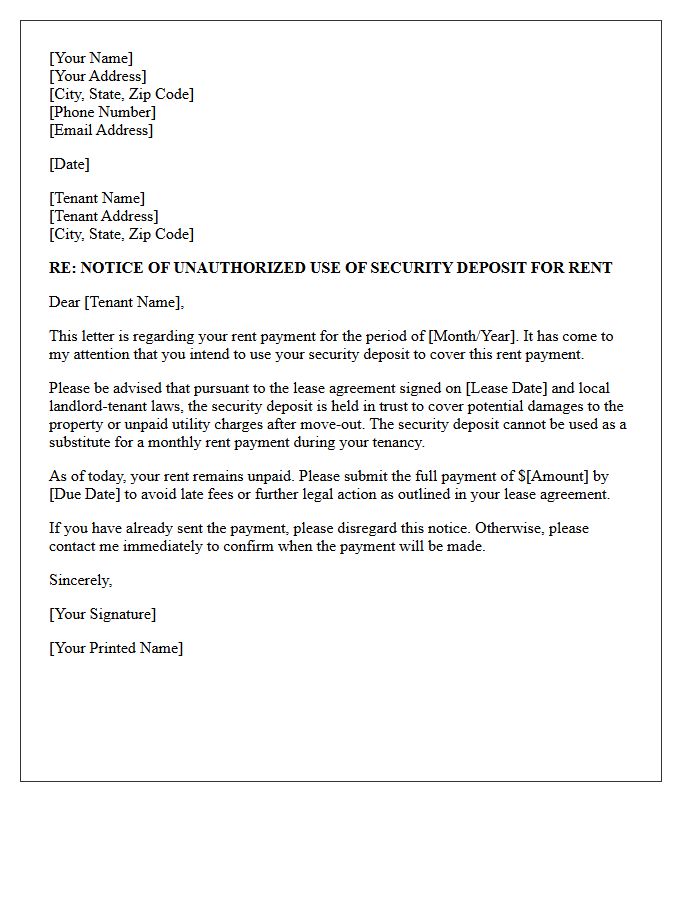
A Notice of Unauthorized Deposit Use for Rent Payment is a legal document issued by a landlord when a tenant attempts to use their security deposit to cover a monthly rent installment without prior written consent. It is crucial to understand that security deposits are typically reserved for property damages or final unpaid balances, not standard rent. This letter serves as a formal demand for immediate payment and protects the landlord's right to maintain a financial safeguard. Unauthorized use can lead to late fees, lease violations, or potential eviction proceedings if the balance is not rectified.
Unauthorized Security Deposit Application for Rent Letter
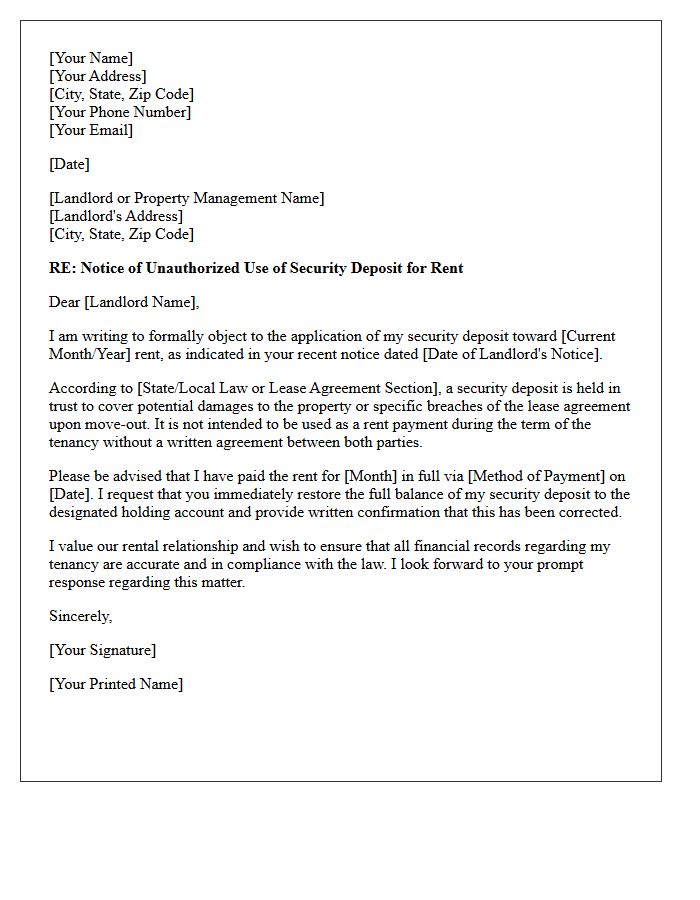
An unauthorized security deposit application letter is a formal notice sent when a landlord illegally uses your security deposit to cover rent without prior written consent. In most jurisdictions, these funds are legally reserved for property damages, not rent payments. Sending this letter protects your tenant rights, creates a paper trail for potential legal action, and demands the immediate restoration of the funds. It is essential to cite specific state laws to ensure your deposit remains protected until your tenancy officially concludes and a final inspection occurs.
Warning Letter for Improper Use of Security Deposit as Rent
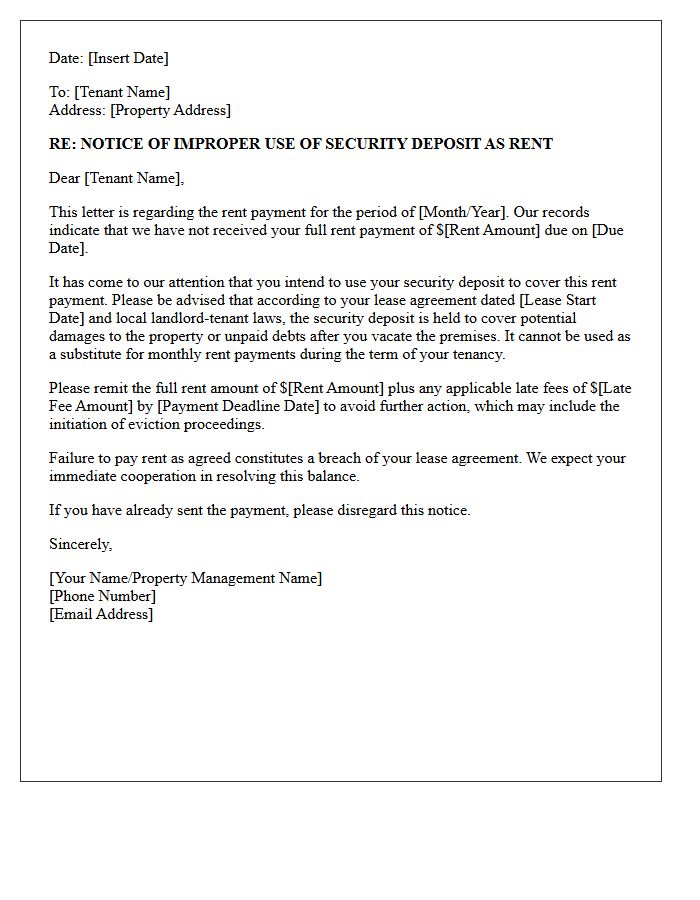
A Warning Letter for improper use of security deposits serves as a formal notice that security funds cannot replace rent. Tenants often mistakenly attempt to apply their deposit toward the final month's payment. However, these funds are legally reserved for potential property damage and cleaning fees. Using the deposit as rent is a lease violation that may lead to late penalties or legal action. Landlords must issue this written warning to clarify financial obligations and maintain the integrity of the security deposit until the final move-out inspection is completed.
Rent Payment via Security Deposit Violation Letter
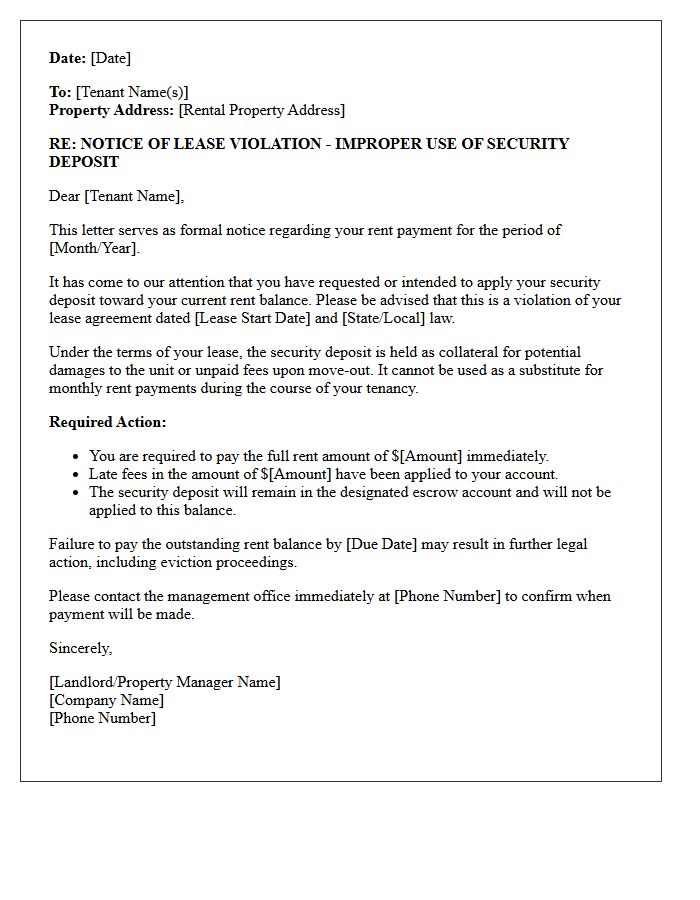
A Security Deposit Violation Letter is a formal notice sent by a landlord when a tenant attempts to withhold rent by using their deposit as the final payment. Legally, security deposits are reserved for property damages and unpaid fees, not as a substitute for monthly rent. Sending this document protects the landlord's rights, clarifies that rent remains outstanding, and warns of potential eviction or late fees. It serves as essential written evidence should the dispute escalate to legal proceedings or a security deposit claim at the end of the tenancy.
Rejection Letter for Security Deposit Applied to Rent
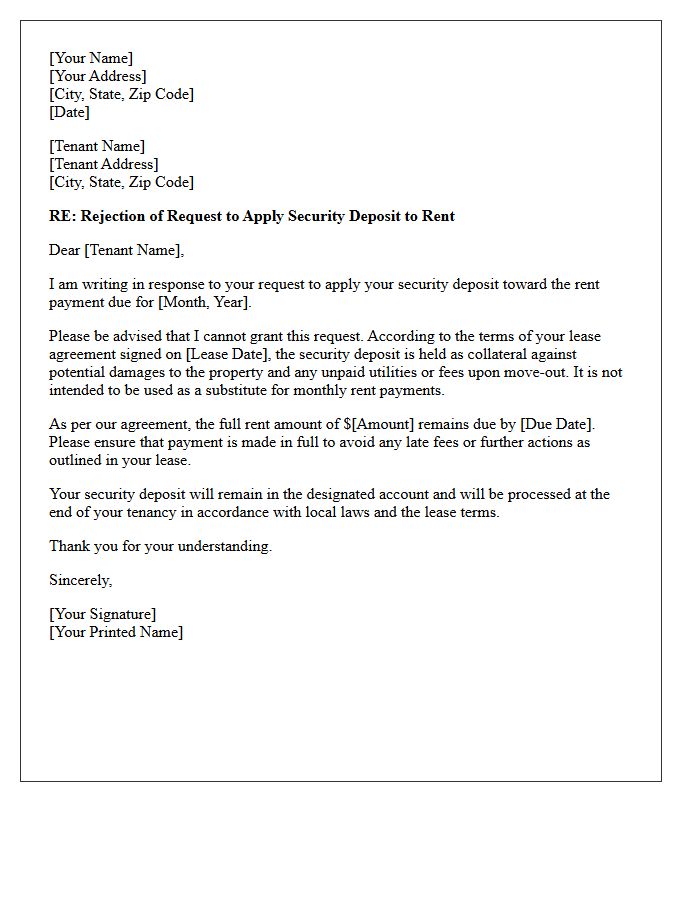
A rejection letter for applying a security deposit to rent is a formal notice clarifying that deposits are legally reserved for property damages, not last-month payments. Landlords use this to protect their financial collateral and ensure consistent cash flow. Tenants should understand that unauthorized rent withholding can lead to eviction or late fees. This document serves as vital evidence in legal disputes, reaffirming the specific terms of the lease agreement. Always send this notice promptly to maintain clear communication and enforce established payment obligations regarding the rental unit's maintenance and restoration.
Demand Letter for Rent Following Unauthorized Deposit Use
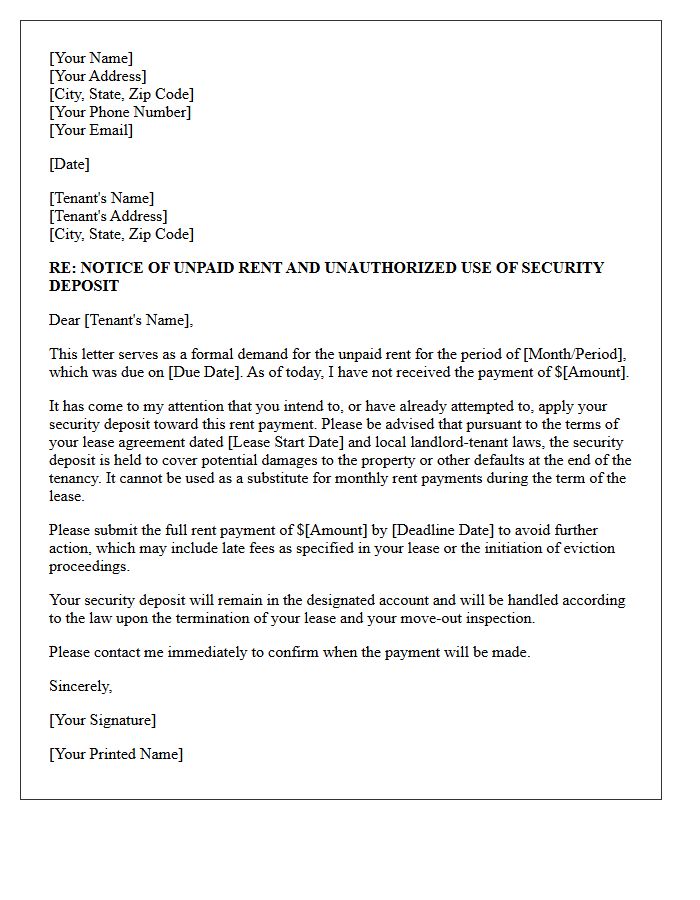
A demand letter for rent is essential if a tenant uses their security deposit to cover monthly rent without written consent. Most lease agreements strictly prohibit this practice, as deposits are reserved for property damages. Sending a formal notice serves as legal evidence of the breach, demanding immediate payment of the outstanding balance. It clearly outlines the consequences of non-payment, such as late fees or potential eviction proceedings. This document protects the landlord's rights by ensuring the deposit remains intact for its intended purpose while enforcing strict contractual compliance.
Lease Violation Letter for Security Deposit Depletion
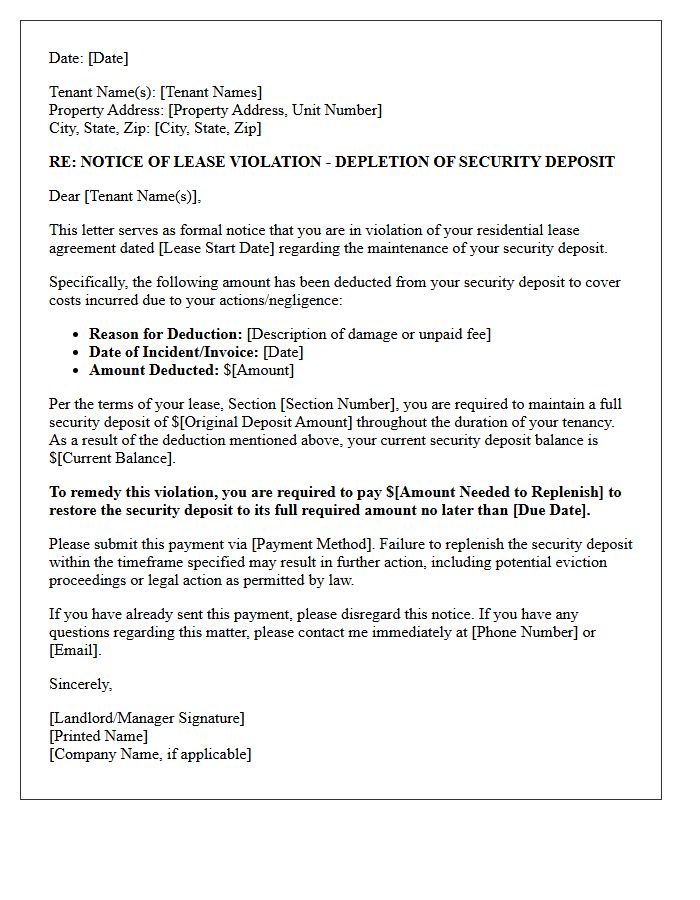
A lease violation letter for security deposit depletion is a formal notice issued when a tenant's actions, such as unpaid rent or property damage, require the landlord to draw funds from the existing deposit. It is crucial to replenish the balance immediately to maintain financial security for the remainder of the tenancy. This document ensures legal transparency and creates a paper trail regarding the breach of contract. Failure to restore the full security deposit amount often constitutes a further lease violation, potentially leading to eviction proceedings or additional legal penalties.
Notice Letter Prohibiting Security Deposit as Rent Payment
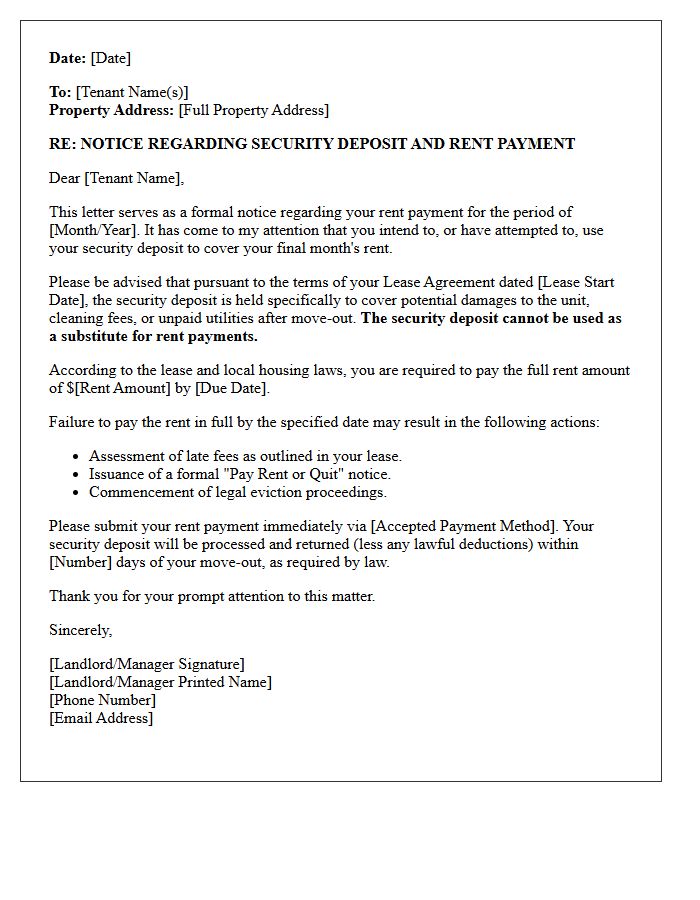
A formal notice prohibiting the use of a security deposit as the last month's rent is essential for protecting property funds. Landlords must clarify that these funds are legally reserved for potential damages and cleaning costs after vacancy. Using the deposit for rent can lead to financial shortfalls during turnover. This document ensures tenants understand their contractual obligations and the specific legal restrictions regarding deposit allocation. Timely communication prevents misunderstandings and reinforces that rent must be paid in full until the lease term officially concludes.
Invalid Rent Payment by Security Deposit Notice Letter
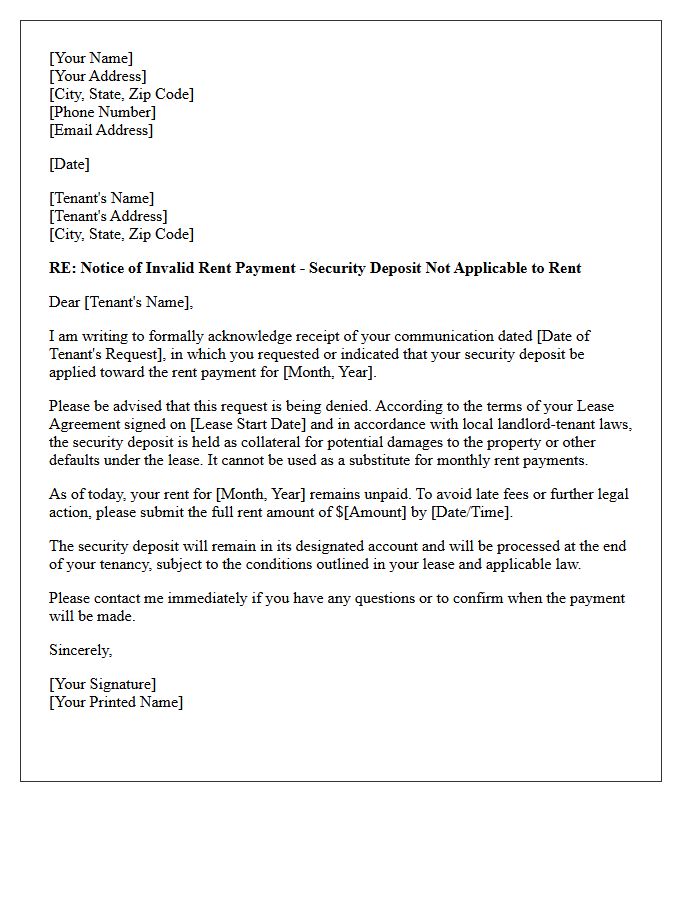
An Invalid Rent Payment by Security Deposit Notice is a legal warning issued when a tenant attempts to use their deposit to cover monthly rent. Under most lease agreements, the security deposit is strictly reserved for potential property damage or unpaid balances after move-out, not as a substitute for regular rent payments. Receiving this notice informs the tenant that they remain in default and must pay the rent immediately to avoid late fees or eviction proceedings. It protects the landlord's financial collateral throughout the tenancy period.
Breach of Lease Letter Regarding Security Deposit Misuse
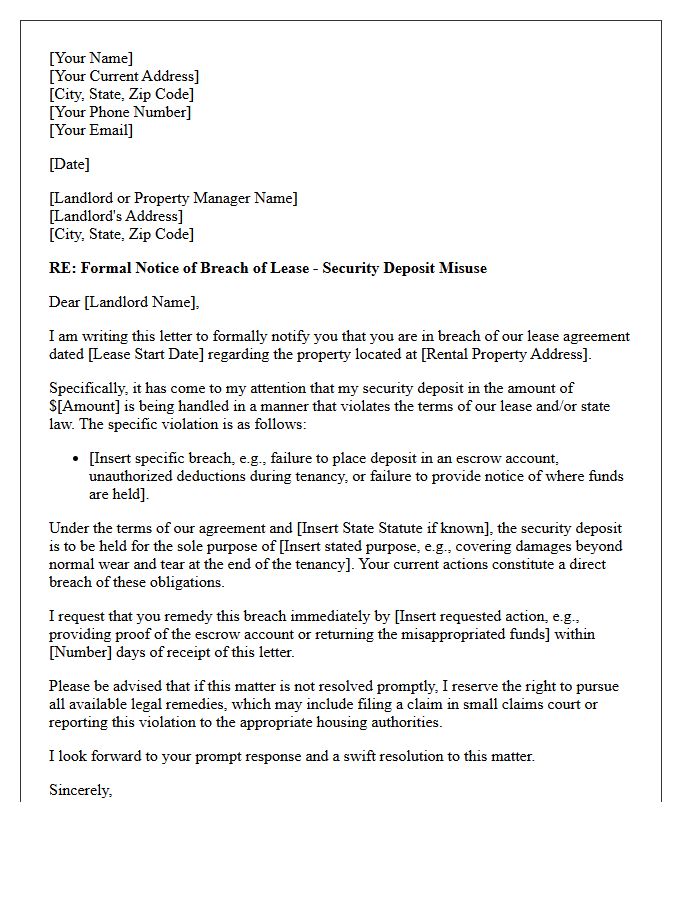
A breach of lease letter regarding security deposit misuse serves as a formal notice when a landlord improperly withholds or utilizes funds. It must clearly outline the specific violations of the rental agreement or state laws, such as using the deposit for normal wear and tear rather than documented damages. Providing a deadline for reimbursement is essential to resolve the dispute before pursuing legal action in small claims court. Ensure you include evidence of the property's condition to strengthen your claim for a full refund of the misappropriated tenant funds.
Outstanding Rent and Unauthorized Deposit Allocation Letter
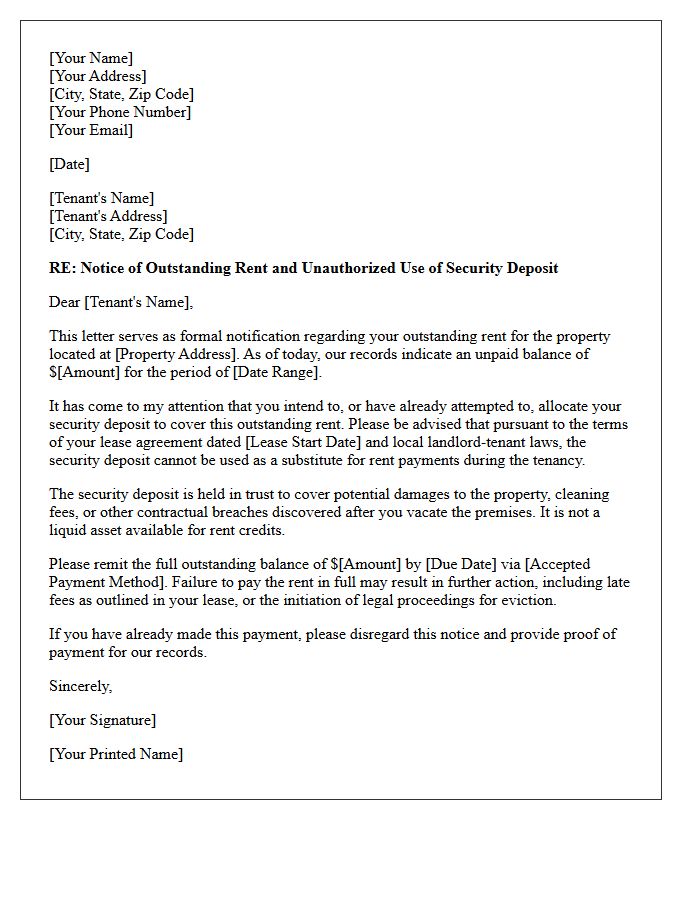
An Outstanding Rent and Unauthorized Deposit Allocation Letter serves as a formal legal notice to a landlord. It disputes the illegal use of a security deposit to cover unpaid rent while the tenancy is active. Security deposits are legally protected and must typically remain in a government-approved scheme until the lease ends. This letter protects your tenant rights by demanding that the landlord restores the funds and provides a clear statement of arrears. Use this document to prevent unauthorized deductions and maintain a clear paper trail for potential legal resolution.
Improper Security Deposit Deduction for Rent Notice Letter
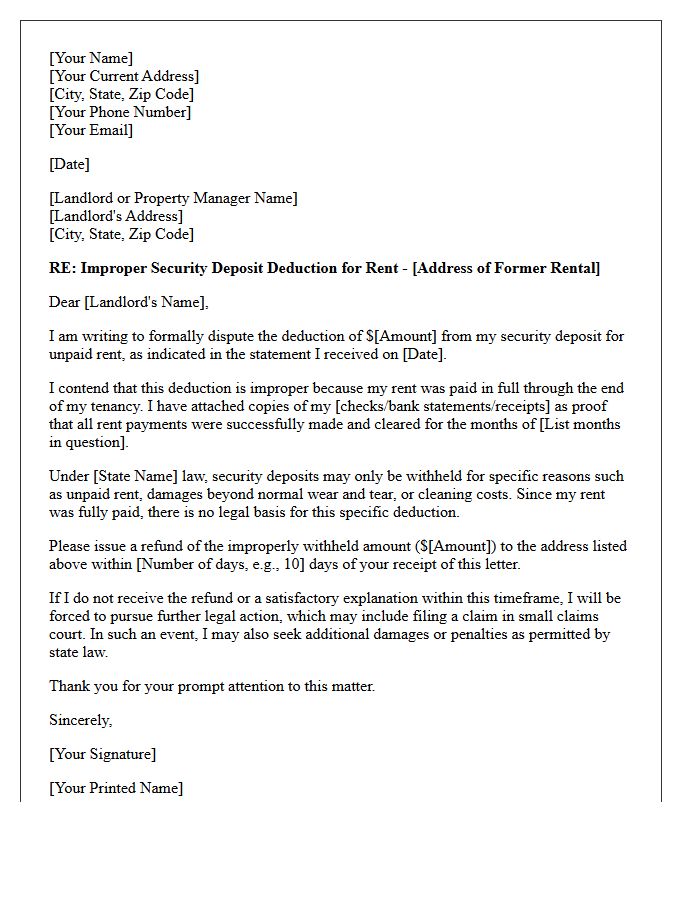
An Improper Security Deposit Deduction for Rent Notice Letter is a formal legal document used by tenants to dispute wrongful withholdings from their deposit. It is crucial to send this letter via certified mail if your landlord failed to provide an itemized statement or deducted for normal wear and tear. This notice serves as a final demand for the return of funds before pursuing a small claims court case. Always reference specific state rental laws and deadlines to ensure your right to a full refund is legally protected.
What is a Notice of Unauthorized Deposit Use for Rent Payment?
This is a formal legal notification sent by a landlord to a tenant when the tenant attempts to use their security deposit to cover monthly rent without prior written consent. In most jurisdictions, security deposits are legally reserved for property damages or unpaid balances at the end of a lease, not as a substitute for active rent payments.
Can a tenant legally use their security deposit to pay the last month's rent?
No, unless the lease agreement explicitly permits it or a written amendment is signed by both parties. Using the deposit for the last month's rent is considered an unauthorized use of funds, as it leaves the landlord without financial protection against potential property damage discovered during the move-out inspection.
What are the consequences of receiving a notice for unauthorized deposit use?
Receiving this notice typically results in the rent being classified as unpaid or late. This can lead to late fees, a negative impact on the tenant's rental history, and potential eviction proceedings for non-payment of rent if the balance is not cleared immediately with a valid payment method.
How should a tenant respond to a Notice of Unauthorized Deposit Use?
A tenant should immediately pay the outstanding rent balance using an approved payment method (such as a check or electronic transfer). Once the rent is paid, the security deposit is restored to its original purpose, and the notice is typically rescinded, preventing further legal action or eviction.
Does a landlord have to provide a notice before taking legal action for unauthorized deposit use?
Yes, in most states, a landlord must provide a formal written notice or a "Pay Rent or Quit" demand before filing for eviction. This notice serves as a legal warning that the tenant has breached the lease terms by failing to pay rent and misapplying the security deposit funds.

Comments