
Maintain a pristine exterior with professional Scheduled Landscaping and Groundskeeping Services. Regular care ensures lush lawns, healthy plants, and a welcoming environment for commercial and residential properties. Consistent maintenance prevents costly repairs and enhances curb appeal throughout every season. To help you organize your maintenance plan effectively, below are some ready to use template.

Image cover: The Ultimate Guide to Professional Landscaping Service Schedules and Templates
Letter Samples List
- Notice Of Scheduled Landscaping Services Letter
- Introduction Of New Groundskeeping Vendor Letter
- Spring Groundskeeping Cleanup Notification Letter
- Change In Routine Landscaping Schedule Letter
- Tenant Request To Clear Lawns For Landscaping Letter
- Pesticide And Herbicide Application Notice Letter
- Seasonal Snow Removal And Groundskeeping Letter
- Request For Proposal For Landscaping Services Letter
- Landscaping And Groundskeeping Vendor Contract Letter
- Apology For Landscaping Noise And Disruption Letter
- Annual Groundskeeping Maintenance Update Letter
- Tenant Feedback On Groundskeeping Services Letter
Notice Of Scheduled Landscaping Services Letter
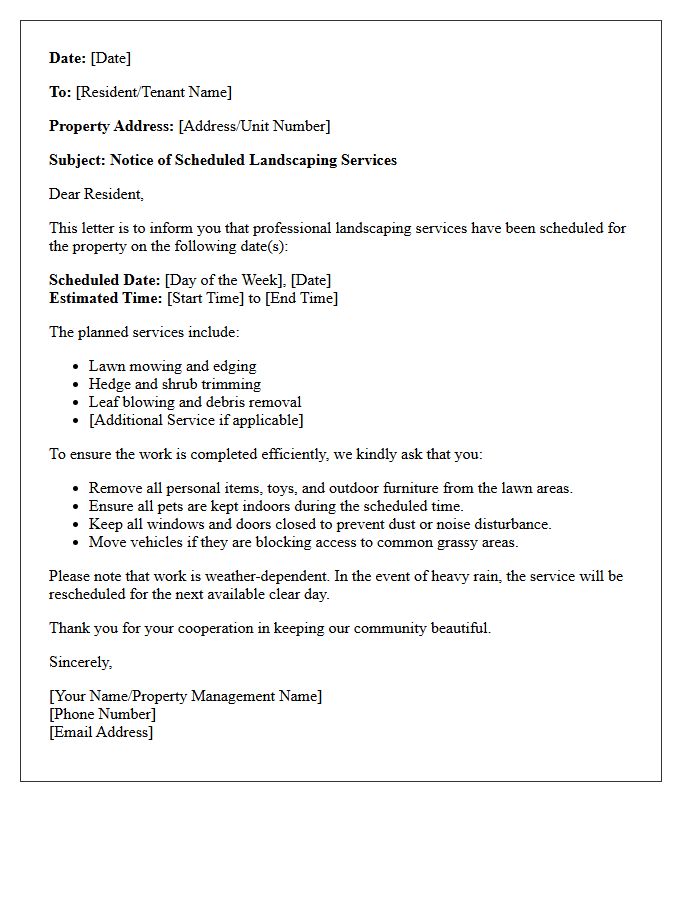
A Notice of Scheduled Landscaping Services is a vital communication tool used by property managers to inform residents about upcoming grounds maintenance. This letter ensures safety and cooperation by specifying the dates, times, and types of work, such as mowing or pesticide application. Residents should use this notification to clear personal items from lawns, close windows, and keep pets indoors. Clear advance notice helps minimize noise disturbances and prevents accidental damage to private property, ensuring a well-maintained environment for everyone in the community.
Introduction Of New Groundskeeping Vendor Letter
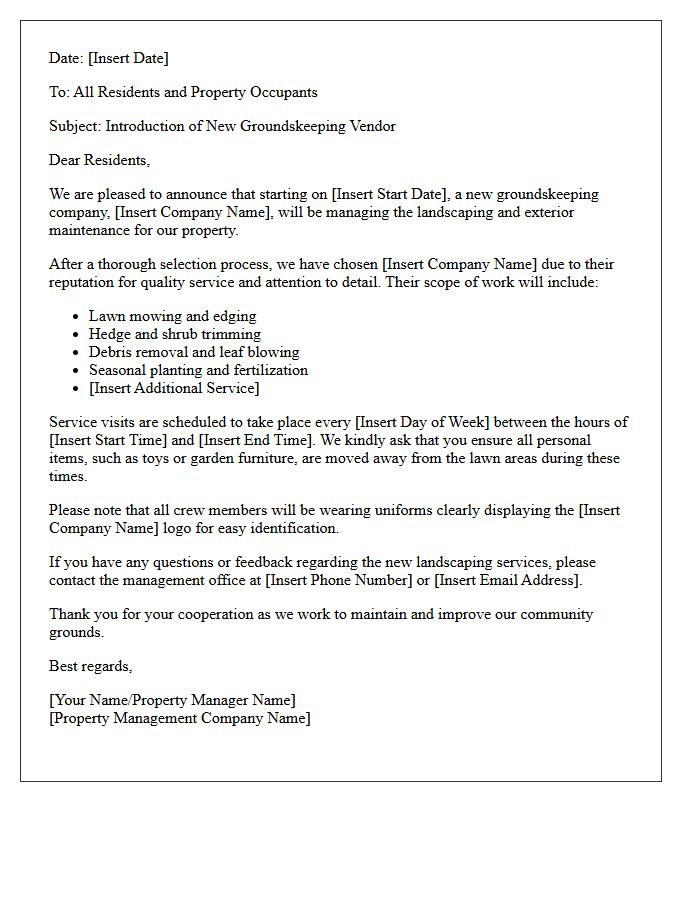
An effective Introduction Of New Groundskeeping Vendor Letter serves to notify residents about the transition in landscape maintenance services. This official communication should clearly state the commencement date and provide the new company's name to ensure property security. It is essential to outline the specific scope of work, including mowing schedules and debris removal, to manage community expectations. Additionally, the letter must include contact information for reporting concerns, ensuring a seamless handover that maintains the aesthetic value and safety of the shared outdoor environment.
Spring Groundskeeping Cleanup Notification Letter
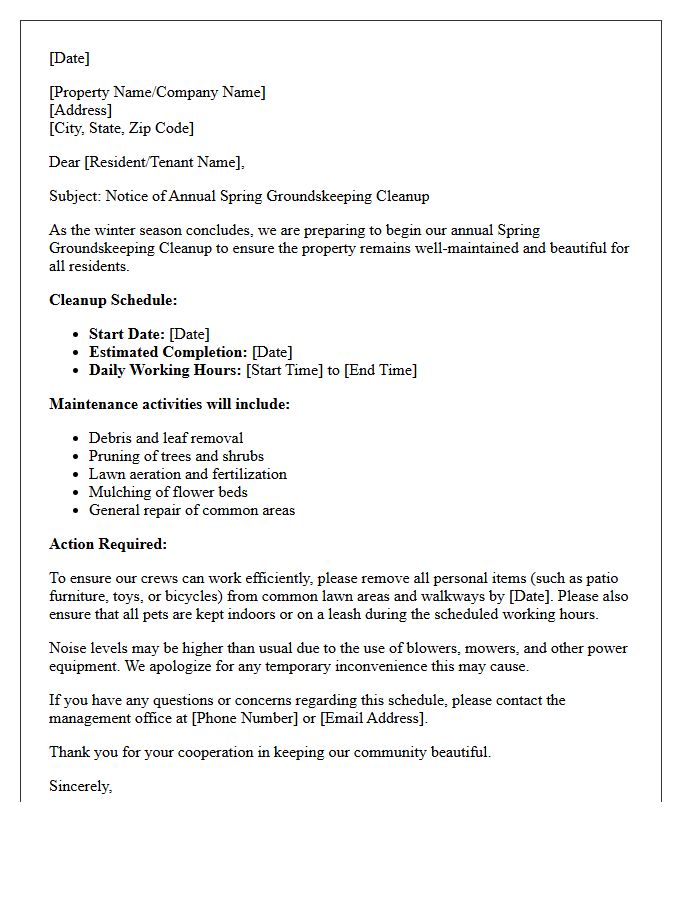
A Spring Groundskeeping Cleanup Notification Letter is an essential communication sent by property managers to residents regarding upcoming maintenance. It highlights the scheduled dates for debris removal, landscaping, and repairs to ensure everyone is prepared. The letter typically instructs tenants to clear personal items from outdoor areas and provides a deadline for compliance to avoid interference with equipment. Proper notice fosters transparency, maintains property curb appeal, and ensures safety for both workers and residents during the seasonal transition. Clear communication helps minimize disruptions while revitalizing the shared environment.
Change In Routine Landscaping Schedule Letter
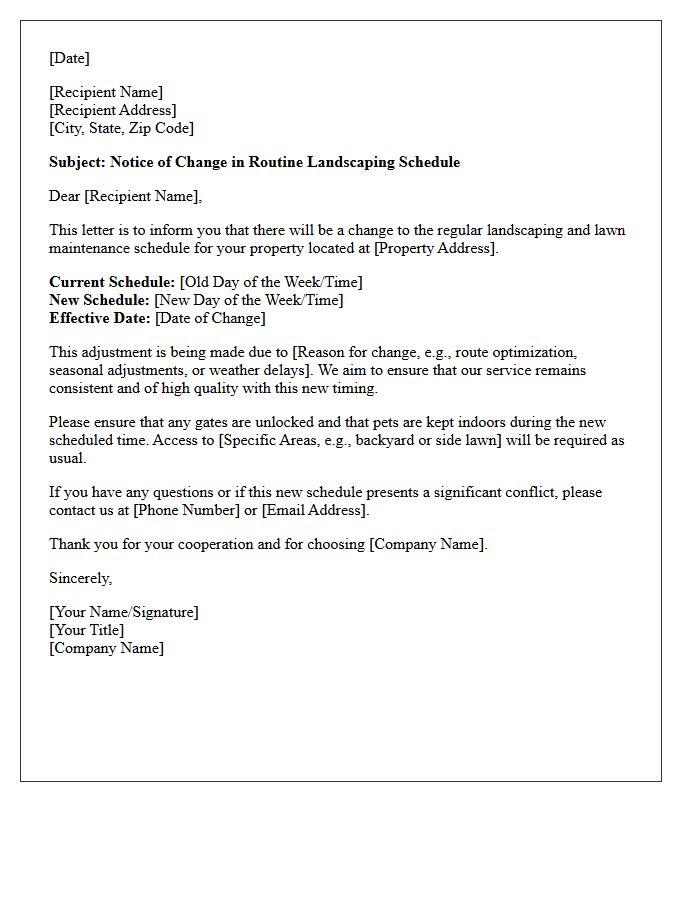
A professional change in routine landscaping schedule letter ensures clear communication regarding adjustments to maintenance dates. It is essential to specify the new service timeframe and the reason for the shift, such as seasonal updates or weather delays. Residents should be informed of any required actions, like clearing outdoor debris or unlocking gates, to prevent service interruptions. Providing a direct point of contact for questions helps maintain transparency and manages homeowner expectations effectively throughout the transition period.
Tenant Request To Clear Lawns For Landscaping Letter
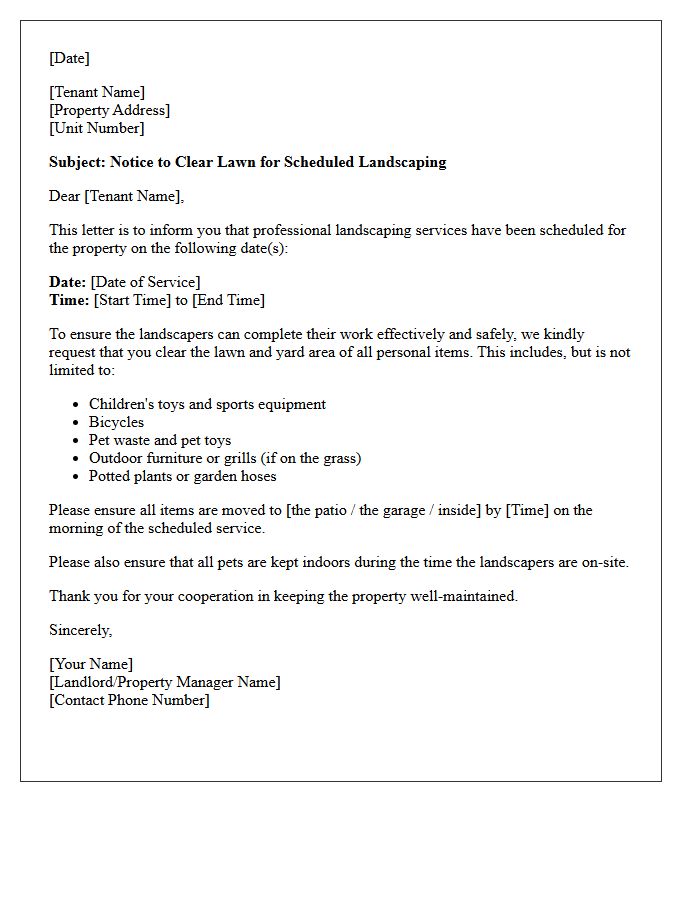
A Tenant Request To Clear Lawns For Landscaping Letter is a formal notice sent to residents requiring the removal of personal items, debris, or unauthorized structures from outdoor spaces. This document ensures landscaping crews can safely access the yard for maintenance or upgrades. To be effective, the letter must clearly state the deadline for compliance and outline potential consequences, such as removal fees or lease violations. Clear communication prevents property damage and maintains the aesthetic appeal and safety of the rental premises for all occupants.
Pesticide And Herbicide Application Notice Letter
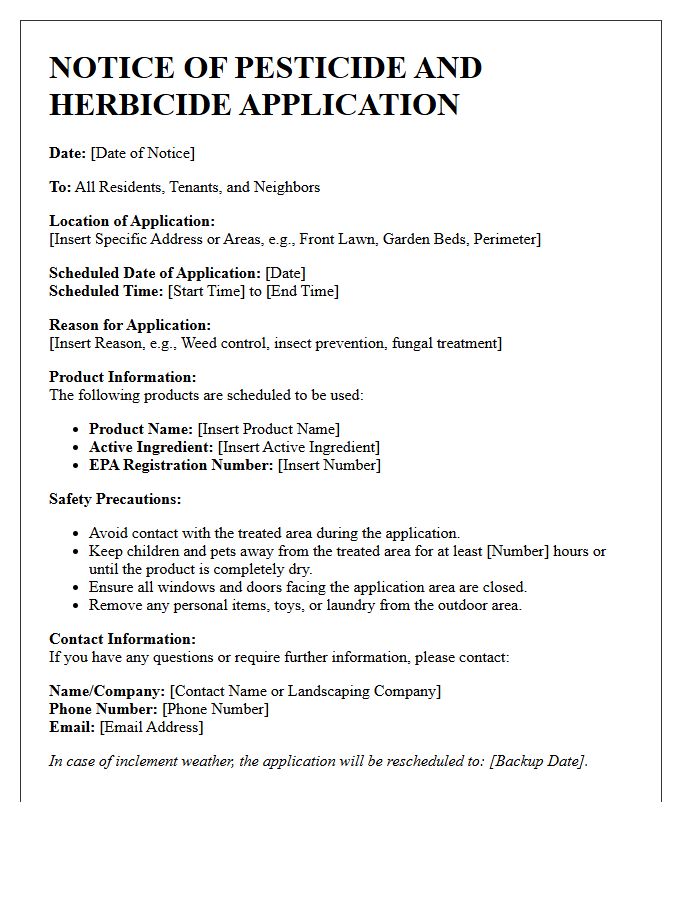
A Pesticide and Herbicide Application Notice Letter is a vital safety communication informing residents about upcoming chemical treatments. It must clearly state the application date, specific locations, and the exact products used. This document ensures compliance with local regulations while protecting public health by advising on re-entry intervals for people and pets. Providing clear contact information and safety precautions helps mitigate exposure risks. Timely notification is essential for transparency and maintaining a safe environment within residential or commercial communities.
Seasonal Snow Removal And Groundskeeping Letter
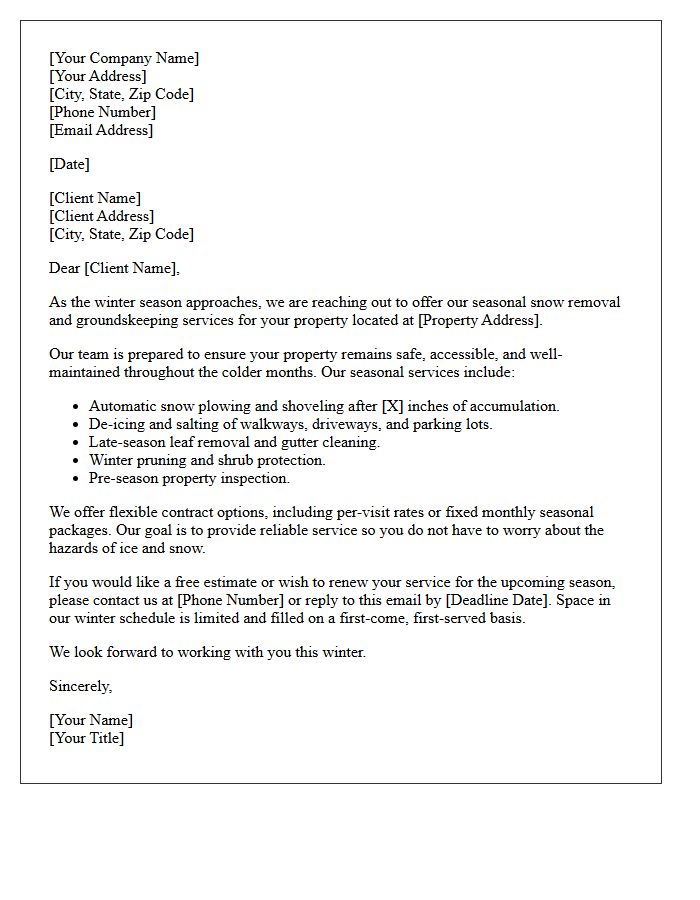
A seasonal snow removal and groundskeeping letter serves as a formal service agreement between contractors and property owners. It clearly outlines the scope of work, including specific triggers for snow clearing and schedules for lawn maintenance. This document is essential for defining liability protection and payment terms before winter begins. By detailing performance standards and equipment usage, both parties ensure consistent property safety and aesthetic appeal. Reviewing these contracts early helps secure reliable maintenance and prevents disputes regarding service expectations during extreme weather conditions.
Request For Proposal For Landscaping Services Letter
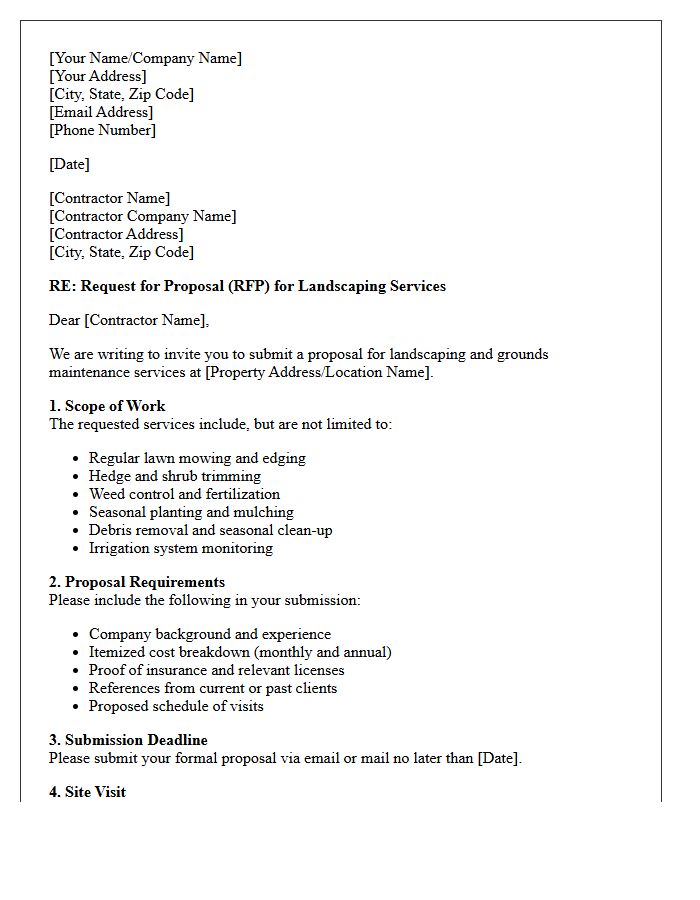
A Request for Proposal (RFP) for landscaping services is a formal invitation used to solicit competitive bids from contractors. It must clearly outline the scope of work, including maintenance schedules, seasonal plantings, and irrigation requirements. To ensure accuracy, include site dimensions and specific performance standards expected. Providing a detailed timeline and budget constraints allows vendors to submit precise estimates. A well-structured letter ensures transparency during the selection process, helping property managers compare service quality and pricing effectively to secure the best professional partnership for their outdoor spaces.
Landscaping And Groundskeeping Vendor Contract Letter
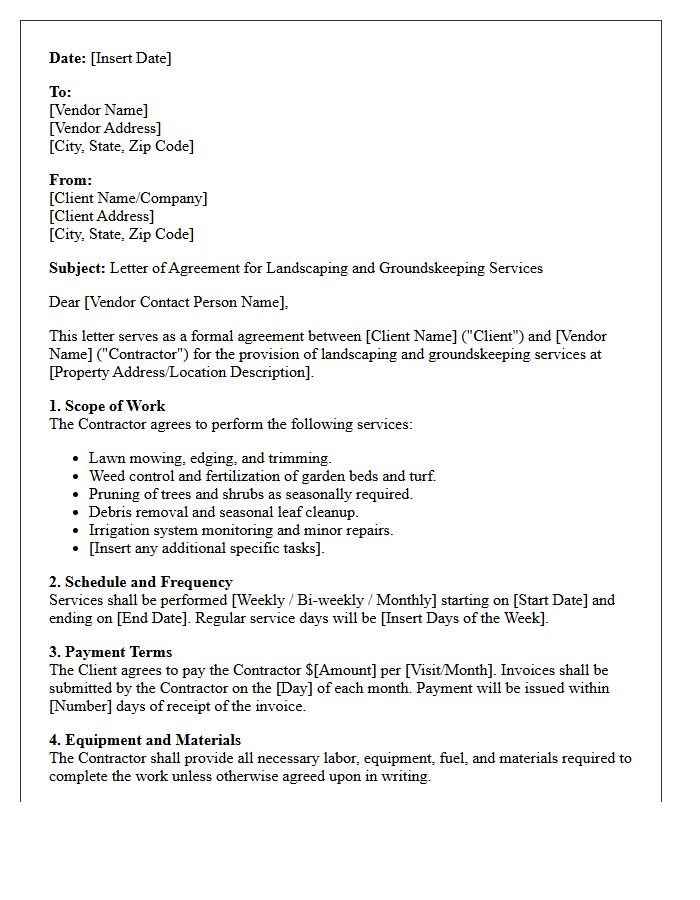
A Landscaping and Groundskeeping Vendor Contract Letter formally establishes the relationship between a property owner and a service provider. This document must clearly outline the scope of work, including lawn maintenance, seasonal debris removal, and irrigation repairs. It is essential to specify the payment terms, service frequency, and contract duration to avoid disputes. Additionally, ensure the letter includes liability insurance requirements and a termination clause. A well-defined agreement protects both parties by setting professional expectations for exterior property care and ensuring consistent aesthetic standards and safety.
Apology For Landscaping Noise And Disruption Letter
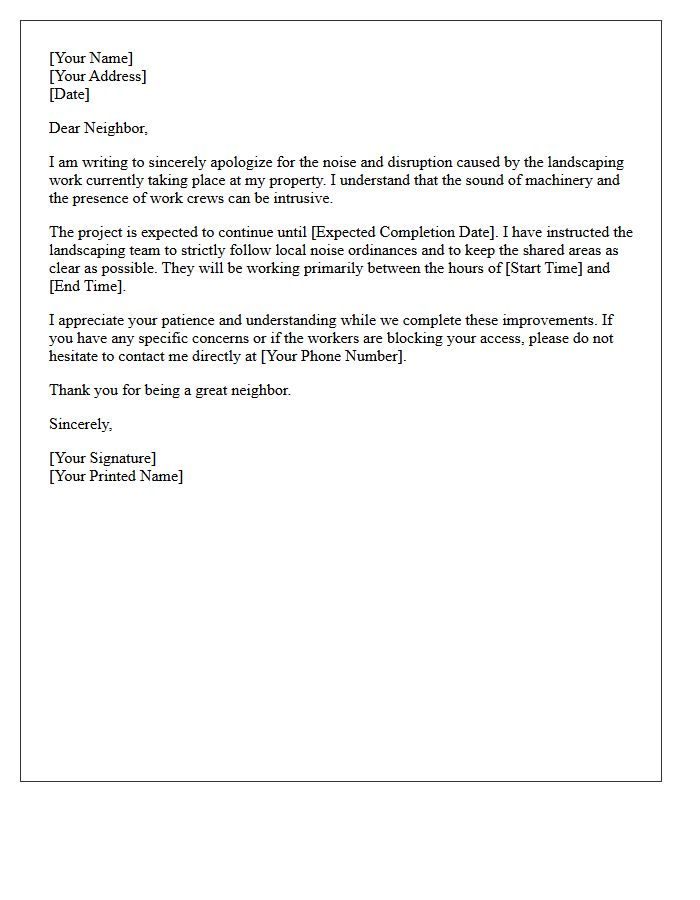
Sending an Apology For Landscaping Noise And Disruption Letter is essential for maintaining positive neighborly relations during renovations. This formal notice should clearly state the project's duration and specific daily working hours to help neighbors plan accordingly. Briefly explain the necessity of the work and provide your contact information for any urgent concerns. A proactive approach demonstrates respect for their peace and quiet, effectively minimizing potential conflicts. Expressing sincere gratitude for their patience and understanding helps preserve a harmonious community environment throughout the disruptive landscaping process.
Annual Groundskeeping Maintenance Update Letter
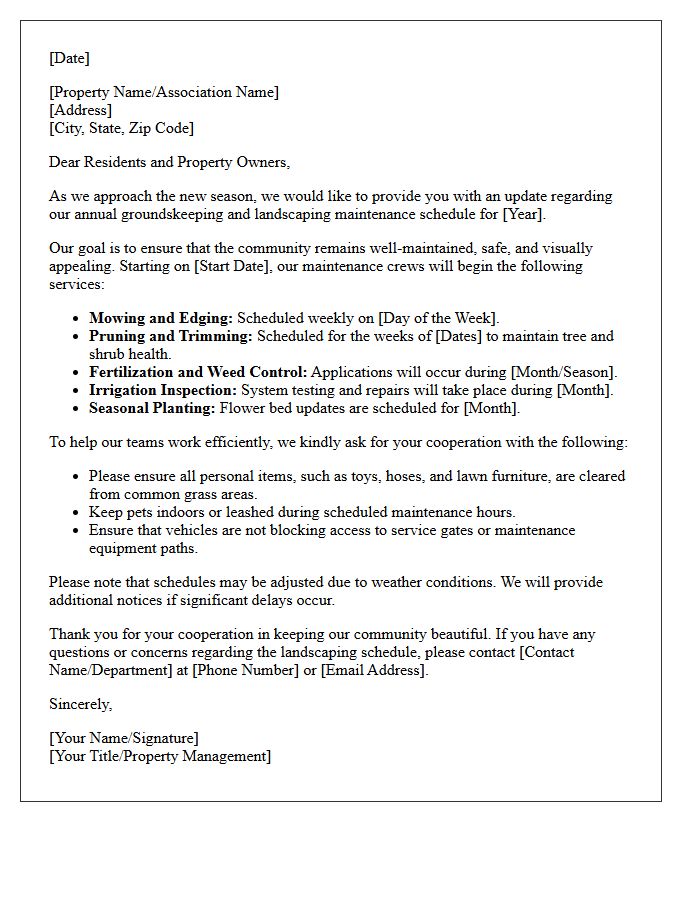
An Annual Groundskeeping Maintenance Update Letter is an essential communication tool used by property managers to inform residents about upcoming landscaping schedules. This document outlines specific dates for mowing, pruning, and fertilization to ensure operational transparency. It serves as a formal notification regarding noise expectations and temporary access restrictions to communal outdoor areas. By providing clear timelines, managers improve resident satisfaction and ensure the property remains aesthetically pleasing and well-maintained throughout the growing season.
Tenant Feedback On Groundskeeping Services Letter
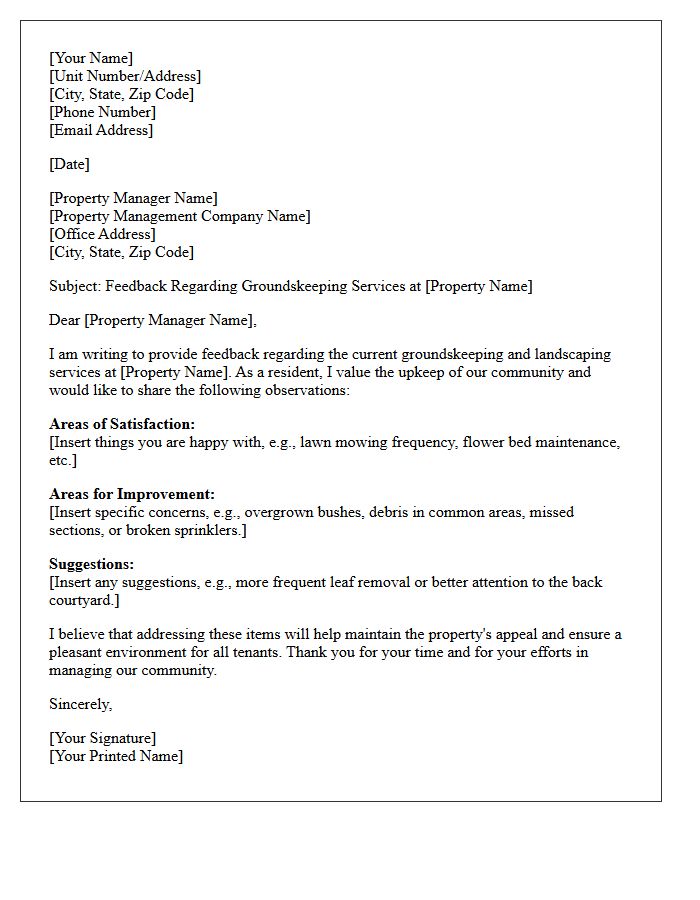
A Tenant Feedback On Groundskeeping Services Letter is a formal communication used to evaluate the landscaping quality and external maintenance of a property. It allows residents to report issues like overgrown lawns, debris, or poor irrigation, ensuring the curb appeal and safety of the premises are upheld. Providing clear, specific details helps property managers hold contractors accountable and improve living conditions. This letter serves as a vital record for requesting specific remedial actions or expressing satisfaction with current seasonal upkeep, ultimately protecting the property's overall value and resident satisfaction.
What services are included in a scheduled landscaping and groundskeeping contract?
Typical scheduled services include lawn mowing, edging, weed control, seasonal fertilization, leaf removal, pruning of shrubs and hedges, and debris clearing to ensure your property remains manicured year-round.
How often should I schedule professional groundskeeping for my property?
Frequency depends on the season; most properties require weekly or bi-weekly maintenance during the peak growing season (spring and summer) and monthly visits for leaf management and dormant pruning during the autumn and winter.
Do scheduled landscaping services include irrigation system monitoring?
Yes, comprehensive groundskeeping plans usually include routine irrigation inspections to check for leaks, adjust sprinkler head positioning, and program seasonal watering timers to optimize water conservation and plant health.
Can I customize my recurring grounds maintenance plan?
Absolutely. Scheduled plans can be tailored to the specific needs of your site, allowing you to prioritize certain areas, choose organic fertilization options, or adjust the frequency of visits based on your budget and aesthetic goals.
Why is a consistent landscaping schedule better than on-call servicing?
Consistency prevents overgrowth, minimizes pest and disease outbreaks through proactive monitoring, and ensures your property maintains a high curb appeal and professional image without the need for emergency remedial work.


Comments