
Stay informed about essential Snow and Ice Removal Operations to ensure safety and accessibility during winter weather events. This guide provides an overview of municipal protocols, clearing schedules, and property owner responsibilities to help maintain clear pathways and minimize travel hazards. Understanding these procedures ensures community-wide preparedness. To simplify your communication, below are some ready to use template.

Image cover: Winter Ready: Professional Snow and Ice Removal Notice Templates
Letter Samples List
- Winter Weather Snow And Ice Removal Preparedness Letter
- Tenant Notice Of Snow And Ice Removal Operations Letter
- Property Management Snow And Ice Clearing Schedule Letter
- Commercial Property Snow And Ice Removal Notice Letter
- Residential Community Snow And Ice Removal Operations Letter
- Emergency Snow And Ice Removal Procedures Letter
- Parking Lot Snow And Ice Removal Vehicle Relocation Letter
- Sidewalk Snow And Ice Removal Safety Compliance Letter
- Vendor Snow And Ice Removal Operations Coordination Letter
- Snow And Ice Removal Operations Delay Notification Letter
- Post-Storm Snow And Ice Removal Assessment Letter
- End Of Season Snow And Ice Removal Operations Summary Letter
Winter Weather Snow And Ice Removal Preparedness Letter
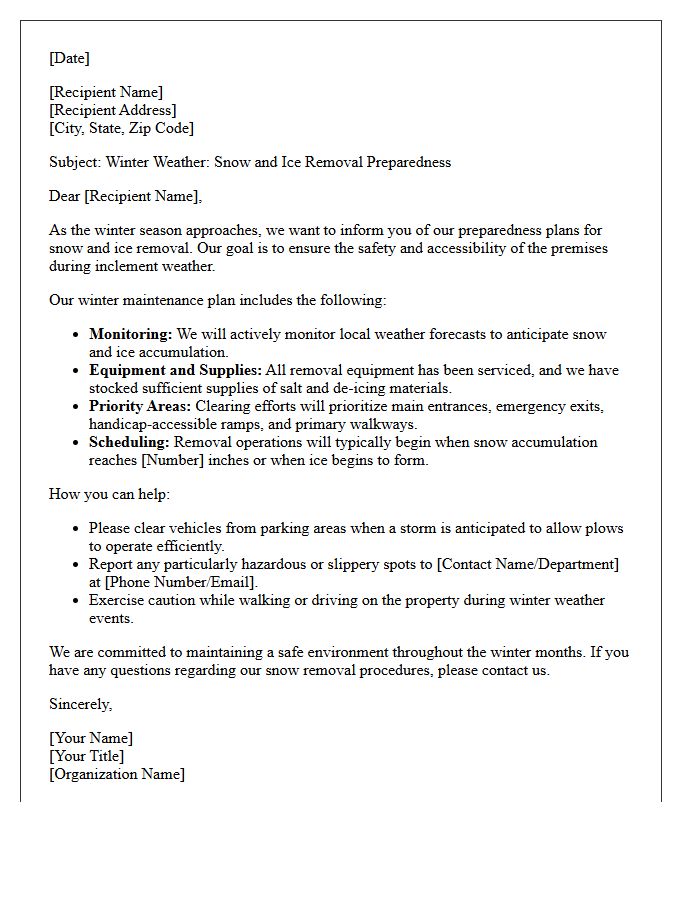
A winter weather letter ensures community safety by outlining clear snow and ice removal protocols. It defines specific resident responsibilities, such as clearing private walkways, while explaining municipal or HOA plowing schedules. Being prepared helps mitigate liability risks and prevents slip-and-fall accidents during freezing temperatures. Effective communication regarding salt application and parking restrictions allows for efficient emergency access. Property owners should review these guidelines early to ensure proactive maintenance and compliance with local safety ordinances before the first major winter storm occurs.
Tenant Notice Of Snow And Ice Removal Operations Letter
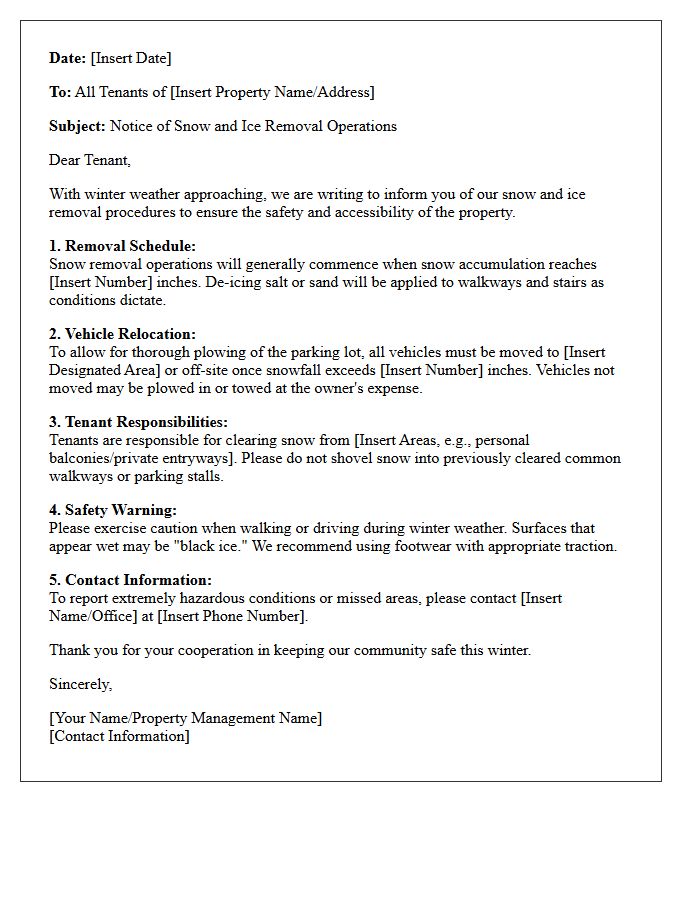
A Tenant Notice of Snow and Ice Removal Operations is a vital communication ensuring safety and compliance during winter. This letter informs residents about scheduled plowing, salt application, and specific parking restrictions to prevent vehicle damage. Property managers use this notice to outline tenant responsibilities, such as clearing private balconies or moving cars by a set deadline. Clearly stating these procedures minimizes liability risks and ensures efficient snow management. Timely distribution helps maintain clear access to walkways and emergency exits, protecting both the landlord and the occupants during severe weather events.
Property Management Snow And Ice Clearing Schedule Letter
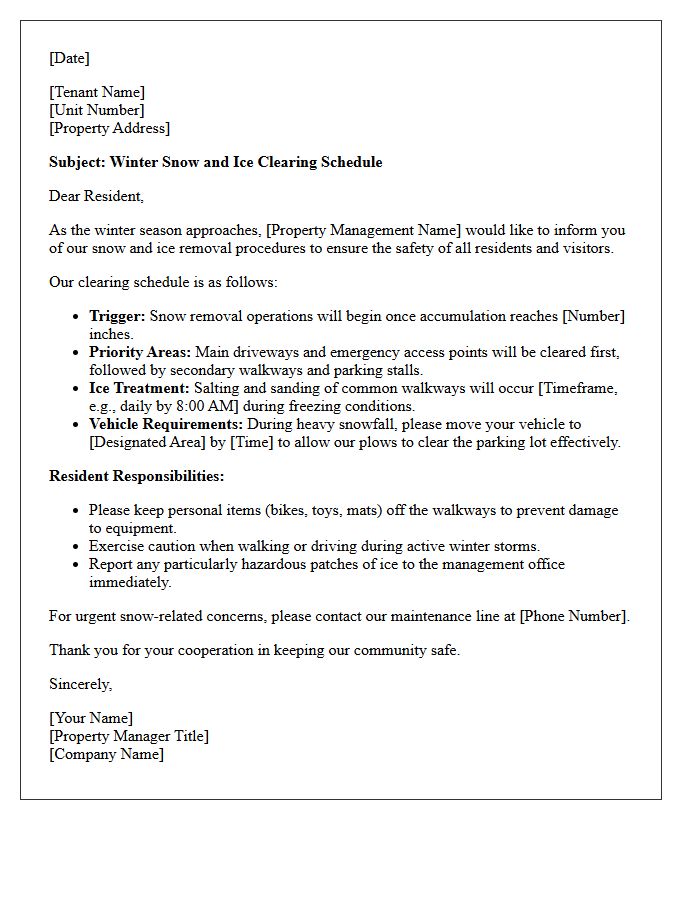
A property management snow and ice clearing schedule letter is a critical liability protection tool that outlines specific removal protocols. It should clearly define service triggers, such as accumulation depth, and establish priority zones like emergency exits and ADA ramps. Providing residents with a transparent operational timeline ensures safety while managing expectations during winter storms. Effective communication regarding salt application and designated parking restrictions helps streamline maintenance efforts, reduces slip-and-fall risks, and maintains clear access across the property throughout the season.
Commercial Property Snow And Ice Removal Notice Letter
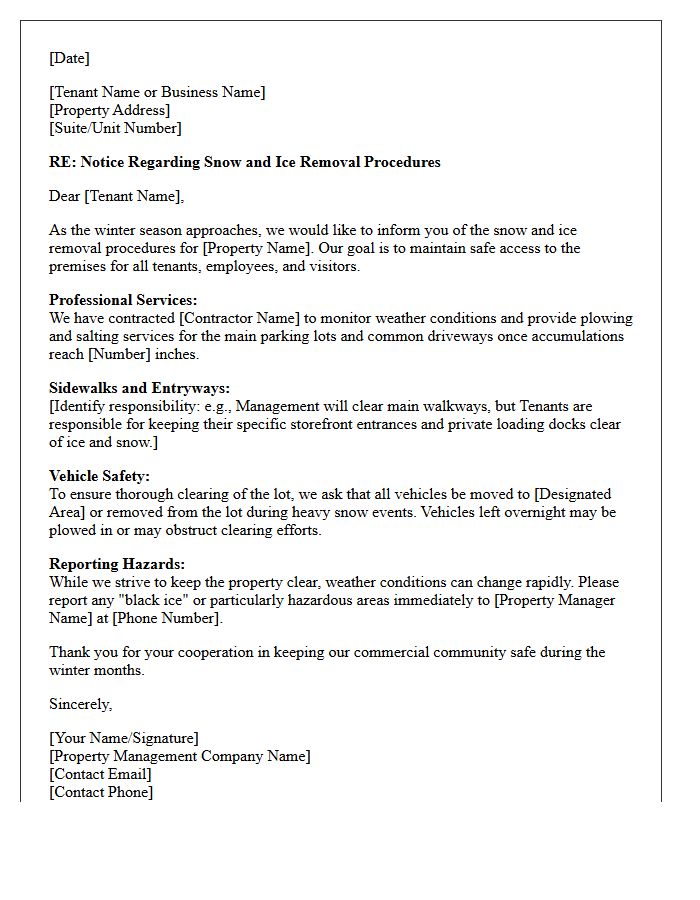
A Commercial Property Snow and Ice Removal Notice Letter is a vital document used to inform tenants and contractors of their specific maintenance responsibilities. It ensures safety by outlining clear protocols for clearing walkways and parking lots during winter. Providing this written notice helps mitigate liability risks and ensures compliance with local safety ordinances. Clearly defining the service timeline and designated salt application areas protects both the property owner and visitors from potential slip-and-fall accidents, maintaining a secure business environment throughout the season.
Residential Community Snow And Ice Removal Operations Letter
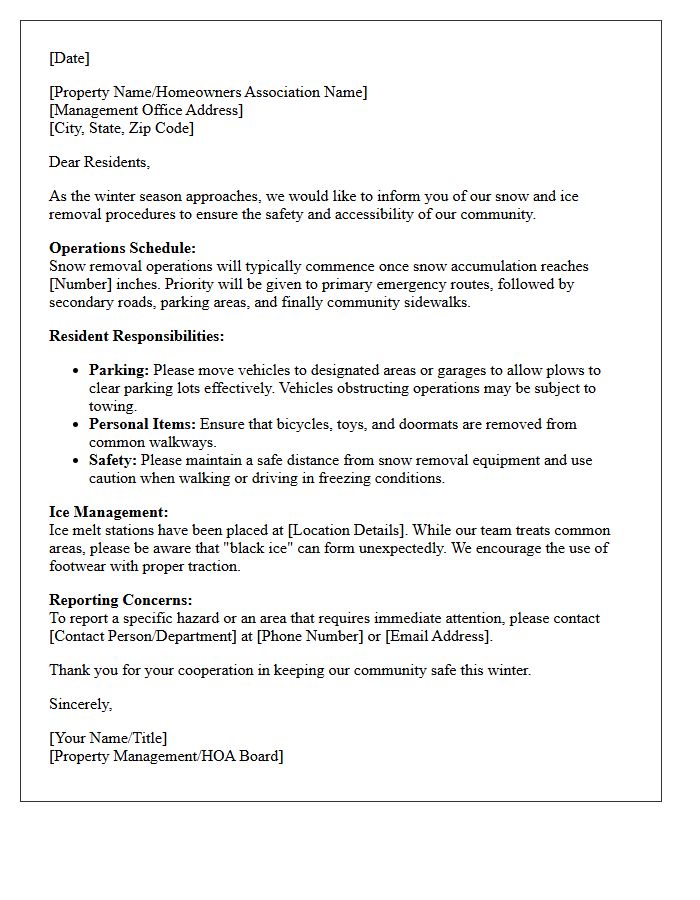
A residential community snow and ice removal operations letter serves as a formal notification detailing winter maintenance protocols. It outlines critical information such as plowing priorities, designated salt application zones, and resident parking requirements to ensure clear access for heavy machinery. The document clarifies the specific service triggers, typically based on snow accumulation depth, and defines liability boundaries between private property and common areas. Property owners must review these guidelines to understand their responsibilities, including sidewalk clearance and vehicle relocation, to ensure neighborhood safety and efficient emergency access during severe winter weather events.
Emergency Snow And Ice Removal Procedures Letter
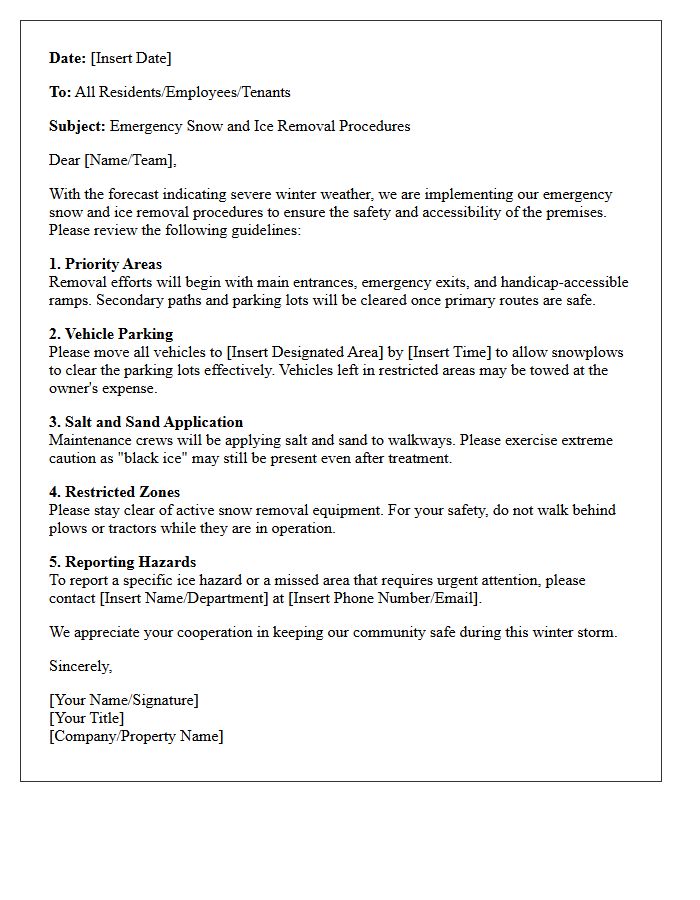
An Emergency Snow and Ice Removal Procedures Letter is a vital notification sent to residents or employees outlining safety protocols during winter storms. It details priority clearance areas, designated parking restrictions, and specific timelines for salt application or plowing. This document ensures operational safety and compliance with local ordinances by defining responsibilities for maintaining accessible pathways. Understanding these guidelines helps minimize liability risks and prevents accidents on icy surfaces. Always review the emergency contact information provided to report hazardous conditions or request immediate assistance during severe weather events.
Parking Lot Snow And Ice Removal Vehicle Relocation Letter
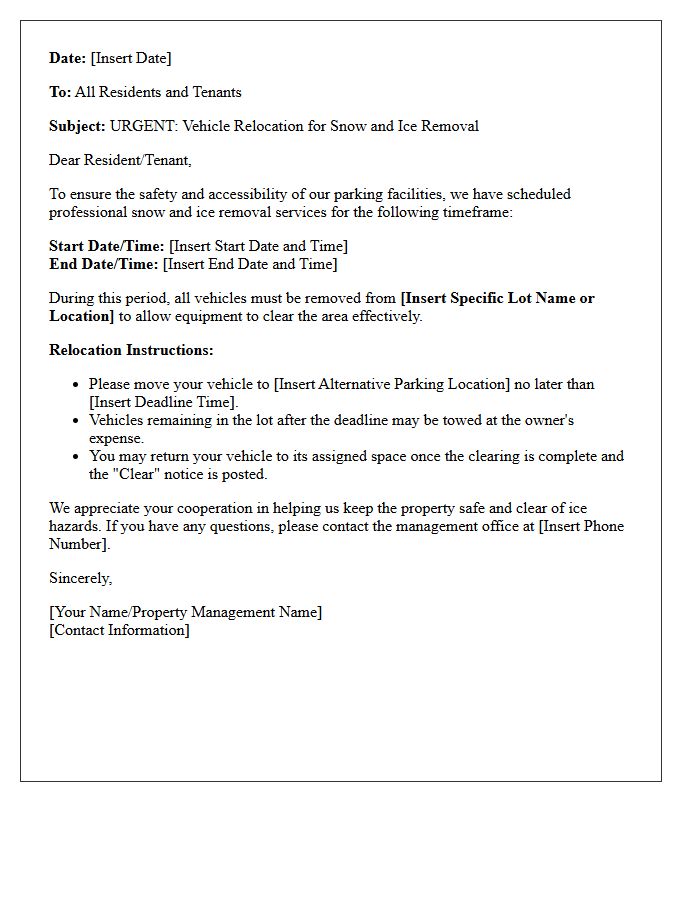
A vehicle relocation letter is a formal notice informing tenants or employees about scheduled snow and ice removal. It specifies a clear deadline for moving cars to designated alternative areas to ensure plow safety and efficiency. To avoid towing, recipients must comply with the stated timeframe. Providing clear instructions helps prevent property damage and ensures the parking lot is completely cleared of hazards. Timely communication is the most important factor in maintaining a safe, accessible environment during winter weather events.
Sidewalk Snow And Ice Removal Safety Compliance Letter
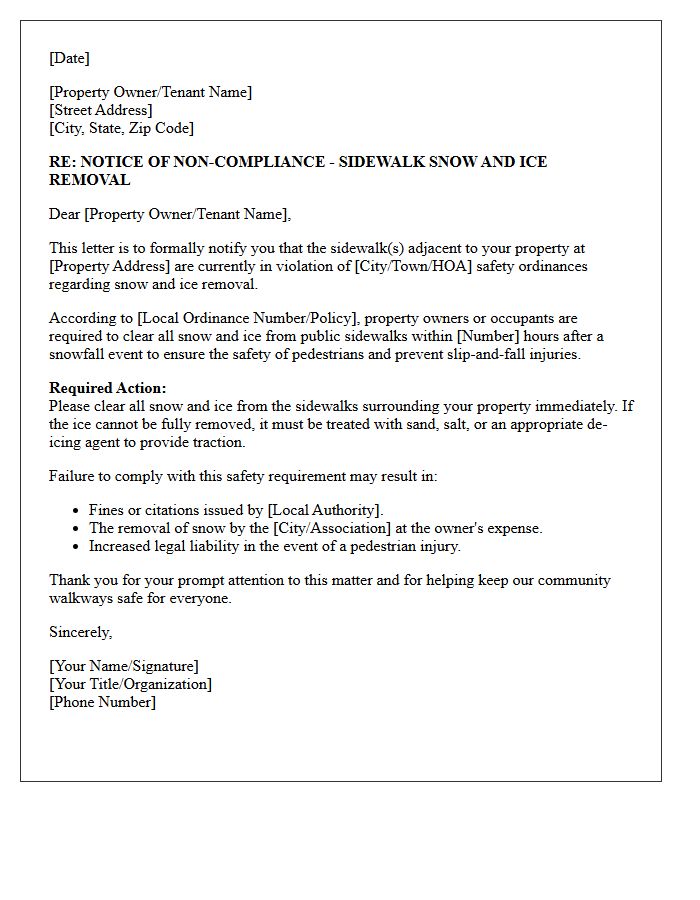
A Sidewalk Snow And Ice Removal Safety Compliance Letter is a critical legal document used by property owners to verify that walkways are clear of hazards. It ensures adherence to local municipal ordinances and reduces liability during winter months. By documenting timely maintenance, you provide essential proof of compliance against personal injury claims. Property managers must issue these letters to confirm that snow removal contractors have fulfilled their safety obligations, protecting both pedestrians and stakeholders from potential lawsuits and fines associated with icy conditions.
Vendor Snow And Ice Removal Operations Coordination Letter
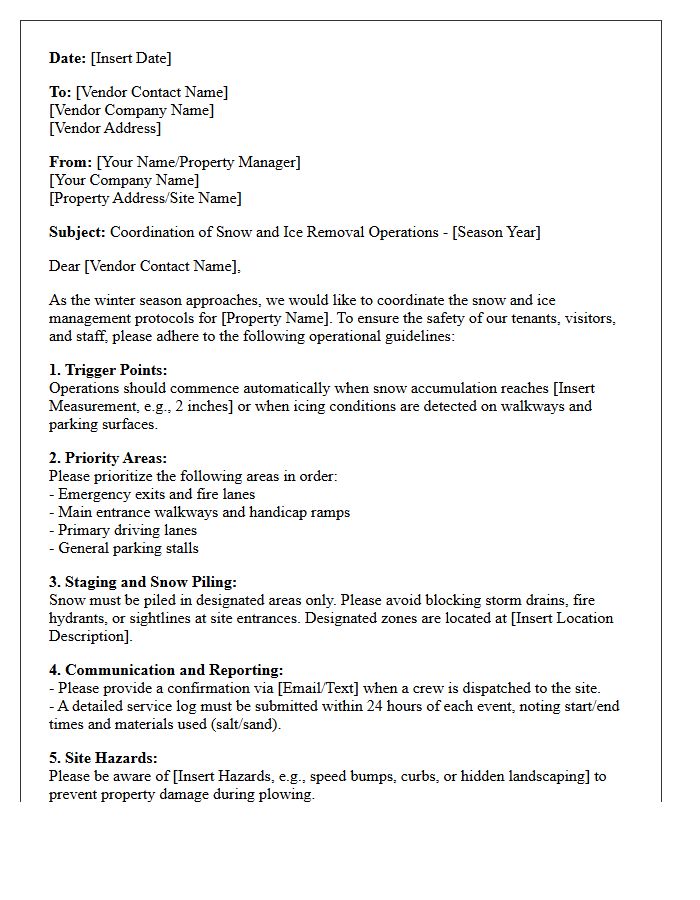
A Vendor Snow and Ice Removal Operations Coordination Letter is a vital document used to align expectations between property managers and contractors. It outlines specific service triggers, priority clearing zones, and communication protocols for winter weather events. Establishing clear liability boundaries and documentation requirements ensures safety and operational continuity. This formal communication minimizes disputes by detailing deployment procedures, equipment staging, and reporting standards before the first snowfall occurs.
Snow And Ice Removal Operations Delay Notification Letter
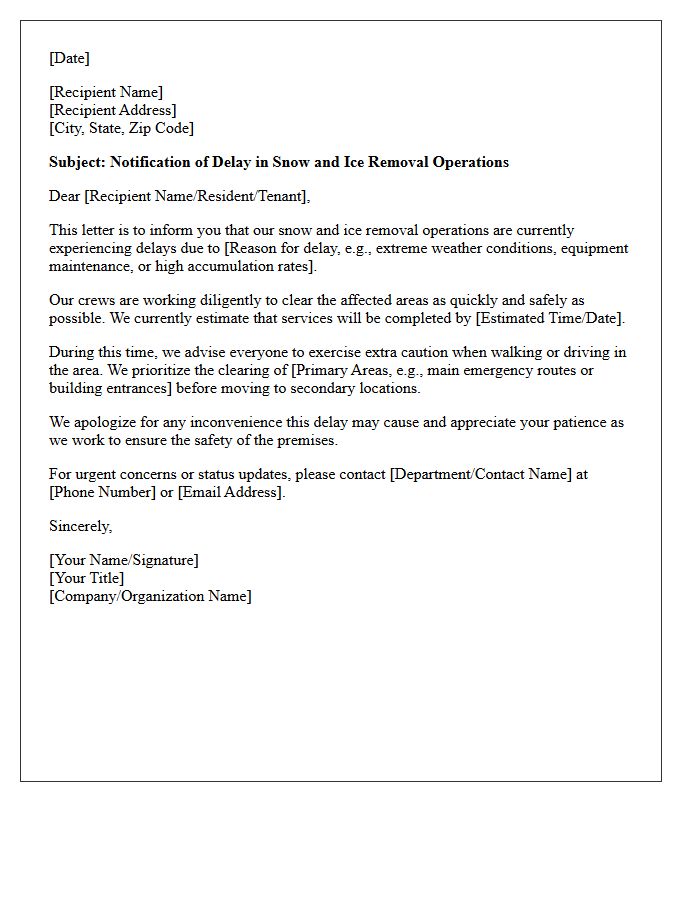
A Snow and Ice Removal Operations Delay Notification Letter informs residents or clients when severe weather exceeds standard response capabilities. It is vital to explain that extreme accumulation or equipment issues have caused a service postponement. The document should outline revised timelines, prioritize safety, and manage expectations regarding clearing priorities. Providing clear communication helps mitigate frustration, ensures public safety, and maintains transparency during winter emergencies. Always include contact details for real-time updates to ensure all stakeholders remain informed throughout the weather event.
Post-Storm Snow And Ice Removal Assessment Letter
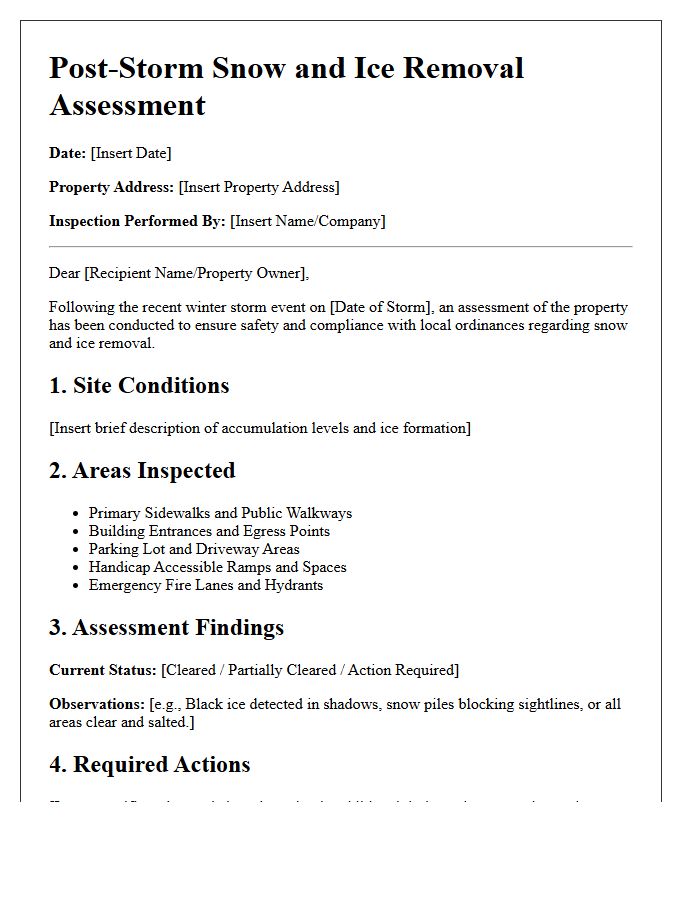
A post-storm assessment letter is a vital document sent by contractors to property managers after severe weather. It provides a detailed record of snow clearing and de-icing actions taken to ensure site safety. This letter serves as essential liability protection by documenting completed work, specific weather conditions, and identified hazards. Property owners use these reports to verify contract compliance and mitigate slip-and-fall risks. Maintaining accurate documentation through this assessment is the most effective way to manage operational transparency and defend against potential legal claims following winter storms.
End Of Season Snow And Ice Removal Operations Summary Letter
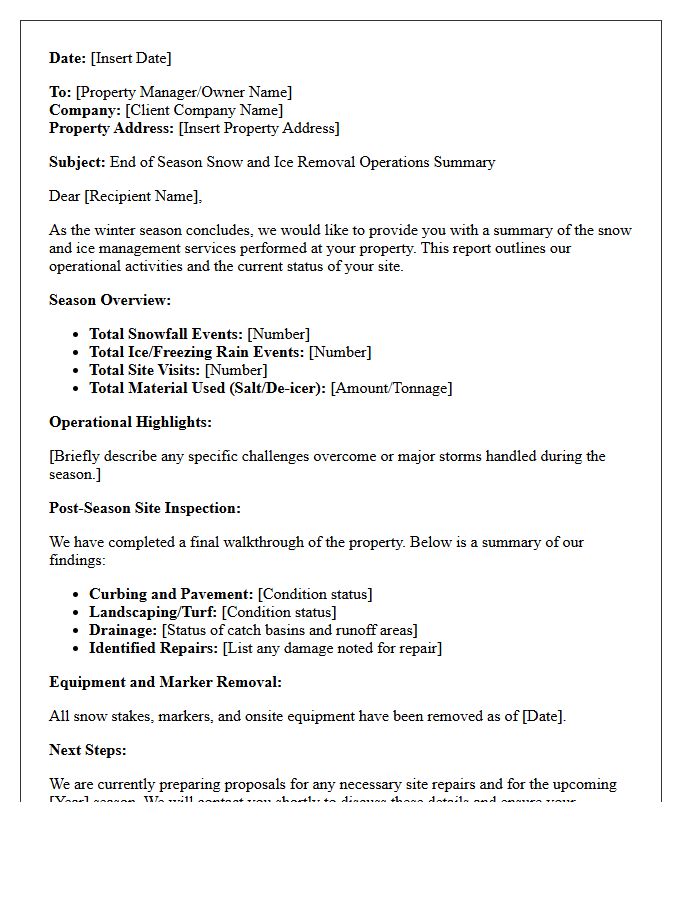
An End of Season Summary Letter provides a comprehensive review of winter maintenance activities. This document outlines total material usage, equipment performance, and service hours to evaluate operational efficiency. By analyzing these metrics, stakeholders can identify cost-saving opportunities and areas for improvement. It serves as an essential record for budget planning and ensures transparency between service providers and property managers. Ultimately, this summary justifies seasonal expenditures and facilitates strategic preparation for upcoming winter cycles through data-driven insights and performance evaluations.
When does the snow and ice removal parking ban go into effect?
The snow emergency parking ban is typically activated when snow accumulation reaches two inches or when freezing rain is forecasted; residents must move vehicles off designated snow routes to allow plows to clear the streets safely.
What are the priority levels for street plowing during a winter storm?
Primary focus is given to "Priority 1" routes, which include emergency vehicle paths, major arterials, and hospital access roads, followed by secondary collector streets and finally residential side streets once the main roads are clear.
Who is responsible for clearing snow from public sidewalks and fire hydrants?
Property owners and tenants are legally required to clear snow and ice from the sidewalks adjacent to their property and should ensure nearby fire hydrants are accessible within 24 hours after the snowfall ends.
Can I shovel or blow snow from my driveway into the public roadway?
No, it is a violation of local ordinances to push, plow, or blow snow from private driveways or sidewalks into public streets, as this creates hazardous driving conditions and interferes with municipal removal operations.
What should I do if a city snow plow damages my property or mailbox?
Residents should report property damage to the Public Works Department within 48 hours; please note that the city is generally only responsible for repairs if the plow made direct physical contact with a properly installed mailbox or curb.


Comments