
A Request for Updated Certificate of Liability Insurance letter is a vital document used to verify that a contractor or vendor maintains active coverage. Ensuring your partners hold current policies protects your business from financial risk and legal liabilities. Maintaining organized compliance records is essential for professional risk management. To simplify your workflow, below are some ready to use templates.
Image cover: Professional Request Templates for Updated Certificates of Liability Insurance
Letter Samples List
- Vendor Updated Certificate of Liability Insurance Request Letter
- Commercial Tenant Certificate of Liability Insurance Renewal Letter
- Notice of Expiring Certificate of Liability Insurance Reminder Letter
- Final Warning for Missing Certificate of Liability Insurance Letter
- Contractor Additional Insured Certificate of Liability Insurance Request Letter
- Annual Property Vendor Certificate of Liability Insurance Update Letter
- Notice of Lease Violation for Lapsed Certificate of Liability Insurance Letter
- Residential Renter Certificate of Liability Insurance Requirement Letter
- Subcontractor Proof of Certificate of Liability Insurance Request Letter
- Service Suspension Due to Expired Certificate of Liability Insurance Letter
- New Tenant Move-In Certificate of Liability Insurance Request Letter
- Property Management Routine Certificate of Liability Insurance Audit Letter
Vendor Updated Certificate of Liability Insurance Request Letter
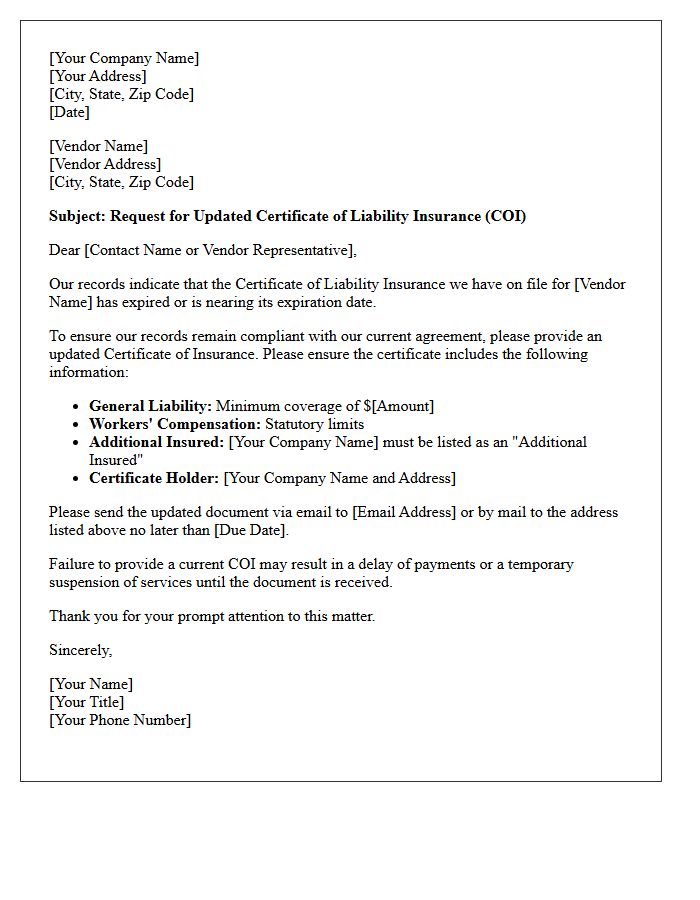
A Vendor Updated Certificate of Liability Insurance Request Letter is a professional formal notice sent to ensure contractors maintain active coverage. It is vital to confirm that your business interests remain protected against potential liabilities or damages. This document formally requests a current COI, verifying that the vendor's policy limits meet your specific compliance standards and have not expired. Keeping these records accurate mitigates financial risk and ensures seamless operational continuity while strictly adhering to contractual obligations and safety protocols within your supply chain management.
Commercial Tenant Certificate of Liability Insurance Renewal Letter
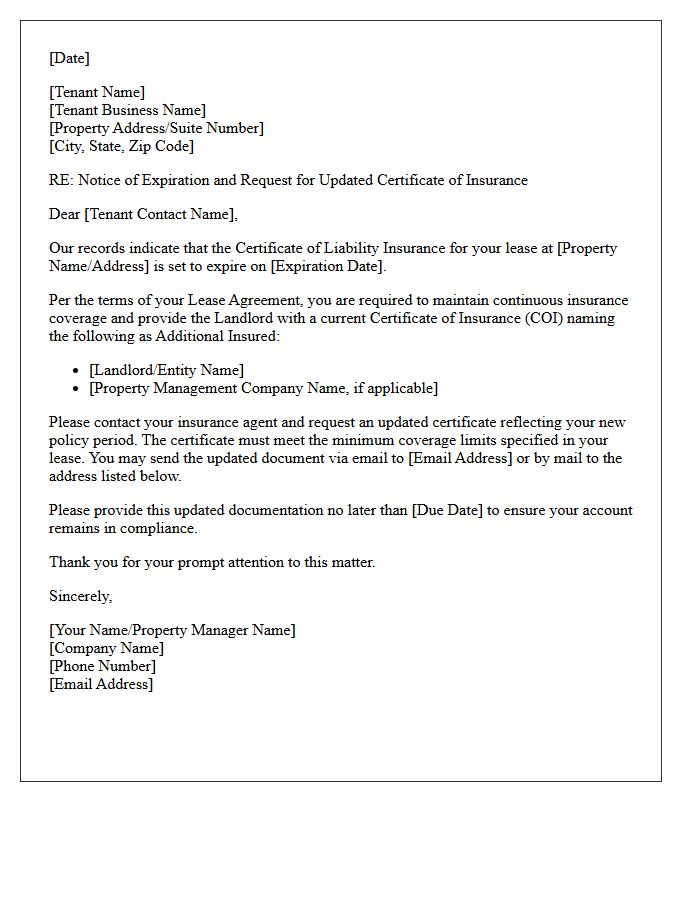
A Commercial Tenant Certificate of Liability Insurance (COI) Renewal Letter is a formal request issued by landlords to ensure continuous coverage. It is vital to verify that the tenant's insurance policies remain active and meet the specific indemnification requirements outlined in the lease agreement. Failure to provide an updated COI can lead to a lease default. Tenants must coordinate with their brokers to submit proof of general liability and property insurance before the current expiration date to maintain legal compliance and protect both parties from financial risk.
Notice of Expiring Certificate of Liability Insurance Reminder Letter
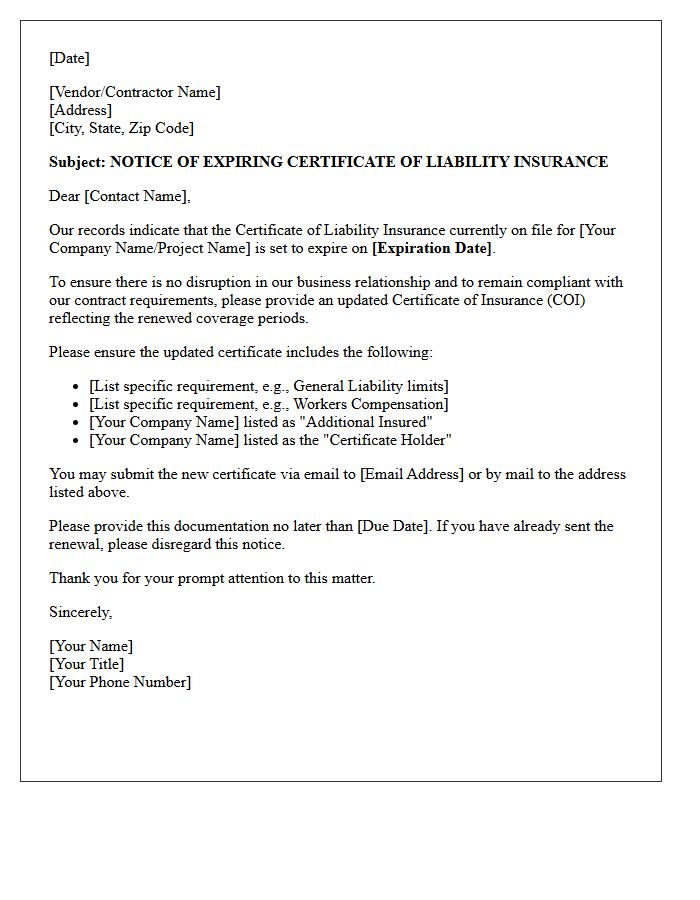
A Notice of Expiring Certificate of Liability Insurance is a critical formal alert sent to ensure continuous coverage. This reminder letter warns policyholders that their insurance protection is nearing its end date. It is essential to act immediately upon receipt to prevent a lapse in coverage, which could lead to legal liabilities, contract breaches, or financial loss. Always verify the expiration date and contact your agent promptly to submit renewal documentation and maintain compliance with your professional or business requirements.
Final Warning for Missing Certificate of Liability Insurance Letter
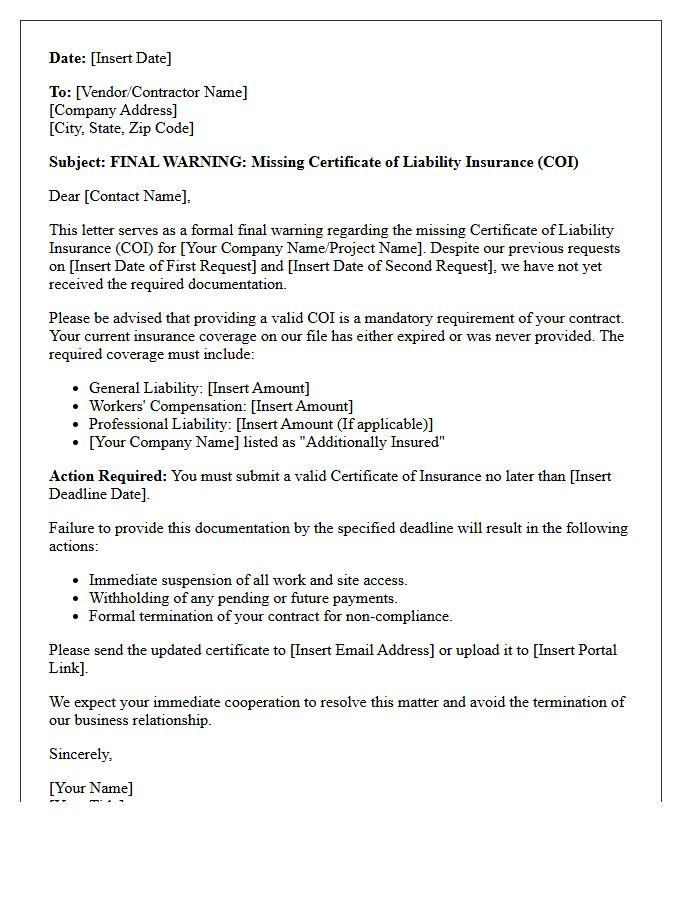
A final warning for a missing Certificate of Liability Insurance (COI) serves as a critical notice before contract termination or site removal. It highlights the urgent requirement for proof of coverage to mitigate financial and legal risks. Failure to submit this documentation immediately can lead to breach of contract and personal liability for damages. You must ensure the policy limits meet specified standards and name the requesting party as an additional insured. Promptly contacting your insurance agent is essential to maintain business compliance and avoid severe operational penalties.
Contractor Additional Insured Certificate of Liability Insurance Request Letter
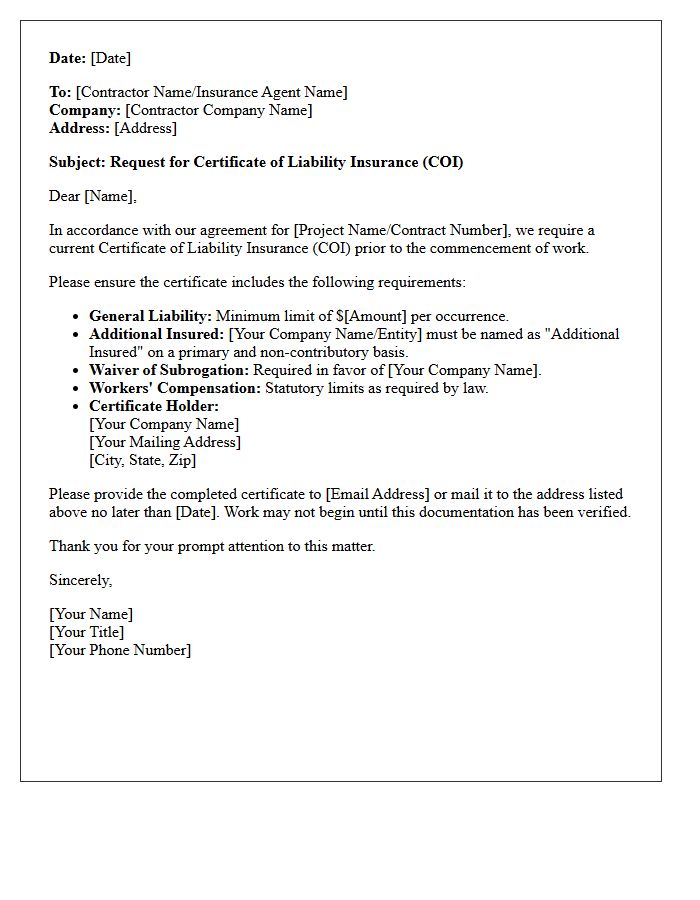
A formal Additional Insured request letter ensures that a contractor's insurance policy extends coverage to the hiring party. It is essential to specify the Certificate Holder details, required coverage limits, and any endorsements like primary and non-contributory language. This document acts as risk transfer, protecting the project owner from liability arising from the contractor's operations. Always verify that the issued Certificate of Insurance (COI) matches the contract requirements to maintain legal protection and financial security throughout the project duration.
Annual Property Vendor Certificate of Liability Insurance Update Letter
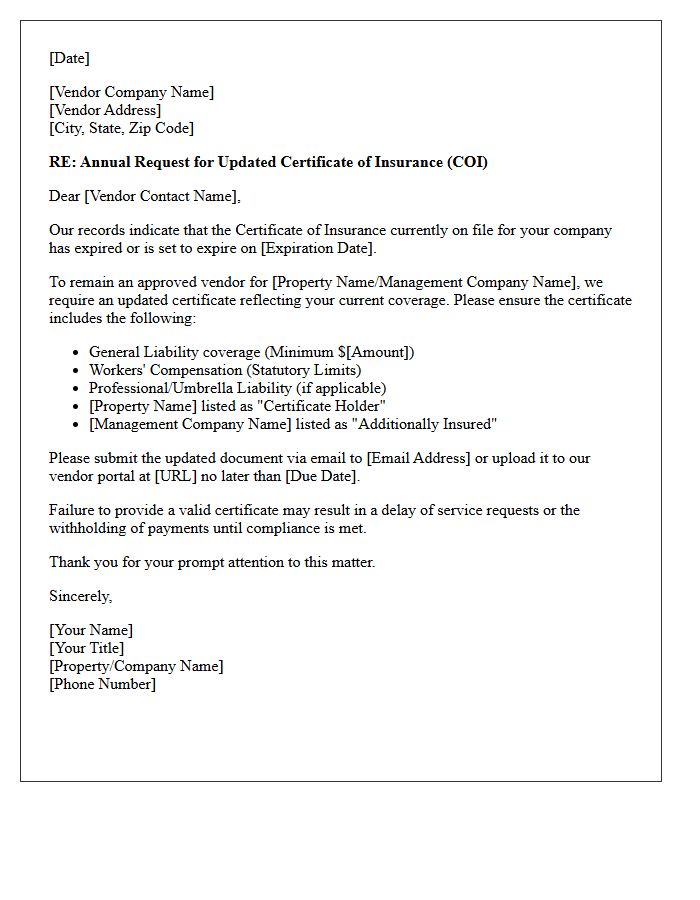
The Annual Property Vendor Certificate of Liability Insurance Update Letter is a critical compliance document used to verify that contractors maintain active coverage. Property managers issue this request to mitigate risk and ensure vendors meet minimum insurance requirements for general liability and workers' compensation. Failure to provide an updated certificate can lead to contract suspension or payment delays. Always confirm the additional insured endorsement is correctly listed to protect the property owner from potential legal claims or financial loss during on-site operations.
Notice of Lease Violation for Lapsed Certificate of Liability Insurance Letter
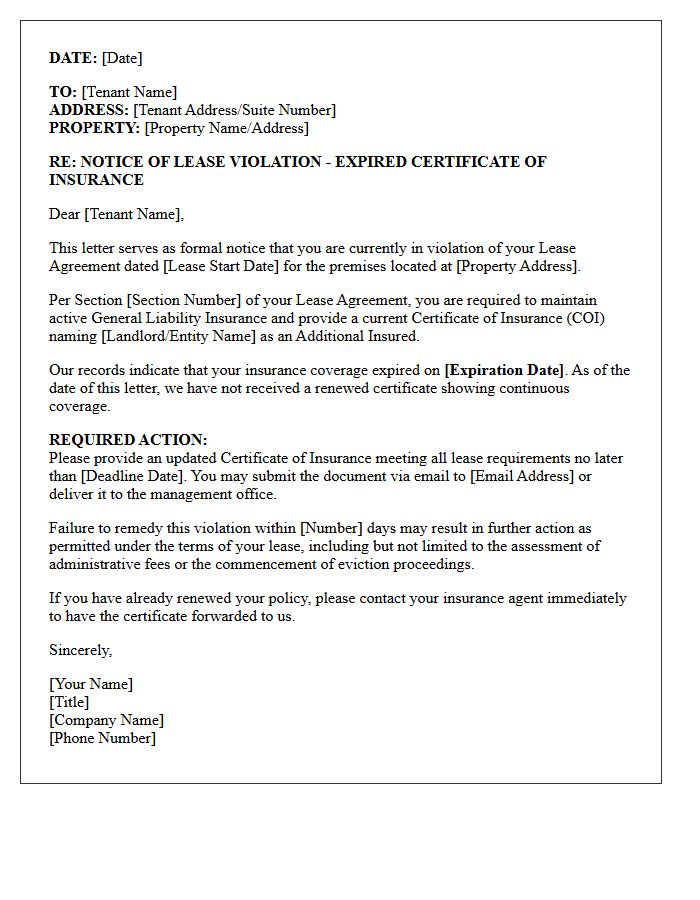
A Notice of Lease Violation regarding a lapsed Certificate of Liability Insurance (COI) is a formal legal warning issued by a landlord. This document notifies the tenant that failing to maintain active coverage breaches the rental agreement. To remedy the situation, the tenant must immediately provide proof of renewal or valid policy documentation. Maintaining continuous insurance is critical to mitigate financial risk and prevent lease termination or potential eviction proceedings resulting from a material breach of contract.
Residential Renter Certificate of Liability Insurance Requirement Letter
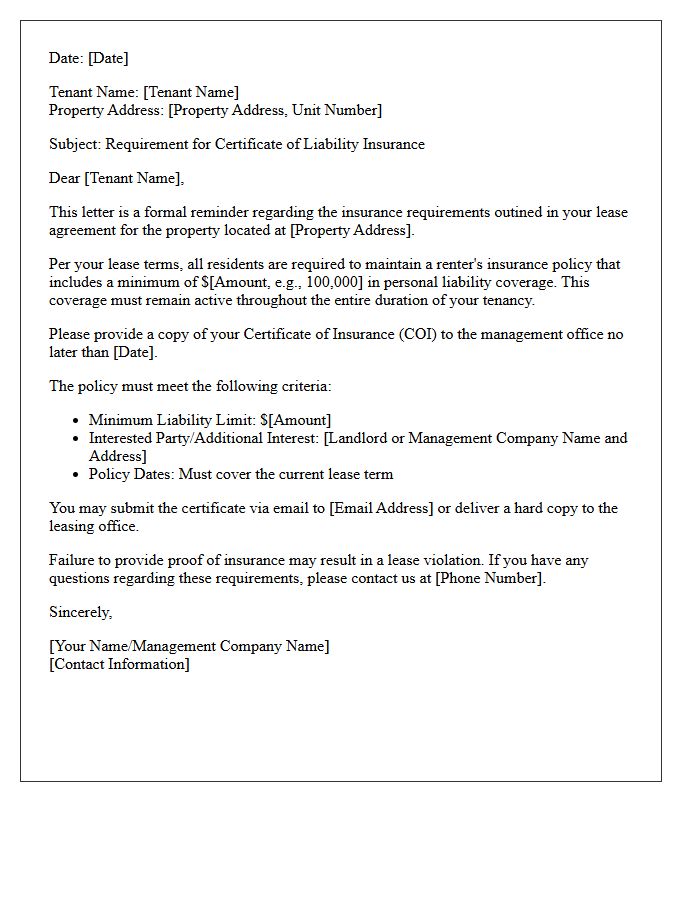
A Residential Renter Certificate of Liability Insurance Requirement Letter is a formal notice from a landlord mandating that tenants carry renter's insurance. This document ensures financial protection against property damage or personal injury claims occurring within the unit. It typically specifies the required coverage limits and lists the landlord as an "additional interested party" to receive notification of policy changes. Providing this certificate is often a lease prerequisite, shifting liability risks away from the property owner and safeguarding the tenant's personal belongings and legal exposure during the tenancy period.
Subcontractor Proof of Certificate of Liability Insurance Request Letter
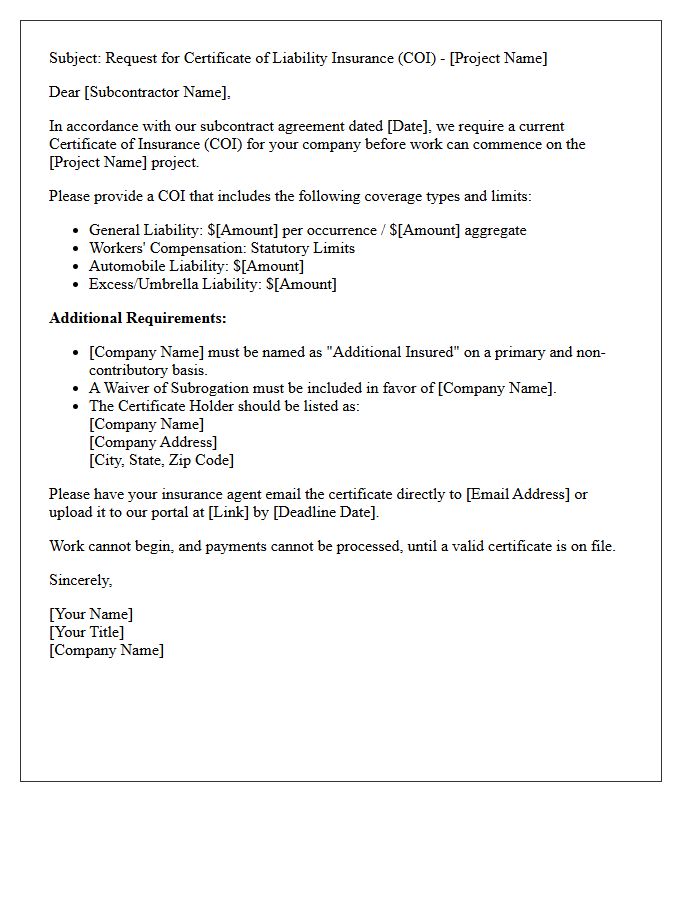
A Subcontractor Proof of Certificate of Liability Insurance Request Letter is a vital document used to verify that hired parties maintain active coverage. This formal request ensures that the subcontractor meets specific indemnity requirements before work begins. By collecting a COI, primary contractors mitigate financial risks and confirm general liability or workers' compensation protection. Failing to secure this proof can leave the hiring business liable for accidents or damages. Always specify minimum coverage limits and request to be named as an additional insured to maintain comprehensive site safety and legal compliance.
Service Suspension Due to Expired Certificate of Liability Insurance Letter
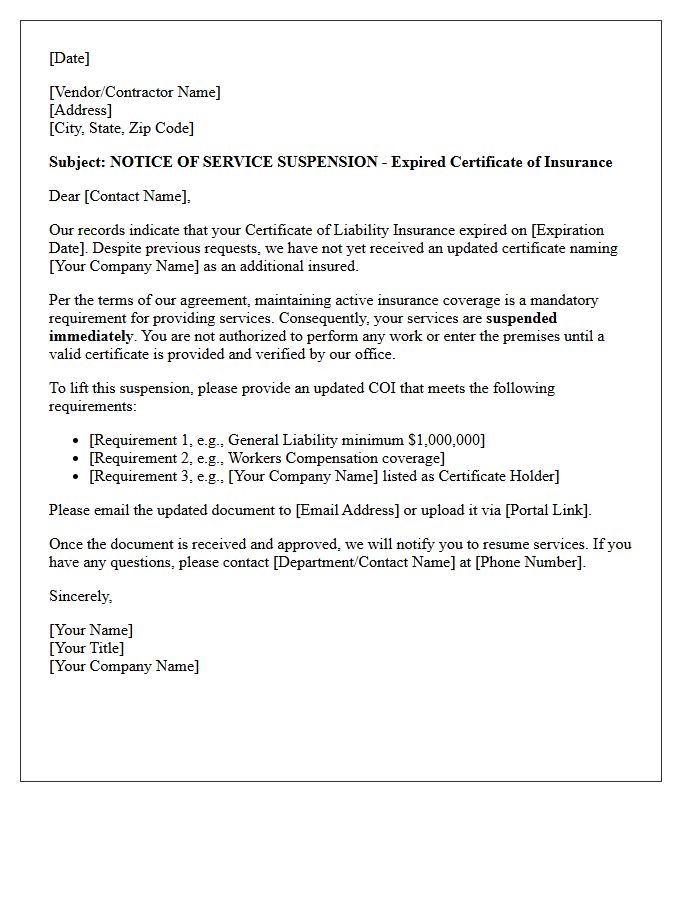
A Service Suspension occurs when your business operations are halted because your Certificate of Liability Insurance (COI) has expired. Maintaining current coverage is a mandatory contractual requirement to protect all parties from financial risk. To resume services, you must immediately provide an updated insurance document to the compliance department. Failure to submit a valid renewal will result in continued site access restrictions and potential contract termination. Always track expiration dates proactively to ensure seamless operations and avoid costly legal non-compliance issues.
New Tenant Move-In Certificate of Liability Insurance Request Letter
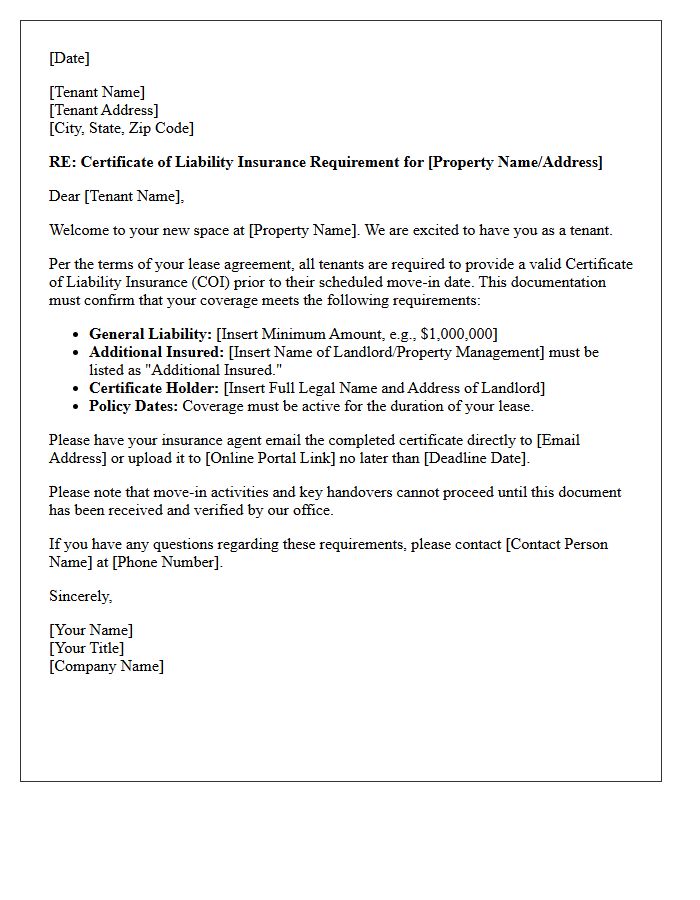
A New Tenant Move-In COI Request Letter is a formal document sent by property managers to ensure incoming residents carry adequate liability insurance. This letter protects the landlord from potential financial losses due to property damage or injuries caused during the moving process. It must specify the required coverage limits, additional insured parties, and the policy expiration date. Tenants must provide this certificate before receiving keys to verify they meet the building's safety standards and risk management protocols, ensuring a secure transition for both parties.
Property Management Routine Certificate of Liability Insurance Audit Letter
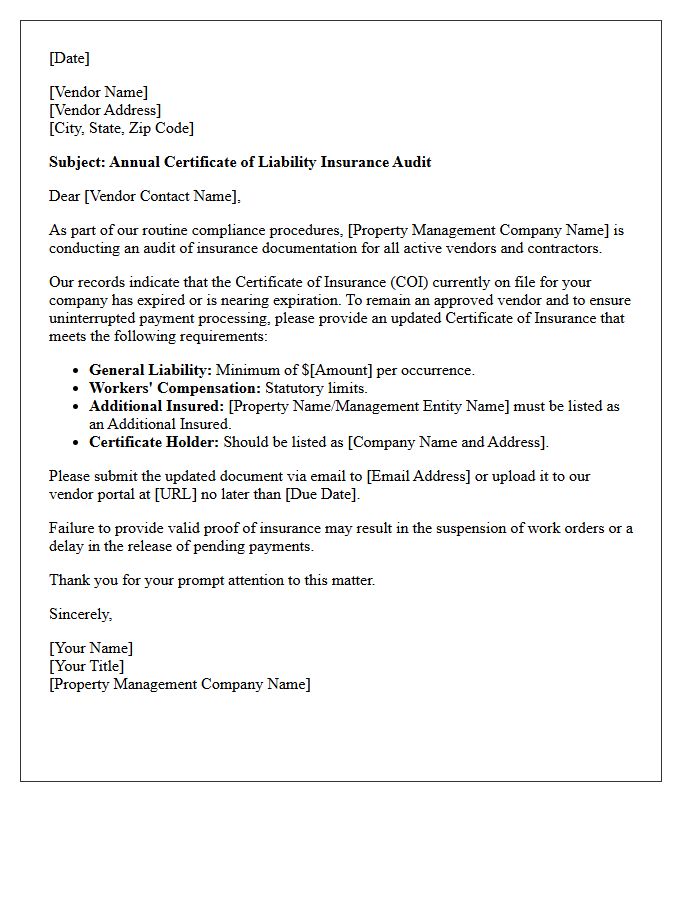
A property management routine Certificate of Liability Insurance (COI) audit letter is a formal request to verify that vendors or tenants maintain active coverage. This process ensures compliance with lease or service agreements, protecting the property owner from legal and financial risks. The audit confirms that insurance policies meet specific indemnification requirements and have not expired. Regular monitoring prevents liability gaps, ensuring that any damages or accidents occurring on the premises are covered by the responsible party's provider rather than the management's own policy.
How do I request an updated Certificate of Liability Insurance (COI) from a vendor?
To request an updated Certificate of Liability Insurance, you should send a formal written request via email or letter to the vendor or their insurance broker. The request should specify the required coverage types, minimum policy limits, and name your organization as the "Certificate Holder" or "Additional Insured" as per your contractual requirements.
What information should be included in a COI renewal request letter?
A standard request letter should include the vendor's name, the specific insurance policies required (General Liability, Workers' Comp, etc.), minimum coverage limits, the expiration date of the current certificate, and the formal name and address of the entity to be listed as the Certificate Holder.
Why is it necessary to request an updated Certificate of Insurance annually?
Requesting an updated COI annually is critical for risk management to ensure that a vendor's insurance coverage has not lapsed, been cancelled, or reduced in limit. It verifies that the vendor remains compliant with the insurance requirements outlined in your business agreement or contract.
When should I send a request for a new Certificate of Liability Insurance?
It is best practice to send a request for an updated COI approximately 30 days before the current certificate's expiration date. This allows the vendor and their insurance agent sufficient time to process the renewal and issue the new document without a gap in verified coverage.
Can I request to be added as an "Additional Insured" on an updated COI?
Yes, when requesting an updated COI, you should explicitly state if your organization requires "Additional Insured" status. This provides your company with coverage under the vendor's policy for claims arising out of the vendor's operations or work performed on your behalf.

Comments