
Securing long-term talent requires evaluating a new hire's performance through direct client insights. Sending a professional feedback request letter after a candidate's probationary period helps identify strengths and areas for improvement while strengthening your client partnership. This proactive communication ensures alignment and long-term satisfaction for all stakeholders. To help you get started, below are some ready to use templates.

Image cover: Securing Client Feedback: Professional Post-Probation Performance Review Templates
Letter Samples List
- Post-Probation Candidate Performance Feedback Request Letter
- Client Feedback Request Letter Following Candidate Probation
- End of Probationary Period Client Feedback Letter
- Candidate Placement Success and Feedback Request Letter
- Probation Completion Client Satisfaction Feedback Letter
- Recruitment Quality Assurance and Client Feedback Letter
- Post-Probation Check-In and Feedback Request Letter
- Executive Search Post-Probation Evaluation Letter
- Talent Acquisition Service Post-Probation Feedback Letter
- Candidate Integration and Probation Review Feedback Letter
- New Hire Probationary Period Feedback Request Letter
- Post-Probation Client Alignment and Feedback Letter
Post-Probation Candidate Performance Feedback Request Letter
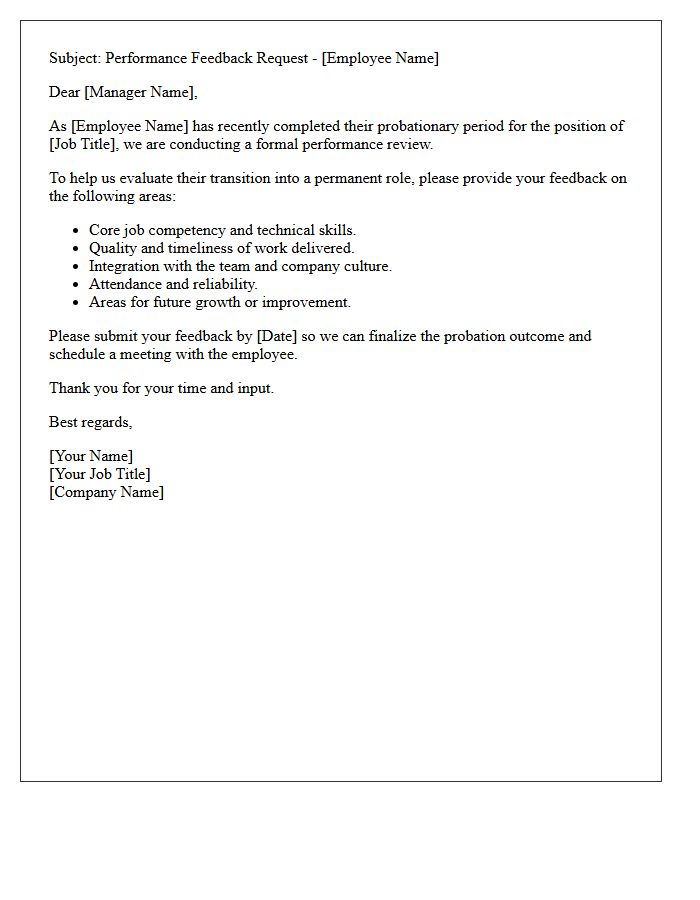
A Post-Probation Candidate Performance Feedback Request Letter is a professional tool used to evaluate a new hire's integration and output. It formalizes the transition from probationary status to permanent employment by gathering structured insights from supervisors. This document should highlight specific achievements, identify areas for ongoing professional development, and clarify long-term expectations. Sending this request ensures transparency, promotes a culture of continuous improvement, and confirms whether the individual aligns with the company's core values and operational goals after their initial trial period.
Client Feedback Request Letter Following Candidate Probation
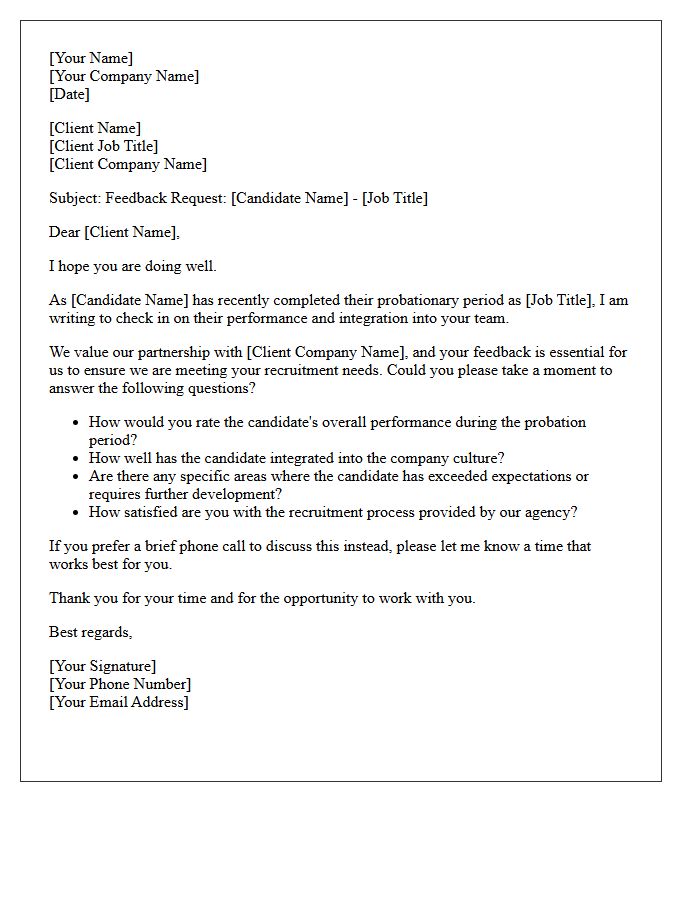
A client feedback request letter after a candidate completes probation is essential for evaluating long-term placement success. This communication helps recruiters measure the employee's performance and cultural fit within the organization. By gathering professional insights, you can refine your talent acquisition strategies and strengthen the client relationship. Ensure the request is brief, professional, and focuses on specific performance benchmarks. Using this quality assurance step demonstrates your commitment to excellence, helps identify potential training needs, and secures future business through proactive service and measurable results.
End of Probationary Period Client Feedback Letter
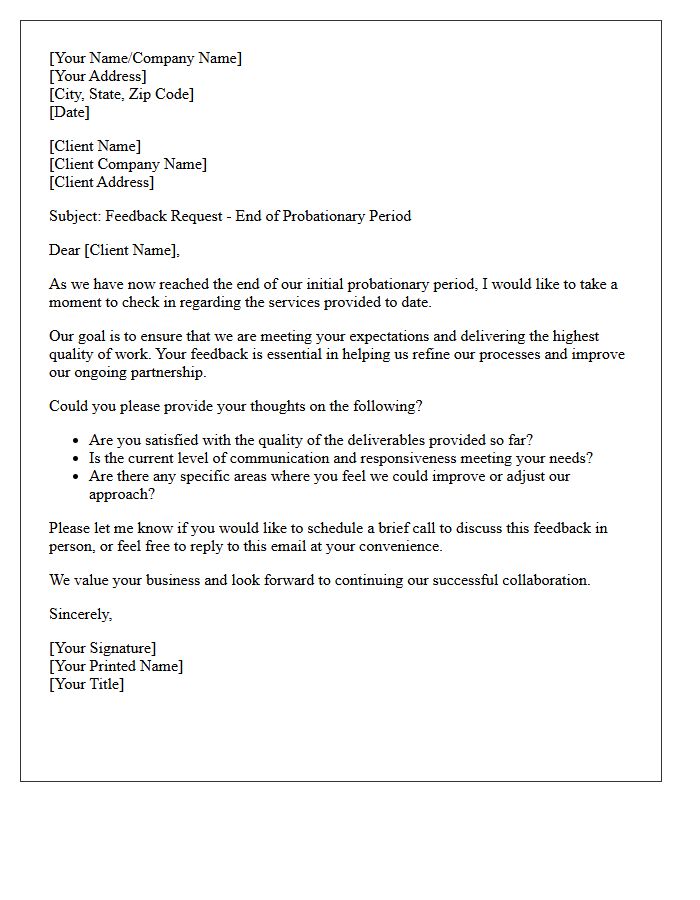
An End of Probationary Period Client Feedback Letter is a professional document used to evaluate a new employee's performance from the client's perspective. It provides essential insights into service quality, communication, and technical proficiency. This feedback helps management decide whether to confirm permanent employment or extend the trial. Including specific examples of successes or areas for improvement ensures a transparent evaluation process. Timely submission of this letter is crucial for maintaining high service standards and fostering long-term accountability within the project team.
Candidate Placement Success and Feedback Request Letter
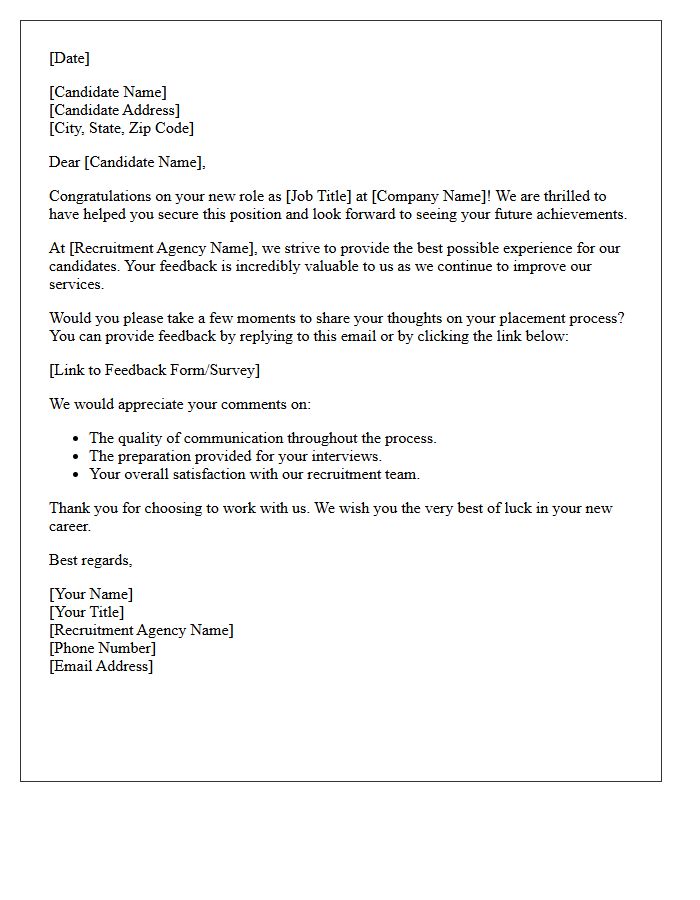
Sending a candidate placement success letter formalizes the hiring outcome while strengthening professional relationships. This communication should clearly state the start date and role details to ensure a smooth onboarding transition. It is equally essential to include a feedback request to gain insights into the recruitment experience. Gathering this information helps optimize your hiring strategy and improves future talent engagement. Maintaining this dual approach fosters long-term networking and demonstrates a commitment to continuous improvement within your talent acquisition process.
Probation Completion Client Satisfaction Feedback Letter
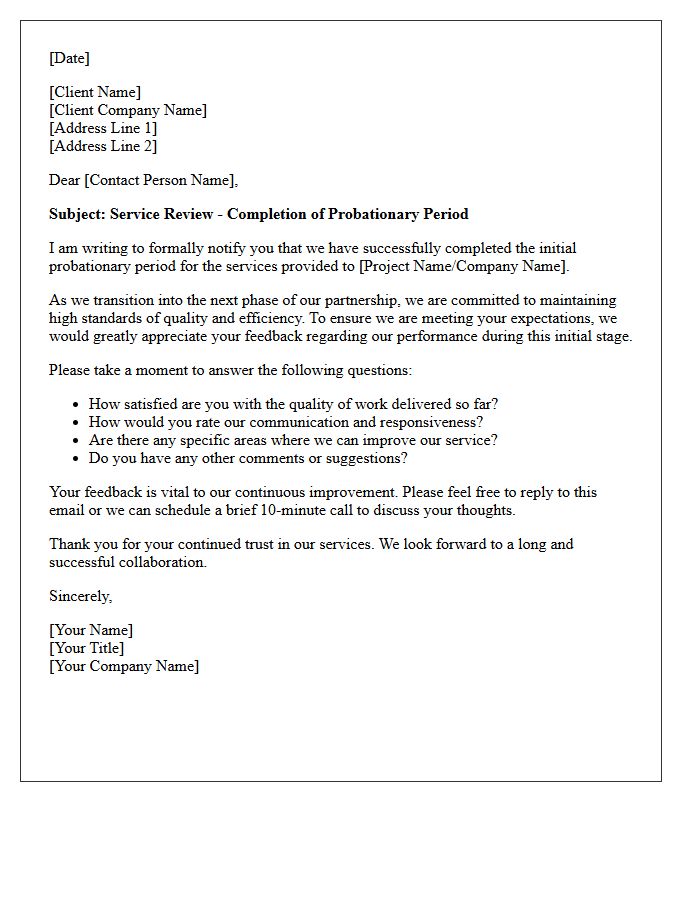
A Probation Completion Client Satisfaction Feedback Letter serves as a professional bridge between a service provider and a client. It formally marks the successful conclusion of a supervisory period while collecting vital data on service quality. This document is essential for quality assurance and continuous improvement. By encouraging honest client input, organizations can refine their processes, enhance communication strategies, and demonstrate a commitment to excellence. Effectively utilizing this feedback helps strengthen future outcomes and ensures that compliance standards are consistently met through evidence-based adjustments.
Recruitment Quality Assurance and Client Feedback Letter
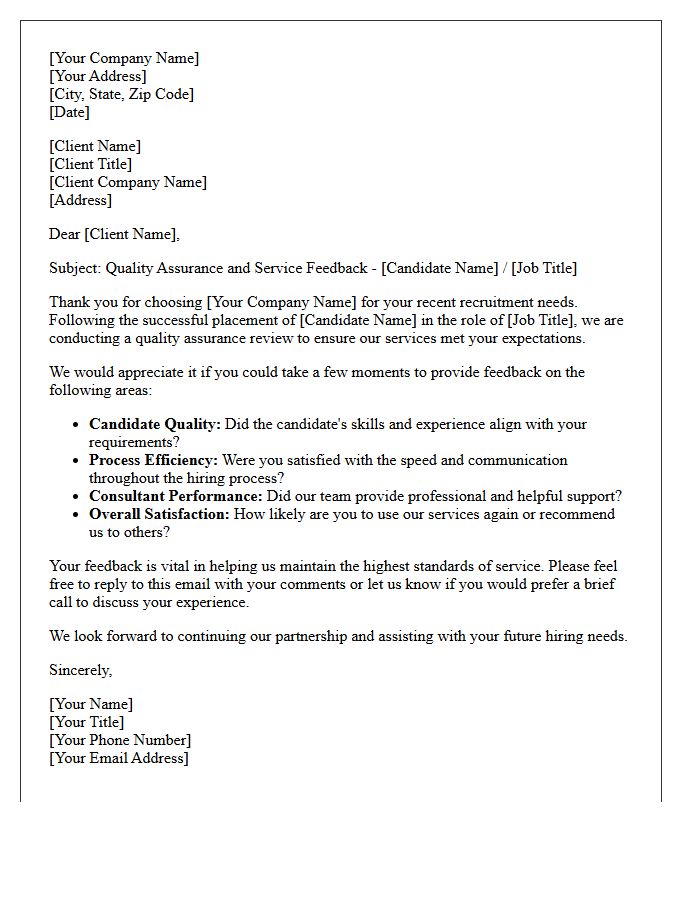
A Recruitment Quality Assurance process ensures service excellence by evaluating candidate placement accuracy and compliance. A Client Feedback Letter serves as a vital tool to measure satisfaction and identify operational gaps. By highlighting specific performance metrics and gathering direct input from hiring managers, agencies can refine their selection criteria. This proactive communication builds trust and long-term partnerships. Implementing a structured feedback loop is essential for maintaining high recruitment standards and ensuring that provided talent consistently aligns with organizational goals and cultural expectations.
Post-Probation Check-In and Feedback Request Letter
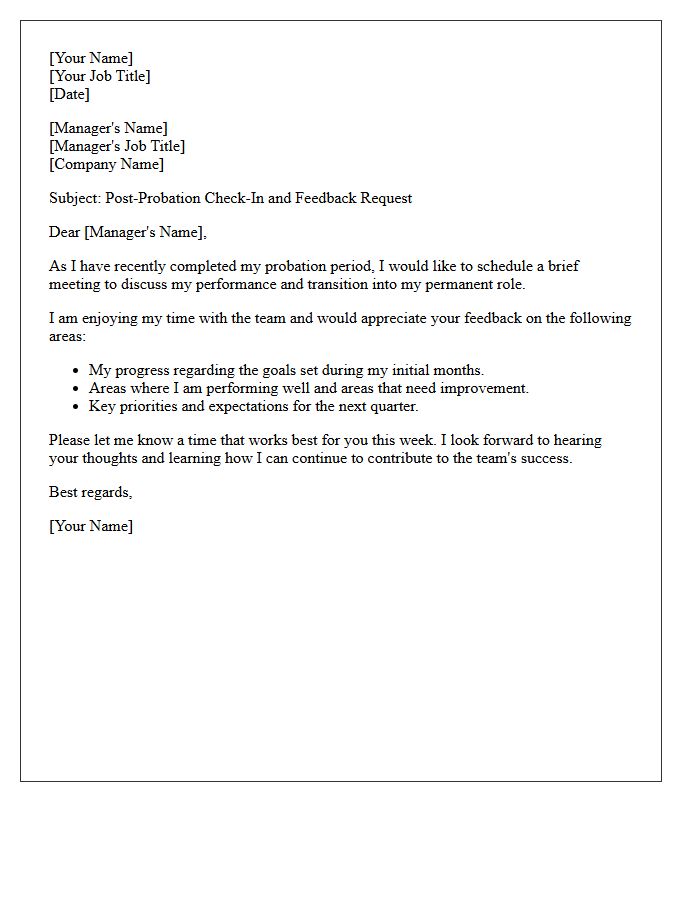
A post-probation check-in letter is a professional tool used to confirm permanent employment status after a trial period. This communication should formally acknowledge your successful transition while requesting constructive performance feedback from management. It serves to align future goals, clarify expectations, and document your achievements within the company. By proactively seeking input, you demonstrate a commitment to professional growth and long-term value, ensuring that both you and your employer remain satisfied with the working relationship and established career trajectory.
Executive Search Post-Probation Evaluation Letter
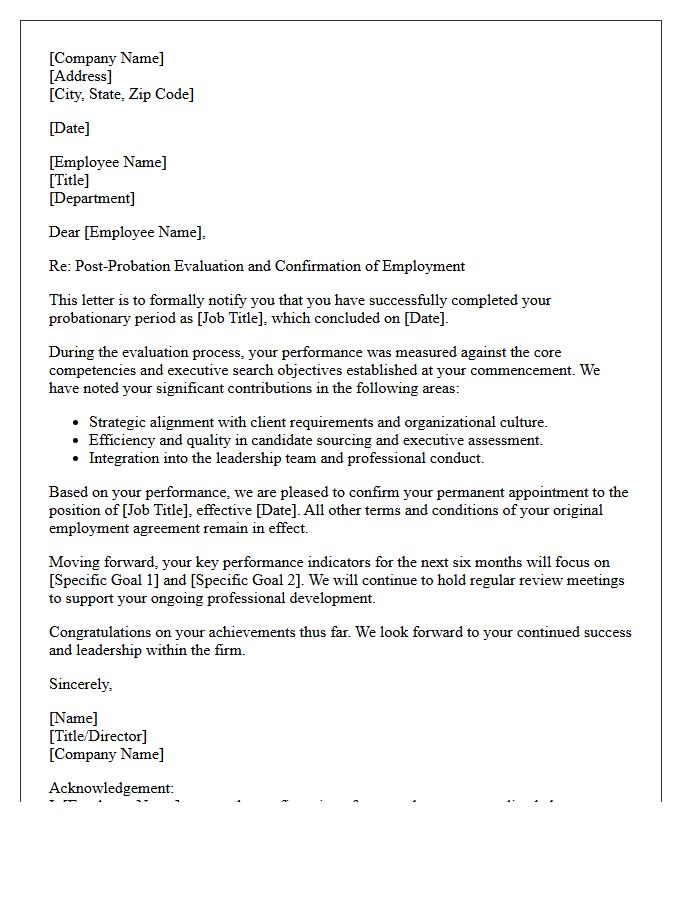
An Executive Search Post-Probation Evaluation Letter formally documents a leader's performance after their initial introductory period. This essential performance review confirms whether the executive has met strategic goals and integrated into the corporate culture. It serves as a legal record for contractual confirmation or termination. A well-structured letter outlines achieved milestones, identifies areas for continued growth, and officially solidifies the executive's permanent appointment within the organization, ensuring alignment between leadership expectations and organizational vision.
Talent Acquisition Service Post-Probation Feedback Letter
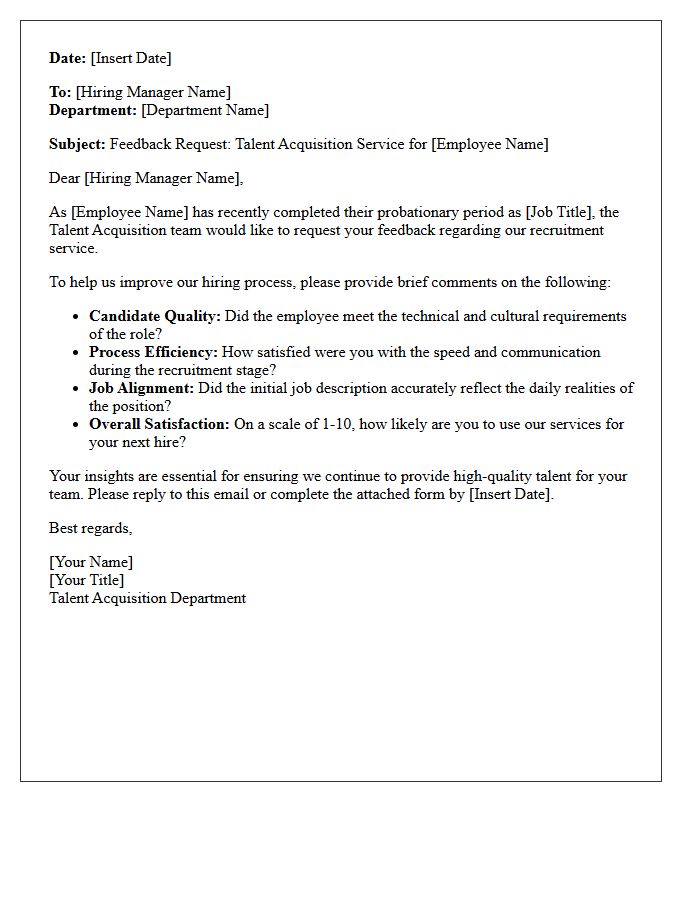
A Post-Probation Feedback Letter is a formal document confirming a new hire's transition to permanent status. It should clearly state the final employment decision based on performance metrics and cultural fit. Effective letters provide constructive insights regarding strengths and areas for further growth, ensuring the employee feels valued. For talent acquisition teams, documenting this milestone is essential for legal compliance and long-term retention. Use this communication to align future expectations, set professional goals, and reinforce the company's commitment to the individual's career progression within the organization.
Candidate Integration and Probation Review Feedback Letter
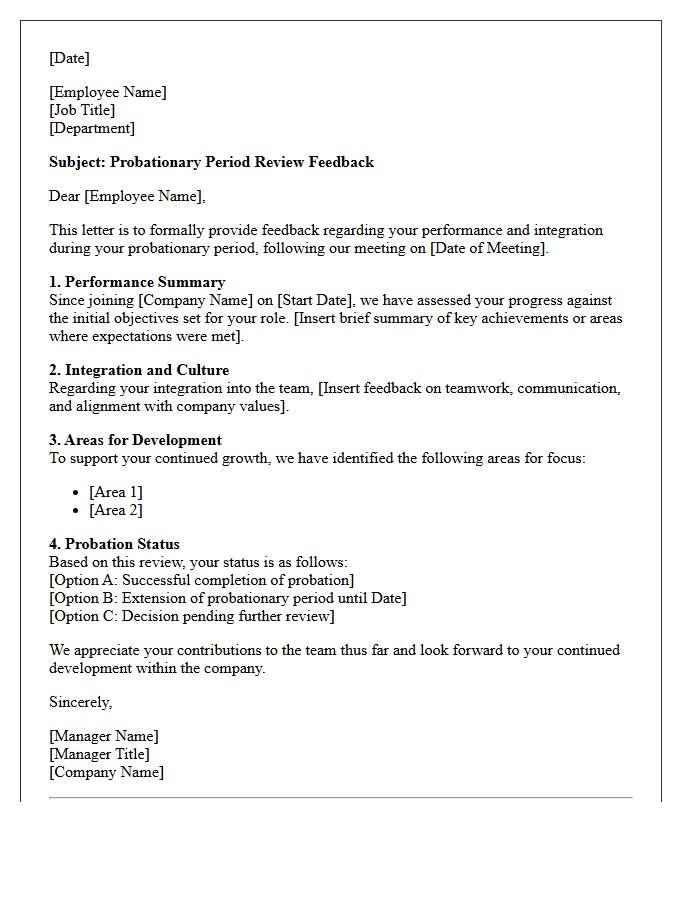
A Candidate Integration and Probation Review Feedback Letter is a critical document used to evaluate a new hire's performance. It confirms whether an employee has successfully passed their probationary period or requires further development. This letter should clearly outline achieved milestones, specific areas for improvement, and formal expectations moving forward. Providing constructive feedback during this phase ensures alignment with company culture and role requirements. Proper documentation protects the organization legally and supports the onboarding process, fostering professional growth and long-term retention through transparent communication and structured performance tracking.
New Hire Probationary Period Feedback Request Letter
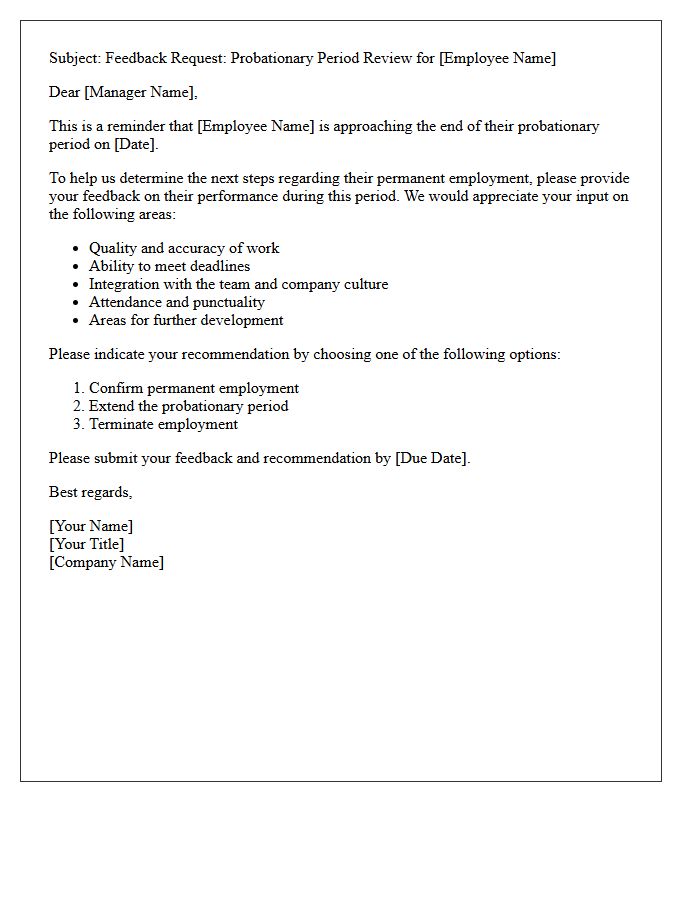
A New Hire Probationary Period Feedback Request Letter is a professional tool used to evaluate a recruit's performance during their initial trial months. It invites the employee to share their perspective while allowing management to document progress, address skill gaps, and align expectations. This transparent communication fosters engagement and determines if the individual is a long-term cultural fit. Formalizing this process ensures that both parties understand the criteria for permanent employment, reducing turnover and clarifying professional goals before the official probationary deadline concludes.
Post-Probation Client Alignment and Feedback Letter
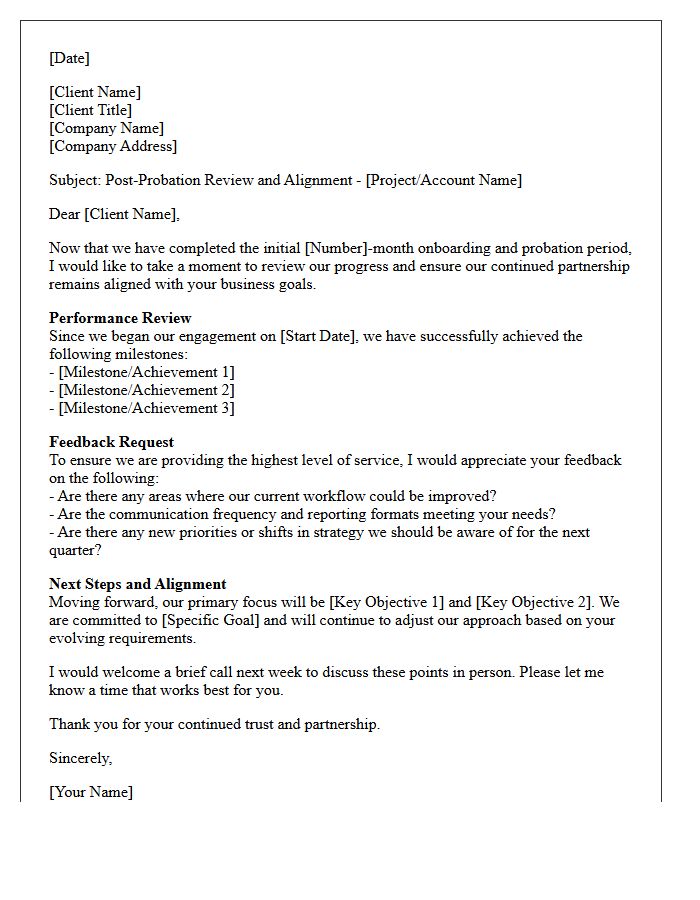
A post-probation letter is a strategic document used to formalize long-term employment after a trial period. This communication serves as a performance milestone, aligning organizational expectations with employee goals. It should explicitly confirm the transition to permanent status while documenting feedback on core competencies and areas for growth. By providing structured feedback, employers foster professional development and strengthen the working relationship. Clear documentation ensures transparency, reduces future misunderstandings, and reinforces the employee's value within the company's broader mission and operational objectives.
What is the purpose of a feedback request letter after a candidate's probationary period?
The purpose is to formally evaluate the new hire's performance, cultural fit, and long-term potential while strengthening the partnership between the recruitment agency and the client.
When is the best time to send a probationary period feedback request?
You should send the request approximately one to two weeks before the official end of the probationary period to allow the client sufficient time to review the candidate's performance and decide on permanent employment.
What key information should be included in a feedback request letter to a client?
The letter should include the candidate's name, their job title, the specific date the probation ends, a clear call-to-action for feedback, and a structured set of questions or a link to an evaluation form.
How does collecting post-probation feedback benefit the recruitment process?
It provides critical data on the quality of the placement, helps refine future candidate sourcing criteria, identifies potential training needs for the hire, and ensures client satisfaction with the recruitment service.
What should you do if a client provides negative feedback during the probation review?
If feedback is negative, act as a mediator to address specific concerns, determine if additional training can resolve the issues, or begin the replacement process if the candidate does not meet the essential requirements of the role.


Comments