
Optimizing your hiring process requires understanding client satisfaction. A professional feedback request letter helps recruitment agencies identify strengths and improve candidate placement quality. Strengthening these partnerships ensures long-term business growth and service excellence. Learn how to solicit constructive insights and maintain professional relationships effectively. To help you get started, below are some ready to use templates.

Image cover: Winning Client Feedback: Recruitment Agency Service Review Templates
Letter Samples List
- Post-Placement Client Satisfaction Feedback Request Letter
- Executive Search Service Evaluation Request Letter
- Temporary Staffing Performance Feedback Letter
- Annual Recruitment Partnership Review Letter
- Unsuccessful Placement Process Feedback Letter
- Candidate Quality and Onboarding Feedback Request Letter
- Agency Communication and Responsiveness Evaluation Letter
- End of Probation Period Client Feedback Letter
- Contract Employee Engagement Service Feedback Letter
- Recruitment Account Manager Performance Assessment Letter
- Permanent Hire Placement Success Feedback Letter
- Client Experience and Agency Improvement Request Letter
Post-Placement Client Satisfaction Feedback Request Letter
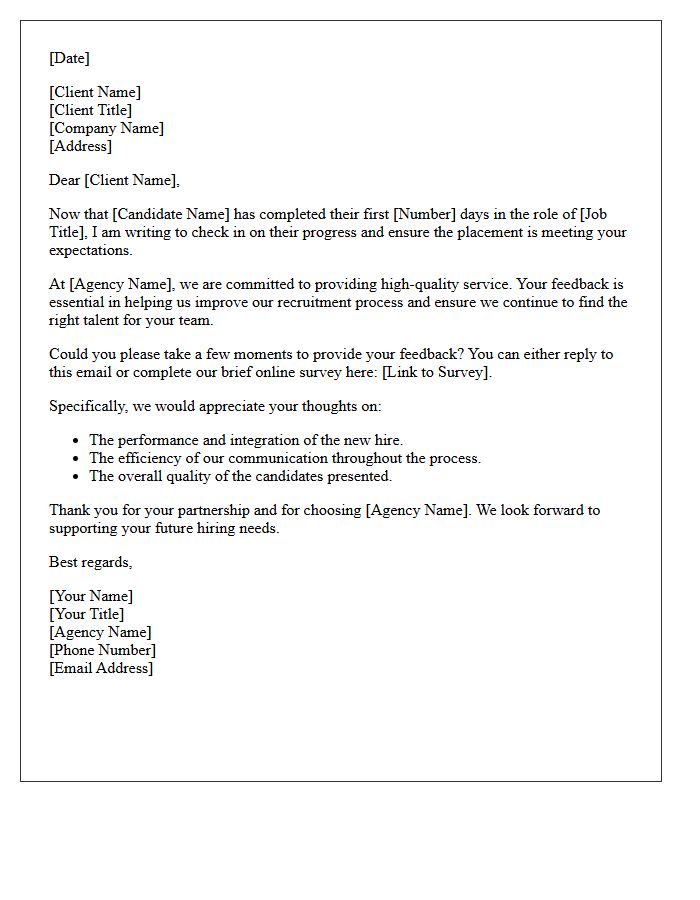
A post-placement client satisfaction feedback request letter is a critical tool for maintaining quality assurance within recruitment. This professional communication seeks candid evaluations regarding the candidate's performance and the overall hiring process. By gathering these insights, agencies can refine their vetting strategies and strengthen long-term partnerships. Timely requests demonstrate accountability and a commitment to excellence, ensuring that the talent provided aligns perfectly with the employer's expectations. Use this feedback to identify operational strengths and address potential areas for improvement, ultimately boosting client retention and service value.
Executive Search Service Evaluation Request Letter
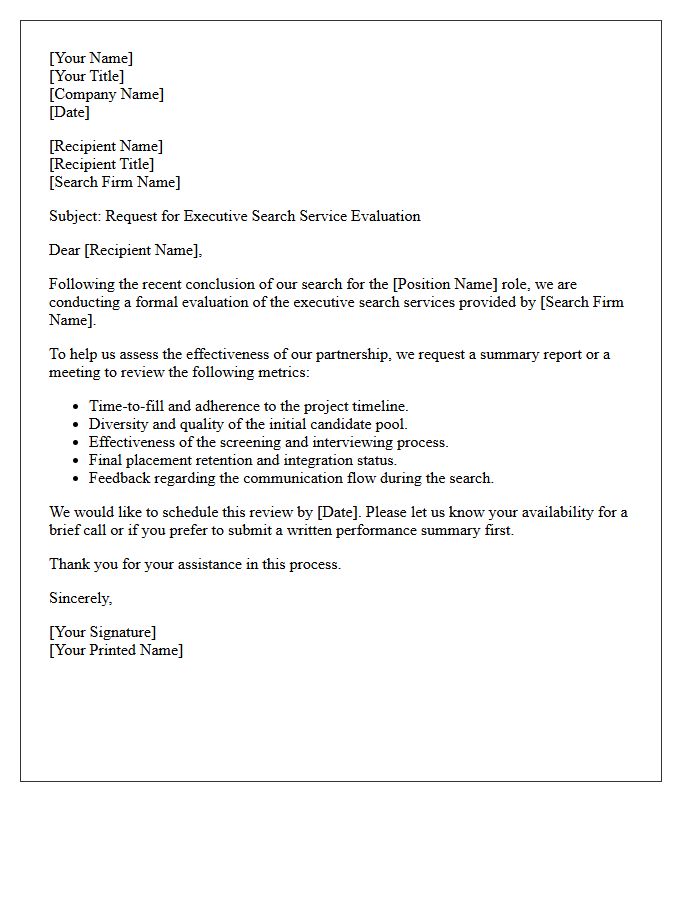
An Executive Search Service Evaluation Request Letter is a formal document used to assess the performance of a recruitment firm. It ensures that the headhunter meets specific performance benchmarks, such as candidate quality, placement speed, and cultural fit. This letter initiates a structured review process to verify if the agency provides a high return on investment for leadership hiring. By documenting expectations and results, companies can optimize their talent acquisition strategy and decide whether to renew professional partnerships with their search consultants.
Temporary Staffing Performance Feedback Letter
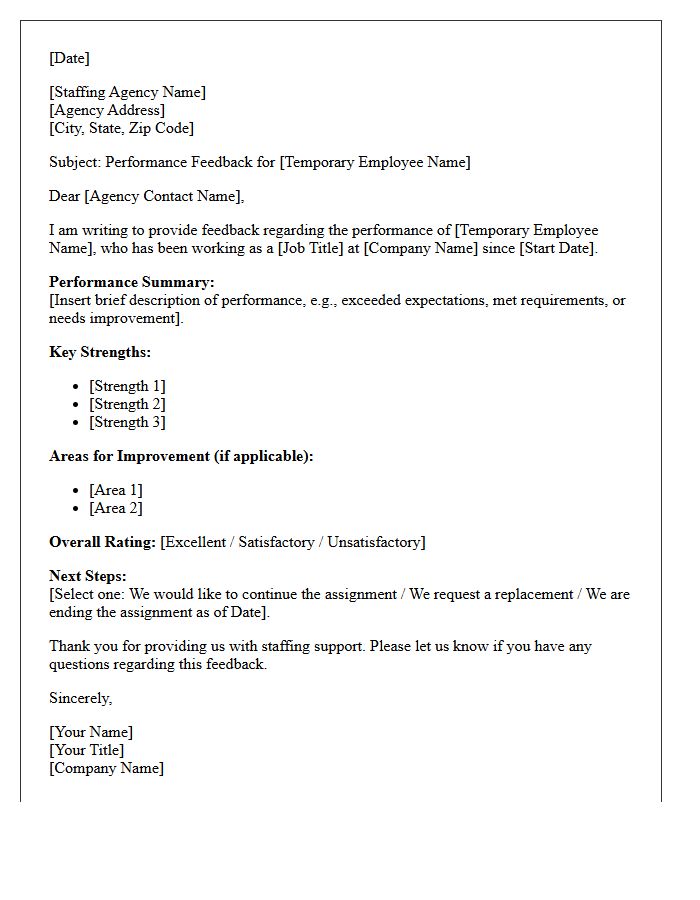
A Temporary Staffing Performance Feedback Letter serves as a formal evaluation of an interim employee's contributions. This document is essential for maintaining high quality standards and ensuring clear communication between the client company and the staffing agency. It should objectively highlight specific achievements, behavioral traits, and technical proficiency. Providing structured feedback helps agencies refine their talent selection process and assists temporary workers in professional development. Documenting performance ensures accountability and simplifies decisions regarding contract extensions, permanent hiring transitions, or the termination of assignments based on merit.
Annual Recruitment Partnership Review Letter
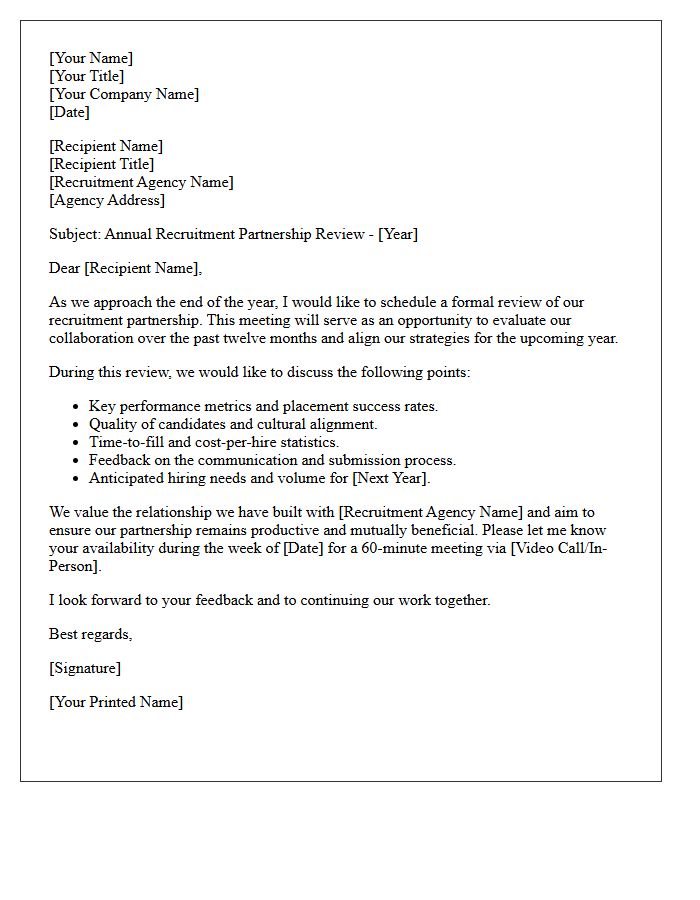
The Annual Recruitment Partnership Review Letter is a formal document used to evaluate the efficiency of your hiring strategy. It serves as a performance benchmark between organizations and their staffing partners. By reviewing key metrics such as time-to-hire, candidate quality, and cost-per-hire, this letter ensures both parties align with future business goals. It provides a structured opportunity to discuss service level agreements, address communication gaps, and renegotiate terms. Ultimately, this review optimizes your talent acquisition pipeline, ensuring your partnership remains productive, transparent, and focused on long-term recruitment success.
Unsuccessful Placement Process Feedback Letter
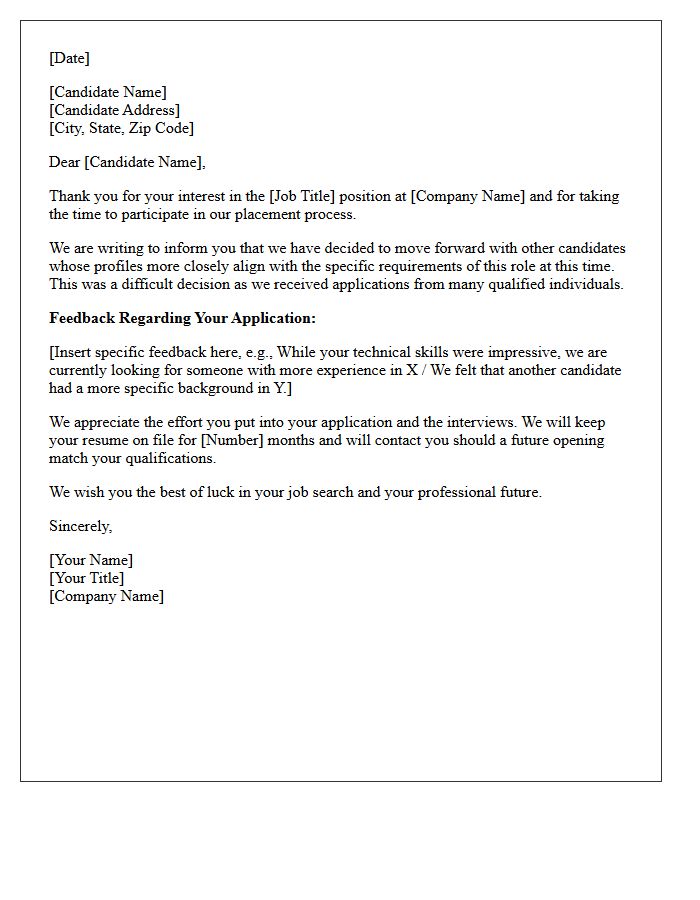
An Unsuccessful Placement Process Feedback Letter is a professional document sent to candidates who were not selected for a position. It provides constructive insights regarding their interview performance and skill gaps. Delivering clear reasons for the decision helps maintain a positive employer brand and supports the applicant's future career development. For employers, it ensures transparency and encourages potential talent to reapply when better suited. Including specific, actionable feedback is the most important element for fostering professional growth and maintaining recruitment integrity during the hiring cycle.
Candidate Quality and Onboarding Feedback Request Letter
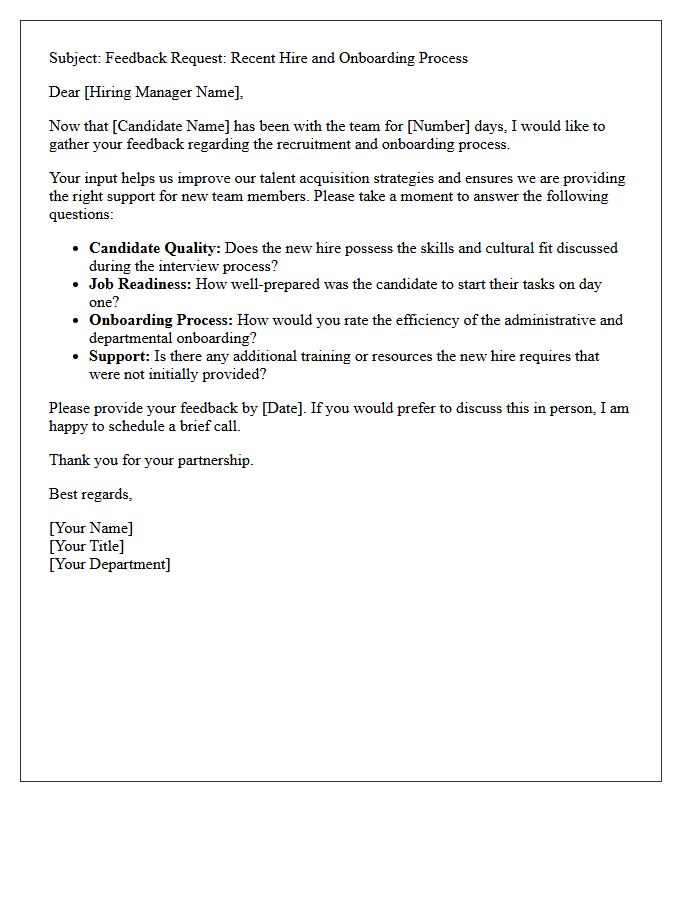
A Candidate Quality and Onboarding Feedback Request Letter is a vital tool for refining your recruitment strategy. It allows hiring managers to assess whether a new hire meets expectations while gathering the candidate's first impressions of the integration process. By soliciting structured input, organizations can identify gaps in talent acquisition and improve retention. Sending this request early ensures timely insights into the alignment between job descriptions and actual roles, ultimately optimizing the employee experience and long-term organizational performance.
Agency Communication and Responsiveness Evaluation Letter
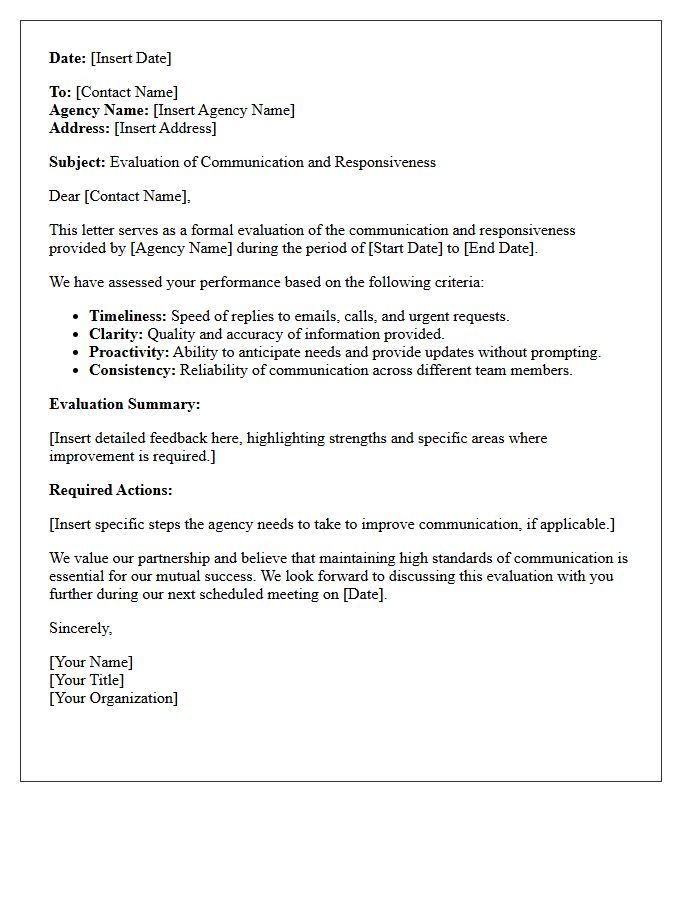
An Agency Communication and Responsiveness Evaluation Letter is a formal document used to assess how effectively a partner manages client interactions. It objectively measures response times, clarity of information, and overall reliability. This evaluation identifies critical communication gaps and ensures that service level agreements are met. By providing structured feedback, organizations can improve accountability and strengthen professional relationships. It serves as a vital tool for performance tracking and strategic alignment between agencies and their stakeholders to ensure project success and long-term efficiency.
End of Probation Period Client Feedback Letter
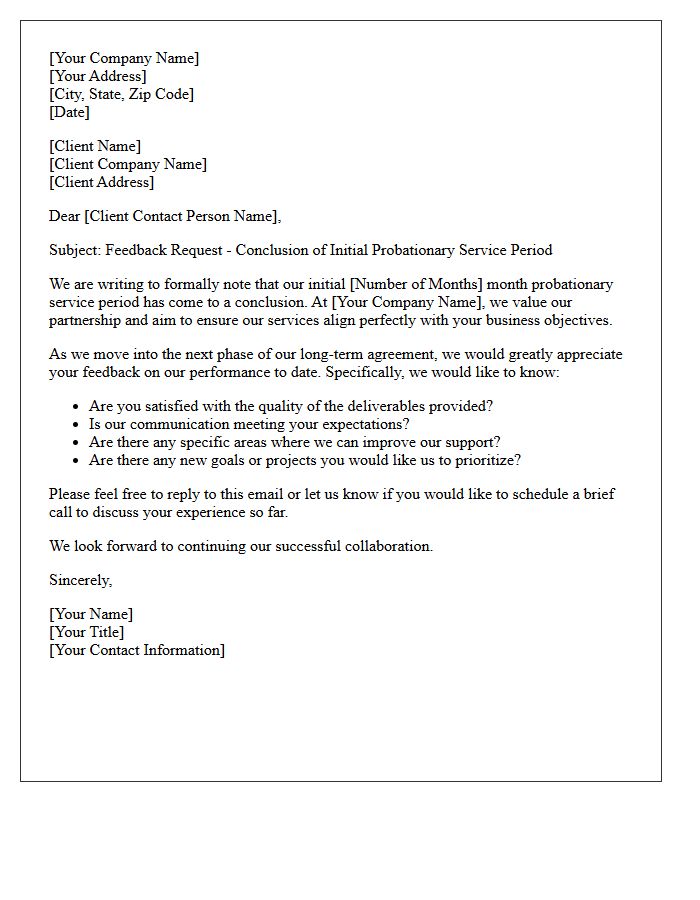
An End of Probation Period Client Feedback Letter is a professional document used to evaluate a new employee's performance from a stakeholder's perspective. It provides objective insights into service quality and interpersonal skills during the trial phase. Collecting this feedback is essential for making informed retention decisions and identifying specific training needs. A well-structured letter fosters transparency between the business and its clients while ensuring the candidate aligns with company standards. This formal evaluation serves as a critical performance benchmark before confirming permanent employment status.
Contract Employee Engagement Service Feedback Letter
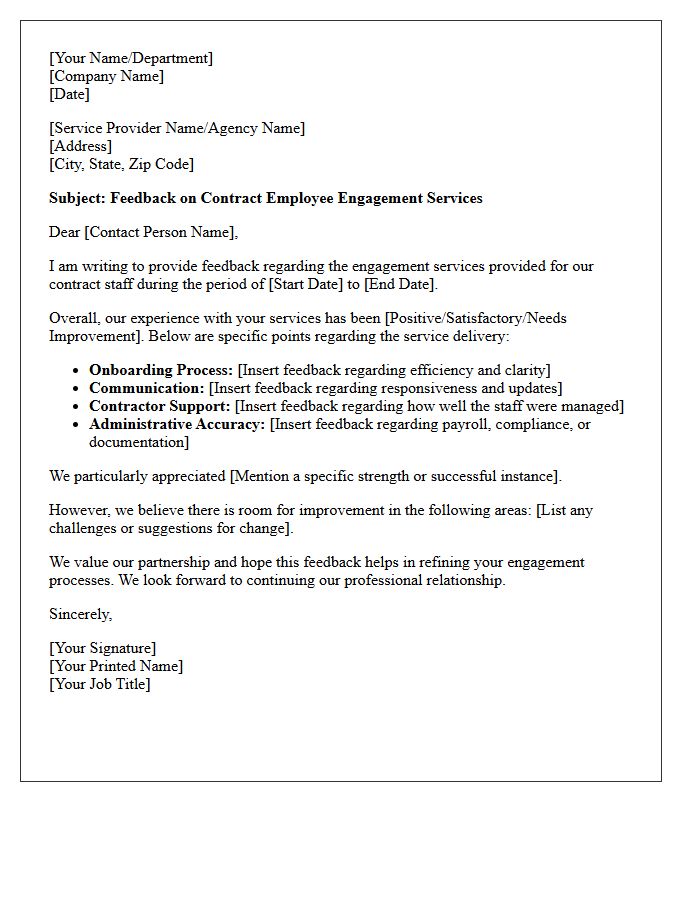
A Contract Employee Engagement Service Feedback Letter is a professional tool used to evaluate the satisfaction and performance of outsourced staff. It bridge the gap between management and temporary workers, ensuring alignment with organizational goals. Key elements include assessing workplace culture, resource availability, and communication effectiveness. By prioritizing employee sentiment, companies can reduce turnover and optimize productivity. This formal document provides actionable insights into the contractor experience, allowing firms to refine their engagement strategies and maintain high standards of operational excellence through structured, qualitative performance reviews.
Recruitment Account Manager Performance Assessment Letter
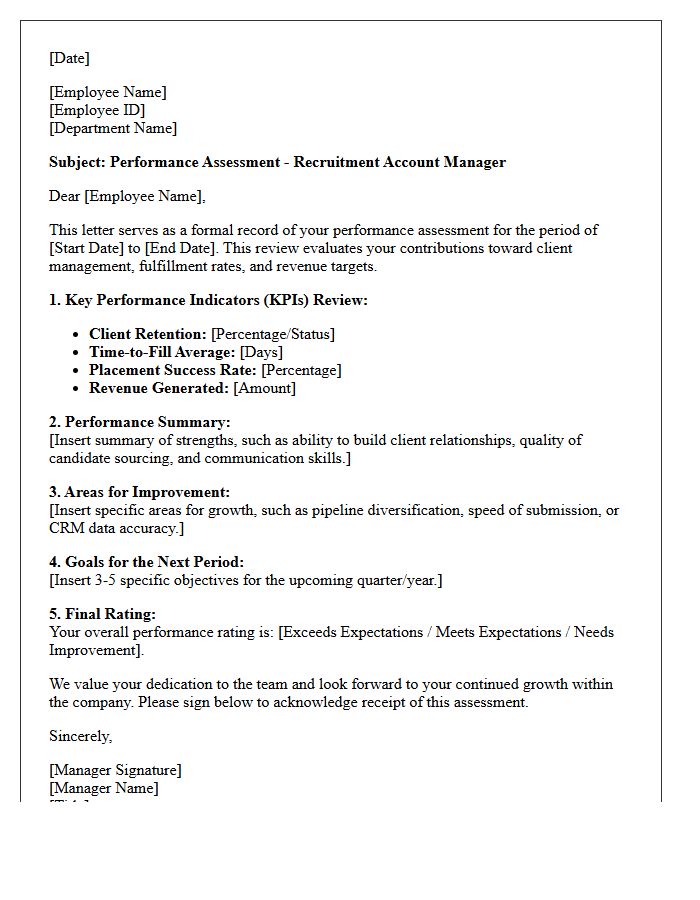
A Recruitment Account Manager Performance Assessment Letter evaluates core metrics like client retention, placement ratios, and revenue growth. It identifies key strengths in relationship management and highlights areas for strategic improvement. This formal document serves as a vital record for career progression, ensuring alignment between individual output and agency goals. By focusing on KPI achievement and communication skills, the assessment fosters professional accountability and long-term success within the competitive talent acquisition landscape.
Permanent Hire Placement Success Feedback Letter
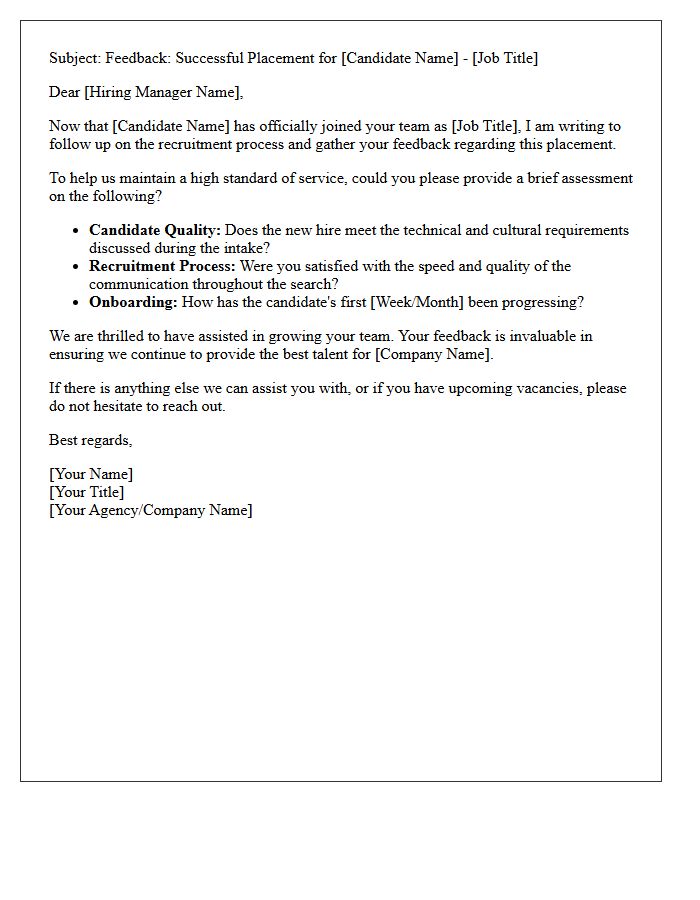
A Permanent Hire Placement Success Feedback Letter is a vital document confirming a candidate's successful integration into a new role. It serves as a formal validation of the recruitment process, capturing essential performance metrics and cultural alignment. By documenting specific achievements during the probationary period, employers provide constructive insights that strengthen future hiring strategies. This professional correspondence fosters transparency between the agency and client, ensuring long-term retention and mutual satisfaction. Use this feedback to refine talent acquisition workflows and celebrate a successful match that drives organizational growth.
Client Experience and Agency Improvement Request Letter
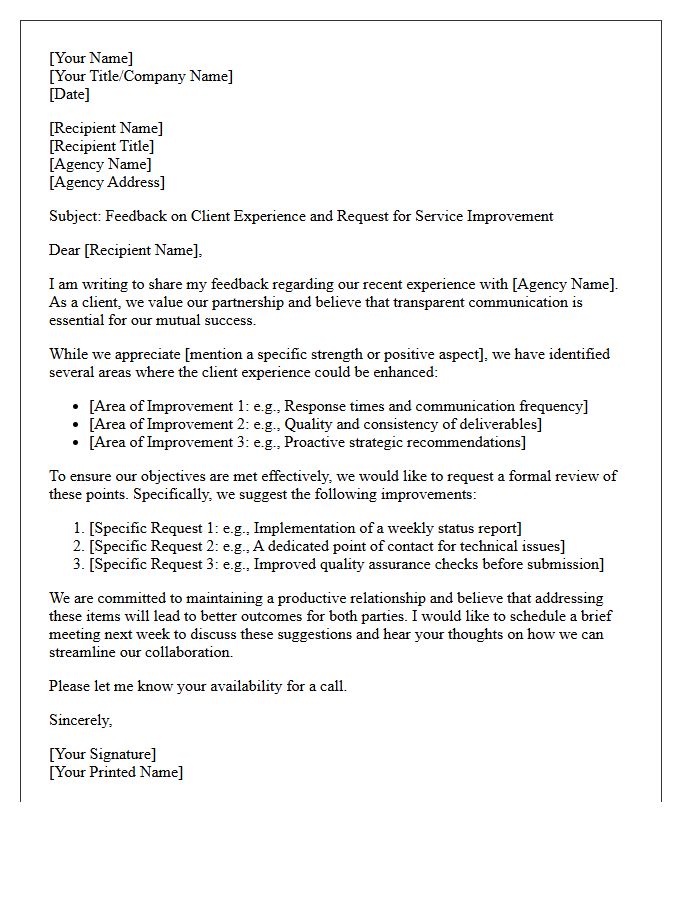
A Client Experience and Agency Improvement Request Letter is a professional document designed to provide constructive feedback regarding service quality. It highlights specific pain points while suggesting actionable solutions to enhance the partnership. Sending this letter fosters transparency and holds the agency accountable for performance gaps. The primary goal is to optimize workflows and ensure that future deliverables align with strategic business objectives. By formalizing your concerns, you initiate a collaborative dialogue that encourages the agency to refine its processes, ultimately leading to a more efficient and mutually beneficial professional relationship.
How should I structure a feedback request letter for recruitment services?
A professional feedback request should include a clear reference to the specific placement or project, a brief explanation of why their input is valued, 3-5 targeted questions regarding candidate quality and communication, and a direct link or method for providing the response.
What is the best time to send a feedback survey to a recruitment client?
The ideal time to send a feedback request is typically 30 to 45 days after a candidate's start date. This timeframe allows the client enough time to assess the new hire's performance and cultural fit while the recruitment process is still fresh in their mind.
What specific questions should I ask in a recruitment feedback form?
Focus on key performance indicators such as the quality of the shortlisted candidates, the speed of the recruitment lifecycle, the professionalism of the consultant's communication, and whether the hired candidate met the specific technical requirements of the role.
How can I encourage clients to respond to recruitment service feedback requests?
To increase response rates, keep the survey concise (less than 3 minutes to complete), use a mix of rating scales and open-ended questions, and explain how their feedback will be used to tailor future talent searches specifically for their company's needs.
Why is collecting client feedback essential for recruitment agencies?
Collecting feedback is vital for improving service delivery, identifying gaps in the screening process, and strengthening long-term client relationships. Additionally, positive testimonials gathered through feedback requests serve as powerful social proof for marketing recruitment services to new prospects.


Comments