
Gathering insights from new hires is essential for refining your recruitment process and ensuring long-term retention. A formal feedback request letter sent after the probationary period helps evaluate the onboarding experience and cultural fit from the employee's perspective. Strengthening this communication builds trust and improves organizational growth. To help you get started, below are some ready to use templates.
Image cover: Mastering the Post-Probation Feedback Loop: Templates and Samples for Placed Candidates
Letter Samples List
- Post-Probation Candidate Placement Feedback Letter
- Probationary Period Completion Feedback Request Letter
- Candidate Experience and Probation Success Feedback Letter
- Recruitment Agency Post-Probation Evaluation Letter
- Placed Candidate Post-Probation Check-In Letter
- Successful Probation Placement Feedback Inquiry Letter
- End of Probation Period Candidate Review Letter
- Recruitment Service and Placement Feedback Letter
- Probationary Milestone Candidate Experience Letter
- Candidate Satisfaction and Probation Completion Letter
- Permanent Placement Post-Probation Feedback Letter
- Post-Placement Probationary Success Check-In Letter
Post-Probation Candidate Placement Feedback Letter
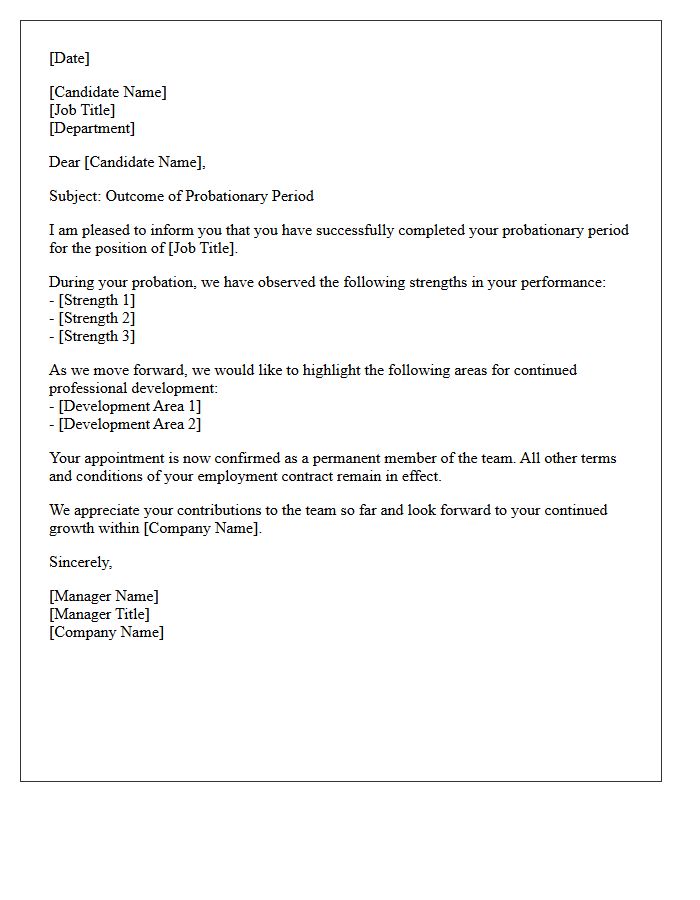
A Post-Probation Candidate Placement Feedback Letter is a formal assessment sent to recruitment agencies or HR departments after a new hire completes their trial period. The performance evaluation serves to validate the hiring decision and refine future talent sourcing strategies. It details whether the candidate met expectations, integrated into the company culture, and achieved specific milestones. This communication is essential for maintaining vendor relationships and ensuring long-term retention. Clear documentation within this letter helps optimize the recruitment lifecycle and supports data-driven decisions for future organizational growth.
Probationary Period Completion Feedback Request Letter
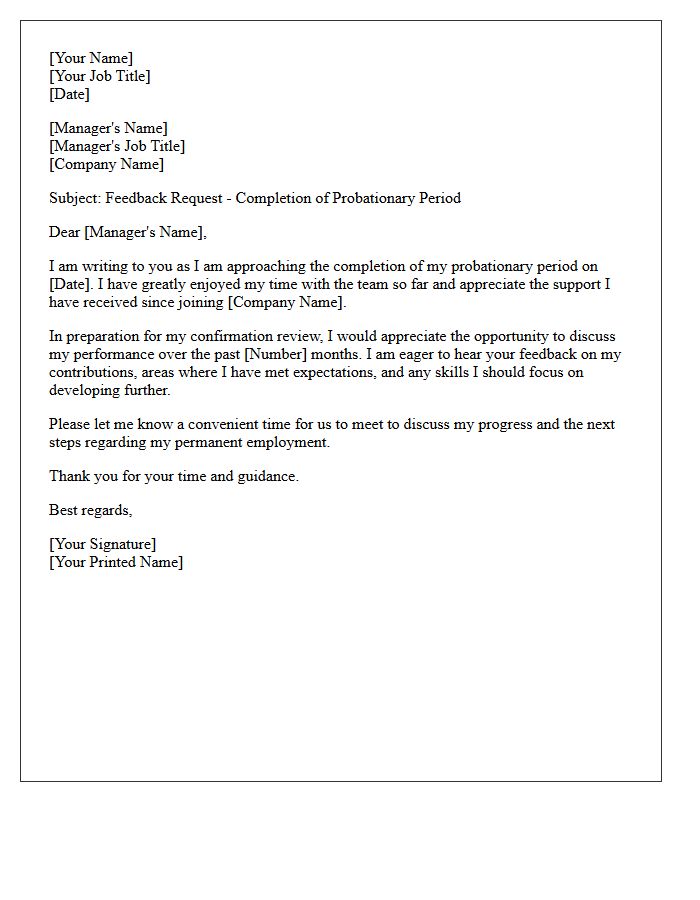
A probationary period completion feedback request letter is a professional communication sent by an employee to their supervisor. This document formally requests an evaluation of performance to determine if hiring expectations were met. It should highlight specific achievements, express ongoing commitment to the company, and seek clarity on permanent employment status. Requesting this feedback demonstrates proactive accountability and a desire for continuous growth. It is an essential step to ensure alignment between the staff member's contributions and the organizational goals before the trial period concludes.
Candidate Experience and Probation Success Feedback Letter
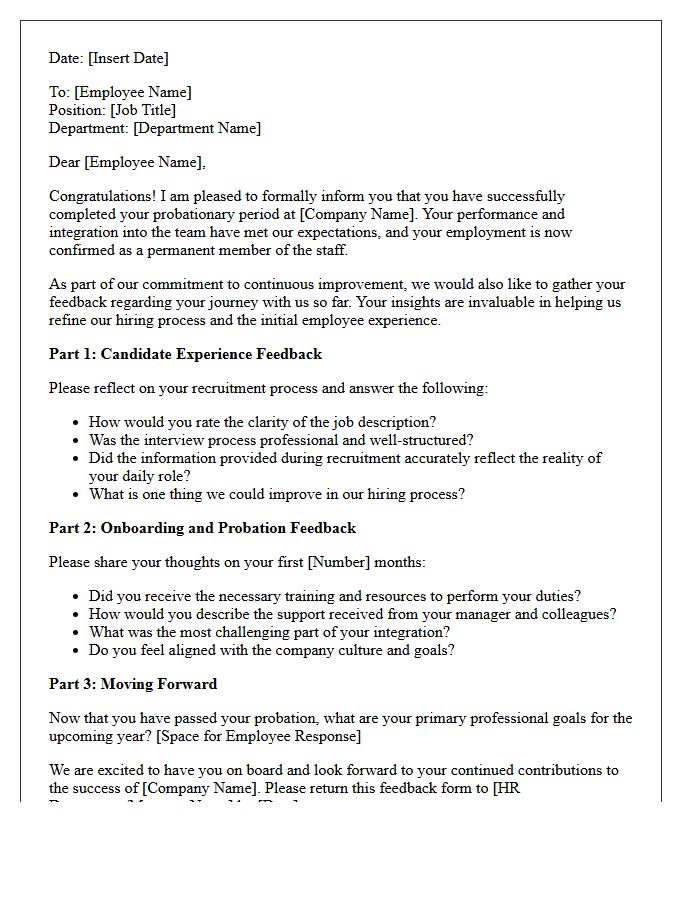
A Candidate Experience and Probation Success Feedback Letter is a strategic communication tool designed to evaluate the transition from recruitment to full employment. It gathers actionable insights regarding the interview process and the onboarding journey. By highlighting strengths and addressing integration gaps, this letter fosters long-term retention and employee engagement. Professional documentation of probationary performance ensures transparency, legal compliance, and a positive employer brand. Ultimately, it strengthens the relationship between the new hire and the organization through constructive, two-way feedback and clear performance expectations.
Recruitment Agency Post-Probation Evaluation Letter
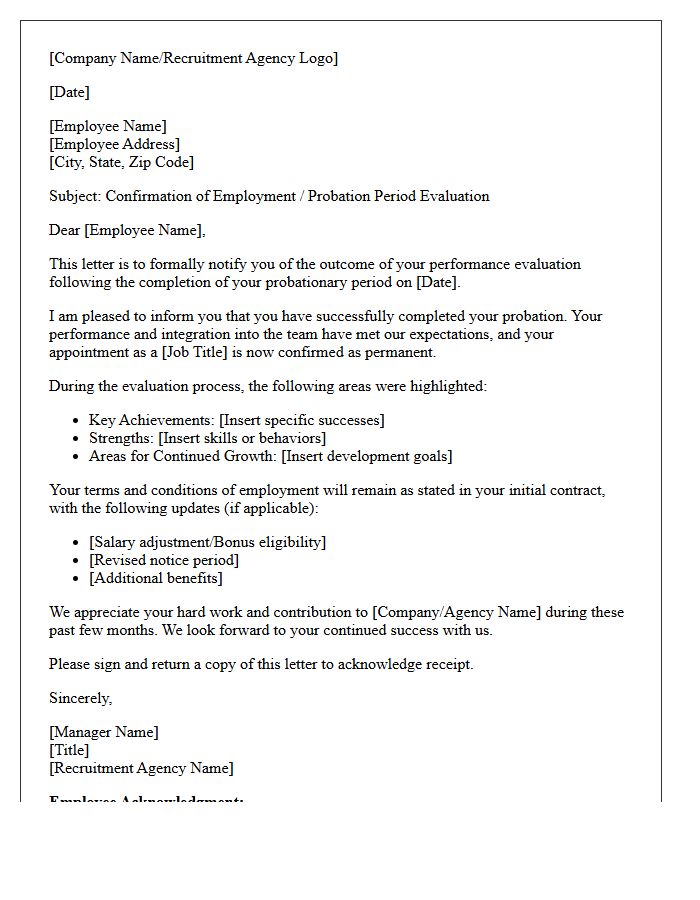
A Recruitment Agency Post-Probation Evaluation Letter is a formal document confirming whether a new hire has successfully met performance standards. This performance review serves as a legal record, transitioning the individual to permanent status. It should clearly outline achieved objectives, areas for growth, and updated benefits. Timely delivery is crucial for maintaining employee engagement and ensuring transparency between the agency, the client, and the worker. Documenting this milestone protects all parties and solidifies the professional relationship after the initial trial period ends.
Placed Candidate Post-Probation Check-In Letter
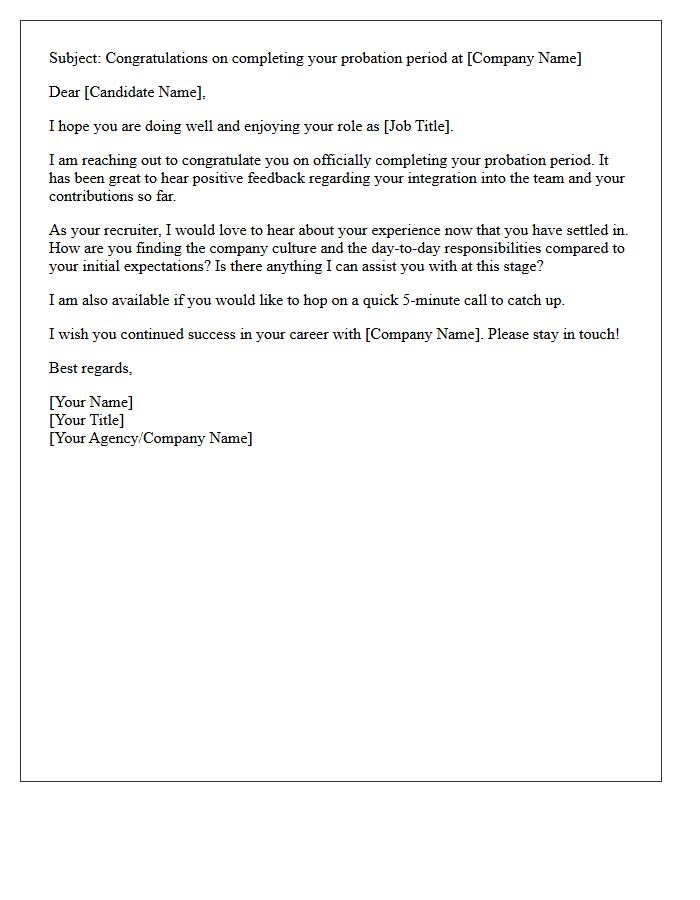
A Placed Candidate Post-Probation Check-In Letter is a strategic tool used by recruiters to evaluate long-term placement success. It confirms that the employee has successfully completed their trial period and remains a cultural fit. This communication helps gather valuable feedback on the onboarding process, strengthens the relationship between the agency and the client, and ensures high retention rates. Proactively addressing any minor concerns at this stage prevents future turnover and demonstrates a commitment to quality service and professional excellence in talent management.
Successful Probation Placement Feedback Inquiry Letter
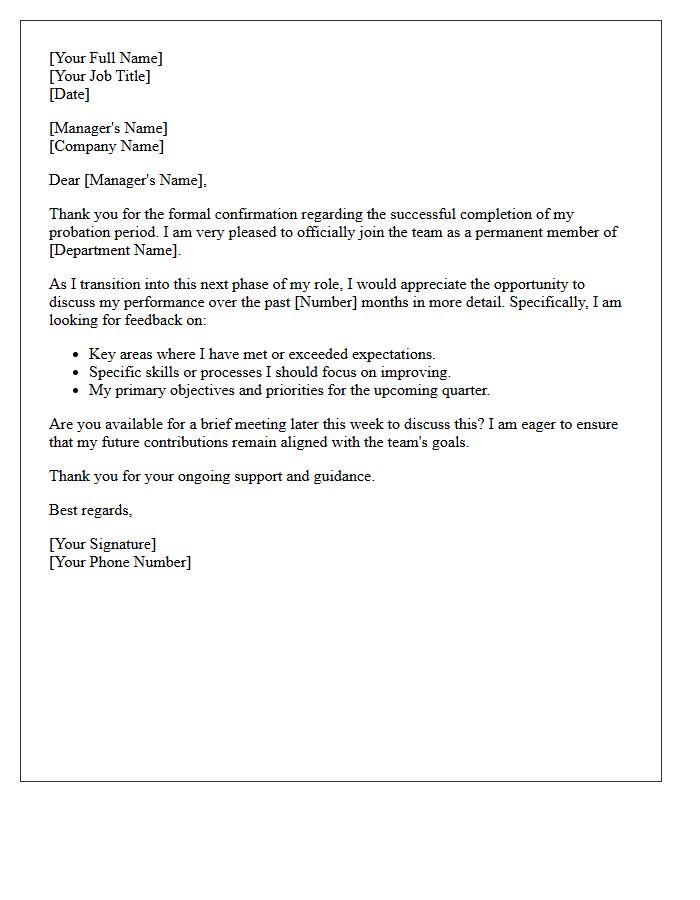
A successful probation placement feedback inquiry letter is a professional tool used to formalize permanent employment. It should clearly reference the completion date of the trial period and request a performance review. Highlighting your key achievements and alignment with company values reinforces your value as an asset. Using a proactive tone demonstrates professionalism and commitment to long-term growth. This document serves as a formal record, ensuring clear communication between the employee and HR regarding contractual status and future expectations within the organization.
End of Probation Period Candidate Review Letter
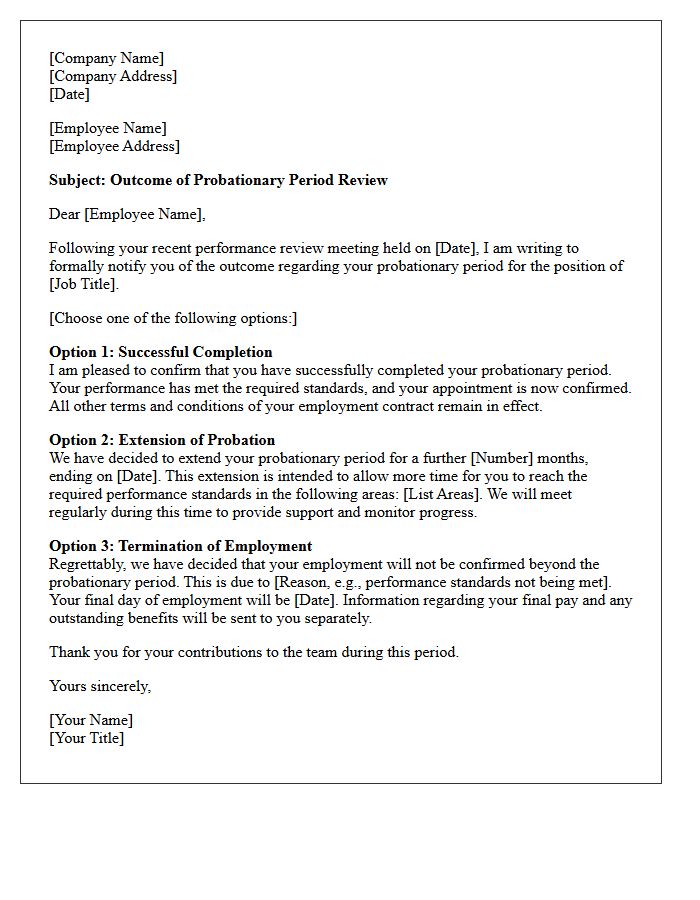
An End of Probation Period Candidate Review Letter is a formal document confirming whether an employee has successfully completed their trial phase. It serves as an official record of performance evaluation, outlining achieved goals or areas for improvement. This letter is crucial for legal compliance and job security, as it transitions the staff member to permanent status. Timely delivery ensures clear communication, boosts morale, and establishes professional expectations for the future. Always include the effective date of permanent employment to provide contractual clarity for both the employer and the individual.
Recruitment Service and Placement Feedback Letter
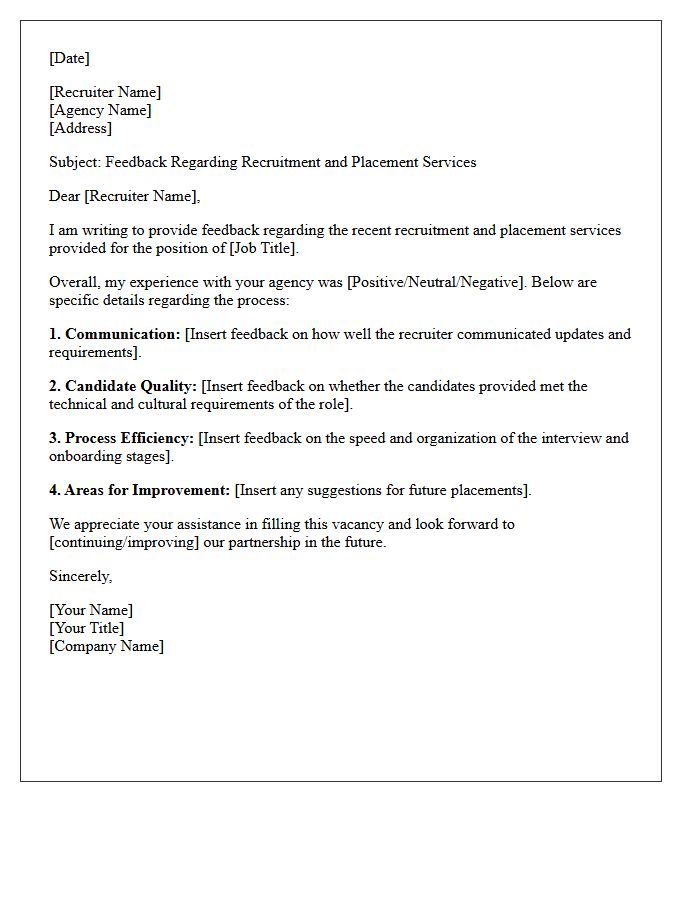
A Recruitment Service and Placement Feedback Letter is an essential communication tool used to evaluate the hiring process efficiency. It allows employers to provide constructive insights regarding candidate quality and agency performance. This professional correspondence helps refine sourcing strategies, ensuring future talent matches specific organizational needs. By documenting candidate suitability and service satisfaction, both parties foster long-term partnerships. Timely feedback streamlines recruitment cycles and optimizes the talent acquisition workflow, making it a critical component for continuous improvement in professional staffing and human resource management.
Probationary Milestone Candidate Experience Letter
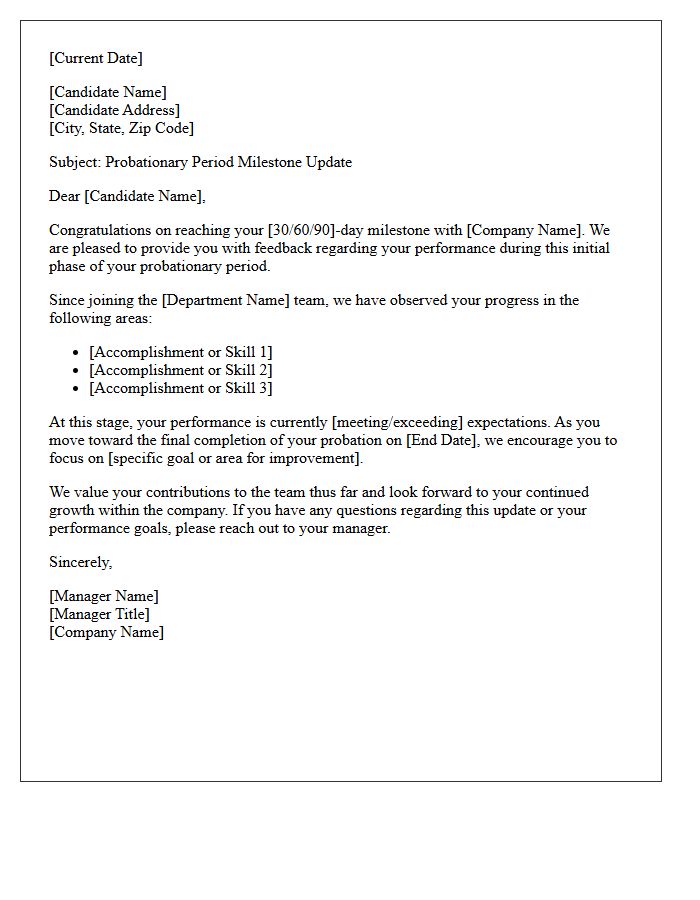
A Probationary Milestone Candidate Experience Letter serves as a formal acknowledgment of a new hire's progress during their initial onboarding phase. It provides structured feedback regarding performance, cultural alignment, and areas for growth before permanent status is granted. This document is essential for transparency, ensuring the employee understands their standing within the organization. By documenting achievements and expectations, it helps mitigate compliance risks and fosters a supportive environment, ultimately enhancing the overall employee experience and increasing long-term retention rates during the critical first few months of employment.
Candidate Satisfaction and Probation Completion Letter
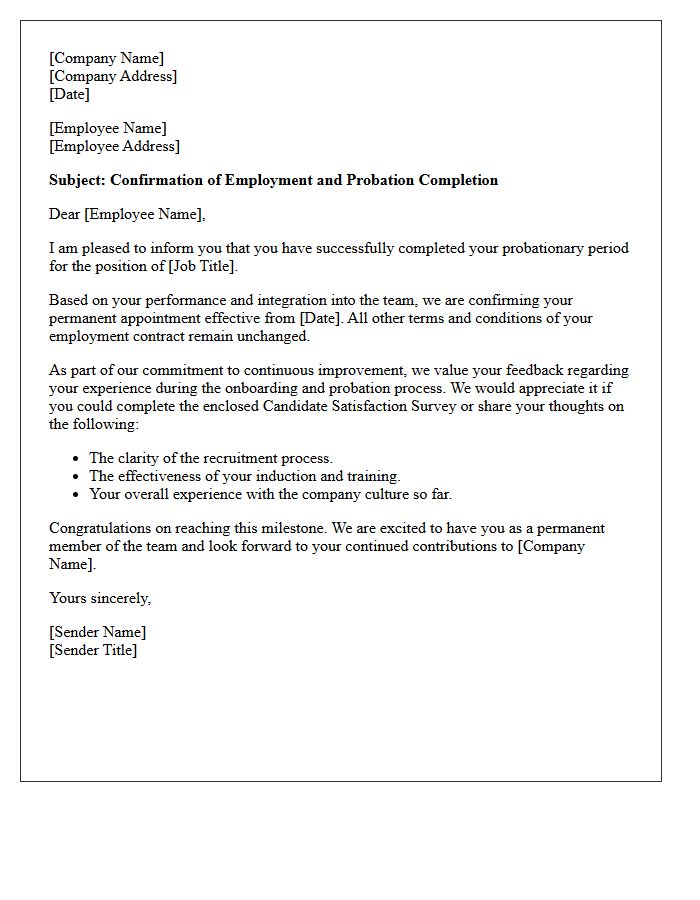
A Candidate Satisfaction and Probation Completion Letter formally confirms a new hire's permanent status after a successful trial period. This document acts as a key retention tool by validating the employee's performance and alignment with company culture. It should outline any updated benefits, salary adjustments, or new responsibilities. Beyond legal confirmation, it serves to measure employee engagement and gather feedback on the onboarding experience. Providing this letter promptly fosters long-term loyalty, ensuring the professional relationship begins with mutual trust and clearly defined expectations for future growth within the organization.
Permanent Placement Post-Probation Feedback Letter
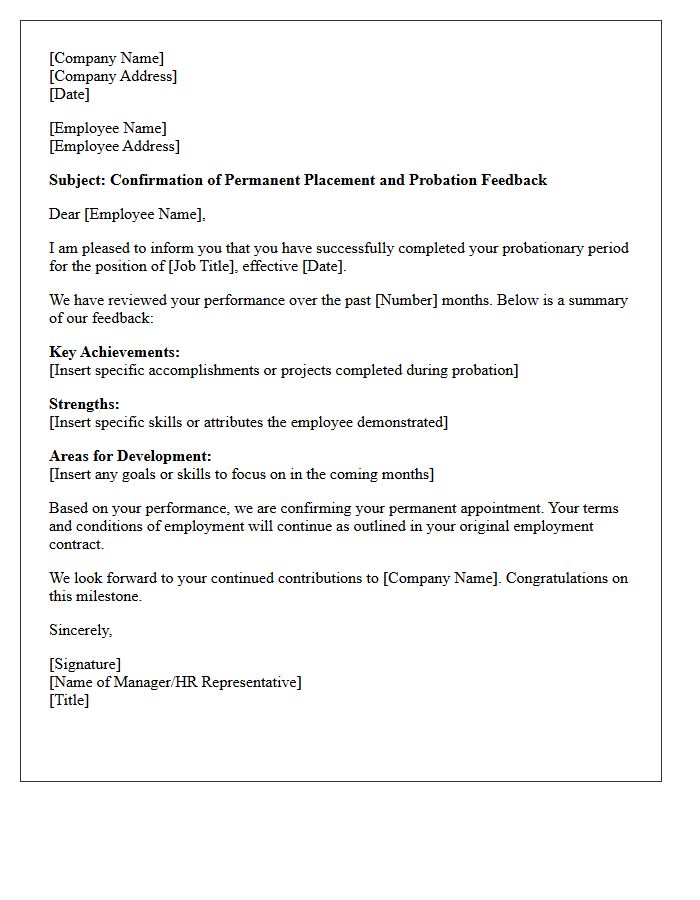
A Permanent Placement Post-Probation Feedback Letter officially confirms a transition from trial status to a long-term role. This document serves as a formal record of a worker's performance, outlining met objectives and future expectations. It provides essential legal protection for the employer while boosting employee morale and engagement. Clear feedback helps align the individual's goals with organizational growth, ensuring long-term success. Receiving this letter solidifies job security and clarifies the professional trajectory within the company after the initial evaluation period ends.
Post-Placement Probationary Success Check-In Letter
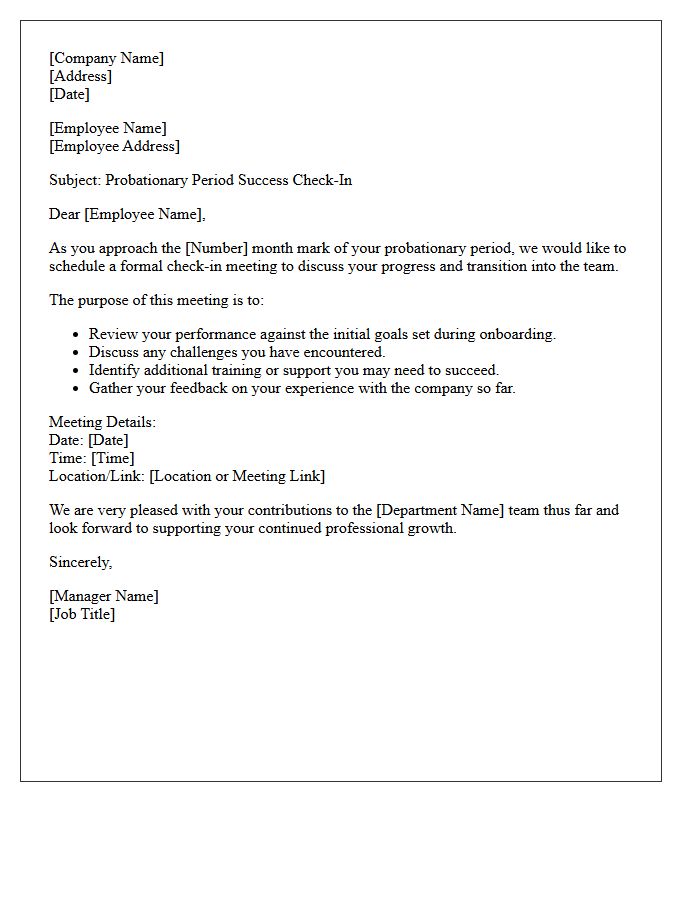
A Post-Placement Probationary Success Check-In Letter is a vital tool for talent retention and quality assurance. This formal communication evaluates a new hire's integration, performance, and cultural fit during their initial trial period. It allows employers to provide constructive feedback while addressing any onboarding gaps or concerns early on. By documenting progress before the probationary period ends, companies ensure alignment between job expectations and employee output, fostering a supportive environment that reduces long-term turnover and strengthens the professional relationship between the hiring manager and the candidate.
What is the purpose of a post-probation feedback request letter?
The purpose is to gather insights from a newly confirmed employee regarding their onboarding experience, job clarity, and team integration to improve organizational retention and culture.
When is the best time to send a feedback request to a placed candidate?
The letter should ideally be sent immediately following the formal completion of the probationary period, typically at the 3-month or 6-month mark, once the candidate's permanent status is confirmed.
What key questions should be included in a probation feedback survey?
Essential questions include asking if the job description matches their daily reality, if they received adequate training, how they view the company culture, and what resources could have improved their transition.
How does collecting feedback from placed candidates benefit the recruitment process?
It helps HR teams and recruiters identify gaps between the hiring promise and the actual workplace experience, allowing for more accurate job postings and better-aligned candidate expectations in the future.
Should post-probation feedback be anonymous or attributed?
While attributed feedback allows for specific problem-solving, offering an anonymous option often results in more honest, constructive criticism regarding management and internal workflows.

Comments