
A successful apprenticeship program onboarding letter is essential for welcoming new talent and setting clear expectations from day one. This formal introduction outlines key responsibilities, mentorship details, and training schedules to ensure a smooth transition into the workplace. Providing structured guidance helps apprentices integrate effectively into your company culture. To help you get started, below are some ready to use template.
Image cover: Welcoming New Talent: Apprenticeship Onboarding Letter Templates and Samples
Letter Samples List
- Recruitment Agency Apprenticeship Welcome Letter
- Onboarding Orientation Schedule Letter
- Applicant Tracking System Access Letter
- Senior Recruiter Mentorship Assignment Letter
- Candidate Data Confidentiality Agreement Letter
- Apprenticeship Placement Goals and Expectations Letter
- First Week Recruitment Training Agenda Letter
- Client Communication and Etiquette Guidelines Letter
- Apprenticeship Stipend and Timesheet Information Letter
- Recruitment Agency Core Values and Culture Letter
- Apprentice Performance Evaluation Schedule Letter
- Apprenticeship Onboarding Phase Completion Letter
Recruitment Agency Apprenticeship Welcome Letter
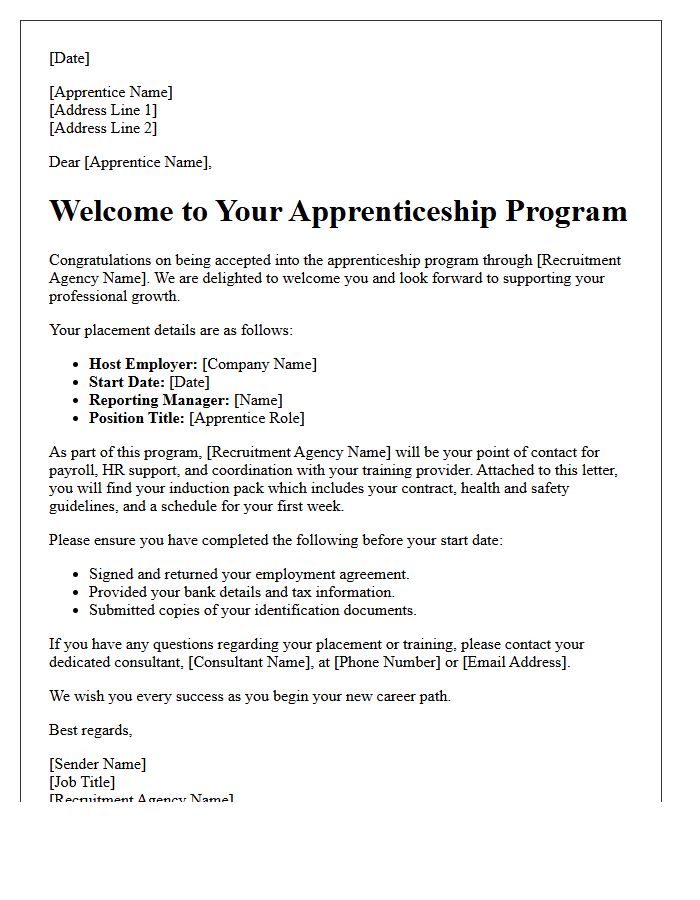
A Recruitment Agency Apprenticeship Welcome Letter is a professional document that formally onboards new talent. It must clearly outline the employment terms, including the start date, assigned mentor, and training schedule. This letter serves as a vital roadmap, aligning expectations between the apprentice and the agency while fostering an inclusive company culture. By highlighting key responsibilities and growth opportunities, it ensures a smooth transition into the recruitment industry. Providing essential contact information and next steps within this document is crucial for building immediate engagement and long-term professional success.
Onboarding Orientation Schedule Letter
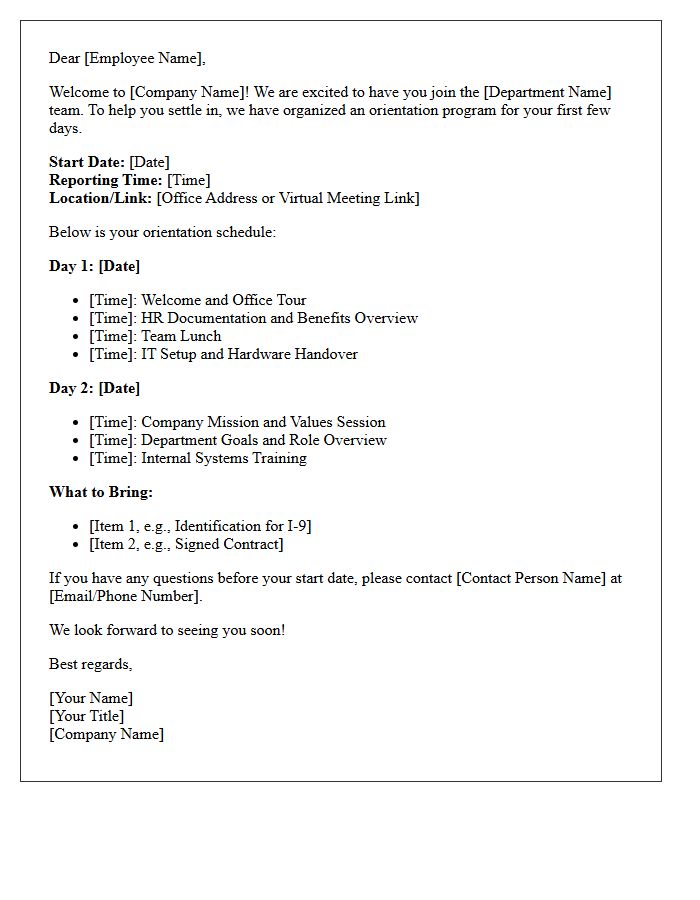
An Onboarding Orientation Schedule Letter serves as a formal welcome, outlining a new hire's first days. This critical document ensures a smooth transition by detailing arrival times, meeting locations, and necessary documentation. It clarifies expectations and introduces key team members, helping to reduce first-day anxiety. Clear communication regarding the agenda fosters early engagement and professional integration. Providing this structured roadmap helps the employee understand their initial responsibilities while reinforcing a positive employer brand and organizational culture from the very beginning of their professional journey.
Applicant Tracking System Access Letter
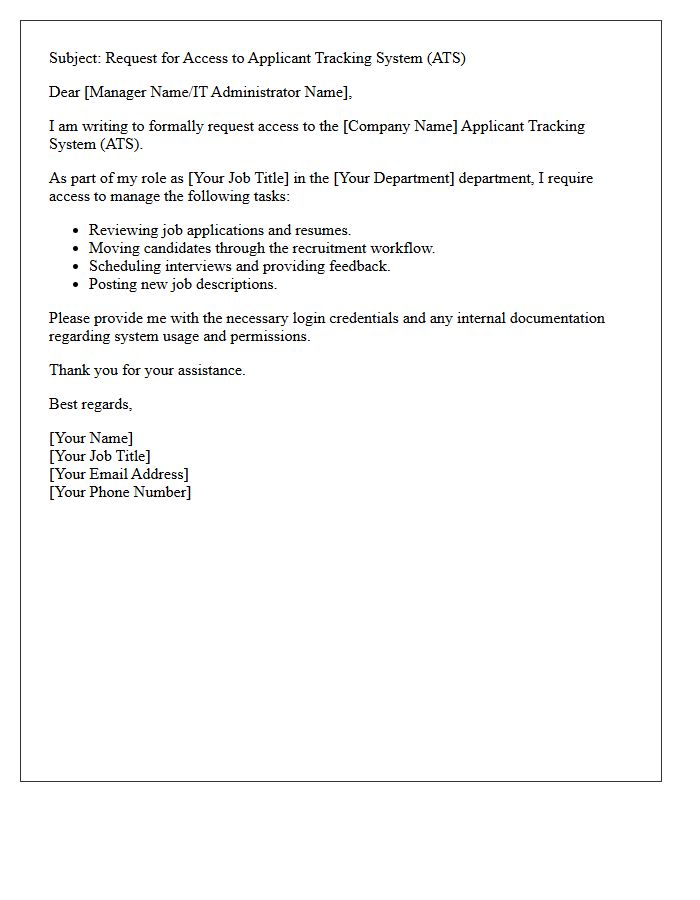
An Applicant Tracking System Access Letter is a formal request sent to an employer to obtain personal data stored within their hiring software. Under regulations like GDPR or CCPA, candidates have a legal right to view their records and assessment notes. This document ensures transparency in the recruitment process, allowing you to verify accuracy and understand how your application was evaluated. Providing a clear, written request helps protect your privacy and ensures companies remain compliant with data protection laws while managing your professional information.
Senior Recruiter Mentorship Assignment Letter
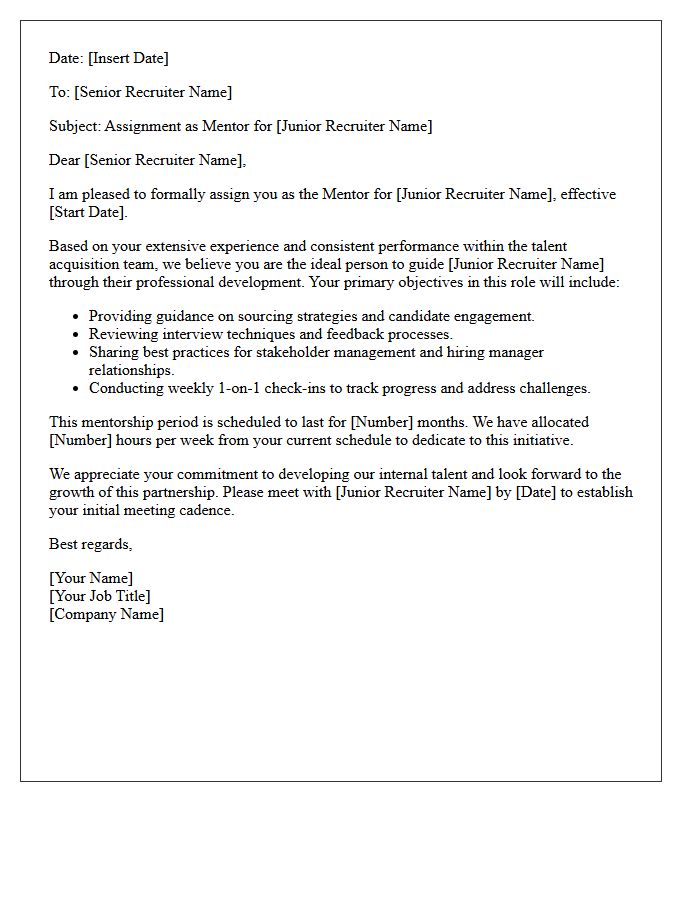
A Senior Recruiter Mentorship Assignment Letter is a formal document outlining the strategic partnership between an experienced talent professional and a protege. It clearly defines the program objectives, expectations, and specific performance milestones. This letter ensures both parties understand their roles in developing advanced sourcing techniques and leadership skills. By formalizing the mentorship structure, the organization fosters professional growth and ensures a consistent transfer of recruitment expertise. This alignment is essential for building a high-performing talent acquisition team and achieving long-term hiring success.
Candidate Data Confidentiality Agreement Letter
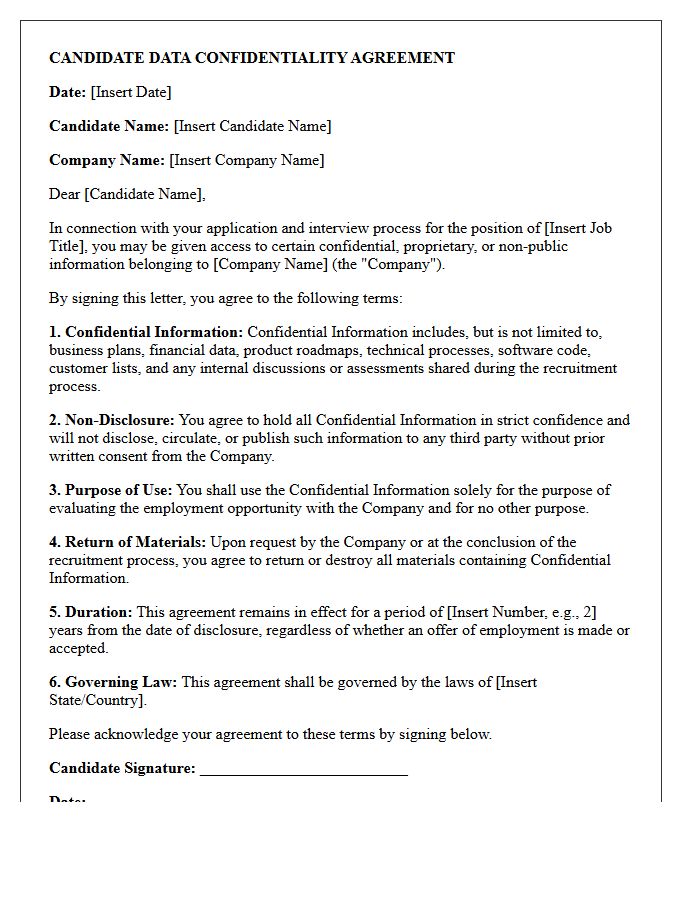
A Candidate Data Confidentiality Agreement Letter is a legal document ensuring that sensitive information shared during recruitment remains private. It protects proprietary data, trade secrets, and internal processes from unauthorized disclosure by applicants. By signing, candidates commit to maintaining strict confidentiality regarding interview materials and company insights. This agreement is crucial for safeguarding a firm's intellectual property and maintaining a competitive advantage. It establishes clear legal boundaries, ensuring that all private information disclosed during the hiring process is handled with the highest level of security and professional integrity.
Apprenticeship Placement Goals and Expectations Letter
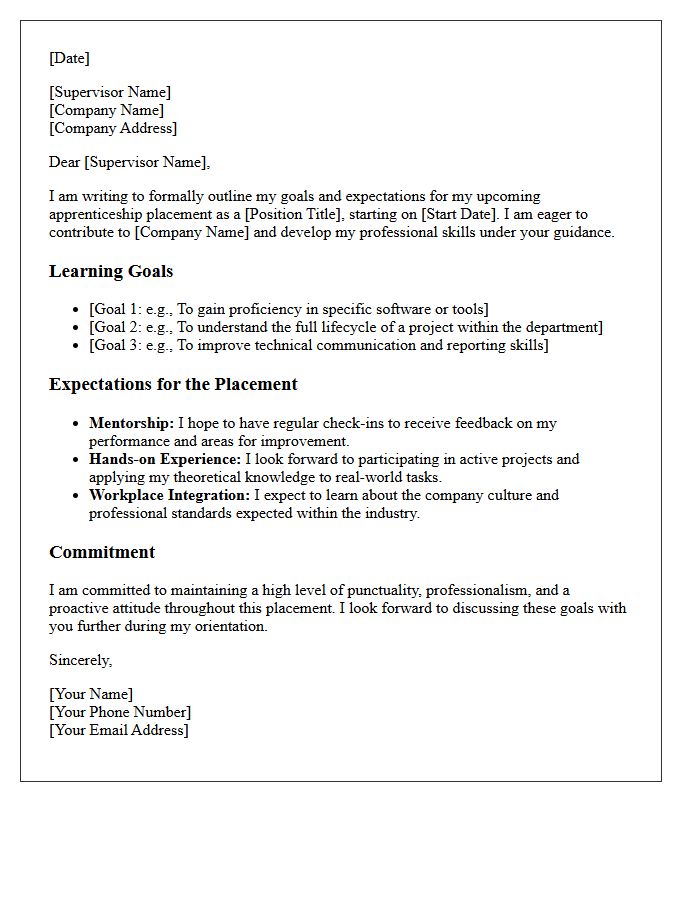
An Apprenticeship Placement Goals and Expectations Letter is a formal document aligning the objectives of the employer, mentor, and apprentice. It serves as a strategic roadmap by outlining specific learning outcomes, professional responsibilities, and performance standards required during the program. This letter ensures clear communication and accountability, helping all parties track progress toward competency. By defining measurable milestones and workplace conduct early on, it fosters a productive environment focused on skill acquisition and successful career integration within the industry.
First Week Recruitment Training Agenda Letter
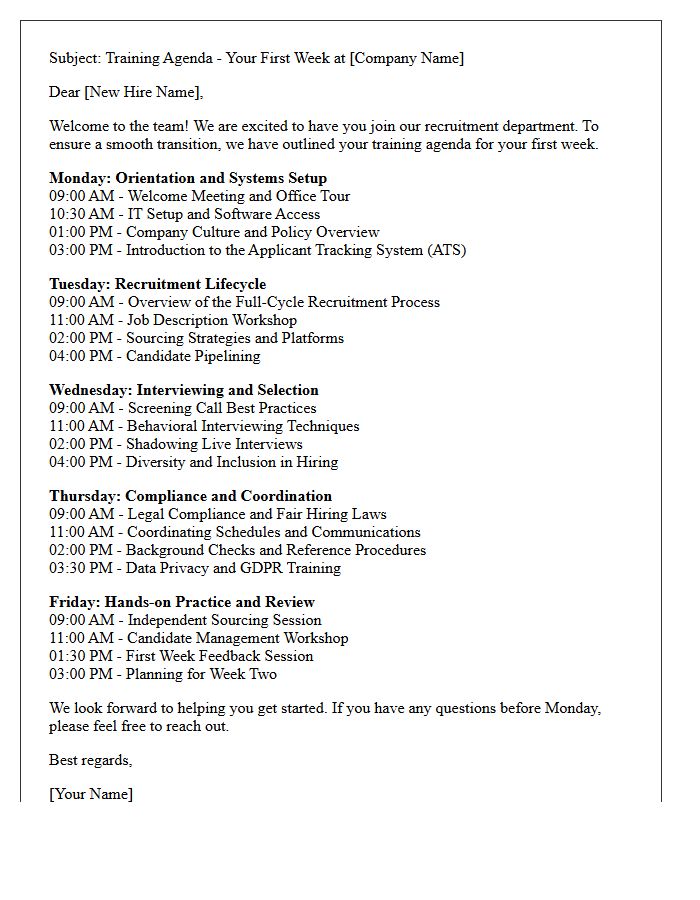
A First Week Recruitment Training Agenda Letter serves as a professional roadmap for new hires. It outlines daily schedules, talent acquisition strategies, and essential software onboarding. The document ensures clear communication regarding performance expectations and team integration. By providing a structured recruitment workflow, organizations help newcomers master sourcing techniques and candidate screening quickly. This letter is vital for aligning new recruiters with company culture and long-term hiring goals, ensuring a seamless transition into the human resources department from day one.
Client Communication and Etiquette Guidelines Letter
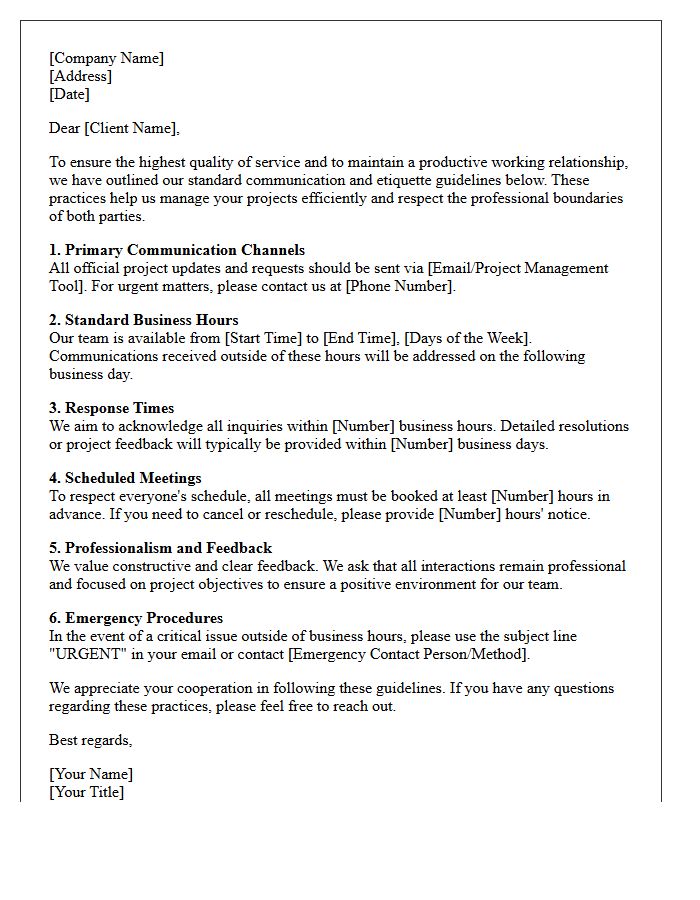
A professional client communication letter establishes clear expectations for business etiquette and interaction standards. It serves as a foundational roadmap, outlining preferred contact methods, response timeframes, and formal protocols to ensure mutual respect. By defining these boundaries early, companies foster trust and minimize misunderstandings. Adhering to these guidelines maintains a consistent brand voice and enhances the overall client experience, making it an essential document for building long-term, successful partnerships and ensuring all project stakeholders remain aligned through transparent and professional discourse.
Apprenticeship Stipend and Timesheet Information Letter
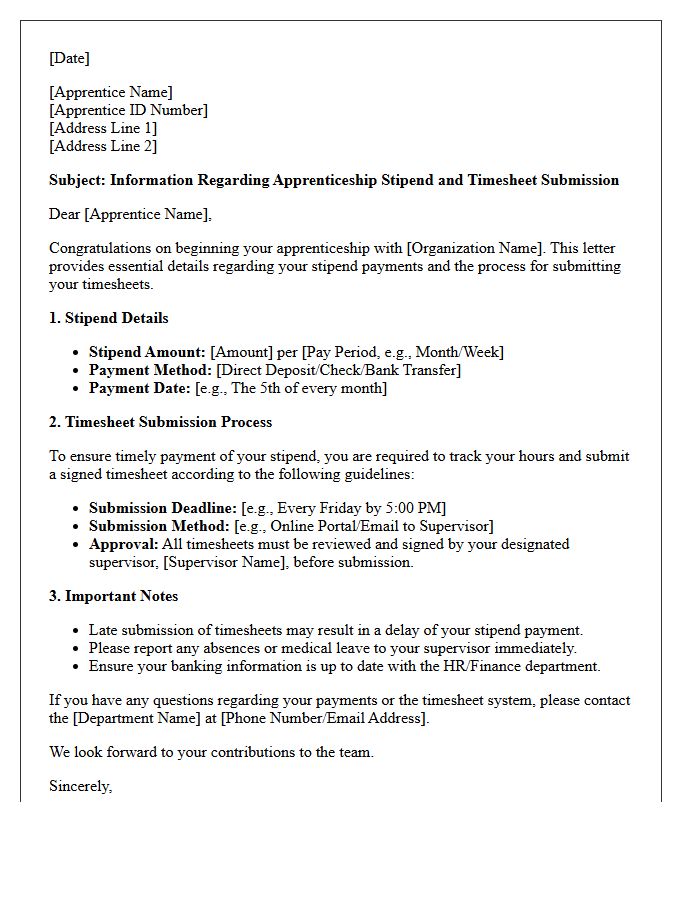
The Apprenticeship Stipend and Timesheet Information Letter outlines the essential process for receiving financial support. It details how to accurately record training hours and submit timesheets to ensure timely payments. Understanding the submission deadlines and payment schedules is critical for maintaining consistent cash flow. This document serves as a formal guide to compliance, eligibility requirements, and the specific rates of compensation provided during your vocational journey. Always verify your bank details and supervisor approvals as instructed to prevent any processing delays during your apprenticeship.
Recruitment Agency Core Values and Culture Letter
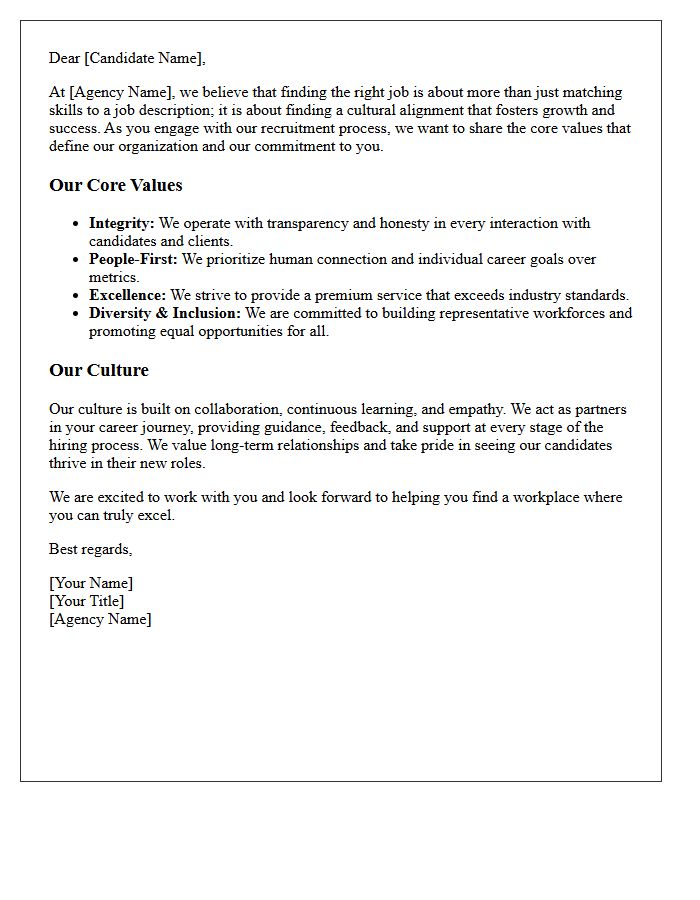
A Recruitment Agency Core Values and Culture Letter is a strategic document defining the ethical framework and behavioral expectations of the firm. It serves as a cultural blueprint, aligning consultants with the agency's mission to ensure consistent service delivery. By outlining principles like integrity, accountability, and transparency, the letter attracts talent that fits the internal environment. Understanding these values is essential for building long-term partnerships and maintaining a professional reputation. Ultimately, it fosters a cohesive workplace where every team member understands the collective vision for success in the competitive staffing industry.
Apprentice Performance Evaluation Schedule Letter
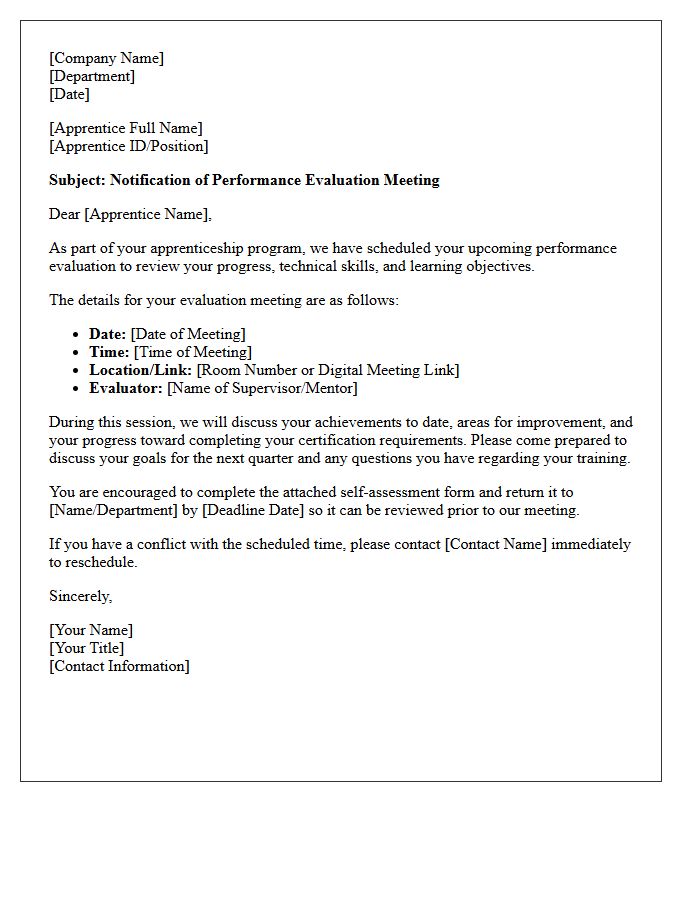
An Apprentice Performance Evaluation Schedule Letter serves as a formal notification outlining the specific dates and criteria for competency assessments. It ensures transparency by documenting the monitoring timeline and performance expectations required for trade advancement. This letter is crucial for tracking skill acquisition and ensuring compliance with apprenticeship standards. Both mentors and apprentices must adhere to this schedule to identify growth opportunities and maintain professional development records within the program. Timely evaluations help determine readiness for increased responsibilities and salary adjustments based on verified proficiency.
Apprenticeship Onboarding Phase Completion Letter
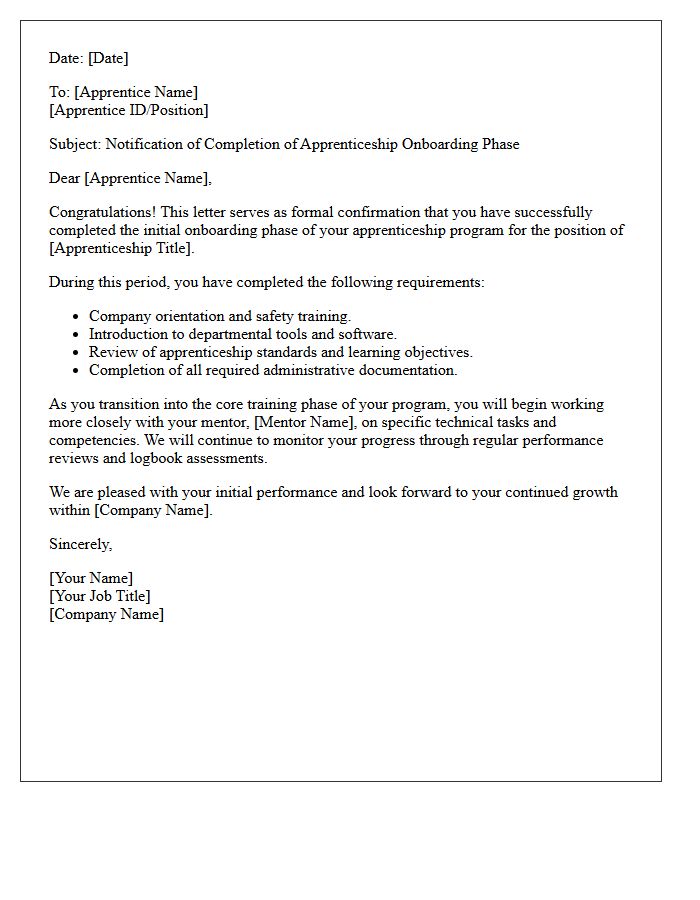
An Apprenticeship Onboarding Phase Completion Letter serves as formal verification that a trainee has successfully integrated into the workplace. This document confirms the validation of core skills and knowledge required to transition into advanced technical training. It signifies that the apprentice has met initial safety standards, professional conduct expectations, and probationary benchmarks. Issuing this letter is a critical milestone for compliance tracking, ensuring both the employer and the educational provider acknowledge the candidate's readiness to progress within their specific vocational pathway.
What should I do first after receiving my apprenticeship onboarding letter?
Upon receiving your letter, you should immediately sign and return the enclosed apprenticeship agreement, confirm your start date, and submit any requested identification documents to formalize your enrollment in the program.
What documents are typically required during the apprenticeship onboarding process?
Commonly required documents include a valid government-issued ID, proof of educational prerequisites, your signed training contract, and completed tax or payroll forms to ensure your compensation is processed correctly.
When will I receive information regarding my mentor and job site location?
Specific details regarding your assigned mentor, supervisor contact information, and primary job site location are usually outlined in the "Reporting Instructions" section of your onboarding letter or provided during the first day of orientation.
Is there a probationary period mentioned in the apprenticeship onboarding letter?
Most onboarding letters will specify a probationary period, typically ranging from 3 to 6 months, during which your performance and technical skill acquisition will be evaluated to ensure you meet the program standards.
How do I access my training schedule and related classroom curriculum?
Your onboarding letter will provide login credentials or instructions for the program's learning management system (LMS), where you can view your technical instruction schedule, required textbooks, and classroom rotation dates.

Comments