
Maintaining professional relationships requires a clear Unsuccessful Candidate Registration Declination Letter to inform applicants they will not be added to your talent pool. This formal communication ensures clarity and preserves your employer brand when a candidate does not meet registration criteria. Effectively managing expectations helps streamline your recruitment process and provides closure. Below are some ready to use templates.
Image cover: Professional Regret: Candidate Registration Declination Templates and Samples
Letter Samples List
- Standard Unsuccessful Candidate Registration Declination Letter
- Experience Mismatch Unsuccessful Candidate Registration Declination Letter
- Industry Misalignment Candidate Registration Declination Letter
- No Active Vacancies Candidate Registration Declination Letter
- Incomplete Application Candidate Registration Declination Letter
- Geographic Constraint Candidate Registration Declination Letter
- Skillset Discrepancy Candidate Registration Declination Letter
- Overqualified Unsuccessful Candidate Registration Declination Letter
- High Volume Agency Registration Declination Letter
- Unsuccessful Initial Assessment Registration Declination Letter
- Out of Network Unsuccessful Candidate Registration Declination Letter
- Closed Roster Candidate Registration Declination Letter
Standard Unsuccessful Candidate Registration Declination Letter
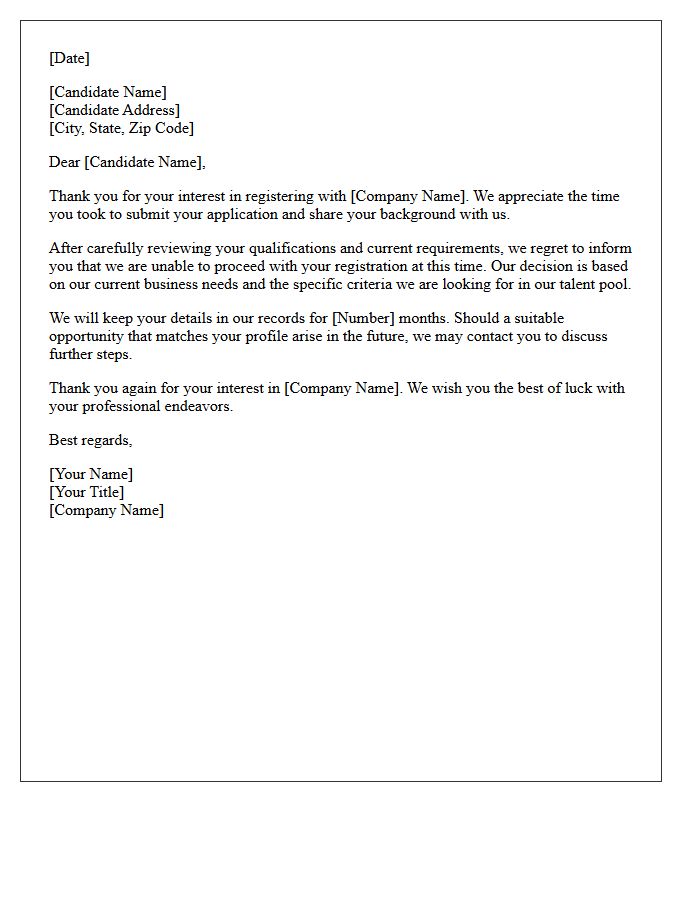
A Standard Unsuccessful Candidate Registration Declination Letter is a professional notification sent to applicants who will not proceed in the recruitment process. It serves to maintain a positive employer brand by providing closure. Key elements include thanking the individual for their interest, stating the decision clearly without specific critique, and mentioning if their data will be kept for future roles. Sending this promptly demonstrates professionalism and respect for the candidate's time, ensuring a favorable reputation in the competitive job market while meeting compliance standards.
Experience Mismatch Unsuccessful Candidate Registration Declination Letter
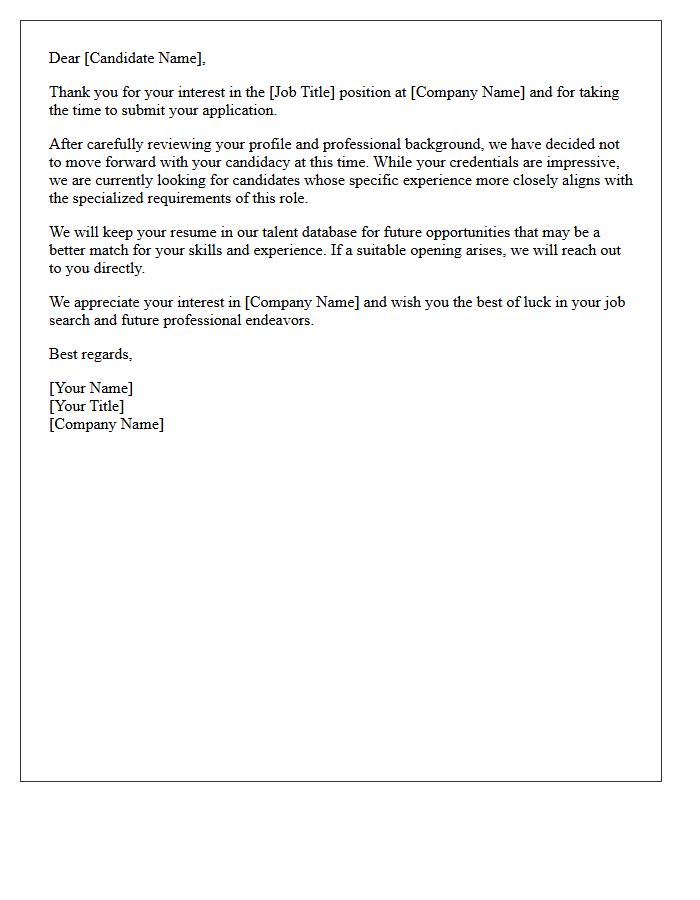
An experience mismatch letter professionally informs applicants that their specific background does not align with the current job requirements. The primary goal is to maintain a positive employer brand while clearly stating that the decision is final based on technical qualifications. Providing constructive feedback regarding the gap in expertise helps candidates understand the rejection. This transparent approach ensures a respectful candidate experience, allowing the individual to pursue roles better suited to their professional history without ambiguity or discouragement during their career search.
Industry Misalignment Candidate Registration Declination Letter
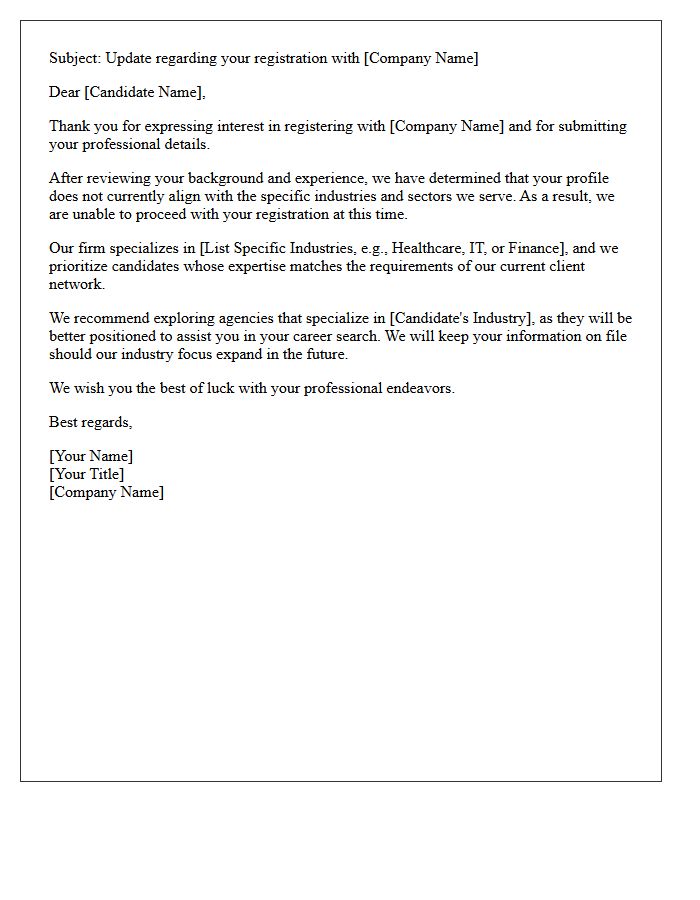
An Industry Misalignment Candidate Registration Declination Letter informs applicants that their professional background does not match the organization's current market focus. This formal notice ensures transparency by clarifying that while their skills are valuable, the mismatch in sector experience prevents further progression. Sending this letter maintains a positive employer brand and provides necessary closure. It is essential to remain professional, as future strategic shifts may eventually align with the candidate's specific industry expertise, making them a potential asset for later opportunities.
No Active Vacancies Candidate Registration Declination Letter
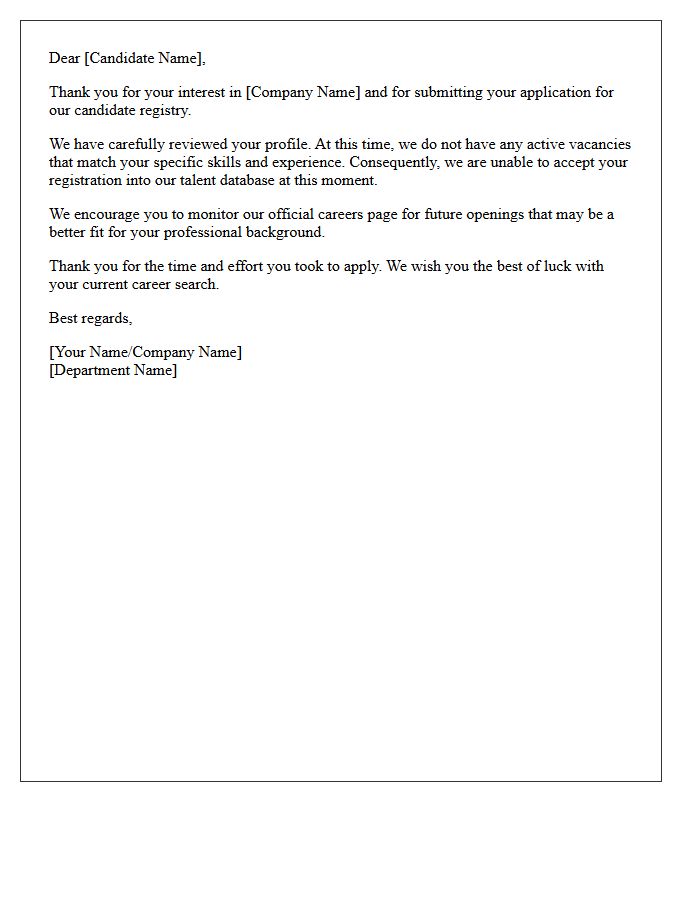
A No Active Vacancies declination letter informs applicants that their profile is being rejected because no current openings match their skills. The primary goal is to maintain a positive employer brand while managing expectations. It is essential to state clearly that the candidate's registration will not proceed at this time. However, many organizations choose to store resumes in a talent pool for future consideration. Providing a professional, concise response ensures a respectful candidate experience even when no immediate opportunities are available for potential hires.
Incomplete Application Candidate Registration Declination Letter
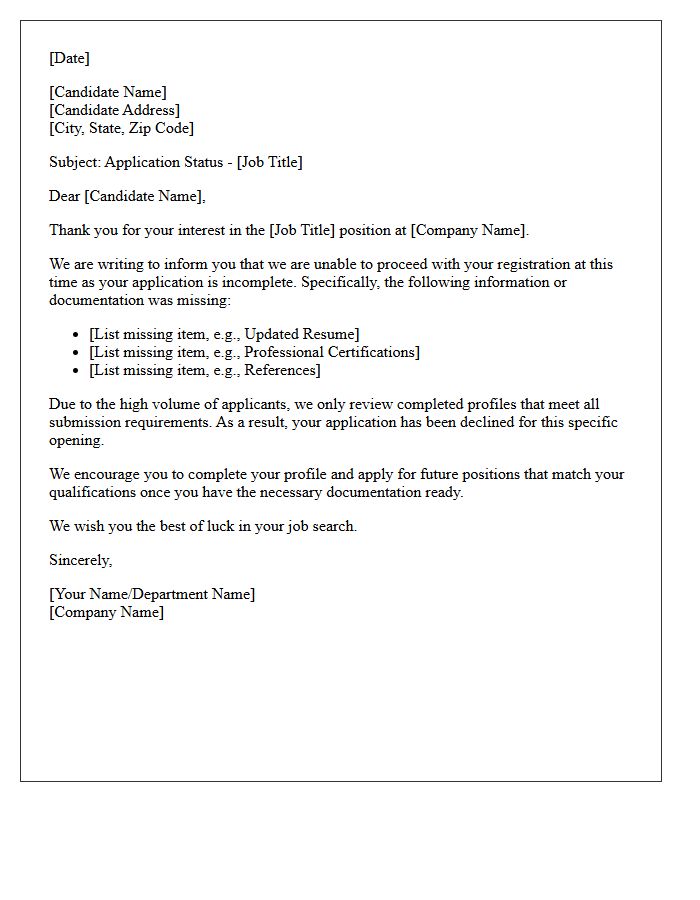
An Incomplete Application Candidate Registration Declination Letter serves as official notice that a job seeker's submission lacked necessary documentation or mandatory information required for evaluation. This formal notification transparently explains that the recruitment process cannot proceed until all eligibility criteria are met. It maintains professional standards by detailing specific missing components, such as missing transcripts or incomplete work history. Providing this feedback ensures compliance and encourages candidates to reapply once their profile is fully updated, fostering a positive employer brand despite the initial rejection of their incomplete registration.
Geographic Constraint Candidate Registration Declination Letter
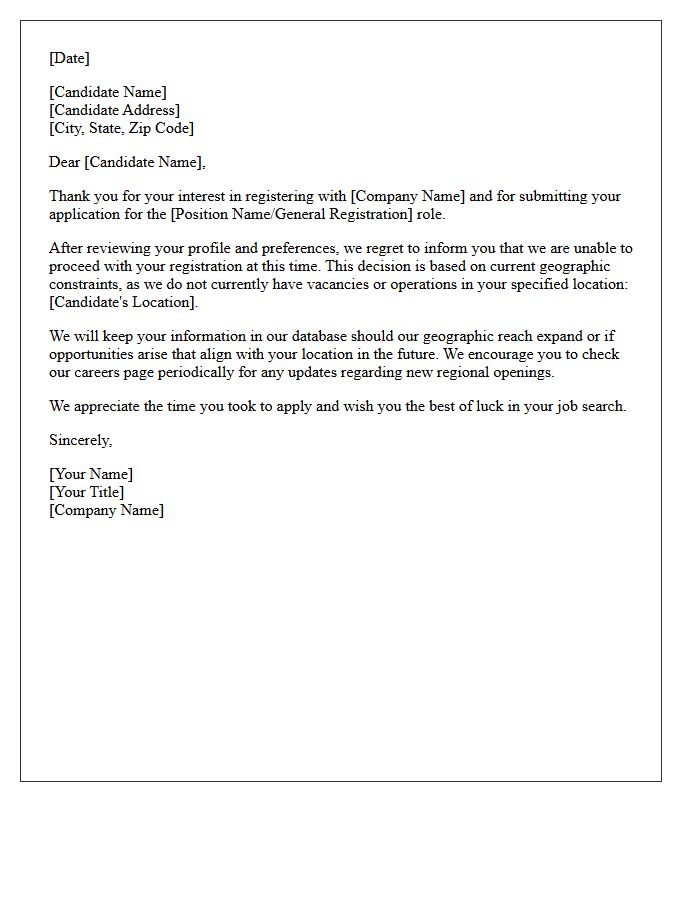
A Geographic Constraint Candidate Registration Declination Letter is a formal notification issued when a professional license application is denied due to regional limitations. It informs the applicant that they do not meet specific residency requirements or jurisdictional mandates necessary for registration. This document typically outlines the legal basis for the refusal and provides instructions on how to appeal the decision. Understanding these constraints is essential for candidates seeking licensure across different states or territories to ensure compliance with localized regulatory standards and geographic eligibility criteria.
Skillset Discrepancy Candidate Registration Declination Letter
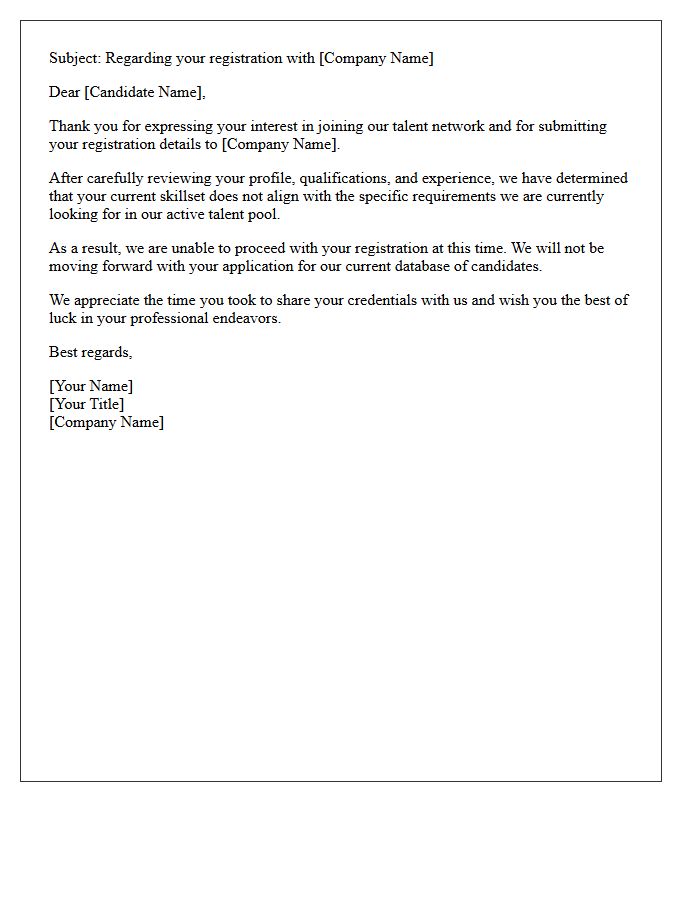
A Skillset Discrepancy Candidate Registration Declination Letter informs applicants that their current qualifications do not align with specific job requirements. It is a vital tool for maintaining professional communication while clearly stating that a mismatch exists between their expertise and the role's needs. To remain semantically effective, the letter should express gratitude, specify the gap professionally, and encourage future applications. Providing this transparent feedback helps manage candidate expectations and protects your employer brand by ensuring every registered individual receives a timely, respectful response regarding their status.
Overqualified Unsuccessful Candidate Registration Declination Letter
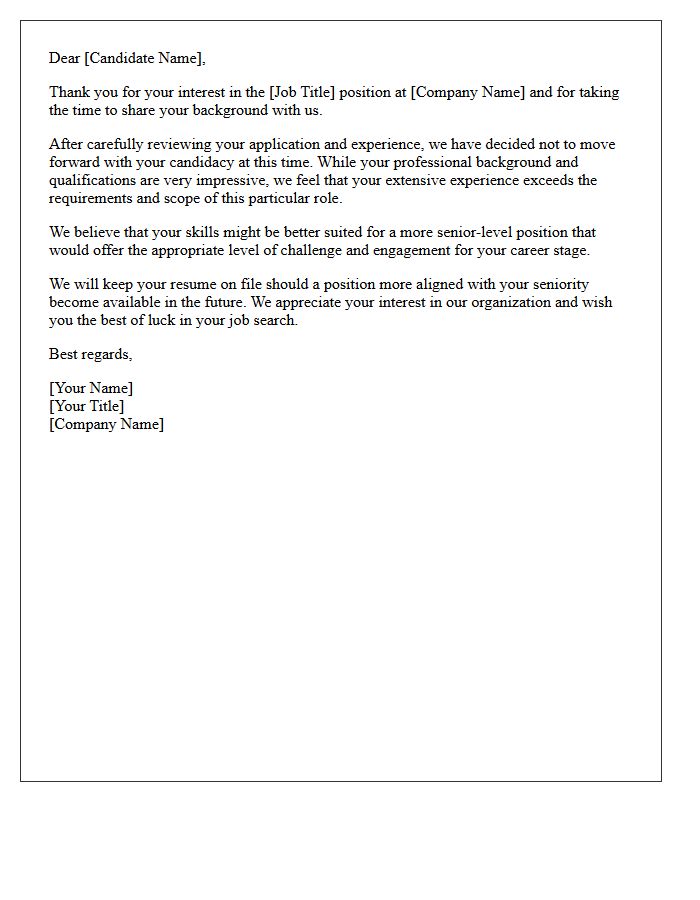
An Overqualified Unsuccessful Candidate Registration Declination Letter is a formal notice sent to applicants whose extensive experience exceeds the position's requirements. It is crucial to maintain a professional tone to protect your employer brand. The content should clearly explain that while their background is impressive, the role may not offer the long-term engagement they seek. Sending this letter promptly ensures transparency and allows the candidate to pursue senior-level opportunities elsewhere, maintaining a positive relationship for potential future leadership roles within your organization.
High Volume Agency Registration Declination Letter
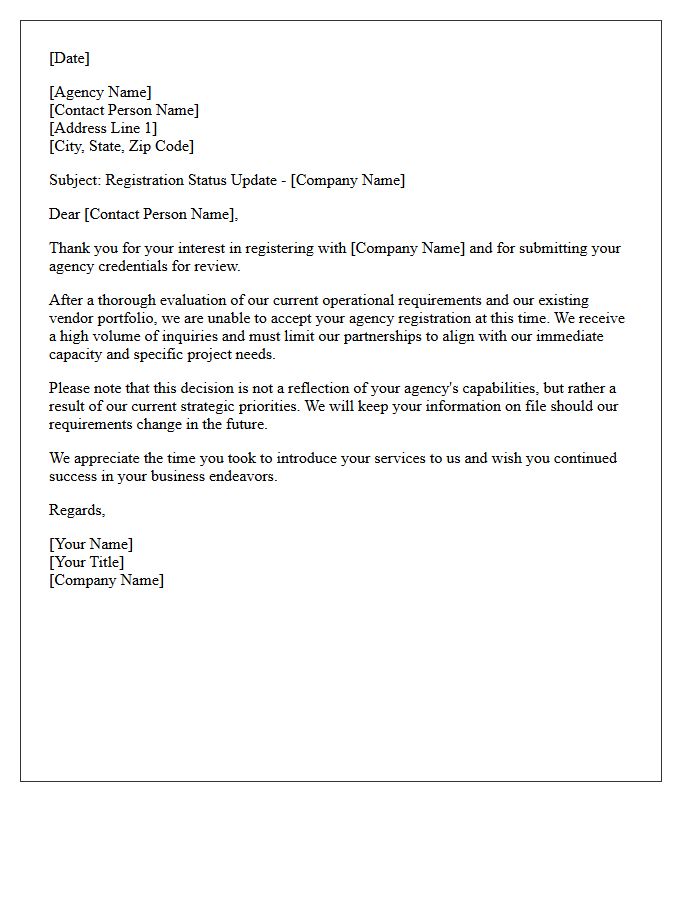
A High Volume Agency Registration Declination Letter is a formal notification from a marketplace informing a business that its application to sell has been rejected. This typically occurs during the verification process required by the INFORM Consumers Act. Common reasons for declination include verification failure, inconsistent documentation, or suspected fraudulent activity. Receiving this letter means the agency cannot operate at scale on the platform. To resolve this, businesses must re-verify credentials or appeal by providing precise, government-issued identification and valid tax information to ensure compliance with transparency regulations.
Unsuccessful Initial Assessment Registration Declination Letter
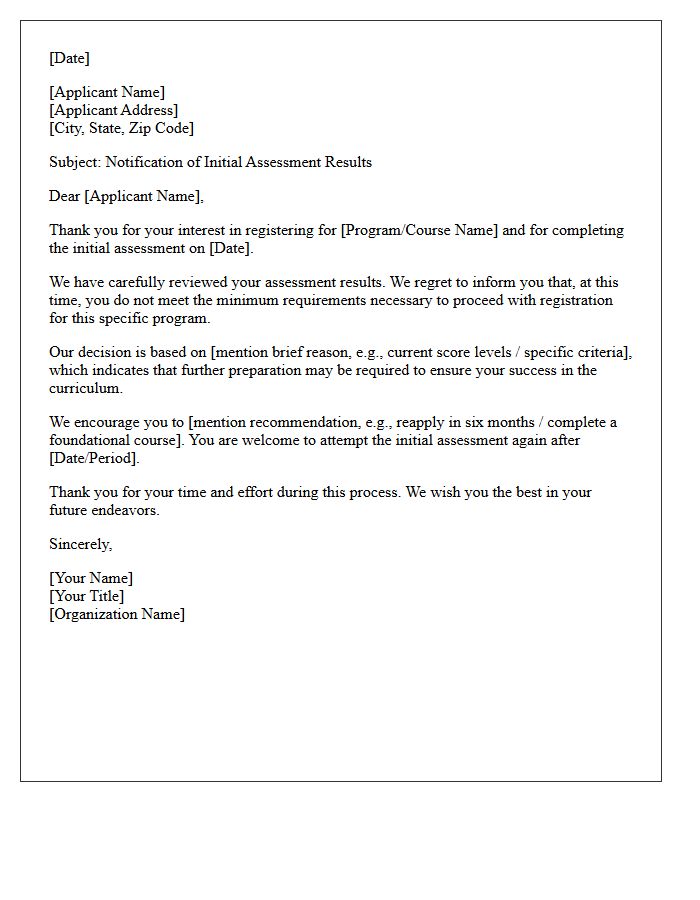
An Unsuccessful Initial Assessment Registration Declination Letter is a formal notification sent when an applicant fails to meet the minimum eligibility criteria for a specific program or professional certification. This document outlines that the initial screening process did not support further progression. It typically provides brief reasons for the rejection, such as insufficient documentation or failing to satisfy prerequisite standards. Understanding this letter is crucial for identifying compliance gaps, allowing applicants to address deficiencies or provide additional evidence before attempting a future re-application or formal appeal process.
Out of Network Unsuccessful Candidate Registration Declination Letter
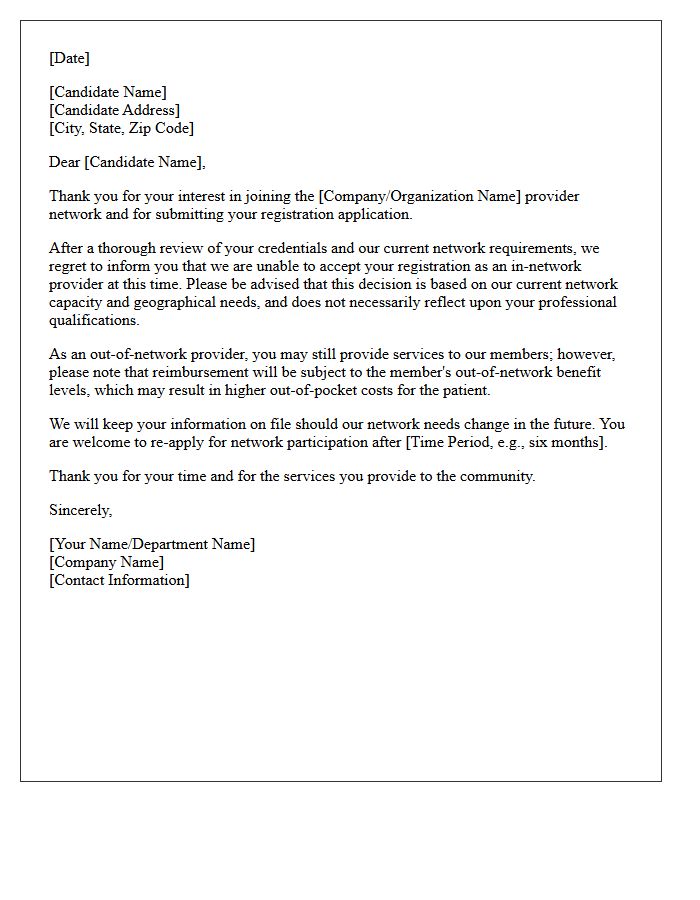
An Out of Network Unsuccessful Candidate Registration Declination Letter is a formal notice sent to applicants who did not meet the specific criteria for a specialized recruitment pool. It professionally communicates that their profile will not be added to the internal network at this time. This document ensures legal compliance and maintains a positive employer brand by providing clarity. Receiving this letter means the organization is not pursuing your candidacy for their exclusive database, though it typically encourages professionals to reapply if their qualifications or the network's requirements change in the future.
Closed Roster Candidate Registration Declination Letter
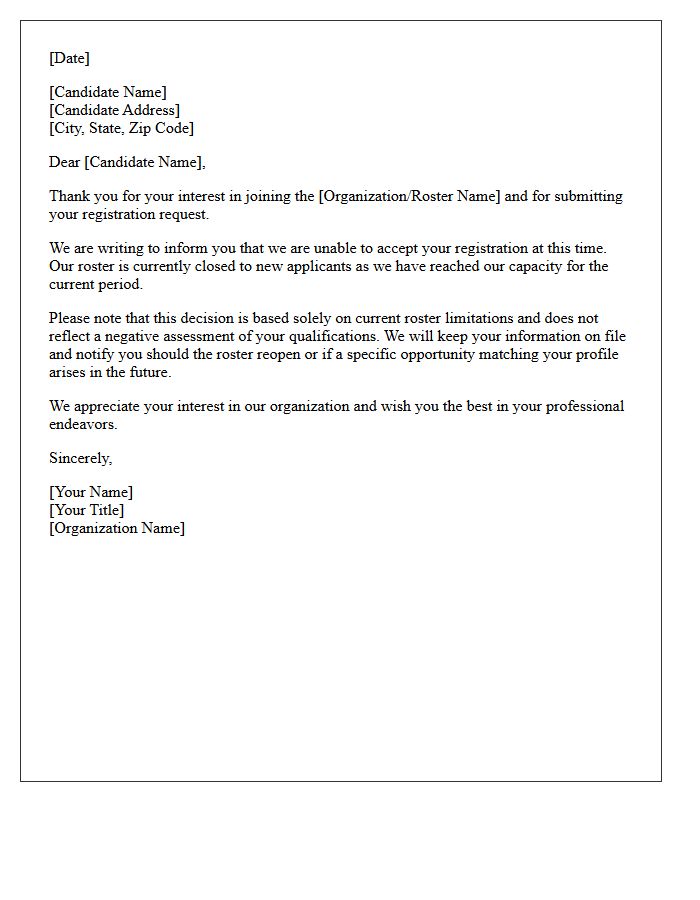
A Closed Roster Candidate Registration Declination Letter is a formal notification sent to applicants when a professional network or internal talent pool is currently at capacity. This document informs the candidate that while their qualifications may be valid, the organization is not accepting new registrations at this time. It is a critical tool for managing expectations and maintaining professional communication. Receiving this letter typically means your profile will not be active until a future enrollment window opens or specific organizational needs change, ensuring the roster remains manageable and relevant.
What is an unsuccessful candidate registration declination letter?
An unsuccessful candidate registration declination letter is a formal notification sent by an employer or recruiter to an applicant to inform them that their application or registration for a specific role or talent pool was not accepted.
When should an employer send a registration declination letter?
Employers should send the declination letter as soon as a final decision has been made, typically within one to two weeks after the registration window closes, to maintain a positive employer brand and respect the candidate's time.
What should be included in a professional declination letter?
A professional letter should include the candidate's name, the specific position or registration program they applied for, a clear statement that the application will not be moving forward, and a polite closing thanking them for their interest.
Can an unsuccessful registration letter include feedback?
While not mandatory, providing brief, constructive feedback is considered a best practice in recruitment. However, many organizations use standardized templates to ensure consistency and minimize legal risks.
Should I keep the candidate's details after sending a declination letter?
If the candidate has potential for future roles, the letter should state that their registration or resume will be kept on file for a specific period in accordance with data protection regulations like GDPR.


Comments