
Maintaining professionalism during offboarding is essential for your brand reputation. A well-crafted Client Portfolio Rejection Letter helps set clear boundaries while preserving future networking opportunities. Learn how to decline projects or end partnerships gracefully without burning bridges. To help you communicate effectively and save time, below are some ready to use template.
Image cover: Professional Guide: Professional Client Rejection Letter Templates and Samples
Letter Samples List
- Industry Mismatch Client Portfolio Rejection Letter
- Current Capacity Client Portfolio Rejection Letter
- Fee Structure Misalignment Client Portfolio Rejection Letter
- Geographic Limitation Client Portfolio Rejection Letter
- Unmatched Hiring Values Client Portfolio Rejection Letter
- Niche Specialization Client Portfolio Rejection Letter
- Low Hiring Volume Client Portfolio Rejection Letter
- Out Of Scope Client Portfolio Rejection Letter
- Temporary Waitlist Client Portfolio Rejection Letter
- Standard Professional Client Portfolio Rejection Letter
- Retained Search Requirement Client Portfolio Rejection Letter
- Incomplete Application Client Portfolio Rejection Letter
Industry Mismatch Client Portfolio Rejection Letter
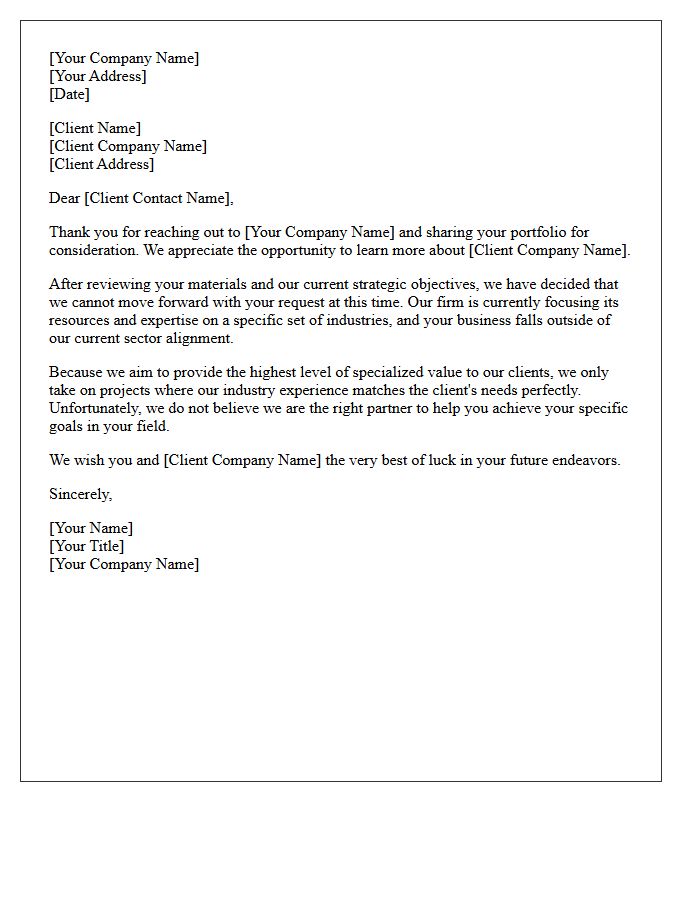
An Industry Mismatch Client Portfolio Rejection Letter is a formal notice sent when a prospect's business sector falls outside a firm's core specialization. This communication ensures strategic alignment by explaining that the firm lacks the specific expertise required for the client's niche. Sending this letter promptly maintains professional integrity and helps the prospect find a more suitable partner. It protects the agency's operational efficiency while preventing future service gaps, ensuring the portfolio remains focused on areas where the firm provides the highest value and proven results.
Current Capacity Client Portfolio Rejection Letter
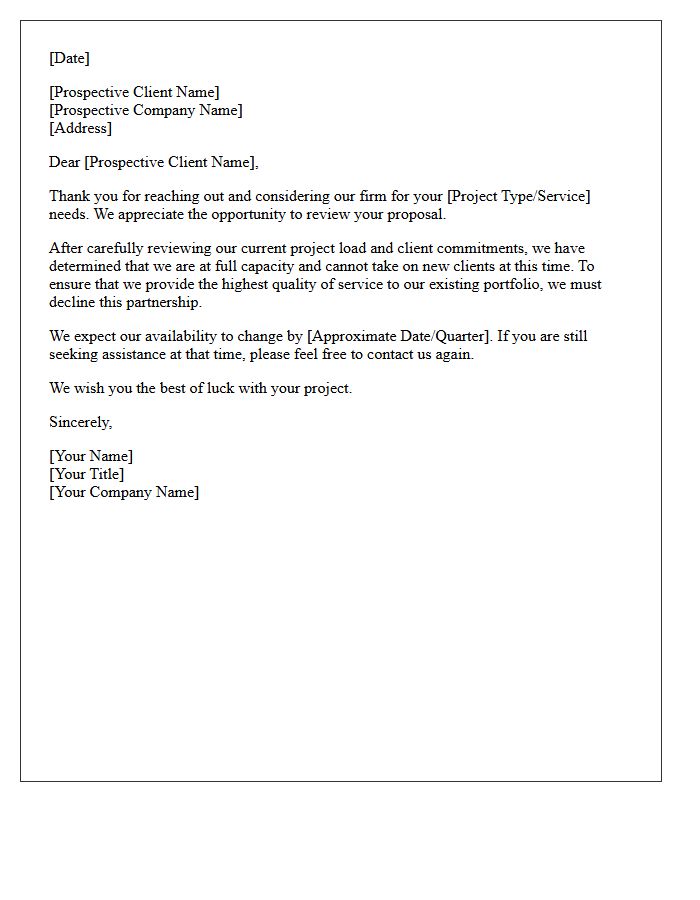
A Current Capacity Client Portfolio Rejection Letter is a formal document used to decline new business when a firm reaches its operational limit. It maintains professional relationships by explaining that current resources are fully committed to existing clients. To ensure future growth, the letter should express gratitude, provide a clear reason for the refusal, and offer a potential referral or a specific timeline for when capacity might reopen. This strategic communication protects service quality and preserves your brand reputation while managing client expectations effectively.
Fee Structure Misalignment Client Portfolio Rejection Letter
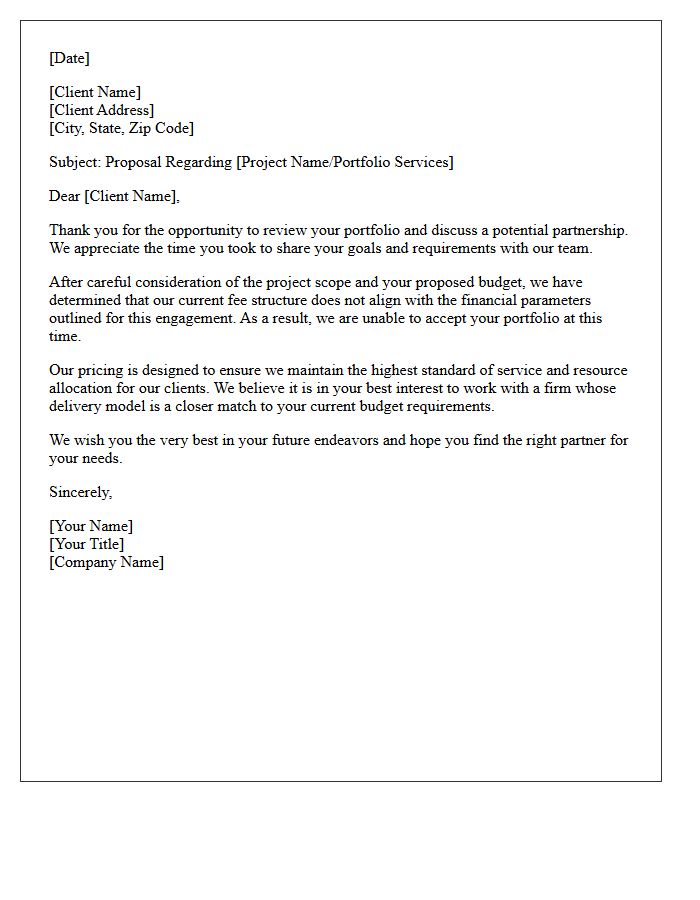
A fee structure misalignment often leads to a client portfolio rejection letter when a prospect's budget cannot sustain the firm's operational costs. This formal document clarifies that the proposed financial terms do not meet minimum management requirements or service standards. To maintain professional relationships, the letter should remain transparent and objective. It ensures both parties avoid unprofitable engagements while directing the potential client toward alternative service providers better suited to their current scale. Clear communication regarding pricing prevents long-term friction and protects the firm's resource allocation and overall profitability.
Geographic Limitation Client Portfolio Rejection Letter
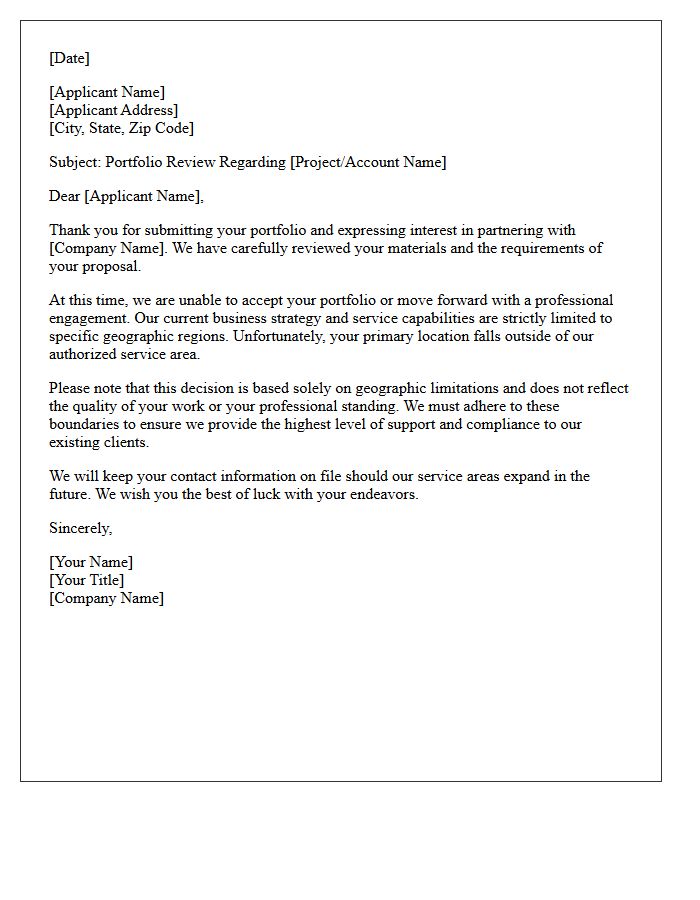
A geographic limitation rejection letter informs potential clients that their location falls outside a firm's authorized service area. This formal notice is a critical step in risk management, ensuring clear communication to prevent future liability or malpractice claims. It must explicitly state that no attorney-client relationship exists while advising the recipient to seek local counsel immediately. By documenting the decision based on jurisdictional boundaries, firms maintain regulatory compliance and protect their professional professional indemnity status while providing the rejected party necessary clarity to pursue alternative legal representation elsewhere.
Unmatched Hiring Values Client Portfolio Rejection Letter
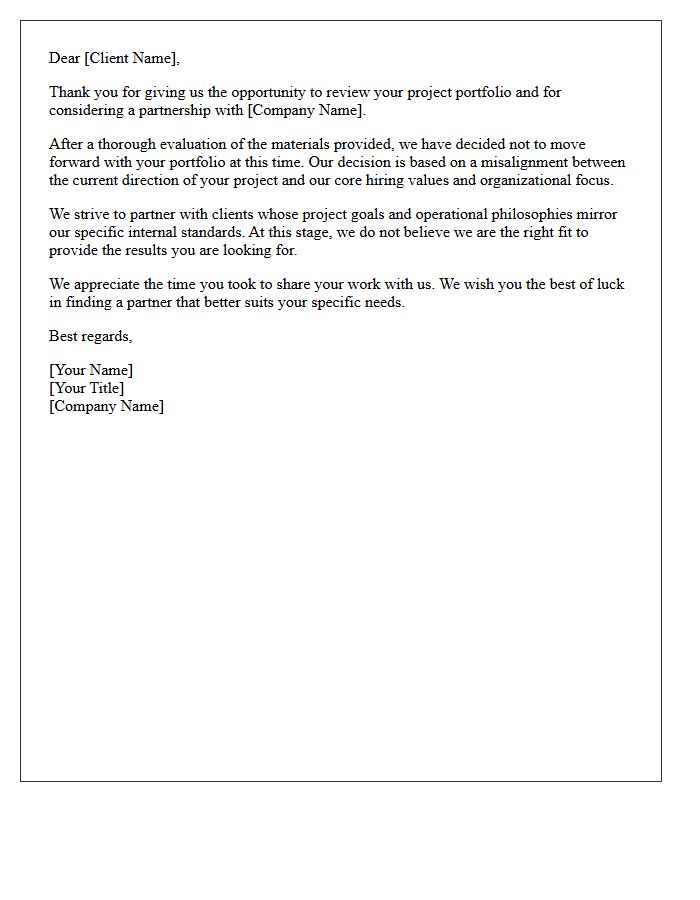
The Unmatched Hiring Values Client Portfolio Rejection Letter serves as a professional communication tool for agencies declining potential partnerships that do not align with their core principles. It clearly outlines the strategic mismatch between a firm's operational culture and the prospective client's needs. By utilizing this document, companies maintain brand integrity and ensure resources are reserved for high-value projects. This transparent approach fosters long-term reputation management while providing the rejected party with concise, respectful feedback regarding the incompatibility of their specific business goals.
Niche Specialization Client Portfolio Rejection Letter
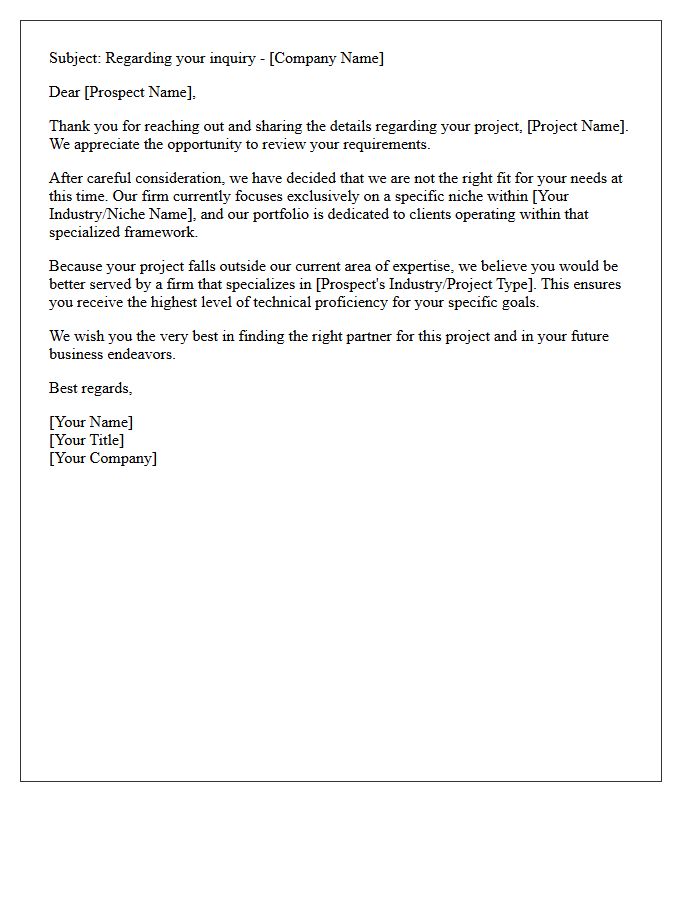
A niche specialization client portfolio rejection letter is a strategic communication used to decline prospects that do not align with your specific expertise. It ensures you maintain professional authority while filtering for high-value projects. The letter should be brief, explaining that the request falls outside your defined niche. To preserve your reputation, always provide a referral to a more suitable colleague. This process protects your workflow efficiency and ensures you only commit to work that strengthens your brand identity and specialized portfolio.
Low Hiring Volume Client Portfolio Rejection Letter
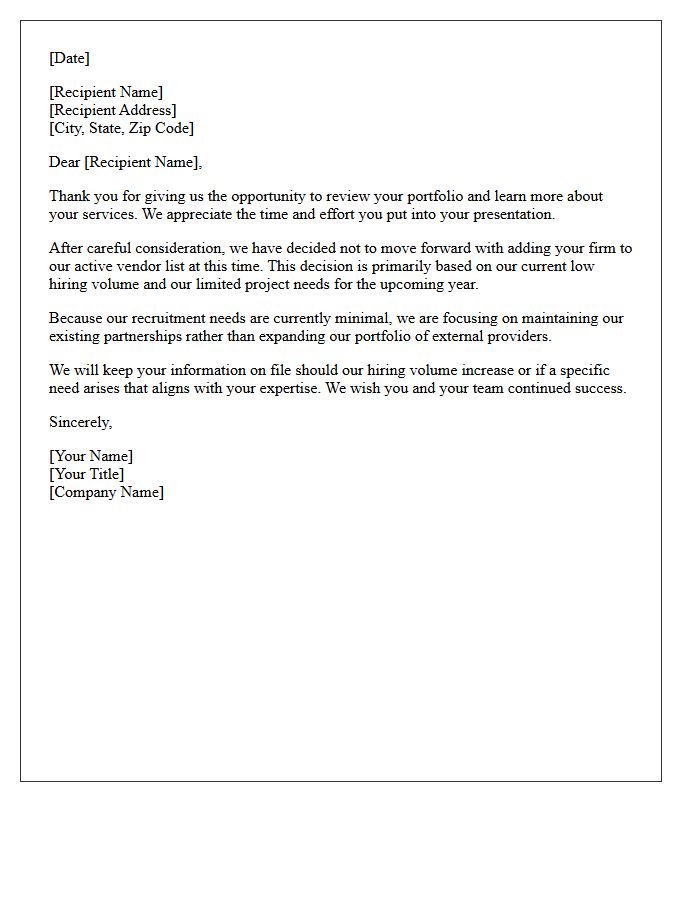
Receiving a Low Hiring Volume Client Portfolio Rejection Letter indicates that your profile was not selected due to limited recruitment capacity. This decision often reflects strategic resource allocation rather than a lack of candidate quality. When a firm manages a low volume of openings, they prioritize a narrow set of specific skills to match immediate needs. It is essential to maintain a professional relationship, as these portfolios are often reviewed again when hiring demand increases. Focus on enhancing your niche expertise to stand out during future high-value selection cycles.
Out Of Scope Client Portfolio Rejection Letter
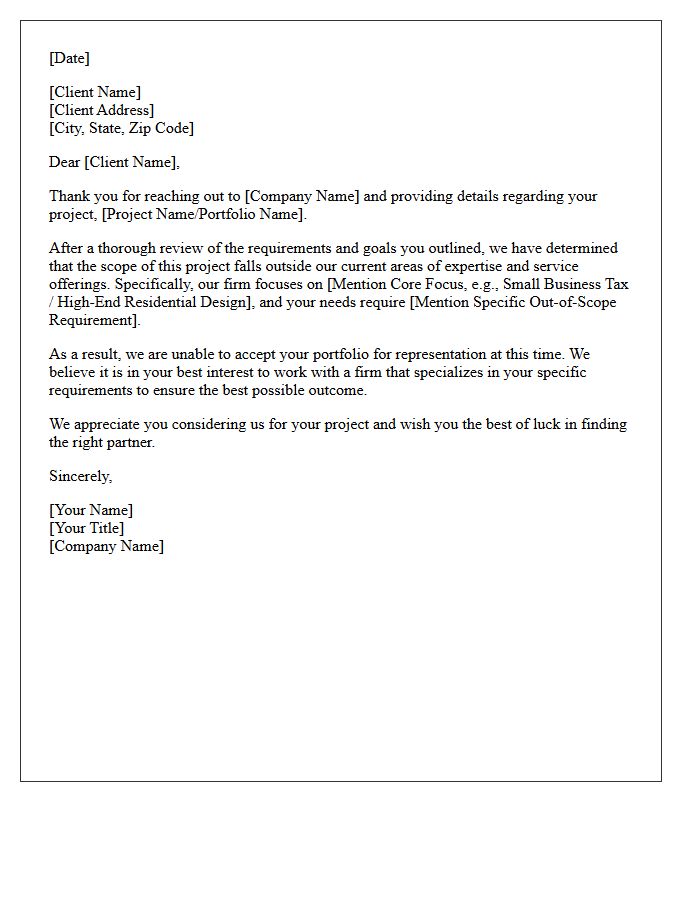
An Out of Scope Client Portfolio Rejection Letter is a formal document used to decline a potential project that does not align with your firm's core competencies or strategic goals. It professionally communicates that the prospect's needs fall outside your expertise, ensuring you maintain brand integrity. A clear rejection prevents future misunderstandings and protects your resource allocation. To preserve professional relationships, it is best practice to provide alternative referrals or resources, helping the client find a suitable match while officially closing the inquiry in your records.
Temporary Waitlist Client Portfolio Rejection Letter
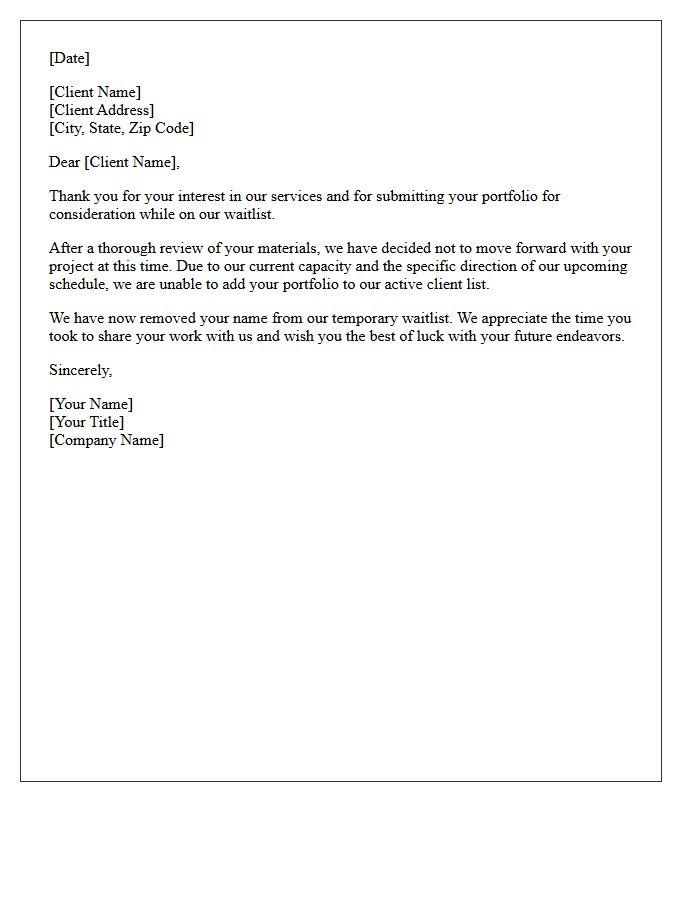
A Temporary Waitlist Client Portfolio Rejection Letter serves as a professional communication tool for firms managing high demand. This document informs potential investors that while their application is currently deferred due to capacity constraints, it is not a final refusal. It helps maintain brand reputation by offering transparency regarding selection criteria and expected timelines. The goal is to manage prospect expectations effectively while keeping the door open for future engagement once portfolio space becomes available, ensuring a professional standard for client relationship management.
Standard Professional Client Portfolio Rejection Letter
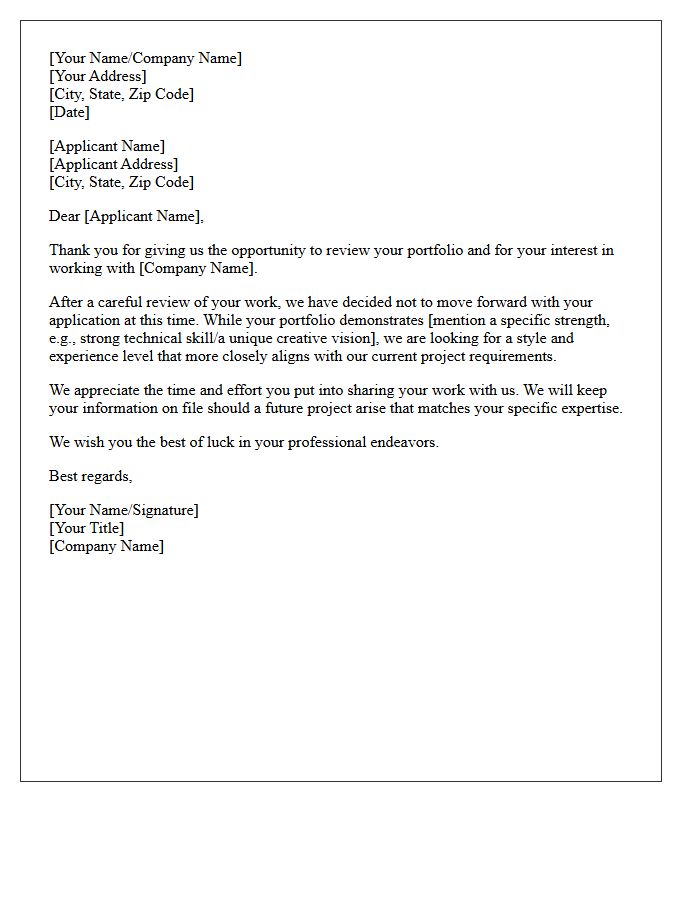
A Standard Professional Client Portfolio Rejection Letter is a formal document used to decline a potential project while maintaining brand reputation. It should clearly state the decision without being overly negative. To ensure professionalism, express gratitude for the submission and provide a brief, neutral reason for the refusal, such as resource constraints or alignment issues. This strategic communication leaves the door open for future networking opportunities, ensuring that the rejected prospect retains a positive impression of your business standards and interpersonal ethics.
Retained Search Requirement Client Portfolio Rejection Letter
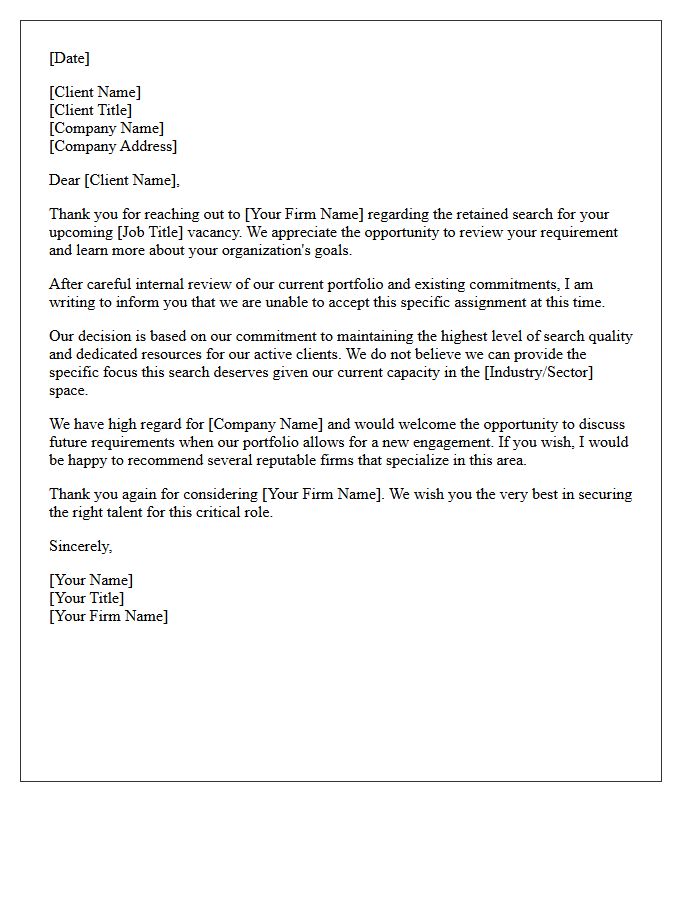
A retained search rejection letter is a professional document sent to candidates who were not selected after being presented in a client portfolio. This communication is vital for maintaining a high-quality candidate experience and protecting the firm's reputation. The letter should be timely, respectful, and transparent, acknowledging the candidate's time and qualifications. Providing brief, constructive feedback when possible ensures a positive relationship for future opportunities. Proper closure prevents ambiguity and reaffirms the firm's professionalism in a competitive executive search environment.
Incomplete Application Client Portfolio Rejection Letter
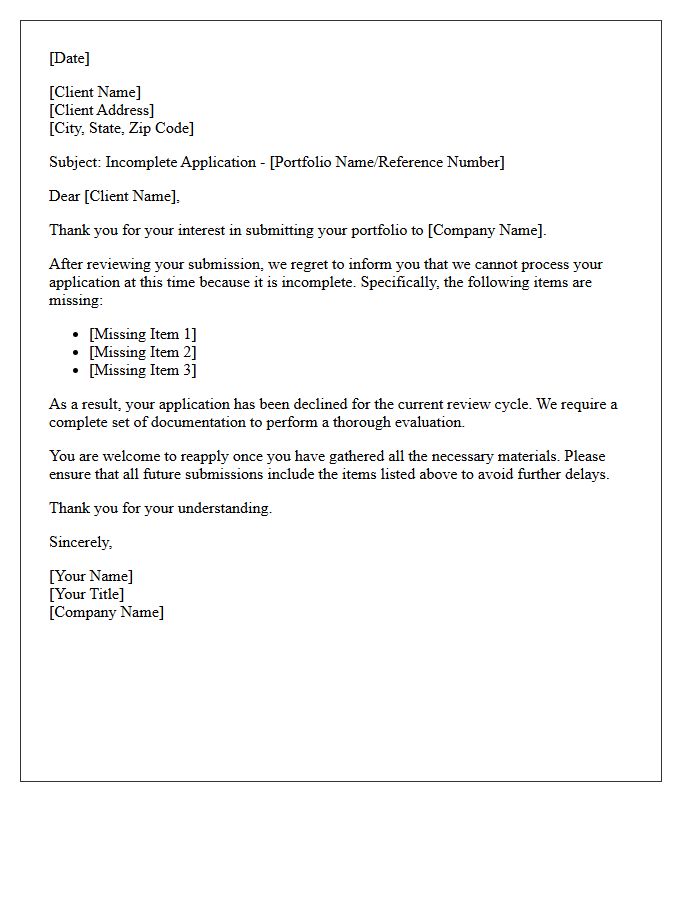
An Incomplete Application Client Portfolio Rejection Letter is a formal notice sent when a submission fails to meet mandatory documentation requirements. This document clearly outlines the specific missing elements that prevented a full compliance review or evaluation. To maintain professional standards, the letter should offer a reapplication timeframe and precise instructions on how to rectify the omissions. Providing clear feedback helps applicants understand the deficiency, ensuring that future portfolio submissions are comprehensive and meet all established onboarding criteria for successful processing.
What should be included in a professional portfolio rejection letter?
A professional rejection letter should clearly state the decision, express gratitude for the submission, provide specific but constructive feedback if possible, and maintain a polite tone to preserve the professional relationship.
How do I tell a creative agency their portfolio was not selected?
Inform the agency by thanking them for the time spent on their proposal, stating that you have decided to move forward with another candidate whose style or experience more closely aligns with your current project needs, and wishing them success in future endeavors.
Is it necessary to provide detailed feedback in a portfolio rejection?
While not mandatory, providing brief, actionable feedback is considered best practice in the creative industry. It helps the professional understand the gap between their work and your requirements, which builds goodwill and professional respect.
What is the best way to handle a follow-up after sending a rejection letter?
If a professional requests further clarification, respond briefly and stay focused on the specific project criteria. Reiterate that the decision was based on "fit" for the particular scope rather than a lack of talent or quality in their overall portfolio.
When is the best time to send a portfolio rejection notice to a freelancer?
You should send the rejection notice as soon as a final decision has been made. Prompt communication allows the freelancer to stop holding time in their schedule and focus on pursuing other opportunities.

Comments