
Rejecting an internal applicant requires a delicate balance of professionalism and career support. Maintaining strong workplace relationships depends on clear, constructive feedback and encouragement for future growth. Our guide explains how to draft a compassionate internal candidate rejection letter that preserves morale while protecting your employer brand. To help you get started, below are some ready to use templates.
Image cover: How to Reject Internal Candidates: Professional Letter Samples and Templates
Letter Samples List
- Standard Internal Candidate Selected Rejection Letter
- Recruitment Agency Rejection Letter Due to Internal Hire
- Post-Interview Rejection Letter for Internal Candidate Selection
- External Applicant Rejection Letter Following Client Internal Hire
- Shortlisted Candidate Rejection Letter After Internal Placement
- Executive Role Internal Candidate Selected Rejection Letter
- Final Stage Rejection Letter Due to Internal Promotion
- Contract Position Internal Candidate Selected Rejection Letter
- Technical Role Rejection Letter Due to Internal Selection
- Client Internal Transfer Decision Rejection Letter
- Agency Candidate Rejection Letter for Internal Role Fill
- Entry Level Internal Candidate Selected Rejection Letter
- Mid-Level Position Internal Selection Rejection Letter
Standard Internal Candidate Selected Rejection Letter
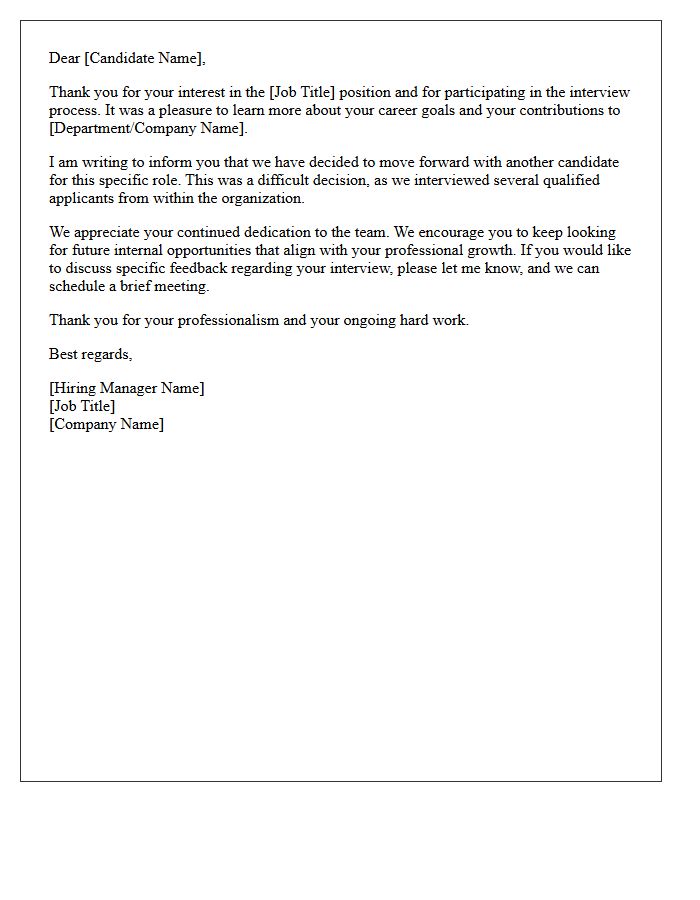
A standard internal candidate rejection letter maintains professional relationships while providing clarity. It should express genuine appreciation for the employee's contribution and interest in growth. Clearly state that another candidate was selected, but emphasize that the decision was based on specific role requirements. To ensure positive morale, offer constructive feedback and encourage future applications for internal mobility. Handling this process with transparency and professionalism is essential for retaining talent and protecting the company culture after a competitive selection process.
Recruitment Agency Rejection Letter Due to Internal Hire
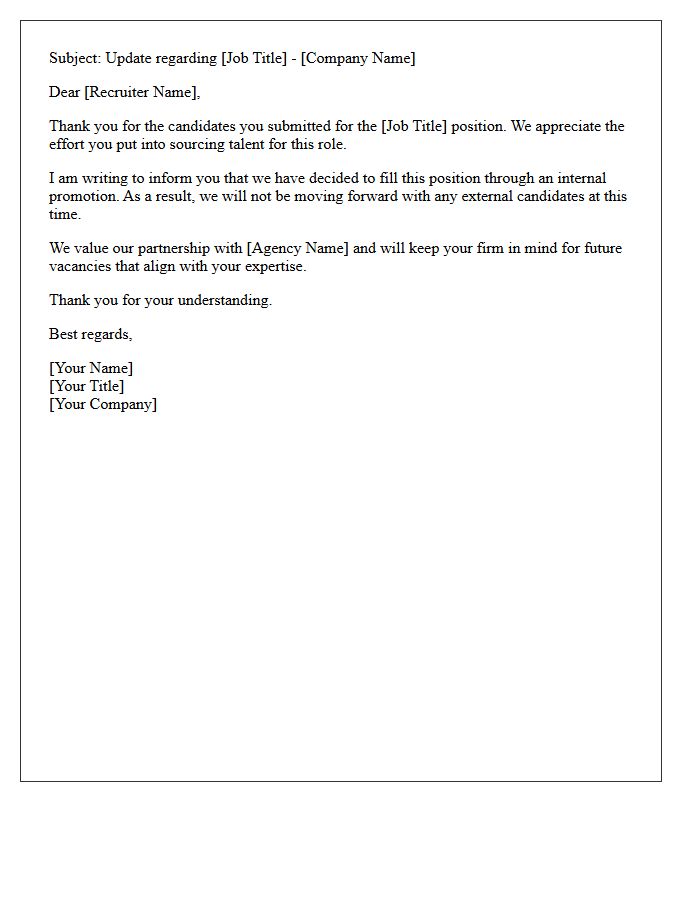
Receiving a rejection letter because of an internal hire signifies that the company prioritized existing talent familiar with their culture and workflows. While frustrating, this outcome is rarely a reflection of your professional qualifications. It is essential to maintain a positive relationship with the recruitment agency, as they can advocate for you in future roles. Professionalism during this stage ensures you remain a top candidate for upcoming vacancies. Always request feedback to refine your approach, as internal shifts often create new external opportunities within the same organization.
Post-Interview Rejection Letter for Internal Candidate Selection
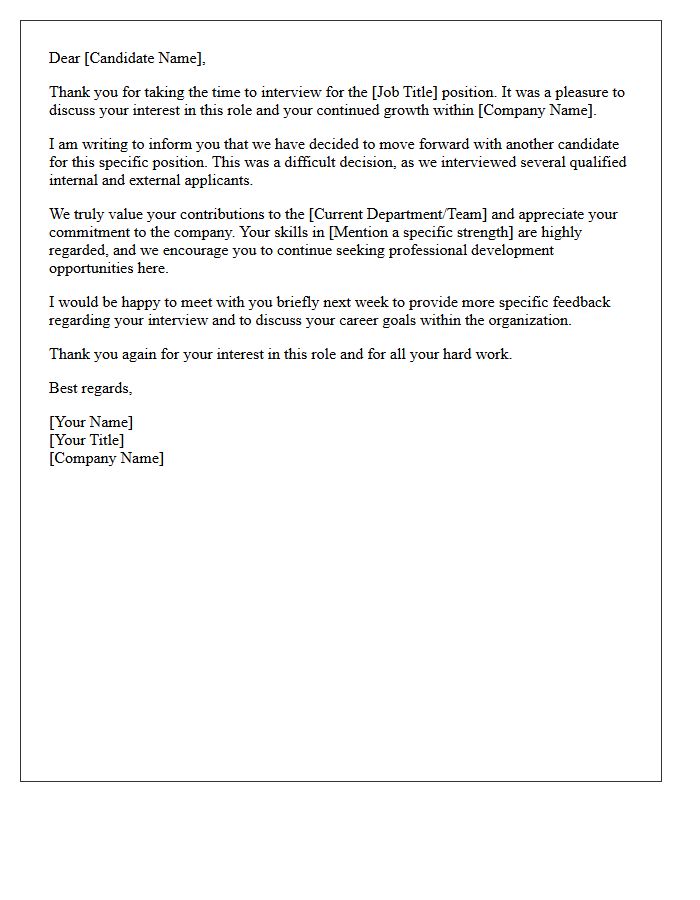
Providing a professional post-interview rejection letter for internal candidates is vital for maintaining workplace morale. Unlike external applicants, internal staff require constructive feedback to support their career development within the organization. The message should be delivered promptly and personally, ideally through a meeting before a formal email. Expressing sincere gratitude for their contribution helps preserve the professional relationship. Clearly explaining the selection criteria without discouraging the employee ensures they remain motivated and understand how to improve for future internal growth opportunities.
External Applicant Rejection Letter Following Client Internal Hire
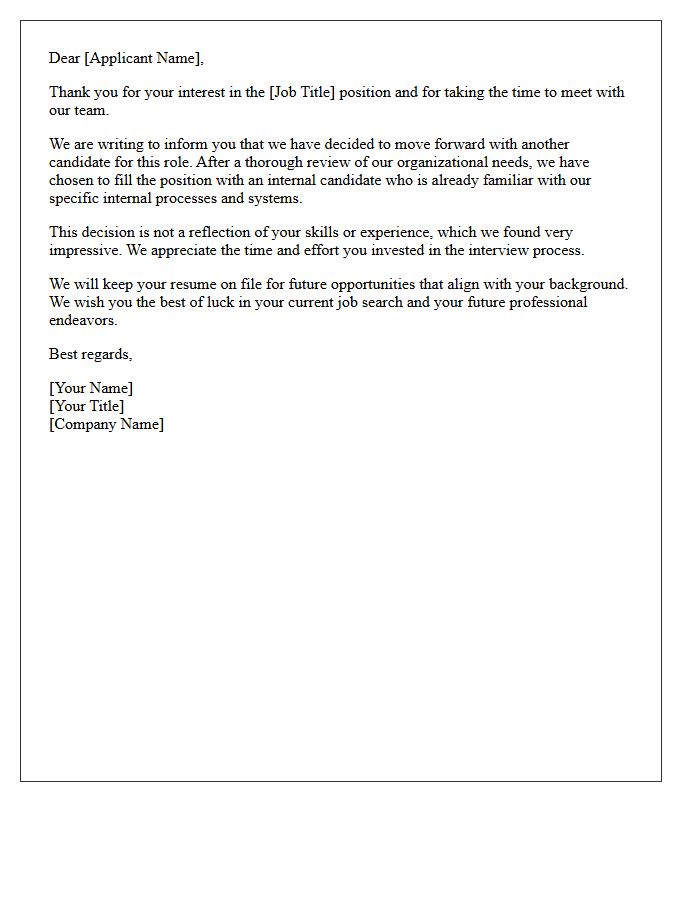
An external applicant rejection letter following an internal hire is a professional notice informing candidates that the position was filled by an existing employee. It is crucial to maintain positive candidate experience by emphasizing that the decision was based on internal mobility rather than a lack of external qualification. This transparency preserves your employer brand and keeps doors open for future talent. Ensure the tone is respectful and appreciative, thanking the applicant for their time while clearly stating that the recruitment process for this specific role has concluded.
Shortlisted Candidate Rejection Letter After Internal Placement
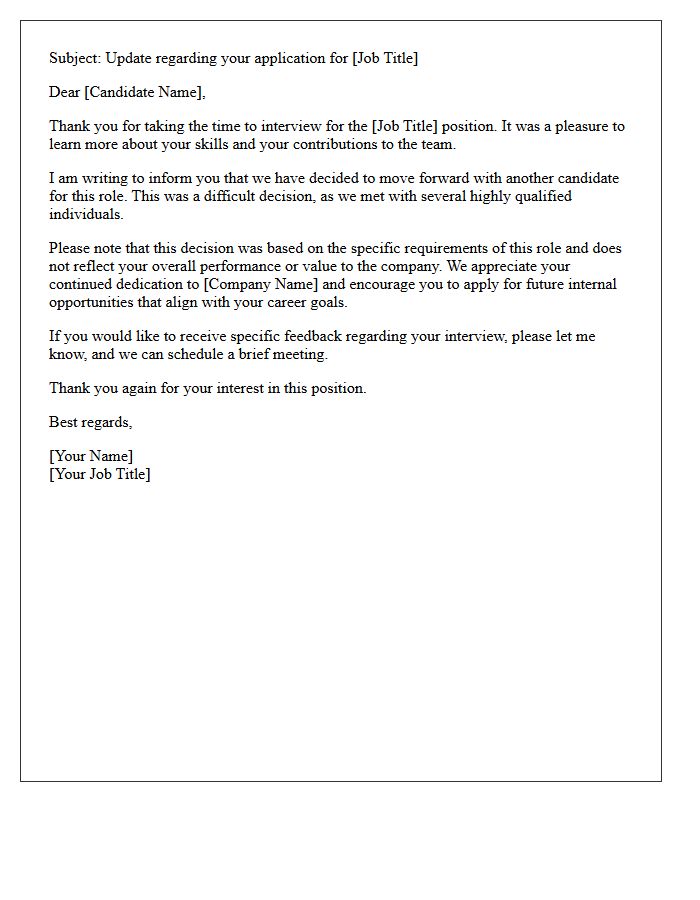
Sending a rejection letter after an internal placement requires sensitivity and transparency. It is crucial to provide constructive feedback to maintain employee morale and support professional growth. Emphasize that the decision was based on specific role requirements rather than lack of merit. Encourage the candidate to continue pursuing career development opportunities within the organization. Professional communication ensures that internal talent feels valued despite not securing the position, preserving a positive workplace culture and long-term retention goals.
Executive Role Internal Candidate Selected Rejection Letter
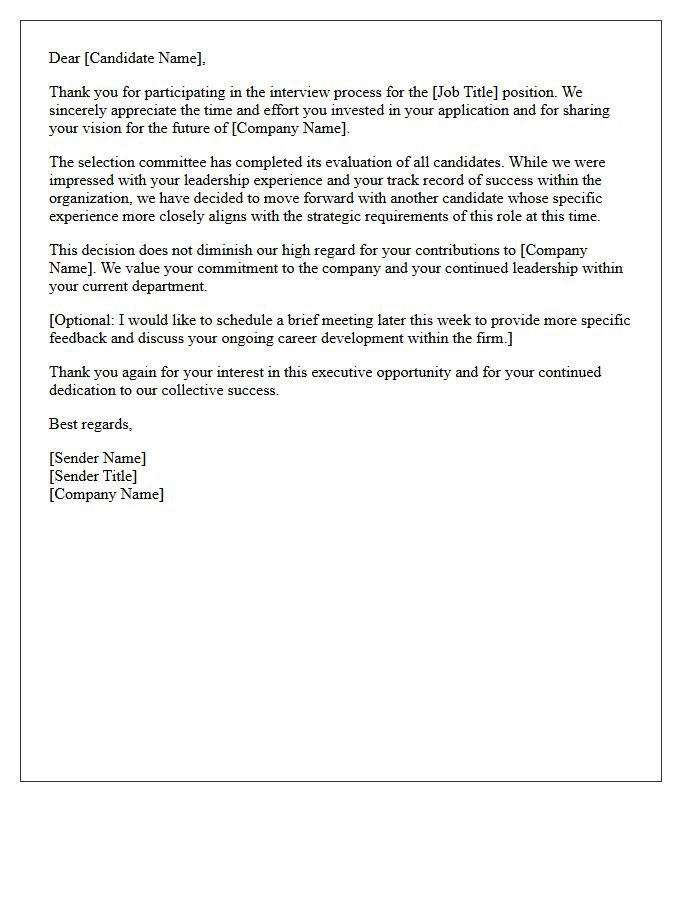
When drafting an executive rejection letter for an internal candidate, prioritize transparency and professional courtesy. Acknowledge their leadership contributions and specific strengths demonstrated during the interview process. Clearly explain that the decision was based on strategic alignment with the organization's future goals. Offer a one-on-one feedback session to discuss career development and future internal mobility. Maintaining the candidate's engagement is vital for long-term talent retention and organizational morale, ensuring they feel valued despite not securing the specific executive role at this time.
Final Stage Rejection Letter Due to Internal Promotion
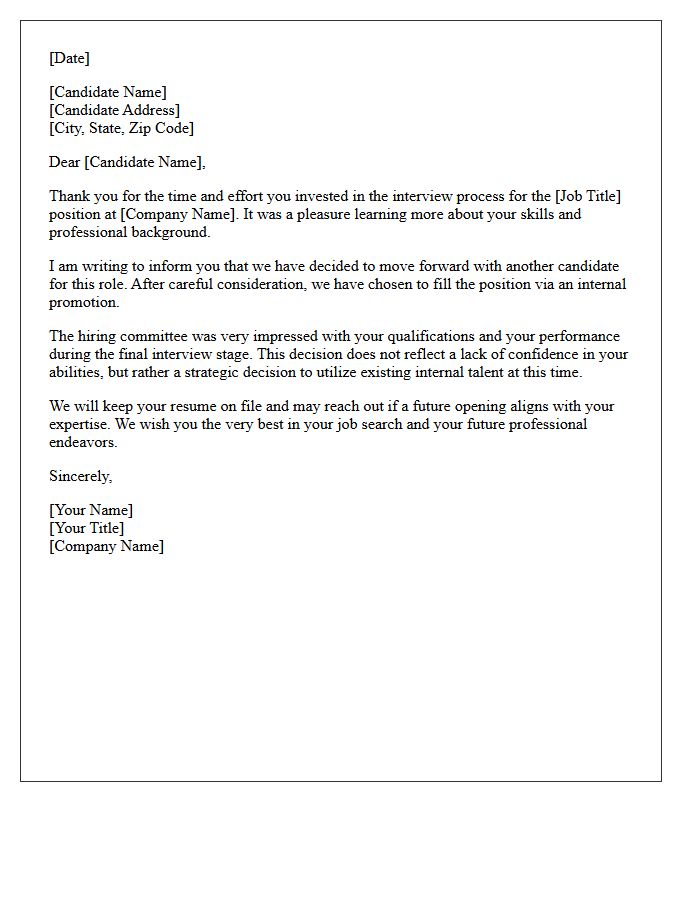
Receiving a rejection letter after the final interview stage because of an internal promotion is common. Organizations often prioritize existing employees to foster loyalty and reduce training costs. While frustrating, this outcome confirms you were a top-tier candidate. Always send a professional follow-up email to maintain your network; internal shifts frequently create new vacancies elsewhere. View this as a positive signal of your qualifications and remain persistent, as your performance likely made you a preferred choice for future opportunities within the company.
Contract Position Internal Candidate Selected Rejection Letter
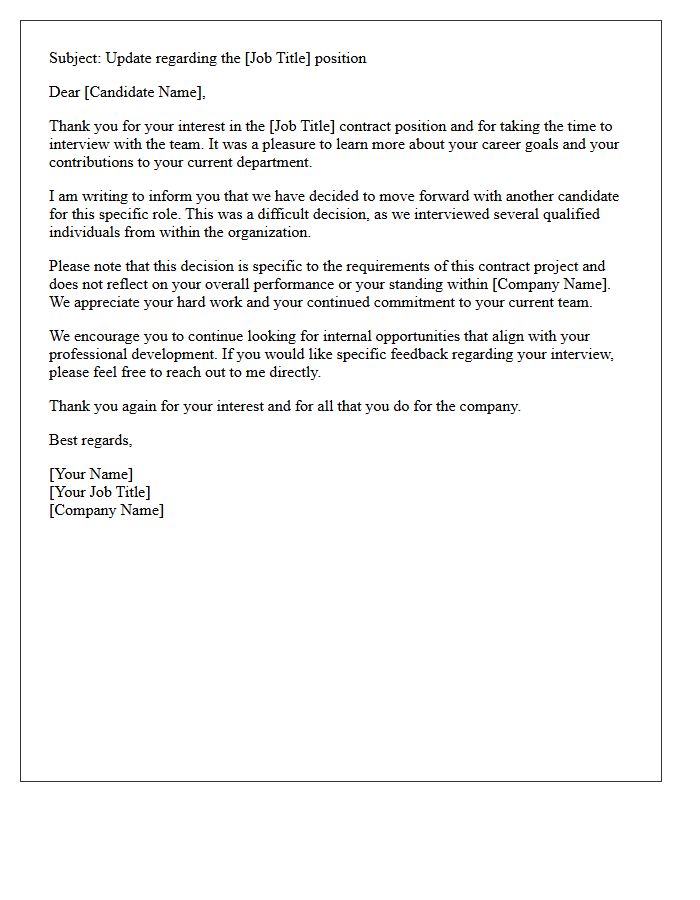
When sending a rejection letter to external applicants because an internal candidate was selected, maintain professionalism and transparency. Clearly state that the position has been filled by someone already within the organization. This approach builds trust and protects your employer brand. Express sincere gratitude for their time and interest, while encouraging them to apply for future contract roles. Keeping the message concise and respectful ensures a positive relationship with potential talent for upcoming opportunities, even when they are not the right fit for the current opening.
Technical Role Rejection Letter Due to Internal Selection
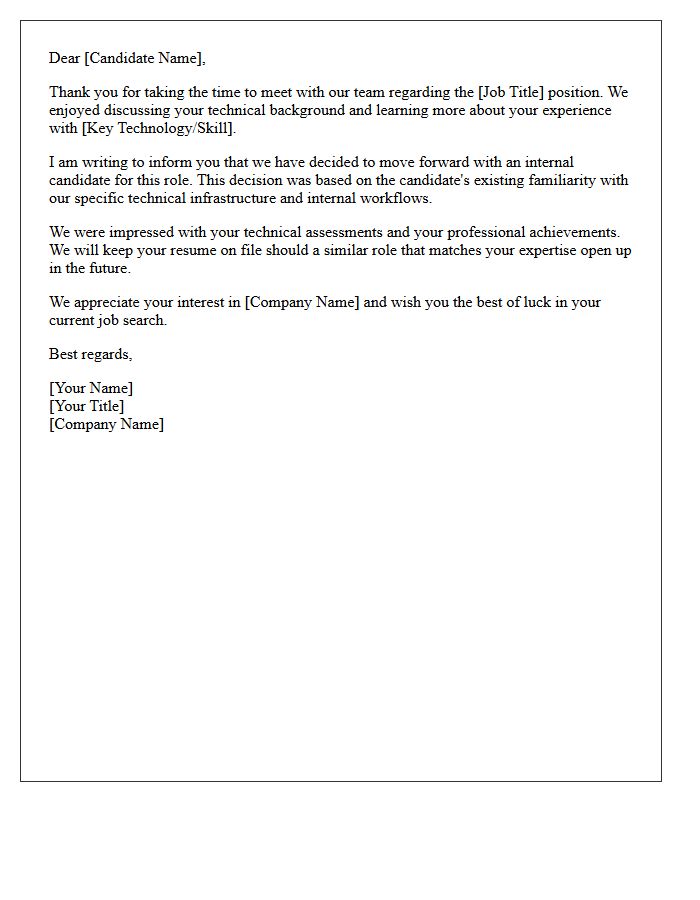
Receiving a technical role rejection letter due to internal selection means the company chose an existing employee for the position. This outcome often reflects internal mobility policies rather than a lack of your technical proficiency. Organizations prioritize internal candidates to reduce onboarding costs and reward loyalty. It is essential to maintain a professional connection with the hiring manager, as your candidate profile remains valued for future external openings. Use this feedback to refine your niche skills, ensuring you remain a top contender when the next external hiring cycle begins.
Client Internal Transfer Decision Rejection Letter
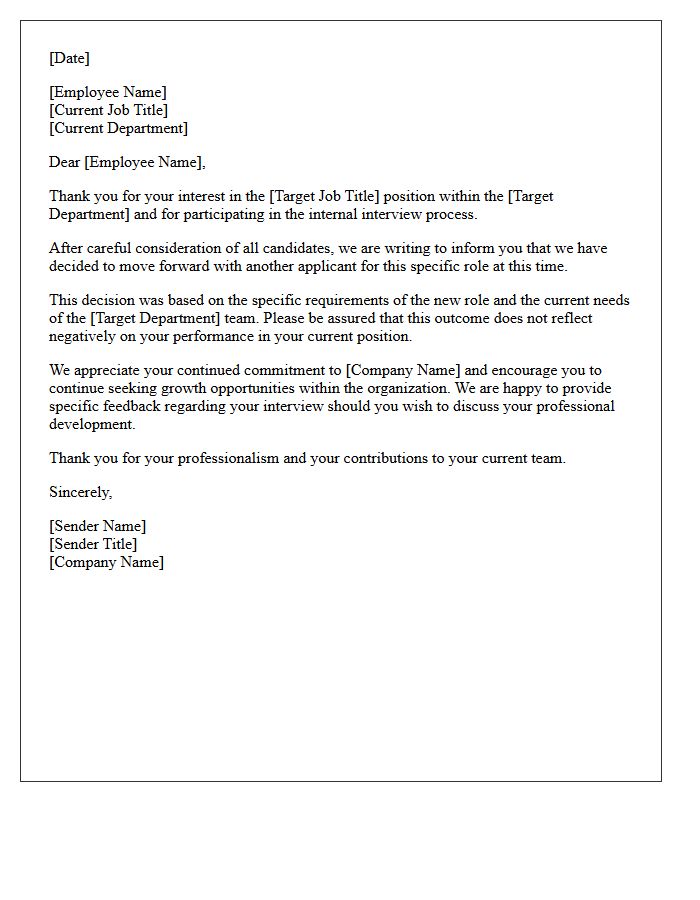
A client internal transfer decision rejection letter formally notifies an employee that their request to move to a different department or role has been denied. It is crucial to maintain professionalism while clearly explaining the business justification for the decision. The letter should express gratitude for the applicant's interest and provide constructive feedback to support their future growth. Ensuring transparency helps preserve employee engagement and morale, even when the outcome is unfavorable. Handling these communications with empathy and clarity is essential for a positive organizational culture.
Agency Candidate Rejection Letter for Internal Role Fill
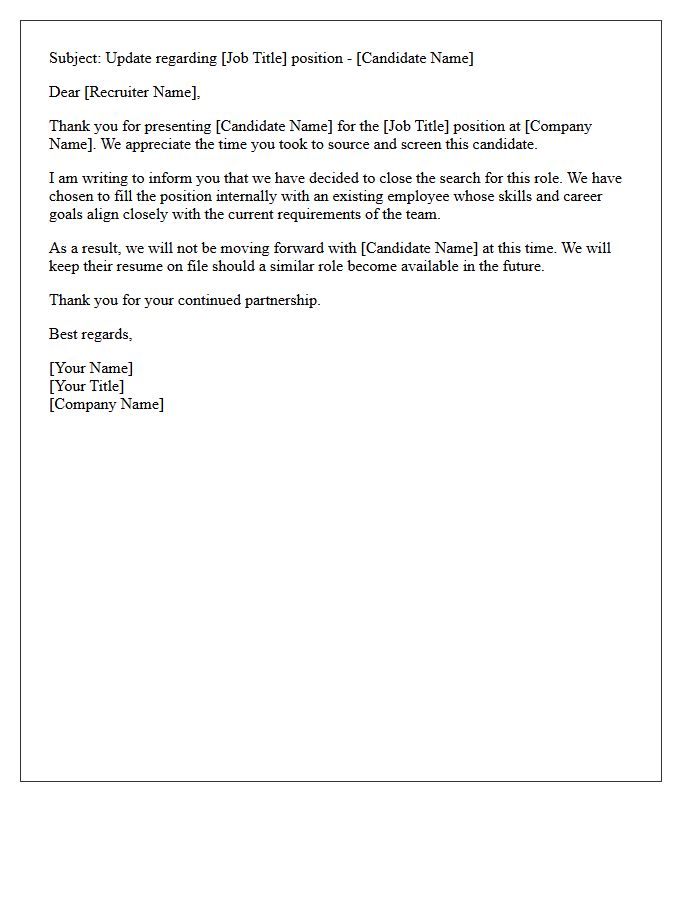
When an agency candidate is bypassed because an internal employee filled the role, transparency is vital. Agencies must inform candidates promptly that the position was awarded to an existing staff member, emphasizing that the decision was based on internal mobility policies rather than candidate shortcomings. This professional courtesy maintains your employer brand and keeps external talent engaged for future opportunities. Clearly stating the role was closed due to an internal placement provides a definitive, neutral reason for rejection that protects the candidate experience and agency reputation.
Entry Level Internal Candidate Selected Rejection Letter
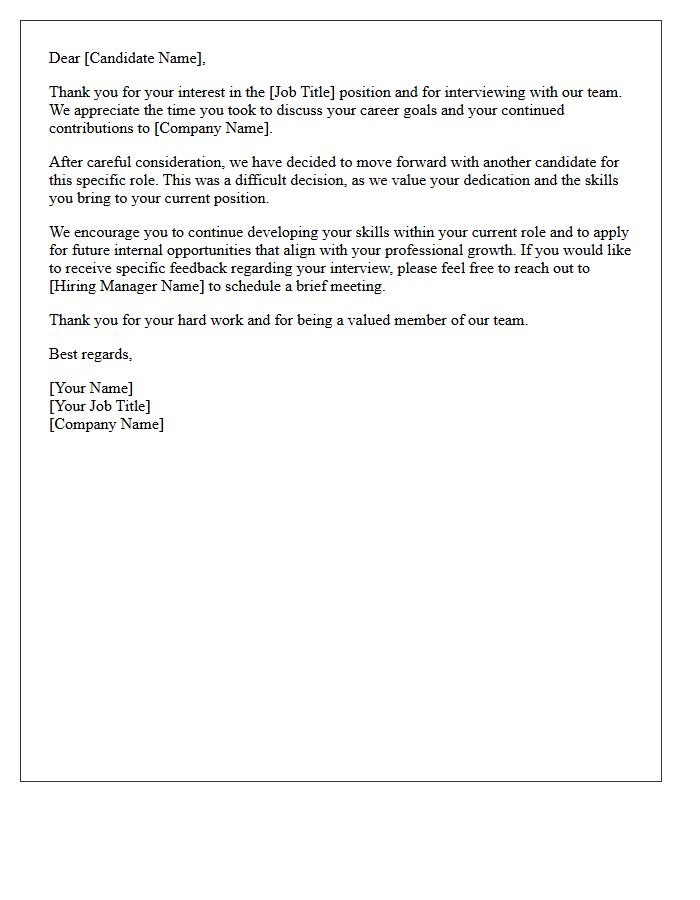
When drafting an Entry Level Internal Candidate Selected Rejection Letter, prioritize transparency and professional encouragement. Express sincere appreciation for their current contributions to the company. Clearly state that while another internal applicant was chosen, their interest in career growth is valued. Offer constructive feedback to help them prepare for future opportunities and maintain high morale. Ensure the tone remains supportive, as retaining internal talent is vital for organizational success. Closing with an invitation for future mentorship or application cycles fosters a positive work environment and long-term loyalty.
Mid-Level Position Internal Selection Rejection Letter
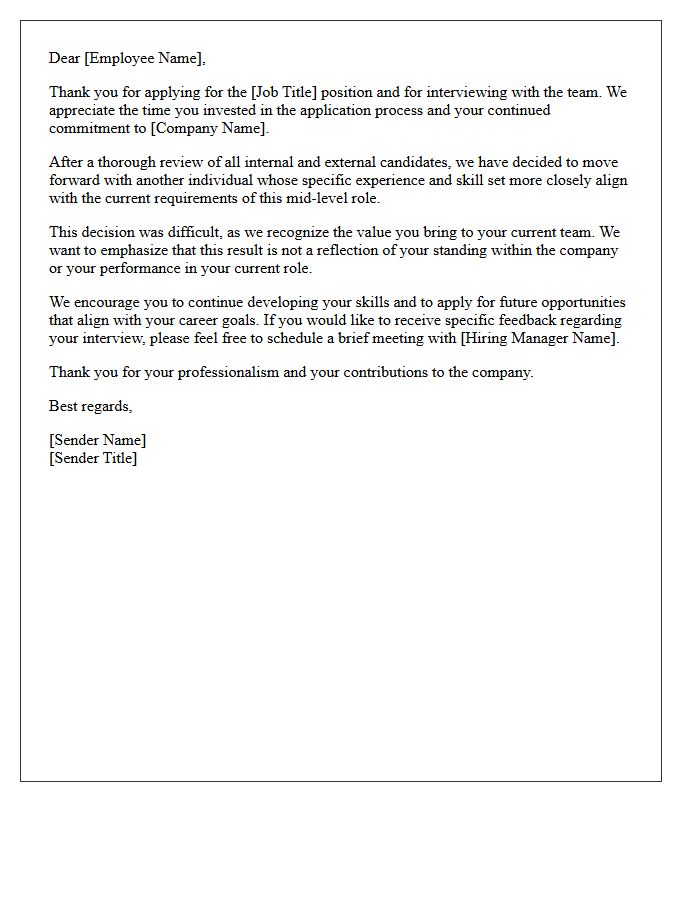
Receiving a rejection letter for a mid-level internal position requires maintaining professionalism while seeking constructive feedback. It is essential to request a debriefing with the hiring manager to understand specific skill gaps or performance metrics. This transparency helps you align your professional development with company goals. Use the outcome as a strategic opportunity to strengthen your internal network and demonstrate resilience. By handling the news gracefully, you preserve your reputation and remain a top candidate for future leadership advancements within the organization.
How should I inform an internal candidate they were not selected for a role?
Internal candidates should ideally be informed via a face-to-face meeting or a direct phone call before the formal rejection letter is sent. This personal touch maintains morale and shows respect for their current contribution to the company.
What should be included in an internal candidate rejection letter?
The letter should express gratitude for their application, clearly state that they were not selected for this specific role, highlight their value to the team, and offer constructive feedback to help with their career development.
Should I provide feedback to internal employees who were rejected for a promotion?
Yes, providing specific, actionable feedback is essential for internal candidates. It helps them understand the skills they need to develop for future opportunities and demonstrates the company's commitment to their professional growth.
How do I encourage an internal candidate to apply for future roles after a rejection?
The rejection letter should emphasize that the decision was based on the specific requirements of the current role and not a reflection of their overall worth. Encourage them to continue seeking growth opportunities and mention any internal development programs available.
When is the best time to send an internal candidate rejection letter?
The formal rejection letter should be sent immediately after the verbal notification and before the chosen candidate is publicly announced. This ensures the internal applicant hears the news directly from the hiring manager rather than through office rumors.

Comments