
Receiving a post-first interview rejection letter is a common part of the professional journey. While disappointing, these notifications provide essential closure and offer a chance to maintain a positive network with potential employers. Handling this feedback gracefully demonstrates high emotional intelligence and professional resilience. To help you navigate this process efficiently, below are some ready to use templates.
Image cover: Professional Rejection Email Templates After a First Interview
Letter Samples List
- Standard Agency Post-First Interview Rejection Letter
- Client Preference Post-First Interview Rejection Letter
- Skill Gap Post-First Interview Rejection Letter
- Cultural Mismatch Post-First Interview Rejection Letter
- Position Closure Post-First Interview Rejection Letter
- Overqualified Candidate Post-First Interview Rejection Letter
- Underqualified Candidate Post-First Interview Rejection Letter
- Salary Expectation Mismatch Post-First Interview Rejection Letter
- Lack Of Industry Experience Post-First Interview Rejection Letter
- Change In Client Direction Post-First Interview Rejection Letter
- Keep On File Post-First Interview Rejection Letter
- Alternative Role Suggestion Post-First Interview Rejection Letter
Standard Agency Post-First Interview Rejection Letter
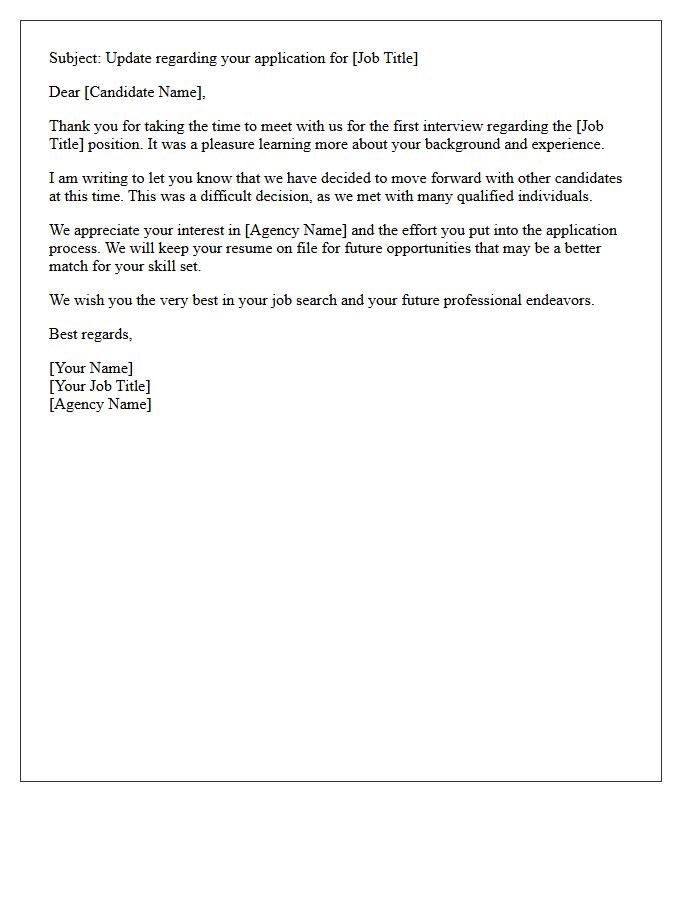
A standard agency post-first interview rejection letter serves as a professional notification that your candidacy will not proceed. Its primary purpose is to maintain a positive employer brand while providing a clear conclusion to the initial screening phase. These messages are typically concise, expressing gratitude for your time without offering specific feedback due to legal or volume constraints. Receiving this notice is a routine part of the hiring process, allowing candidates to focus their energy on other opportunities while keeping doors open for future roles within the organization.
Client Preference Post-First Interview Rejection Letter
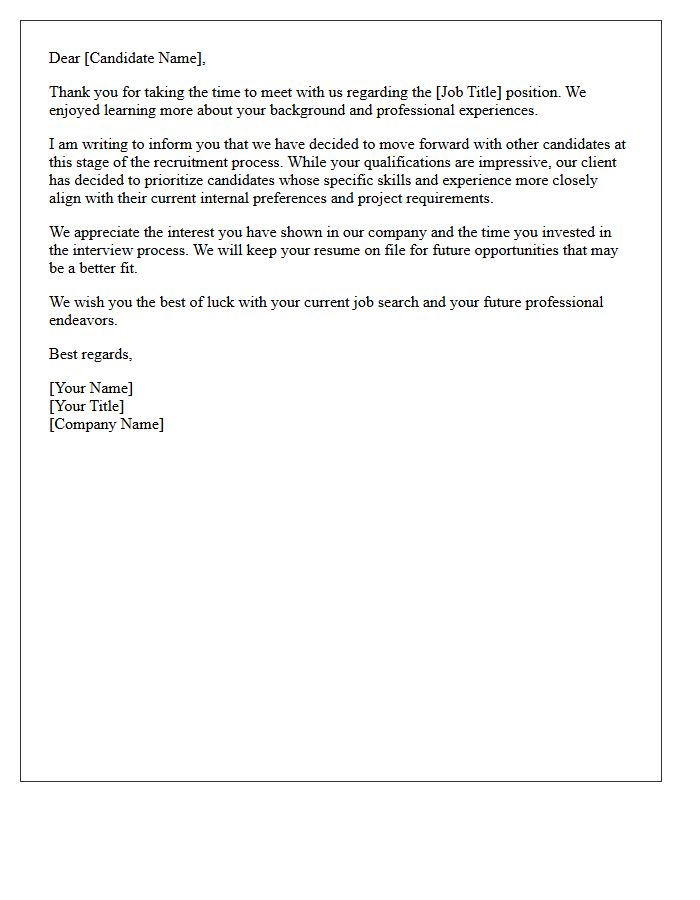
A client preference post-first interview rejection letter should remain professional and transparent. It is essential to inform the candidate clearly that while their skills are valued, the hiring team has decided to move forward with a different profile that more closely aligns with current business needs. Providing constructive feedback helps maintain a positive employer brand and leaves the door open for future opportunities. Always express sincere appreciation for their time and interest, ensuring the communication is prompt, respectful, and encourages a professional connection via platforms like LinkedIn.
Skill Gap Post-First Interview Rejection Letter
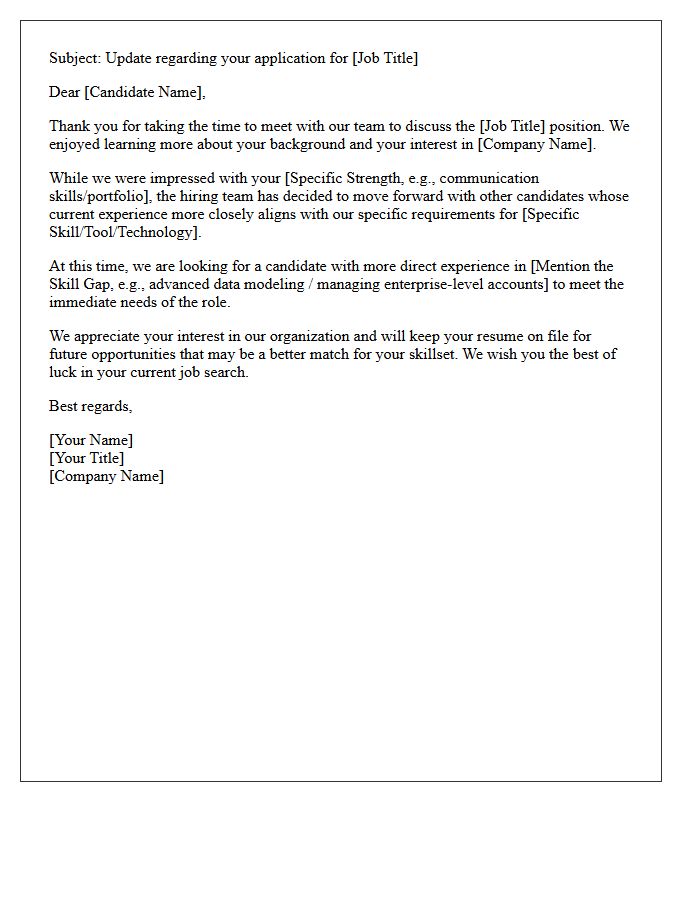
Receiving a rejection letter citing a skill gap after your first interview is valuable feedback for your career progression. It indicates that while your cultural fit and potential were evident, specific technical competencies or certifications are currently missing. Use this constructive criticism to identify precise areas for professional development. Addressing these deficiencies through targeted training or projects enhances your employability for future roles. Always respond professionally to maintain your network, as closing that gap could make you the ideal candidate for upcoming opportunities within the same organization.
Cultural Mismatch Post-First Interview Rejection Letter
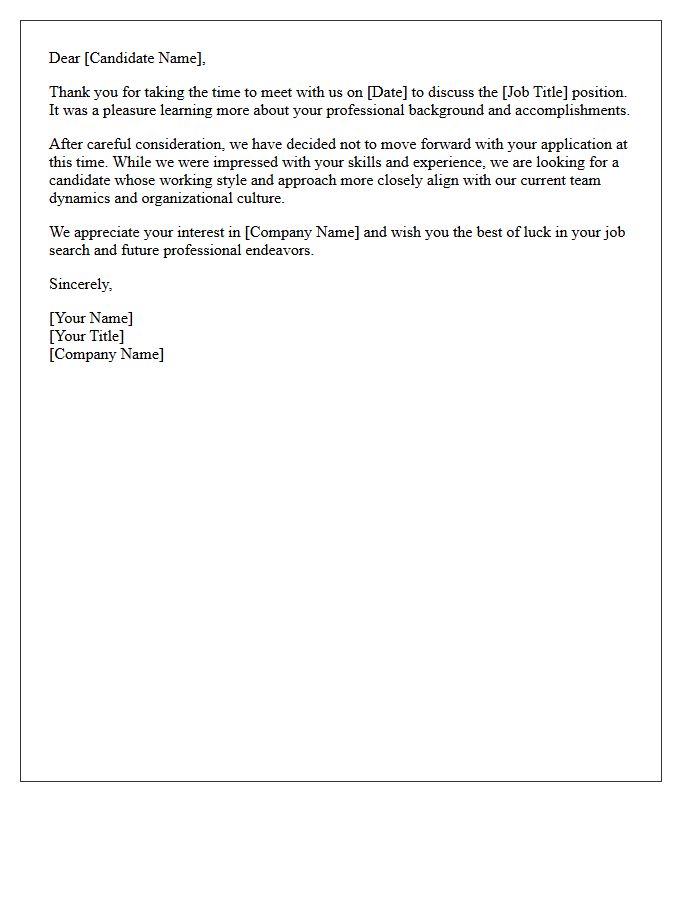
Receiving a rejection letter citing cultural mismatch after a first interview often indicates a misalignment between your personal work style and the company's internal values. This feedback is rarely about your technical skills; instead, it highlights a perceived difference in behavioral expectations or communication approaches. Understanding this helps you refine your target list to organizations where your personality and ethics naturally thrive. Use this insight to ask deeper questions in future interviews, ensuring a mutual cultural fit that fosters long-term professional success and job satisfaction.
Position Closure Post-First Interview Rejection Letter
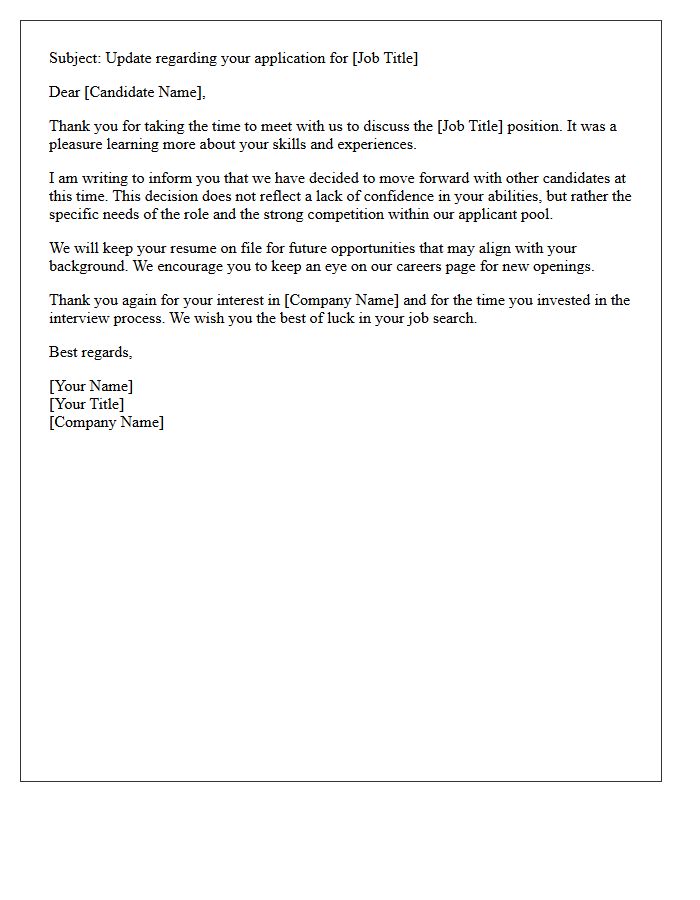
Receiving a position closure notice after your first interview indicates the company has decided not to move forward with any candidates for that specific role. This rejection often occurs due to internal restructuring, budget cuts, or shifting business priorities rather than your individual performance. It is essential to remain professional and send a brief thank-you note to maintain your professional network. This proactive approach ensures you stay on their radar for future opportunities that may align better with the organization's evolving needs and long-term strategic goals.
Overqualified Candidate Post-First Interview Rejection Letter
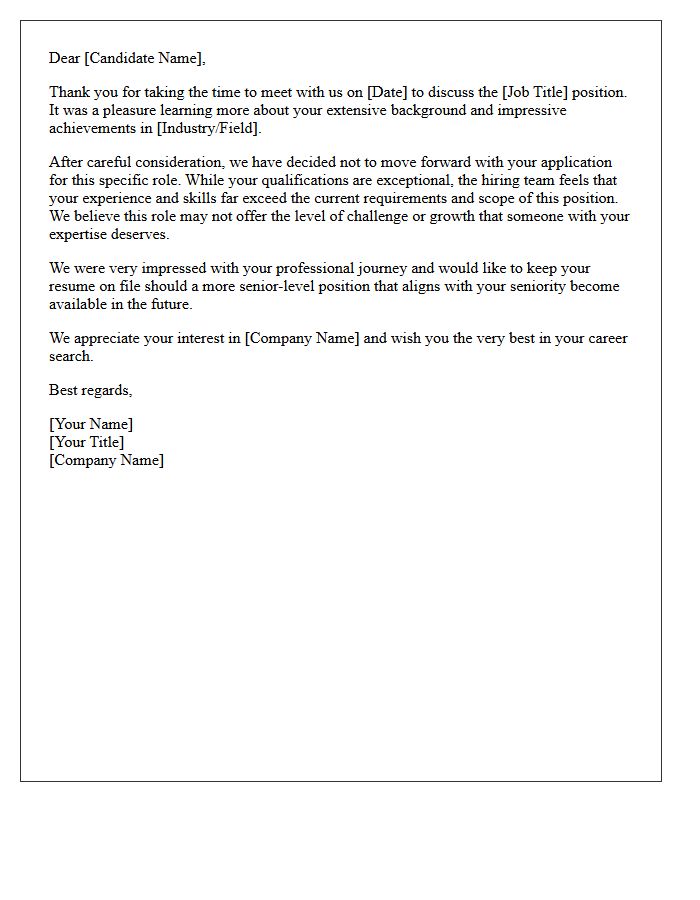
When drafting an Overqualified Candidate Rejection Letter after the first interview, prioritize transparency and professional courtesy. Clearly explain that while their extensive expertise is impressive, the role's current scope may not provide the long-term engagement or growth they deserve. Focus on alignment between the position's demands and the candidate's advanced seniority. Expressing sincere gratitude for their time helps maintain a positive employer brand, keeping the door open for future leadership opportunities that better match their high-level skill set and career trajectory.
Underqualified Candidate Post-First Interview Rejection Letter
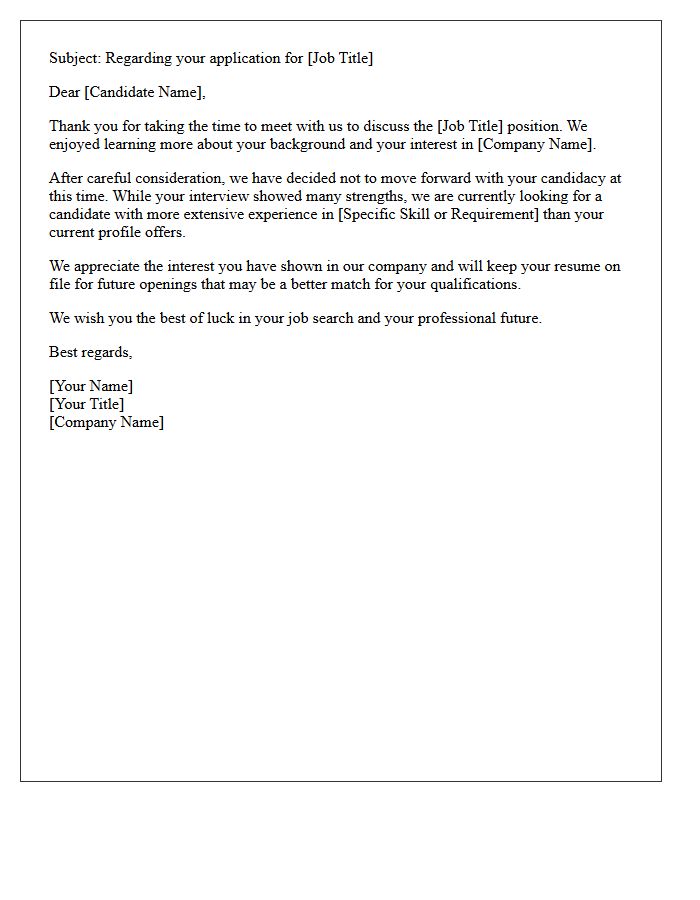
An Underqualified Candidate Post-First Interview Rejection Letter is a professional communication sent after an initial meeting to inform an applicant they will not proceed. It is vital to maintain brand reputation by being prompt and respectful. The message should focus on the misalignment of skills relative to current business needs rather than personal shortcomings. Providing constructive feedback is optional but valued. A clear, empathetic rejection helps candidates find suitable roles while ensuring a positive candidate experience, protecting your company's image for future recruitment cycles.
Salary Expectation Mismatch Post-First Interview Rejection Letter
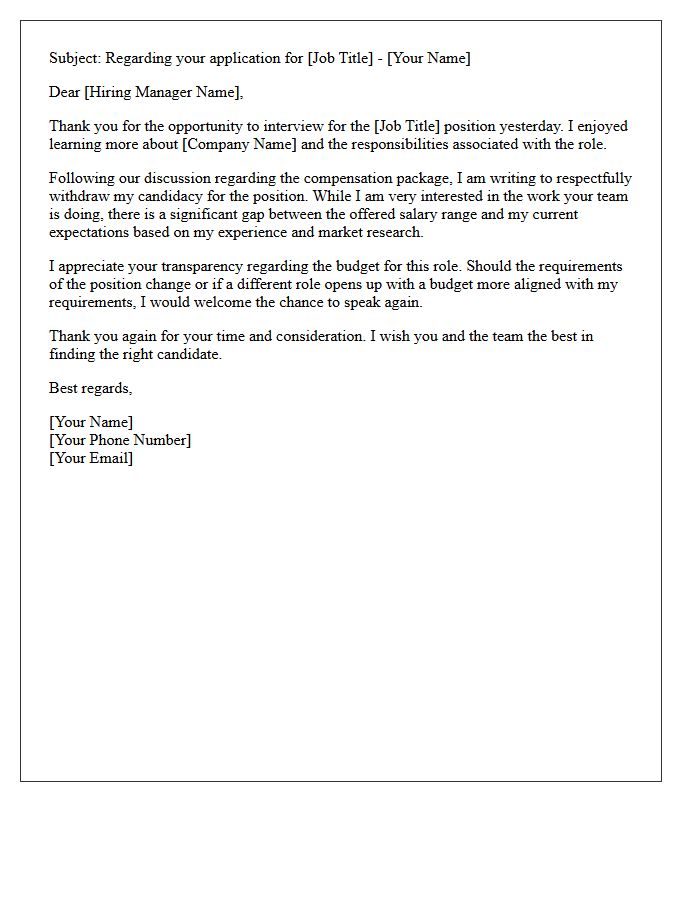
Receiving a rejection letter after a first interview often stems from a salary expectation mismatch. If your required compensation exceeds the pre-approved budget, employers may terminate the process immediately. To avoid this, research market rates thoroughly and discuss budget transparency early. If you are rejected for this reason, consider sending a polite follow-up to express flexibility if the role is your top priority. Understanding your financial value versus company constraints is essential for navigating future negotiations and securing a position that aligns with your professional needs and their fiscal limits.
Lack Of Industry Experience Post-First Interview Rejection Letter
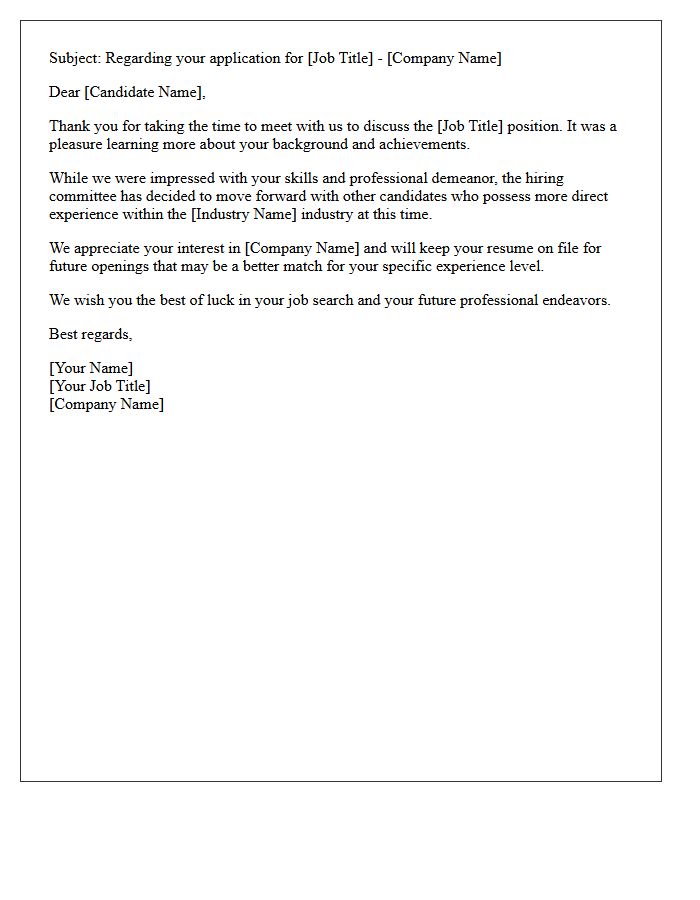
Receiving a post-interview rejection due to a lack of industry experience often indicates that while your soft skills impressed, the role requires specific technical familiarity. Use this feedback to identify transferable skills from your background that bridge the gap. Proactively request constructive feedback to understand which competencies were missing. To improve future prospects, focus on gaining domain-specific knowledge through certifications or freelance projects. Treating this rejection as a roadmap allows you to refine your positioning and demonstrate growth in subsequent applications within the target sector.
Change In Client Direction Post-First Interview Rejection Letter
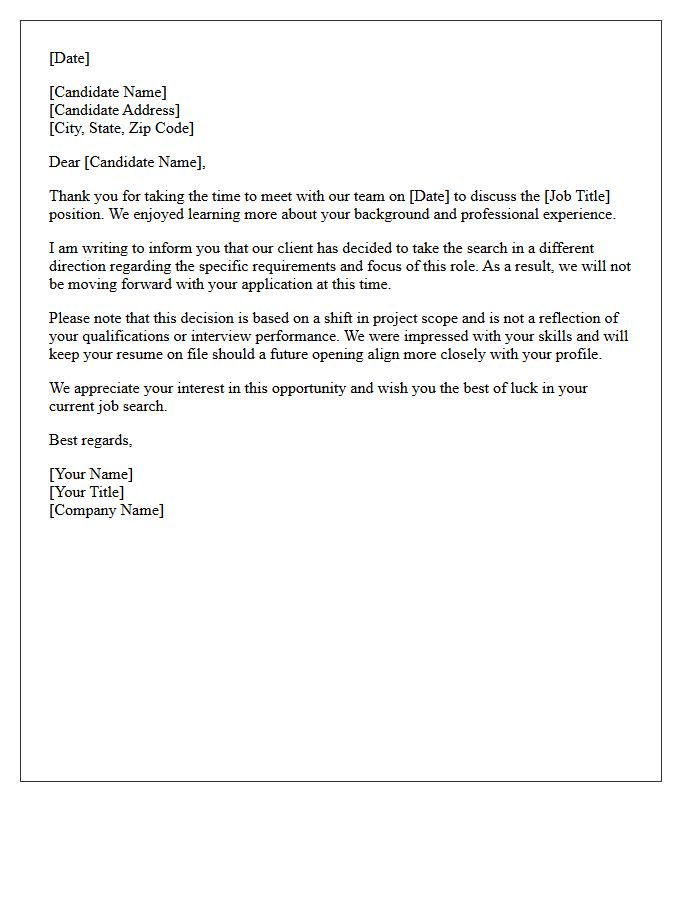
Receiving a rejection letter after a first interview can be discouraging, but a sudden change in client direction often means the role's requirements evolved beyond the initial scope. This shift typically indicates internal restructuring or a revised strategy rather than a reflection of your skills. It is vital to maintain professionalism by sending a polite follow-up. Expressing continued interest ensures you remain a top candidate for future opportunities that align with the company's new objectives. Staying resilient and adaptable is key to long-term career success during these organizational transitions.
Keep On File Post-First Interview Rejection Letter
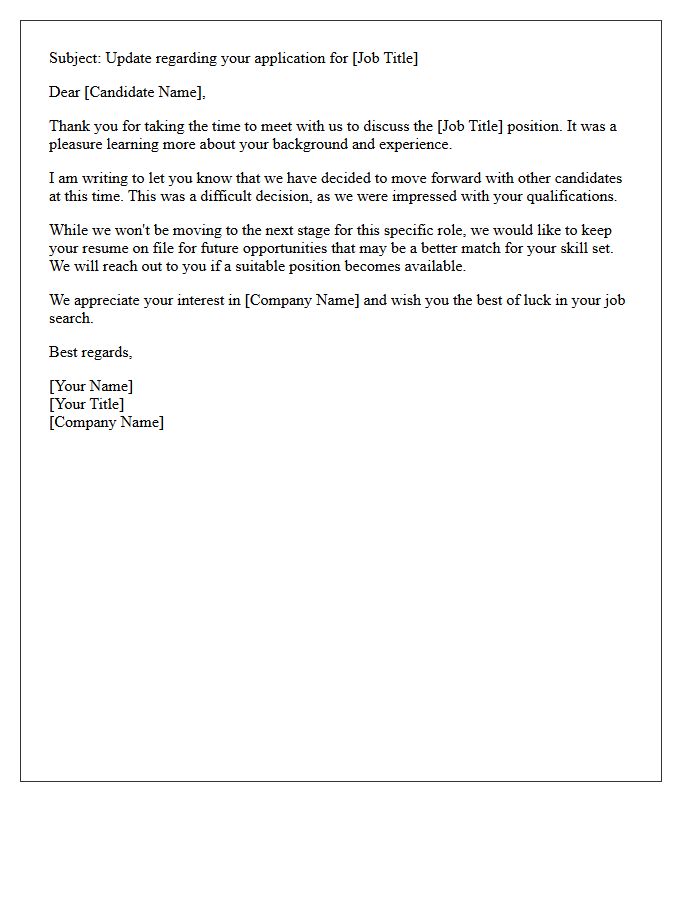
A "Keep On File" post-first interview rejection letter is a professional courtesy indicating that while you weren't selected for the current role, the company values your potential. It serves as a talent pipeline strategy, allowing recruiters to revisit your application for future openings. To optimize your professional standing, respond graciously to maintain a positive relationship. This document signifies that you met the initial qualifications and remain a viable candidate for upcoming opportunities within the organization's database, turning a temporary setback into a strategic long-term connection.
Alternative Role Suggestion Post-First Interview Rejection Letter
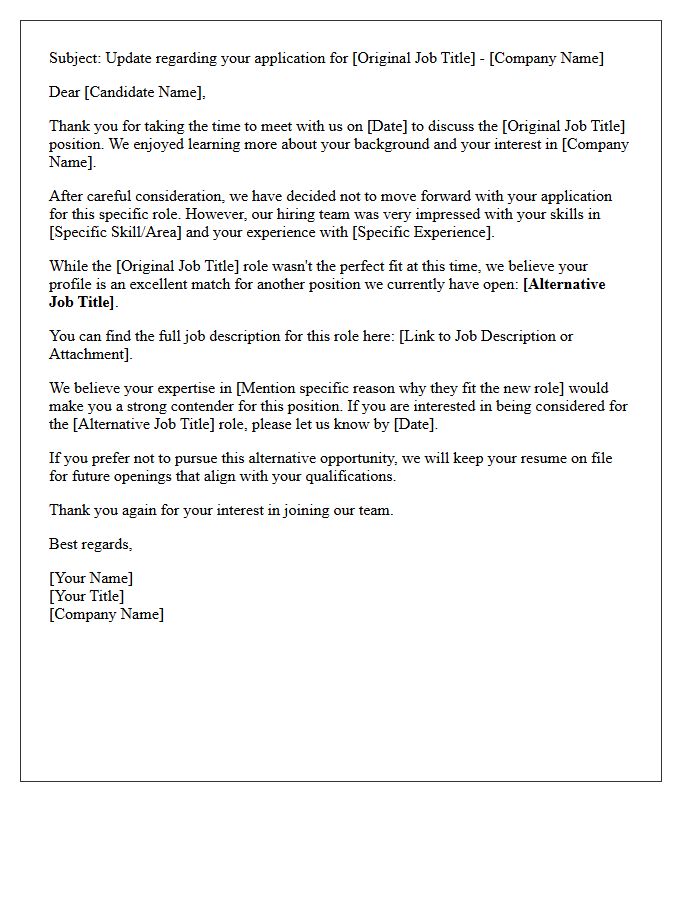
An alternative role suggestion post-rejection is a strategic talent acquisition method used when a candidate fails the initial interview but shows high potential. Instead of a standard dismissal, the recruiter highlights transferable skills and invites the applicant to consider a different position better suited to their profile. This approach maintains a positive candidate experience and builds a robust talent pipeline for future organizational needs. It transforms a potential setback into a collaborative opportunity, ensuring that qualified individuals remain engaged with the company's employer brand despite the initial outcome.
How should I structure a post-first interview rejection letter?
A professional rejection letter should begin with a clear thank you, provide a brief statement regarding the decision, offer a neutral reason such as a "close fit with another candidate," and conclude with well-wishes for their future search.
Is it necessary to provide specific feedback in a rejection email?
While not legally required, providing specific, constructive feedback is highly valued by candidates. However, to minimize legal risks, many companies opt for a standard template that focuses on the qualifications of the selected candidate rather than the shortcomings of the rejected one.
When is the best time to send a rejection letter after the first interview?
You should send the rejection letter as soon as you are certain the candidate is not moving forward, typically within 48 to 72 hours. Prompt communication maintains your employer brand and allows the candidate to focus on other opportunities.
Should a post-interview rejection be sent via email or phone call?
For a first-round interview, an email is the standard and professional choice. Phone calls are generally reserved for final-round candidates who have invested significant time in the process.
How can I encourage a rejected candidate to apply for future roles?
If the candidate was a strong cultural fit but lacked specific technical skills, include a closing statement inviting them to monitor your careers page and stay connected via LinkedIn for future openings that may better align with their expertise.

Comments