
Properly communicating changes to your commercial agreements is essential for maintaining transparency and legal compliance. A Letter Updating or Amending Existing Terms of Business ensures that all parties are informed of new operational standards or fee adjustments while preserving the professional relationship. Use these documents to streamline contract management and protect your interests. Below are some ready to use templates.
Image cover: Effective Communication: Templates for Amending Your Business Terms
Letter Samples List
- Letter Amending Permanent Placement Fee Percentages
- Letter Updating Candidate Rebate Period Conditions
- Letter Modifying Temporary to Permanent Conversion Fees
- Letter Updating Data Protection and Privacy Compliance Terms
- Letter Revising Invoice Payment Schedules and Late Fees
- Letter Amending Exclusivity Period Agreements for Retained Searches
- Letter Updating Candidate Ownership and Introduction Validity Periods
- Letter Adjusting Contractor Margin Rates and Timesheet Processes
- Letter Updating Statutory Compliance and Employment Law Obligations
- Letter Amending Service Level Agreements for Volume Hiring
- Letter Revising Cancellation Fees for Withdrawn Vacancies
- Letter Updating Dispute Resolution and Governing Law Clauses
Letter Amending Permanent Placement Fee Percentages
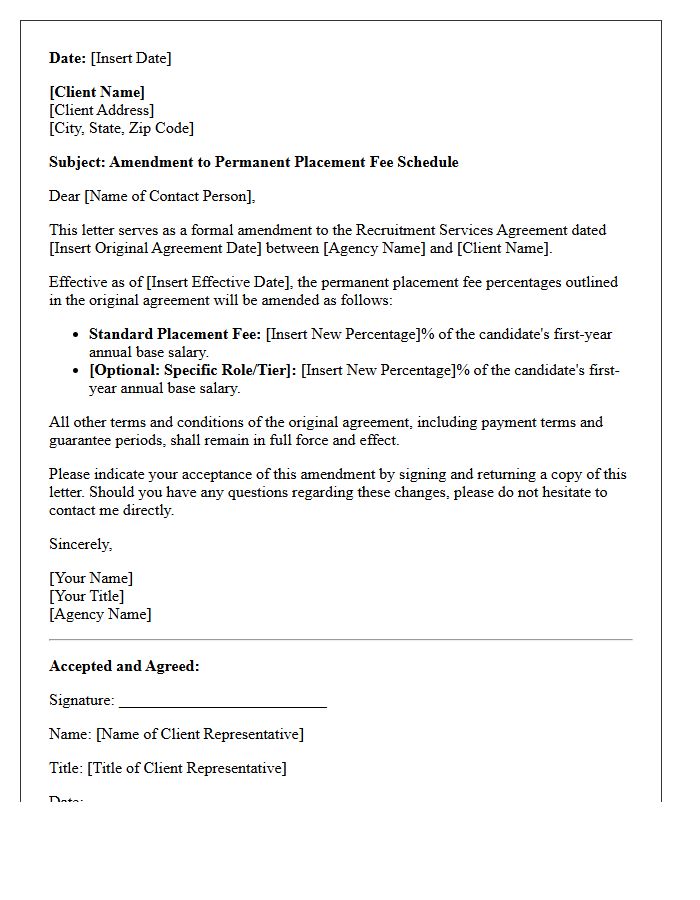
A Letter Amending Permanent Placement Fee Percentages is a legal addendum used to modify the recruitment costs specified in an initial service agreement. This formal document ensures both the agency and the client agree to a new commission structure or flat rate for successful hires. It is essential to clearly state the effective date and identify the specific roles affected by the change. Maintaining an accurate audit trail through this written amendment protects both parties from future billing disputes and ensures financial transparency in the hiring process.
Letter Updating Candidate Rebate Period Conditions
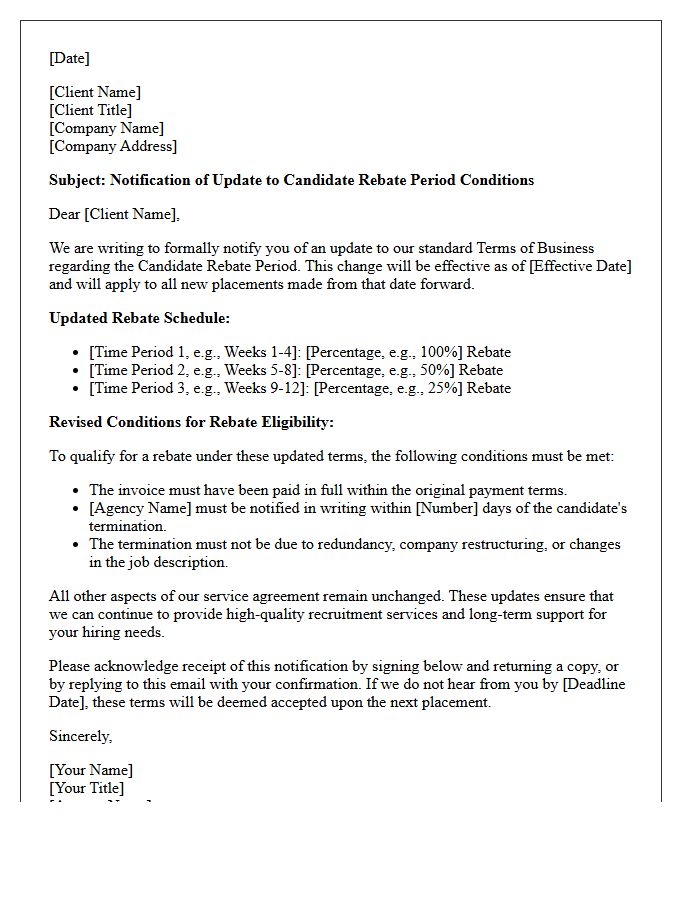
To qualify for a Candidate Rebate, applicants must adhere to specific period conditions regarding documentation. The most critical requirement is that the letter updating your status must be submitted within the designated timeframe, typically starting from the official declaration date. Failure to provide verified evidence of campaign expenditures or eligibility criteria before the deadline results in forfeiture. Ensure all compliance updates are synchronized with the electoral calendar to maintain financial eligibility and secure your reimbursement entitlements under current regulations.
Letter Modifying Temporary to Permanent Conversion Fees
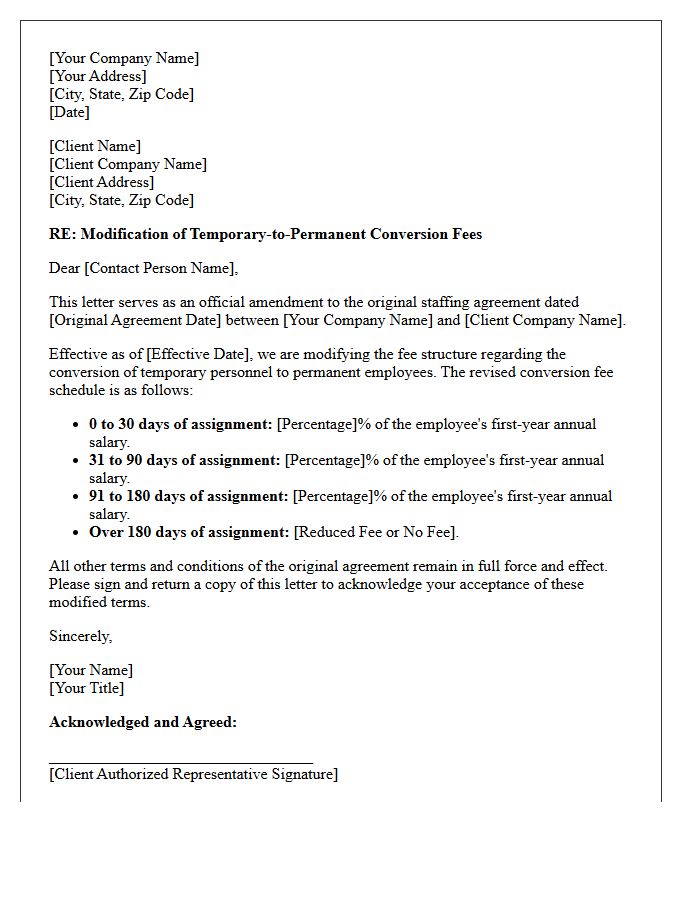
When transitioning staff, understanding Temporary to Permanent Conversion Fees is essential for budget management. These buy-out fees are typically triggered when a company hires a contract worker directly before a predefined period ends. The cost is usually calculated as a percentage of the employee's first-year salary. To mitigate expenses, review the liquidated damages clause in your service agreement. Most contracts include a sliding scale, where the fee decreases the longer the worker remains on the agency's payroll before the official transfer occurs.
Letter Updating Data Protection and Privacy Compliance Terms
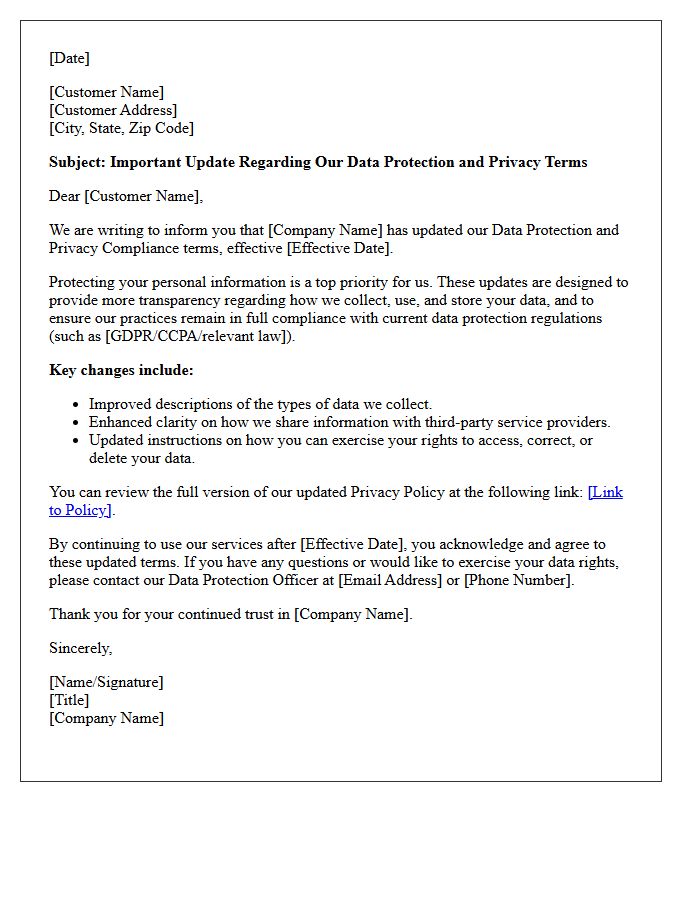
A letter updating Data Protection and Privacy Compliance Terms is a critical legal notification informing stakeholders about changes to how personal information is processed. These updates typically reflect evolving regulations like GDPR or CCPA, ensuring transparency regarding data collection, storage, and user rights. Organizations issue these notices to maintain accountability and mitigate legal risks. It is essential to review these terms to understand your privacy rights and how the entity safeguards your sensitive information against unauthorized access or breaches in an increasingly digital landscape.
Letter Revising Invoice Payment Schedules and Late Fees
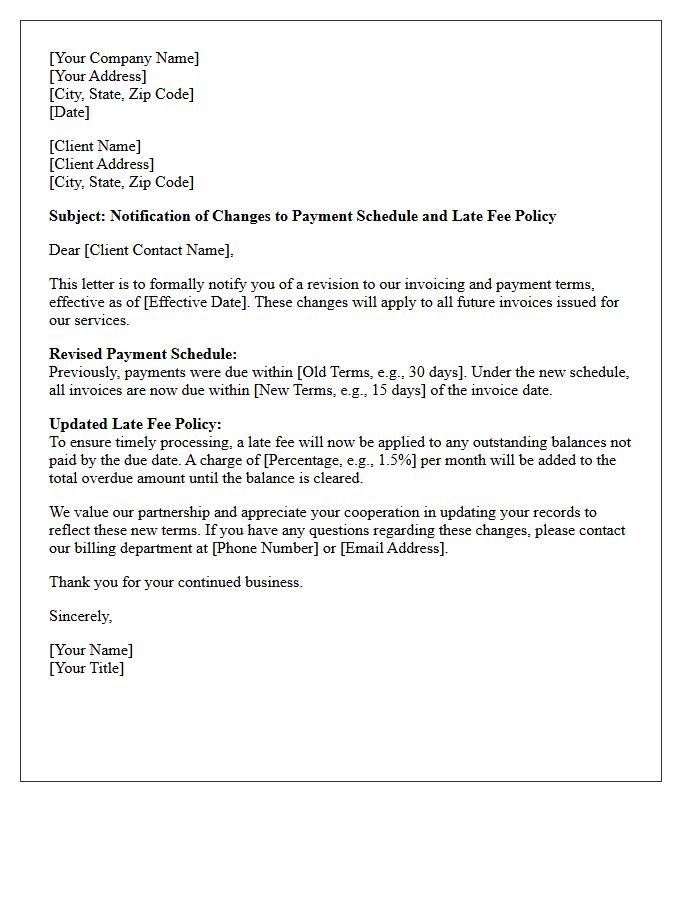
Clearly communicate changes to your billing policy by issuing a formal invoice revision letter. This document must explicitly outline the updated payment schedules and any adjustments to late fee penalties to ensure transparency. Providing a specific effective date helps maintain positive cash flow and manages client expectations. Use concise language to explain why terms are shifting, such as improving operational efficiency. Always encourage open dialogue to resolve potential disputes early, ensuring your business maintains financial stability while preserving professional relationships through clear, written documentation of all modified fiscal terms.
Letter Amending Exclusivity Period Agreements for Retained Searches
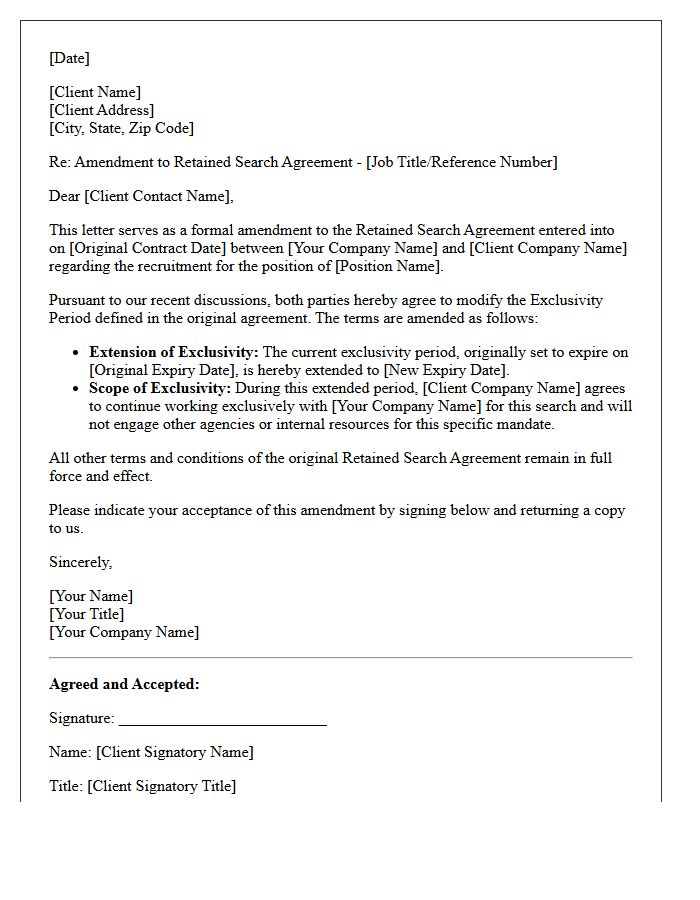
A letter amending the exclusivity period is a legal modification to a retained search agreement. It formally adjusts the timeframe during which a recruitment firm holds the sole right to source candidates for a specific role. This document ensures both parties agree on extended timelines or performance benchmarks while maintaining the original contract's integrity. Clear documentation prevents disputes regarding off-limits protocols and fee structures, ensuring the partnership remains transparent. It is essential to specify the new expiration date to protect the recruiter's dedicated resources and the client's hiring objectives.
Letter Updating Candidate Ownership and Introduction Validity Periods
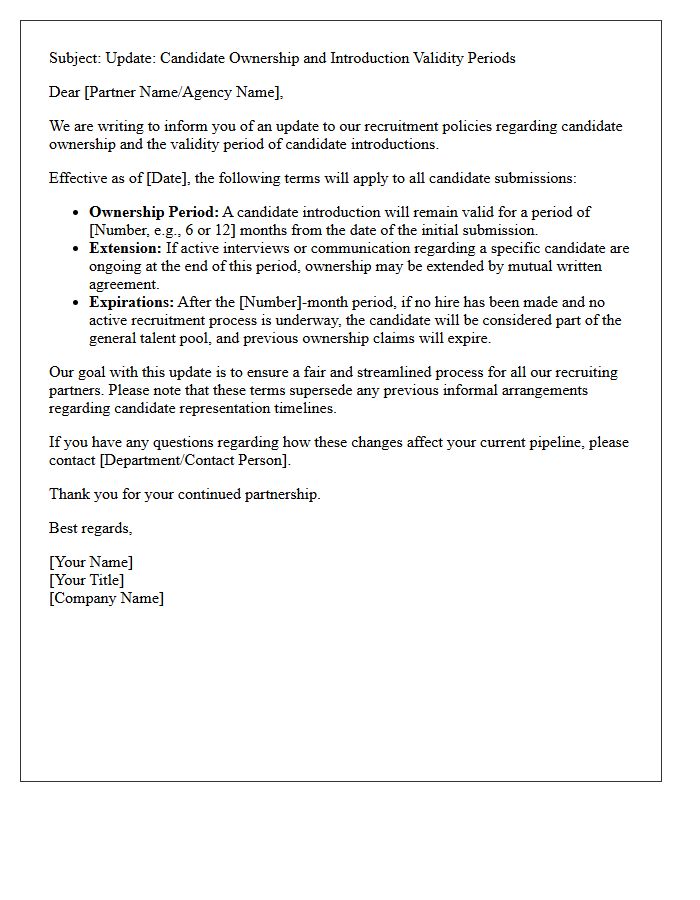
Effective recruitment requires clear candidate ownership policies to prevent commission disputes. An official update letter should specify the introduction validity period, typically lasting six to twelve months. This document defines how long a recruiter maintains legal rights to a lead after submission. Establishing these transparent timeframes ensures both agencies and internal teams understand when a candidate becomes "fair game" again. Clear communication regarding these ownership windows protects professional relationships and minimizes financial conflicts over successful placements.
Letter Adjusting Contractor Margin Rates and Timesheet Processes
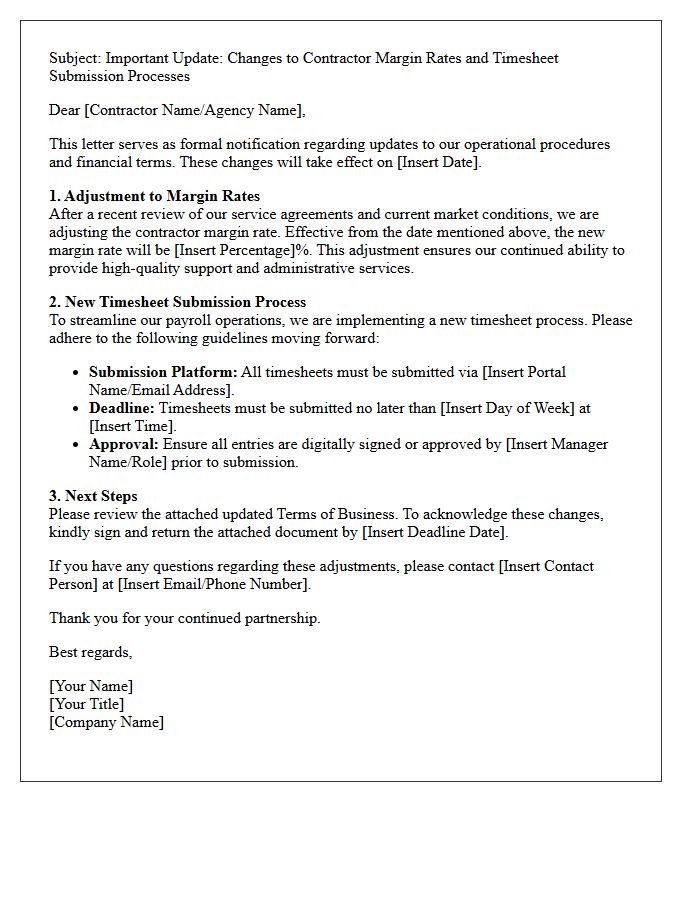
The recent update regarding the Letter Adjusting Contractor Margin Rates clarifies essential modifications to compensation structures. It is crucial to understand how these updated margin rates impact overall project budgeting and final payouts. Furthermore, the Timesheet Processes have been streamlined to ensure faster approvals and precise billing cycles. Contractors must adhere to the new submission deadlines to prevent payment delays. Familiarizing yourself with these administrative shifts ensures financial transparency and maintains operational efficiency across all active contracts. Always verify specific rate adjustments within your individual portal to remain fully compliant with the latest guidelines.
Letter Updating Statutory Compliance and Employment Law Obligations
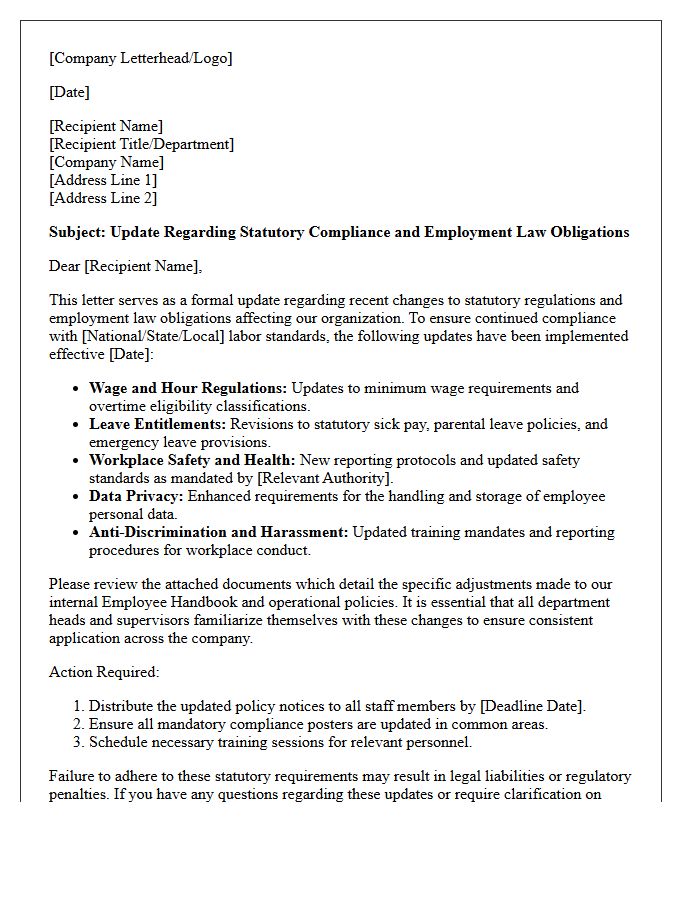
A Statutory Compliance Update Letter is a critical notification ensuring businesses align with evolving employment law obligations. It informs stakeholders about mandatory legislative changes, such as revised minimum wage rates, updated safety protocols, or new anti-discrimination policies. Timely communication is essential to mitigate legal risks, prevent penalties, and maintain workplace transparency. By addressing these regulatory shifts proactively, organizations protect their operational integrity and demonstrate a commitment to fair labor practices. Staying informed through these updates is the most effective way to ensure legal adherence in a dynamic corporate environment.
Letter Amending Service Level Agreements for Volume Hiring
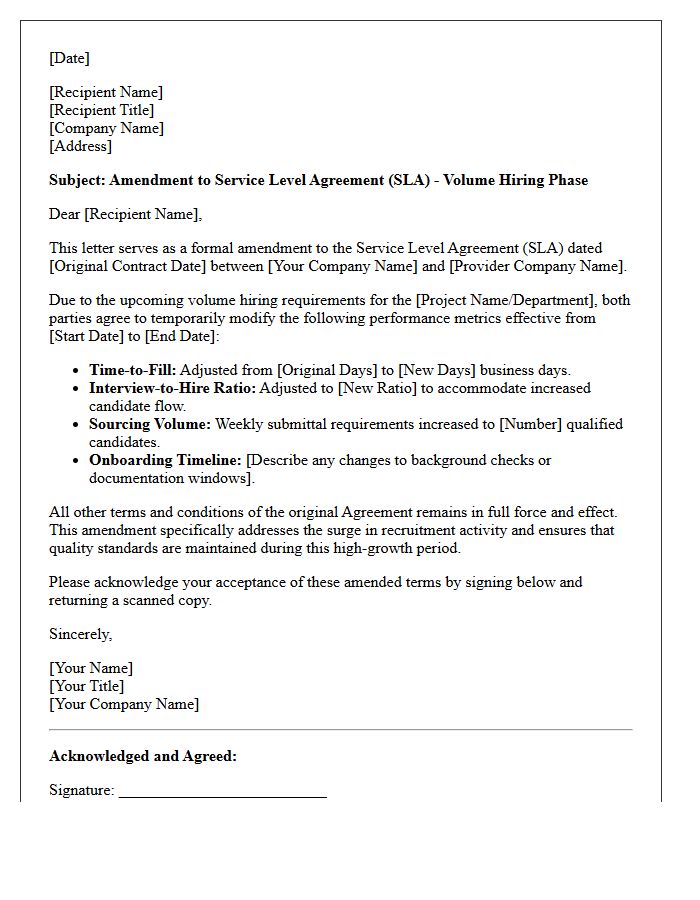
A letter amending Service Level Agreements for volume hiring is a formal contractual addendum used to modify performance metrics during rapid recruitment scales. It ensures that quality of hire and turnaround times remain realistic when candidate numbers surge. This document typically adjusts Key Performance Indicators (KPIs) to align with increased capacity requirements. Clearly defining these updated expectations protects both the employer and the provider, maintaining operational efficiency while preventing service delivery failures during critical growth periods. It is essential for legal clarity and long-term partnership stability.
Letter Revising Cancellation Fees for Withdrawn Vacancies
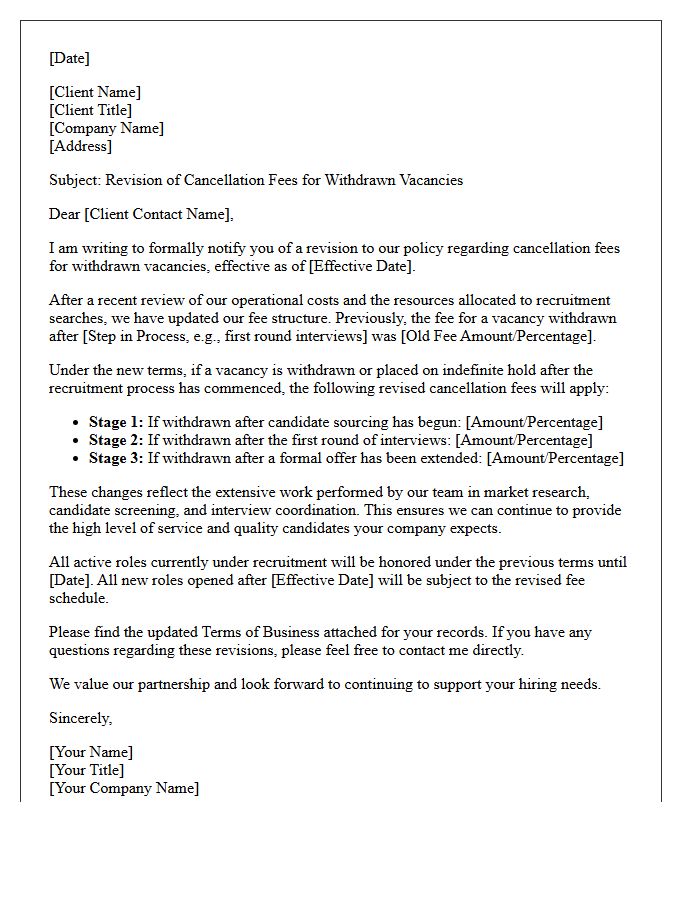
The Letter Revising Cancellation Fees for Withdrawn Vacancies formalizes changes to financial penalties when recruitment requests are retracted. Employers must understand that revised fee structures typically depend on the timing of the withdrawal and resources already expended. This document ensures contractual transparency between agencies and clients, preventing disputes over administrative costs. Reviewing these updates is essential for effective budget management and strategic talent acquisition planning, as it clarifies the fiscal responsibilities associated with cancelling active job searches before a successful placement is finalized.
Letter Updating Dispute Resolution and Governing Law Clauses
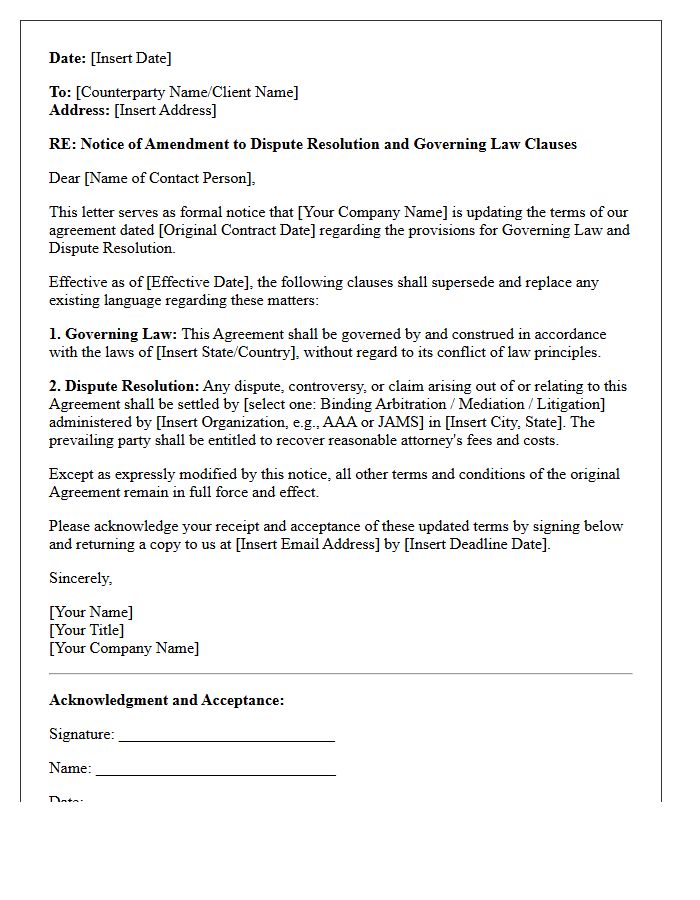
When updating Dispute Resolution and Governing Law clauses, you must provide clear written notice to all parties. These provisions determine where legal conflicts are heard and which state's statutes apply. To ensure enforceability, highlight changes regarding arbitration or jurisdiction to satisfy "conspicuous notice" legal standards. Failure to properly communicate these modifications can render new terms void, potentially forcing litigation in unfavorable venues. Always specify if existing contracts are amended or superseded to maintain legal certainty and mitigate future litigation risks effectively.
How do I legally notify clients of changes to my Terms of Business?
To legally update your Terms of Business, you must issue a formal "Notice of Variation" or an "Amendment Letter" to all active clients. This document should clearly outline the specific clauses being modified, the reason for the update, and the date the new terms become effective.
Can a company change its terms and conditions without consent?
Generally, significant changes require client consent or a notice period defined in the original contract. By sending an amendment letter, you typically provide a notice period (e.g., 30 days); if the client continues to use your services after this period, they are often deemed to have accepted the new terms through "acceptance by conduct."
What should be included in a Letter Amending Existing Terms of Business?
The letter should include the effective date of the changes, a clear reference to the original agreement, a summary of the specific amendments, and instructions on how the client can contact you if they have objections. It is best practice to provide a full copy of the updated terms as an enclosure.
Is an email sufficient for updating terms of business?
Yes, an email is legally sufficient in most jurisdictions provided the original agreement allows for electronic notices. Ensure the subject line clearly states "Important Update to Terms of Business" and use a delivery receipt or tracking method to prove the client received the notification.
What happens if a client rejects the updated terms?
If a client formally rejects the amended terms, the original agreement remains in place until it is terminated. Depending on the "Termination" clause in your original contract, you may have the right to end the business relationship if the client refuses to accept essential new operational or legal terms.

Comments