
An Employee Benefit Plan Audit Representation Letter is a formal document provided by plan management to independent auditors. It confirms the accuracy of financial statements, internal controls, and compliance with ERISA regulations. This essential step ensures management takes full responsibility for the data provided during the audit process. To help you get started, below are some ready to use template.

Image cover: Mastering Employee Benefit Plan Audit Representation Letters: Essential Samples and Templates
Letter Samples List
- Employee Benefit Plan Audit Representation Letter
- Employee Benefit Plan Audit Engagement Letter
- Employee Benefit Plan Legal Counsel Inquiry Letter
- Employee Benefit Plan Actuarial Reliance Letter
- Employee Benefit Plan Internal Control Communication Letter
- Employee Benefit Plan Third-Party Administrator Confirmation Letter
- Employee Benefit Plan Investment Custodian Certification Letter
- Employee Benefit Plan Governance Communication Letter
- Employee Benefit Plan Predecessor Auditor Inquiry Letter
- Employee Benefit Plan Limited Scope Audit Certification Letter
- Employee Benefit Plan Sponsor Management Representation Letter
- Employee Benefit Plan Fraud Risk Inquiry Letter
Employee Benefit Plan Audit Representation Letter
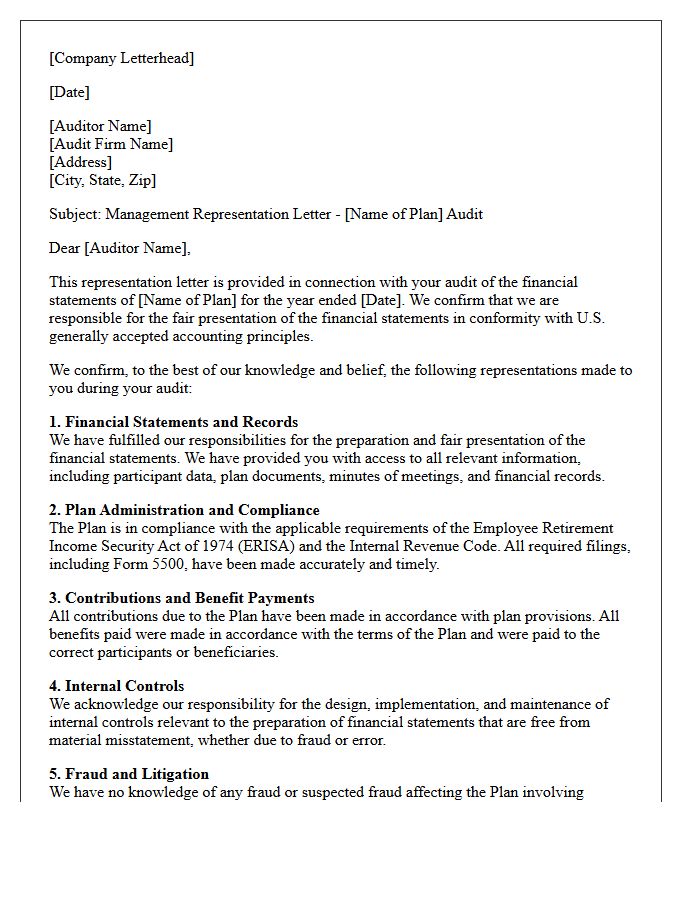
An Employee Benefit Plan Audit Representation Letter is a formal document provided by plan management to the independent auditor. It confirms that the administrator has fulfilled its fiduciary responsibility for the financial statements and internal controls. This letter serves as written evidence that all relevant data, including participant records and compliance testing, was disclosed accurately. By signing, management acknowledges accountability for the plan's financial integrity and adherence to ERISA standards. It is a critical legal requirement for completing the annual audit process and ensuring regulatory compliance.
Employee Benefit Plan Audit Engagement Letter
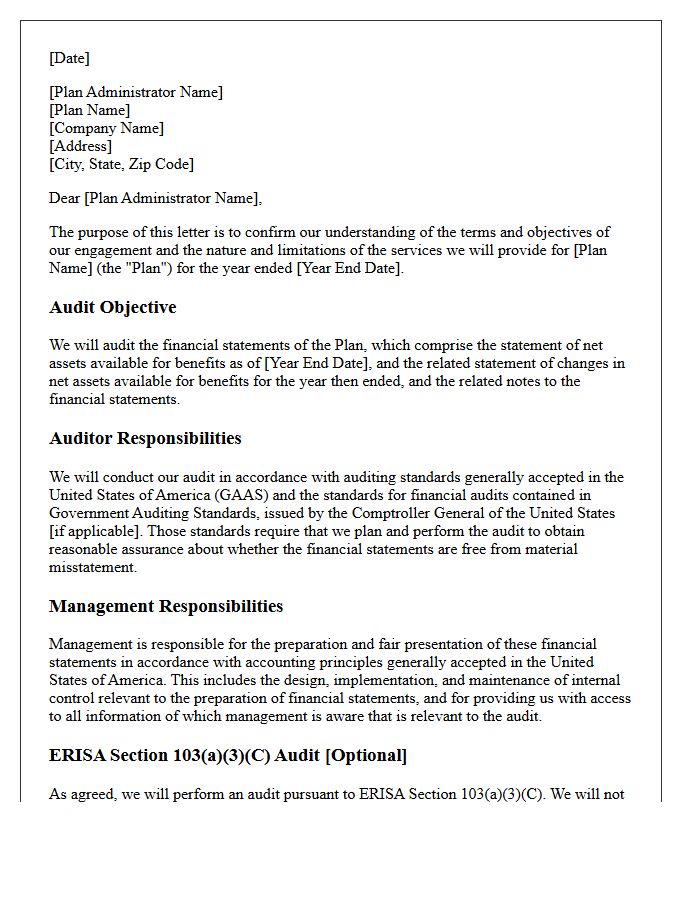
An Employee Benefit Plan Audit Engagement Letter is a formal contract defining the scope and objectives of the audit. It clarifies the responsibilities of plan management, such as maintaining internal controls and providing accurate financial data. This document protects both parties by outlining fee structures, reporting deadlines, and regulatory compliance standards required by ERISA and the Department of Labor. Signing this letter is a critical first step to ensure transparency, establish legal expectations, and facilitate a smooth examination of the plan's financial health and fiduciary integrity.
Employee Benefit Plan Legal Counsel Inquiry Letter
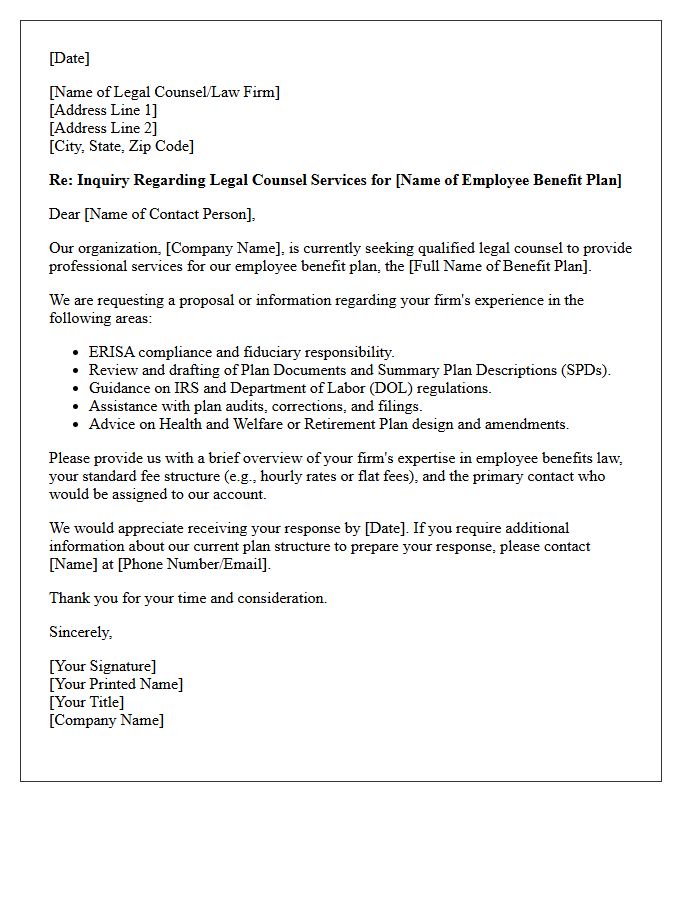
An Employee Benefit Plan Legal Counsel Inquiry Letter is a formal document used during a financial audit to confirm potential legal liabilities. The plan administrator or auditor sends this request to legal counsel to identify pending litigation, claims, or assessments that could financially impact the plan. This letter is essential for ensuring compliance with ERISA standards and provides necessary disclosures for financial statements. It helps auditors evaluate if legal risks are accurately reported, protecting the plan's fiduciary integrity and the interests of its participants.
Employee Benefit Plan Actuarial Reliance Letter
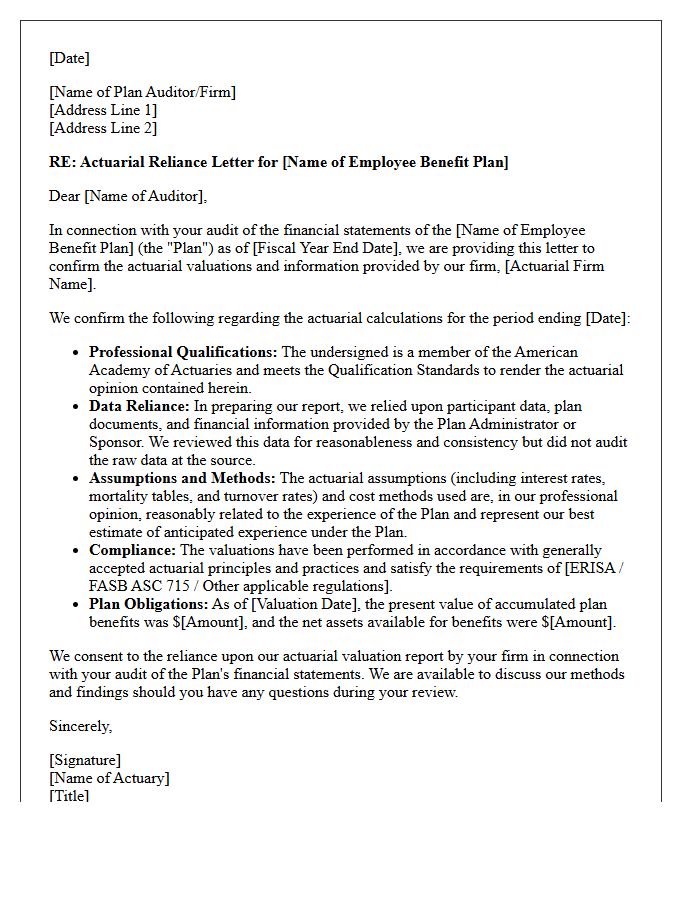
An actuarial reliance letter is a critical document provided by a qualified actuary to an auditor during an employee benefit plan audit. It confirms that the actuary's calculations, such as pension obligations and benefit liabilities, comply with professional standards and regulatory requirements. This letter establishes that the auditor can legally rely on the actuary's specialized expertise to verify the plan's financial health. It ensures transparency, minimizes risk of material misstatement, and validates the valuation methods used to determine the long-term sustainability of the employee benefit plan.
Employee Benefit Plan Internal Control Communication Letter
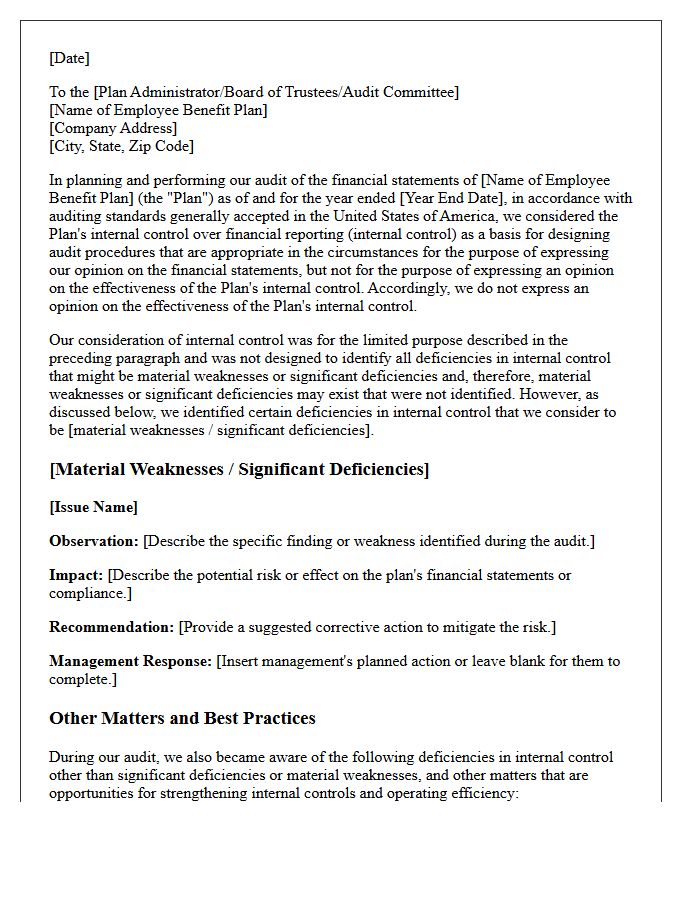
The Employee Benefit Plan Internal Control Communication Letter is a critical document issued by auditors to plan management. It identifies material weaknesses or significant deficiencies discovered during the financial statement audit. Understanding these findings is essential for fulfilling fiduciary responsibilities and ensuring plan operational compliance. This letter provides actionable insights to improve administrative processes and safeguard participant assets. Management must review these reports to strengthen internal controls, mitigate risks of financial misstatement, and ensure the plan adheres to Department of Labor and ERISA regulatory standards.
Employee Benefit Plan Third-Party Administrator Confirmation Letter
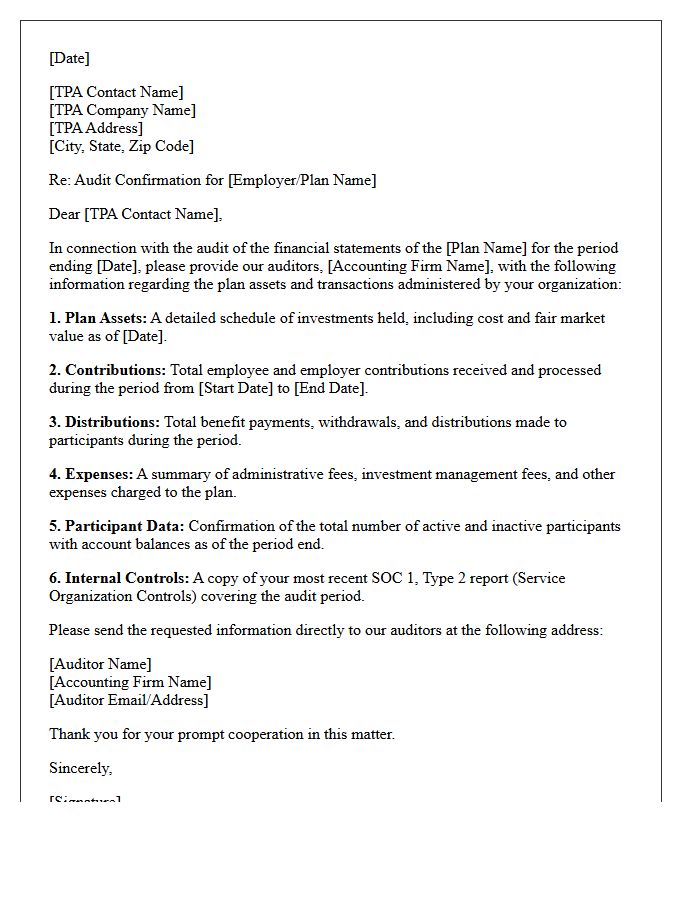
An Employee Benefit Plan Third-Party Administrator Confirmation Letter is a vital document used during audits to verify financial data. It serves as formal independent verification of plan assets, contributions, and benefit payments managed by a TPA. This letter ensures that the financial statements accurately reflect the plan's transactions and compliance status. Auditors rely on this external confirmation to mitigate risks of misstatement, confirming that the administrative records align with the sponsor's reporting obligations under ERISA and regulatory standards.
Employee Benefit Plan Investment Custodian Certification Letter
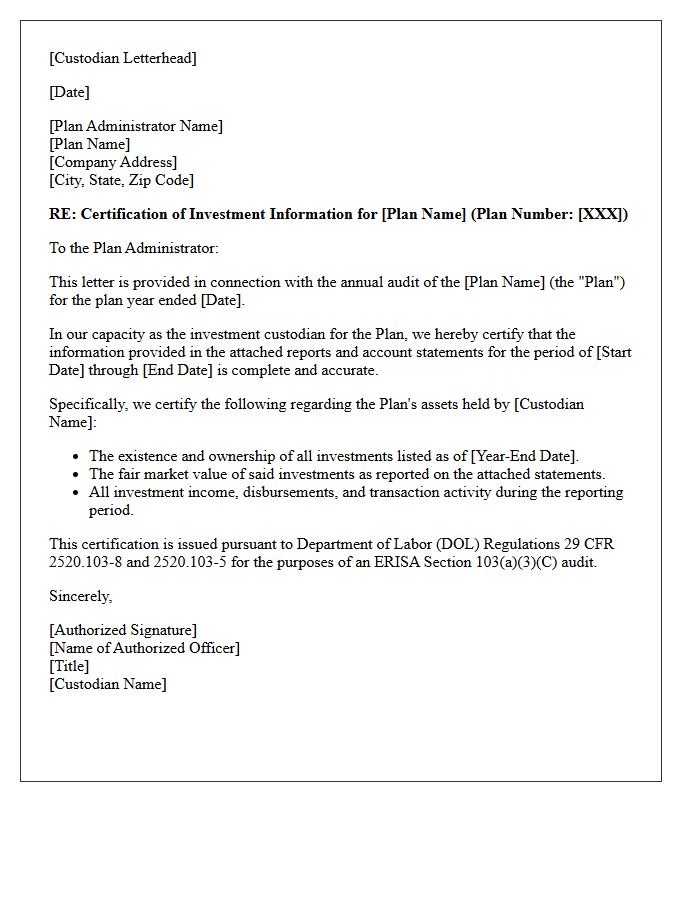
An Employee Benefit Plan Investment Custodian Certification Letter is a vital document for ERISA compliance. It features a formal statement from a financial institution confirming the existence, ownership, and market value of plan assets. Auditors use this custodial verification to ensure financial statements accurately reflect the plan's holdings. This certification provides essential internal control assurance, protecting plan participants by verifying that investments are held securely. It serves as primary evidence during annual plan audits, confirming that reported asset balances are reconciled and legally accounted for by a qualified third party.
Employee Benefit Plan Governance Communication Letter
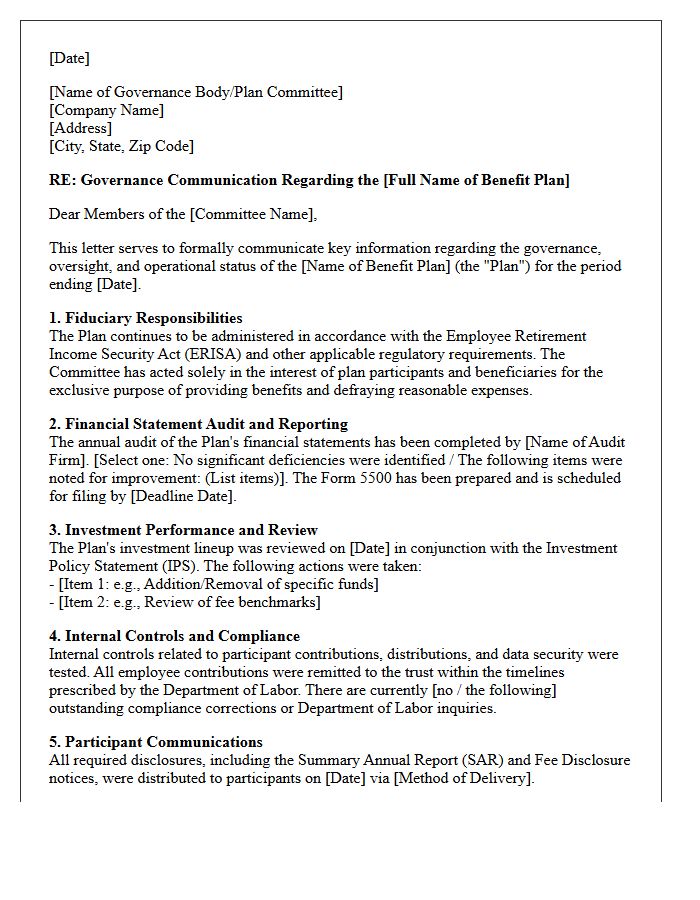
An Employee Benefit Plan Governance Communication Letter, required by AU-C Section 260, is a formal report from auditors to plan fiduciaries. It outlines critical audit findings, including significant accounting practices, corrected misstatements, and potential disagreements with management. This document ensures transparency regarding the plan's financial integrity and internal controls. Fiduciaries must review this letter to fulfill their ERISA responsibilities, as it highlights risks and operational improvements necessary for protecting participant assets and maintaining regulatory compliance within the benefit plan structure.
Employee Benefit Plan Predecessor Auditor Inquiry Letter
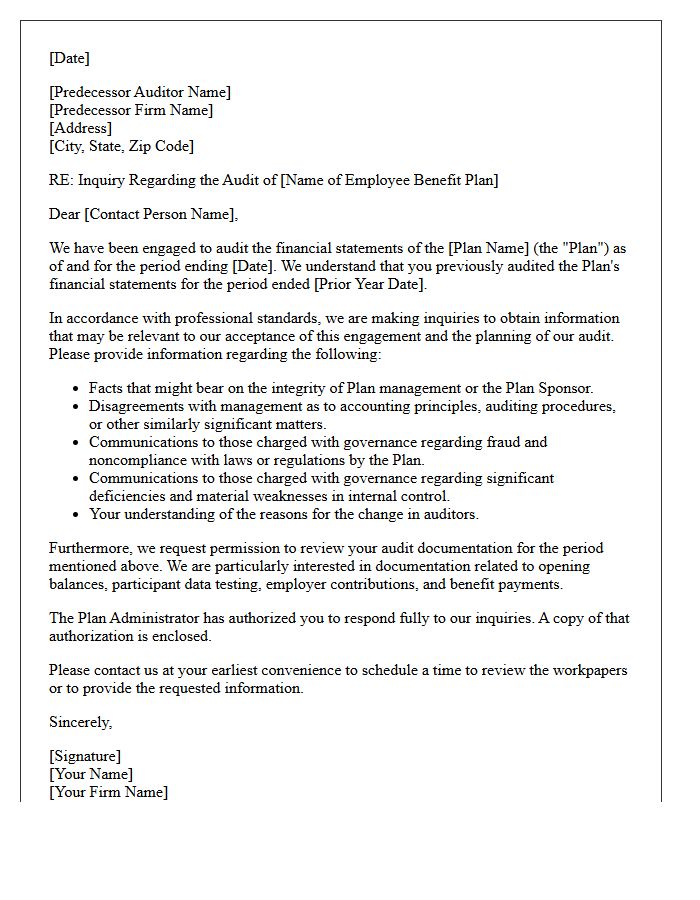
When an Employee Benefit Plan changes service providers, the successor auditor must send a formal predecessor auditor inquiry letter. This communication is essential for evaluating professional integrity and identifying potential audit risks. It addresses disagreements regarding accounting principles, financial reporting, or audit procedures. Reviewing the predecessor's response helps the new auditor gain audit evidence regarding opening balances and plan consistency. This process ensures compliance with AICPA standards and facilitates a smooth transition while protecting the plan's financial oversight and fiduciary reporting requirements.
Employee Benefit Plan Limited Scope Audit Certification Letter
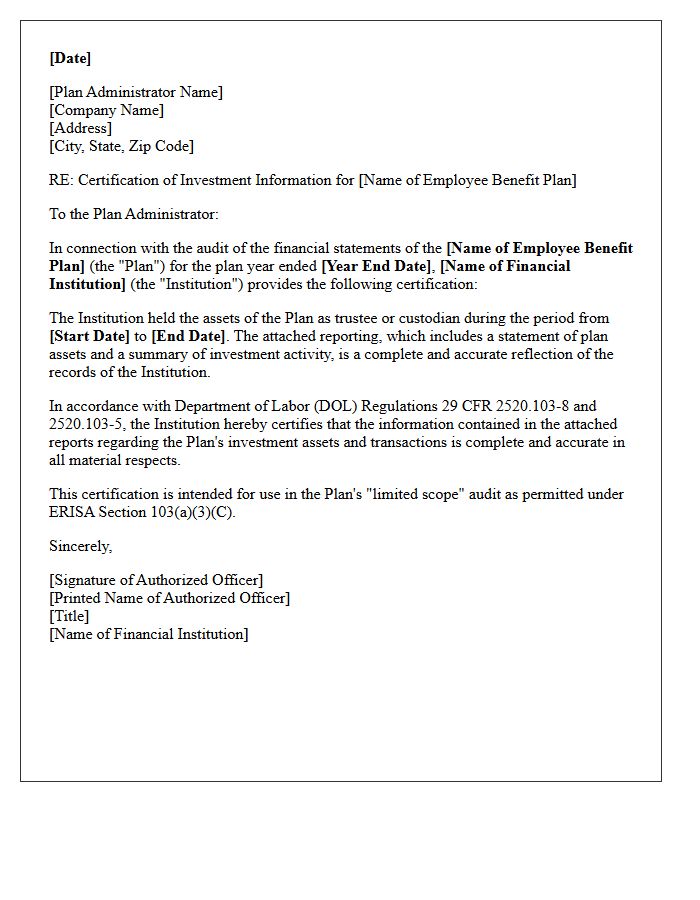
The Employee Benefit Plan Limited Scope Audit Certification Letter is a critical document provided by a qualified institution, such as a bank or insurance company. It confirms the accuracy and completeness of investment information, allowing auditors to perform an ERISA Section 103(a)(3)(C) audit. This certification shifts the audit focus away from verifying investment values to evaluating the plan's administrative compliance. Plan sponsors must ensure the letter specifically covers the entire audit period and is signed by an authorized representative to meet Department of Labor reporting requirements.
Employee Benefit Plan Sponsor Management Representation Letter
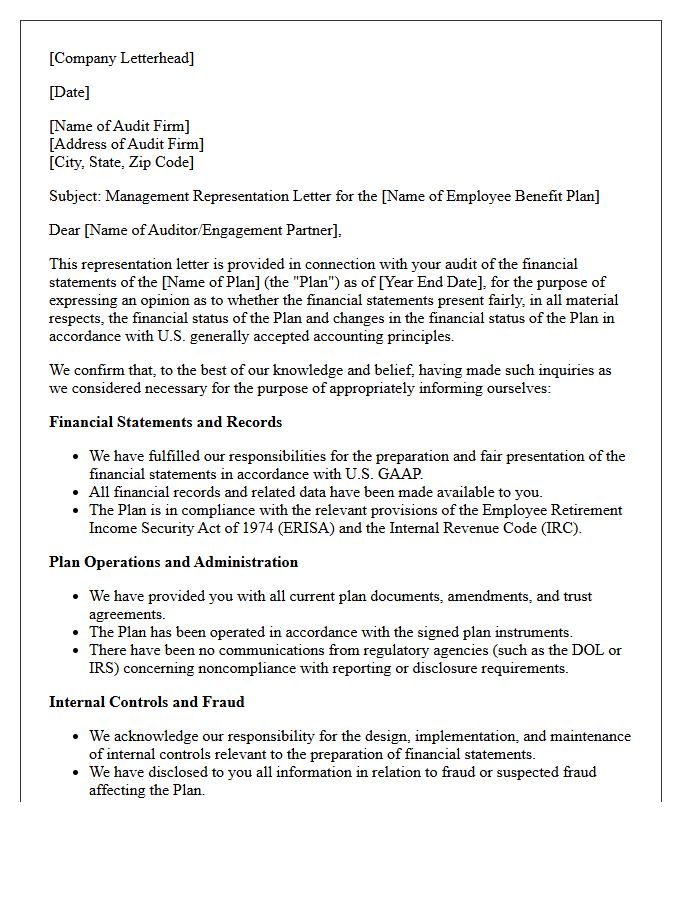
The Management Representation Letter is a critical legal document provided by plan sponsors to external auditors during an employee benefit plan audit. It confirms that management accepts full responsibility for the financial statements, internal controls, and compliance with ERISA standards. By signing this letter, sponsors attest to the accuracy and completeness of the data provided, including participant eligibility and asset valuations. This formal statement protects auditors by documenting that all significant information has been disclosed, ensuring the integrity of the annual report and protecting the interests of plan participants.
Employee Benefit Plan Fraud Risk Inquiry Letter
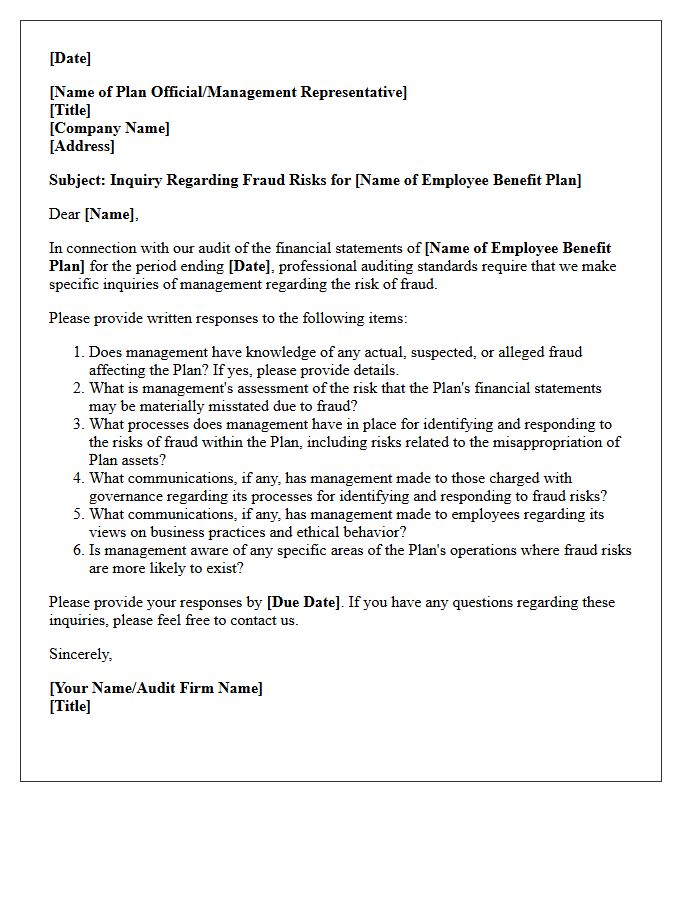
An Employee Benefit Plan Fraud Risk Inquiry Letter is a formal document sent by auditors to plan management and those charged with governance. Its primary purpose is to identify potential financial irregularities or internal control weaknesses within the plan. This communication is a mandatory requirement under auditing standards to assess the risk of material misstatement due to fraud. Recipients must provide transparent disclosures regarding any known or suspected fiduciary breaches, ensuring the protection of participant assets and maintaining the plan's regulatory compliance with ERISA guidelines and Department of Labor standards.
What is an Employee Benefit Plan (EBP) Audit Representation Letter?
An Employee Benefit Plan Audit Representation Letter is a formal document provided by plan management to the independent auditor, confirming the accuracy, completeness, and integrity of the financial information and disclosures provided during the audit process.
Who is responsible for signing the EBP audit representation letter?
The letter must be signed by the plan officials who have primary responsibility for the plan's administration and financial reporting, typically the Plan Administrator, the Chief Financial Officer, or members of the Investment Committee.
Why is a representation letter required for a 401(k) or pension plan audit?
Professional auditing standards (AICPA) require this letter to establish management's accountability for the financial statements and to ensure that all relevant data, such as participant eligibility and employer contributions, have been fully disclosed to the auditor.
What key assertions are included in an Employee Benefit Plan Representation Letter?
The letter covers critical assertions including the plan's tax-qualified status, compliance with ERISA and IRS regulations, the fair valuation of plan investments, and the disclosure of all prohibited transactions or related-party activities.
What happens if plan management refuses to sign the audit representation letter?
If management refuses to provide the signed representation letter, it constitutes a scope limitation. This typically prevents the auditor from issuing an unqualified opinion and may result in a disclaimer of opinion or withdrawal from the engagement.


Comments