
Managing the finances of a late loved one begins with a formal Letter of Request for Deceased Estate Account Opening. This essential document allows executors to consolidate assets and settle liabilities legally. Our guide explains the necessary documentation and professional phrasing required to communicate effectively with financial institutions. To help you get started, below are some ready to use template.
Image cover: Formal Bank Request Templates for Opening a Deceased Estate Account
Letter Samples List
- Letter of Request for Deceased Estate Account Opening
- Letter of Notification of Customer Death and Estate Account Request
- Letter of Intent to Establish a Deceased Estate Account
- Letter of Request to Transfer Deceased Funds to Estate Account
- Letter of Appointment for Estate Account Administrator
- Letter of Indemnity for Deceased Estate Account Opening
- Letter of Request to Close Personal Account and Open Estate Account
- Letter of Verification for Deceased Estate Account Tax Identification Number
- Letter of Authorization for Estate Account Executor Access
- Letter of Request for Estate Account Checkbook Issuance
- Letter of Acknowledgment of Deceased Estate Account Terms
- Letter of Request for Deceased Estate Account Balance Statement
Letter of Request for Deceased Estate Account Opening
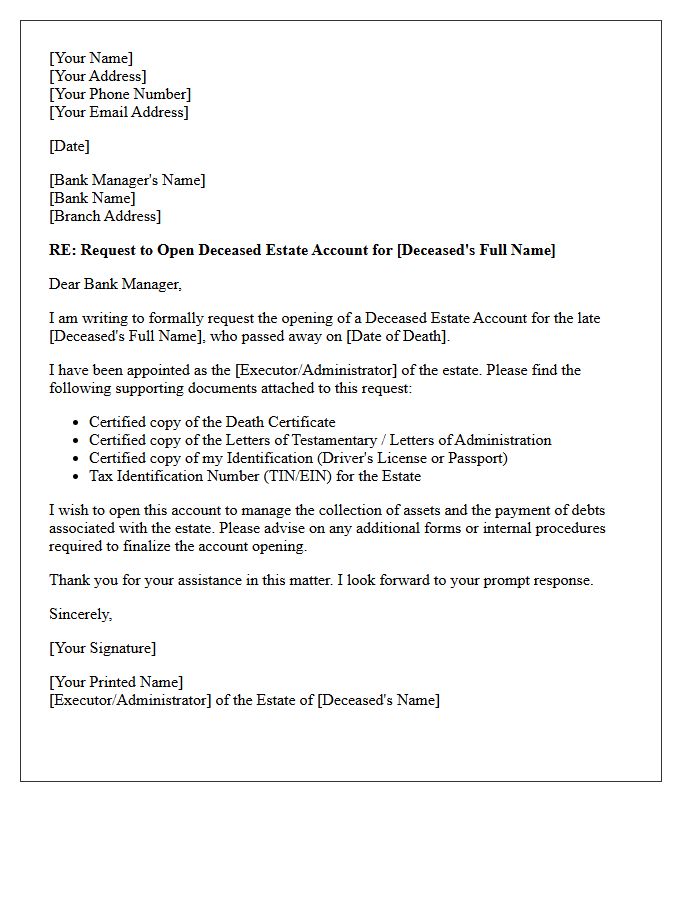
A Letter of Request for Deceased Estate Account Opening is a formal document submitted to a bank to establish a fiduciary account for a decedent's estate. It must clearly state the executor or administrator as the authorized representative. Essential attachments typically include a certified death certificate, tax identification number, and letters of testamentary or administration issued by the court. This account ensures legal segregation of assets, allowing the representative to consolidate funds, settle outstanding debts, and distribute the remaining inheritance to beneficiaries according to probate law requirements.
Letter of Notification of Customer Death and Estate Account Request
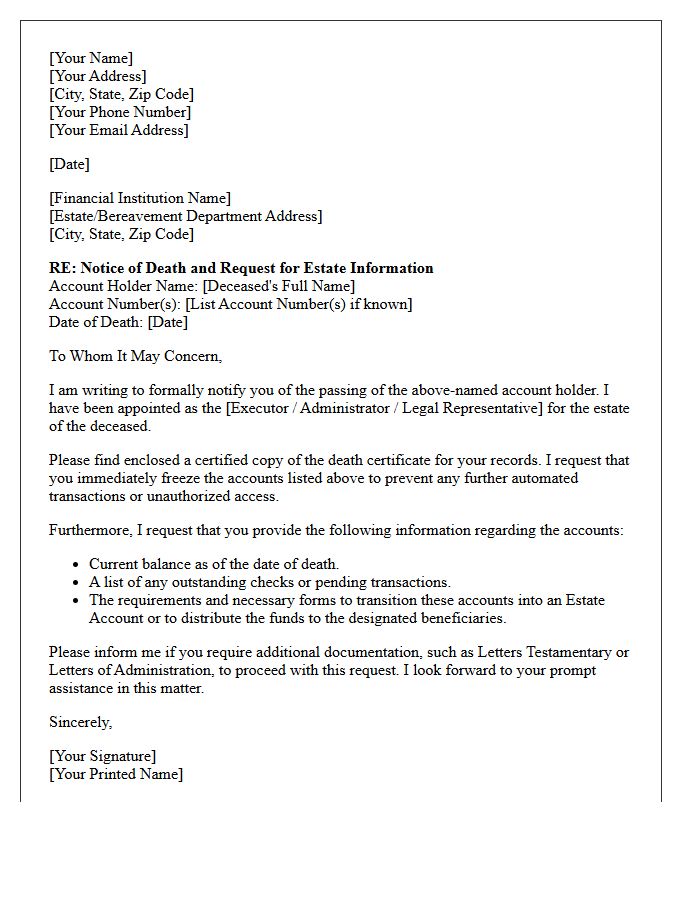
The Letter of Notification of Customer Death is a formal legal document used to inform financial institutions of a client's passing. It serves to freeze assets, preventing unauthorized access and protecting the decedent's estate. Providing an official death certificate alongside this request allows the executor to initiate an Estate Account Request, which facilitates the transfer of funds to heirs. Timely notification is essential to manage outstanding debts and ensure the legal distribution of property according to the will or state probate laws.
Letter of Intent to Establish a Deceased Estate Account
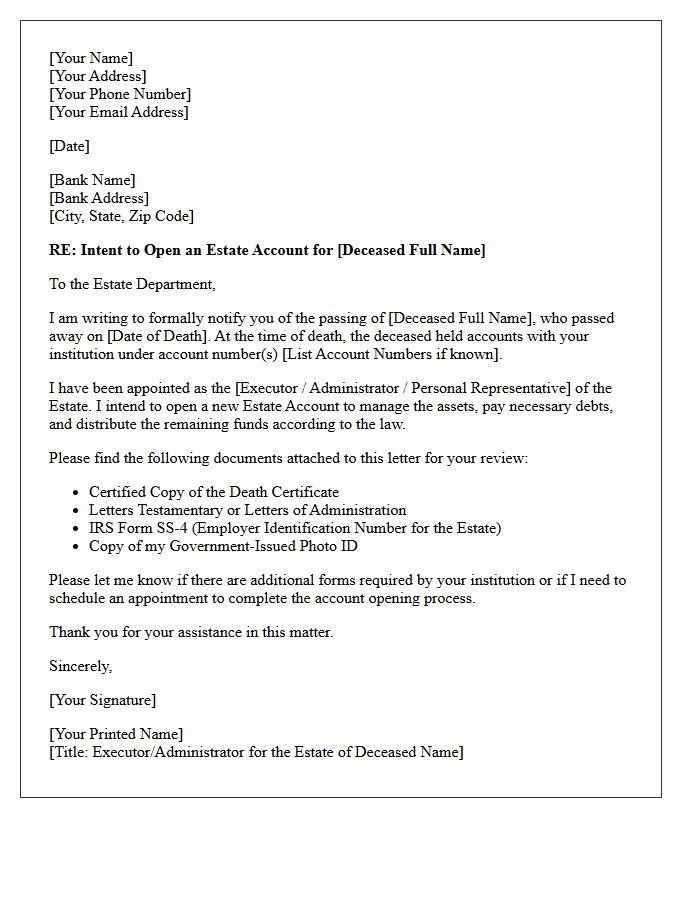
A Letter of Intent to Establish a Deceased Estate Account is a formal request sent to a financial institution to manage a decedent's assets. It identifies the legally appointed executor or administrator and provides proof of authority, such as Letters Testamentary. This document is essential for consolidating funds into a specialized estate account to settle outstanding debts, pay taxes, and distribute remaining inheritance to beneficiaries. Ensuring the letter includes the Employer Identification Number (EIN) from the IRS is vital for tax compliance and efficient probate administration.
Letter of Request to Transfer Deceased Funds to Estate Account
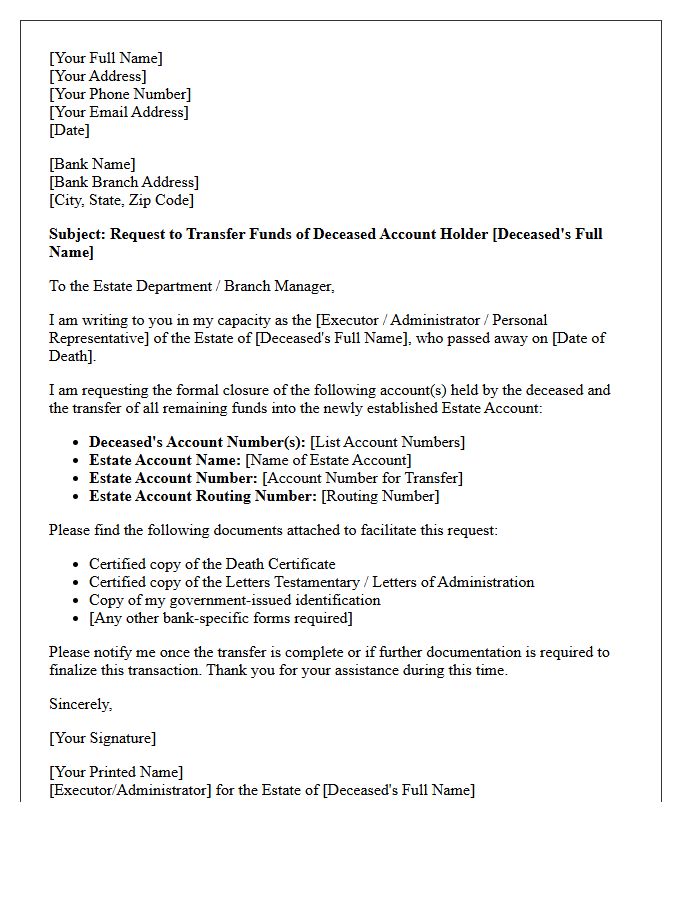
A Letter of Request to Transfer Deceased Funds to Estate Account is a formal legal notification sent to financial institutions. It instructs the bank to move assets from a decedent's private account into a supervised Estate Account. This process ensures that funds are strictly managed by the Executor or Administrator to settle debts and distribute inheritances. You must include a certified death certificate and Letters Testamentary to prove legal authority. This step is essential for transparent probate administration and protects the assets from unauthorized access during the settlement period.
Letter of Appointment for Estate Account Administrator
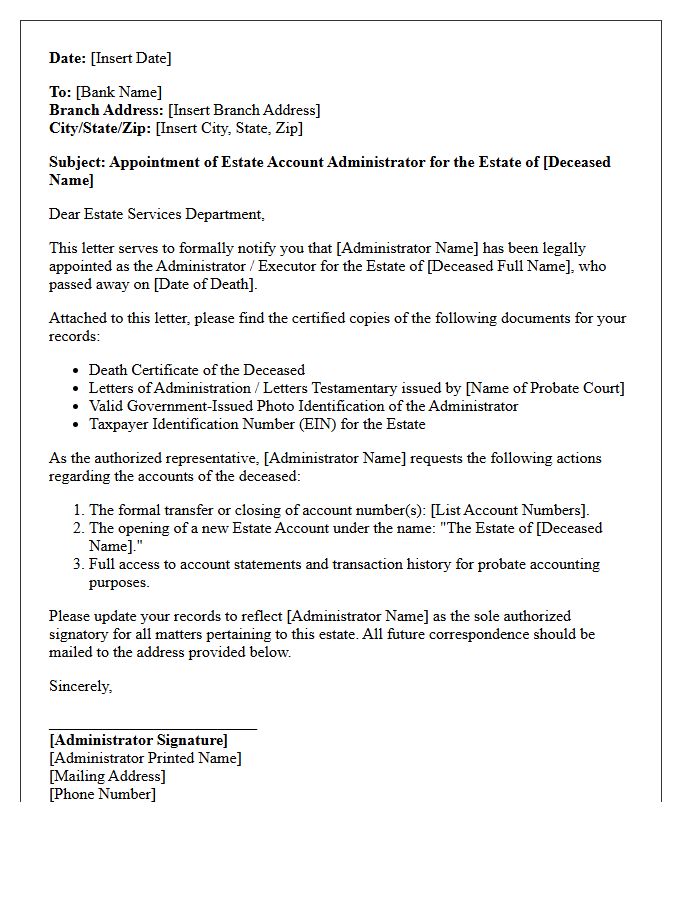
A Letter of Appointment is a legal document issued by a probate court officially designating an individual as the Estate Account Administrator. This Letters of Authority or Letters Testamentary grants the legal power to manage a deceased person's assets, pay debts, and distribute property to heirs. Banks require this certified document to open an estate account and grant access to funds. It serves as essential proof that the appointee has the fiduciary responsibility and legal standing to act on behalf of the estate during the probate process.
Letter of Indemnity for Deceased Estate Account Opening
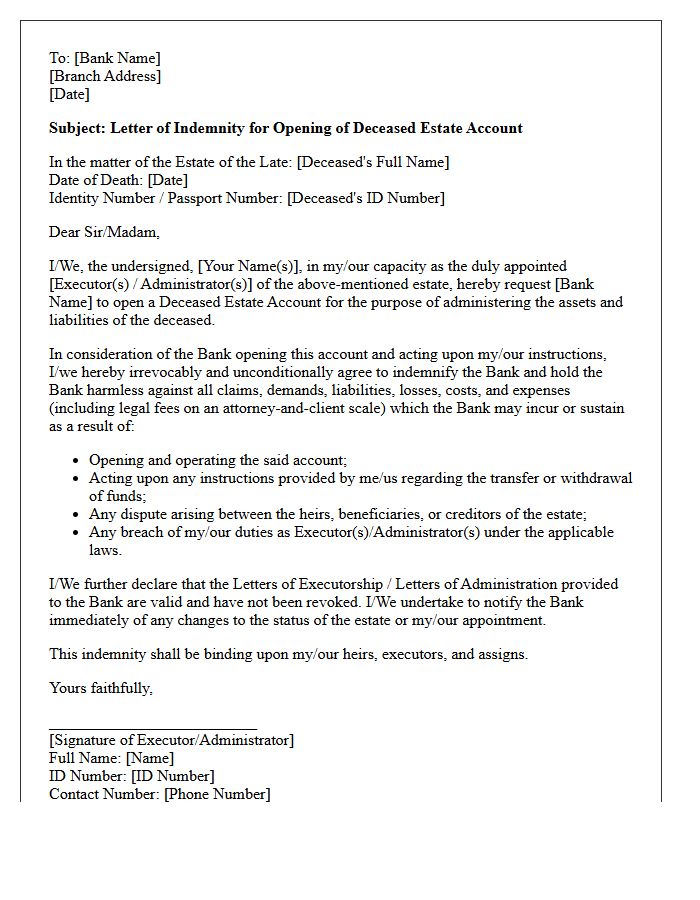
A Letter of Indemnity is a vital legal document used when opening a deceased estate account without formal probate or letters of administration. It protects the financial institution against potential future claims from other heirs or creditors. By signing this indemnification, the claimant accepts personal liability for any losses the bank may incur. This process is typically reserved for small estates to facilitate the distribution of funds to legitimate beneficiaries while ensuring the bank remains legally shielded from competing inheritance disputes or misappropriation of assets.
Letter of Request to Close Personal Account and Open Estate Account
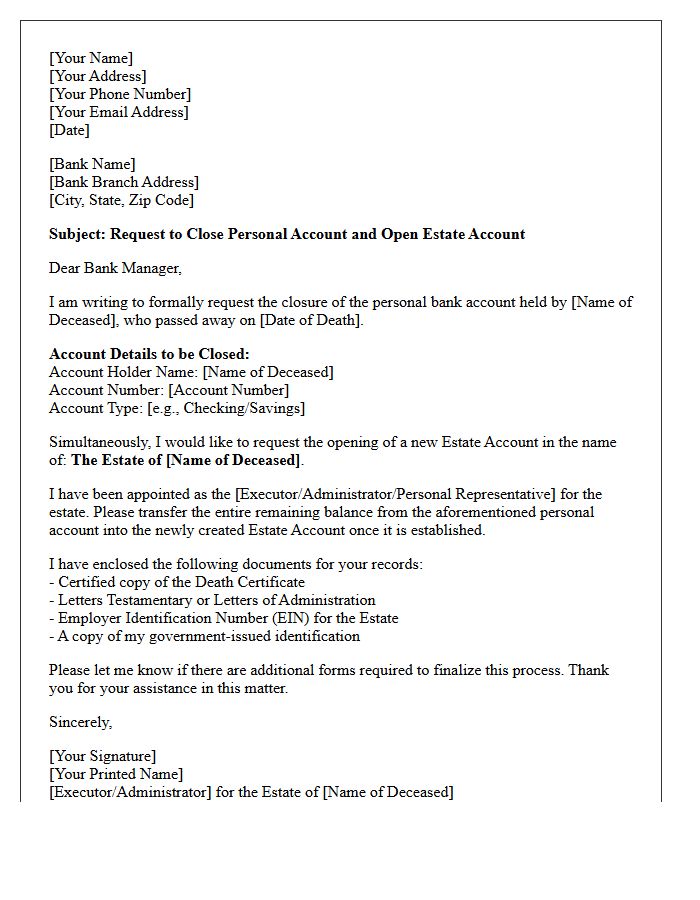
A Letter of Request is essential for formalizing the transition of a deceased person's finances. This legal document notifies the bank to terminate a personal account and transfer remaining balances into a newly established Estate Account. To ensure a smooth process, you must include the formal Letters of Testamentary or Letters of Administration and the death certificate. This structural change allows the executor to manage probate assets, pay valid debts, and distribute inheritances legally while maintaining clear financial records for tax and court reporting purposes.
Letter of Verification for Deceased Estate Account Tax Identification Number
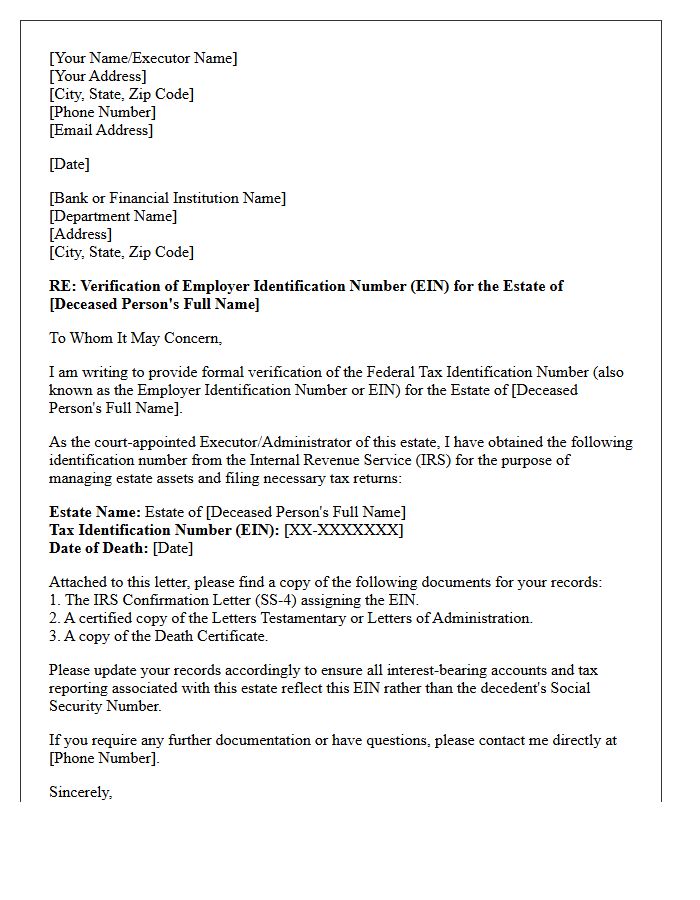
A Letter of Verification is a formal document issued by the IRS confirming the Estate Tax Identification Number (EIN) assigned to a deceased person's assets. This unique nine-digit identifier is essential for executors to manage the probate process, liquidate assets, and file required fiduciary tax returns. It serves as official proof that the estate is a distinct legal entity, separate from the decedent. Without this verification, financial institutions cannot legally open a deceased estate account to collect funds or distribute inheritances to designated beneficiaries.
Letter of Authorization for Estate Account Executor Access
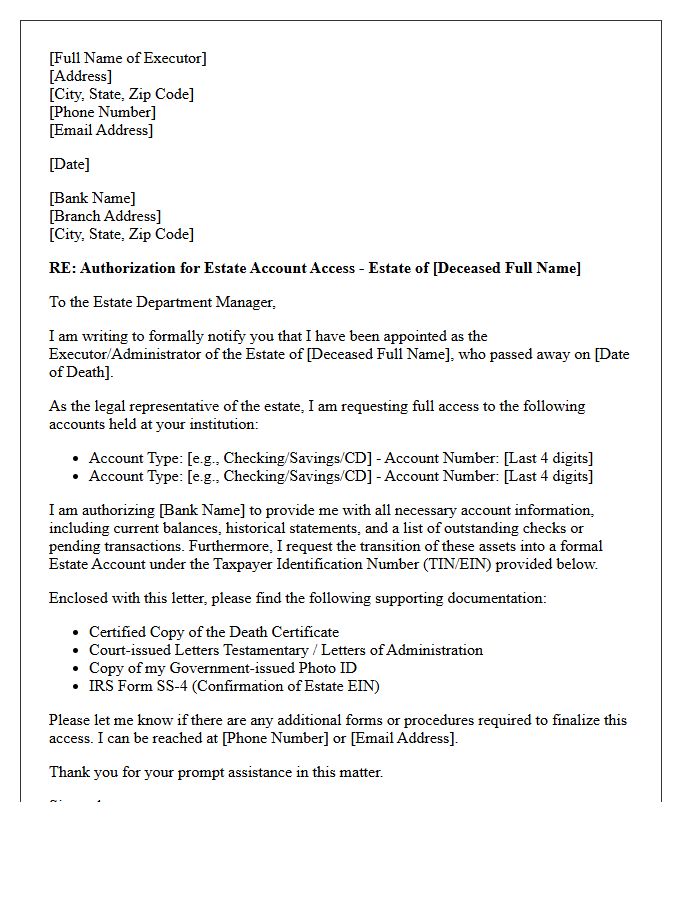
A Letter of Authorization is a vital legal document granting a court-appointed executor the formal power to manage a deceased person's financial assets. It serves as verified proof for banks and institutions that the individual has the fiduciary authority to open an estate account, transfer funds, and settle outstanding debts. Without this official validation-often issued as Letters Testamentary-financial entities cannot legally release private information or allow control over the decedent's holdings, ensuring the secure and lawful distribution of the estate to designated beneficiaries.
Letter of Request for Estate Account Checkbook Issuance
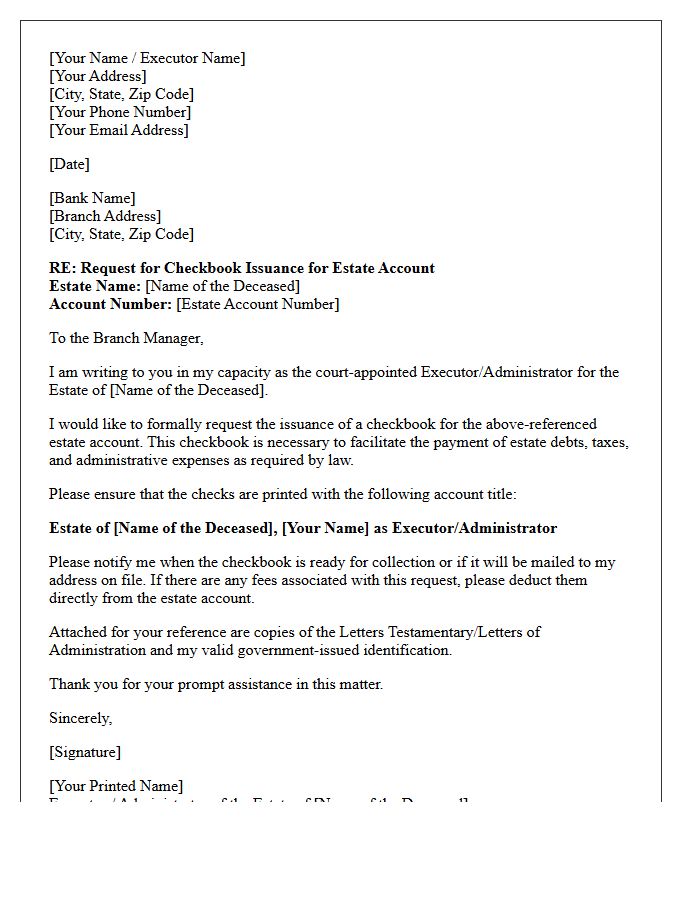
A Letter of Request for Estate Account Checkbook Issuance is a formal document sent to a bank by an executor or administrator. It authorizes the financial institution to provide payment tools necessary for settling the decedent's debts and distributing assets. To ensure processing, you must include the specific estate account number and verify your fiduciary authority through attached Letters Testamentary. Proper checkbook issuance is essential for maintaining accurate financial records and transparent estate accounting during the probate process.
Letter of Acknowledgment of Deceased Estate Account Terms
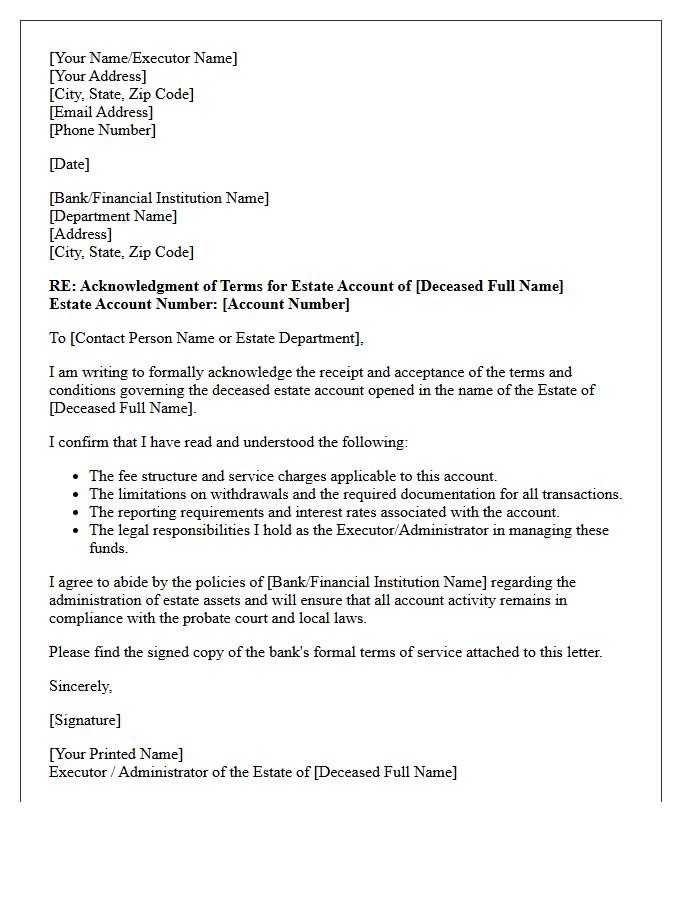
A Letter of Acknowledgment of Deceased Estate Account Terms is a formal document confirming that an executor or administrator understands the specific rules governing a late individual's finances. It ensures compliance with legal probate requirements and prevents unauthorized access to assets. By signing, the representative agrees to the bank's fiduciary obligations, fee structures, and distribution protocols. This step is essential for protecting the estate's value and ensuring that funds are managed transparently before being transferred to the rightful beneficiaries according to the will or state law.
Letter of Request for Deceased Estate Account Balance Statement
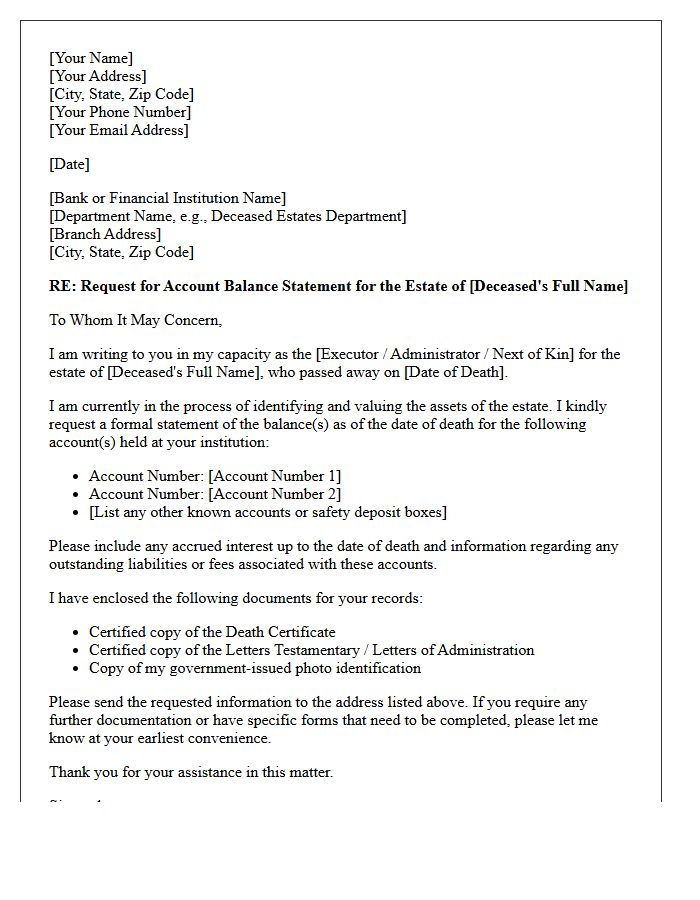
A Letter of Request for Deceased Estate Account Balance Statement is a formal document sent by an executor or administrator to a financial institution. Its primary purpose is to verify the exact valuation of assets held by the deceased at the time of death for probate and tax purposes. You must include the account holder's full name, date of death, and account numbers. Crucially, attach a certified copy of the death certificate and proof of your legal authority, such as Letters of Administration, to ensure the bank releases sensitive financial information.
What is a Letter of Request for a deceased estate account?
A Letter of Request for a deceased estate account is a formal formal document submitted to a banking institution by an executor or administrator to open a dedicated bank account for managing the financial assets and liabilities of a person who has passed away.
What documents must accompany a Letter of Request to open an estate account?
Standard requirements typically include a certified copy of the Death Certificate, the Letters of Administration or Grant of Probate, valid government-issued identification for the executor, and the Tax Identification Number (TIN) for the estate.
Who is authorized to sign the Letter of Request for a deceased estate?
Only the court-appointed executor or the administrator named in the Letters of Administration has the legal authority to sign the Letter of Request and manage the resulting estate account.
Why is a specific estate account necessary instead of using a personal account?
A specific estate account is required to maintain a clear fiduciary audit trail, ensuring that the deceased's funds are legally segregated from the executor's personal finances and used solely for settling debts and distributing inheritance.
Should the Letter of Request include instructions for closing existing accounts?
Yes, the Letter of Request should explicitly instruct the bank to transfer the remaining balances from the deceased's individual accounts into the newly established estate account before closing the old accounts.

Comments