
A subordinated debt audit confirmation letter is a formal request sent to lenders to verify the outstanding balance, interest rates, and priority of repayment terms. This essential step ensures financial statements accurately reflect debt hierarchies and regulatory compliance. Accurate documentation mitigates risk and supports transparent reporting during annual reviews. To assist your process, below are some ready to use template.
Image cover: Subordinated Debt Audit Confirmation: Professional Templates and Samples
Letter Samples List
- Subordinated Debt Audit Confirmation Letter Issuance Date
- Independent Auditor Letter Delivery Instructions
- Banking Institution Client Letter Authorization Signature
- Subordinated Debt Promissory Note Letter Reference
- Audit Letter Confirmation Of Principal Balance Amount
- Audit Letter Verification Of Debt Interest Rate
- Subordinated Debt Maturity Date Letter Acknowledgment
- Regulatory Tier Capital Subordination Terms Letter Statement
- Accrued And Unpaid Interest Confirmation Letter Section
- Debt Covenant Compliance Guarantee Letter Declaration
- Subordinated Debt Audit Confirmation Letter Executed Signatures
Subordinated Debt Audit Confirmation Letter Issuance Date
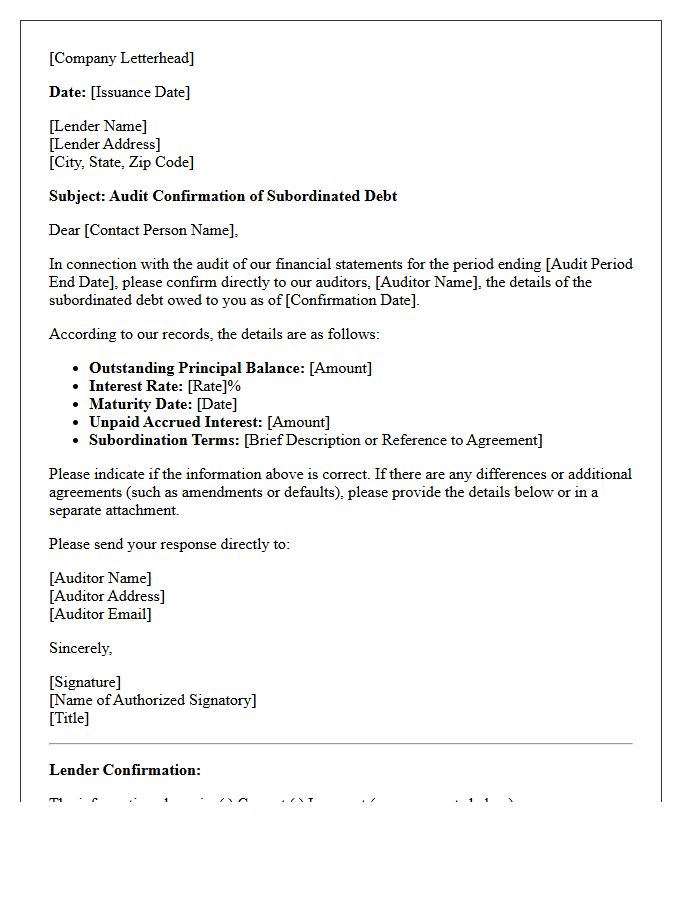
The Subordinated Debt Audit Confirmation Letter Issuance Date is a critical regulatory milestone for financial institutions. It marks when the lender officially verifies debt details, ensuring regulatory capital compliance under Basel III or local standards. This date must align with the fiscal year-end to validate the tier 2 capital status. Auditors use this timestamp to confirm that the debt remains subordinated to senior claims, preventing window dressing and ensuring financial transparency. Accurate timing is essential for maintaining the integrity of the bank's solvency ratios during statutory reporting cycles.
Independent Auditor Letter Delivery Instructions
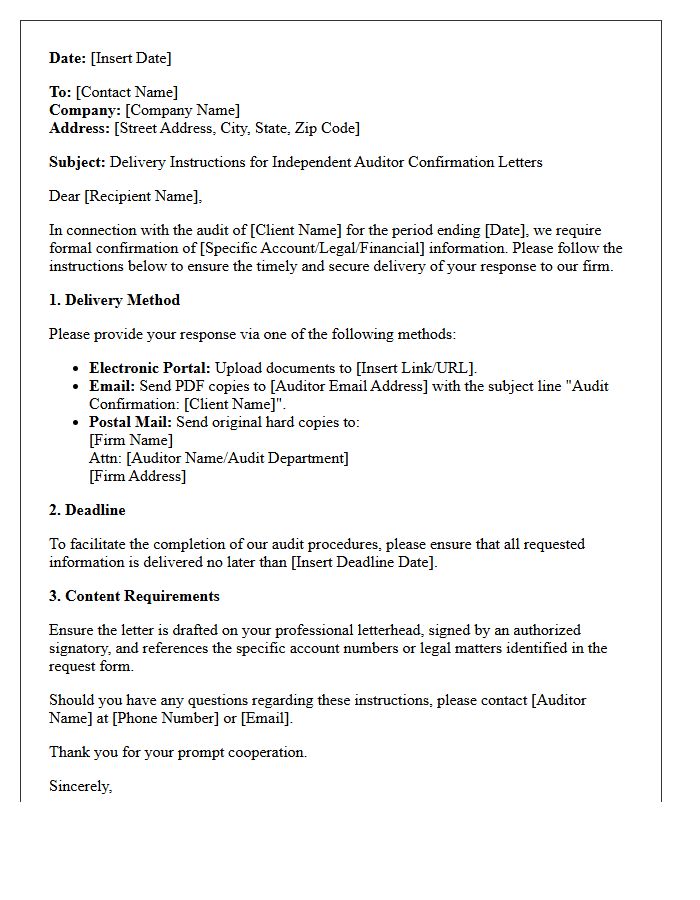
When preparing for a financial audit, Independent Auditor Letter Delivery Instructions provide the specific protocols for submitting confirmation requests. It is critical to follow these guidelines to ensure the authenticity and integrity of the audit evidence. Most firms now require electronic delivery through secure, third-party platforms like Confirmation.com to prevent fraud. Always verify the recipient's authorized email address and mailing details beforehand. Adhering to these instructions minimizes delays in the verification process and ensures that legal and financial disclosures are transmitted safely to the auditing team.
Banking Institution Client Letter Authorization Signature
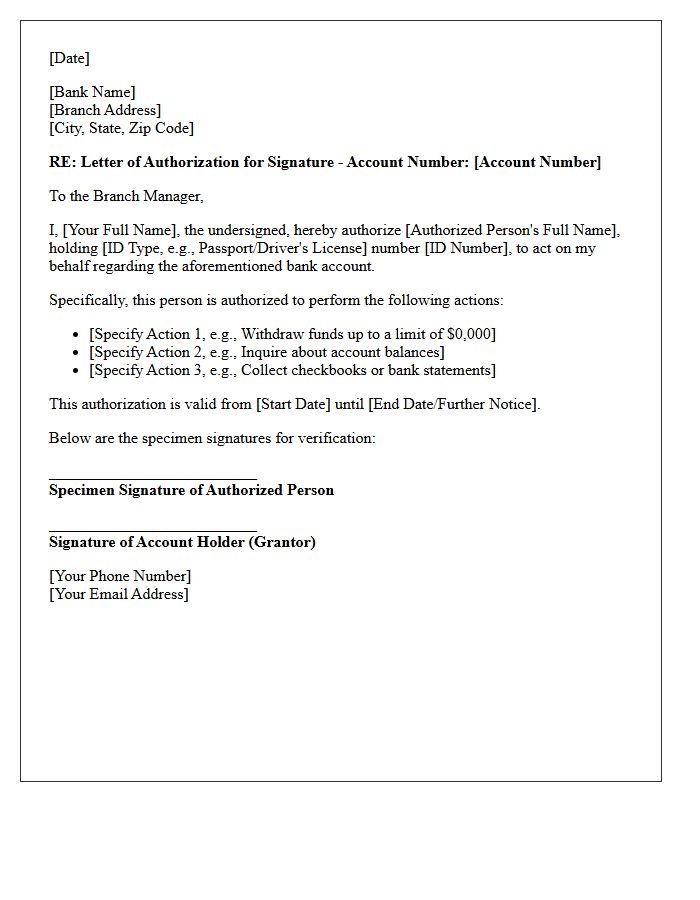
A banking institution client letter authorization signature is the legal validation required to execute financial instructions. This document confirms a client's express consent for transactions, account changes, or information sharing with third parties. To ensure security, banks perform signature verification against their internal records to prevent fraud. For high-value requests, institutions often require a notarized signature or a medallion guarantee to provide an extra layer of authentication. Accuracy and consistency with the original signature card on file are essential for the seamless processing of any formal banking request.
Subordinated Debt Promissory Note Letter Reference
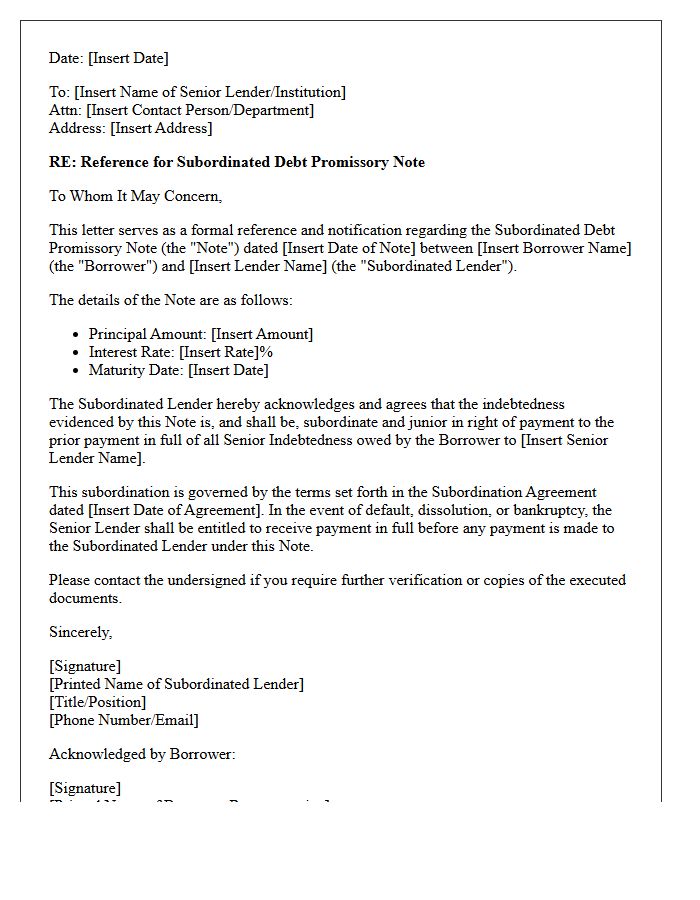
A Subordinated Debt Promissory Note is a critical financial instrument where the lender agrees to rank behind senior creditors during liquidation. This letter reference outlines specific repayment terms, interest rates, and the subordination clause essential for regulatory compliance and capital structuring. It is vital for investors to understand that this debt carries higher risk, as claims are satisfied only after primary obligations are met. Properly documenting this hierarchy ensures transparency in corporate financing and protects the legal standing of all involved parties during potential insolvency proceedings.
Audit Letter Confirmation Of Principal Balance Amount
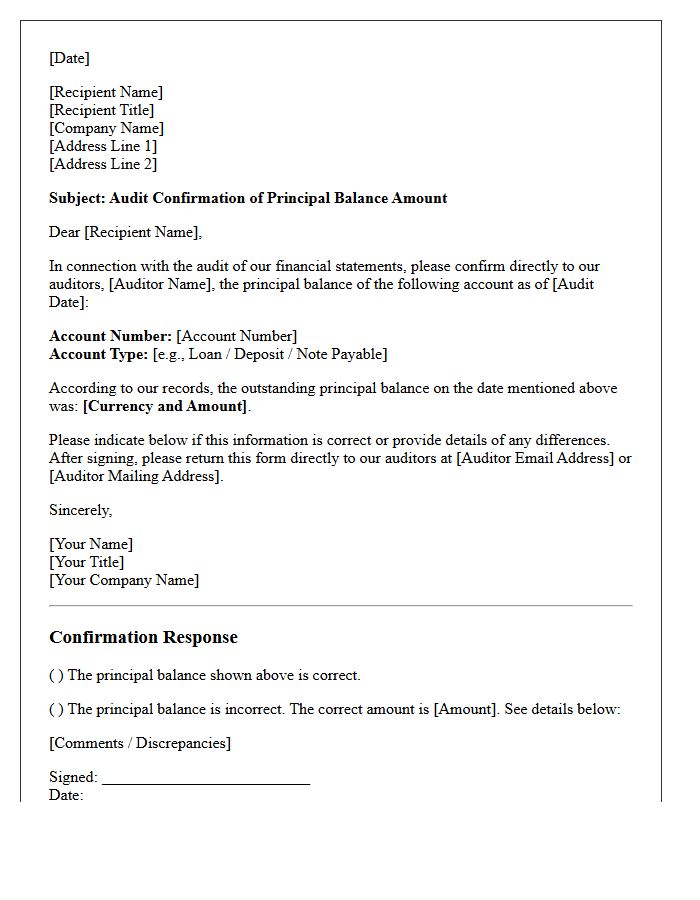
An audit letter confirmation of principal balance is a verification procedure used by auditors to independently validate the accuracy of reported debt. This process involves sending a formal request to the lender to confirm the outstanding principal amount, interest rates, and repayment terms. It serves as critical third-party evidence to prevent financial misstatement and ensure the balance sheet reflects true liabilities. For businesses, timely responses are essential to maintain audit efficiency and demonstrate internal control integrity during the financial reporting cycle.
Audit Letter Verification Of Debt Interest Rate
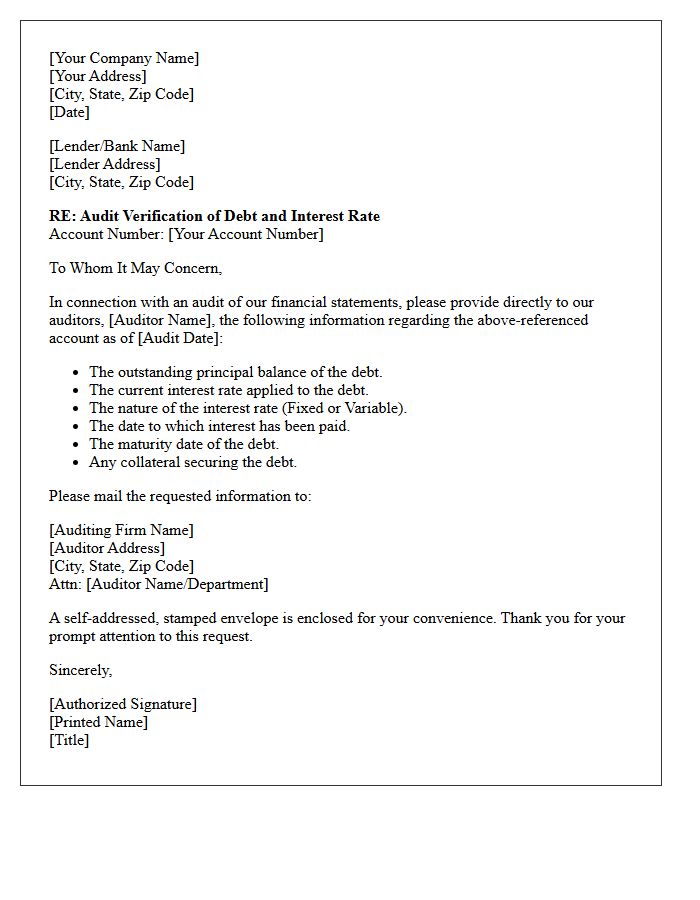
An audit letter verification of debt interest rate ensures financial transparency by confirming loan terms directly with lenders. This process validates that the interest expense and outstanding principal reported on financial statements are accurate and consistent with legal agreements. Auditors use this verification to detect reporting errors, prevent fraud, and ensure compliance with accounting standards. Confirming the specific interest rate is essential for calculating future liabilities and evaluating the overall financial health of a business during an independent financial audit.
Subordinated Debt Maturity Date Letter Acknowledgment
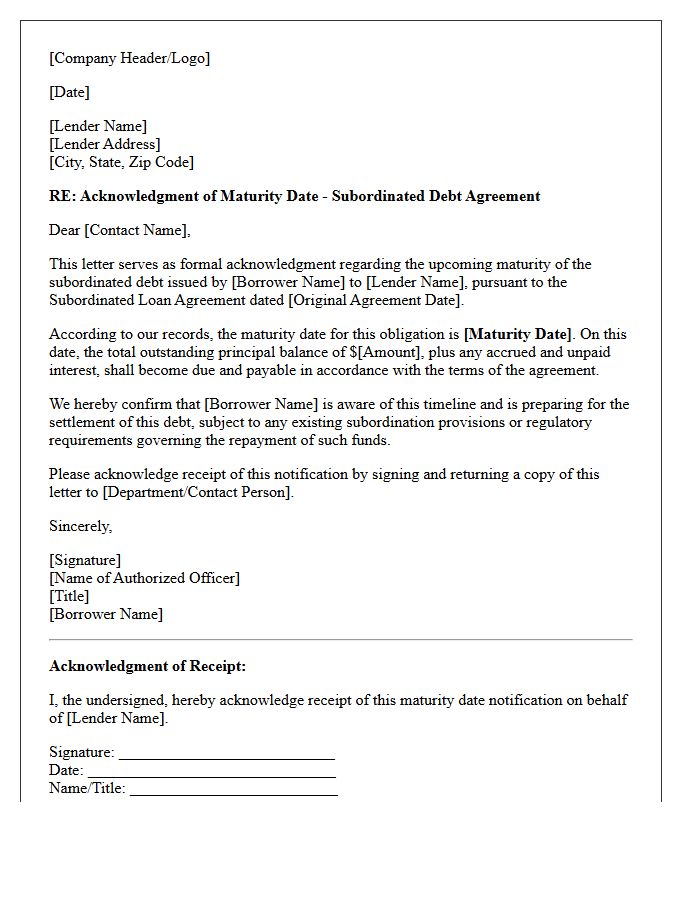
A Subordinated Debt Maturity Date Letter Acknowledgment is a formal document confirming the repayment deadline of secondary debt. This instrument ensures both the lender and borrower agree on the specific date when the principal must be settled, following the satisfaction of senior creditors. It is critical for regulatory compliance and clear financial reporting, as it defines the amortization schedule and potential extension options. Properly acknowledging this date prevents default risks and maintains clarity within the capital structure, ensuring junior lenders understand their position during the final settlement phase.
Regulatory Tier Capital Subordination Terms Letter Statement
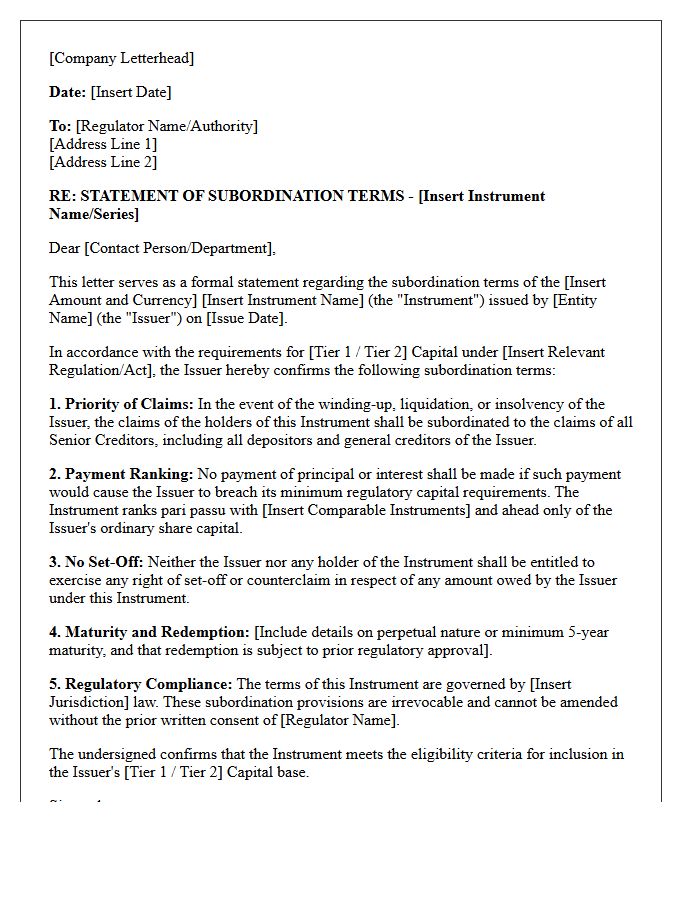
A Regulatory Tier Capital Subordination Terms Letter Statement is a critical legal document used by financial institutions to confirm that specific debt instruments rank below senior obligations during liquidation. This statement ensures compliance with banking regulations by formally outlining subordination clauses required for capital to qualify as Tier 1 or Tier 2. It protects depositors by ensuring holders of these instruments absorb losses first. Verifying these terms is essential for regulatory reporting and maintaining the structural integrity of a bank's capital base under international solvency standards.
Accrued And Unpaid Interest Confirmation Letter Section
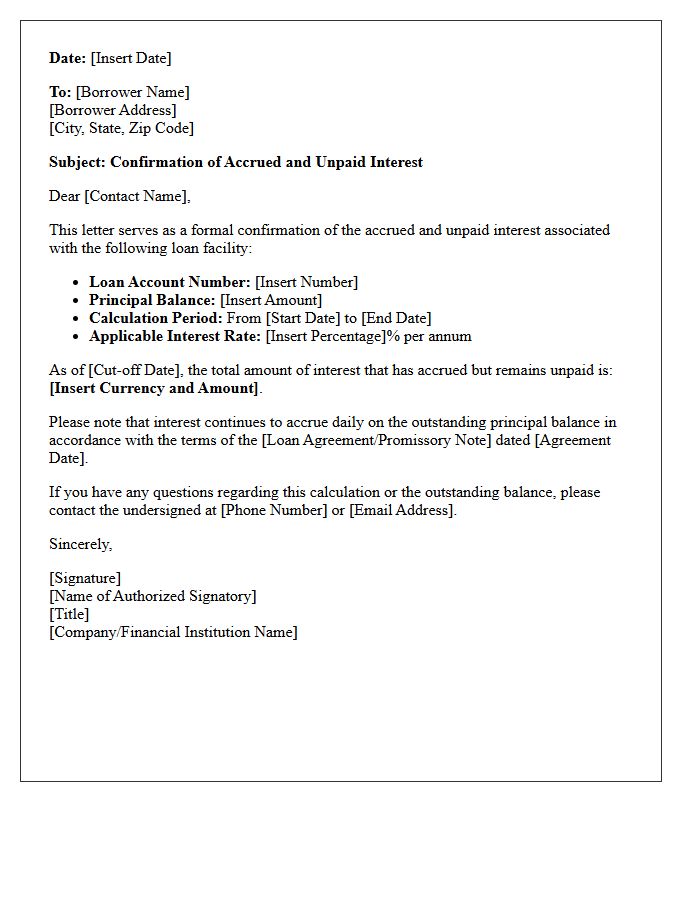
The Accrued and Unpaid Interest Confirmation Letter serves as a critical verification document in financial transactions. This section formally validates the exact amount of interest accumulated but not yet distributed to the lender. It ensures transparency between parties, prevents discrepancies during audits, and confirms the debtor's current liability. By signing this confirmation, both the borrower and lender agree on the outstanding debt balance, providing a legally binding record that protects against future disputes regarding payment obligations and financial reporting accuracy.
Debt Covenant Compliance Guarantee Letter Declaration
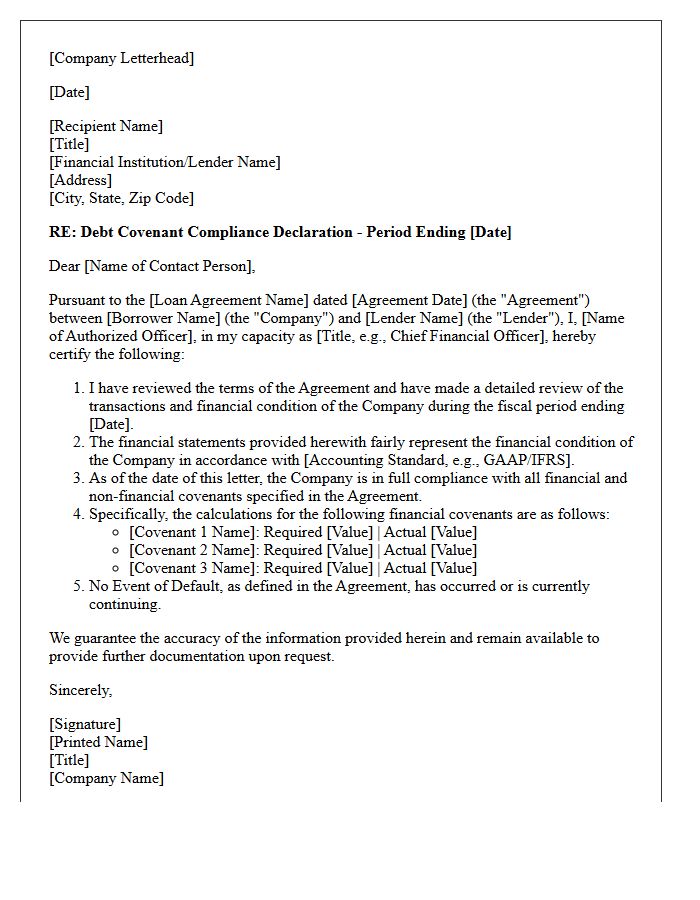
A Debt Covenant Compliance Guarantee Letter Declaration is a formal document where a borrower confirms adherence to specific financial ratios and operational restrictions outlined in a loan agreement. This declaration acts as a legal assurance to lenders that the business remains financially stable and minimizes default risks. Providing accurate data is essential, as any misrepresentation can trigger immediate repayment demands or penalties. Regular submission of this verified statement maintains transparency and ensures the continued availability of credit facilities for the organization.
Subordinated Debt Audit Confirmation Letter Executed Signatures
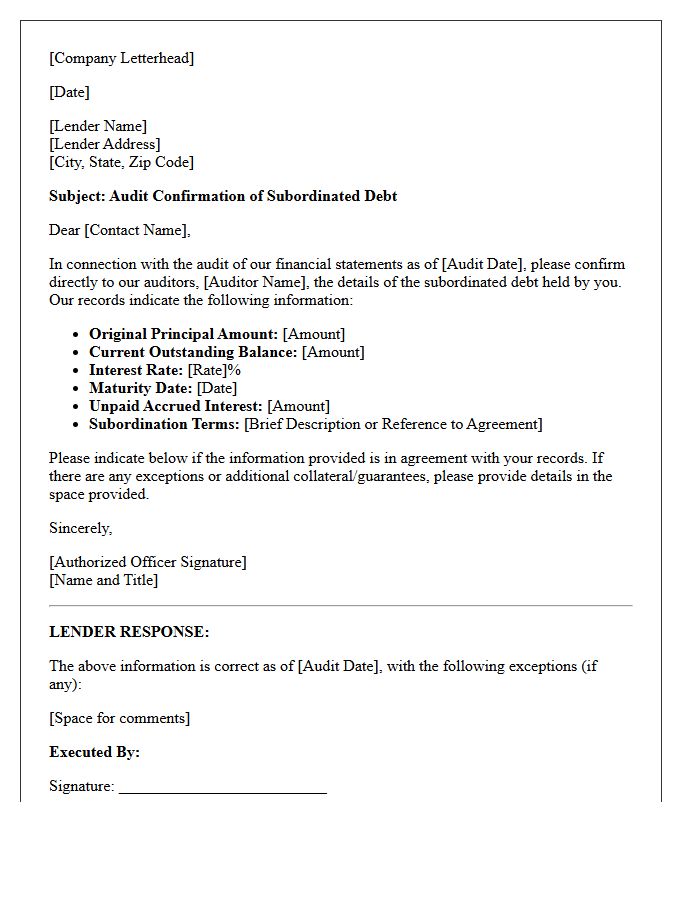
A subordinated debt audit confirmation letter verifies the validity of junior debt obligations during financial statement reviews. It is critical that the document contains executed signatures from both the borrower and the lender to ensure legal enforceability. Auditors use these signed confirmations to substantiate loan balances, interest rates, and maturity dates. Properly executed signatures provide third-party evidence that the debt remains subordinate to senior claims, ensuring the accuracy of the company's capital structure disclosure and compliance with regulatory transparency requirements.
What is a Subordinated Debt Audit Confirmation Letter?
A Subordinated Debt Audit Confirmation Letter is a formal request sent by auditors to lenders to verify the outstanding balance, interest rates, and specific repayment terms of debt that ranks below senior debt in priority of claims.
Why do auditors require confirmation for subordinated debt?
Auditors use these confirmations to obtain direct third-party evidence of the liability's existence, ensure the accuracy of the financial statements, and verify that the debt's subordinate status is legally documented.
What key details are verified in a subordinated debt confirmation?
The letter typically verifies the principal amount owed, maturity dates, interest accruals, collateral details, and the specific "standstill" or subordination clauses that restrict payment until senior obligations are met.
How does a subordination agreement affect the audit process?
Auditors review the agreement to ensure the debt is correctly classified on the balance sheet and to confirm there are no breaches of covenants that could trigger a default or reclassification of the liability.
Who is responsible for signing and returning the debt confirmation letter?
The borrower authorizes the request, but the lender or financial institution holding the debt must sign and return the confirmation directly to the independent auditor to maintain the integrity of the audit evidence.

Comments