
Protect your proprietary information by issuing a formal Cease and Desist Letter to parties engaging in unauthorized data scraping. This legal notice demands an immediate halt to the illegal harvesting of sensitive customer financial records to prevent data breaches and regulatory non-compliance. Ensure your intellectual property and user privacy remain secure from automated extraction tools. Below are some ready to use templates.
Image cover: Protect Your Financial Data: Cease and Desist Templates for Unauthorized Web Scraping
Letter Samples List
- Cease and Desist Letter for Unauthorized Scraping of Bank Customer Financial Data
- Formal Letter Demanding Immediate Cessation of Financial Record Scraping
- Legal Notice Letter Regarding Unauthorized Extraction of Banking Information
- Cease and Desist Letter for Automated Harvesting of Financial Institution Data
- Letter of Demand to Halt Unauthorized Data Scraping of Bank Client Records
- Notice Letter for Terms of Service Violation and Unauthorized Financial Data Scraping
- Cease and Desist Letter Concerning Breach of Privacy via Data Scraping
- Letter to Enjoin Unauthorized Automated Access to Customer Banking Records
- Pre-Litigation Letter for Unlawful Scraping of Sensitive Financial Information
- Cease and Desist Letter Addressing Commercial Exploitation of Scraped Bank Data
- Final Warning Letter for Illicit Web Scraping of Retail Banking Portals
- Letter Initiating Legal Action Against Unauthorized Financial Data Aggregators
Cease and Desist Letter for Unauthorized Scraping of Bank Customer Financial Data
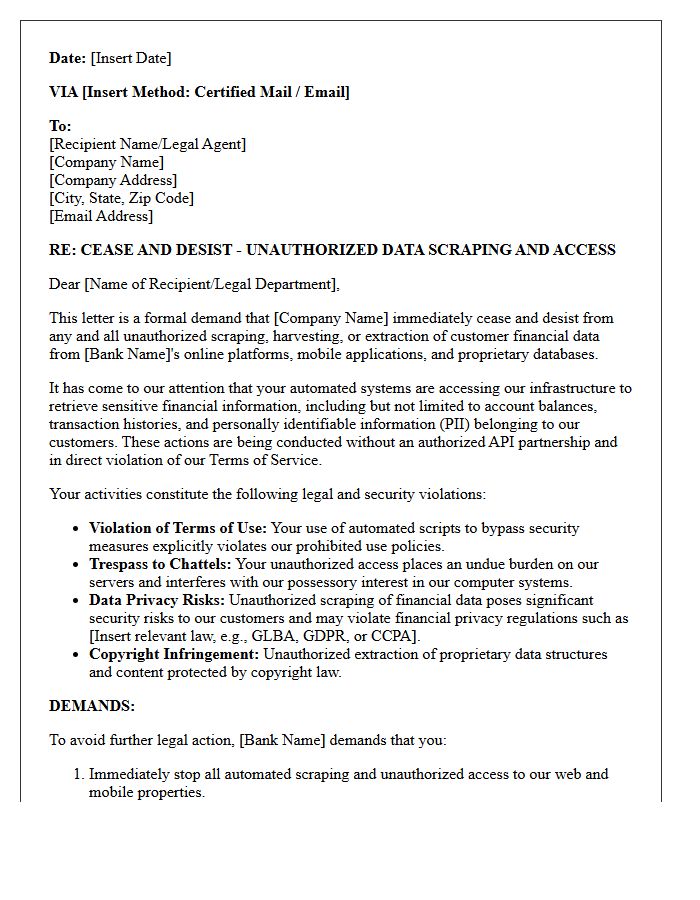
A cease and desist letter for unauthorized scraping is a formal legal notice demanding the immediate termination of automated data harvesting. Financial institutions use this to protect sensitive bank customer financial data and maintain system security. The letter outlines specific violations of terms of service and privacy laws, such as the Computer Fraud and Abuse Act. Failing to comply can result in litigation, permanent injunctions, or statutory damages. It serves as a critical first step in enforcing data sovereignty and safeguarding proprietary information from malicious actors or non-compliant third-party aggregators.
Formal Letter Demanding Immediate Cessation of Financial Record Scraping
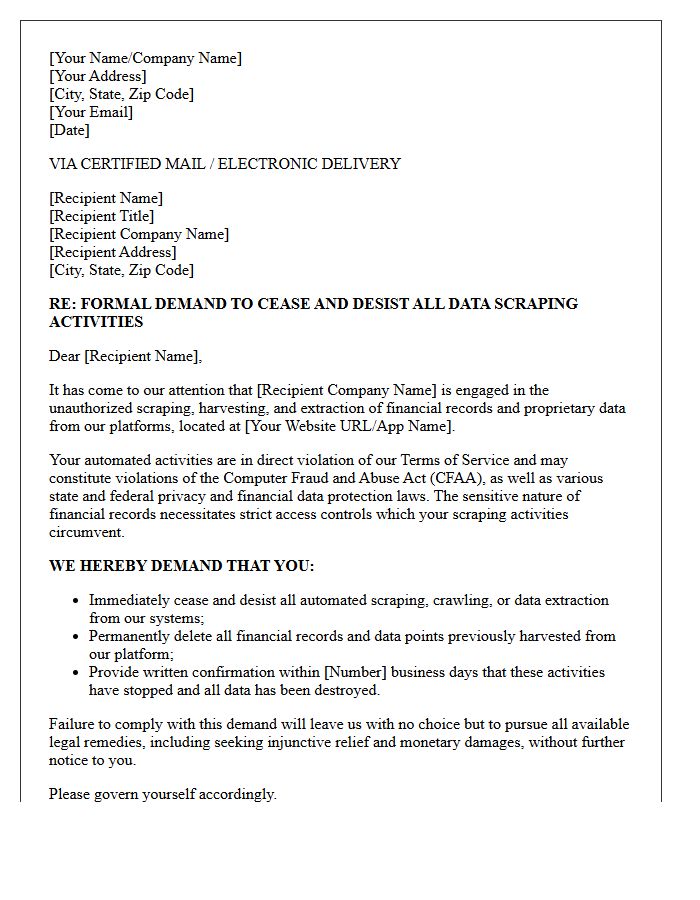
A formal cease and desist letter is a critical legal tool used to stop unauthorized financial record scraping. This document explicitly notifies the offending party that their automated data extraction violates your terms of service, privacy policies, or intellectual property rights. By establishing a clear paper trail, you provide formal notice of legal non-compliance. It is essential to demand the immediate deletion of harvested data and the blocking of access bots. Sending this notice is often a mandatory prerequisite before pursuing litigation or statutory damages for digital trespassing.
Legal Notice Letter Regarding Unauthorized Extraction of Banking Information
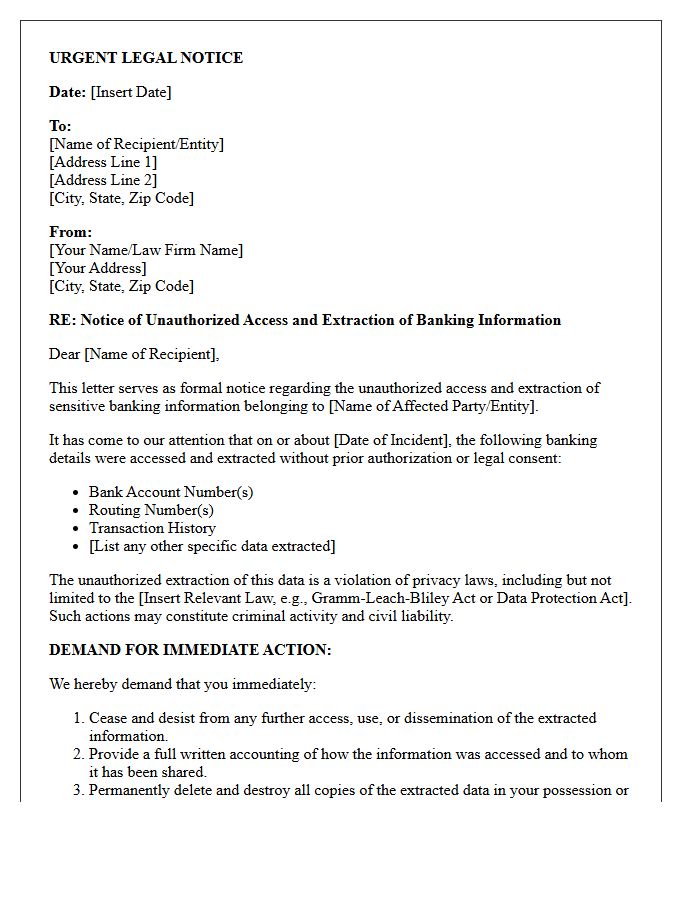
Receiving a Legal Notice regarding the unauthorized extraction of banking information is a critical matter requiring immediate action. This formal document alerts individuals to potential violations of data privacy laws and financial regulations. It serves as a final warning before litigation, detailing specific breaches and demanding the cessation of illicit activities. Recipients must seek legal counsel to evaluate their position and prevent further liability. Failure to respond to these allegations can result in severe criminal penalties or substantial civil lawsuits related to financial fraud and cybersecurity misconduct.
Cease and Desist Letter for Automated Harvesting of Financial Institution Data
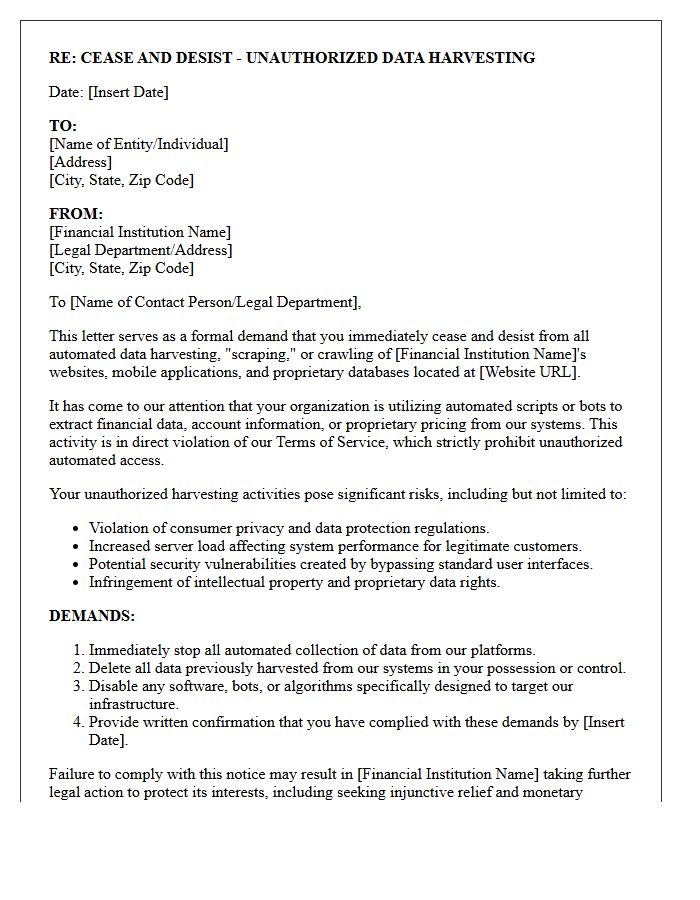
A cease and desist letter for automated harvesting acts as a formal legal notice to stop unauthorized web scraping of sensitive banking information. Financial institutions issue these to protect proprietary data and maintain network security against potential breaches. Recipients must immediately halt bot activity to avoid litigation under the Computer Fraud and Abuse Act. Such letters typically outline specific violations of terms of service and demand the deletion of gathered datasets. Ignoring these warnings can lead to permanent injunctions and significant monetary damages for intellectual property infringement or data misappropriation.
Letter of Demand to Halt Unauthorized Data Scraping of Bank Client Records
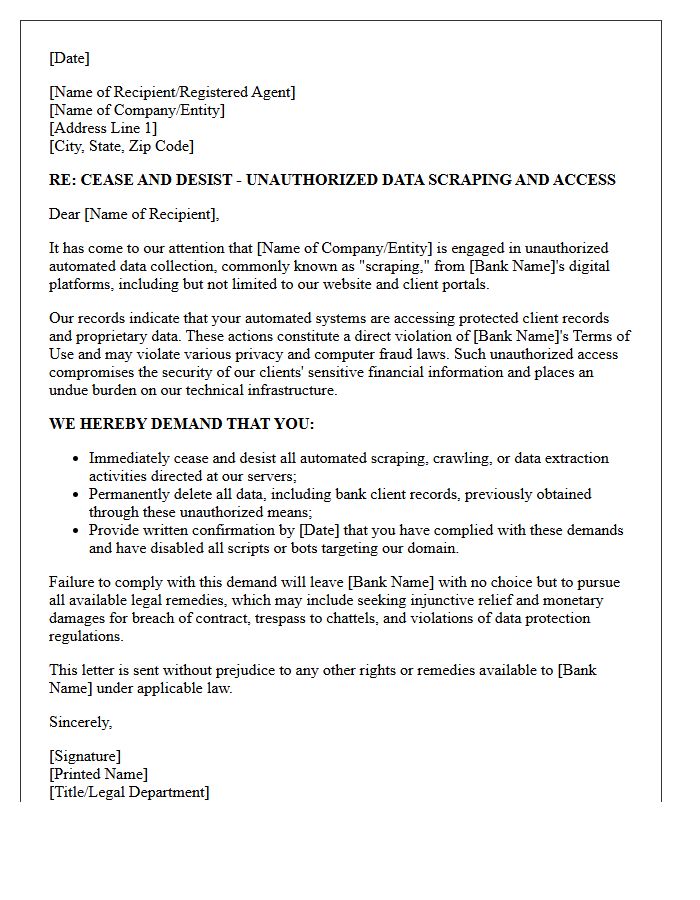
A Letter of Demand serves as a formal legal notice to immediately stop unauthorized data scraping of sensitive bank client records. This document asserts intellectual property rights and highlights potential violations of data privacy laws like GDPR or CCPA. It demands the recipient cease automated collection, delete harvested datasets, and provide written compliance confirmation. Sending this letter is a critical preliminary step to establish a legal record before pursuing litigation or seeking injunctive relief to protect proprietary financial information and maintain client confidentiality against malicious extraction bots.
Notice Letter for Terms of Service Violation and Unauthorized Financial Data Scraping
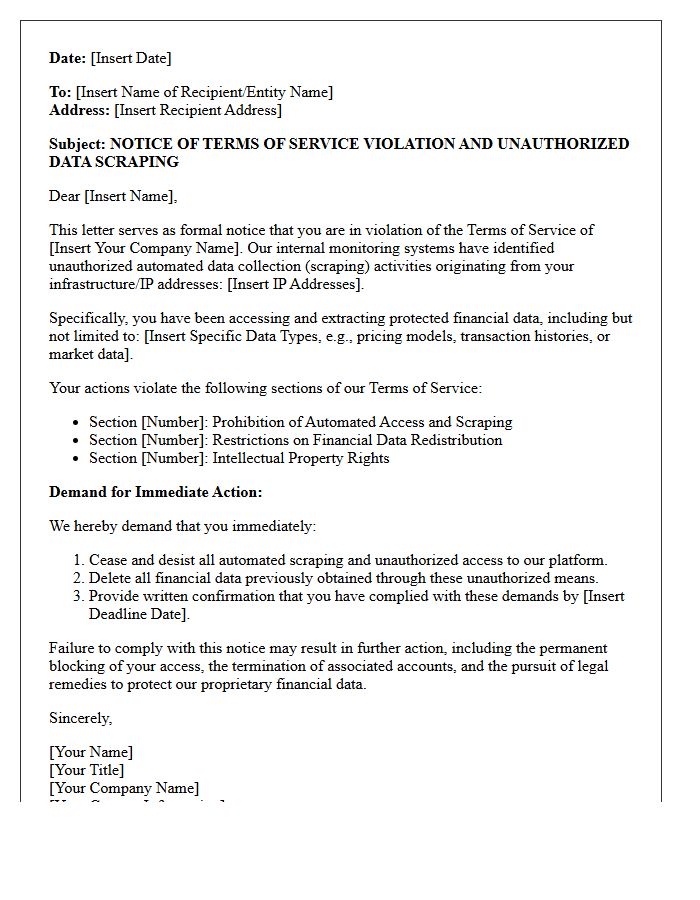
A Notice Letter serves as a formal legal warning regarding Terms of Service violations. This document specifically addresses unauthorized financial data scraping, which occurs when automated tools extract sensitive fiscal information without permission. Such actions breach contractual agreements and may violate cybersecurity laws. The notice demands an immediate cease and desist of all scraping activities to prevent legal escalation or account termination. Organizations must prioritize data integrity and API compliance to avoid litigation, as unauthorized access compromises financial data privacy and platform security protocols.
Cease and Desist Letter Concerning Breach of Privacy via Data Scraping
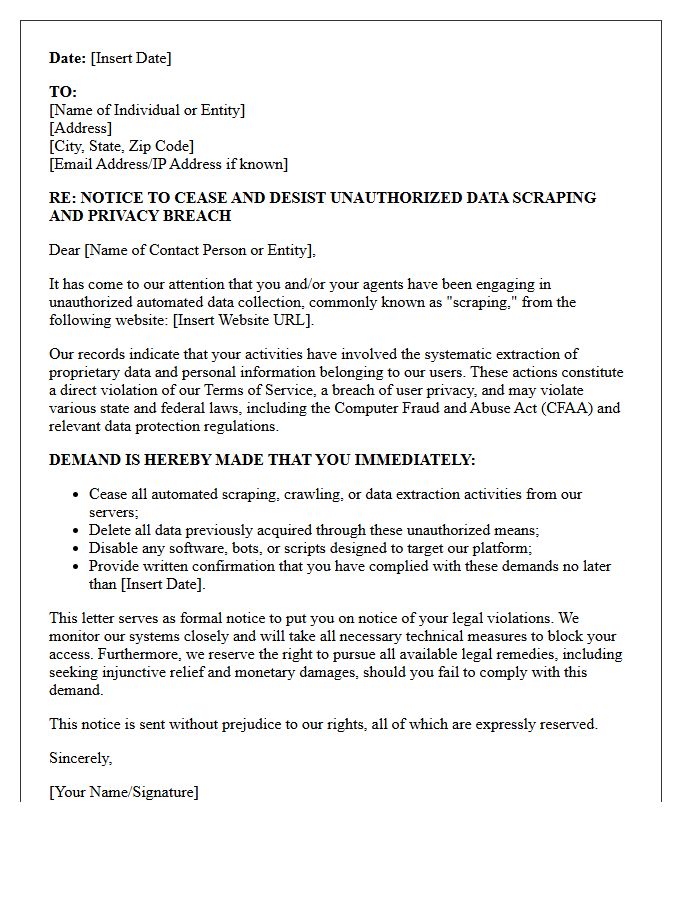
A Cease and Desist Letter for privacy breach via data scraping serves as a formal legal demand to stop unauthorized automated harvesting of personal information. It asserts that unauthorized scraping violates terms of service and compromises user data protection rights. By issuing this document, entities establish a legal paper trail to prevent further exploitation and demand the immediate deletion of captured datasets. Failing to comply can lead to litigation involving computer fraud and privacy torts, making it a critical tool for safeguarding digital assets and enforcing regulatory compliance.
Letter to Enjoin Unauthorized Automated Access to Customer Banking Records
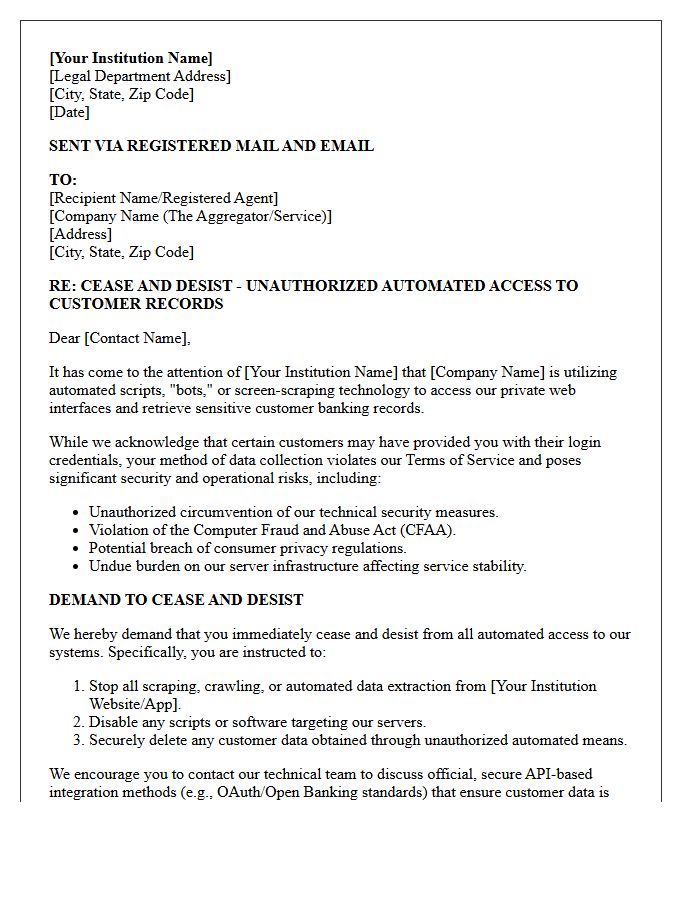
A letter to enjoin unauthorized automated access is a formal legal notice sent by financial institutions to third parties. Its primary purpose is to demand an immediate halt to screen scraping or other unapproved data collection methods that bypass official APIs. This document is essential for maintaining data security and ensuring compliance with privacy regulations. By issuing this notice, banks protect sensitive customer banking records from potential breaches and prevent excessive server strain caused by non-sanctioned automated access, ultimately safeguarding the integrity of the financial ecosystem.
Pre-Litigation Letter for Unlawful Scraping of Sensitive Financial Information
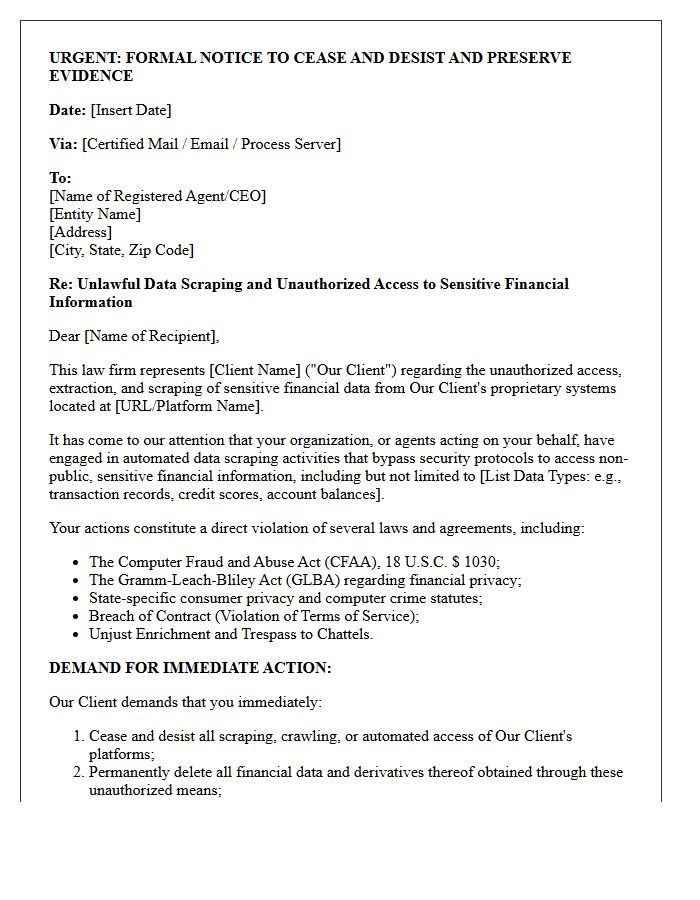
A Pre-Litigation Letter serves as a formal legal notice demanding that an entity cease the unlawful scraping of sensitive financial information. This document outlines specific violations of data privacy laws and terms of service. It acts as a final warning to prevent further unauthorized access before a lawsuit is filed. Key objectives include demanding the immediate deletion of harvested data and preserving evidence for potential discovery. Addressing these breaches early is critical to mitigating financial risks, protecting consumer privacy, and ensuring compliance with strict data protection regulations like the CCPA or GDPR.
Cease and Desist Letter Addressing Commercial Exploitation of Scraped Bank Data
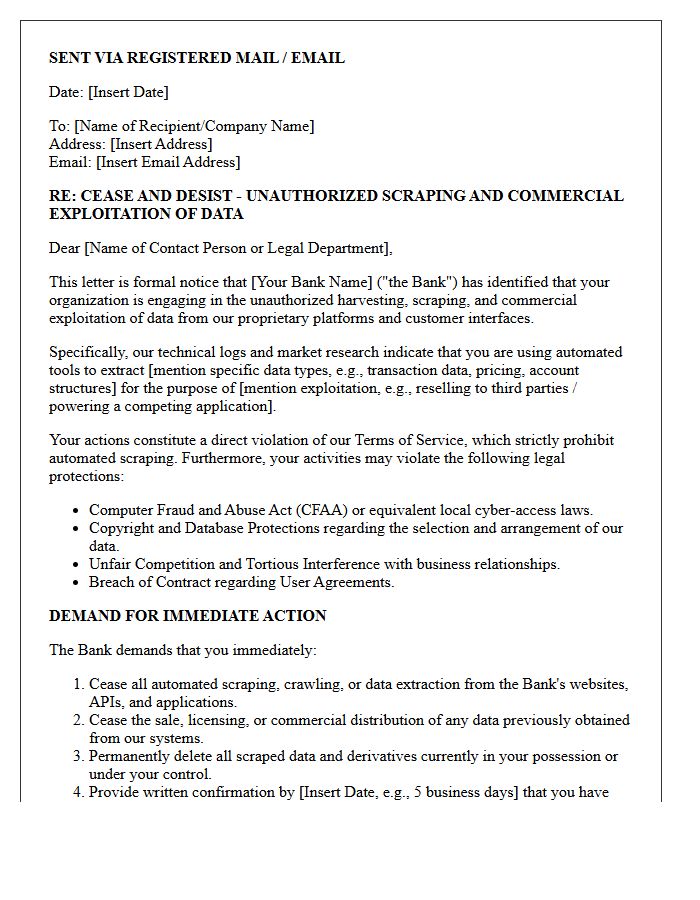
A Cease and Desist Letter is a formal legal notice demanding that an entity immediately stop the unauthorized commercial exploitation of scraped bank data. It asserts proprietary rights over financial information and highlights violations of terms of service or data privacy laws. Sending this document serves as a critical first step to mitigate security risks, prevent market cannibalization, and establish a paper trail for potential litigation. By addressing web scraping early, financial institutions protect sensitive customer insights and maintain control over their exclusive digital assets and competitive infrastructure.
Final Warning Letter for Illicit Web Scraping of Retail Banking Portals
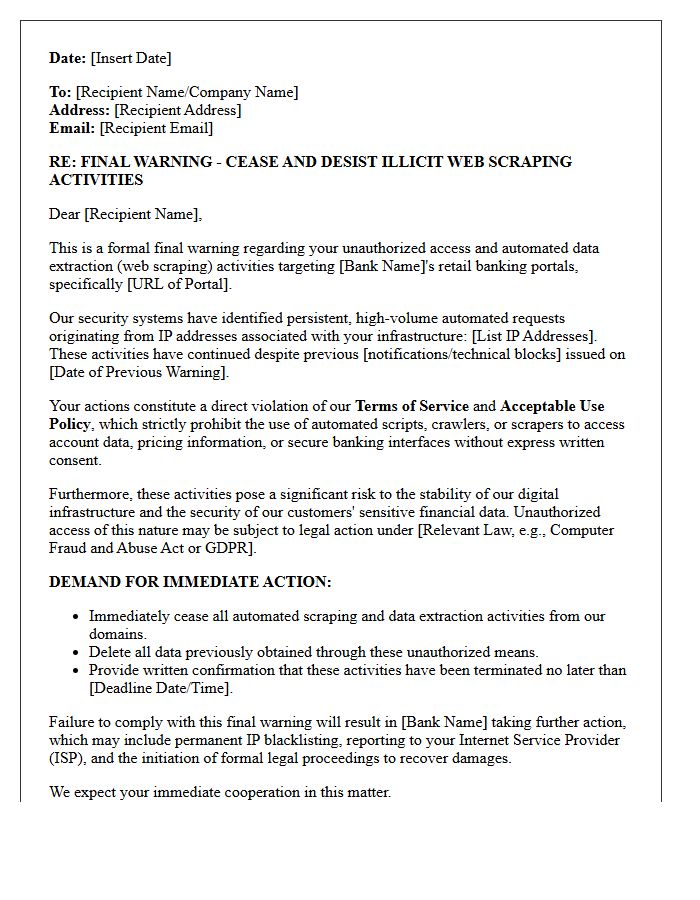
A Final Warning Letter serves as a formal legal notice demanding the immediate cessation of unauthorized data extraction from retail banking portals. These letters highlight violations of terms of service and potential breaches of the Computer Fraud and Abuse Act. Receiving this document signifies that the financial institution has detected your automated scripts and is prepared to initiate litigation or permanent IP blocking. To avoid criminal charges or civil lawsuits, entities must halt all illicit web scraping activities and transition to sanctioned API integrations for accessing sensitive financial data securely.
Letter Initiating Legal Action Against Unauthorized Financial Data Aggregators
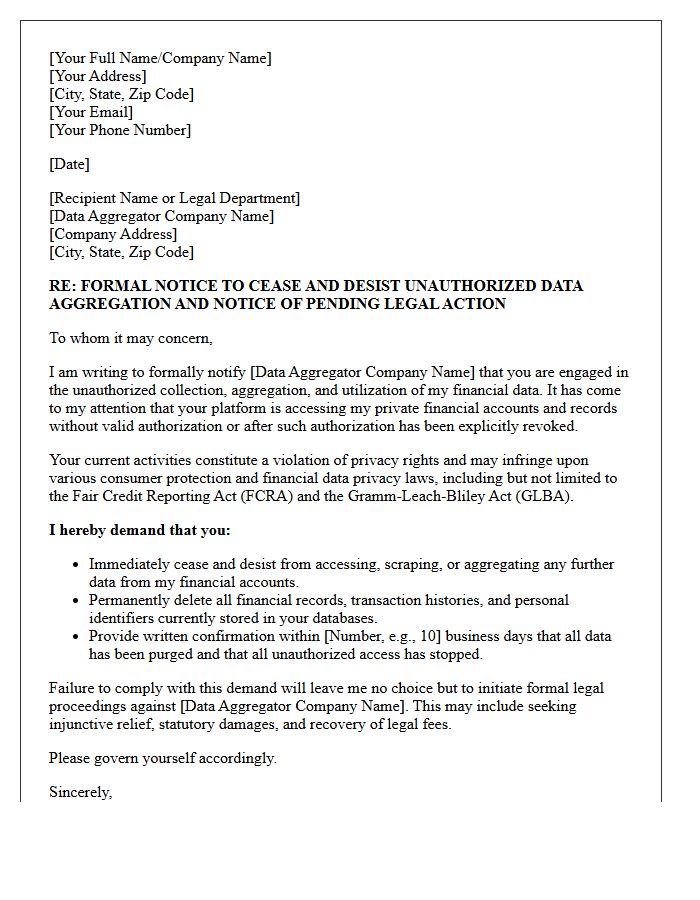
A formal letter initiating legal action serves as a cease and desist notice against unauthorized data scrapers. This document demands the immediate termination of non-consensual access to sensitive financial records to prevent privacy breaches. It asserts legal rights under data protection regulations, warning aggregators of potential litigation for intellectual property theft or security violations. By establishing a clear legal paper trail, organizations protect their proprietary infrastructure and ensure that financial information remains secure from predatory or unregulated harvesting practices that compromise consumer confidentiality and system integrity.
What is a Cease and Desist Letter for unauthorized data scraping?
A Cease and Desist Letter for unauthorized data scraping is a formal legal notice demanding that an individual or entity immediately stop using automated tools or bots to extract proprietary information, such as customer financial records, from a website or database without permission.
Is scraping customer financial records a violation of data privacy laws?
Yes, scraping customer financial records typically violates multiple data privacy regulations, including the Gramm-Leach-Bliley Act (GLBA) and the GDPR, as well as Computer Fraud and Abuse Act (CFAA) statutes, because it involves the unauthorized access of sensitive Personally Identifiable Information (PII).
Can I be sued for scraping financial data even if the information is publicly accessible?
Yes, even if certain data appears public, scraping it may violate a website's Terms of Service (ToS), breach contract law, or infringe upon database copyrights. Financial institutions have a fiduciary duty to protect customer records, making unauthorized extraction a high-risk activity for litigation.
What are the legal consequences of ignoring a Cease and Desist Letter for data scraping?
Ignoring a Cease and Desist Letter can lead to civil lawsuits for damages, permanent injunctions, and in cases involving sensitive financial records, criminal charges or significant regulatory fines for compromising consumer financial privacy.
How do I stop a bot from scraping my customers' financial data?
To stop unauthorized scraping, you should issue a formal Cease and Desist Letter to the bot operator and their hosting provider, while simultaneously implementing technical barriers such as CAPTCHAs, IP rate limiting, and Web Application Firewalls (WAF).

Comments