
A Third-Party Vendor Compliance Assessment Letter is a vital tool for verifying that partners adhere to your organization's security and regulatory standards. This formal inquiry ensures vendors maintain data integrity and mitigate operational risks within your supply chain. Strengthening these oversight processes protects your business from legal and financial liabilities. To simplify your workflow, below are some ready to use template.
Image cover: Effective Third-Party Vendor Compliance Assessment Letter Templates and Samples
Letter Samples List
- Initial Third-Party Vendor Compliance Assessment Request Letter
- Annual Vendor Risk Management Audit Notification Letter
- Information Security And Cybersecurity Controls Verification Letter
- Data Privacy And Protection Regulatory Compliance Letter
- Anti-Money Laundering And Sanctions Vendor Screening Letter
- Business Continuity And Disaster Recovery Assessment Letter
- Financial Service Provider Due Diligence Questionnaire Letter
- Payment Card Industry Data Security Standard Assessment Letter
- Vendor Compliance Deficiencies And Remediation Action Letter
- Third-Party Assessment Conditional Approval Notification Letter
- Regulatory Compliance Certification And Attestation Letter
- Vendor Non-Compliance Escalation And Warning Letter
- Final Third-Party Vendor Compliance Assessment Approval Letter
Initial Third-Party Vendor Compliance Assessment Request Letter
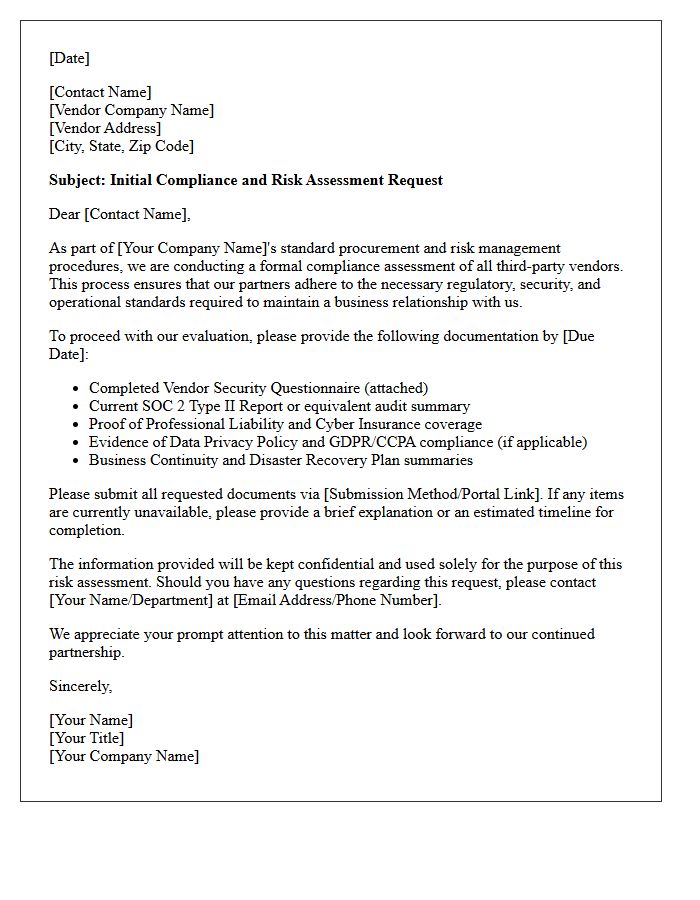
An Initial Third-Party Vendor Compliance Assessment Request Letter is a formal document sent to potential partners to evaluate their security posture and regulatory alignment. It initiates the due diligence process by requesting detailed documentation, such as SOC2 reports, data privacy policies, and insurance certificates. Ensuring vendor risk management at the onset protects your organization from potential data breaches and legal liabilities. Clear communication in this letter sets expectations for transparency, ensuring the vendor meets your internal compliance standards before any contractual agreement is finalized or sensitive information is shared.
Annual Vendor Risk Management Audit Notification Letter
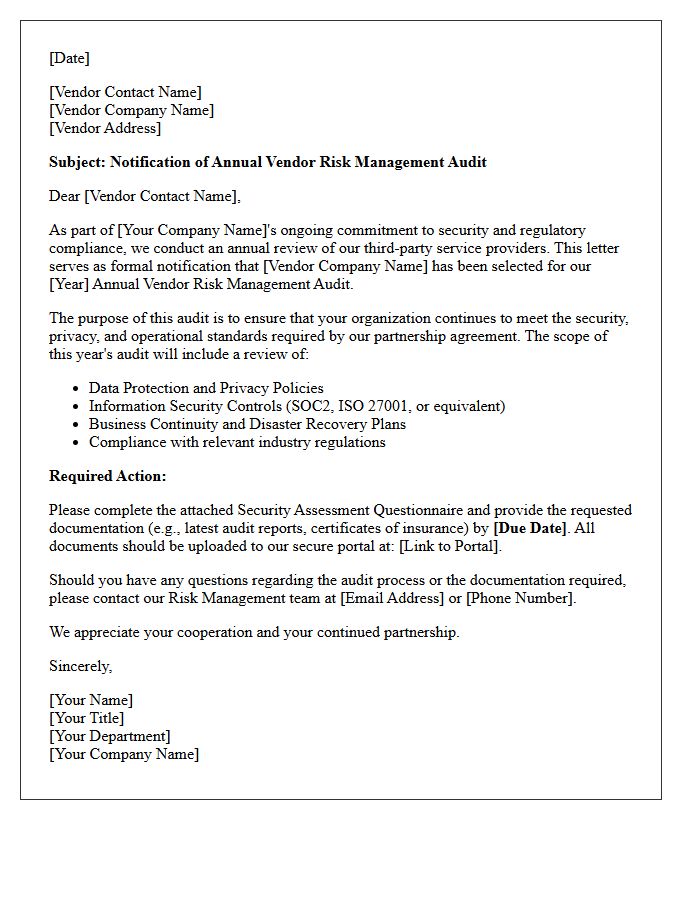
An Annual Vendor Risk Management Audit Notification Letter is a formal communication informing third-party partners of an upcoming compliance assessment. This essential document outlines the audit scope, required documentation, and specific timelines to evaluate security postures and operational stability. It ensures that vendors adhere to contractual obligations and regulatory standards, mitigating potential supply chain vulnerabilities. For organizations, this proactive notification is a critical step in maintaining data integrity and managing systemic risks by verifying that external service providers follow rigorous safety protocols and maintain robust internal controls.
Information Security And Cybersecurity Controls Verification Letter
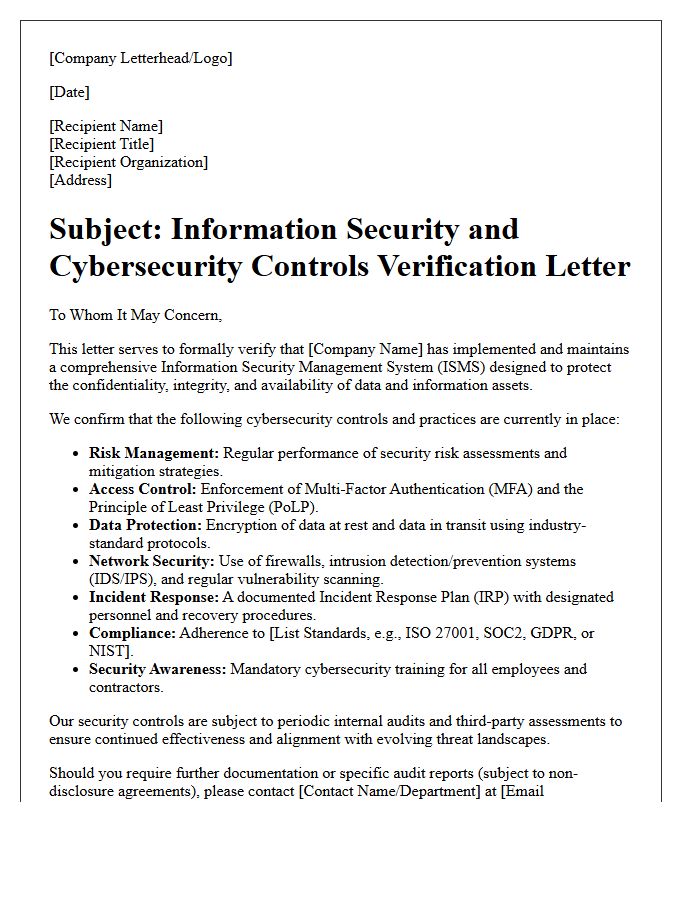
An Information Security and Cybersecurity Controls Verification Letter serves as formal attestation that an organization's security posture aligns with established frameworks. It provides third-party assurance to stakeholders and clients that critical safeguards are implemented and functioning effectively. This document confirms the validation of technical, administrative, and physical controls, reducing perceived risk during vendor assessments. By verifying compliance with standards like ISO 27001 or SOC 2, the letter builds trust and demonstrates a commitment to protecting sensitive data against evolving cyber threats.
Data Privacy And Protection Regulatory Compliance Letter
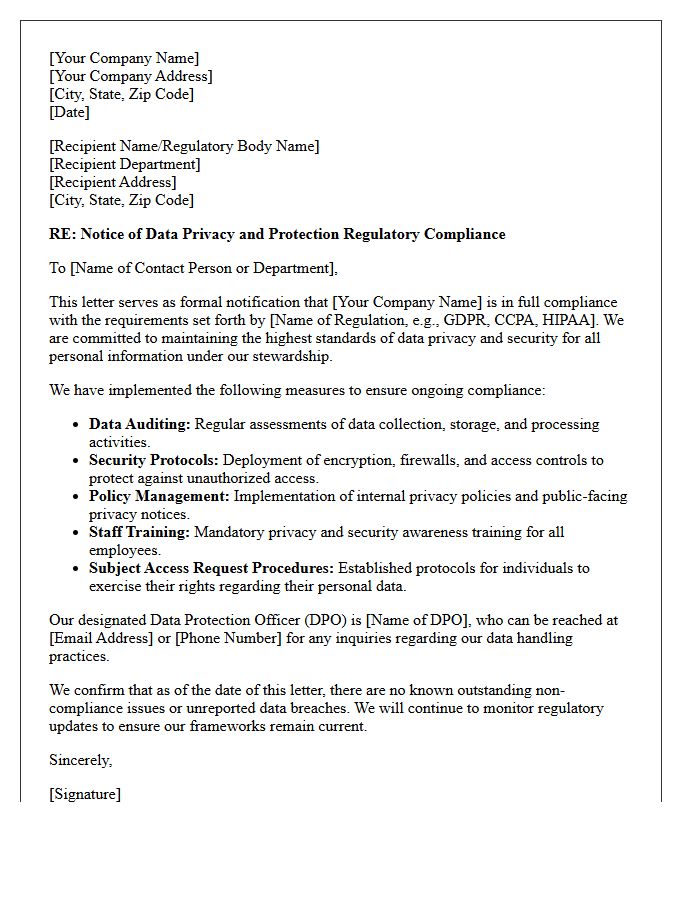
A Data Privacy and Protection Regulatory Compliance Letter is a formal document verifying that an organization adheres to legal standards like GDPR or CCPA. It serves as official proof for stakeholders, auditors, and partners that sensitive information is handled securely. This letter outlines specific security protocols, data encryption methods, and breach notification policies implemented to mitigate risks. Ensuring regulatory compliance through this documentation builds institutional trust, avoids heavy legal penalties, and demonstrates a proactive commitment to maintaining data integrity and user confidentiality in a digital landscape.
Anti-Money Laundering And Sanctions Vendor Screening Letter
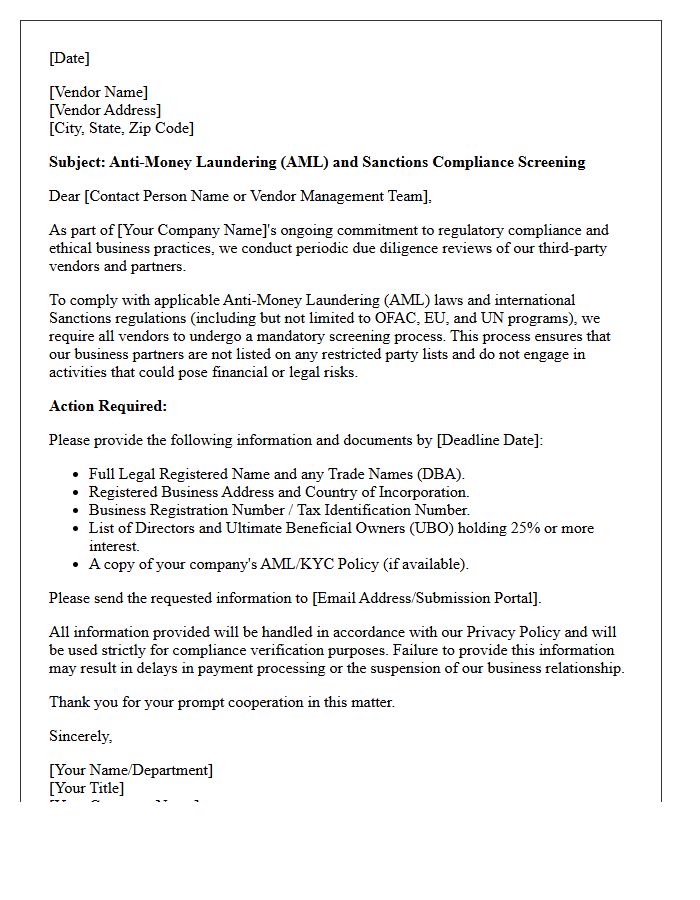
An Anti-Money Laundering and Sanctions Vendor Screening Letter is a formal document used to verify that third-party partners comply with global financial regulations. It ensures entities are not listed on international sanctions lists or involved in illicit activities. This due diligence process is essential for risk mitigation, helping organizations avoid legal penalties and reputational damage. By requiring vendors to disclose their ownership structure and compliance protocols, businesses maintain regulatory integrity and secure their supply chains against financial crimes like terrorism financing or fraud.
Business Continuity And Disaster Recovery Assessment Letter
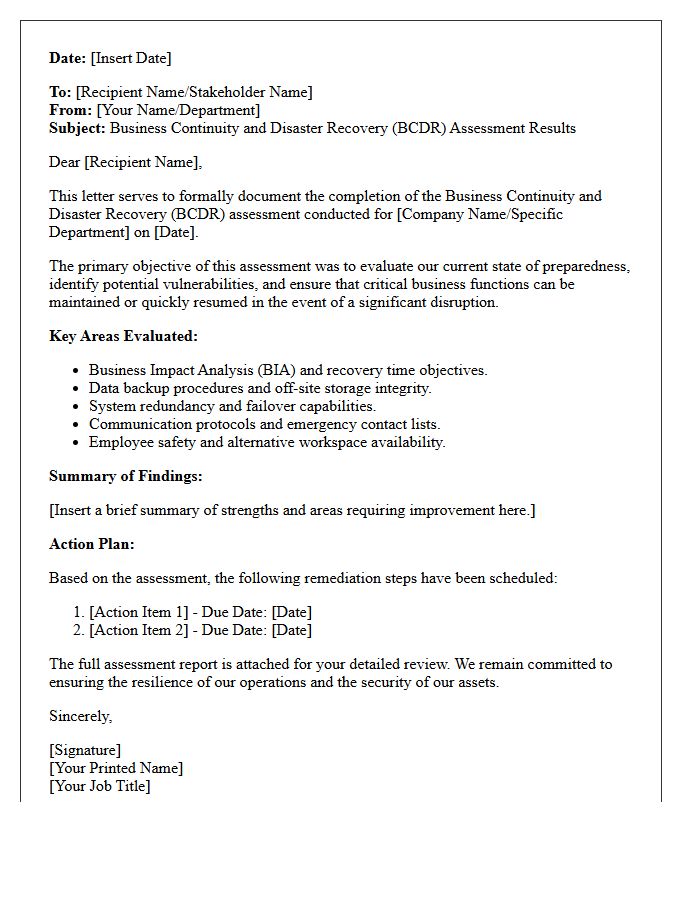
A Business Continuity and Disaster Recovery (BCDR) Assessment Letter serves as formal verification of an organization's resilience. It summarizes the effectiveness of contingency plans and technical safeguards against potential disruptions. This document confirms that critical systems have undergone rigorous testing to ensure operational stability and data integrity during emergencies. For stakeholders and auditors, it provides essential assurance that the business can maintain operational continuity and recover vital infrastructure swiftly after a catastrophic event, minimizing downtime and mitigating long-term financial or reputational risks.
Financial Service Provider Due Diligence Questionnaire Letter
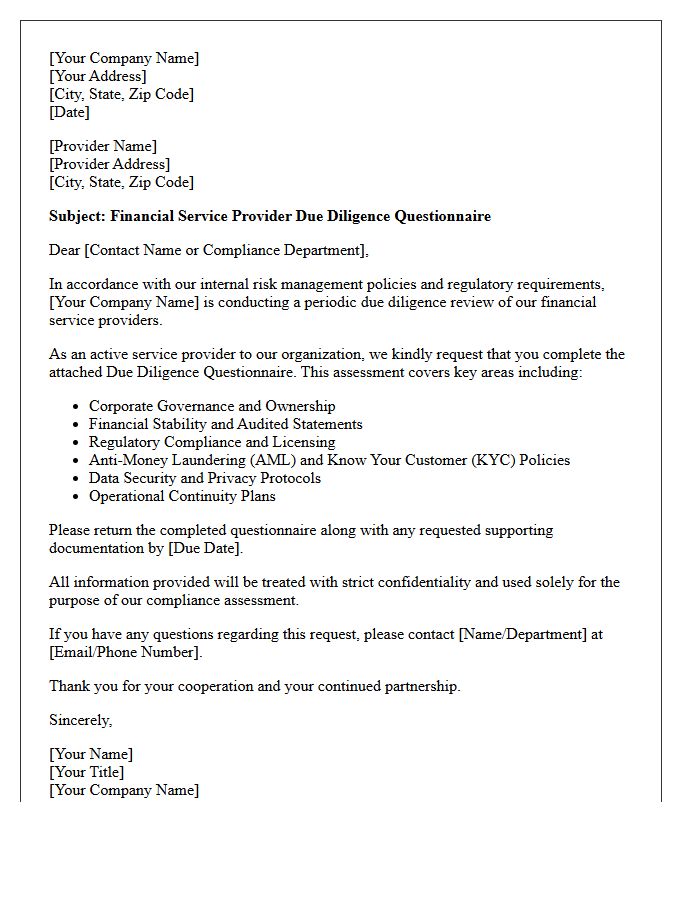
A Financial Service Provider Due Diligence Questionnaire Letter is a formal request used to assess the operational integrity and regulatory compliance of a potential partner. This document ensures that the provider adheres to Anti-Money Laundering (AML) protocols and robust data security standards. Organizations use these letters to mitigate financial risk, verify licensing, and evaluate internal controls before establishing a professional relationship. Conducting thorough vetting through this inquiry is essential for maintaining fiduciary responsibility and protecting assets against fraud or systemic failures in the global financial ecosystem.
Payment Card Industry Data Security Standard Assessment Letter
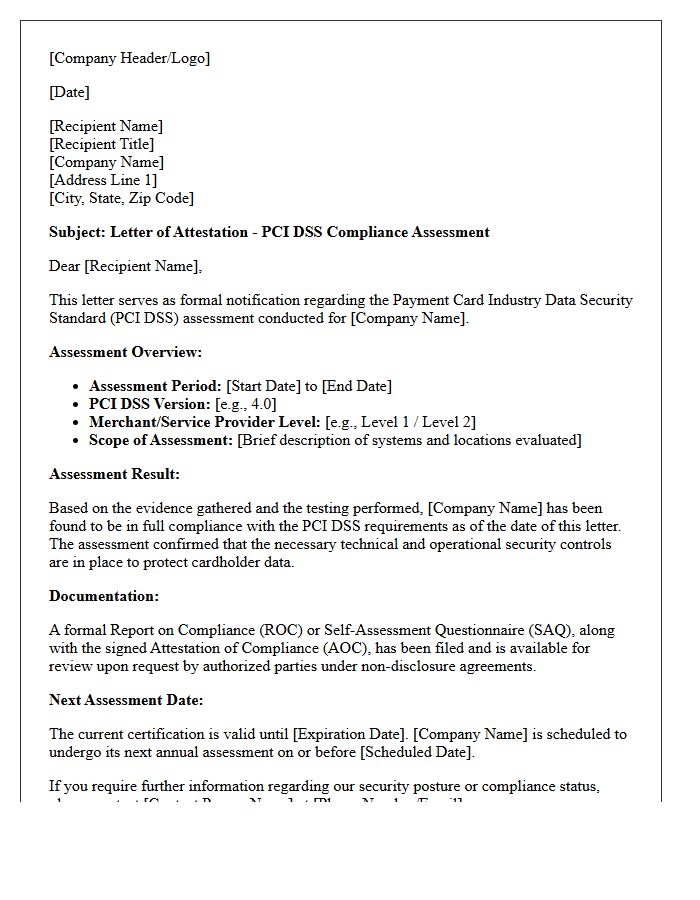
The PCI DSS Assessment Letter, often referred to as an Attestation of Compliance (AOC), serves as official proof that an organization satisfies global security standards for protecting cardholder data. This document summarizes the results of a rigorous audit, confirming that technical and operational controls are effectively implemented. For businesses, it is the primary evidence required by acquiring banks and payment brands to verify regulatory compliance. Maintaining a current assessment letter is essential for mitigating security risks, preventing costly data breaches, and ensuring continuous authorization to process credit card transactions securely.
Vendor Compliance Deficiencies And Remediation Action Letter
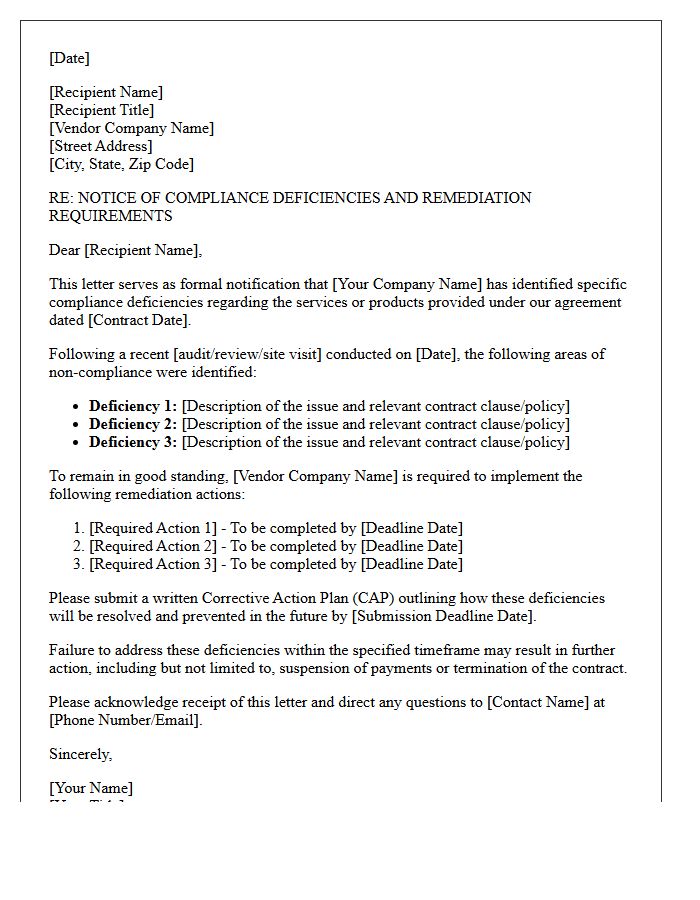
A Vendor Compliance Deficiencies And Remediation Action Letter is a formal notification issued when a supplier fails to meet contractual standards or regulatory requirements. This document identifies specific performance gaps, such as security flaws or delivery delays, and demands corrective measures. It serves as a legal record of non-compliance while providing a clear timeline for remediation. Promptly addressing these issues is essential to mitigate operational risks, maintain supply chain integrity, and avoid potential contract termination. Effective communication ensures both parties align on quality expectations and long-term business stability.
Third-Party Assessment Conditional Approval Notification Letter
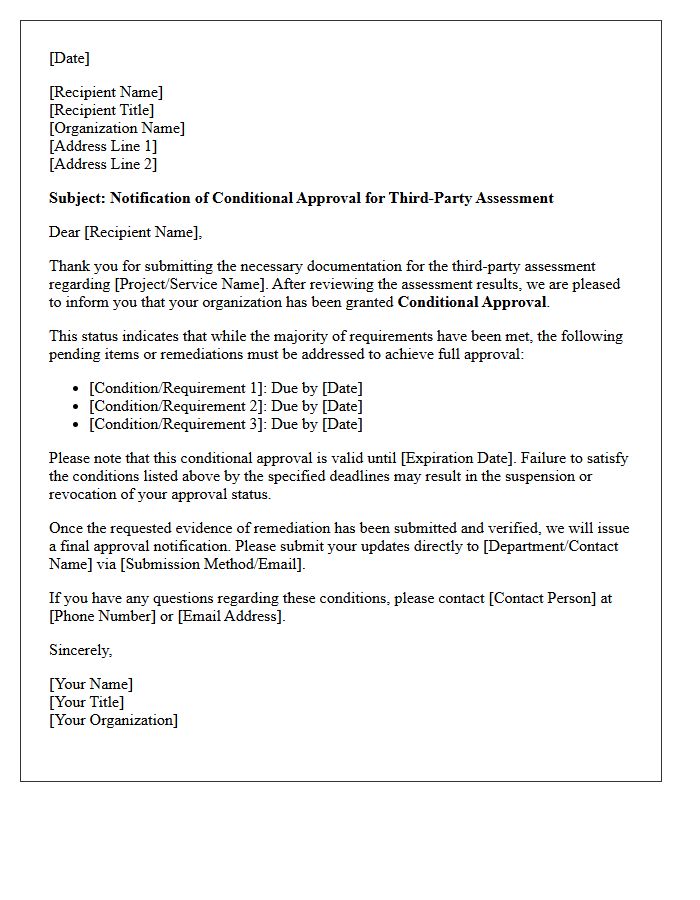
A Third-Party Assessment Conditional Approval Notification Letter signifies that a vendor has passed initial security evaluations but must address specific gaps to achieve full compliance. This conditional approval allows for a temporary business engagement while the provider remediates identified risks within a set timeframe. It is a critical document in risk management, outlining the remediation plan and necessary safeguards required to maintain data integrity. Stakeholders must closely monitor these conditions to ensure all security obligations are met before the final authorization is granted for long-term partnership.
Regulatory Compliance Certification And Attestation Letter
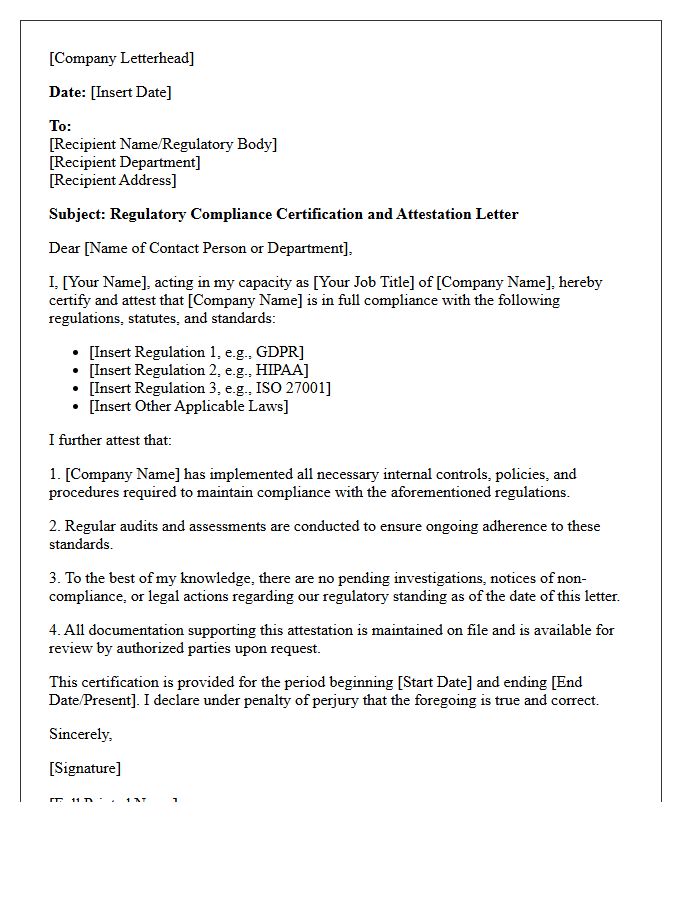
A regulatory compliance certification and attestation letter serves as formal verification that an organization adheres to specific legal standards and industry mandates. This document, often signed by an officer or third-party auditor, provides assurance to stakeholders and regulators regarding operational integrity. It validates that internal controls and security protocols are effectively implemented to mitigate risk. Obtaining this letter is essential for building trust during audits or partnership evaluations, as it confirms a proactive commitment to mandatory governance and data protection frameworks within a complex regulatory landscape.
Vendor Non-Compliance Escalation And Warning Letter
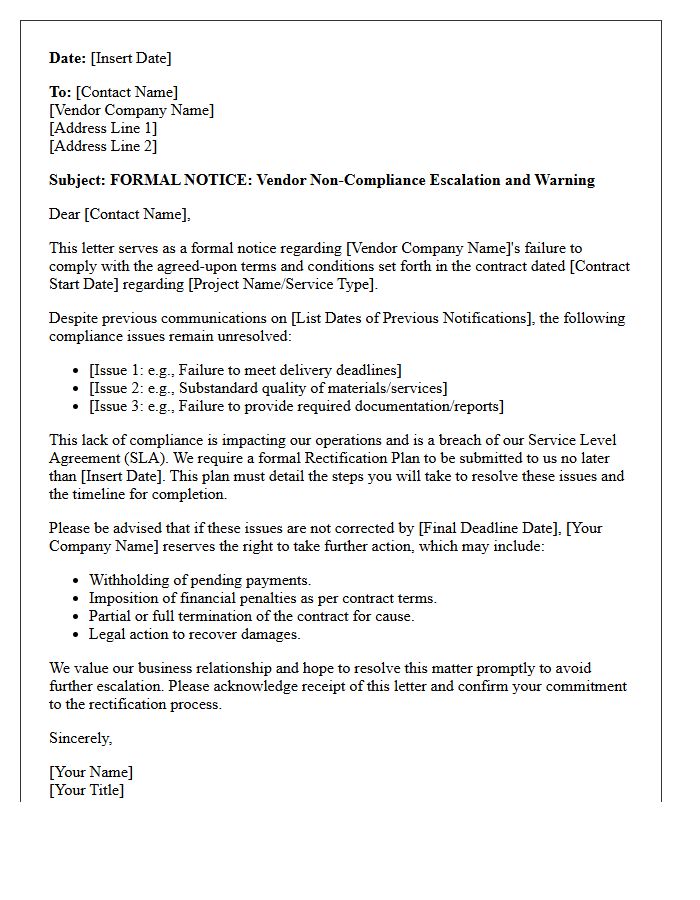
A Vendor Non-Compliance Escalation is a formal process triggered when a supplier fails to meet contractual obligations or service levels. This procedure ensures accountability through structured Warning Letters, which document specific breaches and required corrective actions. Issuing a formal notice is essential for legal protection and maintaining supply chain integrity. It serves as a final opportunity for the vendor to rectify performance issues before facing contract termination or financial penalties. Effective communication during this stage is vital to mitigate operational risks and protect business interests.
Final Third-Party Vendor Compliance Assessment Approval Letter
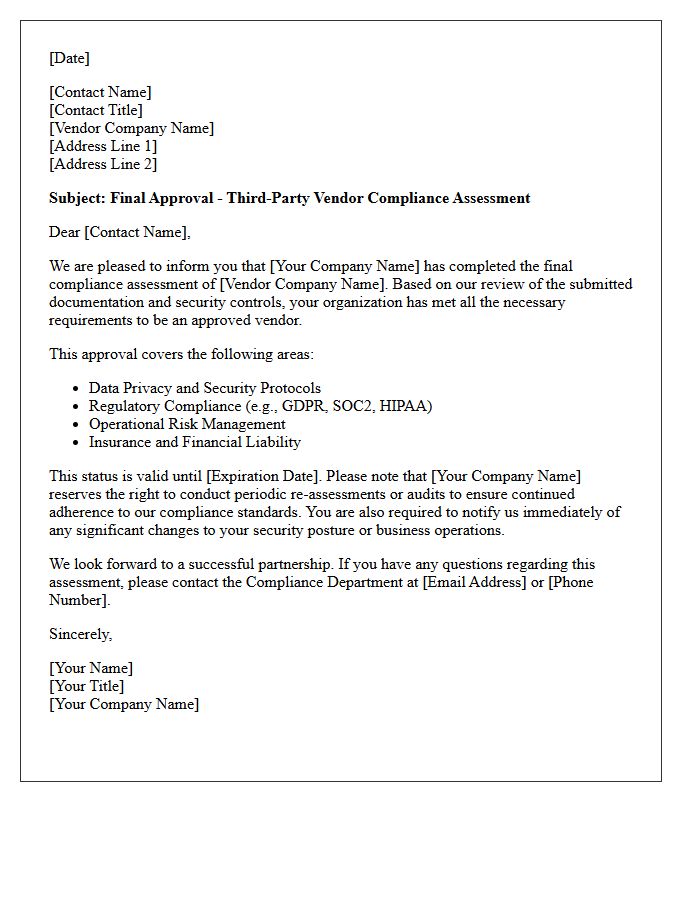
A Final Third-Party Vendor Compliance Assessment Approval Letter serves as formal authorization that a service provider has met all security protocols and regulatory standards. This document confirms that the vendor's internal controls, data protection measures, and operational risks align with organizational requirements. Receiving this letter indicates the completion of due diligence, allowing the partnership to proceed securely. It is a critical component of risk management, ensuring that external partners uphold the integrity and safety of shared corporate infrastructure and sensitive information.
What is a Third-Party Vendor Compliance Assessment Letter?
A Third-Party Vendor Compliance Assessment Letter is a formal document sent by an organization to its external suppliers or service providers to evaluate their adherence to specific regulatory standards, security protocols, and internal risk management policies.
Why do companies require a vendor compliance assessment?
Companies require these assessments to mitigate operational risks, ensure data privacy protection, and maintain regulatory compliance with frameworks such as GDPR, HIPAA, or SOC2, thereby protecting the hiring organization from legal and financial liabilities caused by a vendor's negligence.
What key components are included in a compliance assessment letter?
Typically, the letter includes a detailed questionnaire regarding data security measures, proof of certifications (like ISO 27001), evidence of insurance coverage, business continuity plans, and a formal request for audit documentation or self-attestation signatures.
How should a vendor respond to a compliance assessment request?
A vendor should respond by providing accurate, evidence-based documentation for all security controls mentioned, disclosing any known vulnerabilities, and ensuring that all responses are verified by their internal compliance or information security officer within the specified deadline.
What happens if a vendor fails the compliance assessment?
If a vendor fails to meet the required standards, the hiring organization may issue a corrective action plan (CAP), restrict the vendor's access to sensitive data, or ultimately terminate the business relationship if the security gaps pose a significant risk to the company.

Comments