
An Anti-Bribery and Corruption Policy Acknowledgment Letter is a vital document ensuring employees understand and commit to ethical conduct and legal compliance. It mitigates corporate liability by formalizing agreement to follow strict anti-corruption standards. Implementing this letter reinforces a culture of integrity and transparency within your organization. To simplify your documentation process, below are some ready to use template.
Image cover: Official Anti-Bribery and Corruption Policy Acknowledgment Templates
Letter Samples List
- Anti-Bribery and Corruption Policy Acknowledgment Letter
- Bank Employee Anti-Bribery and Corruption Compliance Letter
- Financial Institution Anti-Bribery and Corruption Declaration Letter
- Corporate Acknowledgment Letter for Anti-Bribery and Corruption Policy
- Global Banking Anti-Bribery and Corruption Acknowledgment Letter
- Vendor Anti-Bribery and Corruption Policy Acceptance Letter
- Annual Anti-Bribery and Corruption Policy Acknowledgment Letter
- Executive Acknowledgment Letter for Anti-Bribery and Corruption Compliance
- Third-Party Anti-Bribery and Corruption Policy Acknowledgment Letter
- Financial Services Anti-Bribery and Corruption Certification Letter
- Board of Directors Anti-Bribery and Corruption Acknowledgment Letter
- Contractor Anti-Bribery and Corruption Policy Agreement Letter
Anti-Bribery and Corruption Policy Acknowledgment Letter
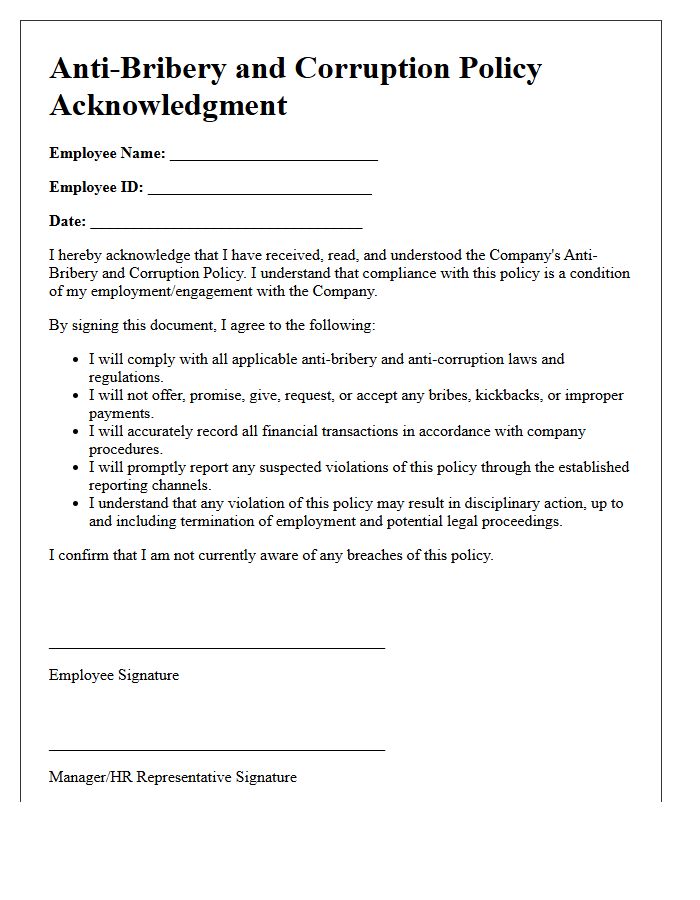
An Anti-Bribery and Corruption Policy Acknowledgment Letter is a formal document confirming that an individual understands and commits to ethical business practices. By signing, employees and partners agree to comply with legal standards like the FCPA or UK Bribery Act. This letter serves as a critical compliance tool to mitigate corporate liability and prevent financial misconduct. It ensures transparency, protects the organization's reputation, and establishes a zero-tolerance stance against illicit payments or undue influence in all professional dealings.
Bank Employee Anti-Bribery and Corruption Compliance Letter
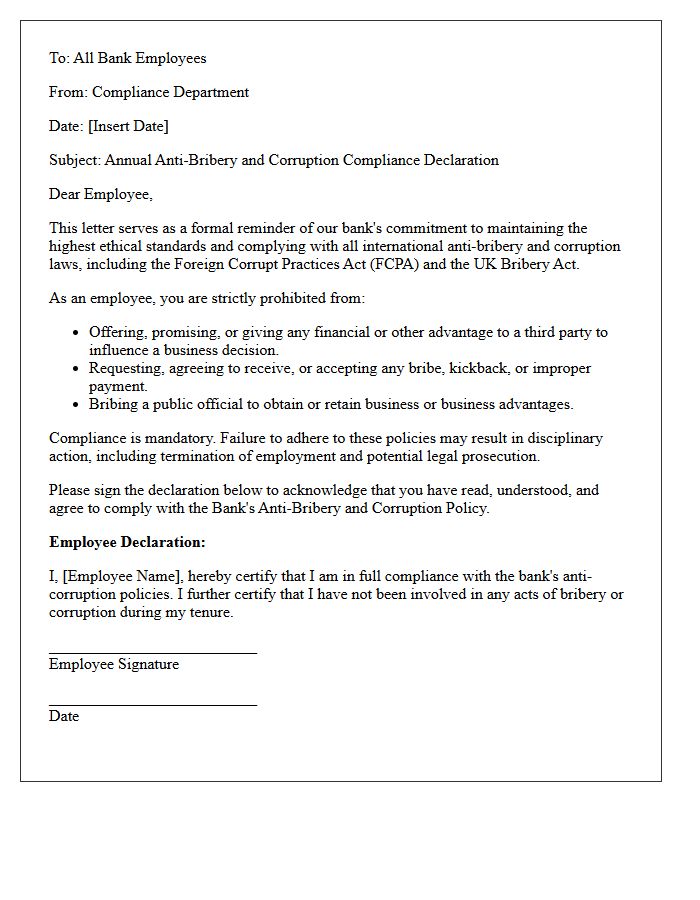
A Bank Employee Anti-Bribery and Corruption Compliance Letter is a formal document ensuring staff adhere to integrity standards and legal regulations like the FCPA. It requires employees to acknowledge their fiduciary duty and commitment to preventing financial crimes. This letter outlines prohibited activities, such as accepting improper inducements or facilitation payments, to mitigate institutional risk. By signing, employees confirm their understanding of ethical conduct policies and the legal consequences of non-compliance, which is essential for maintaining the bank's reputation and regulatory standing within the global financial system.
Financial Institution Anti-Bribery and Corruption Declaration Letter
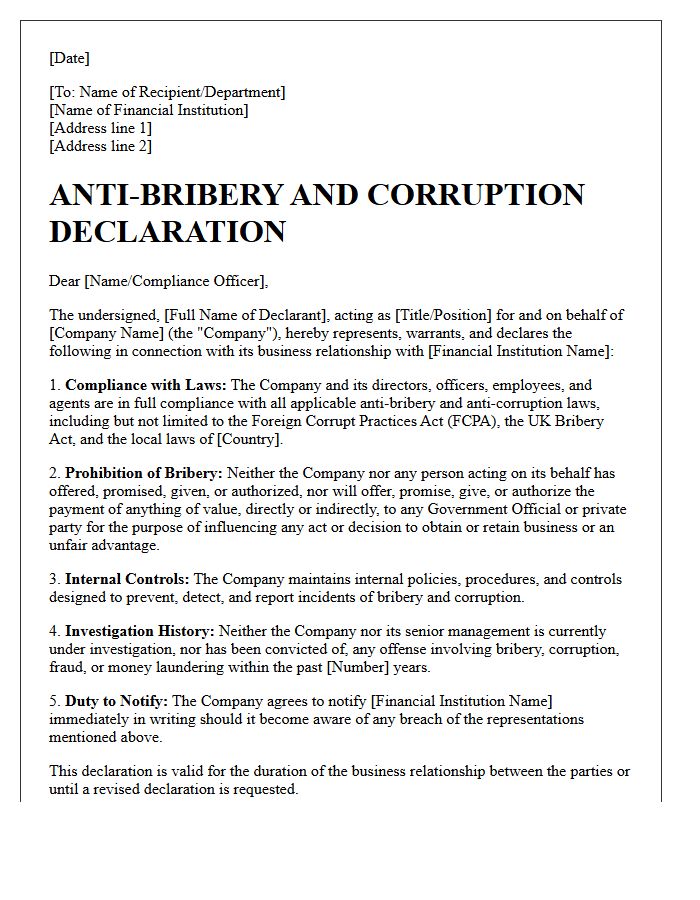
A Financial Institution Anti-Bribery and Corruption Declaration Letter is a formal document where an entity confirms its compliance with global anti-corruption laws, such as the FCPA or UK Bribery Act. This letter serves as a critical due diligence instrument during onboarding or annual reviews. It assures partners that the institution maintains robust internal controls, prohibits unethical payments, and strictly forbids bribery of public officials. Providing this signed declaration is essential for establishing regulatory trust, mitigating legal risks, and ensuring transparency within international financial transactions and corporate partnerships.
Corporate Acknowledgment Letter for Anti-Bribery and Corruption Policy
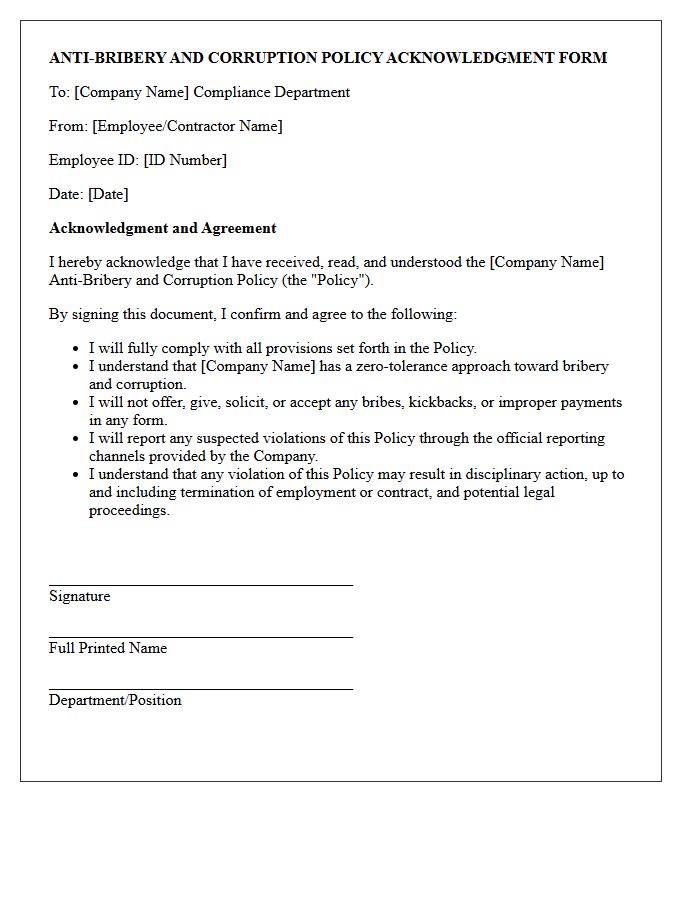
A corporate acknowledgment letter is a compliance mandate ensuring employees formally recognize and pledge to uphold Anti-Bribery and Corruption (ABC) policies. This document serves as legal evidence that staff understand ethical standards and the consequences of misconduct. By signing, individuals commit to preventing bribery, kickbacks, and unethical inducements in business dealings. It is a critical component of a robust internal control system, protecting the organization from regulatory penalties and reputational damage while fostering a culture of corporate integrity and transparency throughout all global operations.
Global Banking Anti-Bribery and Corruption Acknowledgment Letter
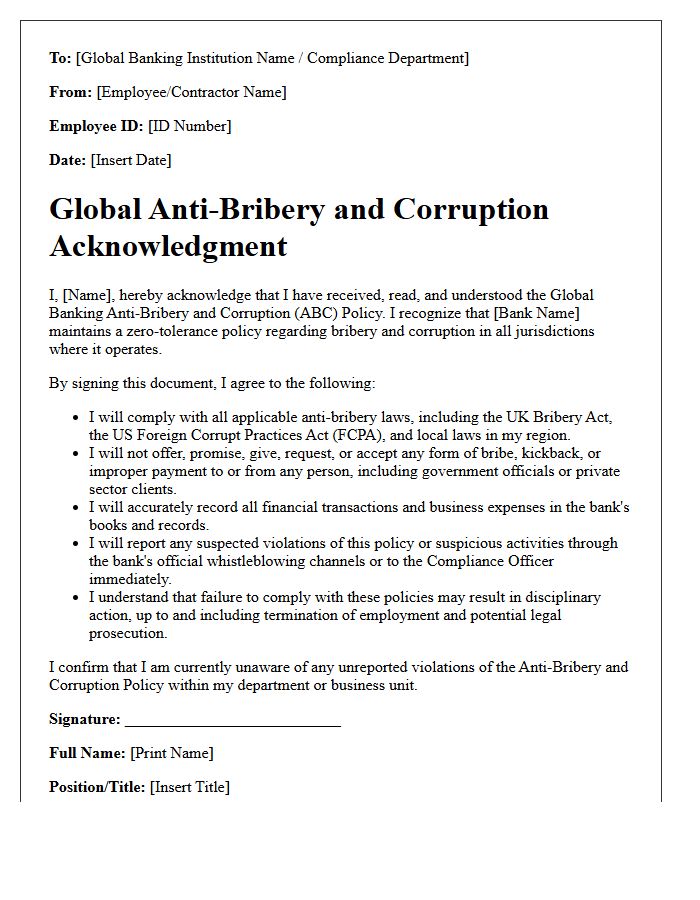
The Global Banking Anti-Bribery and Corruption Acknowledgment Letter is a mandatory compliance document ensuring institutional integrity. By signing, employees and third parties formally commit to upholding anti-corruption laws, such as the FCPA and UK Bribery Act. This letter serves as a legal confirmation that stakeholders understand strict policies against prohibited payments, kickbacks, and unethical inducements. It is a critical tool for risk management, protecting the organization from severe regulatory penalties and reputational damage while fostering a transparent financial environment dedicated to ethical business practices and global legal standards.
Vendor Anti-Bribery and Corruption Policy Acceptance Letter
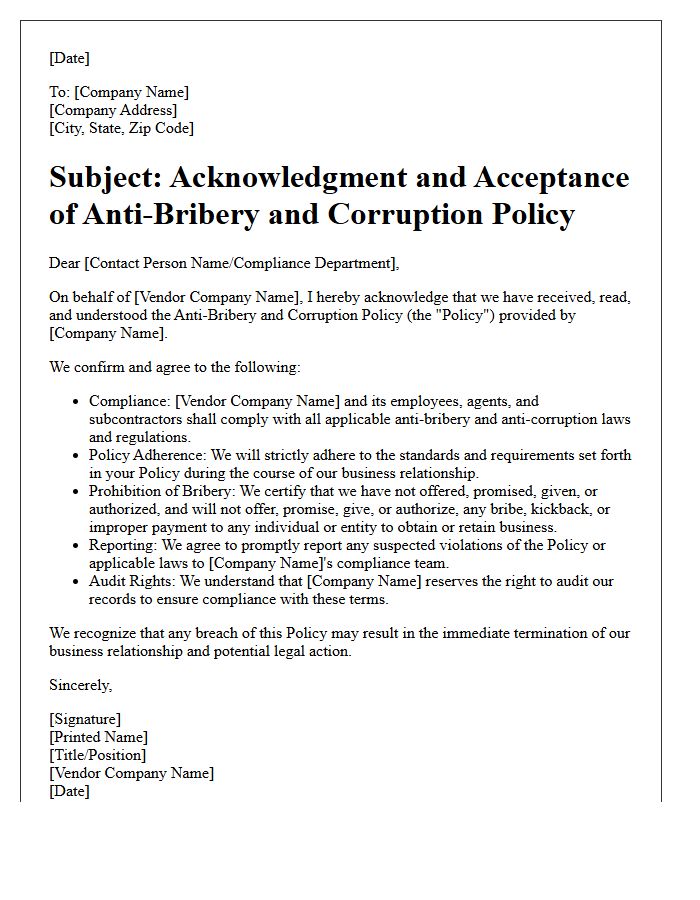
A Vendor Anti-Bribery and Corruption Policy Acceptance Letter is a formal document where suppliers legally commit to ethical business practices. By signing, vendors guarantee compliance with international laws like the FCPA or UK Bribery Act. This agreement mitigates corporate liability by ensuring third parties do not offer, solicit, or accept bribes. It establishes a zero-tolerance framework for integrity and transparency across the supply chain. Providing this signed acknowledgment is often a mandatory prerequisite for onboarding, protecting the hiring organization from legal repercussions and reputational damage caused by unethical partner conduct.
Annual Anti-Bribery and Corruption Policy Acknowledgment Letter
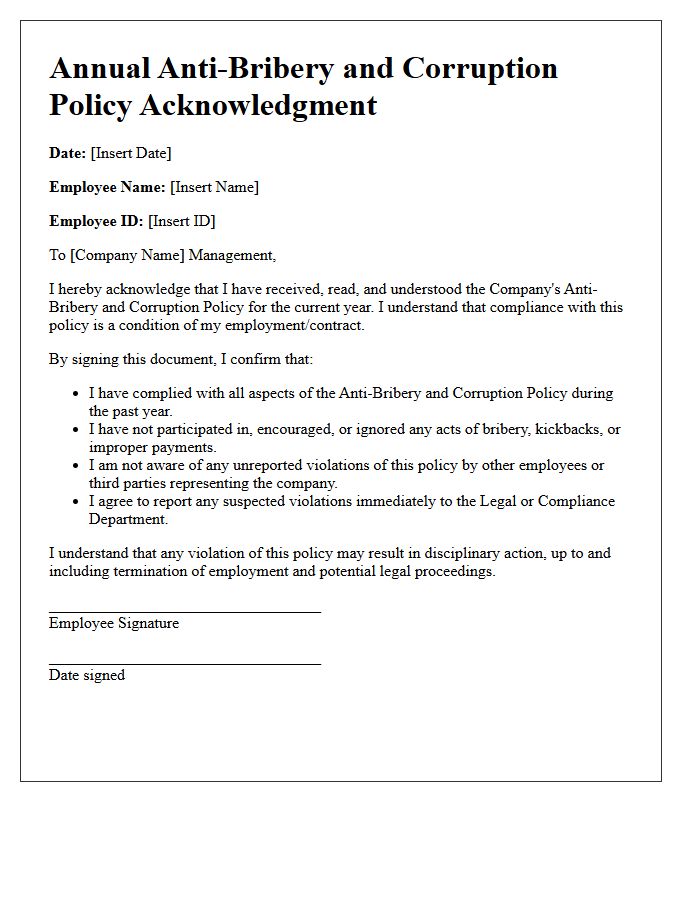
The Annual Anti-Bribery and Corruption Policy Acknowledgment Letter is a mandatory document ensuring employees understand and commit to ethical conduct. By signing, individuals confirm their compliance with legal standards like the FCPA and UK Bribery Act. This formal affirmation mitigates corporate risk by maintaining a culture of integrity and transparency. It serves as vital evidence that the organization actively prevents illicit payments, protecting both the entity and its staff from severe legal penalties or reputational damage. Consistent participation is essential for maintaining robust corporate governance and global regulatory alignment.
Executive Acknowledgment Letter for Anti-Bribery and Corruption Compliance
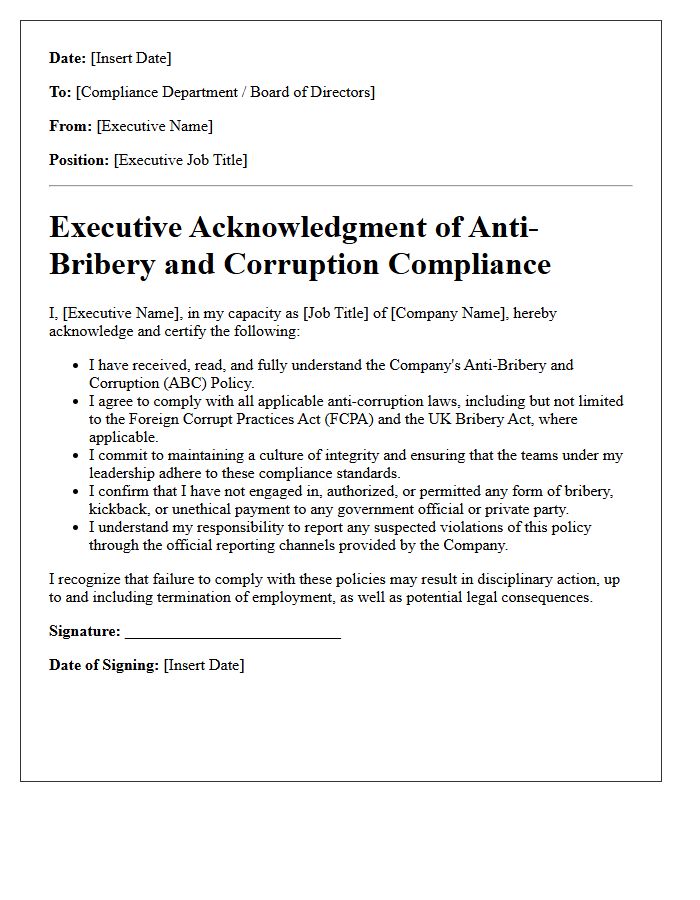
An Executive Acknowledgment Letter is a formal document confirming a leader's commitment to Anti-Bribery and Corruption Compliance. It serves as a binding statement that the executive understands legal frameworks, such as the Foreign Corrupt Practices Act (FCPA), and pledges to uphold ethical standards. This letter is crucial for establishing a tone at the top, ensuring accountability, and mitigating corporate legal risks. By signing, executives reinforce a culture of integrity, protecting the organization from financial penalties and reputational damage while demonstrating proactive adherence to global regulatory expectations and internal governance policies.
Third-Party Anti-Bribery and Corruption Policy Acknowledgment Letter
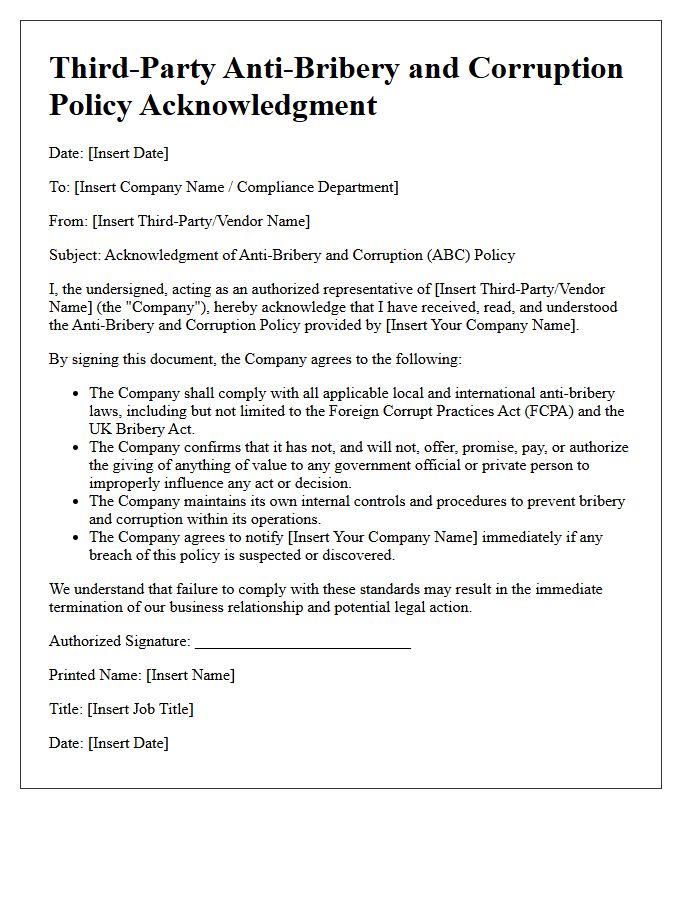
A Third-Party Anti-Bribery and Corruption Policy Acknowledgment Letter is a legal confirmation ensuring that external partners comply with ethical standards and anti-corruption laws like the FCPA. By signing this document, vendors formally agree to prevent bribery, kickbacks, and unethical influence in business dealings. This acknowledgment is a vital component of due diligence, protecting the hiring organization from significant legal liability and reputational damage. It establishes clear expectations for transparency and compliance across the entire supply chain, ensuring all parties operate with integrity and legal accountability.
Financial Services Anti-Bribery and Corruption Certification Letter
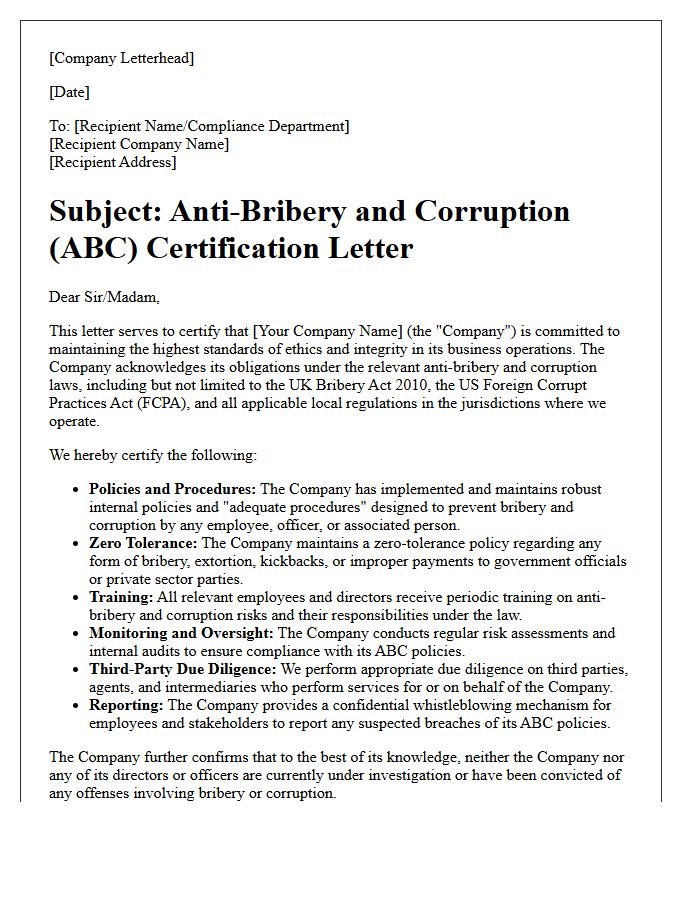
A Financial Services Anti-Bribery and Corruption Certification Letter is a critical document used to verify a firm's adherence to global anti-corruption laws like the FCPA or UK Bribery Act. This letter confirms that the institution maintains robust internal controls, comprehensive employee training, and strict monitoring policies to prevent illicit payments. Financial entities often require this certification during due diligence processes to mitigate reputational risk and ensure legal compliance when establishing new business relationships or conducting high-value international transactions.
Board of Directors Anti-Bribery and Corruption Acknowledgment Letter
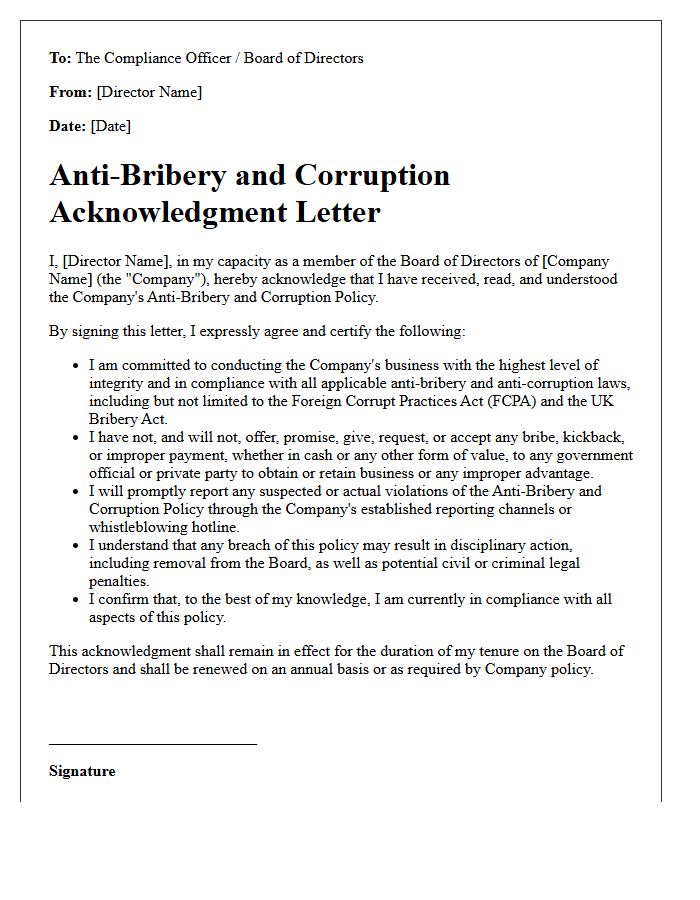
A Board of Directors Anti-Bribery and Corruption Acknowledgment Letter is a formal document confirming that leadership adheres to strict ethical standards and legal regulations like the FCPA. This signed statement serves as a compliance verification, ensuring directors understand their responsibility to prevent bribery and maintain corporate integrity. It mitigates legal risks by demonstrating a top-down commitment to transparency and governance accountability. By signing, board members formally pledge to uphold internal controls, report suspicious activities, and prevent corrupt practices within the organization's global operations.
Contractor Anti-Bribery and Corruption Policy Agreement Letter
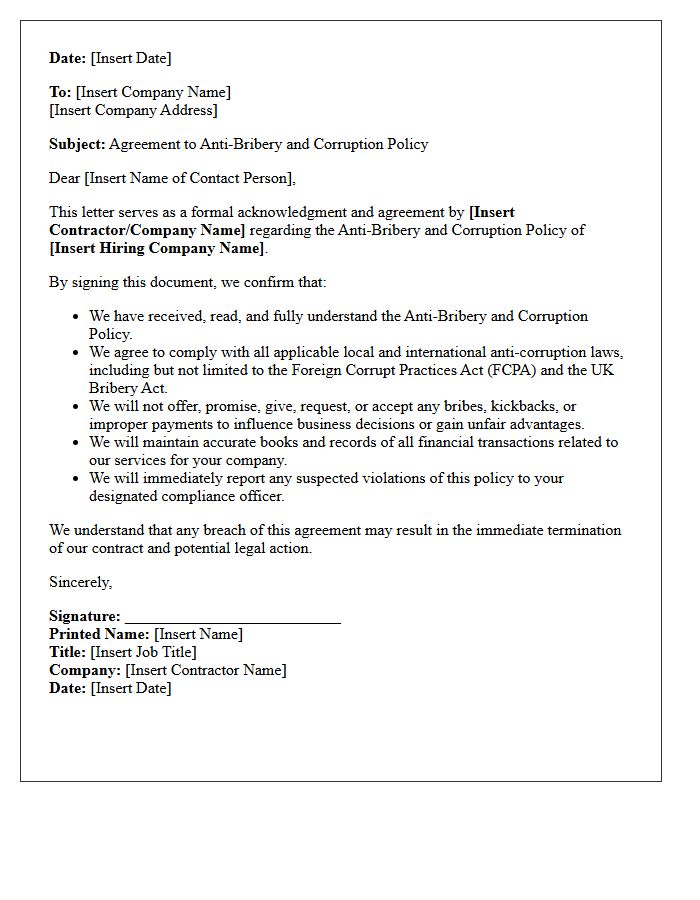
A Contractor Anti-Bribery and Corruption Policy Agreement Letter is a legally binding document ensuring third parties adhere to ethical standards. Its primary purpose is to enforce zero tolerance for bribery, kickbacks, or illicit payments during business operations. By signing, contractors commit to regulatory compliance with international laws like the FCPA or UK Bribery Act. This agreement mitigates vicarious liability for the hiring company, protecting its reputation and financial integrity. Failure to comply typically results in immediate contract termination and potential legal action to maintain corporate transparency and accountability.
What is an Anti-Bribery and Corruption Policy Acknowledgment Letter?
An Anti-Bribery and Corruption Policy Acknowledgment Letter is a formal document signed by employees, contractors, or third parties to confirm they have read, understood, and agreed to comply with the organization's ethical standards and legal obligations regarding bribery prevention.
Why is signing the corruption policy acknowledgment mandatory?
Signing the acknowledgment is mandatory because it serves as legal evidence of compliance training. it ensures that every individual is aware of the specific behaviors prohibited by laws such as the FCPA or UK Bribery Act, thereby protecting the organization from liability.
What key elements are included in a standard acknowledgment letter?
A standard acknowledgment letter typically includes a summary of the zero-tolerance stance on bribery, definitions of prohibited activities, reporting procedures for whistleblowers, and a clear statement regarding the disciplinary consequences of non-compliance.
Who is required to sign the Anti-Bribery and Corruption Acknowledgment?
The requirement generally applies to all internal staff, executive leadership, board members, and external partners-including suppliers, consultants, and agents-who act on behalf of the company in a business capacity.
How often should the policy acknowledgment be renewed?
To ensure ongoing compliance and awareness of updated regulations, the Anti-Bribery and Corruption Policy Acknowledgment should ideally be reviewed and re-signed on an annual basis or whenever significant changes are made to the corporate policy.

Comments