
A Demand Letter for Forged Indorsement Restitution is a formal legal notification sent to a financial institution when a check has been cashed without proper authorization. This document asserts your rights to recover misappropriated funds due to signature fraud. It serves as a critical first step in the recovery process. To help you get started, below are some ready to use template.
Image cover: Recover Your Funds: Forged Indorsement Restitution Templates and Demand Letter Guide
Letter Samples List
- Initial Demand Letter for Restitution of Forged Indorsement
- Follow-Up Demand Letter for Forged Indorsement Restitution
- Letter of Notification Regarding Suspected Forged Indorsement
- Final Warning Letter for Restitution of Forged Funds
- Letter of Affidavit Submission for Forged Indorsement Claim
- Bank Investigation Letter Regarding Forged Indorsement Allegations
- Letter of Demand for Reversal of Forged Indorsement Transaction
- Legal Counsel Letter for Forged Indorsement Restitution
- Letter of Acknowledgment for Forged Indorsement Dispute
- Indemnity Claim Letter for Forged Indorsement Restitution
- Letter of Notice for Breach of Warranty Pertaining to Forged Indorsement
- Settlement Offer Letter for Forged Indorsement Restitution Claim
Initial Demand Letter for Restitution of Forged Indorsement
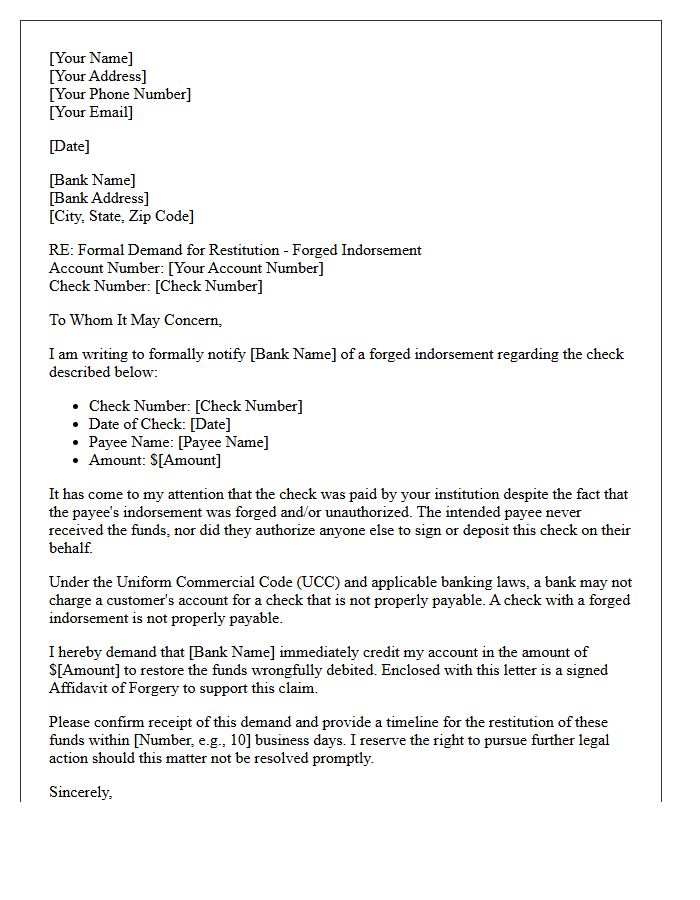
An initial demand letter for restitution of forged indorsement is a formal legal notice sent to a financial institution or individual who processed a check with an unauthorized signature. This critical document asserts that the payee's endorsement was falsified, leading to the conversion of funds. To ensure recovery, the letter must clearly state the check details, proof of the forgery, and a deadline for reimbursement. Under the Uniform Commercial Code, timely notification is essential to preserve your legal rights and establish liability for the financial loss incurred.
Follow-Up Demand Letter for Forged Indorsement Restitution
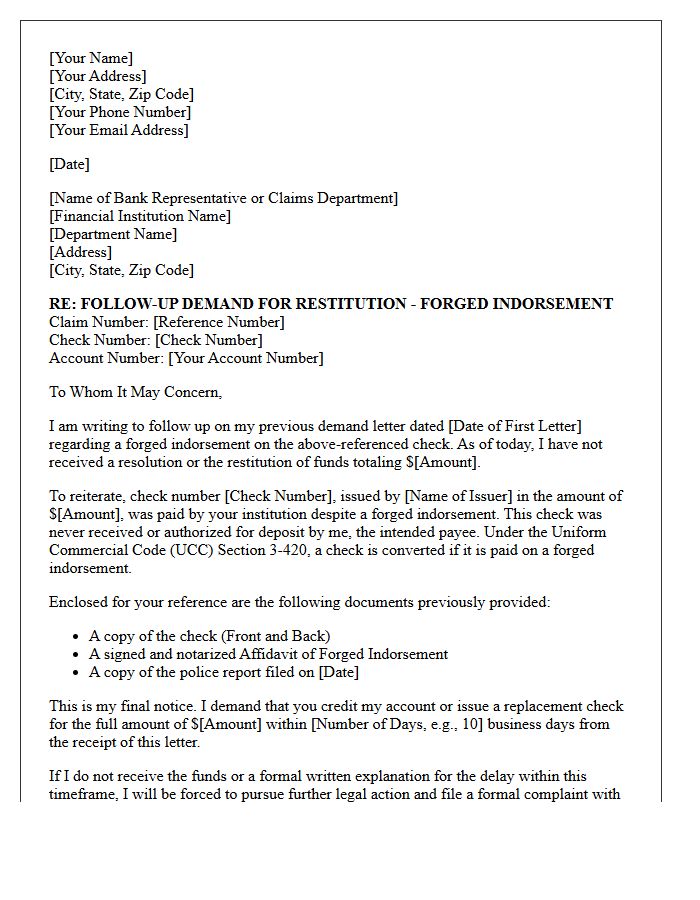
A Follow-Up Demand Letter is a critical legal tool used to recover funds after a bank fails to respond to an initial forged indorsement claim. This formal correspondence emphasizes the financial institution's liability under the Uniform Commercial Code for paying an unauthorized party. It serves as a final notice to resolve the restitution process before escalating to litigation or regulatory complaints. Clearly documenting the timeline and the original check details ensures a solid evidentiary trail, compelling the bank to fulfill its obligation to reimburse the rightful payee for the stolen proceeds.
Letter of Notification Regarding Suspected Forged Indorsement
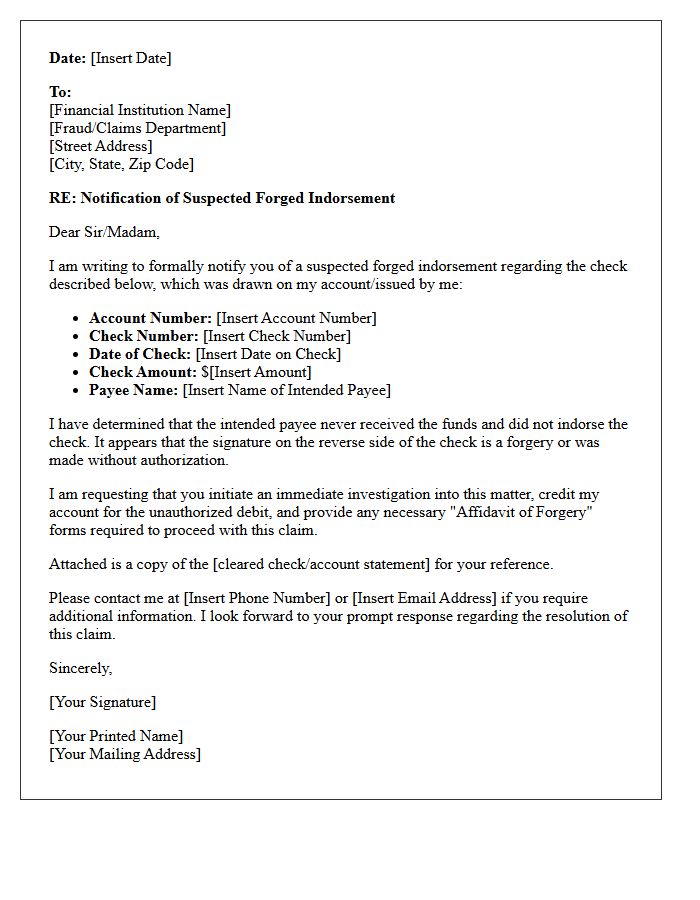
A Letter of Notification Regarding Suspected Forged Indorsement is a formal legal document used to alert a financial institution that a check was cashed without authorization. This notice initiates a claim of forgery, shifting liability back to the bank that accepted the fraudulent signature. It is crucial to act quickly to protect your recovery rights under the Uniform Commercial Code. Ensure you include the specific check number, date, and amount to expedite the investigation into the unauthorized payment and secure a potential reimbursement for the missing funds.
Final Warning Letter for Restitution of Forged Funds
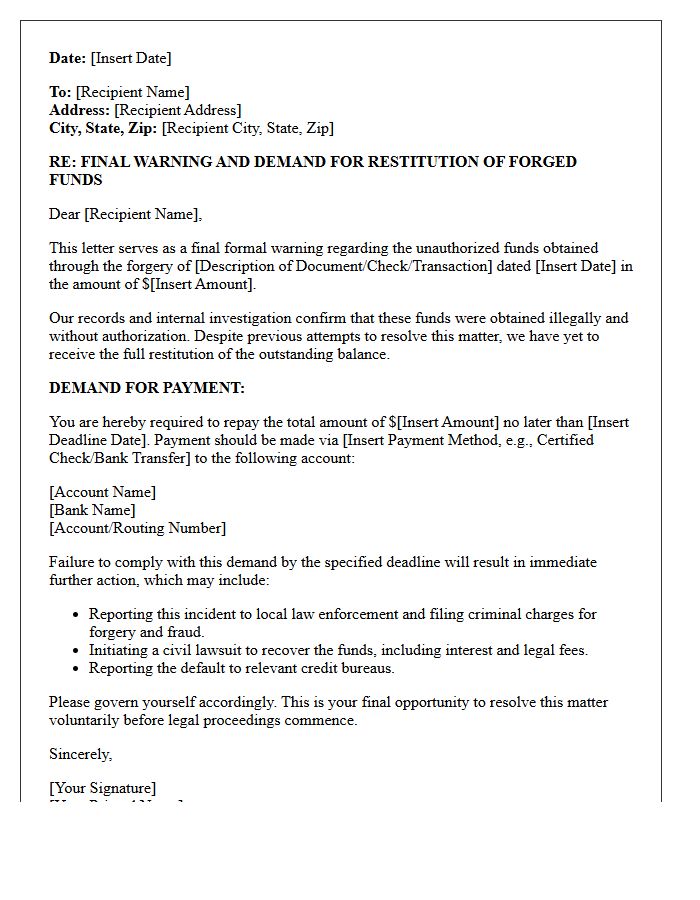
A final warning letter for the restitution of forged funds serves as a formal legal notice demanding the immediate return of misappropriated money. This document outlines the specific fraudulent activity detected and establishes a strict deadline for repayment to avoid further escalation. It acts as a mandatory precursor to criminal prosecution or civil litigation. Receiving this letter indicates that the organization has documented evidence of forgery, making urgent legal compliance or professional consultation essential to mitigate severe penalties, including imprisonment or permanent employment termination.
Letter of Affidavit Submission for Forged Indorsement Claim
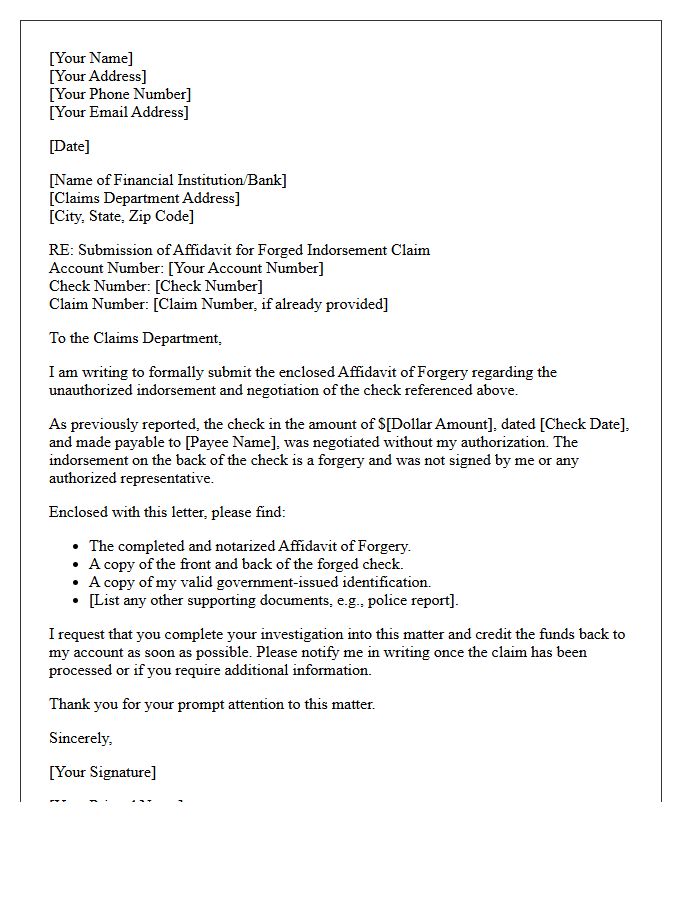
A Letter of Affidavit Submission for a Forged Indorsement Claim is a critical legal sworn statement used to recover funds when a check was stolen and cashed by an unauthorized party. You must clearly state that the signature is fraudulent and that you received no benefit from the transaction. Timely filing with your financial institution is essential to preserve your reimbursement rights under the Uniform Commercial Code. Ensure the document is notarized to verify its authenticity and include all relevant transaction details to expedite the bank's investigation into the unauthorized payment.
Bank Investigation Letter Regarding Forged Indorsement Allegations
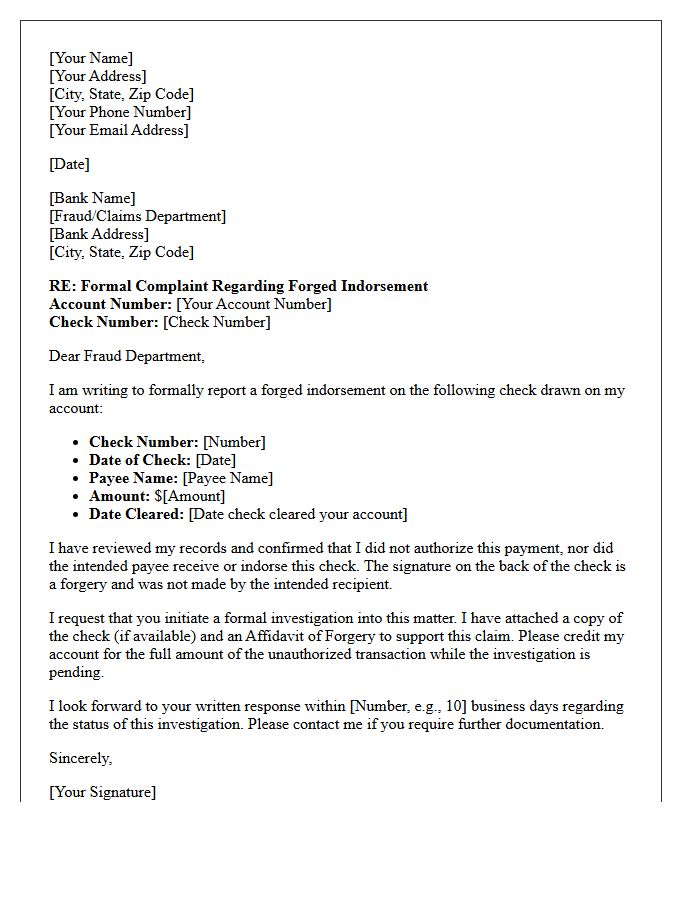
A bank investigation letter regarding forged indorsement allegations notifies parties that a check was processed without the legal payee's valid signature. This critical document initiates a formal inquiry to verify the authenticity of endorsements and determine liability under the Uniform Commercial Code. Banks typically require an affidavit of forgery to substantiate claims. Understanding the strict statutory deadlines for reporting unauthorized signatures is essential for loss recovery. If a breach of warranty is proven, the depository bank is generally held responsible for reimbursing the funds to the rightful claimant.
Letter of Demand for Reversal of Forged Indorsement Transaction
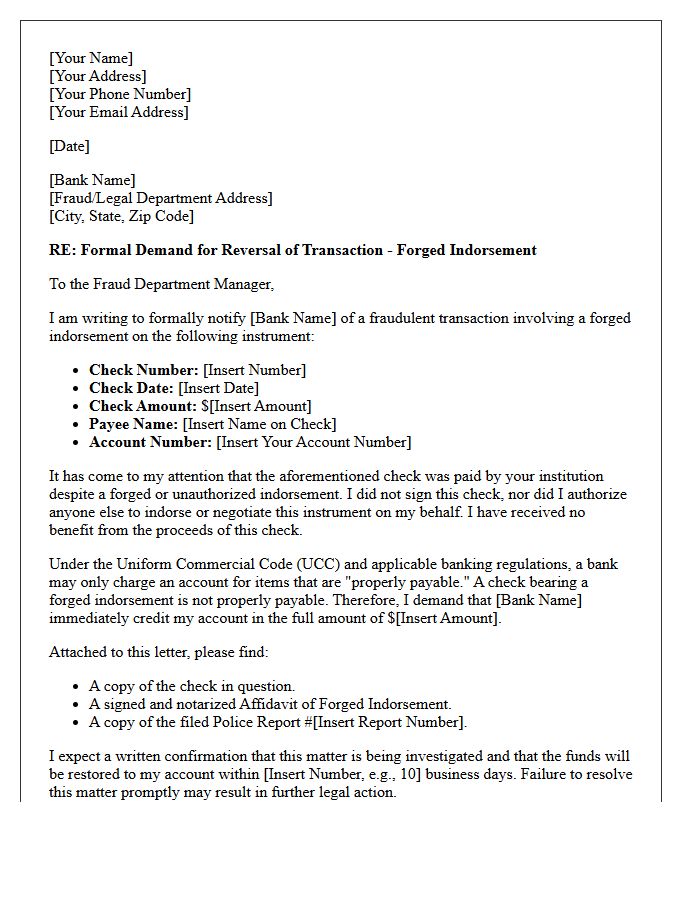
A Letter of Demand for Reversal of Forged Indorsement is a formal legal notification sent to a financial institution when a check has been negotiated without authorization. Under the Uniform Commercial Code, banks are generally liable for paying checks with forged signatures. This document must clearly identify the specific transaction, state the lack of authority regarding the endorsement, and officially request a full credit restoration. Promptly serving this demand is critical for protecting your legal rights and initiating the bank's internal fraud investigation process to recover lost funds.
Legal Counsel Letter for Forged Indorsement Restitution
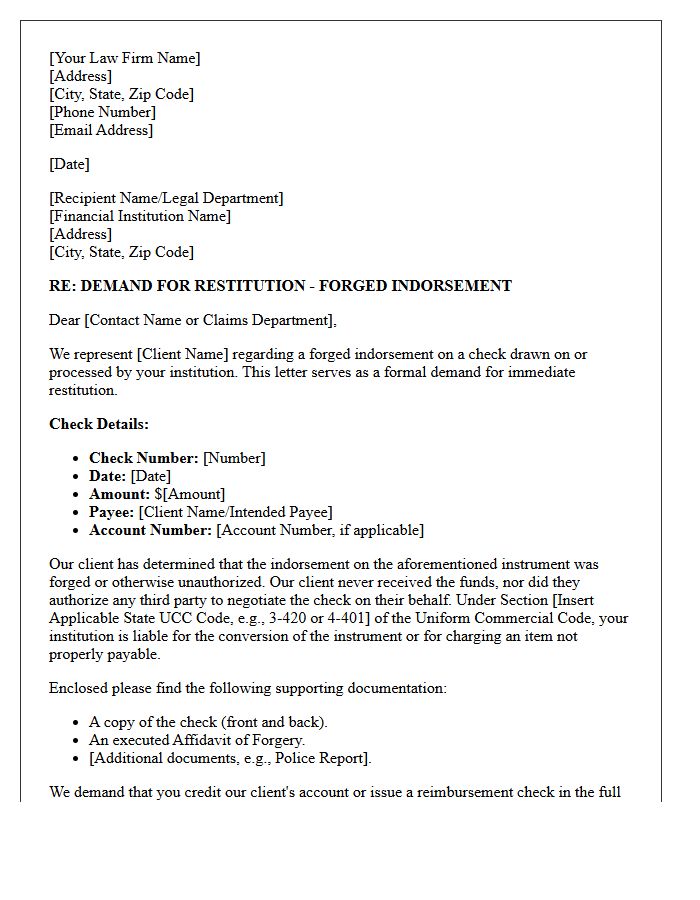
A legal counsel letter for forged indorsement restitution is a formal demand used to recover funds stolen through unauthorized signatures on checks. This document notifies the financial institution of the negotiable instrument fraud, strictly adhering to the timeline set by the Uniform Commercial Code. It serves as essential evidence that the rightful payee never received the proceeds. Providing a sworn affidavit of forgery alongside this letter compels the bank to investigate and reimburse the losses caused by the security breach or identity theft incident.
Letter of Acknowledgment for Forged Indorsement Dispute
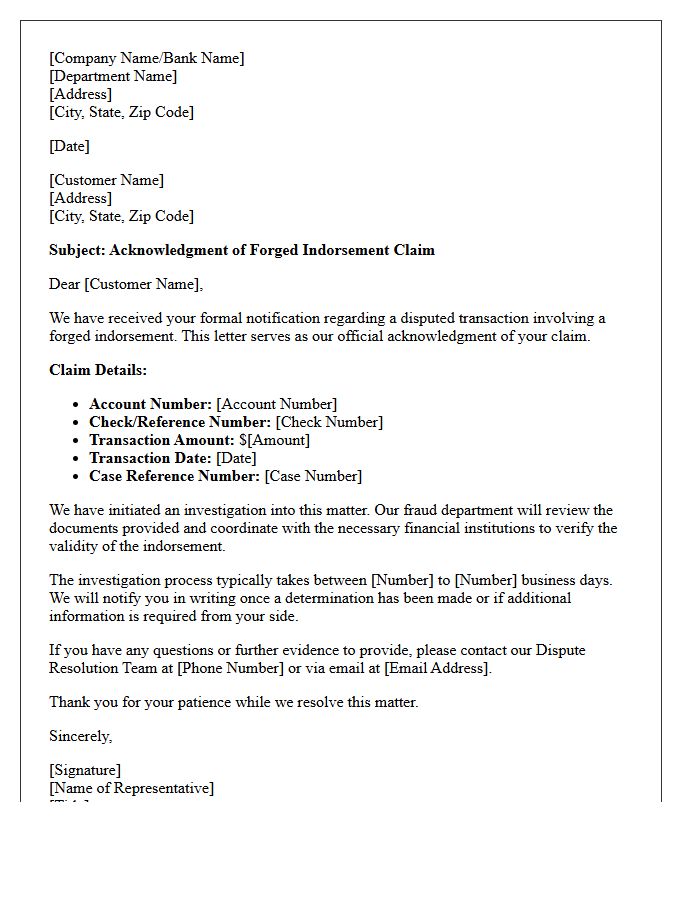
A Letter of Acknowledgment for a forged indorsement dispute confirms that a financial institution has received your formal claim regarding unauthorized check signatures. This document serves as official proof that your case is under investigation. It typically outlines the timeline for the bank's review process and specifies any additional documentation required, such as an affidavit. Retaining this letter is crucial for your records to ensure the bank adheres to Electronic Fund Transfer Act or UCC protections while attempting to recover your misappropriated funds.
Indemnity Claim Letter for Forged Indorsement Restitution
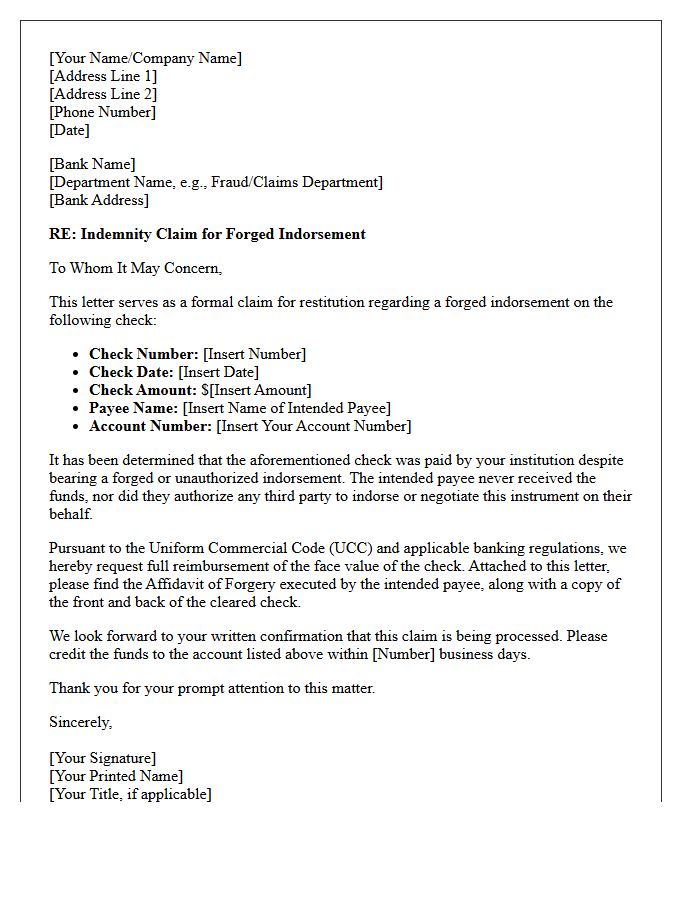
An Indemnity Claim Letter is a formal legal demand sent by a drawer or drawee bank to recover funds lost through a forged indorsement. Under the Uniform Commercial Code, the presenting bank typically breaches its presentment warranty by processing an instrument without a valid signature from the rightful payee. This document asserts a right to full restitution, including the principal amount and applicable legal fees. Timely notification is critical to mitigate losses and establish liability, ensuring the reimbursement of misappropriated funds through the banking system's established clearinghouse protocols.
Letter of Notice for Breach of Warranty Pertaining to Forged Indorsement
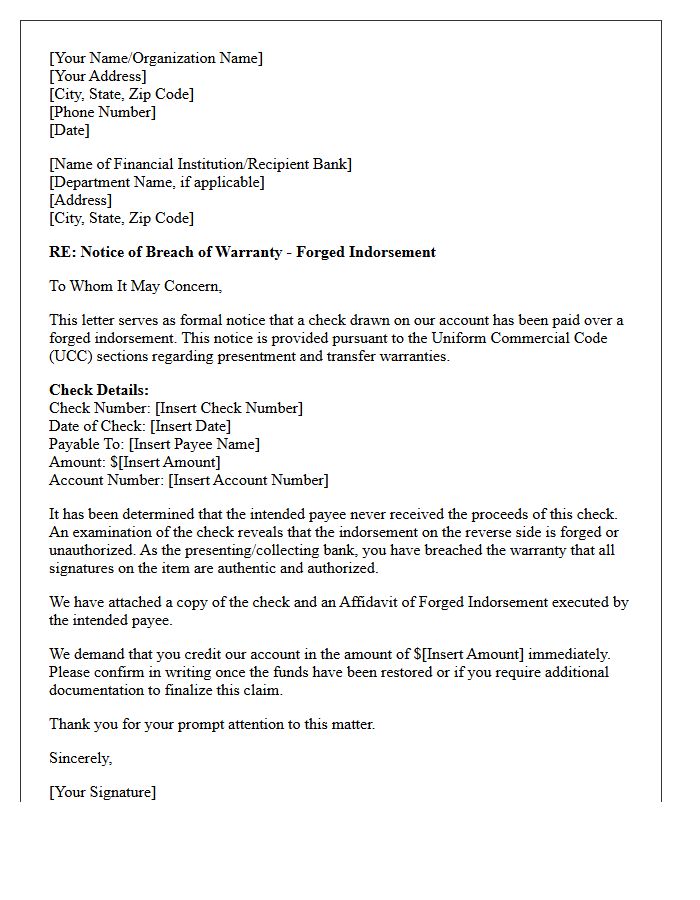
A letter of notice for a breach of warranty regarding a forged indorsement is a critical legal document used to inform a financial institution of a fraudulent check transfer. Under the Uniform Commercial Code, the presenting bank warrants that all signatures are genuine. When a forged indorsement occurs, the payor bank must provide timely notice to the warrantor to preserve its right to seek reimbursement. Failure to act promptly can result in a loss of claims, making clear documentation of the unauthorized signature essential for loss recovery in banking transactions.
Settlement Offer Letter for Forged Indorsement Restitution Claim
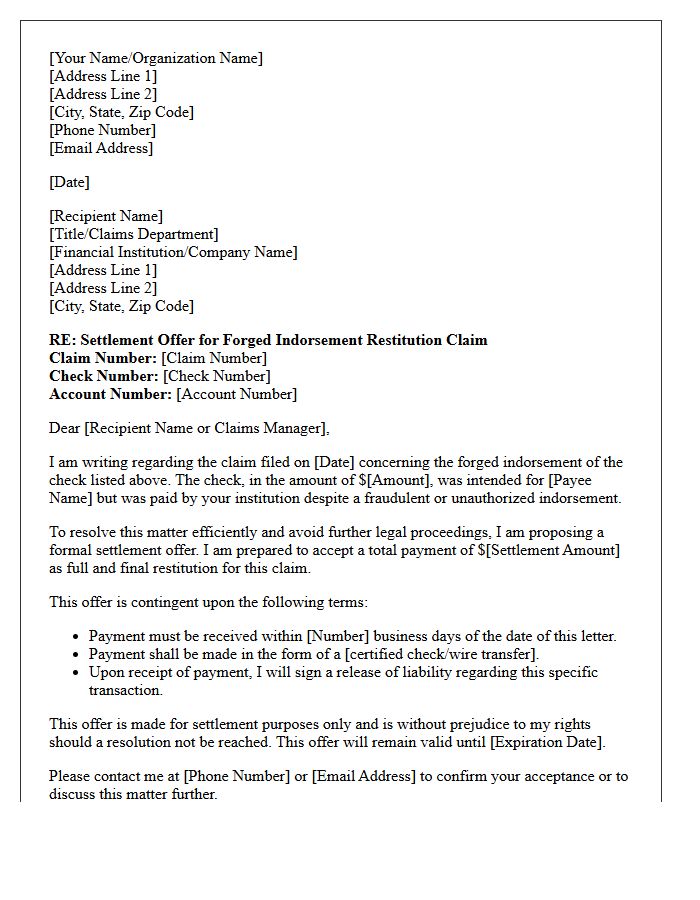
A settlement offer letter for a forged indorsement restitution claim is a formal legal document used to resolve disputes over unauthorized check signatures. It outlines the restitution amount offered to the rightful payee to avoid prolonged litigation. To ensure validity, the letter must clearly specify the check details, the negotiation terms, and a full release of liability upon payment. Promptly addressing these claims helps mitigate financial losses and maintains banking compliance. Always verify the statute of limitations and insurance coverage before finalyzing a settlement agreement to protect your legal interests.
What is a Demand Letter for Forged Indorsement Restitution?
A Demand Letter for Forged Indorsement Restitution is a formal legal notice sent to a financial institution or individual requesting the return of funds paid out on a check that contained a fraudulent or unauthorized signature. It serves as a preliminary step before litigation to recover losses incurred due to check fraud.
When should I send a demand letter for a forged check indorsement?
You should send the demand letter as soon as you discover that a check was intercepted, altered, or cashed by someone other than the intended payee. Prompt notification is critical, as banking regulations and the Uniform Commercial Code (UCC) often impose strict time limits on reporting unauthorized indorsements for restitution.
What information must be included in a forged indorsement restitution claim?
The letter should include the check number, date of issuance, exact dollar amount, the name of the intended payee, and a copy of the front and back of the processed check. It must also clearly state that the indorsement is a forgery and include an Affidavit of Forgery to provide sworn evidence of the claim.
Who is liable for a forged indorsement under the Uniform Commercial Code (UCC)?
Under the UCC, the "presenting bank" or the bank that first accepted the forged check is generally liable for the loss because they are in the best position to verify the identity of the person cashing the check. The drawer (the person who wrote the check) typically seeks restitution from their own bank, which then seeks reimbursement from the bank that accepted the forged instrument.
How long does the bank have to respond to a restitution demand?
While specific timelines vary by jurisdiction and bank policy, most financial institutions acknowledge receipt within 10 to 30 business days. If the bank denies the claim or fails to respond, the demand letter serves as critical evidence of your attempt to resolve the matter should you choose to pursue a civil lawsuit for the recovery of the funds.

Comments