
An Anti-Money Laundering Examination Letter is a formal notification from regulators signaling an upcoming audit of your firm's compliance framework. It outlines required documentation, internal controls, and transaction monitoring records necessary to evaluate regulatory adherence. Preparing accurately ensures your institution meets legal standards and avoids penalties. To help you streamline this process, below are some ready to use template.
Image cover: Professional AML Examination Response Templates and Request Letter Samples
Letter Samples List
- Notification of Anti-Money Laundering Examination Letter
- Request for Customer Due Diligence Documentation Letter
- Suspicious Activity Report Audit Request Letter
- Anti-Money Laundering Policy and Procedure Information Letter
- Wire Transfer and Transaction Monitoring Data Letter
- Office of Foreign Assets Control Sanctions Compliance Letter
- Preliminary Anti-Money Laundering Examination Findings Letter
- Bank Management Response to Examination Deficiencies Letter
- Anti-Money Laundering Remediation and Action Plan Letter
- Final Anti-Money Laundering Examination Closeout Letter
- Notice of Statutory Anti-Money Laundering Violation Letter
Notification of Anti-Money Laundering Examination Letter
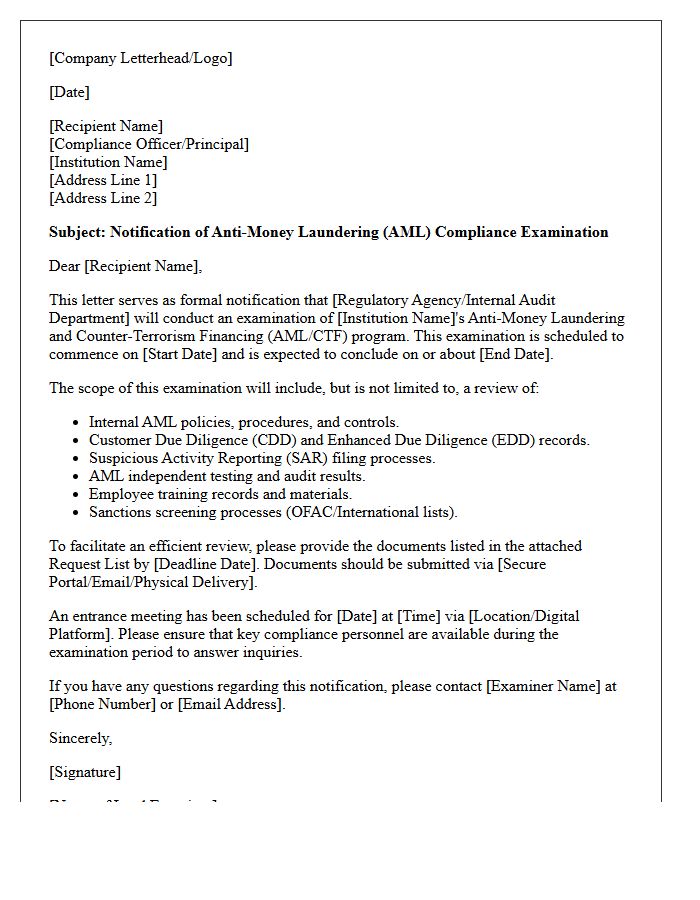
A Notification of Anti-Money Laundering Examination Letter signals an upcoming regulatory audit to assess your firm's compliance with financial security laws. Regulators use this formal notice to request extensive documentation, including Risk Assessments, transaction records, and training logs. Receiving this letter requires immediate action to organize data and demonstrate robust internal controls. Being prepared ensures you can prove regulatory adherence and mitigate the risk of penalties. This process is essential for maintaining transparency and preventing illicit financial activities within the global banking system.
Request for Customer Due Diligence Documentation Letter
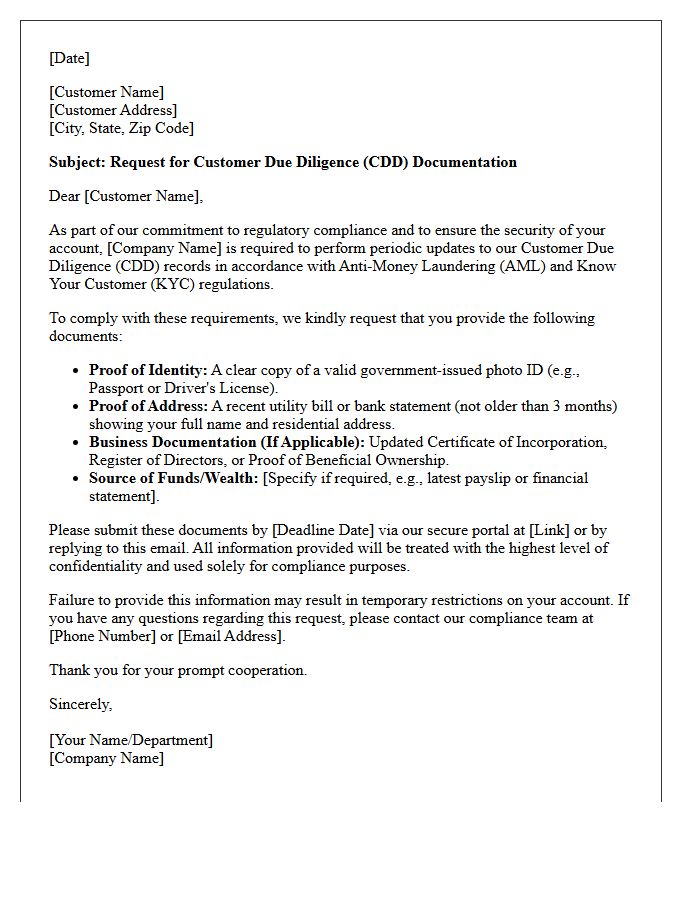
A Request for Customer Due Diligence (CDD) Documentation Letter is a formal inquiry used by financial institutions to verify a client's identity and assess potential risks. This process ensures compliance with Anti-Money Laundering (AML) regulations and "Know Your Customer" protocols. The letter typically requests official identification, proof of address, and details regarding the source of funds. Providing accurate information is essential to maintain account standing and prevent financial crimes. Promptly responding to these requests helps establish transparency and legal conformity between the business and its clients.
Suspicious Activity Report Audit Request Letter
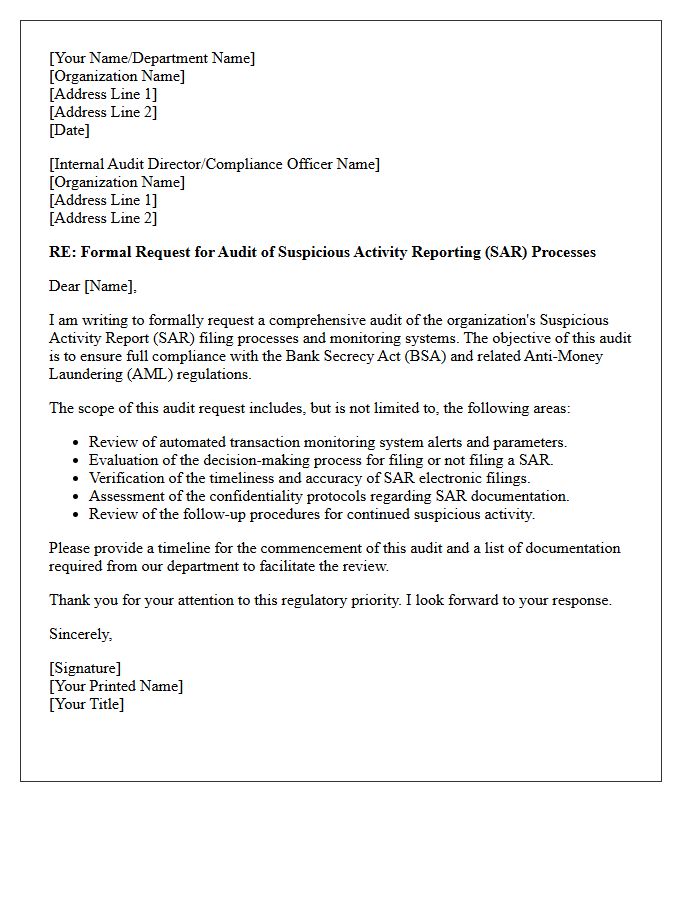
A Suspicious Activity Report Audit Request Letter is a formal document issued by regulatory bodies or internal auditors to evaluate a financial institution's compliance with AML protocols. It mandates the disclosure of SAR filing processes, decision-making rationales, and internal control effectiveness. Understanding the confidentiality requirements is critical, as disclosing a SAR's existence to unauthorized parties is strictly prohibited by law. This audit ensures that the institution accurately identifies, documents, and reports potential financial crimes while maintaining robust risk management standards and adherence to legal mandates like the Bank Secrecy Act.
Anti-Money Laundering Policy and Procedure Information Letter
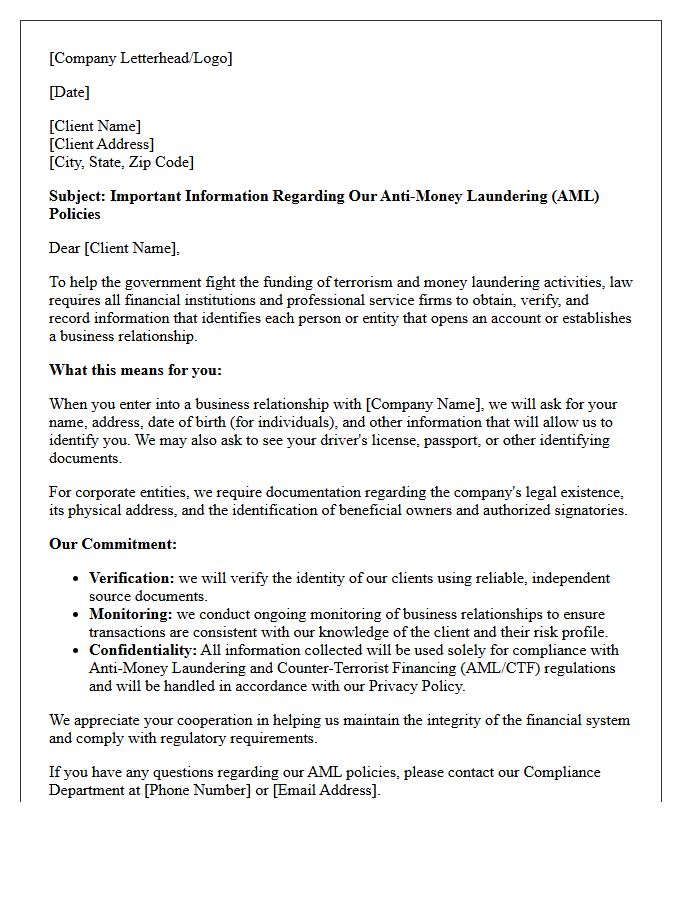
An Anti-Money Laundering (AML) Policy and Procedure Information Letter is a formal document outlining a firm's commitment to preventing financial crimes. It serves as a compliance overview for clients and regulators, detailing internal protocols for identity verification, risk assessment, and transaction monitoring. This letter ensures transparency regarding Know Your Customer (KYC) standards and legal obligations under international financial regulations. By providing this information, institutions demonstrate their dedication to detecting suspicious activities, mitigating fraud, and maintaining the integrity of the global financial system while ensuring all operations remain legally sound.
Wire Transfer and Transaction Monitoring Data Letter
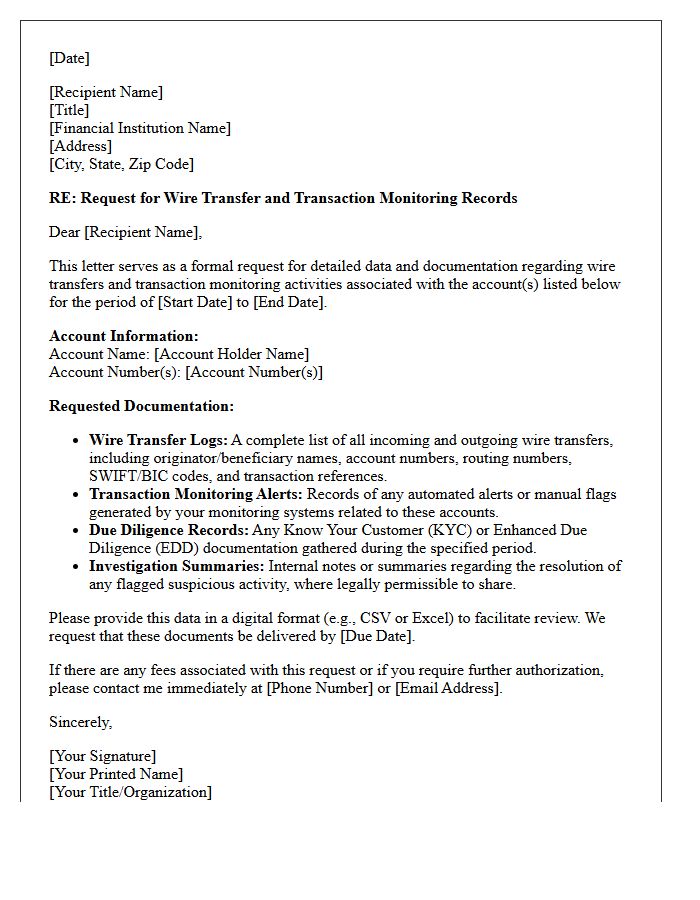
A Wire Transfer and Transaction Monitoring Data Letter is a formal regulatory request often issued by authorities like the NYDFS. It requires financial institutions to certify that their automated systems effectively detect suspicious activity and comply with anti-money laundering (AML) laws. This document ensures that transaction monitoring protocols are robust, accurately mapped, and capable of preventing financial crimes. Compliance officers must verify that the data fueling these systems is complete and integrated, as any gaps can lead to severe legal penalties or regulatory enforcement actions.
Office of Foreign Assets Control Sanctions Compliance Letter
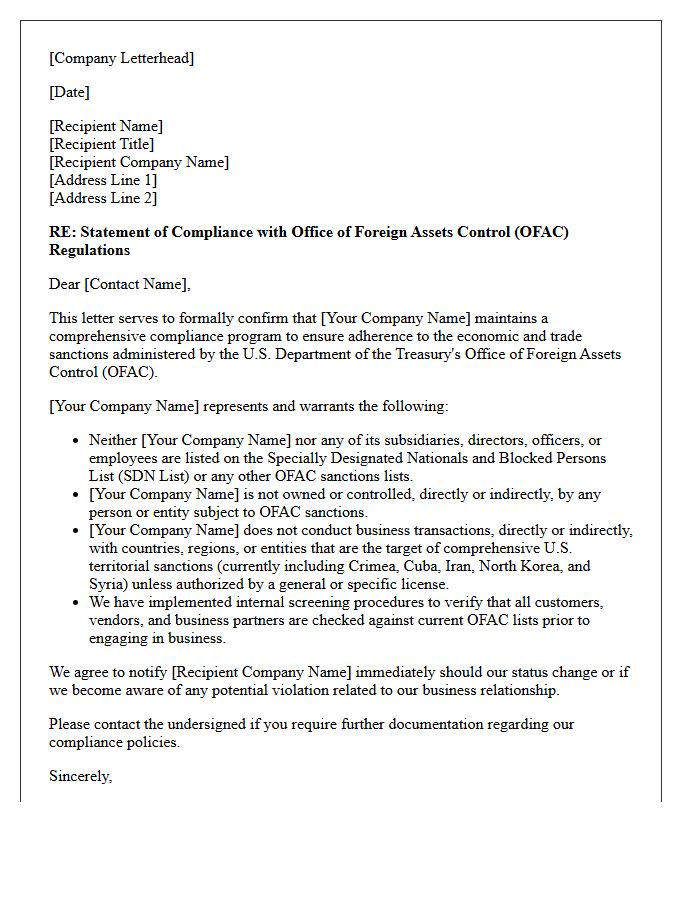
An OFAC Sanctions Compliance Letter serves as formal verification that an entity adheres to United States economic and trade restrictions. Issued to financial institutions or partners, this document confirms that a business does not engage with specially designated nationals or embargoed countries. Maintaining an active compliance program is essential to mitigate legal risks, avoid severe monetary penalties, and ensure seamless cross-border transactions. It demonstrates a commitment to regulatory transparency and prevents involuntary involvement in illicit activities or international security threats within the global financial landscape.
Preliminary Anti-Money Laundering Examination Findings Letter
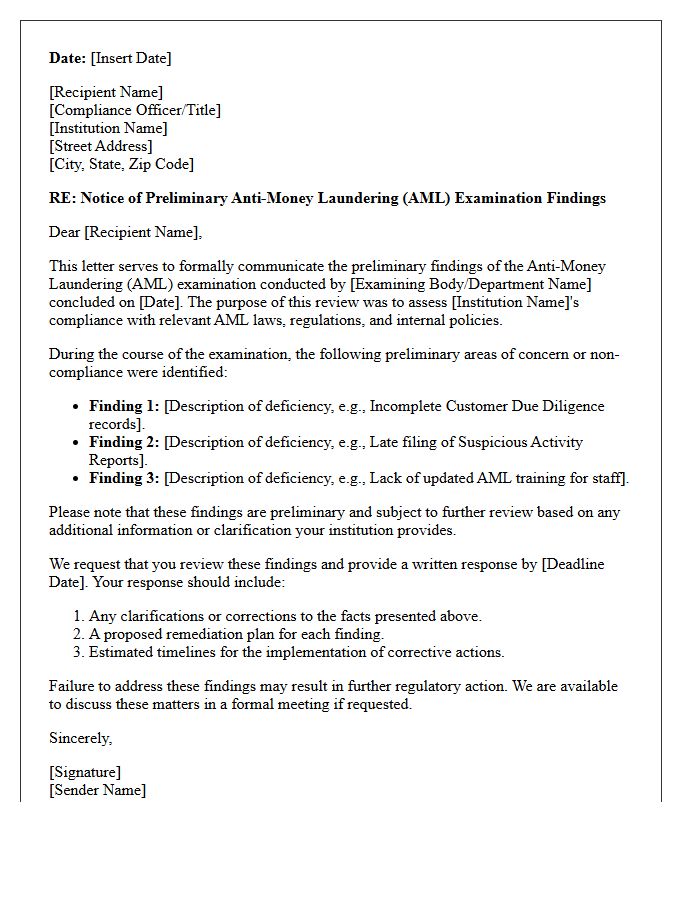
A Preliminary Anti-Money Laundering Examination Findings Letter is a formal notification from regulators identifying compliance deficiencies discovered during an audit. This document outlines specific regulatory gaps in a firm's AML program, such as inadequate risk assessments or flawed suspicious activity reporting. Receiving this letter is a critical phase where institutions must provide a detailed written response to remediate findings before they escalate into formal enforcement actions or heavy fines. Timely corrective action is essential to demonstrate a commitment to financial integrity and to maintain operational standing with governing authorities.
Bank Management Response to Examination Deficiencies Letter
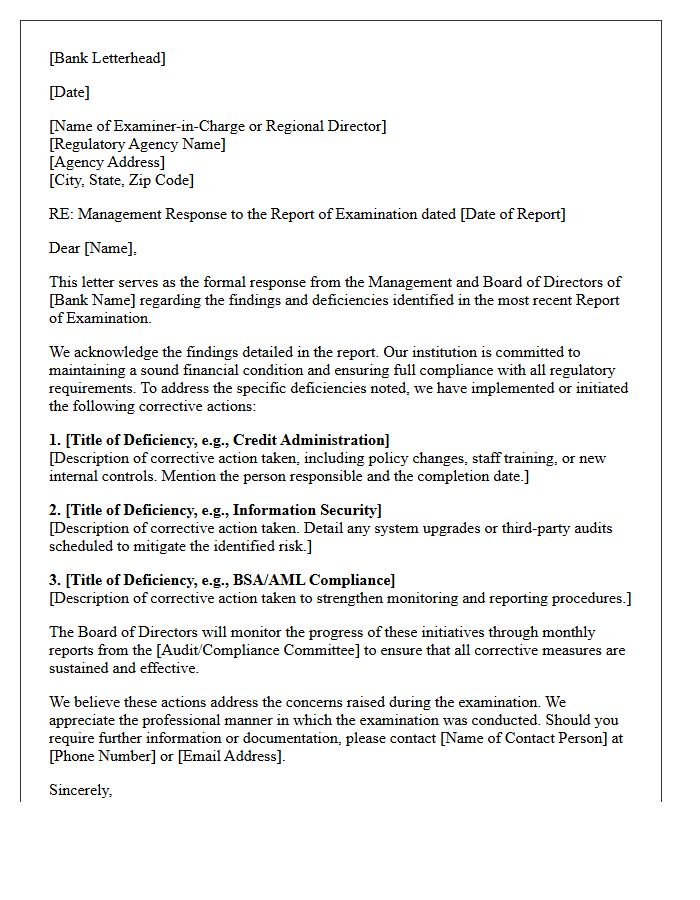
A Bank Management Response to Examination Deficiencies Letter is a formal document addressing regulatory findings identified during a safety and soundness review. Management must provide a detailed corrective action plan that outlines specific steps, responsible parties, and clear timelines for remediation. This response demonstrates the board's commitment to resolving compliance gaps and mitigating operational risks. Accuracy and transparency are essential, as regulators use this communication to evaluate the institution's governance effectiveness and determine if further enforcement actions are necessary to ensure financial stability.
Anti-Money Laundering Remediation and Action Plan Letter
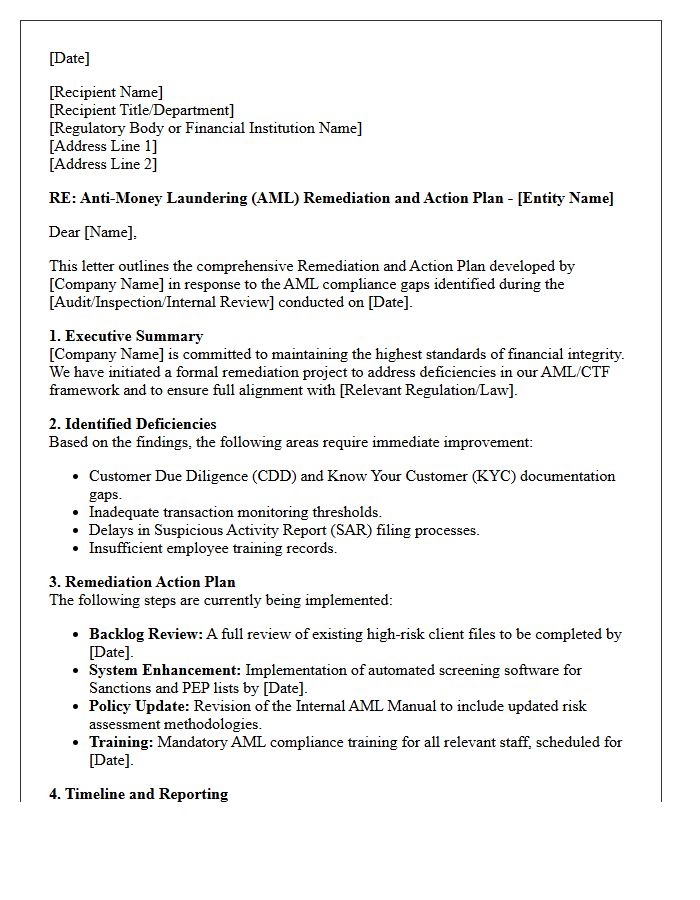
An Anti-Money Laundering (AML) Remediation and Action Plan Letter is a formal document issued by regulators or compliance officers following an audit. It outlines specific deficiencies in a firm's financial safeguards and mandates a structured timeline for corrective measures. This plan is critical for mitigating compliance risks and preventing legal penalties. Financial institutions must demonstrate how they will enhance due diligence, monitoring systems, and reporting protocols to align with statutory requirements. Promptly addressing these gaps ensures operational integrity and protects the organization from facilitating illicit financial activities or facing severe regulatory enforcement actions.
Final Anti-Money Laundering Examination Closeout Letter
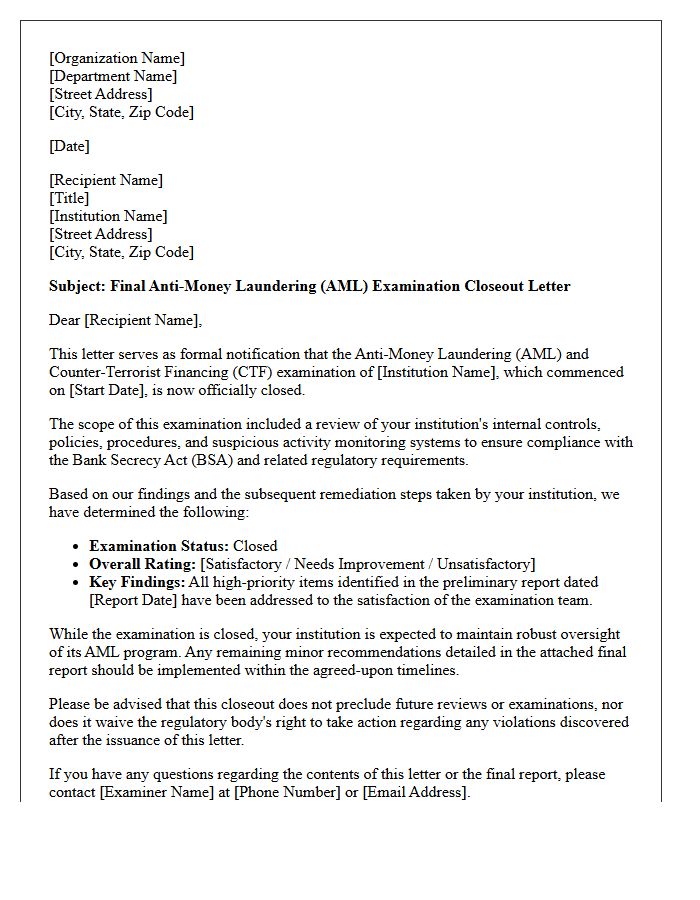
A Final Anti-Money Laundering (AML) Examination Closeout Letter is a formal document issued by regulators to conclude an audit. It summarizes key findings, identifies compliance deficiencies, and outlines required corrective actions. Receiving this letter signifies the end of the supervisory cycle, but institutions must strictly adhere to its remediation timelines. Failure to address the highlighted regulatory gaps can lead to enforcement actions, significant fines, or increased oversight. Proper documentation of resolved issues is essential to ensure future BSA/AML compliance and maintain a positive relationship with financial authorities.
Notice of Statutory Anti-Money Laundering Violation Letter
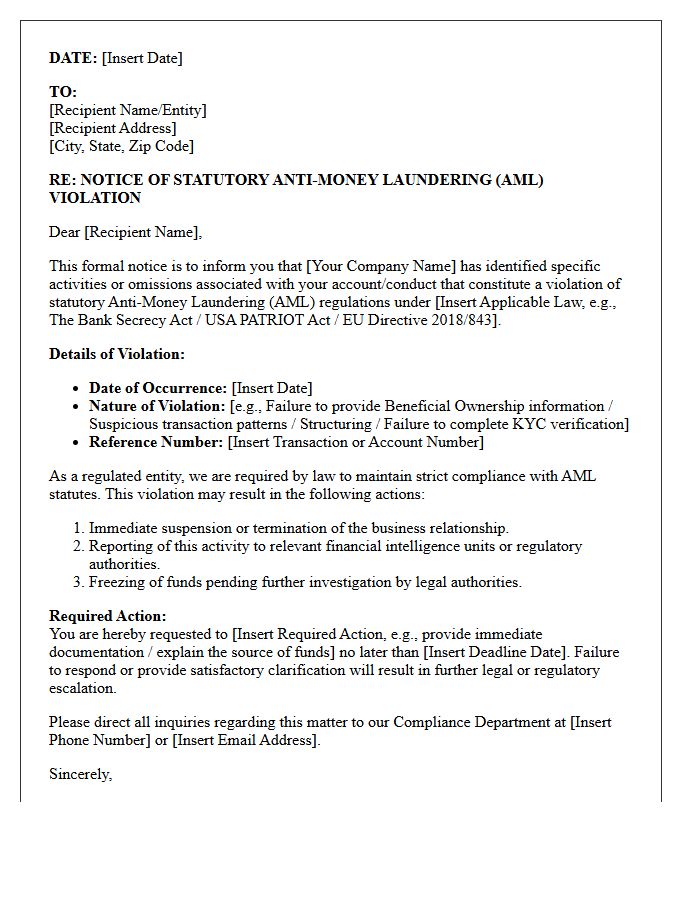
A Notice of Statutory Anti-Money Laundering Violation Letter is a formal legal document issued by regulatory bodies or financial institutions. This letter serves as a critical warning that your account activities may have breached specific Compliance Regulations. Receiving this notice indicates potential legal liability and may lead to asset freezes or criminal prosecution. It is essential to provide a timely, documented response to address the Alleged Discrepancies. Understanding the specific statutes cited is the most important step in protecting your legal standing and maintaining financial transparency.
What is an Anti-Money Laundering (AML) Examination Letter?
An AML examination letter is an official notification sent by regulatory bodies, such as FINRA, the SEC, or state examiners, informing a financial institution of an upcoming audit to review their compliance with the Bank Secrecy Act (BSA) and related anti-money laundering regulations.
What documents are typically requested in an AML examination letter?
The letter usually includes a request list for the firm's written supervisory procedures (WSPs), independent testing reports, customer identification program (CIP) records, suspicious activity reports (SARs), and employee training logs related to anti-money laundering protocols.
How should a financial institution prepare for an AML exam after receiving the letter?
Preparation involves designating a primary point of contact, organizing all requested documentation chronologically, ensuring the AML Compliance Officer is available for interviews, and performing a self-gap analysis to address any known deficiencies before the examiners arrive.
What is the typical timeframe for responding to an AML examination letter?
While timeframes vary by regulator, institutions are typically given 15 to 30 days from the date of the letter to provide the initial document production and prepare for the on-site or remote review phase.
What are the consequences of failing to meet the requirements of an AML examination?
Failure to demonstrate a robust AML program can lead to regulatory findings, "Matters Requiring Attention" (MRAs), formal enforcement actions, significant monetary fines, and reputational damage to the financial institution.

Comments