
An Asset Quality Review Notification Letter is a formal communication sent by financial regulators or lead auditors to banks, initiating an evaluation of loan portfolios and risk management practices. This critical document outlines the scope, timeline, and data requirements necessary to ensure capital adequacy and transparency. To help you streamline this compliance process, below are some ready to use template.

Image cover: Official Asset Quality Review Notification Templates and Formal Letter Samples
Letter Samples List
- Regulatory Asset Quality Review Initiation Letter
- Internal Asset Quality Review Announcement Letter
- Asset Quality Review Data Request Notification Letter
- Asset Quality Review Scope of Examination Letter
- Commercial Portfolio Asset Quality Review Letter
- Pre-Assessment Asset Quality Review Notification Letter
- Asset Quality Review On-Site Inspection Letter
- Asset Quality Review Management Representation Letter
- Asset Quality Review Preliminary Findings Letter
- Asset Quality Review Exception Notification Letter
- Asset Quality Review Remediation Directive Letter
- Asset Quality Review Final Conclusion Letter
Regulatory Asset Quality Review Initiation Letter
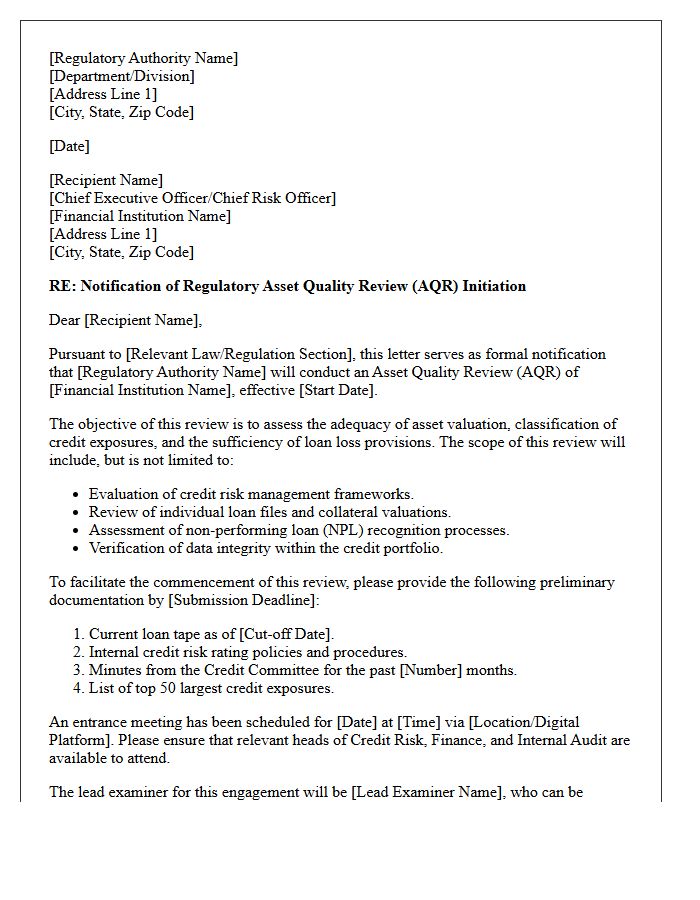
A Regulatory Asset Quality Review Initiation Letter is a formal notification from financial authorities signaling the start of a rigorous prudential assessment. It outlines the specific scope, timelines, and data requirements for evaluating a bank's credit risk exposure and valuation accuracy. This document serves as the official trigger for on-site inspections to ensure capital adequacy and balance sheet transparency. Institutions must respond promptly with comprehensive documentation to demonstrate regulatory compliance and mitigate potential findings regarding non-performing loans or inadequate provisioning levels during the audit process.
Internal Asset Quality Review Announcement Letter
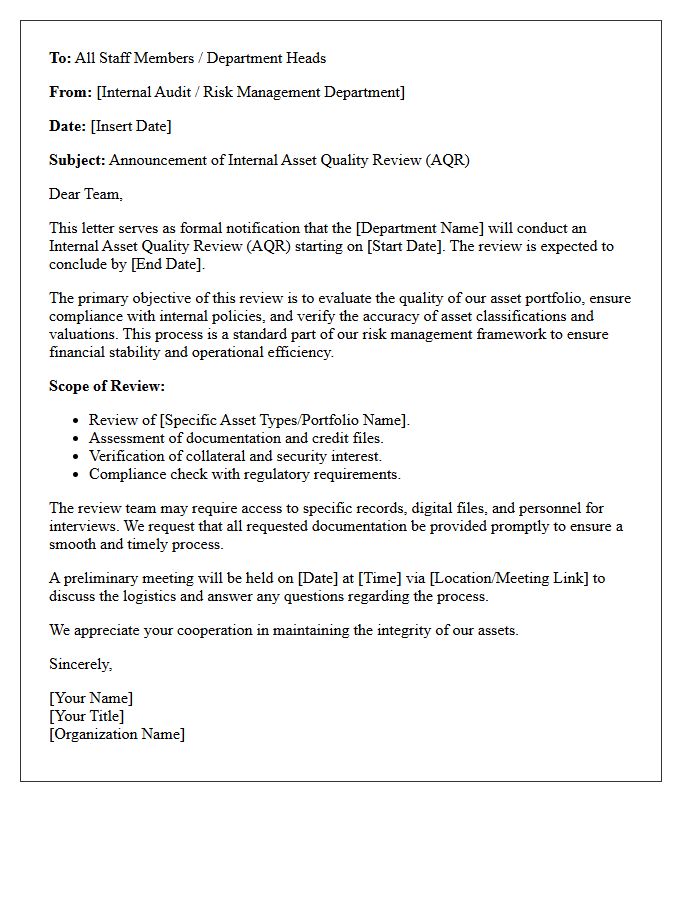
An Internal Asset Quality Review Announcement Letter serves as formal notification that an organization is initiating a systematic evaluation of its financial assets. This document outlines the scope, objectives, and timeline for assessing credit risk and loan performance. It ensures transparency across departments, detailing the required documentation and key personnel involved. By establishing clear expectations, the letter helps maintain regulatory compliance and promotes institutional stability through proactive risk management and accurate asset valuation practices during the audit period.
Asset Quality Review Data Request Notification Letter
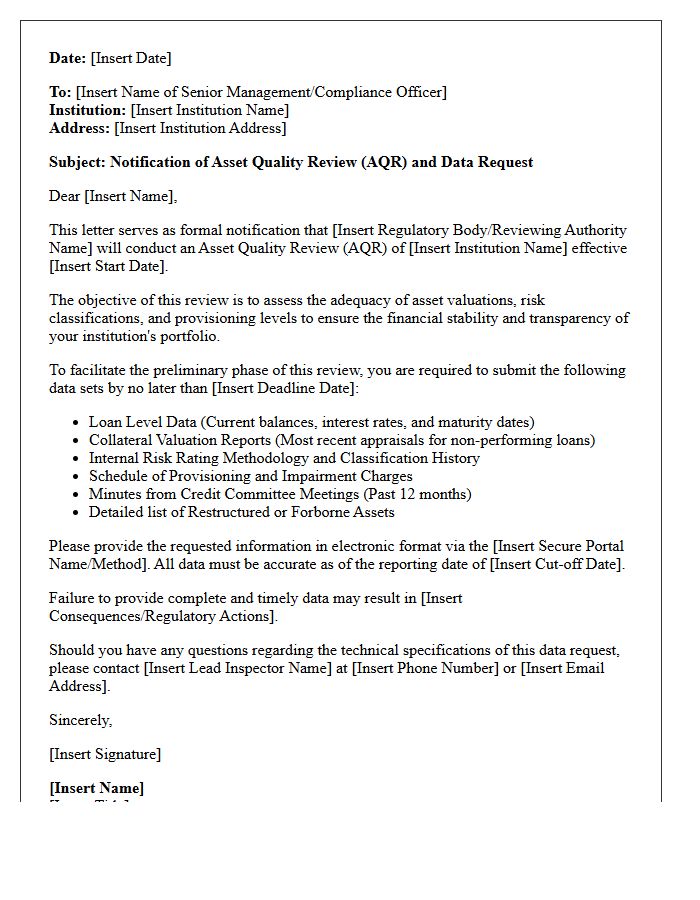
An Asset Quality Review (AQR) Data Request Notification Letter is a formal communication from financial regulators, such as the ECB, initiating an in-depth evaluation of a bank's credit risk. It outlines the specific loan tapes, data integrity requirements, and strict submission deadlines necessary to assess valuation accuracy. This letter marks the beginning of a rigorous supervisory audit, ensuring that institutional risk profiles are transparent and capital adequacy is sufficient. Compliance is essential to avoid regulatory penalties and maintain market confidence through high-quality financial reporting standards.
Asset Quality Review Scope of Examination Letter
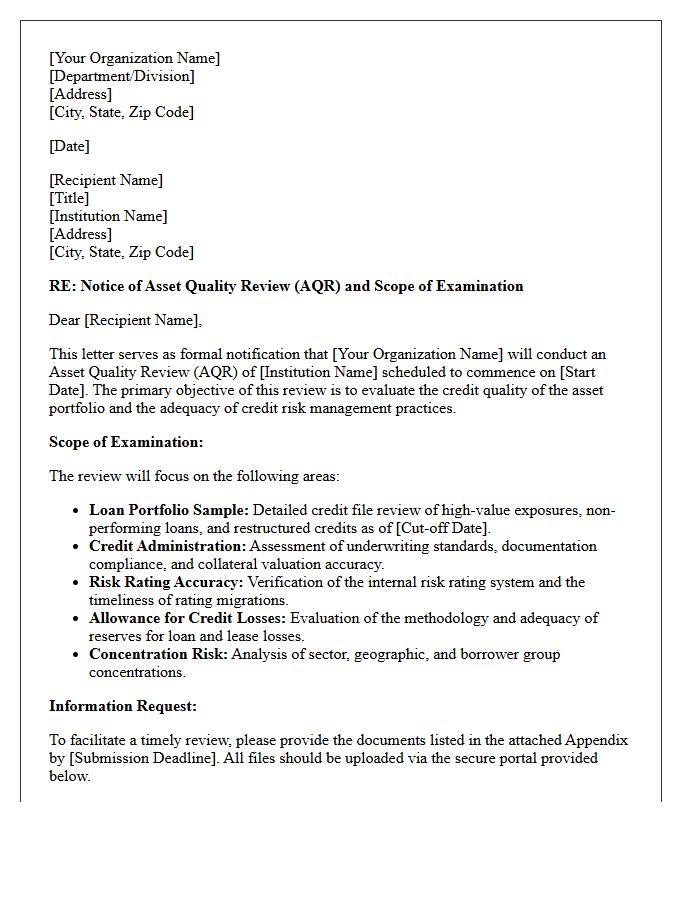
An Asset Quality Review Scope of Examination Letter is a formal regulatory notification detailing the parameters of an upcoming bank audit. It outlines the specific loan portfolios, risk management processes, and internal controls under scrutiny. Understanding this document is crucial for financial institutions to prepare necessary documentation and ensure compliance with capital adequacy standards. By defining the review's depth and timeline, the letter helps banks identify potential credit risks and asset impairments early, maintaining overall financial stability and transparency during the supervisory evaluation process.
Commercial Portfolio Asset Quality Review Letter
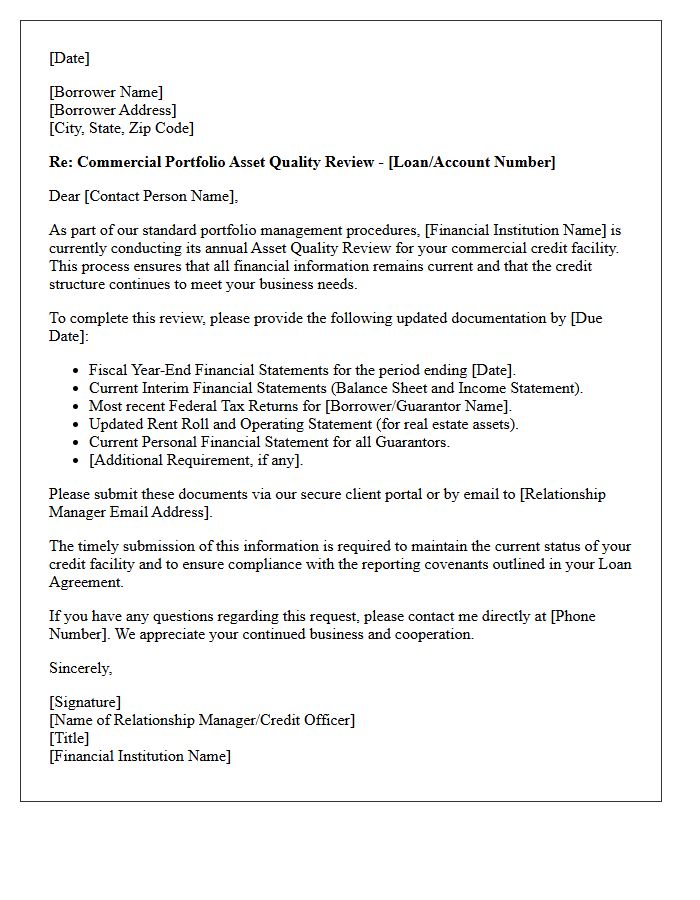
A Commercial Portfolio Asset Quality Review Letter is a formal regulatory notification detailing the findings of a credit risk assessment. It evaluates the underlying risk within a lender's loan book by examining underwriting standards, collateral valuations, and internal risk ratings. Receiving this letter indicates that examiners have identified specific credit weaknesses or procedural gaps that require immediate remediation. Financial institutions must address these findings to ensure capital adequacy, improve portfolio stability, and maintain compliance with banking regulations to prevent future financial impairment and operational oversight.
Pre-Assessment Asset Quality Review Notification Letter
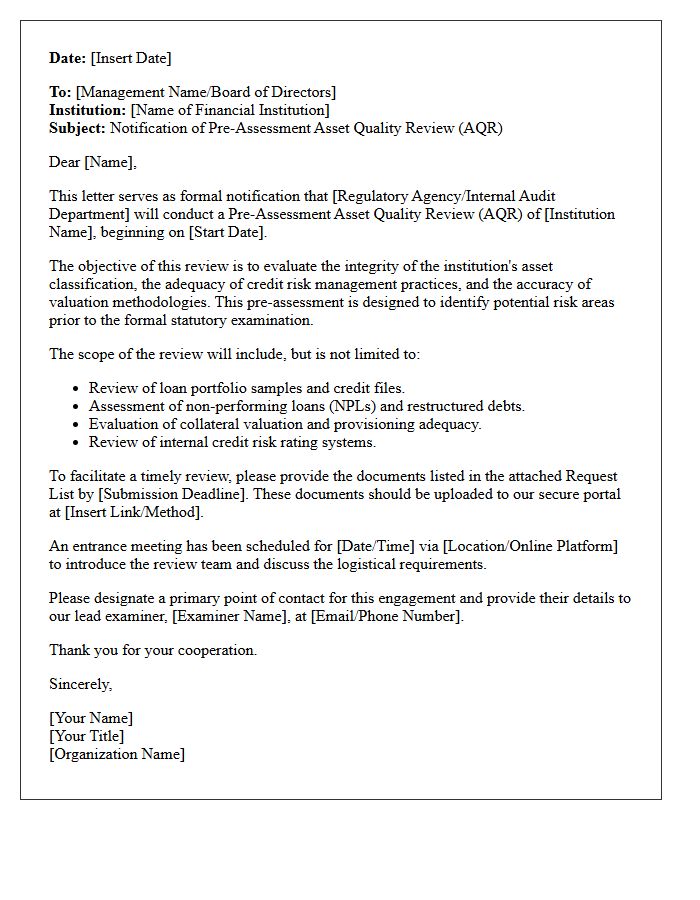
A Pre-Assessment Asset Quality Review Notification Letter serves as formal notice that a financial institution will undergo a rigorous evaluation of its loan portfolio and risk management practices. Issued by regulatory bodies like the ECB, this letter outlines the scope, timeline, and data requirements for the audit. It is a critical preparatory step ensuring transparency before the comprehensive stress test begins. Banks must provide accurate asset valuations and credit classifications to demonstrate financial stability and capital adequacy during this mandatory supervisory process.
Asset Quality Review On-Site Inspection Letter
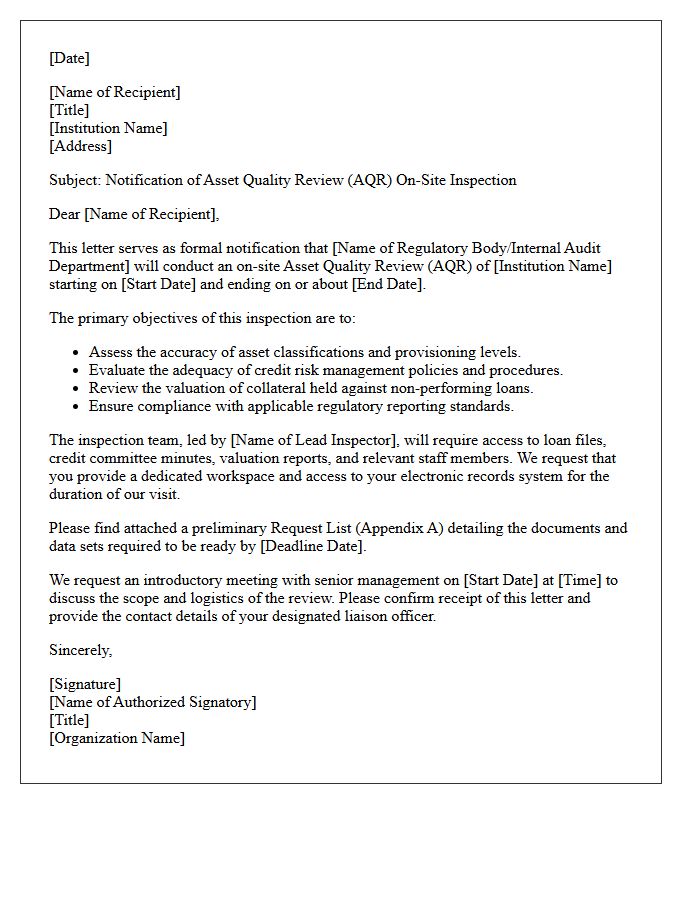
The Asset Quality Review (AQR) On-Site Inspection Letter serves as a formal notification from regulators, such as the ECB, initiating a rigorous evaluation of a bank's asset valuation. This document outlines the scope, timeline, and data requirements for verifying loan classifications and collateral accuracy. It is critical for financial institutions because it precedes the deep-dive audit designed to ensure capital adequacy and transparency. Receiving this letter requires immediate preparation of credit files and internal systems to facilitate a smooth supervisory risk assessment process.
Asset Quality Review Management Representation Letter
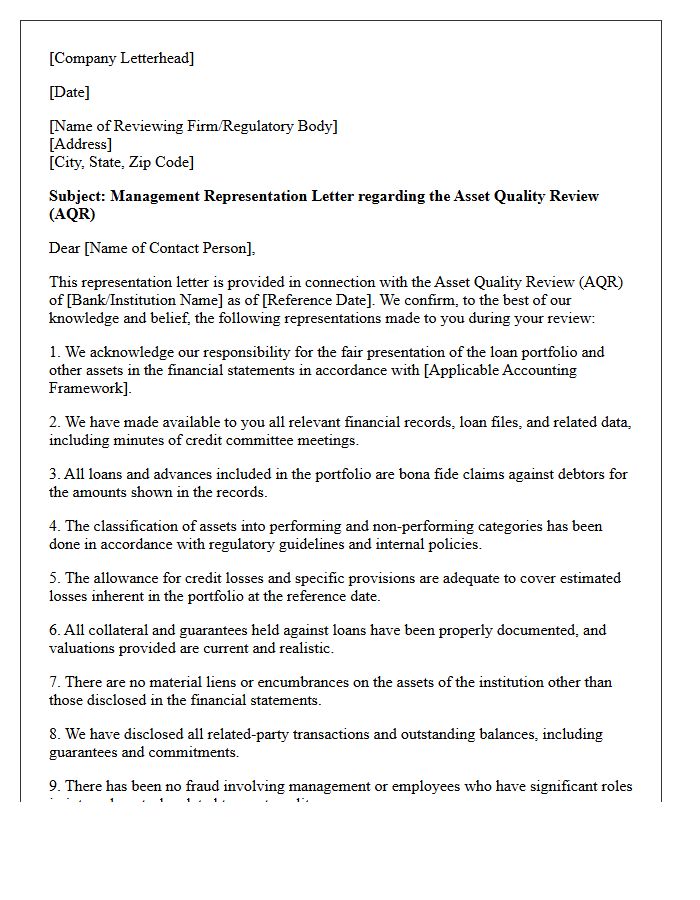
The Asset Quality Review Management Representation Letter is a formal document signed by senior executives to confirm the accuracy of financial data provided to regulators. It serves as a legal safeguard ensuring that all information regarding loan classifications, provisions, and collateral valuations is complete and truthful. By signing, management acknowledges their responsibility for internal controls and the integrity of the bank's balance sheet. This letter is a critical component of the audit trail, reducing information asymmetry and establishing accountability during rigorous prudential assessments of a financial institution's overall health.
Asset Quality Review Preliminary Findings Letter
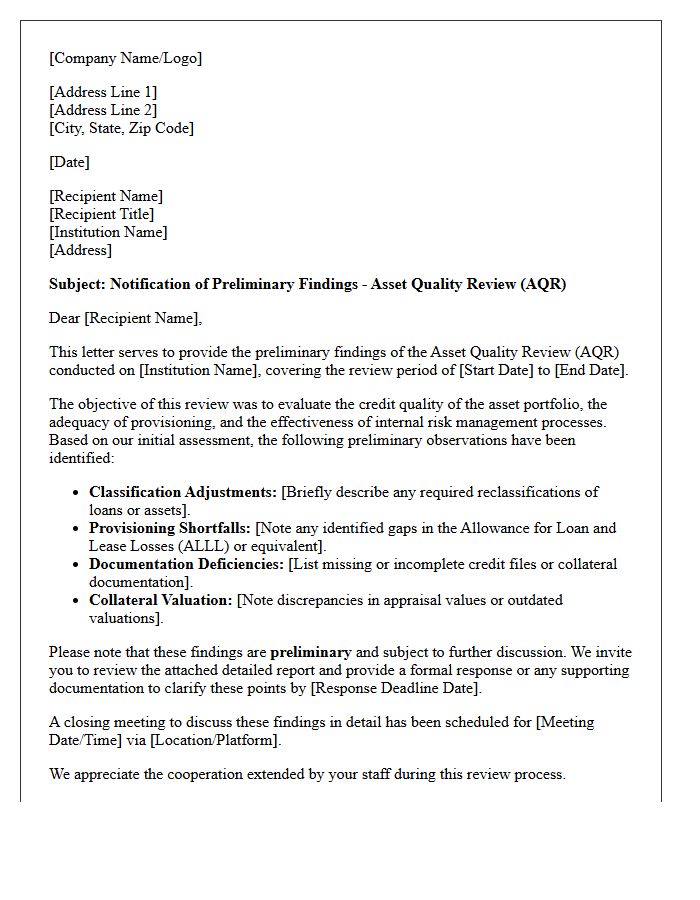
An Asset Quality Review (AQR) Preliminary Findings Letter serves as a formal notification from regulators detailing initial assessments of a financial institution's credit risk and loan valuations. This document identifies potential capital shortfalls, classification errors, or provisioning gaps before final results are published. Understanding these findings is crucial for banks to address compliance issues and rectify data discrepancies. It acts as a critical early warning, allowing management to prepare for mandatory adjustments to their balance sheet and ensure regulatory solvency and transparent reporting.
Asset Quality Review Exception Notification Letter
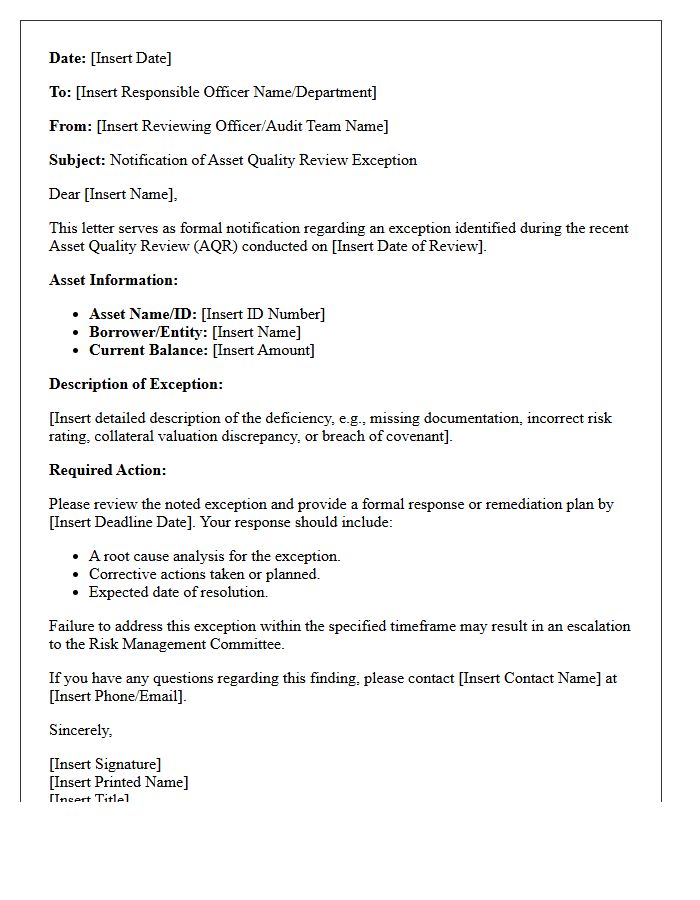
An Asset Quality Review Exception Notification Letter is a formal document issued by financial regulators or auditors after evaluating a bank's loan portfolio. It identifies credit risk deficiencies, such as improper asset classification, inadequate documentation, or insufficient collateral valuation. Receiving this letter requires the institution to implement remedial actions to address specific weaknesses in lending practices. Timely resolution is critical to maintaining regulatory compliance, ensuring financial stability, and preventing potential downgrades in the bank's overall safety and soundness rating during a supervisory examination.
Asset Quality Review Remediation Directive Letter
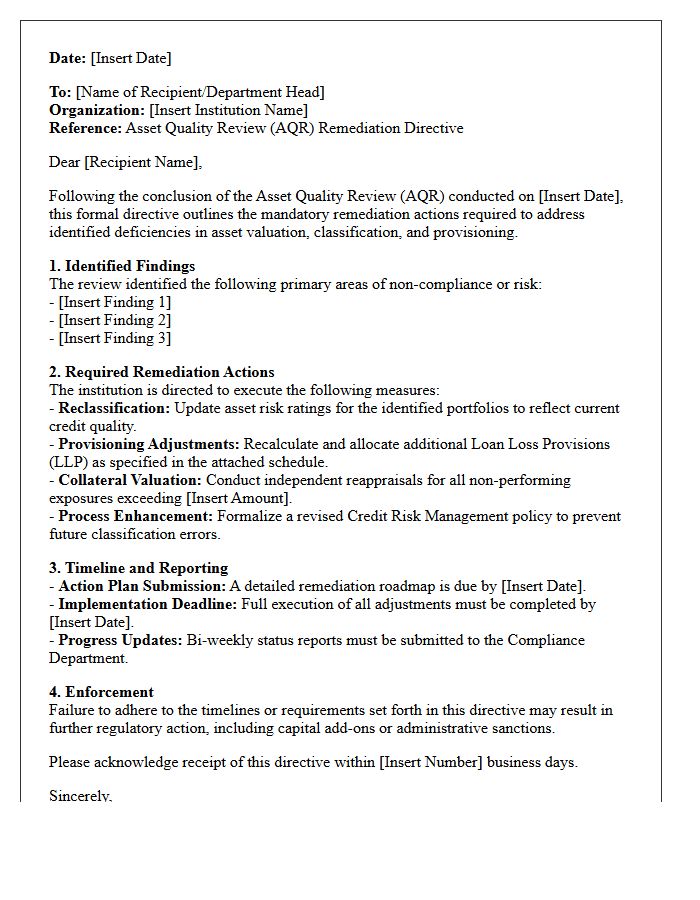
An Asset Quality Review Remediation Directive Letter is a formal supervisory communication issued by regulators to financial institutions following a comprehensive audit. It mandates specific corrective actions to address identified deficiencies in loan classification, provisioning accuracy, and risk management frameworks. Banks must strictly adhere to the prescribed remediation timeline to ensure capital adequacy and financial transparency. Failure to resolve these findings can lead to heightened oversight or regulatory penalties, making this letter a critical roadmap for restoring balance sheet integrity and meeting prudential standards.
Asset Quality Review Final Conclusion Letter
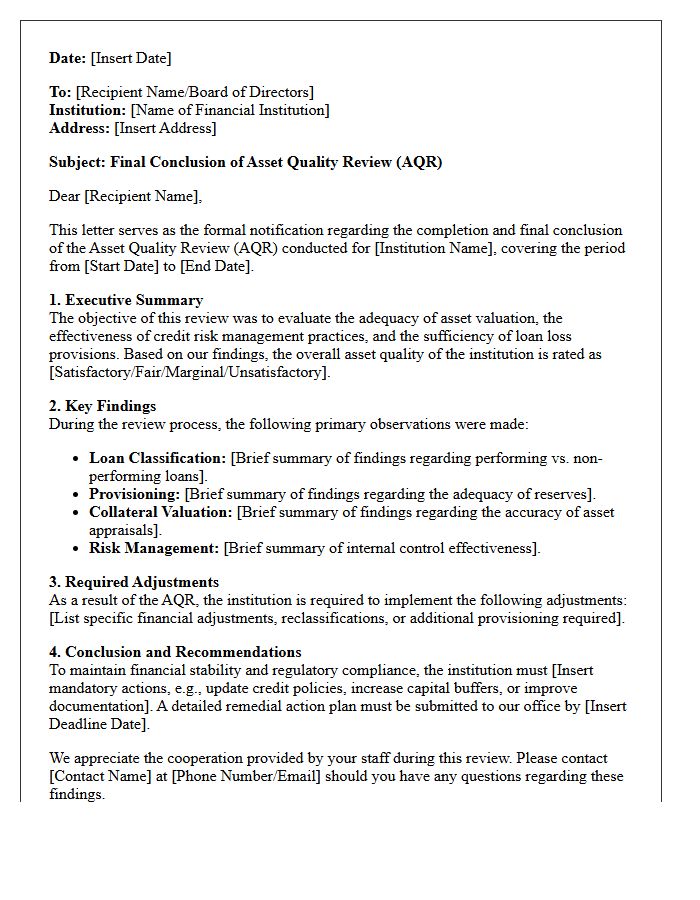
The Asset Quality Review Final Conclusion Letter represents the definitive regulatory assessment of a bank's financial health. This document summarizes critical findings regarding loan valuations, provisions, and risk classifications identified during the audit. It serves as a binding mandate for financial institutions to adjust their balance sheets and enhance capital adequacy. Understanding this letter is vital for stakeholders, as it dictates necessary remediation actions and influences the institution's overall stability rating within the banking union framework.
What is an Asset Quality Review (AQR) notification letter?
An Asset Quality Review notification letter is a formal communication sent by financial regulators or lead auditors to a bank's management, announcing a mandatory evaluation of the institution's credit portfolios, risk management practices, and asset valuations to ensure financial stability.
What are the primary objectives of receiving an AQR notification letter?
The primary objectives outlined in the letter are to verify the adequacy of loan loss provisioning, ensure accurate asset classification, assess the transparency of the balance sheet, and confirm compliance with prudential accounting standards.
Which documents are typically requested in an Asset Quality Review notification?
The notification usually includes a data request list (DRL) requiring loan tapes, collateral valuation reports, credit files for specific sampled borrowers, internal risk rating methodologies, and historical recovery data for non-performing loans.
How should a financial institution prepare after receiving an AQR notification?
Upon receipt, the institution should establish a dedicated task force, clean and validate data for the specified portfolios, ensure all credit documentation is digitized and accessible, and prepare management for interviews regarding internal credit policies.
Does an Asset Quality Review notification imply a failure in banking compliance?
No, receiving an AQR notification does not necessarily imply failure; it is often a routine supervisory tool or part of a broader "stress test" exercise applied to the banking sector to maintain systemic confidence and identify potential credit risks early.

Comments