
The Beneficial Ownership Rule requires businesses to disclose specific identifying information to FinCEN to enhance financial transparency. Our detailed guide explains the legal requirements, filing deadlines, and compliance steps necessary for your company to remain in good standing. Ensure your organization meets these federal reporting standards efficiently. To simplify your communication, below are some ready to use template.
Image cover: Mastering BOI Reporting: Official Implementation Letters and Templates
Letter Samples List
- Initial Notification Letter for Beneficial Ownership Rule Implementation
- Request Letter for Beneficial Ownership Certification Details
- Reminder Letter for Missing Beneficial Ownership Documentation
- Final Warning Letter for Beneficial Ownership Non-Compliance
- Account Restriction Letter Due to Beneficial Ownership Deficiencies
- Cover Letter for Beneficial Ownership Declaration Form
- Letter of Acknowledgment for Completed Beneficial Ownership Submission
- Letter of Exemption from Beneficial Ownership Reporting Requirements
- Internal Policy Letter for Beneficial Ownership Verification Standards
- Letter of Attestation for Beneficial Ownership Record Accuracy
- Periodic Review Letter for Beneficial Ownership Information Updates
- Regulatory Audit Letter for Beneficial Ownership Rule Adherence
Initial Notification Letter for Beneficial Ownership Rule Implementation
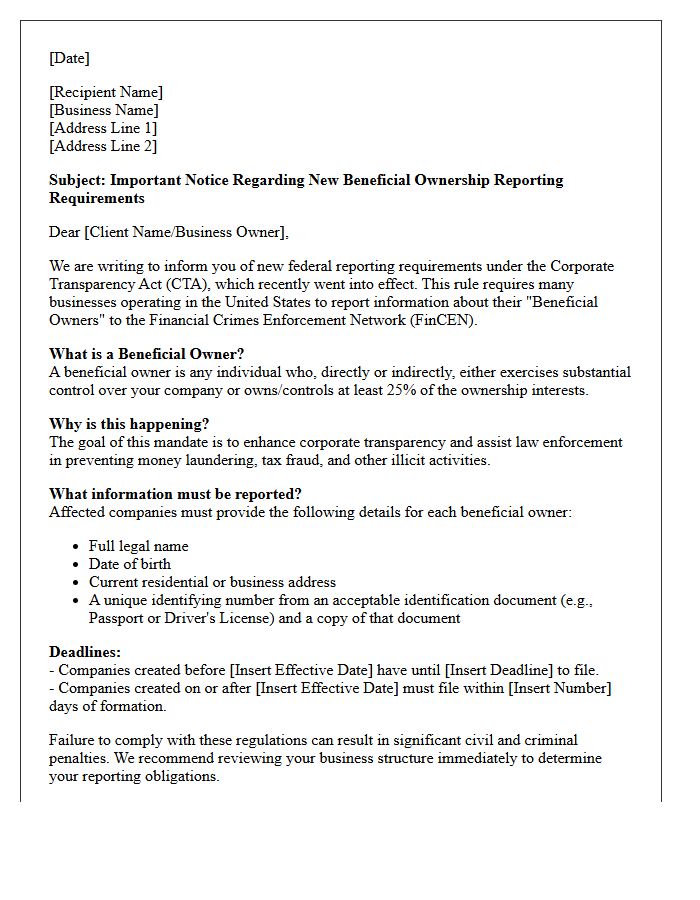
The Initial Notification Letter informs businesses about mandatory reporting requirements under the Beneficial Ownership Information (BOI) rule. This federal mandate, part of the Corporate Transparency Act, requires most entities to disclose individuals who own or control the company to FinCEN. This letter serves as a formal alert to ensure compliance and avoid significant non-compliance penalties. It is the first step in identifying reportable beneficial owners to enhance financial transparency and prevent illicit activities like money laundering. Reviewing this notice promptly is essential for meeting legal filing deadlines.
Request Letter for Beneficial Ownership Certification Details
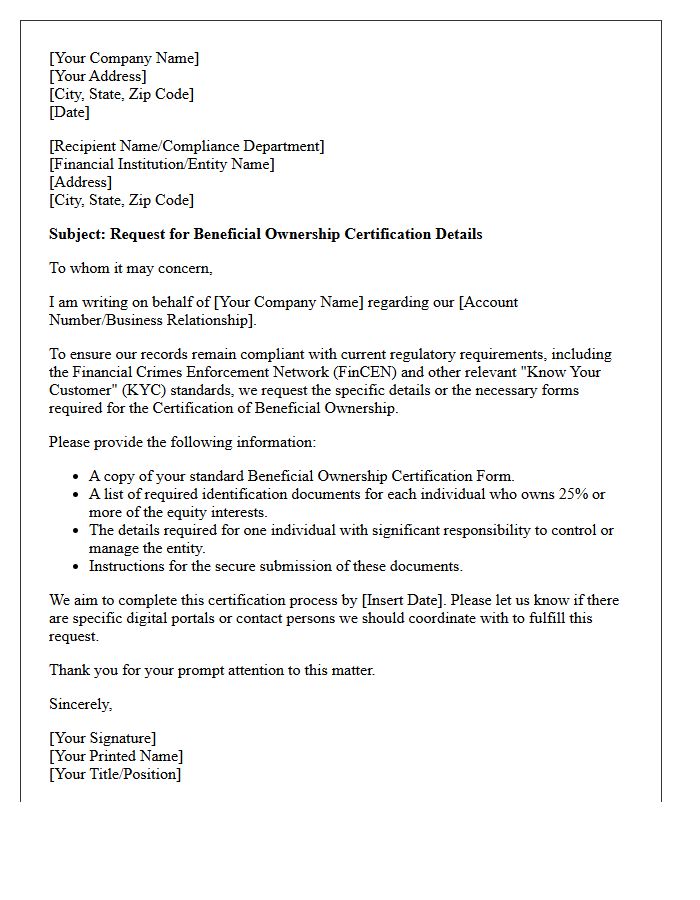
A Request Letter for Beneficial Ownership Certification is a formal document used by financial institutions to identify individuals who own or control a legal entity. To comply with AML and KYC regulations, businesses must disclose ultimate beneficial owners (UBOs) holding 25% or more equity. Providing accurate details ensures transparency and prevents financial crimes like money laundering. When drafting this letter, ensure all identification documents and ownership percentages are clearly stated to facilitate seamless account opening or due diligence processes required by global banking standards.
Reminder Letter for Missing Beneficial Ownership Documentation
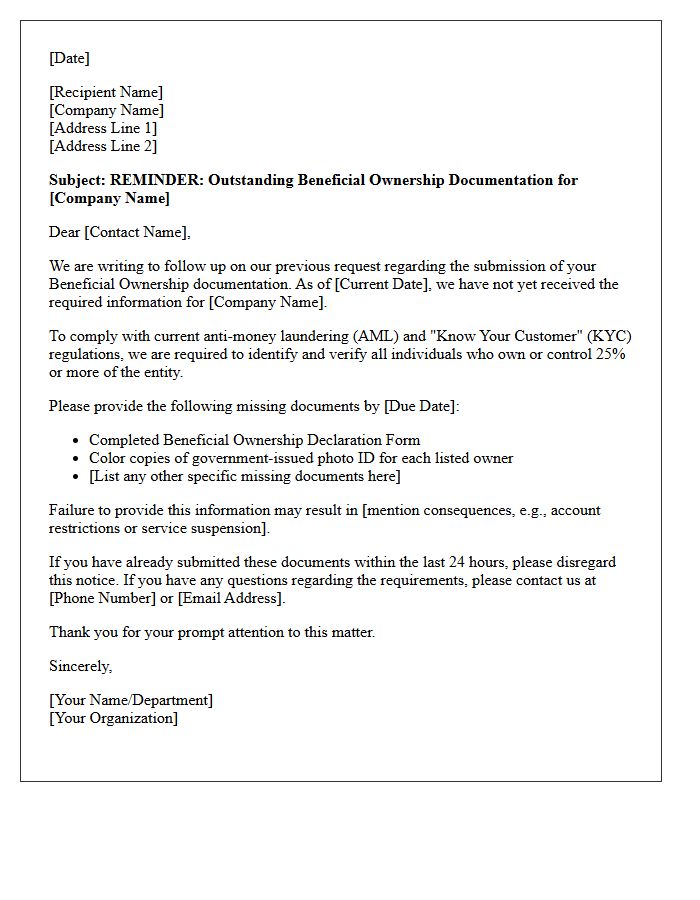
A Reminder Letter for Missing Beneficial Ownership Documentation is a formal notice sent to business entities failing to disclose individuals with significant control. Compliance is mandatory under transparency laws, such as the Corporate Transparency Act, to prevent financial crimes. Failure to provide accurate beneficial ownership information (BOI) can result in severe penalties, including hefty daily fines or criminal prosecution. Recipient organizations must prioritize these requests immediately to ensure their legal status remains active and compliant with regulatory standards. Timely submission of these documents is essential for maintaining corporate transparency and operational integrity.
Final Warning Letter for Beneficial Ownership Non-Compliance
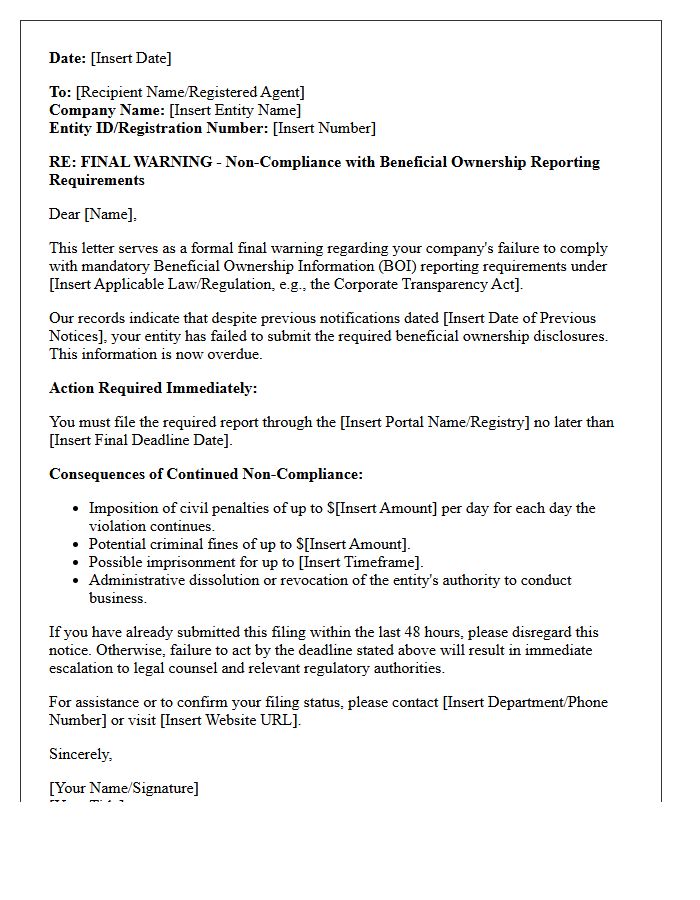
A final warning letter for Beneficial Ownership non-compliance is a critical legal notice issued to entities failing to report ownership details. This document signifies the last opportunity to fulfill transparency requirements before the imposition of severe penalties. Failure to act immediately can lead to substantial daily fines, potential criminal prosecution, or the involuntary dissolution of the business. It is essential to verify all data and submit the required filing through the official regulatory portal to ensure full compliance and avoid administrative enforcement actions.
Account Restriction Letter Due to Beneficial Ownership Deficiencies
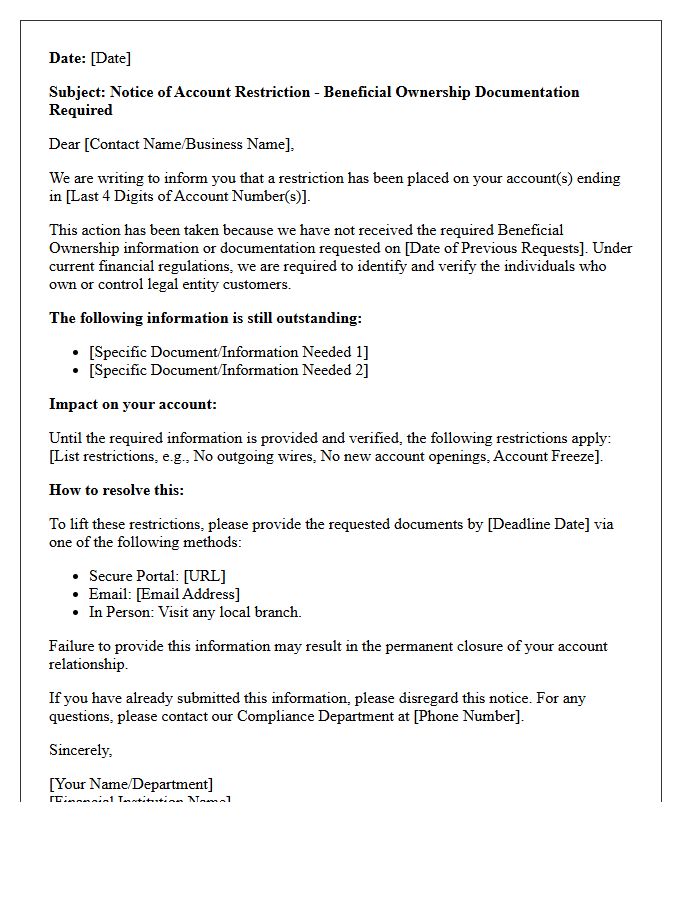
An Account Restriction Letter is a formal notice issued when a financial institution identifies missing or outdated information regarding the individuals who own or control a legal entity. Under federal Beneficial Ownership regulations, banks must verify the identity of significant stakeholders to prevent financial crimes. Failing to provide accurate ownership certification or supporting documentation within the specified deadline will lead to limited account functionality, including frozen transactions or total account closure. Promptly submitting the required due diligence forms is essential to maintain active banking services and ensure regulatory compliance.
Cover Letter for Beneficial Ownership Declaration Form
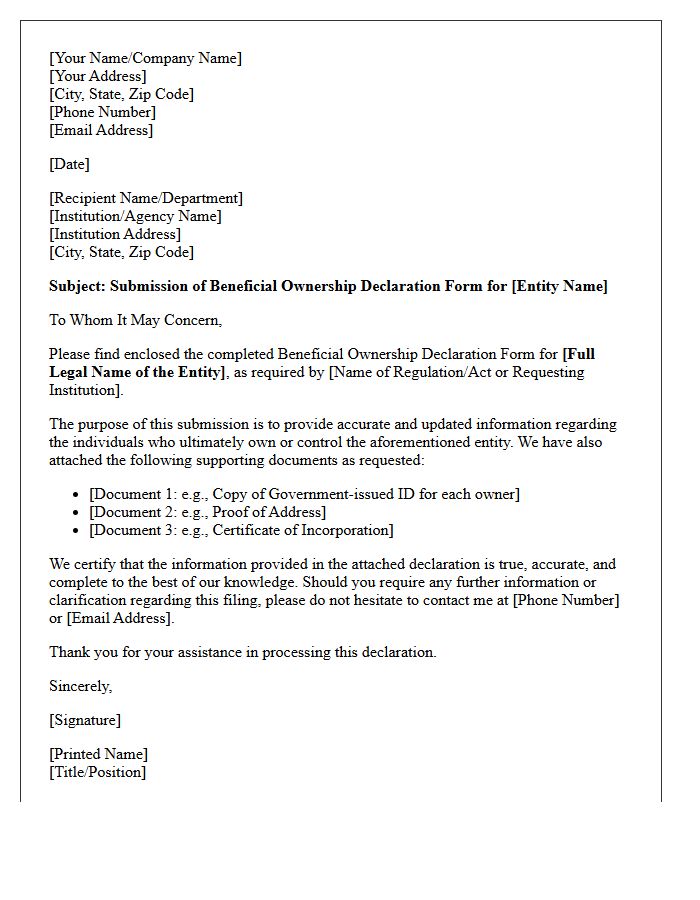
A cover letter for a Beneficial Ownership Declaration is essential for clarifying the control structure of a legal entity. It must explicitly identify the ultimate beneficial owners who exercise significant influence or hold over 25% of shares. This document ensures transparency and anti-money laundering compliance during corporate registration or bank account opening. Ensure the letter includes the entity's full legal name, registration number, and a signed statement confirming that all provided information is current and accurate to avoid legal delays or regulatory penalties.
Letter of Acknowledgment for Completed Beneficial Ownership Submission
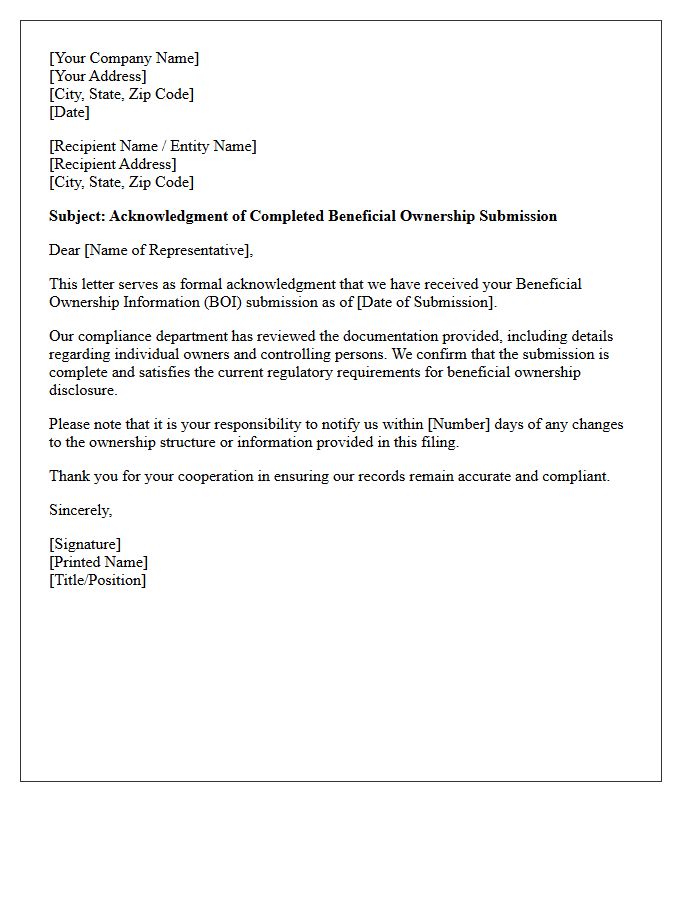
A Letter of Acknowledgment for Completed Beneficial Ownership Submission serves as official confirmation that a legal entity has successfully filed its required transparency report. This document verifies compliance with anti-money laundering regulations and the Corporate Transparency Act. It is essential to securely archive this receipt, as it contains a unique filing ID and date stamp. Businesses must present this letter during regulatory audits or banking procedures to prove they have disclosed all individuals with significant control. Timely submission avoids severe penalties and ensures your entity remains in good standing with government authorities.
Letter of Exemption from Beneficial Ownership Reporting Requirements
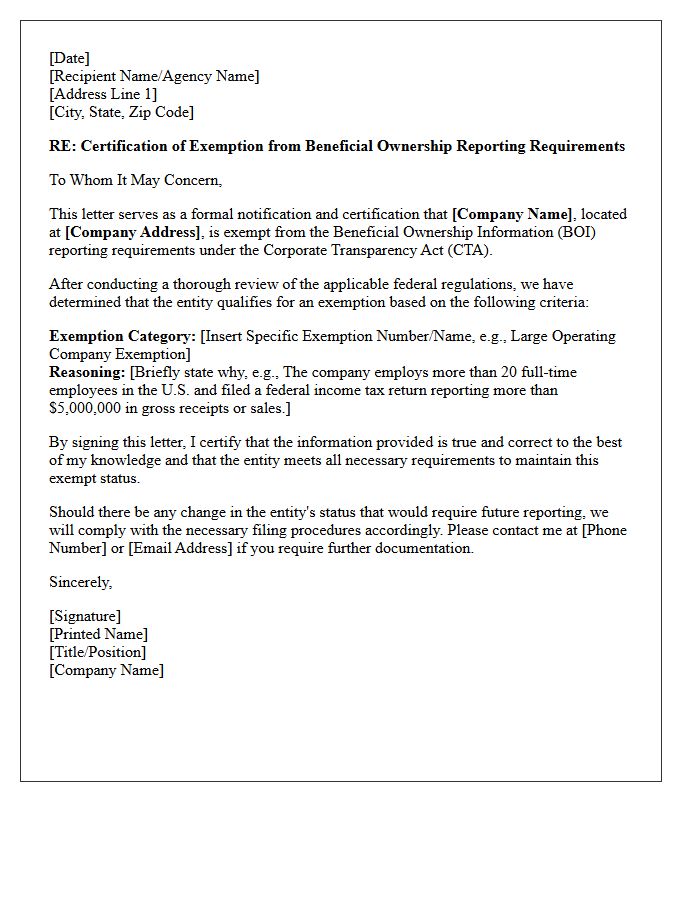
Entities exempt from Beneficial Ownership Information (BOI) reporting, such as public companies or nonprofits, often use a Letter of Exemption to verify their status. While FinCEN does not issue formal certificates, this document confirms the entity meets specific Corporate Transparency Act criteria. Maintaining a formal record of exemption is vital for compliance during financial audits or banking transactions. It serves as official documentation that the entity is not required to disclose beneficial owners to federal authorities, ensuring legal protection and regulatory transparency.
Internal Policy Letter for Beneficial Ownership Verification Standards
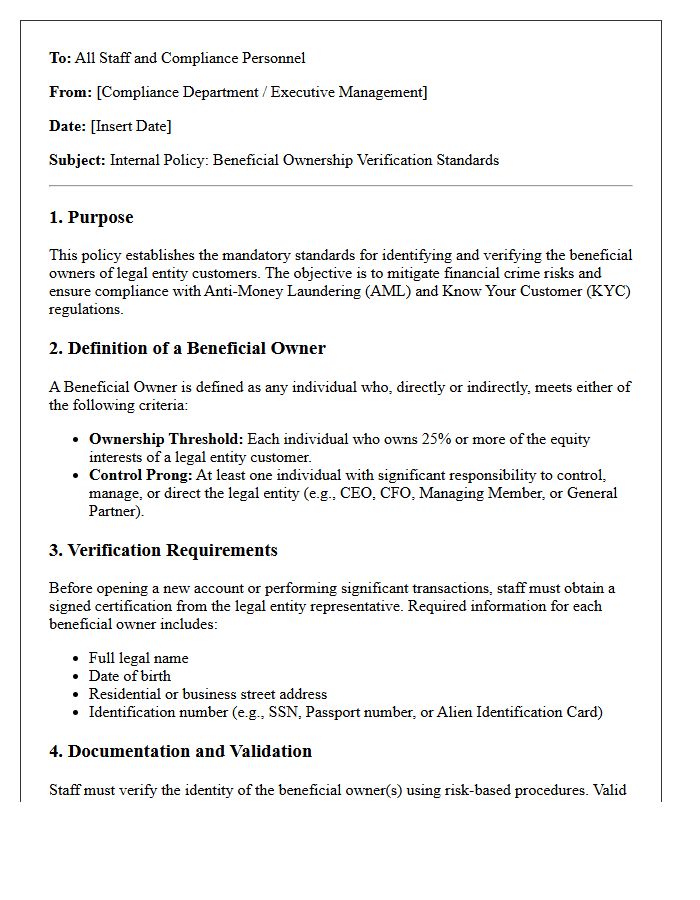
An Internal Policy Letter for Beneficial Ownership Verification establishes mandatory protocols for identifying individuals with significant control over legal entities. This document ensures regulatory compliance with AML and KYC standards by defining clear procedures for verifying identity documents and ownership structures. It serves as a critical risk management tool, helping institutions mitigate financial crime and maintain transparency. Employees must adhere to these guidelines to prevent legal penalties and ensure the accuracy of stakeholder data during the customer due diligence process.
Letter of Attestation for Beneficial Ownership Record Accuracy
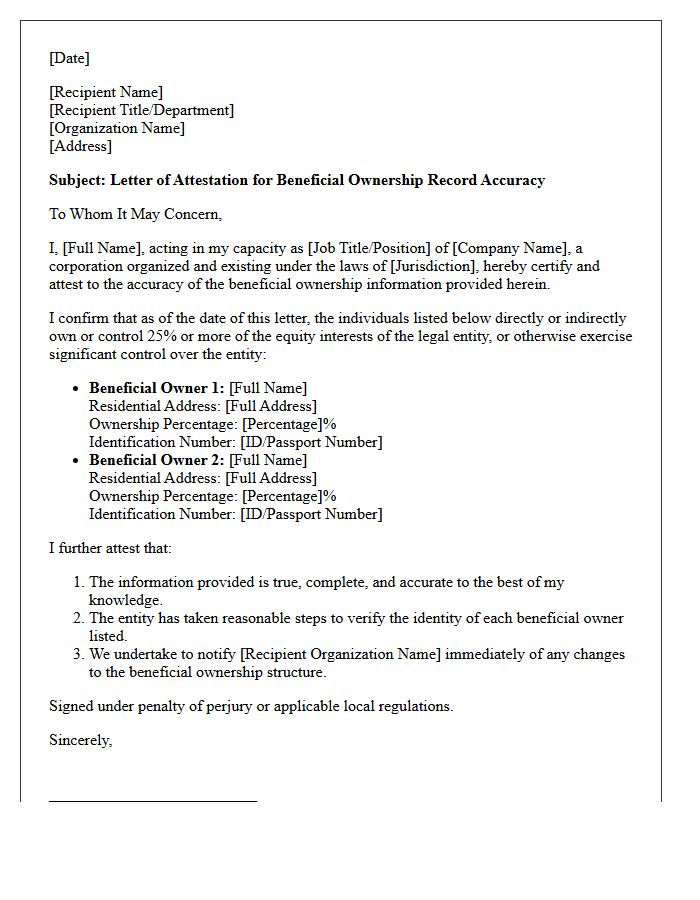
A Letter of Attestation for Beneficial Ownership Record Accuracy is a formal document verifying that Ultimate Beneficial Ownership (UBO) information is current and correct. Under transparency regulations, entities must confirm the identities of individuals who exercise significant control. This attestation mitigates risks associated with financial crimes, such as money laundering or tax evasion. Ensuring the accuracy of these records is a mandatory legal compliance step for corporate governance, providing authorities and financial institutions with a verified trail of ownership to maintain institutional integrity and regulatory alignment.
Periodic Review Letter for Beneficial Ownership Information Updates
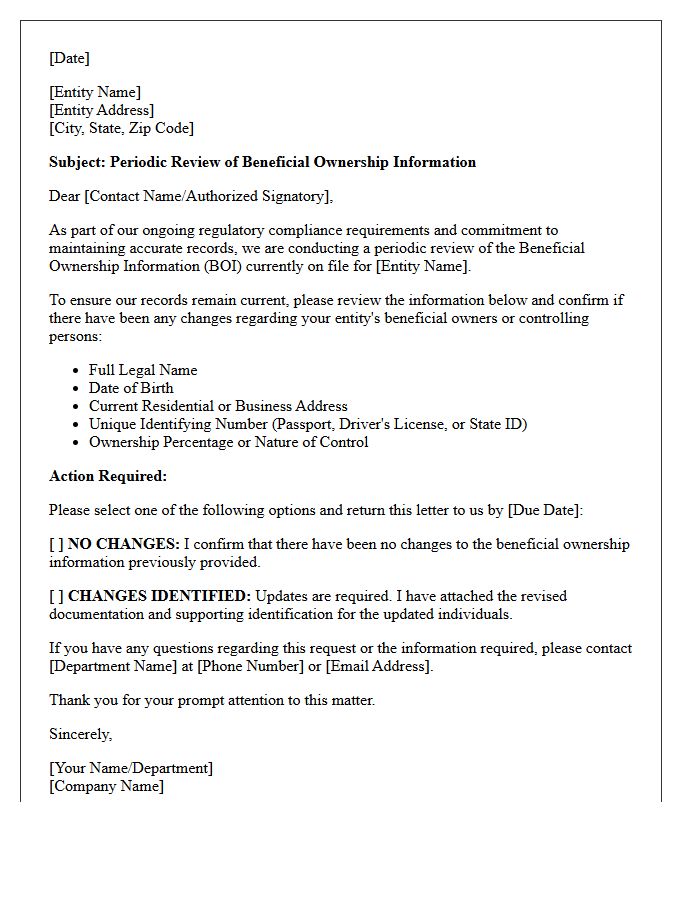
A Periodic Review Letter is a formal request to confirm that your Beneficial Ownership Information (BOI) remains accurate under FinCEN regulations. It is crucial to verify all reporting company details, including owners' addresses and identification documents. Any changes to control persons or ownership percentages must be updated within thirty days to ensure continuous legal compliance. Promptly responding to these reviews helps your business avoid significant civil penalties and ensures your corporate transparency records are current and legally valid. Always maintain documented proof of your most recent filing status.
Regulatory Audit Letter for Beneficial Ownership Rule Adherence
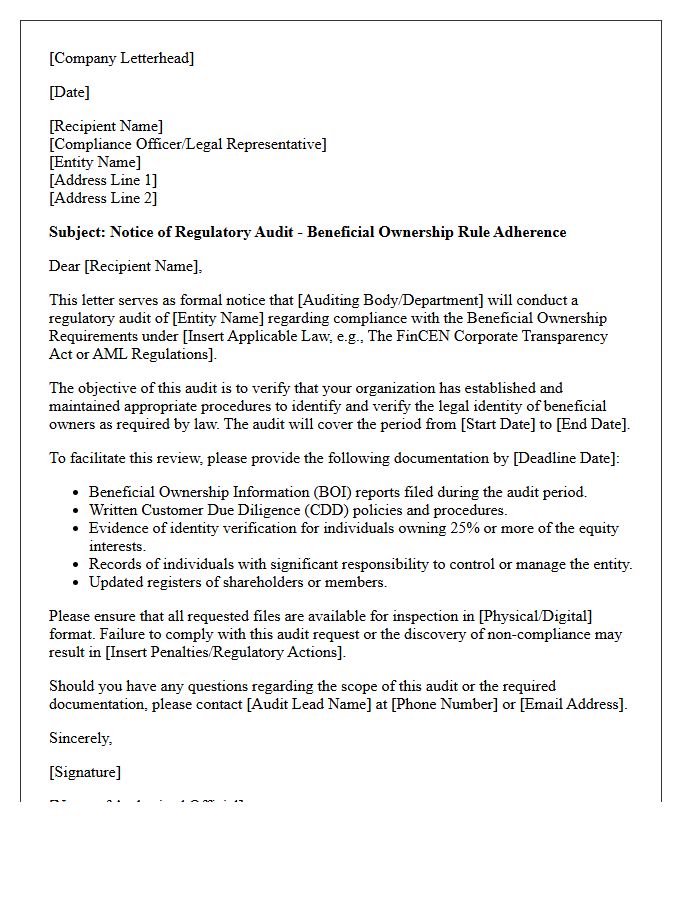
A regulatory audit letter confirms a legal entity's compliance with the Beneficial Ownership Rule, ensuring financial transparency. This formal inquiry verifies that institutions have identified the true human controllers behind corporate structures to prevent money laundering and tax evasion. Organizations must maintain accurate documentation of individuals holding significant equity interests or managerial control. Promptly responding to these audits with verified beneficial owner data is essential to avoid legal penalties and maintain regulatory standing under global financial integrity standards like the Corporate Transparency Act.
What is a Beneficial Ownership Rule Implementation Letter?
A Beneficial Ownership Rule Implementation Letter is a formal notification sent by financial institutions to legal entity customers outlining new requirements to identify and verify the natural persons who own or control the company, in compliance with FinCEN's Corporate Transparency Act regulations.
Who is required to provide information under the Beneficial Ownership Rule?
Most legal entities, including corporations, LLCs, and similar structures registered to do business in the United States, must provide information regarding their "beneficial owners"-individuals who own 25% or more of the equity interests or exercise significant control over the entity.
What specific information is requested in an implementation letter?
The letter typically requests the legal name, date of birth, residential address, and a unique identifying number from an unexpired government ID (such as a passport or driver's license) for every individual identified as a beneficial owner or a control person.
Why is my financial institution sending me an implementation letter now?
Financial institutions are required by federal law to maintain updated records and verify the identities of entity owners to prevent financial crimes such as money laundering, tax evasion, and terrorism financing as part of their Anti-Money Laundering (AML) compliance programs.
What happens if a company fails to respond to the implementation letter?
Failure to provide the requested beneficial ownership information may result in the financial institution being unable to open new accounts, restrictions on existing accounts, or the potential termination of the banking relationship to ensure regulatory compliance.

Comments