
A Suspicious Activity Report (SAR) Filing Protocol Letter provides financial institutions with a standardized framework for notifying authorities about potential fraud or money laundering. This formal document ensures compliance with anti-money laundering regulations by outlining specific detection triggers and reporting procedures. To help you maintain regulatory standards and streamline your documentation process, below are some ready to use templates.
Image cover: Official Suspicious Activity Report Filing Protocol and Templates
Letter Samples List
- Suspicious Activity Report Filing Confirmation Letter
- Internal Escalation Protocol Letter for Suspicious Transactions
- Board of Directors Notification Letter for Suspicious Activity
- Compliance Officer Designation Letter for Suspicious Reporting
- Suspicious Activity Report Confidentiality Protocol Letter
- Continuing Activity Review Protocol Letter for Suspicious Accounts
- Employee Acknowledgment Letter for Suspicious Activity Protocols
- Account Termination Protocol Letter Following Suspicious Activity
- Internal Information Request Letter for Suspicious Investigation
- Joint Suspicious Activity Report Filing Agreement Letter
- Annual Audit Letter for Suspicious Activity Reporting Protocols
- Suspicious Activity Report Validation and Approval Letter
Suspicious Activity Report Filing Confirmation Letter
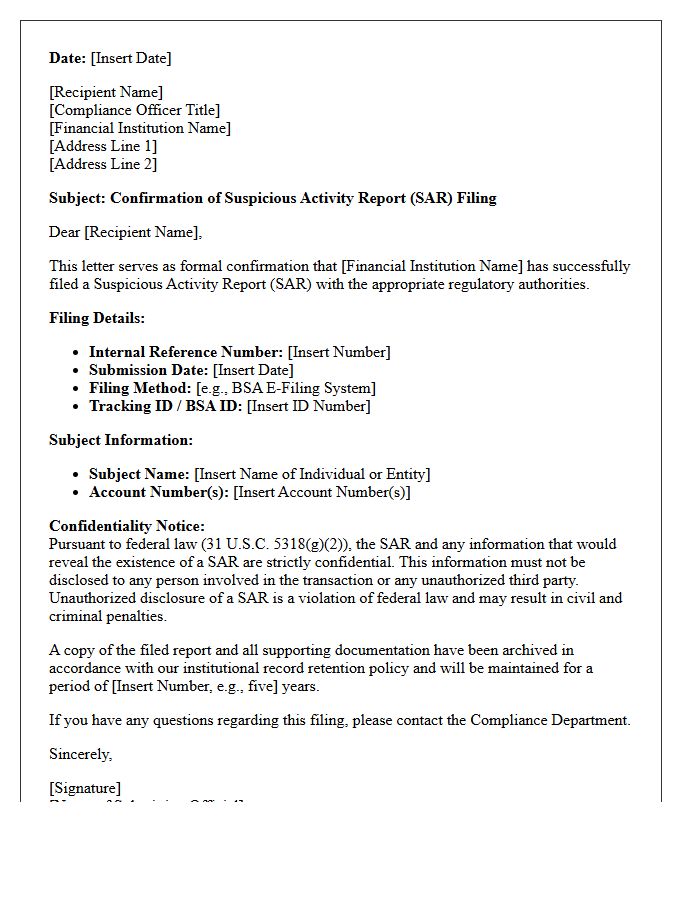
A Suspicious Activity Report Filing Confirmation Letter is an official document issued by FinCEN to verify that a financial institution has successfully submitted a SAR. This confirmation serves as critical evidence of regulatory compliance under the Bank Secrecy Act. It includes a unique tracking number, filing date, and confirmation ID. Importantly, these letters must remain strictly confidential; disclosing the existence of a SAR filing to unauthorized parties or the subject of the report is a federal offense that carries severe legal penalties for institutions and individuals.
Internal Escalation Protocol Letter for Suspicious Transactions
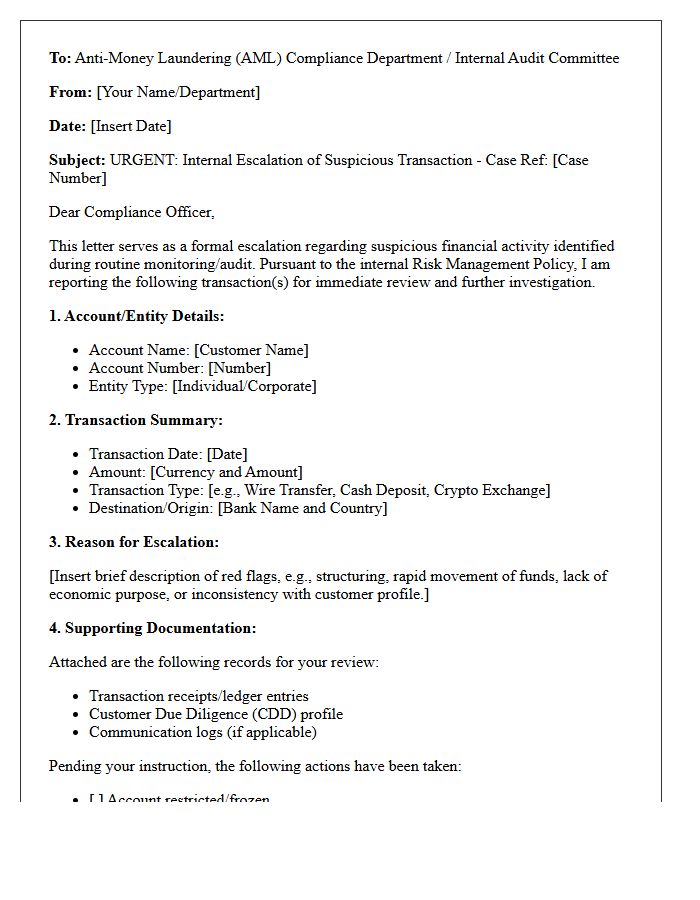
An Internal Escalation Protocol Letter is a formal document used to report suspicious transactions to a firm's Money Laundering Reporting Officer (MLRO). It ensures a structured communication channel for staff to flag potential financial crimes, such as money laundering or fraud, without alerting the client. This protocol is critical for regulatory compliance and legal protection under AML laws. The letter must detail specific red flags and transaction anomalies, providing a clear audit trail for internal investigations and potential external reporting to financial authorities.
Board of Directors Notification Letter for Suspicious Activity
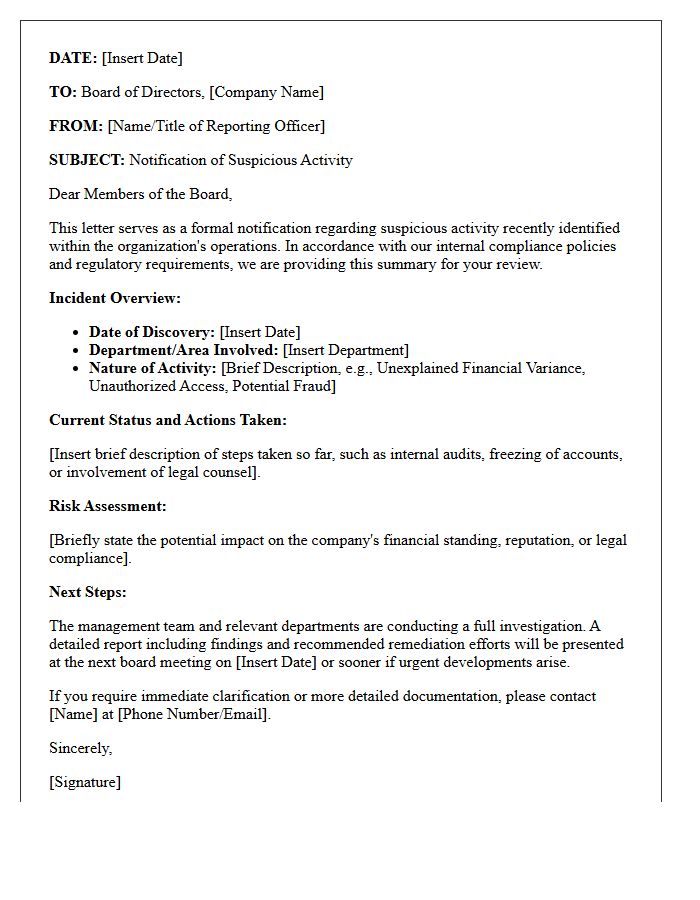
A Board of Directors Notification Letter is a formal document used to inform leadership of potential financial crimes or internal irregularities. It ensures high-level oversight of suspicious activity reports, maintaining corporate governance and regulatory compliance. This communication must prioritize confidentiality to avoid tipping off suspects while outlining the nature of the risk and corrective actions taken. Prompt reporting helps the board fulfill its fiduciary duty and protects the organization from legal penalties and reputational damage. It serves as a vital bridge between compliance departments and strategic decision-makers.
Compliance Officer Designation Letter for Suspicious Reporting
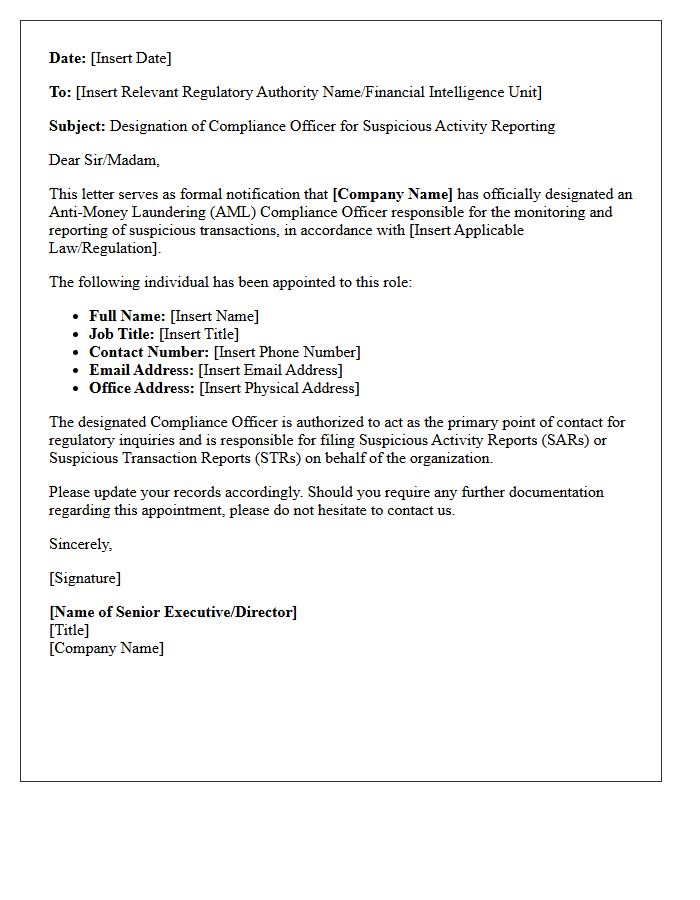
A Compliance Officer Designation Letter is a formal document required by regulatory bodies like FinCEN to officially appoint an individual responsible for overseeing anti-money laundering protocols. This letter serves as legal evidence that a specific officer has the authority and accountability to manage and file Suspicious Activity Reports (SARs). It must clearly outline the officer's duties, ensuring the financial institution remains compliant with the Bank Secrecy Act. Properly documenting this designation is critical during audits to prove regulatory oversight and institutional commitment to preventing financial crimes.
Suspicious Activity Report Confidentiality Protocol Letter
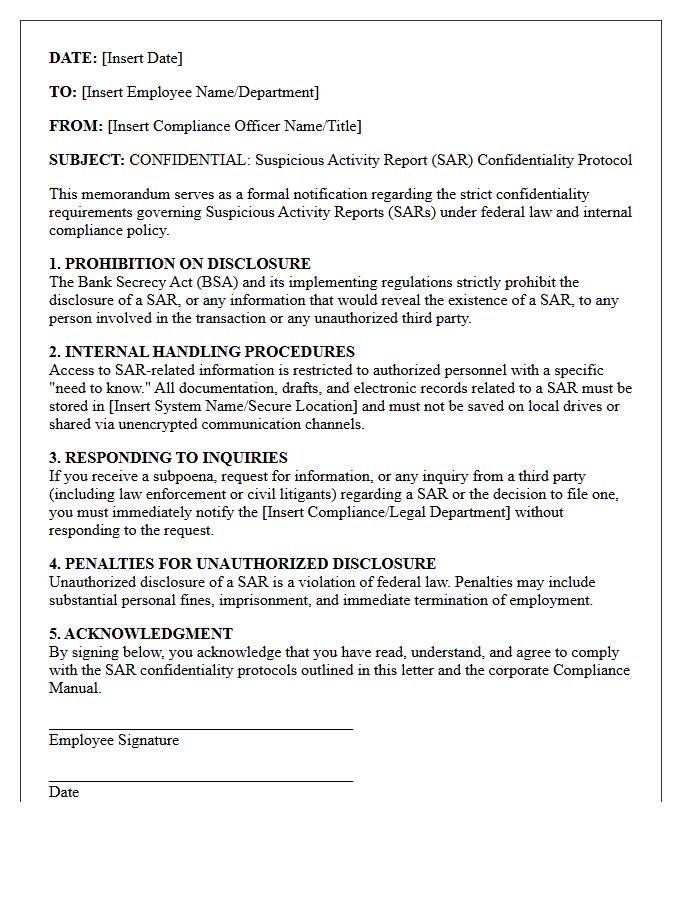
The Suspicious Activity Report (SAR) Confidentiality Protocol Letter is a critical regulatory alert issued by the Financial Crimes Enforcement Network (FinCEN). It reinforces that financial institutions must never disclose the existence or contents of a SAR to unauthorized parties. Protecting this information is vital for maintaining the integrity of law enforcement investigations and preventing "tipping off" potential suspects. Any breach of this protocol can lead to severe civil and criminal penalties, emphasizing that confidentiality is the cornerstone of effective anti-money laundering and counter-terrorism financing frameworks.
Continuing Activity Review Protocol Letter for Suspicious Accounts
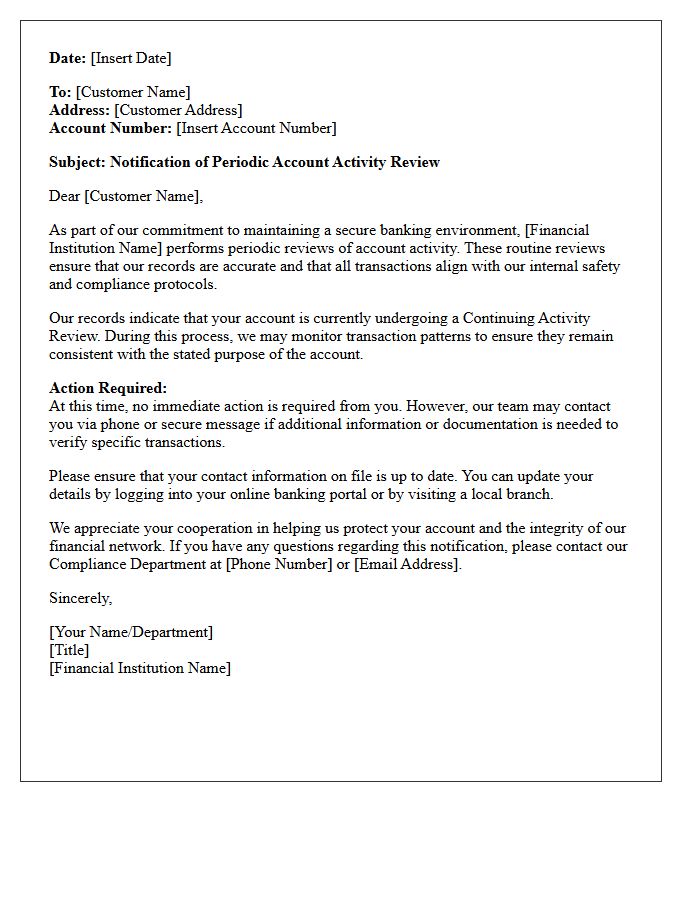
A Continuing Activity Review Protocol Letter is a regulatory requirement for financial institutions to document ongoing monitoring of suspicious activity. When an initial SAR is filed, banks must conduct follow-up reviews every 90 days to determine if the illicit behavior persists. This compliance protocol ensures continuous oversight and triggers supplemental filings if necessary. It is a critical component of AML risk management, providing law enforcement with updated intelligence on potential financial crimes while maintaining a clear audit trail for regulators during periodic examinations of account behavior.
Employee Acknowledgment Letter for Suspicious Activity Protocols
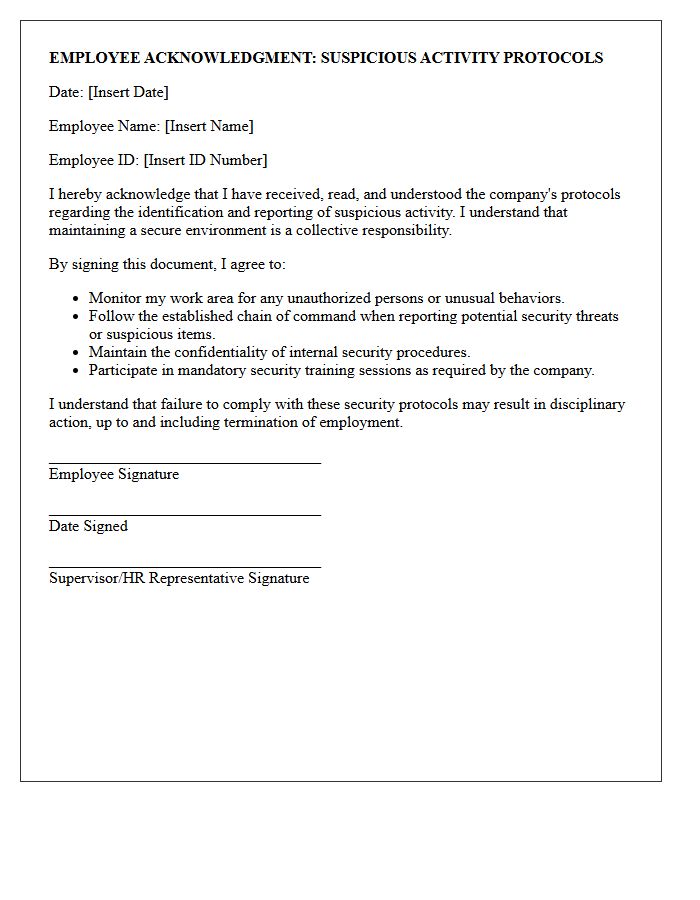
An Employee Acknowledgment Letter for suspicious activity protocols ensures staff members understand and commit to security reporting procedures. This document confirms that employees recognize potential threats, such as unauthorized access or data breaches, and know the correct channels for escalation. By signing, personnel provide formal verification of their training and compliance with internal safety standards. This legally protects the organization by establishing a clear chain of responsibility, fostering a proactive culture of vigilance and operational integrity within the workplace.
Account Termination Protocol Letter Following Suspicious Activity
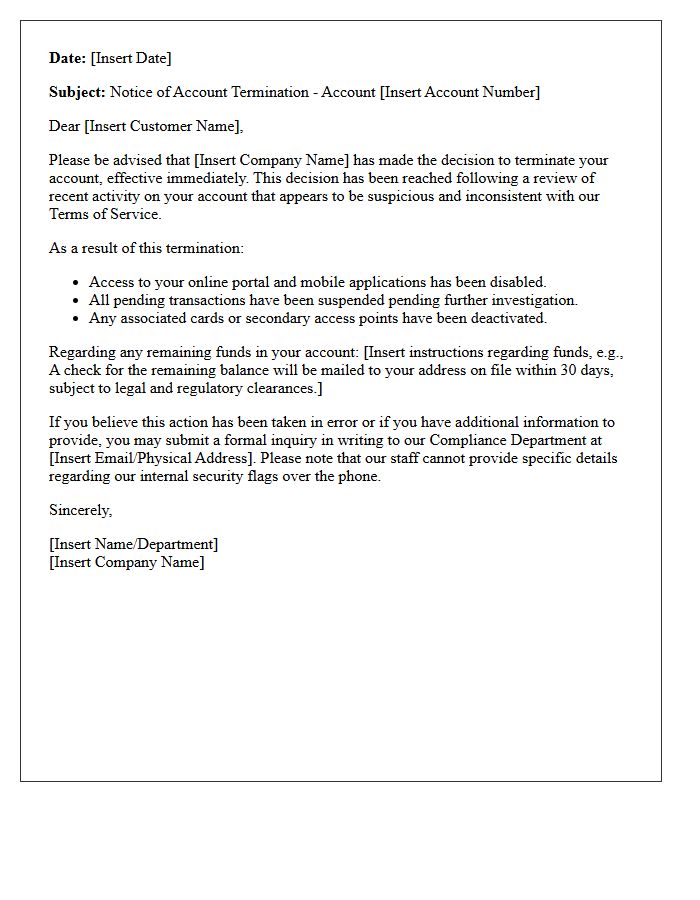
An Account Termination Protocol Letter serves as a formal legal notice following suspicious activity or security breaches. This document outlines the specific reasons for permanent closure, citing violations of terms of service. It effectively mitigates liability and ensures regulatory compliance while notifying the user that access is revoked. For security purposes, these letters often detail the timeline for asset liquidation or remaining balance transfers. Understanding this protocol is essential for maintaining platform integrity and protecting sensitive data from further unauthorized compromise or fraudulent behavior.
Internal Information Request Letter for Suspicious Investigation
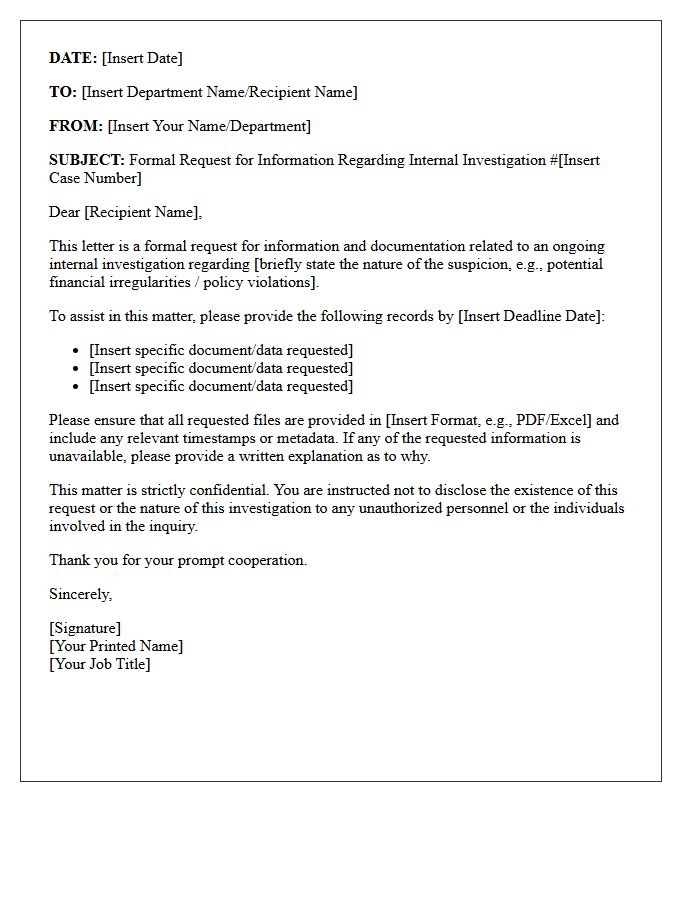
An Internal Information Request Letter is a formal document used during a suspicious investigation to gather critical data from internal departments. It ensures legal compliance and maintains a clear audit trail while maintaining confidentiality. By specifying the required records and timelines, this letter helps investigators verify facts and identify potential internal threats or policy violations. Properly documenting these requests is essential for protecting the organization's integrity and supporting further disciplinary or legal actions based on the discovered evidence.
Joint Suspicious Activity Report Filing Agreement Letter
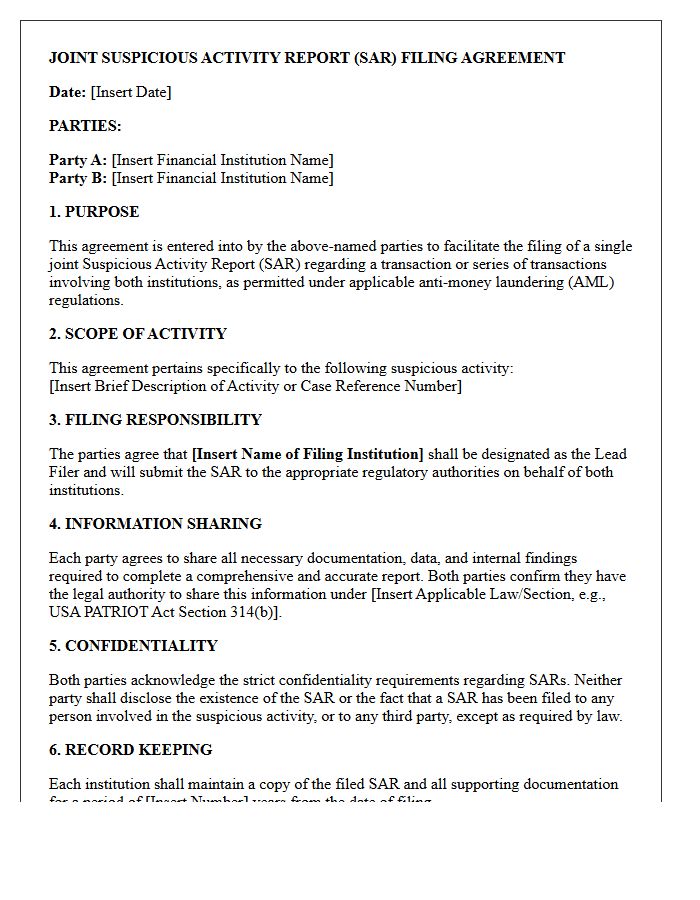
A Joint Suspicious Activity Report Filing Agreement Letter is a formal document used by multiple financial institutions to coordinate the reporting of shared suspicious behavior. By establishing this agreement, participants can provide a unified narrative to regulatory bodies, preventing redundant filings while ensuring all legal requirements are met. This process facilitates enhanced information sharing under Section 314(b) of the USA PATRIOT Act. It is essential for maintaining strict confidentiality and protecting the institutions against potential liability through collective compliance and thorough documentation of multi-party financial investigations.
Annual Audit Letter for Suspicious Activity Reporting Protocols
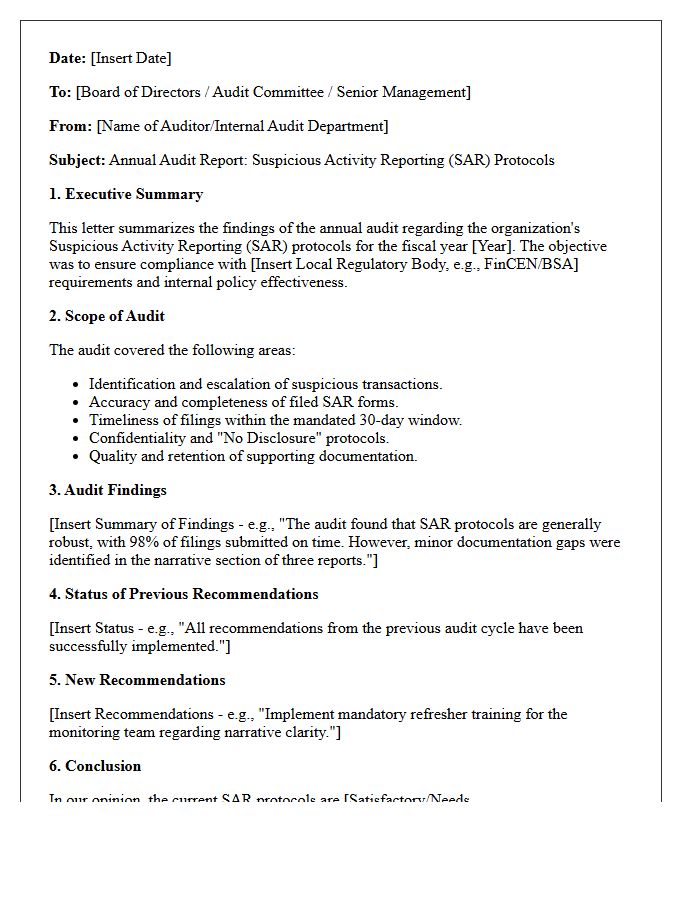
The Annual Audit Letter serves as a critical independent validation of a financial institution's Suspicious Activity Reporting (SAR) protocols. This document confirms that internal monitoring systems effectively detect, investigate, and report potential financial crimes to regulatory authorities. Auditors evaluate the accuracy of filings, the timeliness of submissions, and the robustness of oversight frameworks. Maintaining a comprehensive audit trail is essential for ensuring full AML compliance and mitigating legal risks. Ultimately, this letter demonstrates to regulators that the organization's anti-money laundering measures are functioning as intended to prevent illicit financial activities.
Suspicious Activity Report Validation and Approval Letter
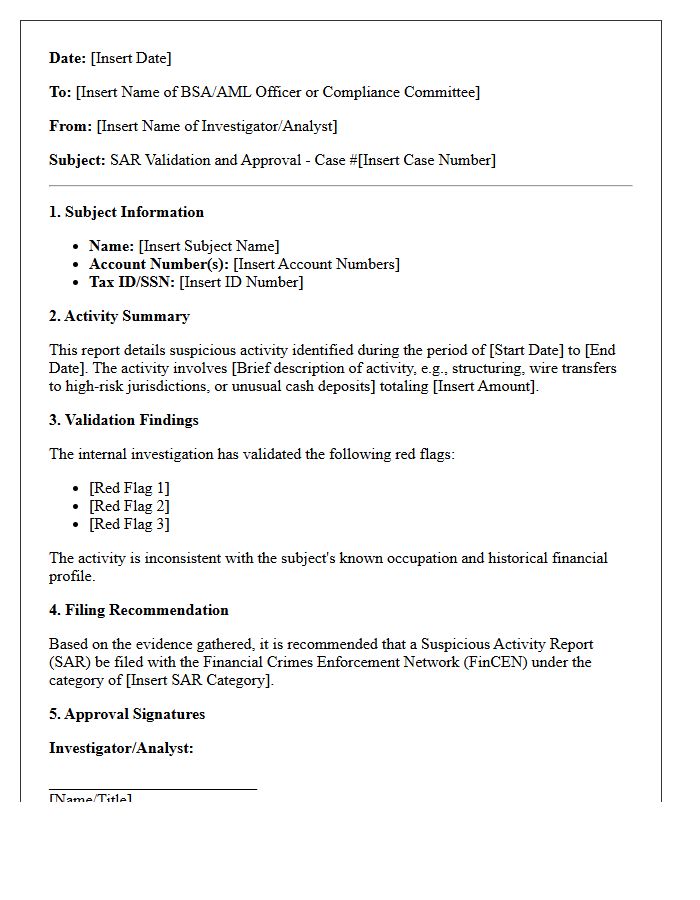
A Suspicious Activity Report (SAR) Validation and Approval Letter is a critical document issued by financial institutions to confirm that a potential case of financial crime has been reviewed and authorized for filing. This formal internal record ensures regulatory compliance with anti-money laundering (AML) laws. It validates that the investigation met legal standards and received necessary management sign-off before being submitted to authorities like FinCEN. Proper documentation of this approval is essential for audit trails, demonstrating that the institution maintains rigorous oversight in detecting and reporting illicit activities.
What is a Suspicious Activity Report (SAR) Filing Protocol Letter?
A SAR Filing Protocol Letter is a formal notification sent by a financial institution to a client or entity outlining the specific regulatory requirements and internal procedures for reporting suspicious financial behavior to the Financial Crimes Enforcement Network (FinCEN).
When is a SAR Filing Protocol Letter typically issued?
This letter is issued when an account exhibits patterns consistent with money laundering, structuring, or fraud, serving as a procedural document to ensure the institution remains compliant with the Bank Secrecy Act (BSA) reporting mandates.
Does a SAR Filing Protocol Letter inform the client they are being investigated?
No, due to federal "Tipping Off" prohibitions under 31 U.S.C. § 5318(g)(2), the protocol letter focuses on compliance expectations and policy requirements rather than disclosing the specific filing of a Suspicious Activity Report against the individual.
What information is included in a standard SAR Filing Protocol document?
The document typically includes the legal basis for monitoring (BSA/AML laws), the types of documentation required for high-risk transactions, and the potential administrative consequences for failing to provide transparent financial data.
How should a recipient respond to a SAR Filing Protocol Letter?
Recipients should provide the requested transactional due diligence documentation immediately and ensure all future financial activities align with the institution's stated anti-money laundering (AML) compliance standards to avoid account restriction or closure.

Comments