
A Wire Transfer Protocol Adjustment Letter is a formal notification sent to clients or partners to update banking procedures or security requirements. It ensures financial transactions remain secure and compliant with evolving banking standards. Clear communication helps prevent fraud and ensures seamless international fund transfers. To simplify your process, below are some ready to use template.
Image cover: Official Notification Templates for Wire Transfer Protocol Updates
Letter Samples List
- Corporate Account Wire Transfer Protocol Adjustment Letter
- International Routing Wire Transfer Protocol Adjustment Letter
- Domestic Processing Wire Transfer Protocol Adjustment Letter
- High-Value Transaction Wire Transfer Protocol Adjustment Letter
- Security Authentication Wire Transfer Protocol Adjustment Letter
- Regulatory Compliance Wire Transfer Protocol Adjustment Letter
- Daily Transaction Limit Wire Transfer Protocol Adjustment Letter
- Beneficiary Verification Wire Transfer Protocol Adjustment Letter
- Fraud Mitigation Wire Transfer Protocol Adjustment Letter
- Automated Clearing Wire Transfer Protocol Adjustment Letter
- Multi-Currency Exchange Wire Transfer Protocol Adjustment Letter
- Institutional Client Wire Transfer Protocol Adjustment Letter
Corporate Account Wire Transfer Protocol Adjustment Letter
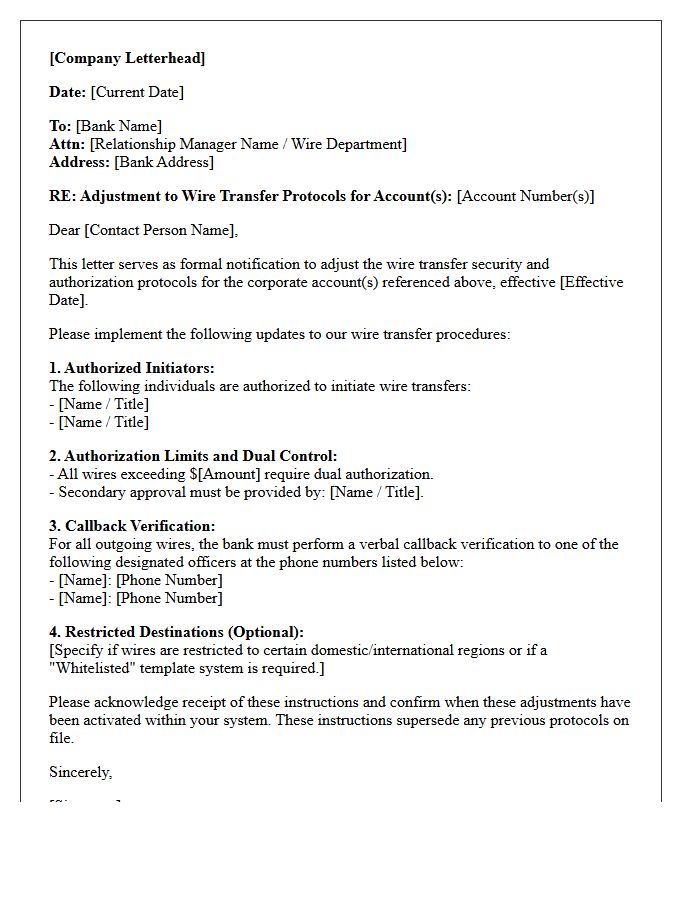
A Corporate Account Wire Transfer Protocol Adjustment Letter is a formal notification detailing mandatory updates to business payment security measures. This document outlines revised verification procedures, authorization levels, and authentication steps required to execute electronic funds transfers. It serves as a vital safeguard against wire fraud and business email compromise. Companies must review these changes immediately to ensure continuous access to banking services and maintain transaction compliance. Understanding these protocol shifts is essential for protecting corporate assets and ensuring all financial administrators follow the newly established security standards.
International Routing Wire Transfer Protocol Adjustment Letter
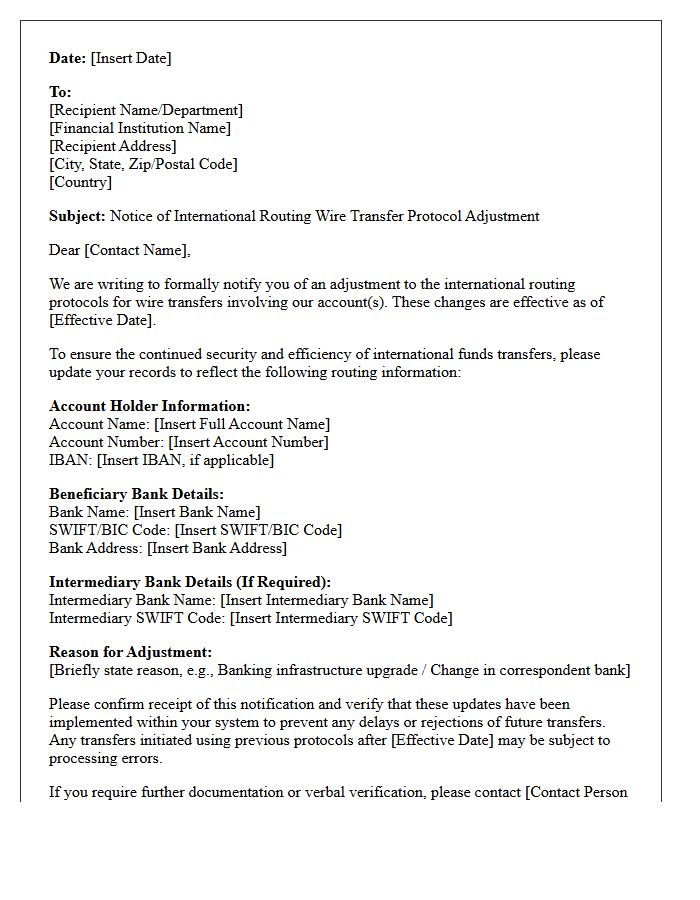
An International Routing Wire Transfer Protocol Adjustment Letter is a formal document used to rectify incorrect banking instructions during cross-border fund movements. It ensures that SWIFT codes, IBANs, or intermediary bank details are accurately updated to prevent transaction delays or rejections. Financial institutions utilize this letter to maintain regulatory compliance and secure communication protocols. Properly executing this adjustment is essential for global liquidity management, as it mitigates risks associated with misdirected payments and ensures the seamless electronic transfer of capital across diverse international banking networks.
Domestic Processing Wire Transfer Protocol Adjustment Letter
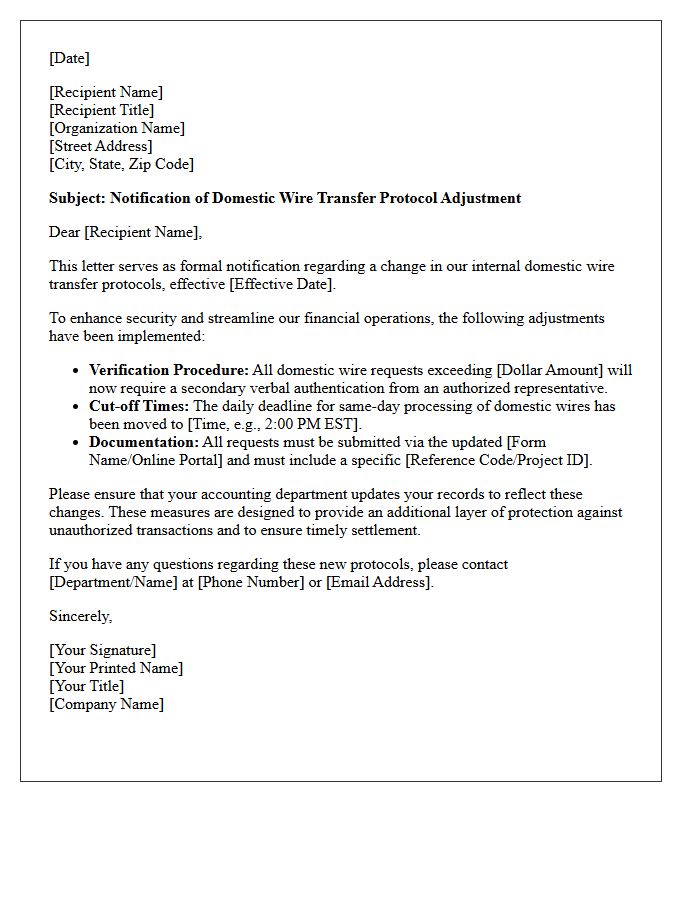
A Domestic Processing Wire Transfer Protocol Adjustment Letter is a formal notification issued by financial institutions to update settlement procedures. It outlines critical changes to routing instructions, verification steps, and security protocols required for electronic funds transfers. Businesses must review these adjustments immediately to ensure compliance and prevent transaction delays. Accurate implementation of these new standards is essential for maintaining financial integrity and protecting against wire fraud. Always verify the authenticity of such letters through a secondary, trusted communication channel before modifying any sensitive banking information or payment workflows.
High-Value Transaction Wire Transfer Protocol Adjustment Letter
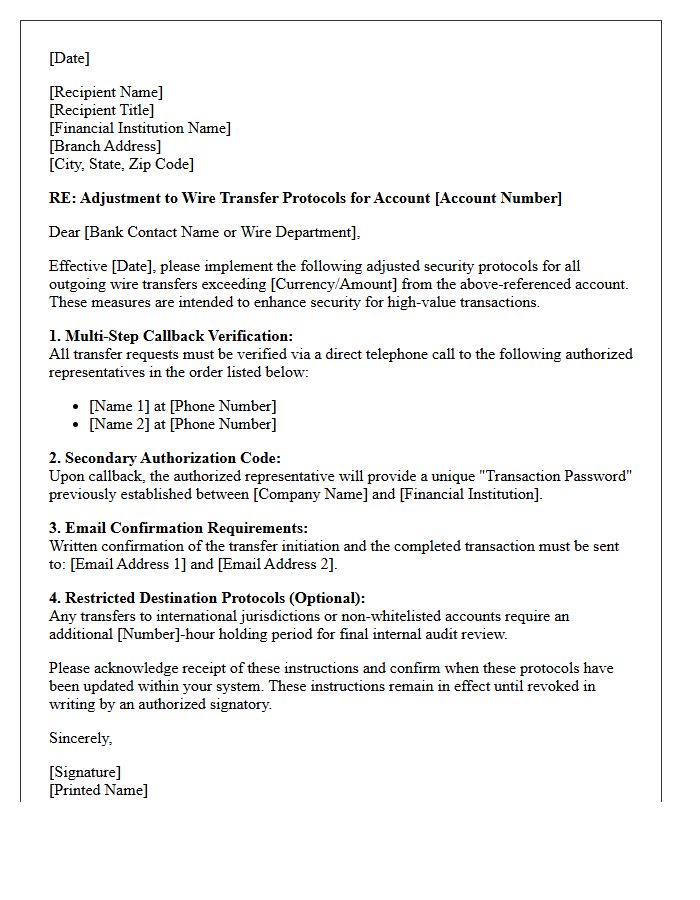
A High-Value Transaction Wire Transfer Protocol Adjustment Letter is a formal notification used to update security procedures for large financial movements. It typically outlines new verification steps, such as multi-factor authentication or callback requirements, to mitigate risks like business email compromise. Recipients must strictly adhere to these revised protocols to ensure funds are processed securely. This document serves as a legal record of changes in communication channels or banking details, making due diligence essential before authorizing any significant capital transfer to prevent fraudulent interception.
Security Authentication Wire Transfer Protocol Adjustment Letter
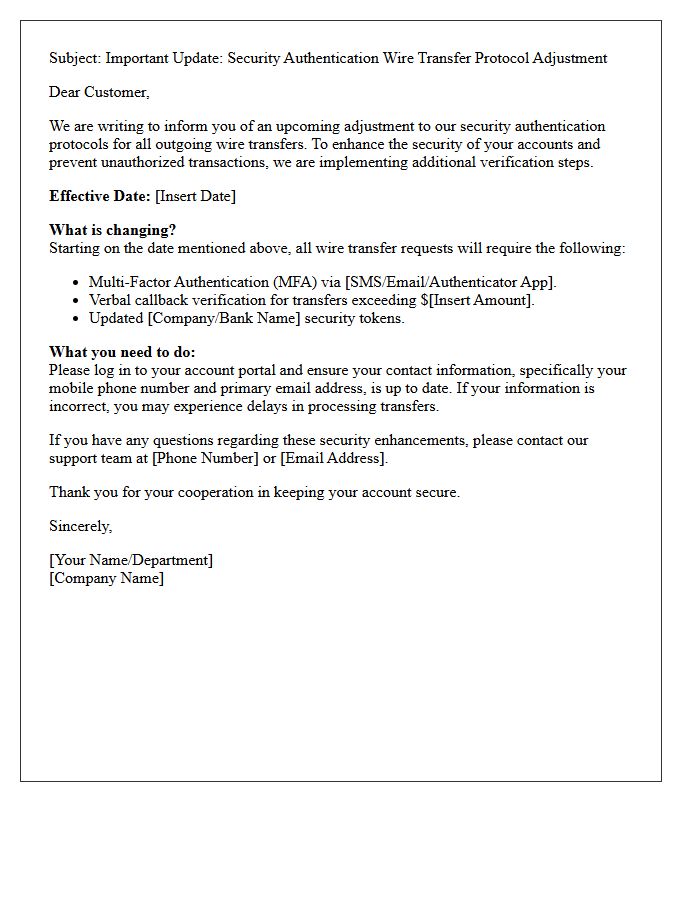
A Security Authentication Wire Transfer Protocol Adjustment Letter is a critical document used to verify banking identity and update fund transfer procedures. It ensures that enhanced security protocols are implemented to prevent unauthorized access and wire fraud. Recipients must treat these letters with caution, as they often contain sensitive financial instructions. Always verify the sender's authenticity through a secondary, trusted channel before making any changes. This adjustment process is essential for maintaining the integrity of high-value transactions and protecting corporate assets against sophisticated cyber threats and social engineering attacks.
Regulatory Compliance Wire Transfer Protocol Adjustment Letter
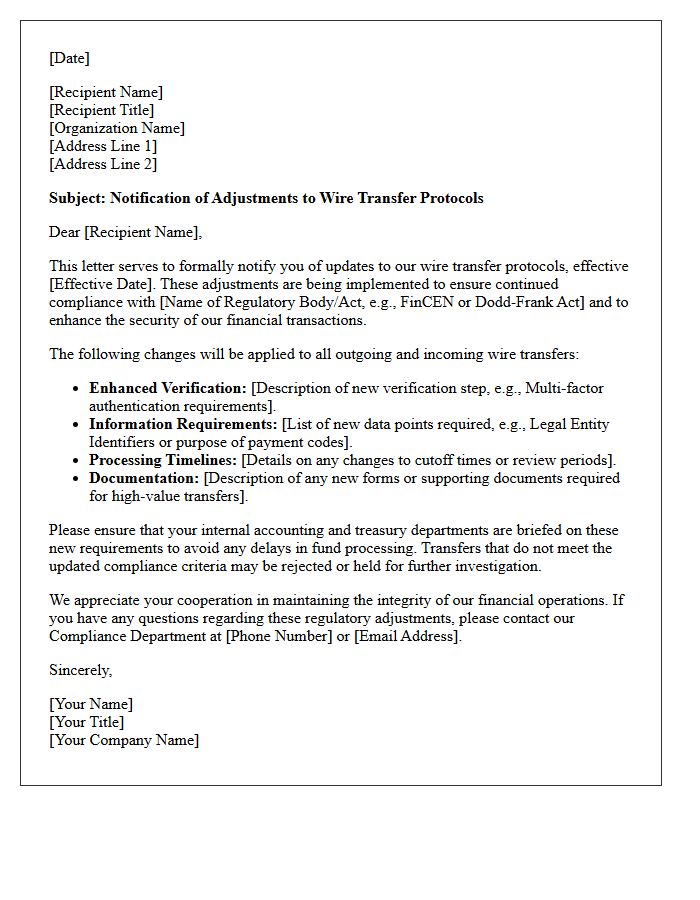
A Regulatory Compliance Wire Transfer Protocol Adjustment Letter is a formal notification issued by financial institutions to update clients on modified security standards. These adjustments ensure alignment with mandatory anti-money laundering (AML) and "Know Your Customer" (KYC) frameworks. It is essential to review these letters immediately, as they often detail new mandatory documentation, verification steps, or transaction limits required to prevent fraud. Failure to adhere to these updated protocols can result in significant processing delays or the rejection of international fund transfers during regulatory audits.
Daily Transaction Limit Wire Transfer Protocol Adjustment Letter
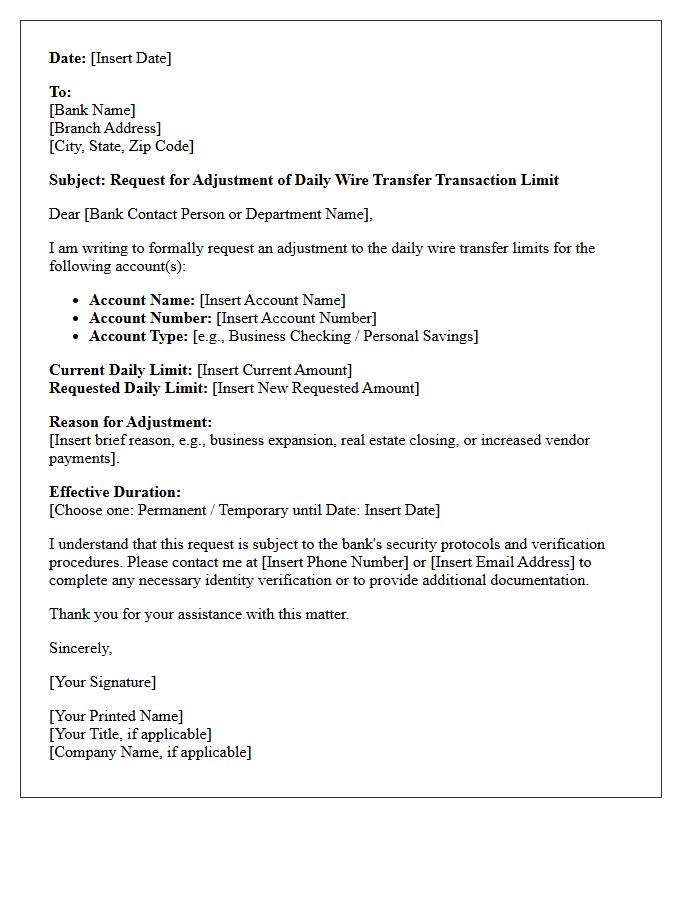
A Daily Transaction Limit Wire Transfer Protocol Adjustment Letter is a formal request used to modify existing security thresholds for electronic funds transfers. This document is essential for businesses needing to increase liquidity or manage high-value payments securely. It outlines specific authorization protocols, updated monetary caps, and required verification steps to prevent fraud. Providing precise account credentials and authorized signatures ensures that financial institutions can update wire protocols without disrupting operational workflows or compromising account safety.
Beneficiary Verification Wire Transfer Protocol Adjustment Letter
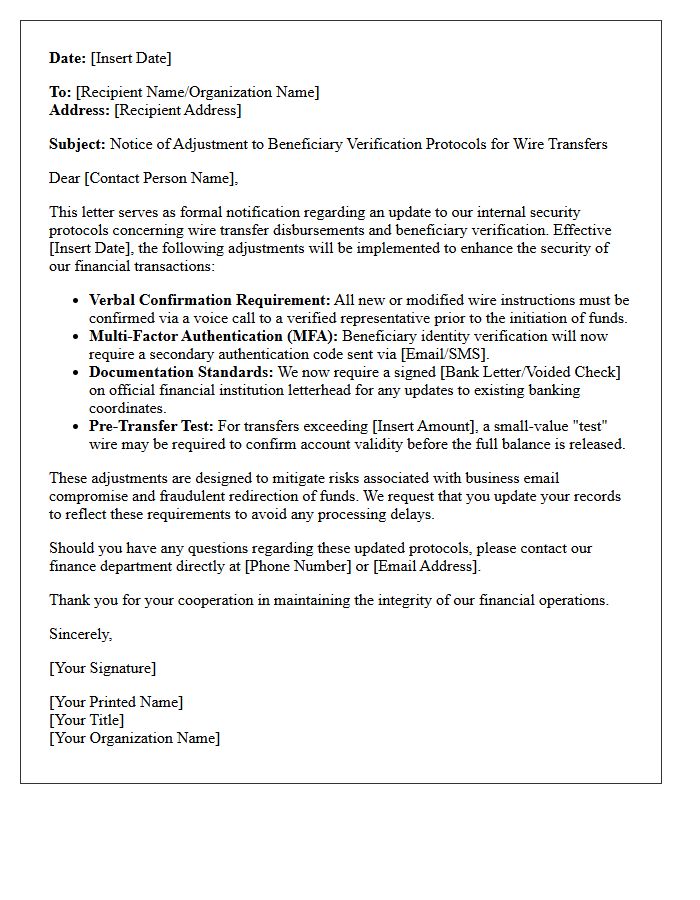
A Beneficiary Verification Wire Transfer Protocol Adjustment Letter is a formal notice sent by financial institutions to update security procedures for international payments. This document outlines new identity authentication requirements designed to prevent Business Email Compromise (BEC) and wire fraud. Recipients must strictly follow these updated verification steps-such as multi-factor confirmation or callback procedures-to ensure funds reach the intended account. Failure to comply with these adjusted protocols may result in delayed transactions or payment rejection to protect the integrity of the transfer process.
Fraud Mitigation Wire Transfer Protocol Adjustment Letter
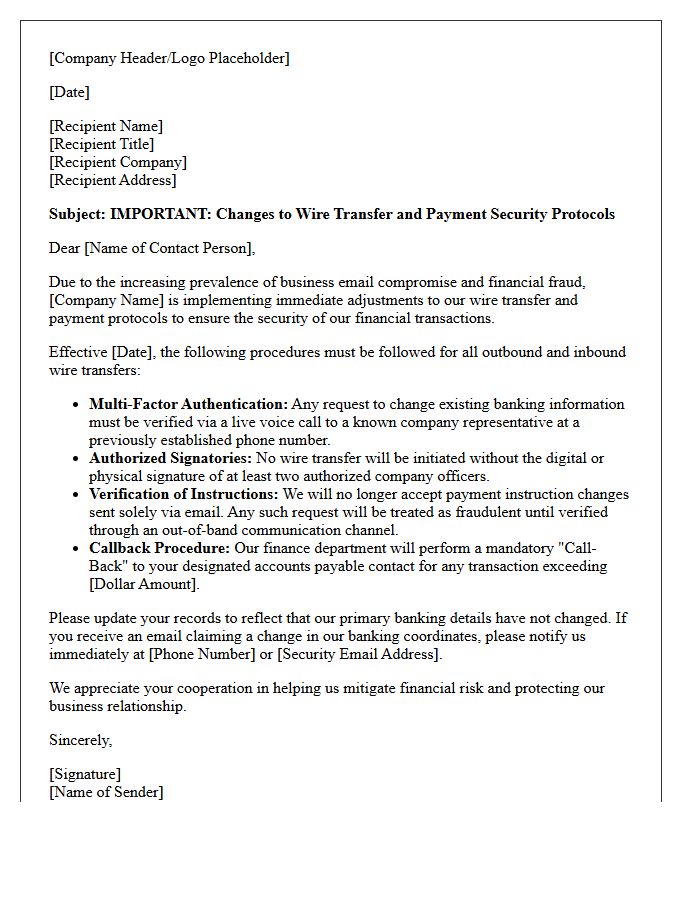
A Fraud Mitigation Wire Transfer Protocol Adjustment Letter is a critical formal notice informing clients of updated security measures for fund transfers. Its primary purpose is to prevent unauthorized transactions by detailing mandatory verification steps, such as voice callbacks or multi-factor authentication. Organizations must issue these letters to ensure legal compliance and protect financial assets. Recipients should strictly follow the new identity validation procedures and remain vigilant against phishing attempts. Verifying the authenticity of this document through a trusted, offline channel is essential to safeguard against evolving cyber threats and wire fraud.
Automated Clearing Wire Transfer Protocol Adjustment Letter
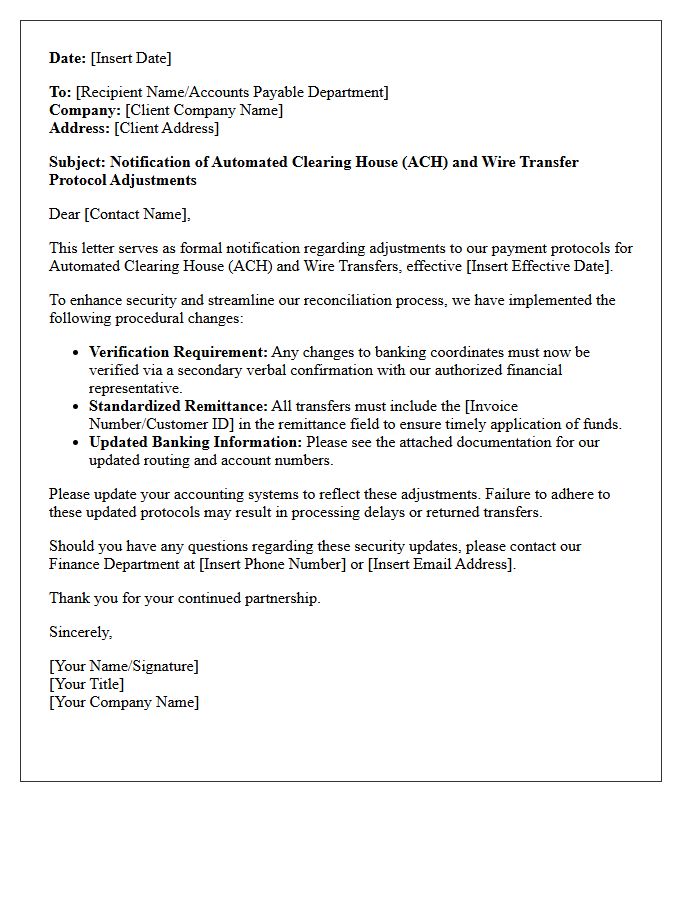
An Automated Clearing Wire Transfer Protocol Adjustment Letter is a formal document used to rectify financial discrepancies or errors during electronic fund transfers. It serves as an official request to adjust transaction details, such as incorrect amounts or routing data, ensuring regulatory compliance and accounting accuracy. Financial institutions use this protocol to maintain a transparent audit trail and resolve settlement imbalances between parties. Understanding this process is essential for businesses to mitigate operational risks and maintain secure, efficient payment processing within the global banking infrastructure.
Multi-Currency Exchange Wire Transfer Protocol Adjustment Letter
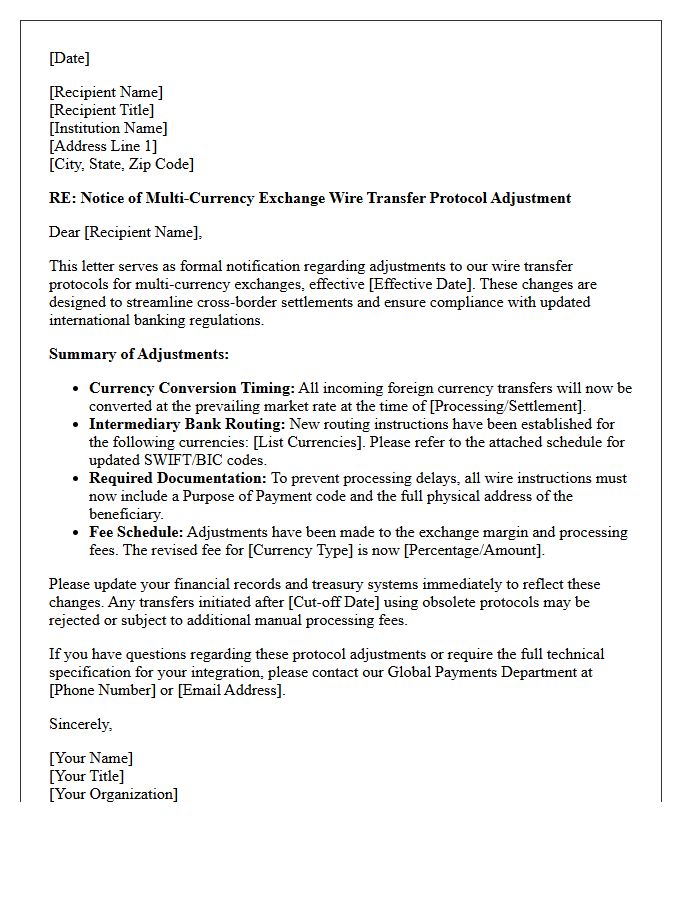
A Multi-Currency Exchange Wire Transfer Protocol Adjustment Letter is a formal notification sent by financial institutions to update clients on changes in cross-border transaction procedures. This document outlines new regulatory requirements, updated exchange rate mechanisms, and modified routing instructions necessary for global funds transfers. It is crucial to review these adjustments immediately to prevent payment delays, ensure compliance with international banking standards, and minimize currency conversion fees. Always verify the authenticity of such letters through secure banking channels to protect against wire transfer fraud and unauthorized account changes.
Institutional Client Wire Transfer Protocol Adjustment Letter
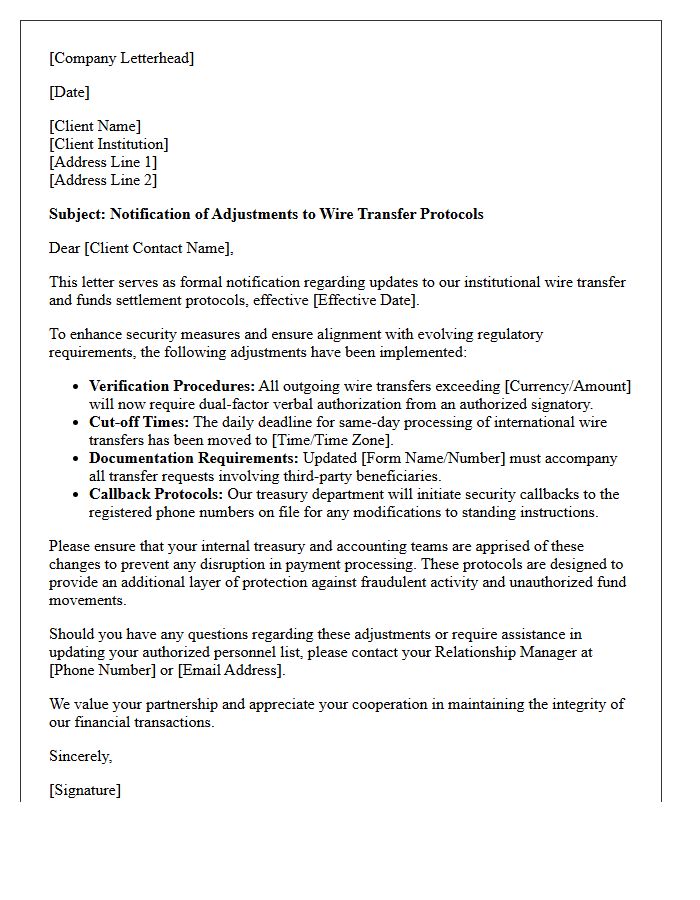
An Institutional Client Wire Transfer Protocol Adjustment Letter notifies organizations of mandatory security updates for processing high-value transactions. This formal communication outlines critical changes to authentication procedures, including new multi-factor requirements or verified callback protocols. It is essential to ensure compliance with updated anti-money laundering (AML) regulations and to mitigate cybersecurity risks like business email compromise. Clients must review these adjustments immediately to prevent payment delays, as outdated methods will no longer be supported by the financial institution's secure infrastructure.
What is a Wire Transfer Protocol Adjustment Letter?
A Wire Transfer Protocol Adjustment Letter is a formal notification sent by a financial institution or business entity to inform clients of changes to the security procedures, verification steps, or technical requirements for processing electronic funds transfers.
Why did I receive a wire transfer protocol adjustment notice?
You received this notice because your financial provider has updated its compliance standards or security frameworks to enhance fraud prevention, align with new banking regulations, or improve the efficiency of international and domestic wire processing.
Do I need to sign and return the protocol adjustment letter?
In most cases, yes. To ensure uninterrupted service, clients are often required to acknowledge the new transfer protocols by signing the letter or completing an updated wire transfer agreement reflecting the new security measures.
Will these protocol adjustments change my wire transfer fees?
Generally, a protocol adjustment focuses on security and procedural workflows rather than pricing; however, you should review the "Fee Schedule" section of the letter to confirm if there are any associated changes to transaction costs.
What happens if I do not comply with the new wire transfer instructions?
Failure to adhere to the updated protocols may result in delayed transactions, the rejection of outgoing wire requests, or a temporary suspension of your wire transfer privileges until the new security verification requirements are met.

Comments