
After a foreclosure sale, a Post-Foreclosure Cash for Keys Offer Letter provides a professional way to negotiate a voluntary move-out with former owners or tenants. This strategic agreement saves time and legal costs by offering a financial incentive for leaving the property in good condition. Streamline your eviction process effectively using our expert guide; below are some ready to use template.
Image cover: Professional Cash for Keys Agreement Templates and Post-Foreclosure Notice Samples
Letter Samples List
- Standard Post-Foreclosure Cash For Keys Offer Letter
- Real Estate Owned Department Relocation Assistance Letter
- Bank Owned Property Voluntary Move-Out Offer Letter
- Financial Institution Property Surrender Compensation Letter
- Post-Foreclosure Tenant Transition Agreement Letter
- Lender Sponsored Cash For Keys Proposal Letter
- Mortgage Servicer Eviction Alternative Offer Letter
- Residential Foreclosure Occupant Relocation Incentive Letter
- Bank Asset Management Cash For Keys Letter
- Post-Sale Property Vacancy Compensation Letter
- Default Servicing Cash For Keys Settlement Letter
- Real Estate Portfolio Occupant Departure Offer Letter
Standard Post-Foreclosure Cash For Keys Offer Letter
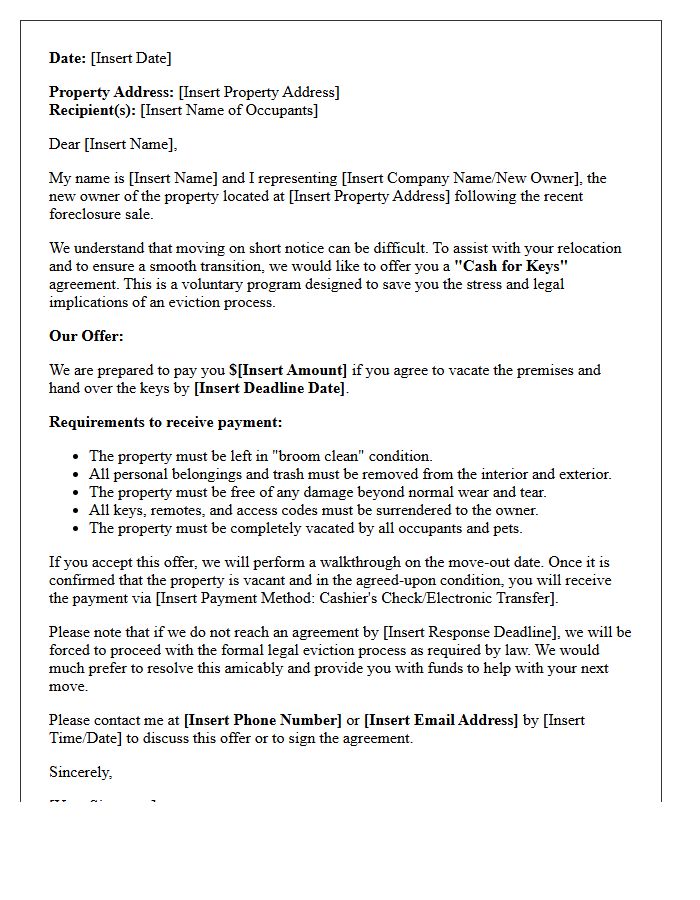
A standard Cash for Keys offer letter is a strategic legal document used by lenders or new owners after foreclosure. It proposes a voluntary move-out agreement where the occupant receives a specific monetary payment in exchange for leaving the property in broom-clean condition by a set date. This alternative to formal eviction saves time and legal costs for both parties. The letter must clearly outline the incentive amount, the move-out deadline, and the required property standards to ensure a smooth, documented transition of possession.
Real Estate Owned Department Relocation Assistance Letter
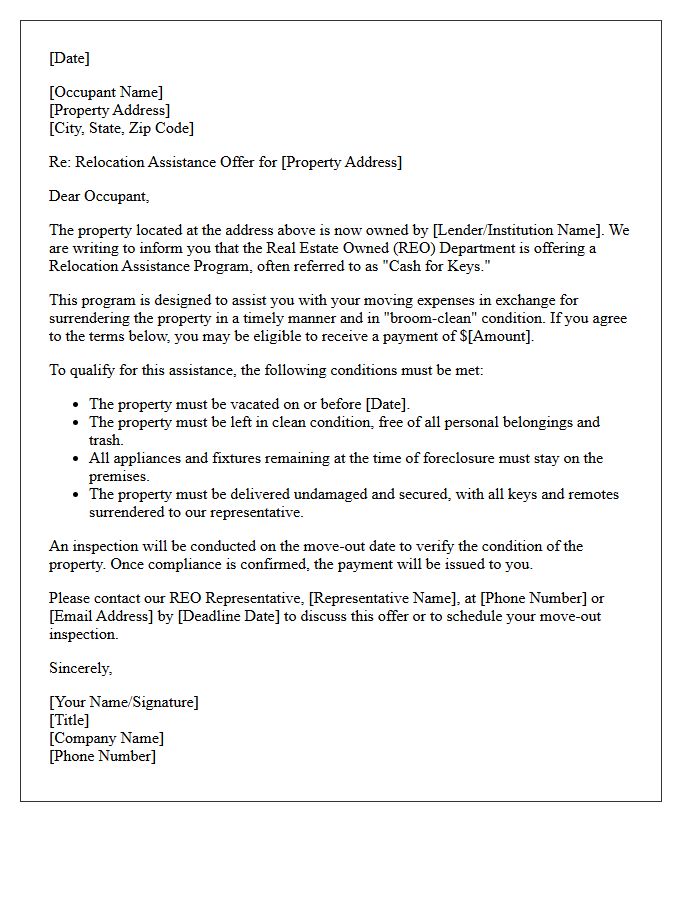
A Real Estate Owned (REO) Department Relocation Assistance Letter, often called Cash for Keys, is a formal agreement offered by lenders to occupants of foreclosed properties. This document outlines financial incentives provided in exchange for vacating the premises voluntarily and leaving the home in "broom-clean" condition. It serves as a cost-effective alternative to lengthy legal eviction processes. To qualify, occupants must typically meet specific deadlines and undergo a final property inspection. This voluntary relocation helps preserve the asset's value while providing occupants with essential moving capital.
Bank Owned Property Voluntary Move-Out Offer Letter
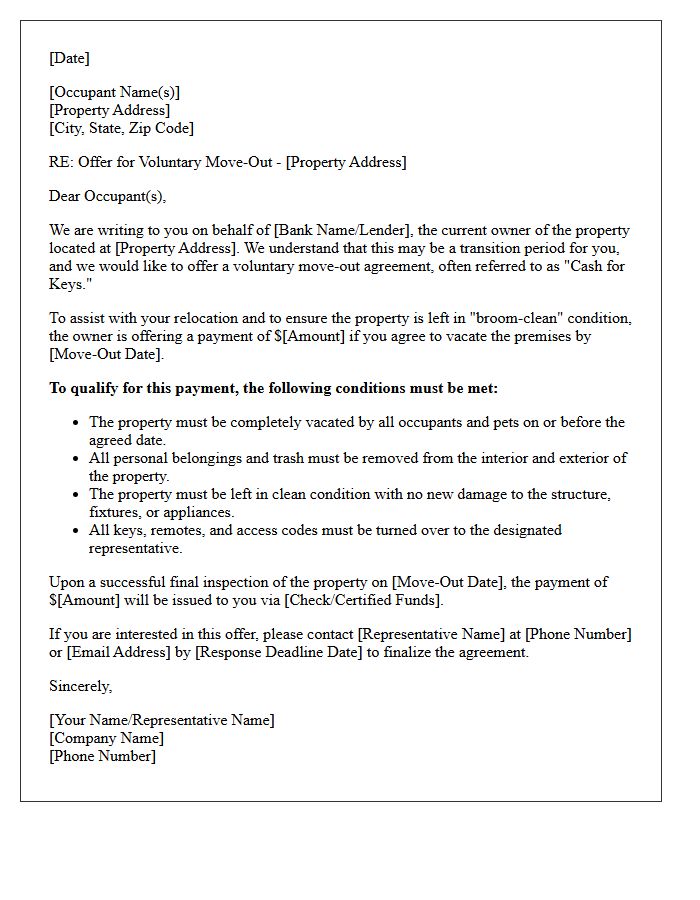
A Bank Owned Property Voluntary Move-Out Offer Letter, often called Cash for Keys, is a formal proposal sent to occupants after foreclosure. This document offers a specific financial incentive in exchange for vacating the premises by a set deadline. To receive payment, the property must be left in broom-clean condition without damage. This agreement provides a faster, less stressful alternative to eviction proceedings, helping occupants secure relocation funds while allowing the bank to regain possession of the asset quickly and efficiently. Always verify the offer's legitimacy before signing.
Financial Institution Property Surrender Compensation Letter
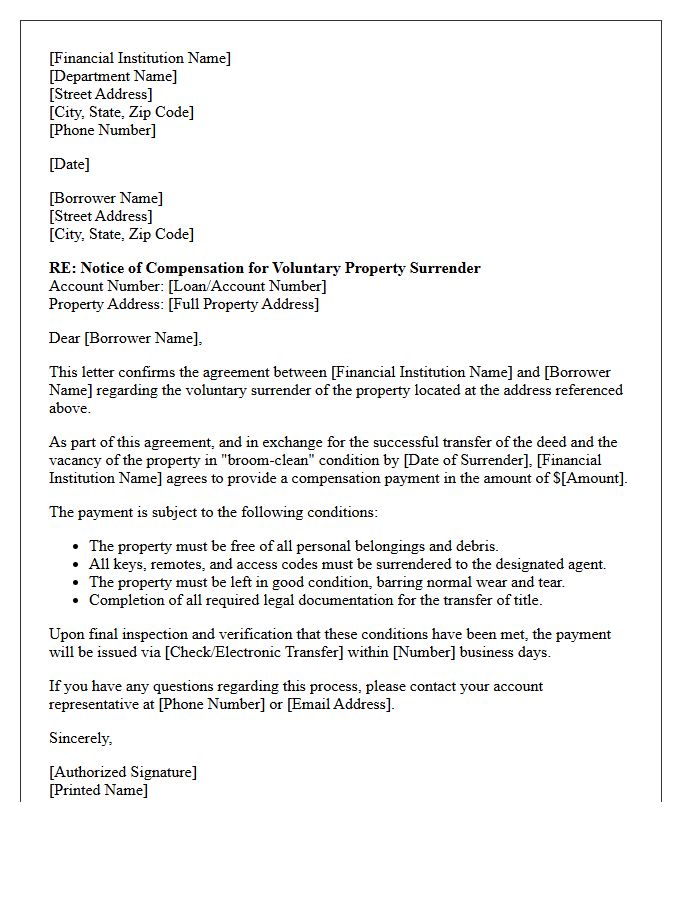
A Financial Institution Property Surrender Compensation Letter is a formal notification sent when a bank or lender seizes collateral to settle a debt. This document details the asset liquidation process and calculates the remaining balance or surplus. It is crucial for borrowers to verify the fair market value applied to the property to ensure accurate credit reporting and legal compliance. Understanding this letter helps you identify potential deficiency judgments or claim any excess proceeds resulting from the sale of the surrendered asset after satisfying the outstanding loan obligations.
Post-Foreclosure Tenant Transition Agreement Letter
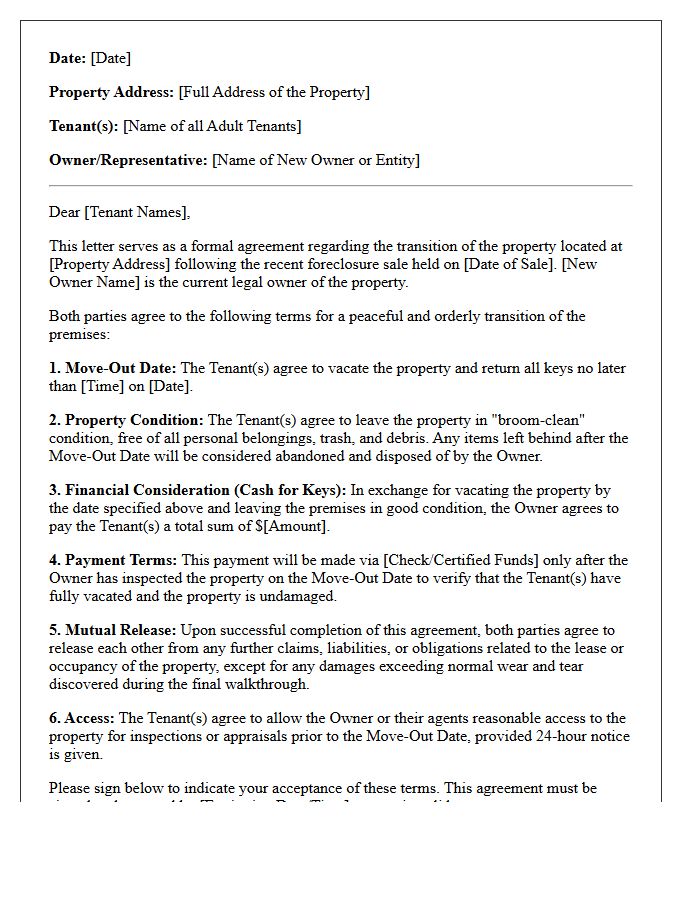
A Post-Foreclosure Tenant Transition Agreement Letter is a formal document used to negotiate a voluntary move-out plan between a new owner and existing occupants. This legal tool, often called "Cash for Keys," provides tenants with financial incentives or extended relocation time in exchange for leaving the property in good condition. It serves as a strategic alternative to eviction, saving both parties from costly court fees and long legal delays. By signing this mutually beneficial agreement, new owners gain possession quickly while tenants secure resources for their next housing transition.
Lender Sponsored Cash For Keys Proposal Letter
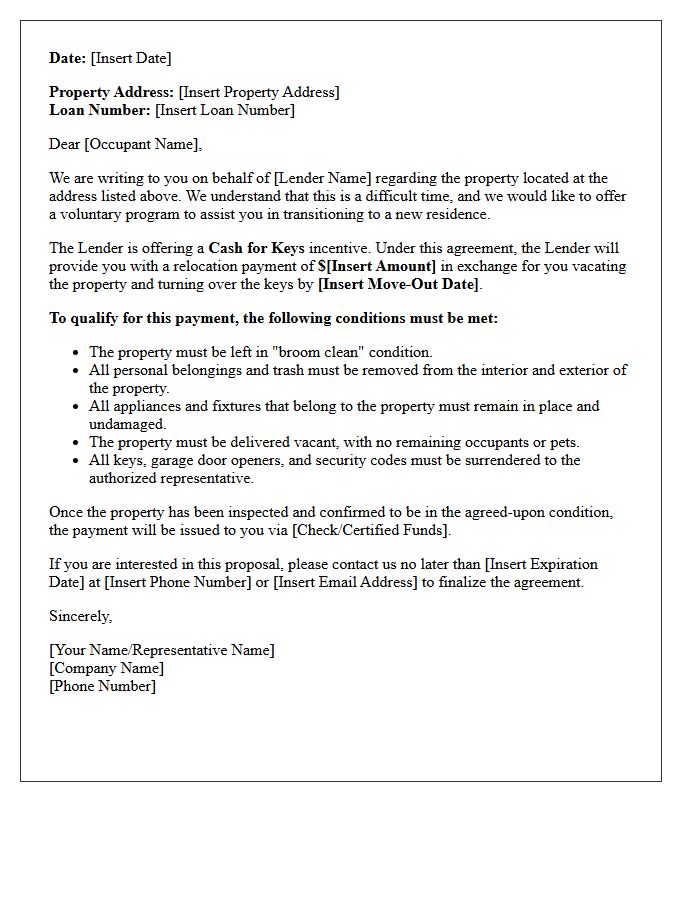
A lender-sponsored cash for keys proposal letter is a formal legal offer designed to facilitate a voluntary move-out. In this agreement, the financial institution provides a cash incentive to occupants in exchange for surrendering the property in "broom-clean" condition. This alternative to traditional foreclosure or eviction saves time and legal expenses for both parties. It is essential to ensure the document specifies the payment amount, the required move-out date, and a full release of liability to ensure a smooth transition and clear title recovery for the lender.
Mortgage Servicer Eviction Alternative Offer Letter
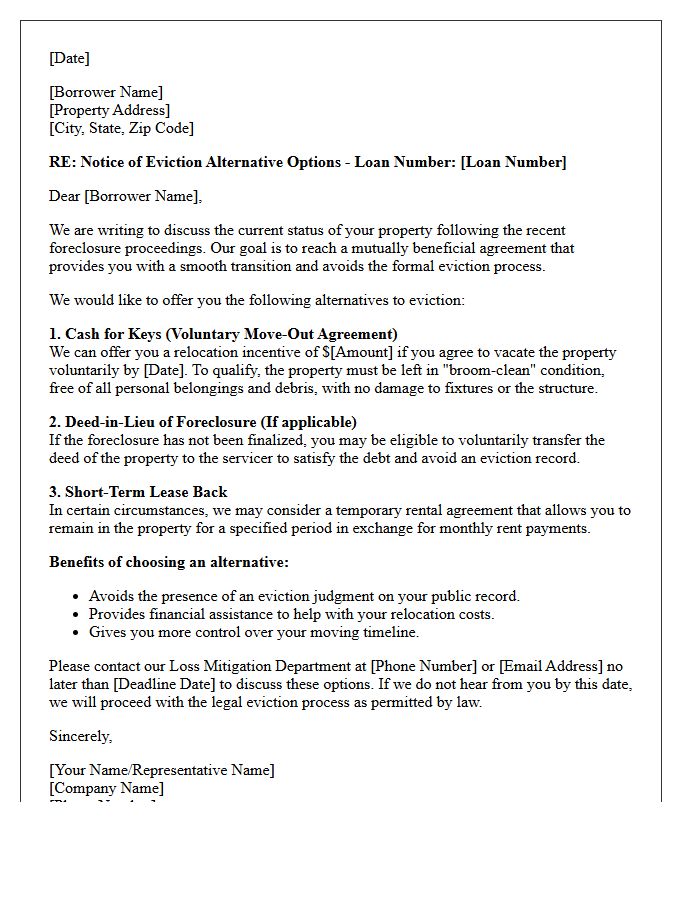
A Mortgage Servicer Eviction Alternative Offer Letter is a legal notification providing homeowners alternatives to foreclosure. These documents typically outline loss mitigation options, such as loan modifications, short sales, or deeds in lieu of foreclosure. It is crucial to respond immediately to these offers, as they are designed to prevent displacement and stabilize housing. Understanding the terms is essential for protecting your property rights and financial future. Always verify the sender's authenticity to avoid scams while exploring these formal pathways to remain in your home or transition gracefully.
Residential Foreclosure Occupant Relocation Incentive Letter
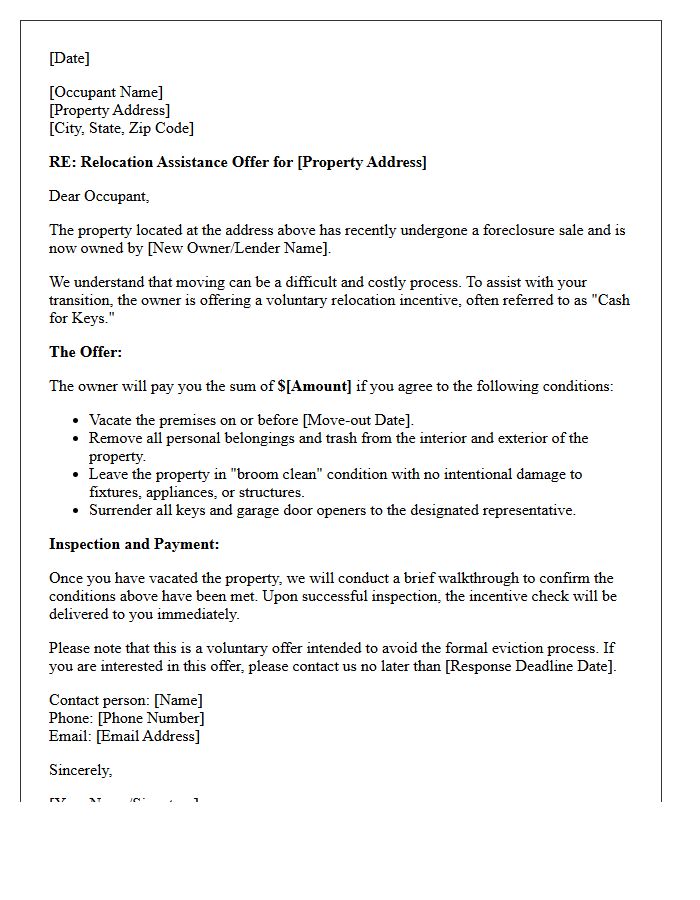
A Residential Foreclosure Occupant Relocation Incentive Letter, commonly known as a Cash for Keys agreement, is a formal offer from a lender to occupants. It provides financial compensation in exchange for voluntarily vacating the property by a specific date. This legal document ensures the home is left in "broom-clean" condition, helping the bank avoid lengthy eviction proceedings. For occupants, it offers a relocation fund to secure new housing, while lenders save on legal costs and potential property damage during the transition of ownership.
Bank Asset Management Cash For Keys Letter
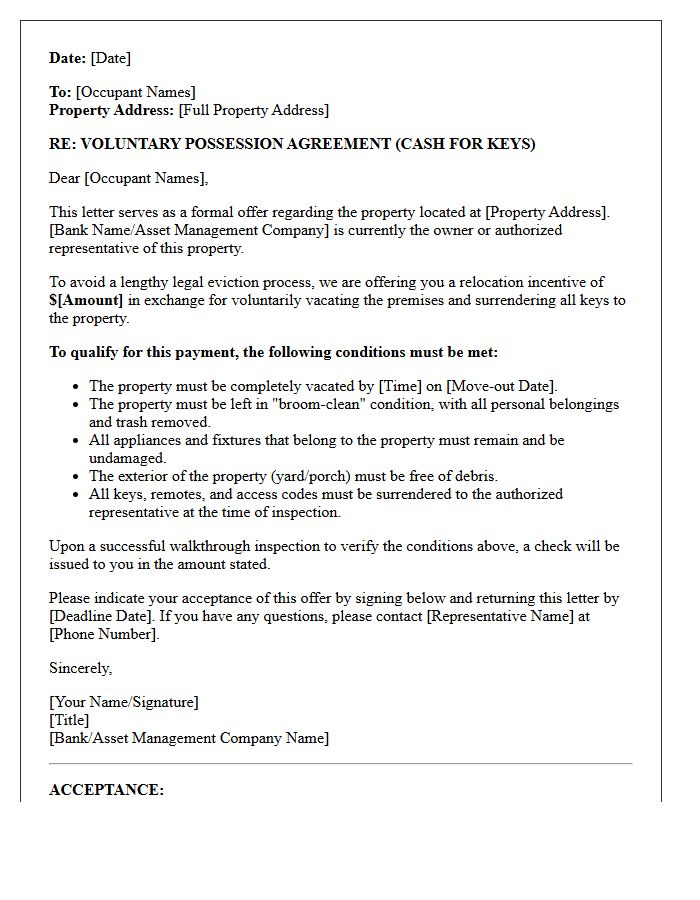
A Cash for Keys letter is a formal agreement used by bank asset management to regain possession of a foreclosed property without lengthy eviction proceedings. The bank offers a specific financial incentive to occupants in exchange for vacating the premises by a set date and leaving the home in "broom-clean" condition. This voluntary move-out process saves time and legal costs for the lender while providing tenants or former owners with relocation funds. It is essential to ensure the agreement is in writing to guarantee payment upon a successful final inspection.
Post-Sale Property Vacancy Compensation Letter
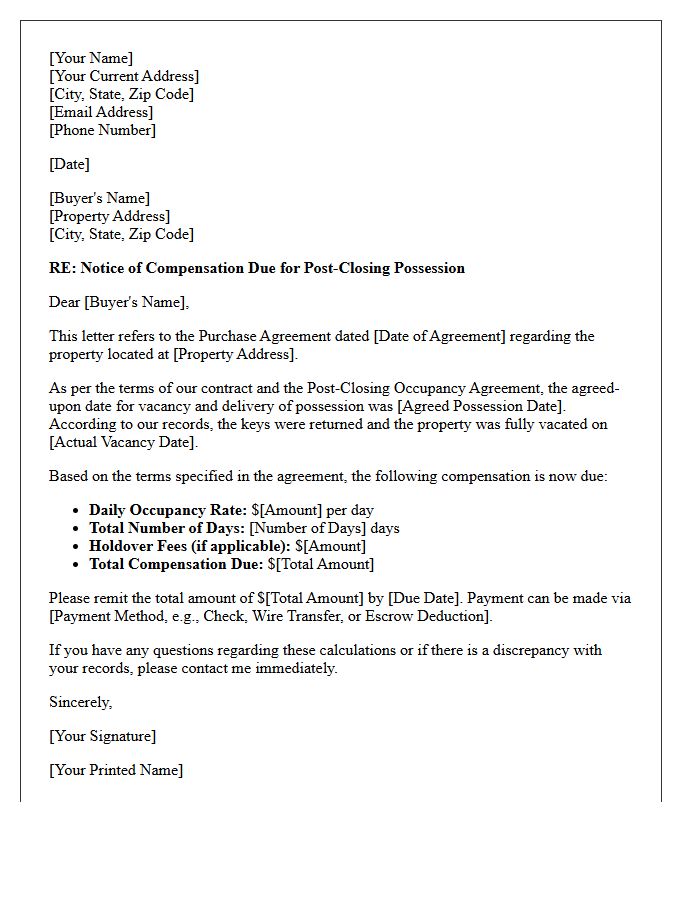
A Post-Sale Property Vacancy Compensation Letter is a formal agreement ensuring a seller compensates the buyer if they remain in the home after closing. The financial penalty, often calculated as a daily rate, incentivizes the seller to vacate by the agreed-upon possession date. This document protects the buyer's rights and covers potential lodging or storage costs. It is essential to specify the exact move-out deadline and the specific per diem charges to avoid legal disputes and ensure a smooth transition of property ownership.
Default Servicing Cash For Keys Settlement Letter
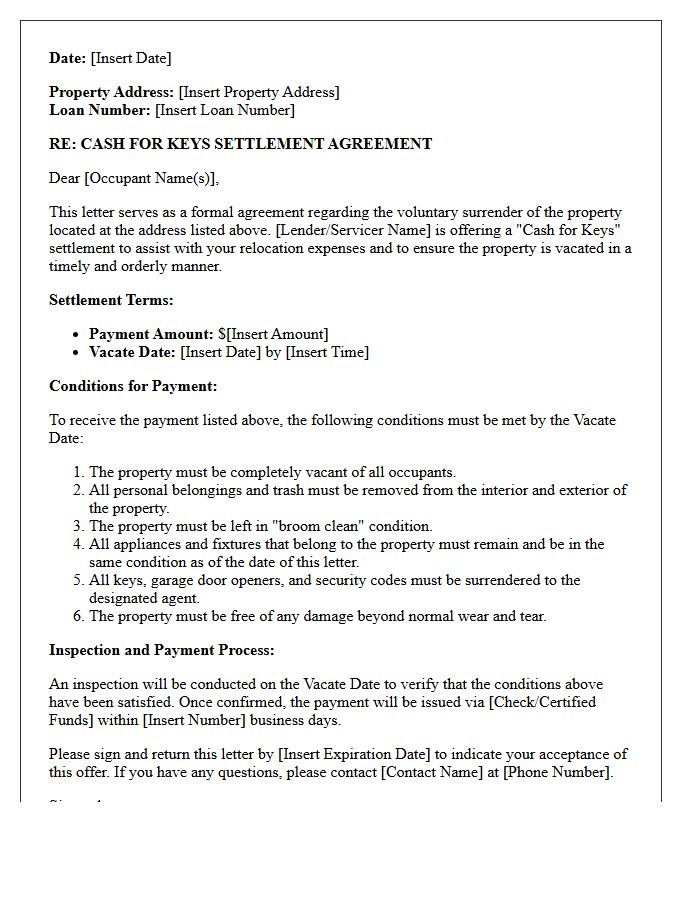
A Cash For Keys Settlement Letter is a legal agreement where a lender offers a tenant or homeowner a financial incentive to vacate a property voluntarily. This alternative to formal foreclosure or eviction ensures the premises are left in broom-clean condition by a specified date. It is essential to ensure the document clearly outlines the payment amount, move-out deadline, and a full release of liability. Both parties must sign to make the terms binding, providing a faster, less damaging resolution for the occupant's credit history and the servicer's timeline.
Real Estate Portfolio Occupant Departure Offer Letter
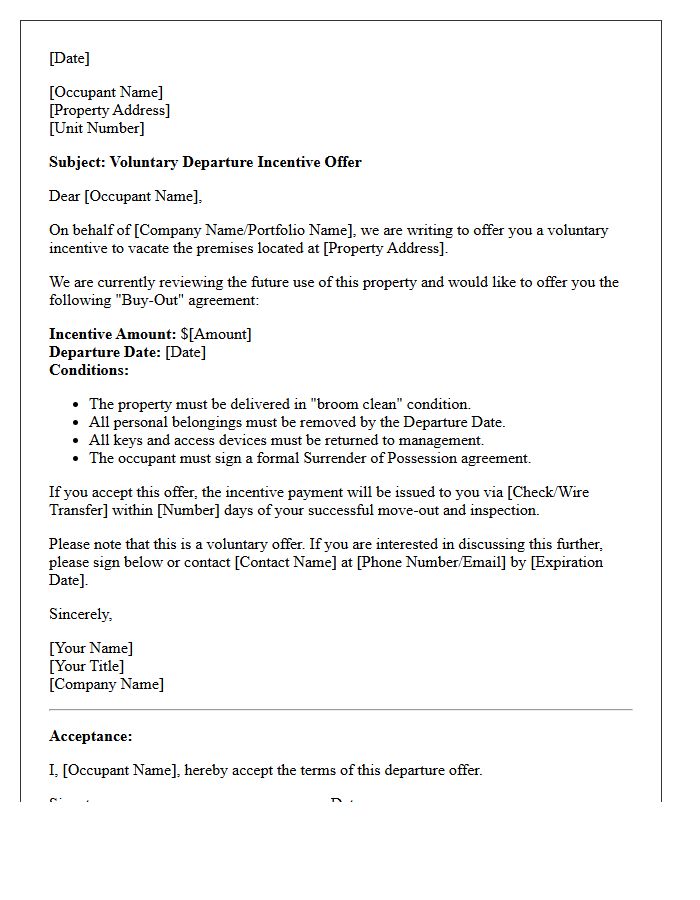
A Real Estate Portfolio Occupant Departure Offer Letter is a strategic document used to negotiate a voluntary lease surrender. This formal proposal, often called a "buyout," incentivizes tenants to vacate a property before their contract expires. It is essential for portfolio optimization, allowing owners to renovate, sell, or re-lease units at current market rates. To be effective, the letter must clearly outline the financial compensation, move-out deadlines, and legal release of claims to ensure a smooth transition and mitigate vacancy risks within the investment portfolio.
What is a Post-Foreclosure Cash for Keys Offer Letter?
A post-foreclosure cash for keys offer letter is a formal written agreement where a new property owner (typically a bank or investor) offers a specific monetary sum to the current occupants in exchange for them vacating the property by a set date and leaving it in "broom-clean" condition.
How much money should I offer in a Cash for Keys agreement?
The amount offered in a cash for keys letter typically ranges from $500 to $5,000, or the equivalent of one to two months' rent. The specific value depends on local moving costs, the urgency of the eviction process, and the overall condition of the property.
What should be included in a formal Cash for Keys offer?
A professional offer letter must include the total payment amount, the deadline for moving out (move-out date), specific cleaning requirements, a release of liability, and a clear statement that the funds will be paid only after a successful final inspection of the vacant property.
Is a Cash for Keys agreement legally binding after foreclosure?
Yes, once both the property owner and the occupant sign the cash for keys agreement, it becomes a legally binding contract. It serves as an alternative to the formal eviction process, saving both parties time and legal expenses associated with a Writ of Possession.
What are the benefits of using a Cash for Keys letter instead of eviction?
For owners, it prevents property damage and avoids lengthy court delays. For occupants, it provides immediate relocation funds and prevents an eviction judgment from appearing on their credit report or public records, which preserves their future ability to rent.

Comments