
Responding to a bank notice regarding an inactive status requires a formal Dormant Account Reactivation Inquiry Response Letter. This document verifies your identity and intent to resume banking activities to prevent asset escheatment. Providing clear account details ensures a smooth restoration process with your financial institution. To help you draft this request effectively, below are some ready to use template.
Image cover: Welcome Back: Re-Engaging Your Account and Next Steps
Letter Samples List
- Standard Dormant Account Reactivation Inquiry Response Letter
- Dormant Account Reactivation Approval And Confirmation Letter
- Dormant Account Reactivation Identity Verification Request Letter
- Incomplete Dormant Account Reactivation Inquiry Follow-Up Letter
- Dormant Account Reactivation Branch Appointment Scheduling Letter
- Dormant Account Reactivation Signature Update Request Letter
- Know Your Customer Compliance Reactivation Requirement Letter
- Dormant Account Reactivation Denial And Closure Notice Letter
- Corporate Dormant Account Reactivation Inquiry Response Letter
- Joint Dormant Account Reactivation Authorization Request Letter
- Dormant Account Reactivation Process And Fee Disclosure Letter
- Pending Dormant Account Reactivation Status Notification Letter
Standard Dormant Account Reactivation Inquiry Response Letter
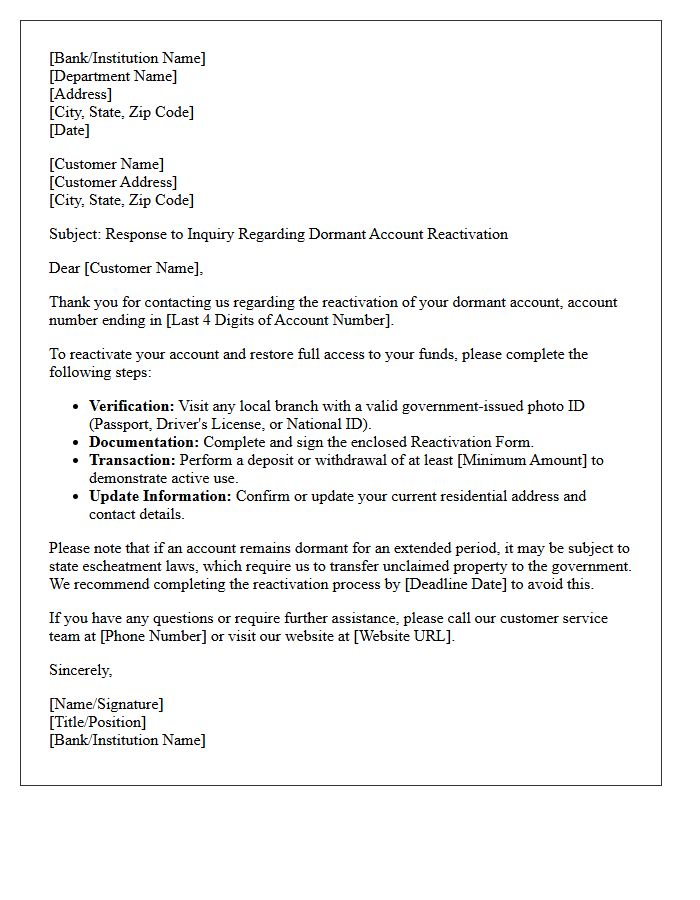
A Standard Dormant Account Reactivation Inquiry Response Letter is a formal document sent by financial institutions to guide clients on restoring access to inactive accounts. The reactivation process typically requires the account holder to submit updated identification, proof of address, and a signed request form. Understanding the specific compliance requirements is essential to prevent permanent closure or the transfer of funds to state authorities. This letter outlines necessary steps, potential fees, and the documentation needed to verify identity and successfully resume regular banking activities without further disruption.
Dormant Account Reactivation Approval And Confirmation Letter
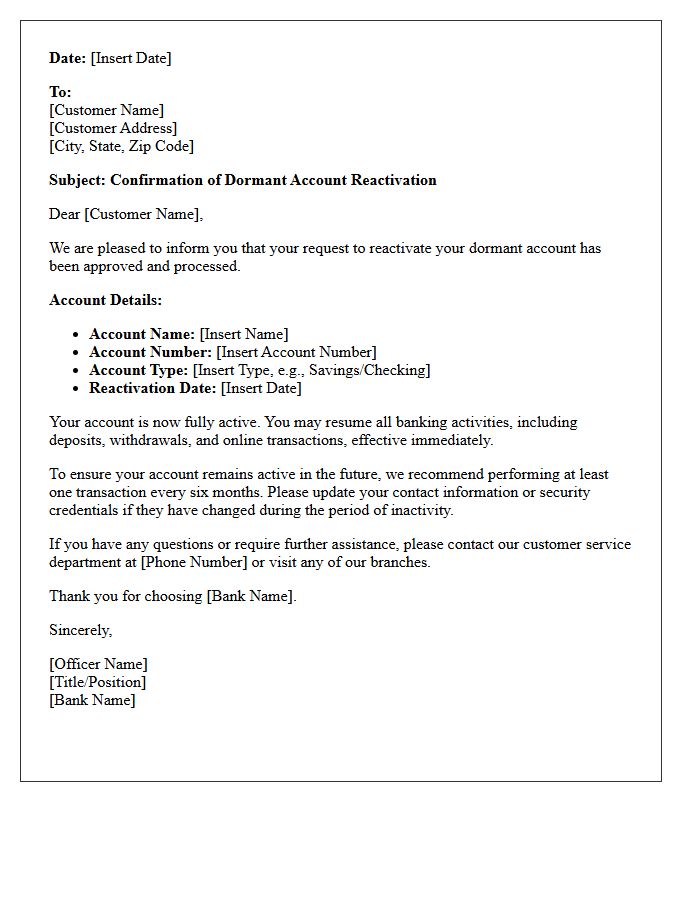
A Dormant Account Reactivation Approval And Confirmation Letter is an official document issued by a bank to verify that a previously inactive account is now fully operational. This letter confirms that the account holder has successfully completed mandatory KYC updates and met security requirements. It serves as formal proof that transaction restrictions are lifted, allowing for immediate deposits and withdrawals. Retaining this confirmation is essential for financial record-keeping and ensures that the account status is updated across all banking systems to prevent future service interruptions.
Dormant Account Reactivation Identity Verification Request Letter
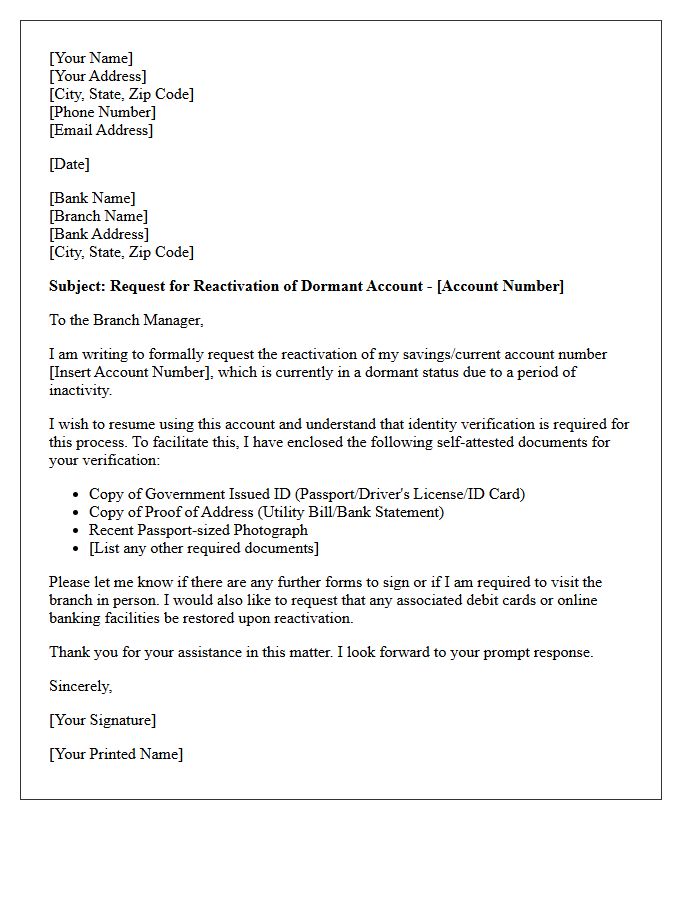
A Dormant Account Reactivation Identity Verification Request Letter is a formal document sent to a financial institution to restore access to an inactive account. To ensure security, banks require identity verification to prevent unauthorized access and fraud. The letter should include your full name, account number, current contact details, and copies of government-issued identification. Clearly state your intent to reactivate the account and confirm your current residency. Providing accurate documentation is the most important step to successfully passing the bank's security protocols and regaining control over your financial assets.
Incomplete Dormant Account Reactivation Inquiry Follow-Up Letter
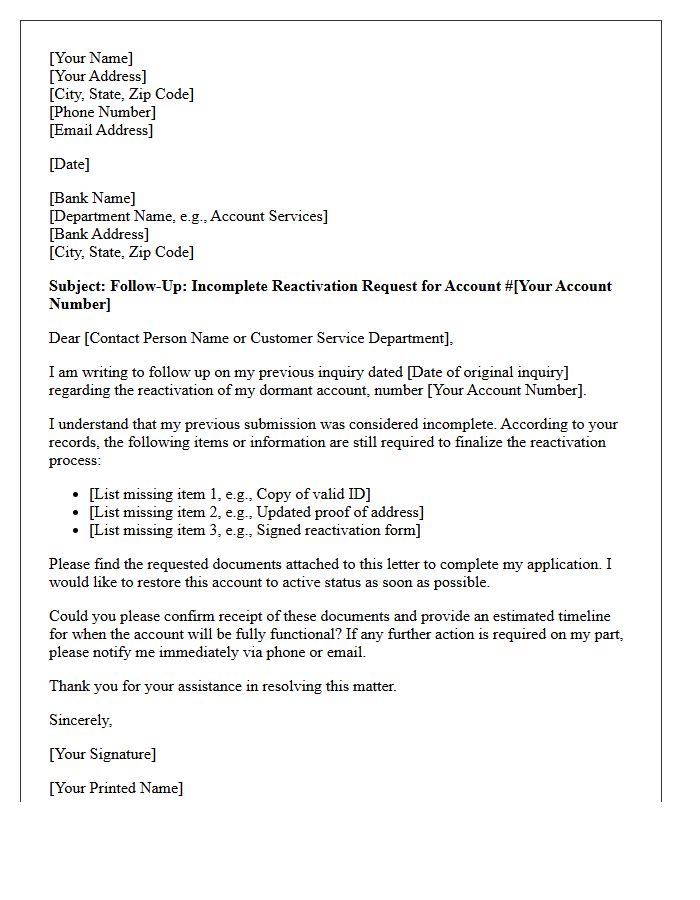
An Incomplete Dormant Account Reactivation Inquiry Follow-Up Letter is a formal notice sent when a customer's request to restore an inactive account lacks mandatory documentation or signatures. It serves as a critical bridge to prevent permanent closure or escheatment to the state. To ensure successful processing, you must provide the missing information specified in the correspondence promptly. Providing valid identification and updated contact details is essential to verify account ownership and comply with banking security regulations, ultimately allowing you to regain full access to your financial assets.
Dormant Account Reactivation Branch Appointment Scheduling Letter
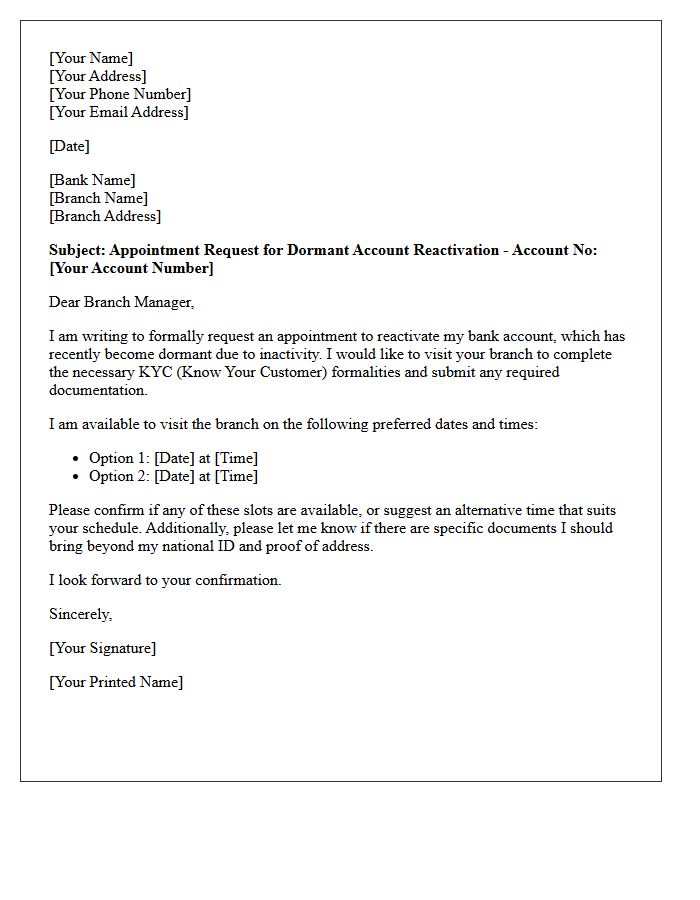
A Dormant Account Reactivation letter is a formal request to restore access to an inactive bank profile. To regain control of your funds, you must schedule a branch appointment for identity verification. Ensure you bring valid government-issued identification and any required KYC documentation specified in the notice. Timely scheduling is essential to avoid permanent escheatment or additional administrative fees. Confirming your appointment date ensures a bank representative is available to process your request efficiently and secure your financial assets.
Dormant Account Reactivation Signature Update Request Letter
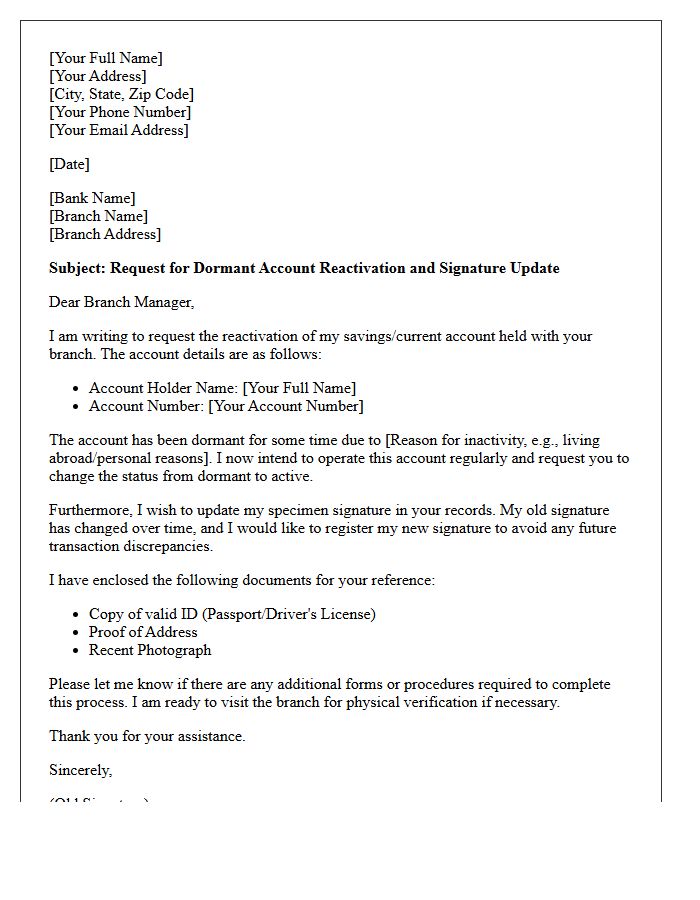
A Dormant Account Reactivation Signature Update Request Letter is a formal document sent to a bank to restore access to an inactive account. To ensure security, banks require a current signature specimen to verify the account holder's identity against their records. This letter must include your full name, account number, and contact details. Providing an updated signature is essential to prevent identity theft and facilitate future transactions. Always attach a valid government-issued photo ID to validate your request and ensure a smooth reactivation process for your funds.
Know Your Customer Compliance Reactivation Requirement Letter
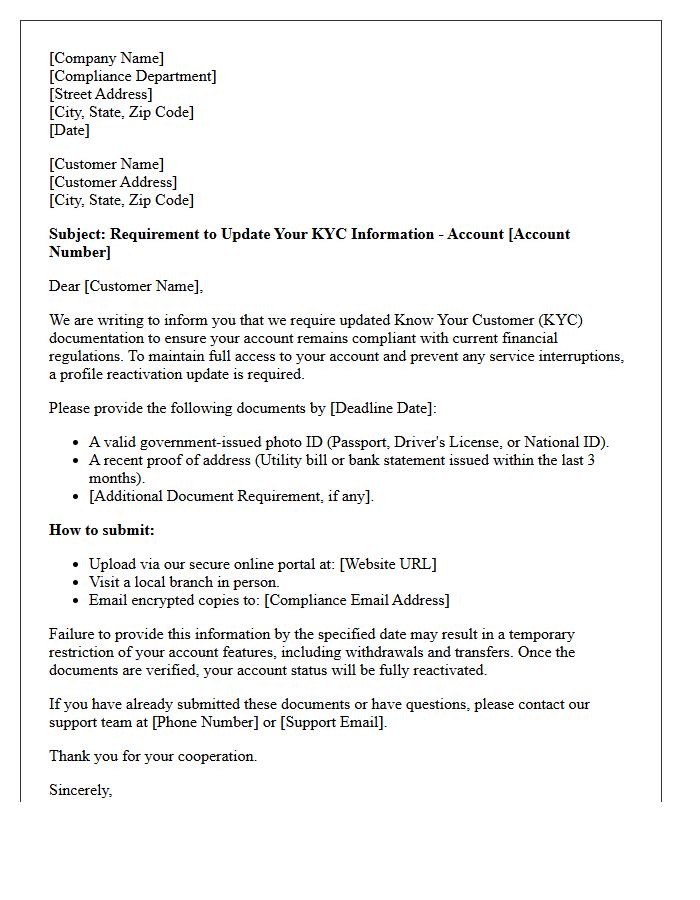
A Know Your Customer (KYC) Reactivation Requirement Letter is a formal request from financial institutions to update outdated personal documentation. Compliance regulations mandate that banks periodically verify your identity, address, and source of funds to prevent financial crimes like money laundering. If you receive this notice, you must provide the requested records within the specified deadline. Failure to comply may lead to temporary account restrictions or complete closure. Responding promptly ensures your account remains active and aligns with regulatory anti-money laundering (AML) standards.
Dormant Account Reactivation Denial And Closure Notice Letter
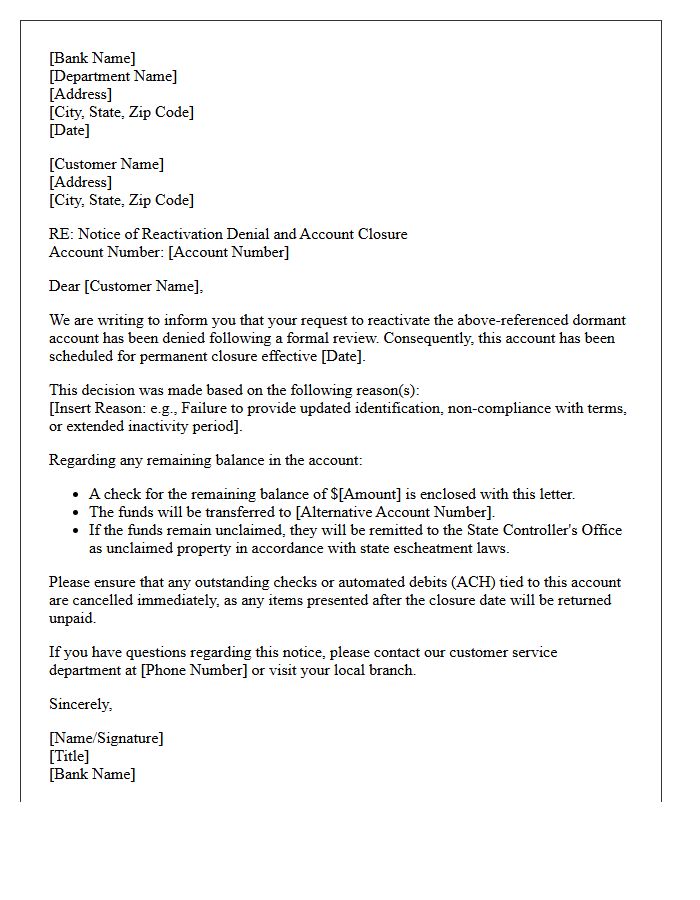
A Dormant Account Reactivation Denial and Closure Notice Letter is a formal notification issued by a bank when a request to reopen an inactive account is rejected. This occurs if the customer fails to meet compliance requirements or updated KYC (Know Your Customer) protocols. The letter signifies that the financial institution has decided to permanently close the account rather than reinstate it. It typically outlines the reasons for denial and provides instructions for the disbursement of remaining funds to the legal owner before the account is finalized.
Corporate Dormant Account Reactivation Inquiry Response Letter
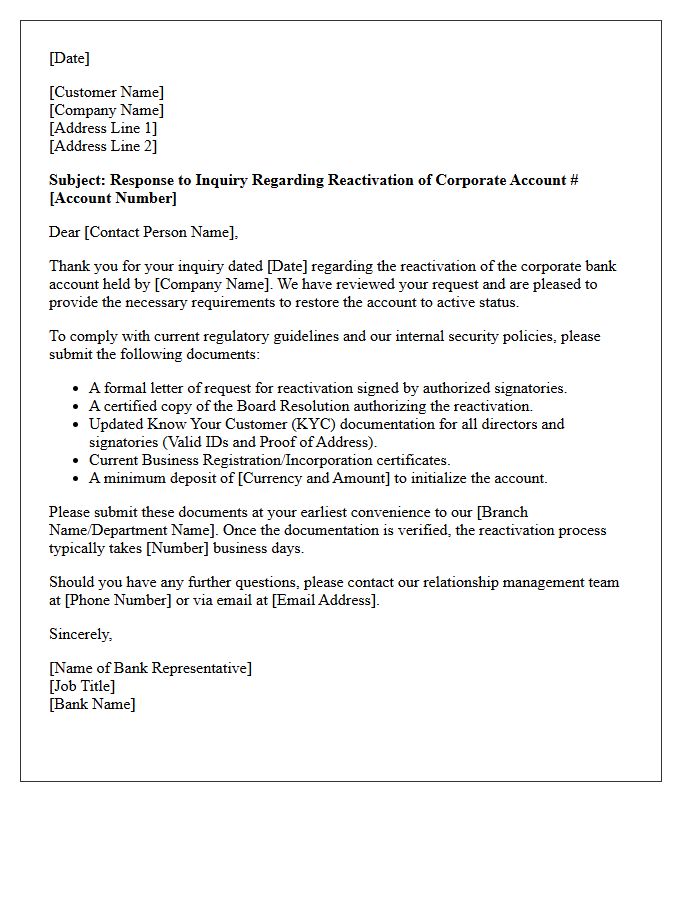
A Corporate Dormant Account Reactivation Inquiry Response Letter is a formal document issued by a bank detailing the necessary steps to restore an inactive business account. It outlines specific compliance requirements, such as submitting updated Know Your Customer (KYC) documents, valid corporate resolutions, and current identification for authorized signatories. Promptly addressing this response is crucial to regain access to funds and resume financial operations. Organizations must ensure all provided information matches official records to satisfy regulatory verification standards and successfully finalize the reactivation process.
Joint Dormant Account Reactivation Authorization Request Letter
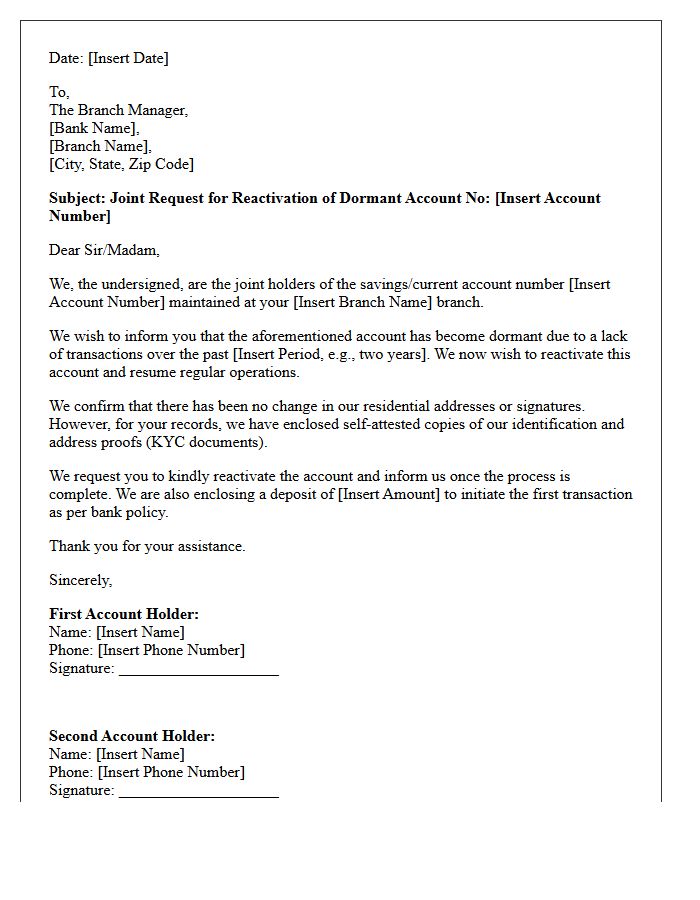
A Joint Dormant Account Reactivation Authorization Request Letter is a formal document submitted to a bank to restore access to an inactive account. To ensure processing, both account holders must provide their legal signatures and valid identification. The letter should clearly state the account number, current contact details, and a formal request to resume transactions. Reactivation is essential to prevent the permanent transfer of funds to unclaimed property divisions. Providing a brief explanation for the inactivity can help expedite the bank's verification process and security protocols.
Dormant Account Reactivation Process And Fee Disclosure Letter
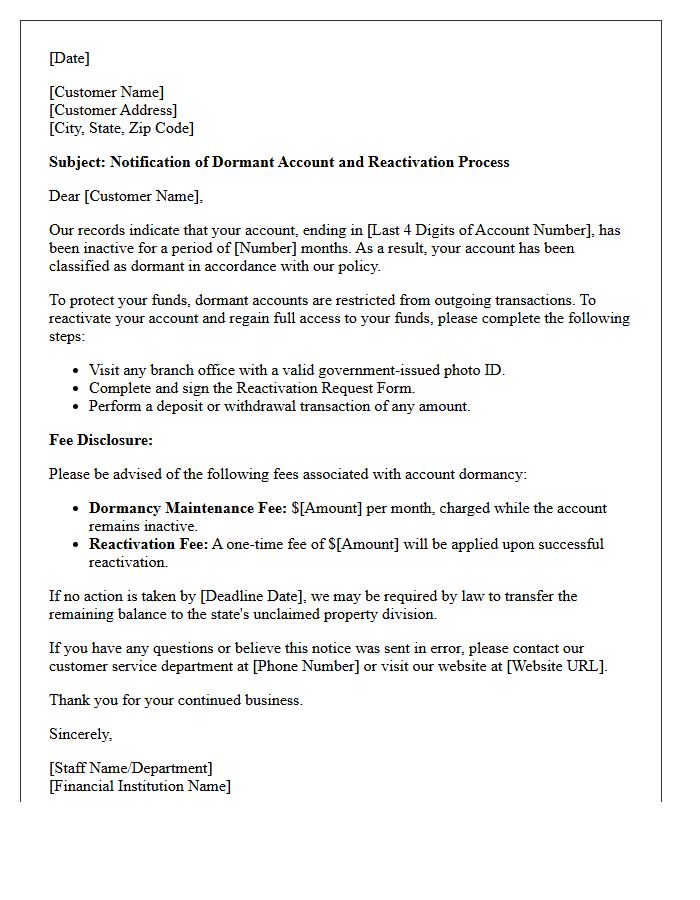
A Dormant Account Reactivation Process and Fee Disclosure Letter is a formal notification sent when a bank account becomes inactive due to prolonged lack of transactions. This document outlines the necessary steps to restore access and lists any applicable maintenance fees or penalties incurred during dormancy. It is legally required to inform customers before funds are potentially transferred to the state as unclaimed property. To avoid account closure, users must typically perform a transaction or submit a written request as specified in the letter's instructions.
Pending Dormant Account Reactivation Status Notification Letter
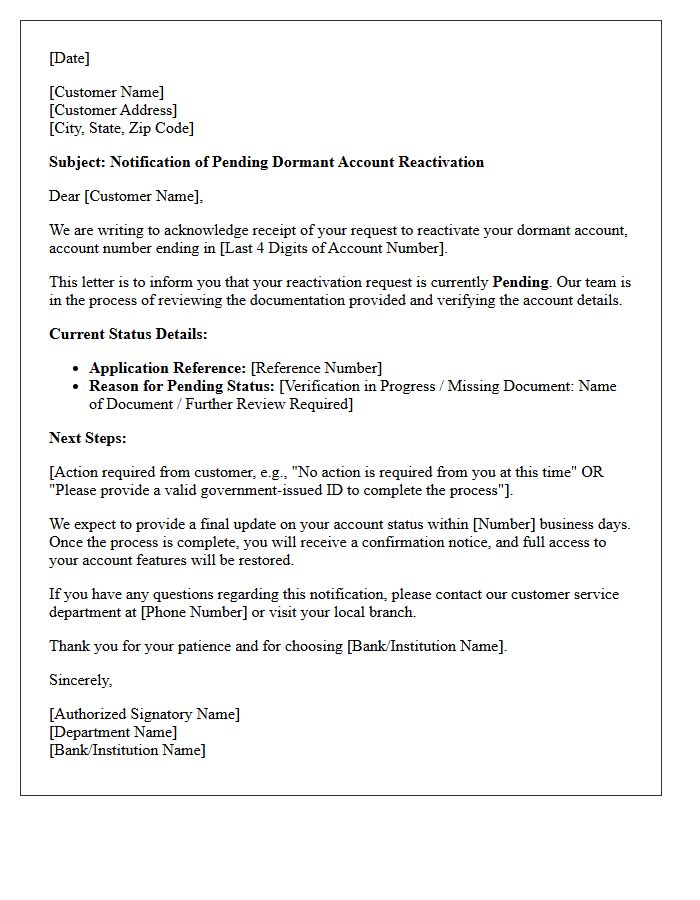
A Pending Dormant Account Reactivation Status Notification Letter is a formal notice informing you that an inactive account is being restored. To prevent permanent escheatment or loss of funds to the state, users must verify their identity or perform a transaction. This letter confirms that your request to reactivate the account is currently being processed by the financial institution. Ensure all required documentation is submitted promptly to finalize the status change and regain full access to your financial assets and banking services before the deadline.
What is a dormant account reactivation inquiry response letter?
This letter is an official communication sent by a financial institution to a client, outlining the necessary steps, required documentation, and applicable fees needed to restore an inactive or dormant account to active status.
How do I reactivate my bank account after receiving this notice?
To reactivate your account, you typically need to visit a branch in person or log in to secure online banking to perform a transaction. You must also provide updated Know Your Customer (KYC) documents, such as a valid government-issued ID and proof of address.
Are there any fees associated with reactivating a dormant account?
Fee structures vary by institution; some banks charge a specific reactivation fee, while others may require a minimum deposit to restore the balance. Refer to the specific terms mentioned in your inquiry response letter for your account's requirements.
What happens if I do not respond to the dormant account notice?
If no action is taken within the timeframe specified in the letter, the account may be permanently closed, and the remaining funds may be transferred to the state's unclaimed property department under escheatment laws.
What documents are required to process a reactivation request?
Standard requirements include a signed reactivation form, a current photo ID (Passport or Driver's License), and recent utility bills for address verification. Business accounts may require updated corporate resolutions or trade licenses.


Comments