
This memorandum outlines critical strategies for enhancing Cybersecurity Threat Awareness across your organization. It specifically addresses the evolving risks associated with sophisticated phishing attacks designed to compromise sensitive data. By educating employees on identifying malicious links and fraudulent communications, businesses can significantly strengthen their digital defenses. To help you implement these security protocols immediately, below are some ready to use template.
Image cover: Strengthening Resilience: Cybersecurity Awareness and Phishing Defense Resources
Letter Samples List
- Letter Regarding Cybersecurity Threat Awareness and Phishing Protocols for Bank Employees
- Executive Letter on Phishing Threat Mitigation in Banking Operations
- Internal Letter Concerning Cybersecurity Awareness and Anti-Phishing Measures
- Letter of Notification on Emerging Cybersecurity Threats and Phishing Scams in the Financial Sector
- Advisory Letter on Institutional Phishing Awareness and Cyber Threat Readiness
- Compliance Letter Detailing Cybersecurity Threat Awareness and Phishing Defense Strategies
- Letter of Instruction for Banking Staff on Phishing Identification and Cyber Threat Reporting
- Management Letter Addressing Recent Phishing Attempts and Cybersecurity Threat Awareness
- Regulatory Letter on Mandatory Cybersecurity Threat and Phishing Awareness Training
- Letter of Memorandum Regarding Phishing Vulnerabilities and Cyber Threat Vigilance in Banking
- Security Directive Letter on Phishing Prevention and Cybersecurity Awareness for Branch Managers
- Official Letter Outlining Bank Protocols for Cybersecurity Threat Awareness and Phishing Incidents
Letter Regarding Cybersecurity Threat Awareness and Phishing Protocols for Bank Employees
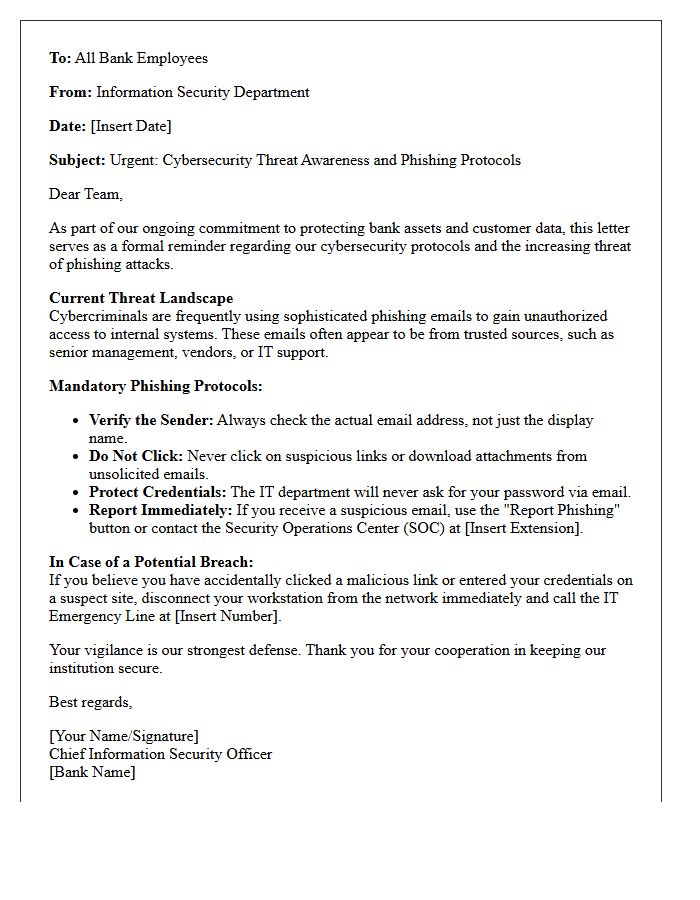
This internal communication outlines critical cybersecurity protocols designed to safeguard financial data against evolving digital risks. Employees must exercise vigilance when handling unsolicited emails or suspicious links that mimic official bank correspondence. The letter details mandatory phishing awareness training and emphasizes strict adherence to multi-factor authentication requirements. By prioritizing these security measures, staff act as the primary defense against unauthorized access and data breaches. Immediate reporting of any anomaly to the IT security department is essential to maintaining the institution's integrity and ensuring the continued protection of client assets.
Executive Letter on Phishing Threat Mitigation in Banking Operations
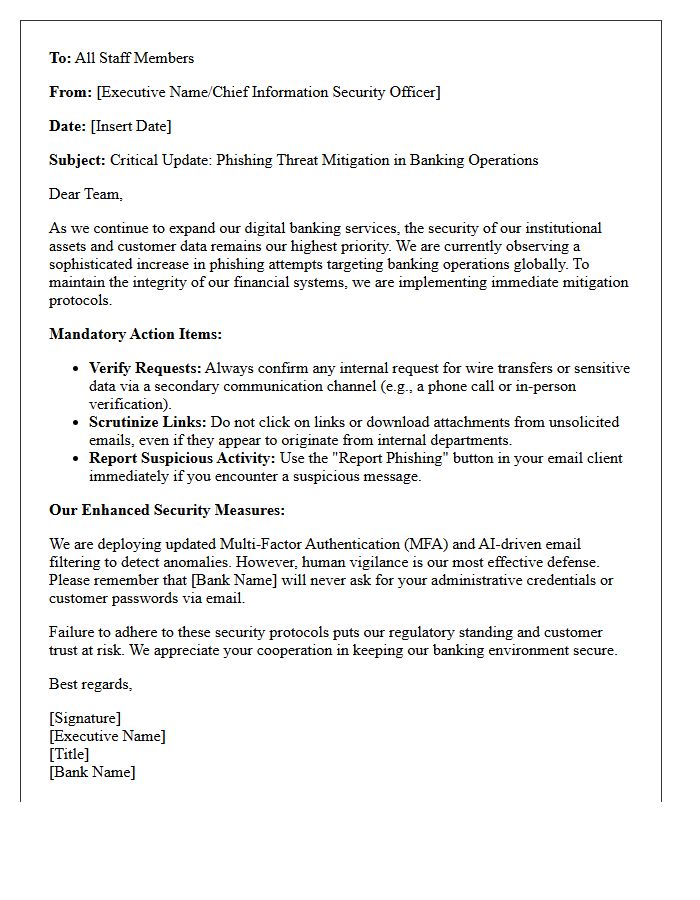
Banks must prioritize an Executive Letter to address escalating security risks. This strategic document outlines critical phishing threat mitigation protocols essential for protecting financial assets. By implementing multi-factor authentication and continuous staff training, organizations strengthen their defense against credential theft. Executives must lead the adoption of advanced email filtering and incident response plans to ensure operational resilience. Proactive communication serves as a vital framework for safeguarding customer trust and maintaining regulatory compliance within modern banking ecosystems.
Internal Letter Concerning Cybersecurity Awareness and Anti-Phishing Measures
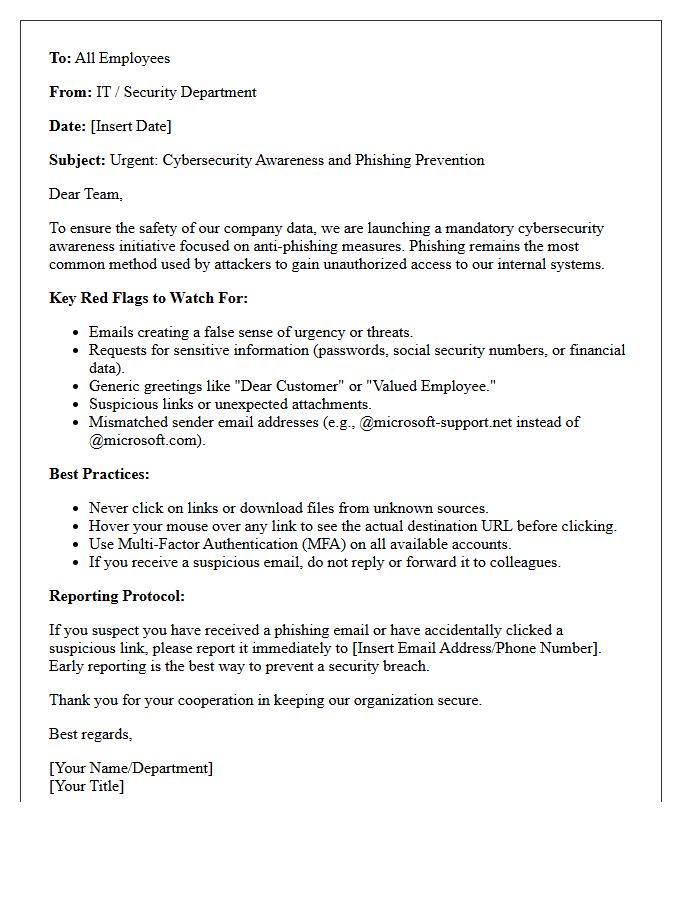
An internal letter regarding cybersecurity awareness serves as a vital communication tool to reinforce organizational safety. It outlines critical protocols for identifying anti-phishing measures, such as verifying sender addresses and avoiding suspicious links. By educating employees on evolving digital threats, the company minimizes the risk of data breaches and unauthorized access. This proactive approach fosters a culture of vigilance, ensuring every staff member understands their role in protecting sensitive information and maintaining network integrity against sophisticated social engineering tactics.
Letter of Notification on Emerging Cybersecurity Threats and Phishing Scams in the Financial Sector
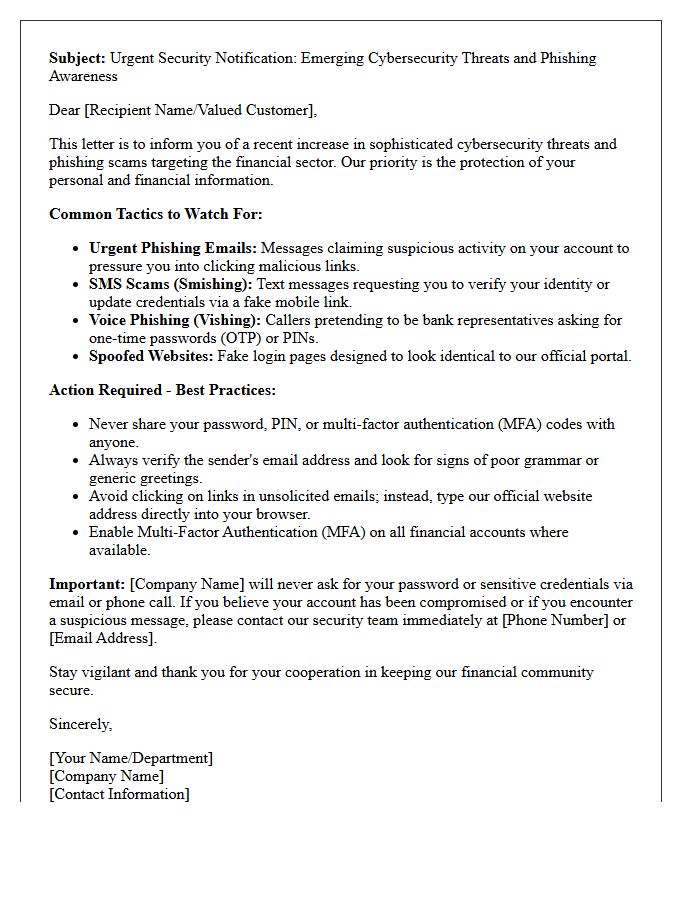
The Letter of Notification serves as a critical warning regarding emerging cybersecurity threats targeting global financial institutions. It highlights sophisticated phishing scams designed to compromise sensitive banking credentials and internal systems. Financial entities must implement multi-factor authentication and robust employee training to mitigate these risks. Staying informed about these evolving digital dangers is essential for protecting financial stability and maintaining customer trust against increasingly complex social engineering tactics used by modern cybercriminals.
Advisory Letter on Institutional Phishing Awareness and Cyber Threat Readiness
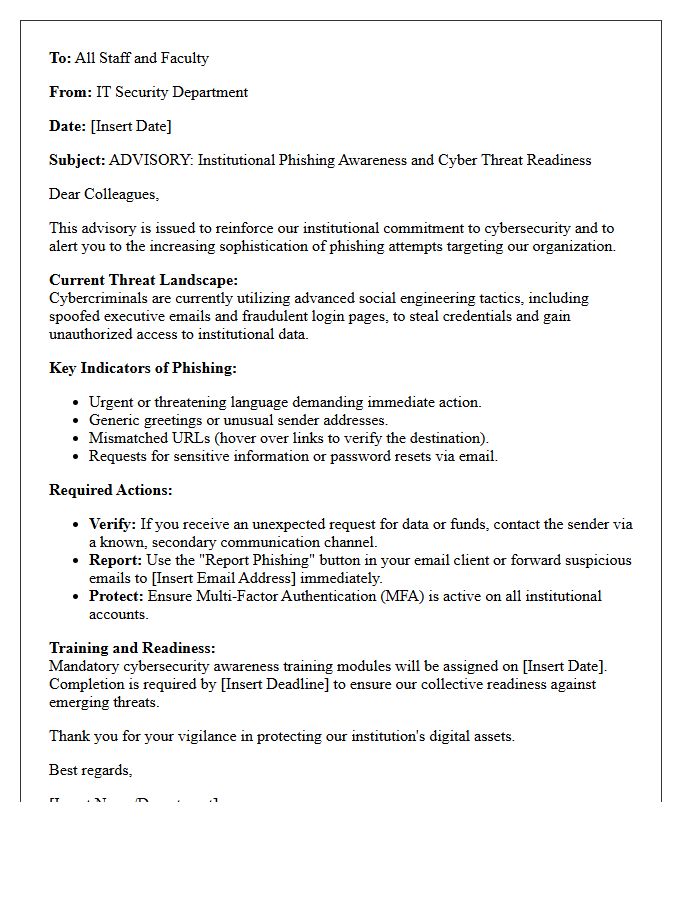
The Advisory Letter serves as a critical directive for organizations to enhance their cybersecurity posture. It emphasizes the necessity of Institutional Phishing Awareness to mitigate social engineering risks. Institutions must implement robust Cyber Threat Readiness protocols, including multi-factor authentication and continuous employee training. This formal guidance highlights that human vigilance is the primary defense against sophisticated data breaches. Adhering to these regulatory standards ensures operational resilience and protects sensitive information from evolving digital threats, making proactive defense a mandatory institutional priority in the modern threat landscape.
Compliance Letter Detailing Cybersecurity Threat Awareness and Phishing Defense Strategies
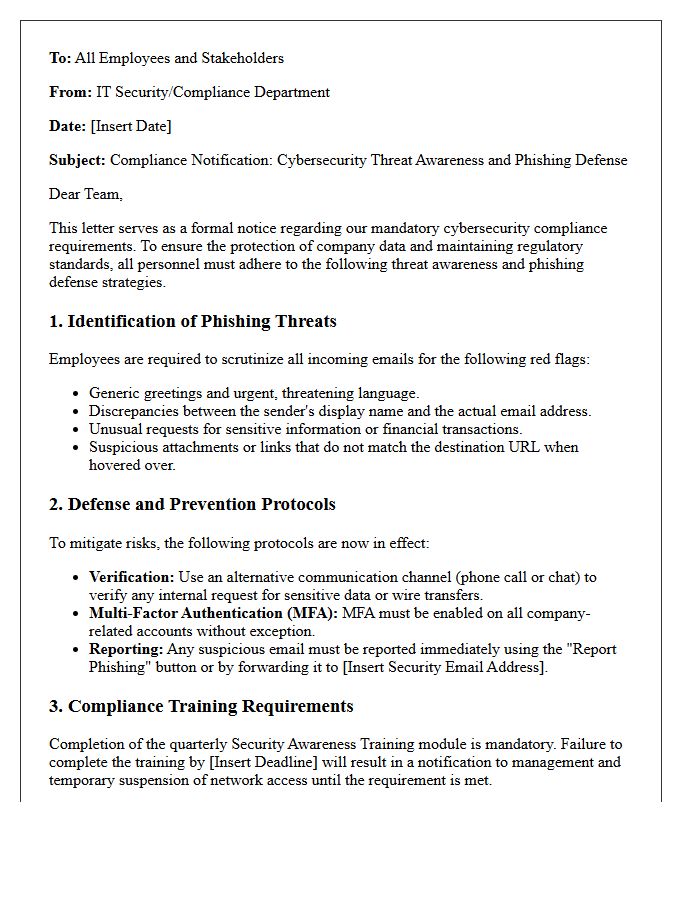
A Compliance Letter serves as a formal attestation of an organization's commitment to cybersecurity threat awareness and resilience. It outlines mandatory phishing defense strategies, such as multi-factor authentication and continuous employee training, to mitigate social engineering risks. This document is essential for regulatory alignment, ensuring that all stakeholders understand their role in protecting sensitive data. By documenting proactive security protocols and incident response measures, the letter provides legal verification that the company maintains rigorous standards to defend against evolving digital threats and unauthorized access attempts.
Letter of Instruction for Banking Staff on Phishing Identification and Cyber Threat Reporting
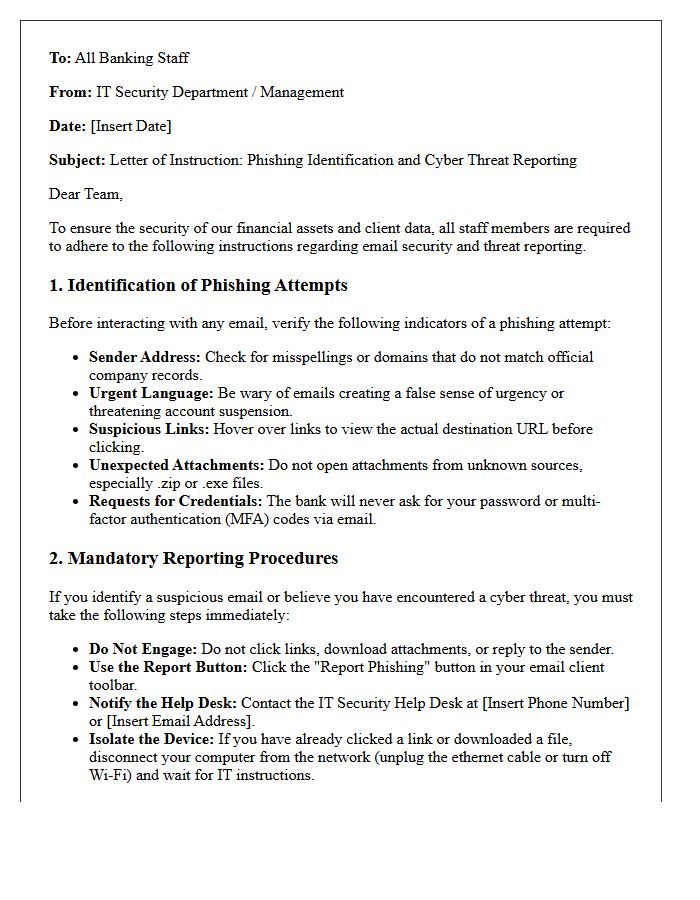
Bank personnel must maintain vigilance against phishing attacks designed to compromise sensitive financial data. This letter of instruction outlines critical steps for identifying deceptive emails, such as verifying sender addresses and scrutinizing urgent requests for credentials. Staff should never click suspicious links or download unverified attachments. Effective cyber threat reporting is essential; any potential security breach must be communicated immediately to the IT department. By adhering to these protocols, employees act as the primary defense against digital fraud, ensuring the integrity of institutional assets and protecting client confidentiality from evolving cybersecurity risks.
Management Letter Addressing Recent Phishing Attempts and Cybersecurity Threat Awareness
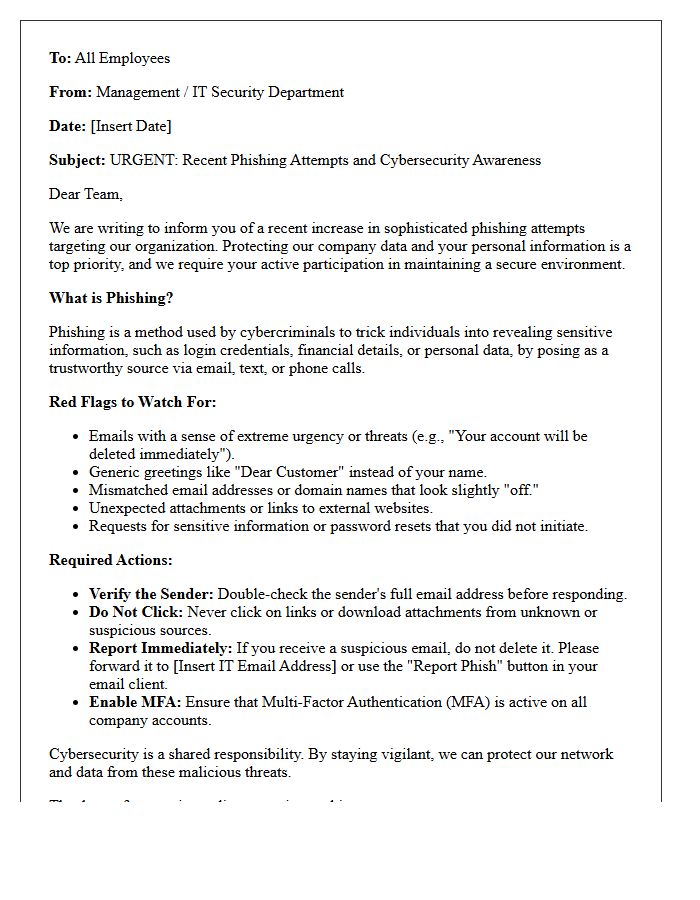
To ensure organizational resilience, please review our latest management letter regarding recent phishing attempts. Threat actors are using sophisticated social engineering to compromise credentials. We emphasize that cybersecurity awareness is our primary defense. Always verify the sender's identity before clicking links or downloading attachments. If you notice suspicious activity, report it immediately to the IT department. Strengthening our collective vigilance is essential to protecting sensitive data and maintaining operational integrity against evolving digital threats. Your cooperation is vital to sustaining a secure environment for all employees and stakeholders.
Regulatory Letter on Mandatory Cybersecurity Threat and Phishing Awareness Training
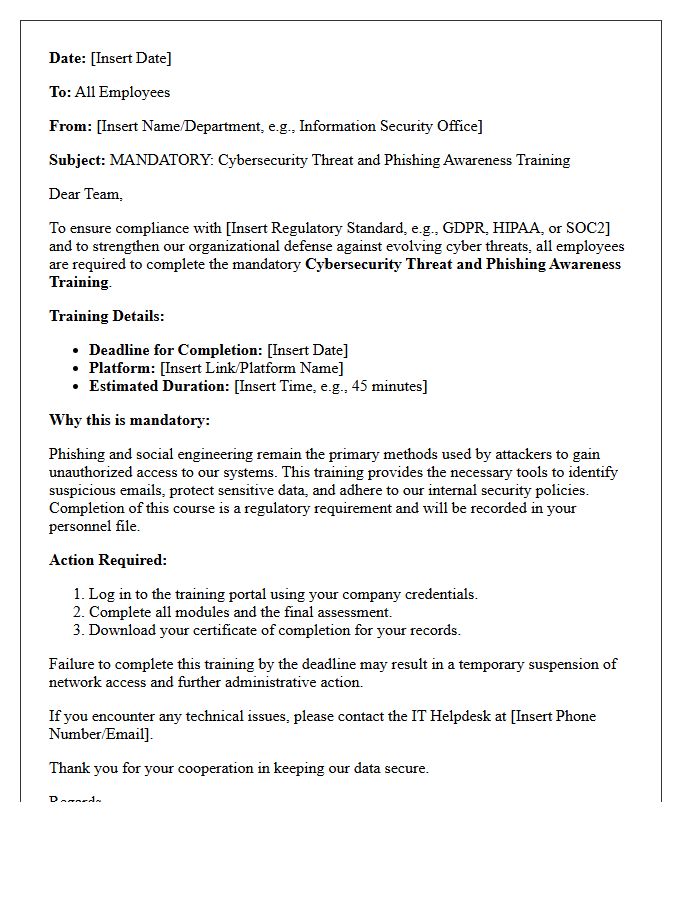
The Regulatory Letter mandates that all employees undergo comprehensive cybersecurity threat and phishing awareness training. This directive ensures organizations maintain high security standards to prevent data breaches and financial loss. Key requirements include interactive modules, regular simulated phishing tests, and documented completion records to prove compliance. Failure to adhere to these guidelines can result in severe legal penalties and increased vulnerability to social engineering attacks. Implementing this training is an essential regulatory requirement for protecting sensitive information and strengthening an enterprise's overall defensive posture against evolving digital threats.
Letter of Memorandum Regarding Phishing Vulnerabilities and Cyber Threat Vigilance in Banking
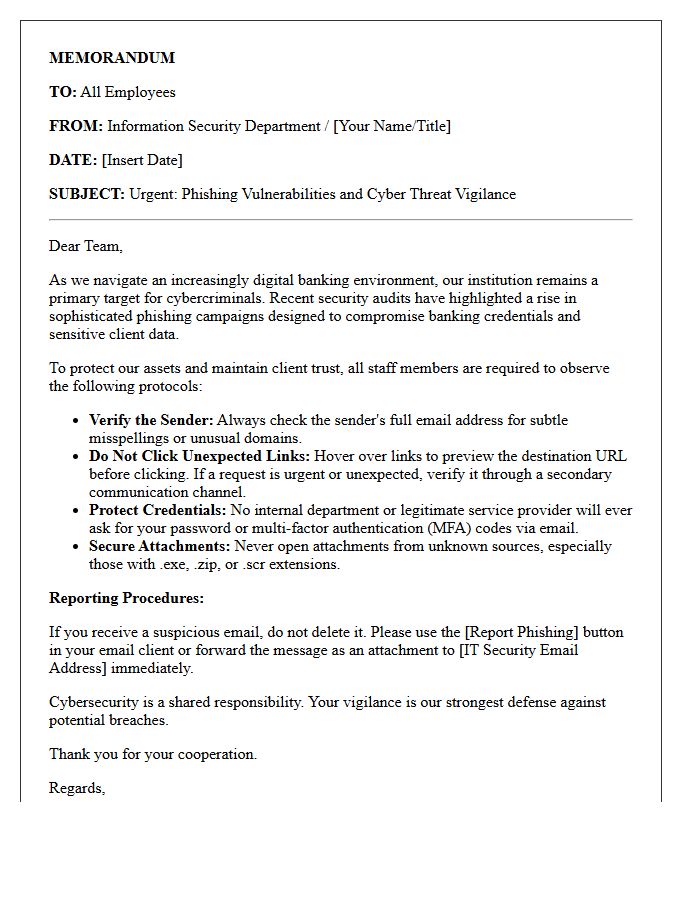
The Letter of Memorandum serves as a critical directive for financial institutions to address phishing vulnerabilities. It outlines mandatory protocols for cyber threat vigilance, emphasizing the identification of deceptive social engineering tactics. Banking entities must implement robust multi-factor authentication and continuous monitoring to secure sensitive data. This memorandum reinforces regulatory compliance standards, ensuring that proactive defense mechanisms are prioritized to mitigate financial fraud and protect consumer assets from evolving digital risks. Maintaining high security awareness is essential for operational integrity in the modern banking landscape.
Security Directive Letter on Phishing Prevention and Cybersecurity Awareness for Branch Managers
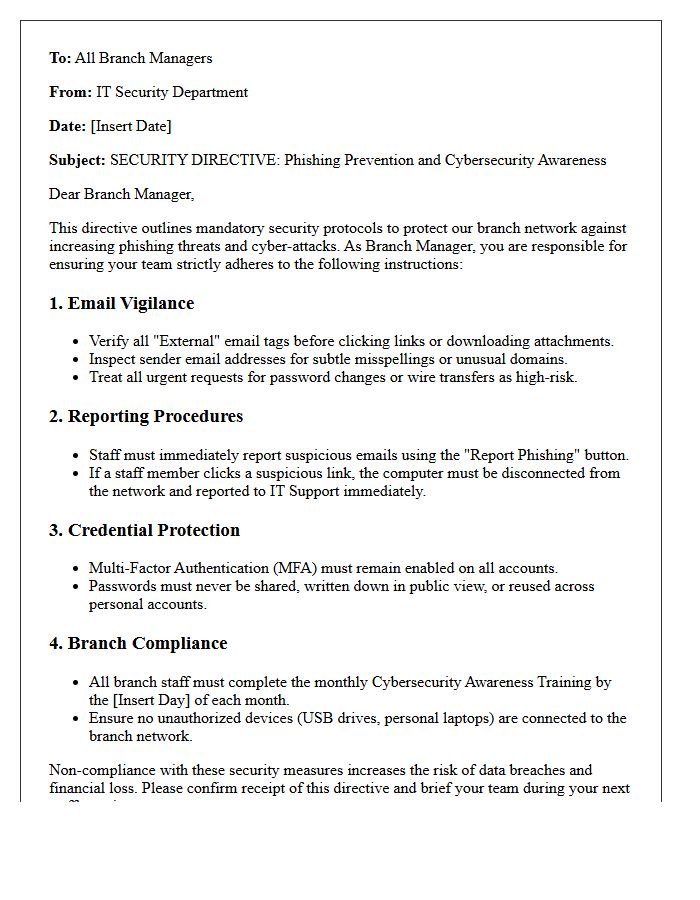
The Security Directive Letter mandates that branch managers prioritize phishing prevention and staff cybersecurity awareness. It outlines critical protocols for identifying deceptive communications, securing sensitive client data, and reporting potential breaches immediately. Managers must conduct regular training sessions to ensure every employee recognizes social engineering tactics. Compliance is essential to mitigate operational risks and protect the institution's digital infrastructure. By fostering a culture of vigilance, branches can effectively defend against evolving cyber threats and maintain institutional integrity.
Official Letter Outlining Bank Protocols for Cybersecurity Threat Awareness and Phishing Incidents
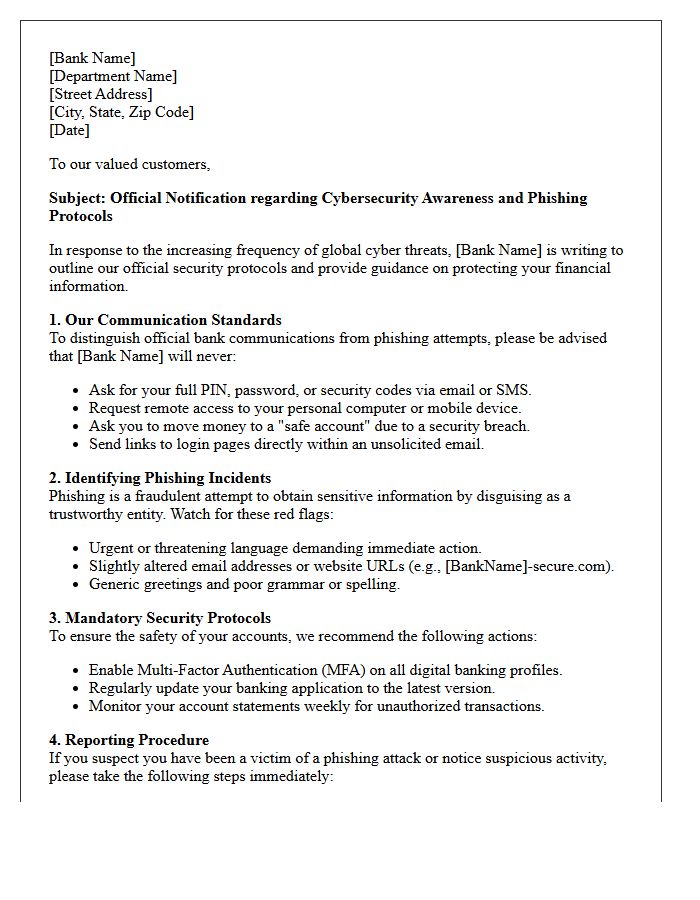
This official communication establishes critical cybersecurity protocols to protect financial assets. It outlines mandatory procedures for identifying phishing incidents, such as verifying sender addresses and avoiding suspicious links. The document serves as a formal framework for threat awareness, ensuring clients and staff recognize social engineering tactics. By adhering to these security standards, users mitigate the risk of unauthorized access. Immediate reporting of suspicious activity is essential to maintaining the integrity of the banking network and preventing data breaches through proactive incident response measures.
What is the primary purpose of the Memorandum on Cybersecurity Threat Awareness and Phishing?
The memorandum is designed to educate employees on identifying sophisticated phishing attempts, outlining mandatory reporting protocols, and reinforcing the organization's defensive posture against evolving cybersecurity threats.
How can employees identify a potential phishing attempt according to the policy?
Employees should look for common indicators such as mismatched sender email addresses, urgent or threatening language, requests for sensitive credentials, and suspicious attachments or hyperlinks from unexpected sources.
What are the immediate steps to take if a suspicious email is received?
Upon detecting a suspicious email, do not click any links or download attachments. Use the internal "Report Phishing" tool or forward the email as an attachment to the dedicated IT Security Operations center for analysis.
What are the consequences of failing to comply with the cybersecurity awareness guidelines?
Non-compliance increases the risk of a data breach and may lead to mandatory remedial training, revocation of system access privileges, or disciplinary action in accordance with the organization's security policy.
Does the memorandum include guidance on smishing and vishing?
Yes, the memorandum extends threat awareness to include SMS phishing (smishing) and voice phishing (vishing), advising staff to never share multi-factor authentication (MFA) codes or corporate passwords over phone or text.

Comments