
This article provides a comprehensive overview of the official Memorandum on Liquidity Ratio Reporting Requirements, detailing compliance standards for financial institutions. It outlines essential regulatory frameworks, reporting frequencies, and calculation methodologies necessary to maintain institutional stability and transparency. Understanding these guidelines ensures alignment with current fiscal oversight protocols. To simplify your documentation process, below are some ready to use template.
Image cover: Standardizing Your Liquidity Ratio Reporting: Official Memorandum Templates and Compliance Guidelines
Letter Samples List
- Official Letter Regarding the Memorandum on Liquidity Ratio Reporting Requirements
- Compliance Letter for the Memorandum on Bank Liquidity Ratio Reporting Requirements
- Directive Letter Outlining the Memorandum on Liquidity Ratio Reporting Requirements
- Executive Letter Detailing the Memorandum on Liquidity Ratio Reporting Requirements
- Notification Letter Concerning the Memorandum on Liquidity Ratio Reporting Requirements
- Advisory Letter Accompanying the Memorandum on Liquidity Ratio Reporting Requirements
- Regulatory Letter Appending the Memorandum on Liquidity Ratio Reporting Requirements
- Internal Bank Letter Addressing the Memorandum on Liquidity Ratio Reporting Requirements
- Supervisory Letter Introducing the Memorandum on Liquidity Ratio Reporting Requirements
- Statutory Letter Enforcing the Memorandum on Liquidity Ratio Reporting Requirements
- Management Letter Forwarding the Memorandum on Liquidity Ratio Reporting Requirements
- Policy Letter Enclosing the Memorandum on Liquidity Ratio Reporting Requirements
Official Letter Regarding the Memorandum on Liquidity Ratio Reporting Requirements
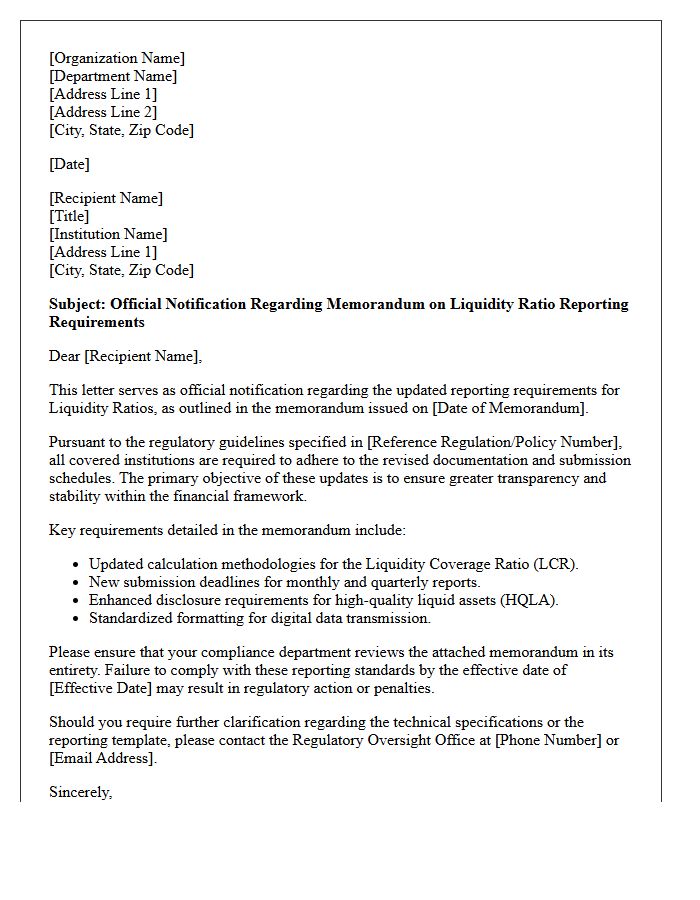
Financial institutions must adhere to the Liquidity Coverage Ratio (LCR) standards outlined in the official memorandum. This regulatory document specifies mandatory reporting requirements to ensure banks maintain sufficient high-quality liquid assets. Entities are obligated to submit precise data regarding cash flows and funding stability within designated deadlines to mitigate systemic risk. Compliance with these technical guidelines is essential for robust liquidity risk management and fulfilling supervisory expectations. Failure to provide accurate disclosures may result in regulatory scrutiny or penalties, highlighting the importance of thorough data validation processes.
Compliance Letter for the Memorandum on Bank Liquidity Ratio Reporting Requirements
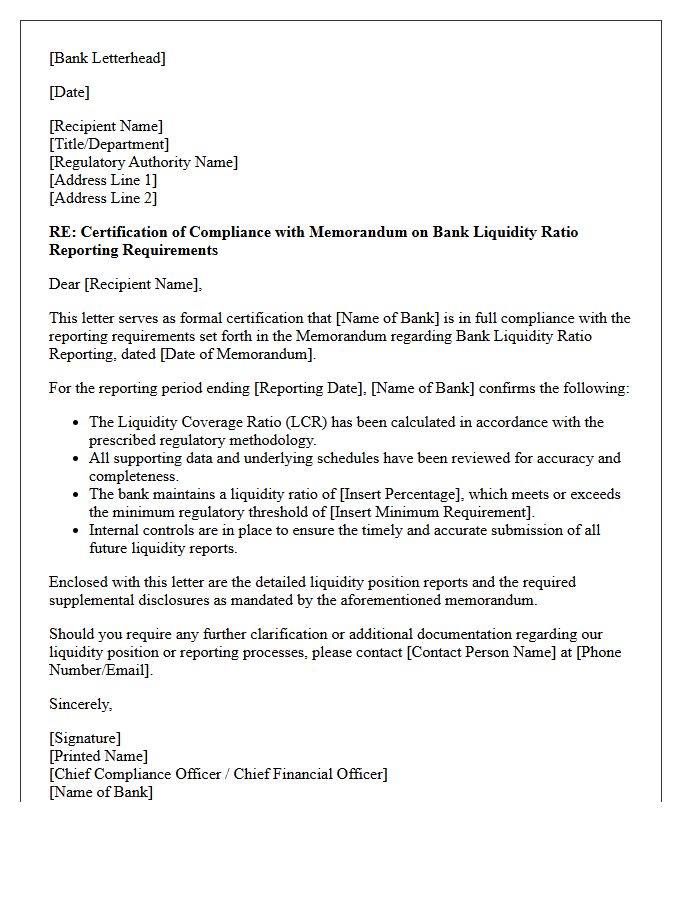
A Compliance Letter confirms a financial institution's adherence to the Memorandum on Bank Liquidity Ratio Reporting Requirements. This document ensures banks maintain sufficient liquid assets to meet short-term obligations. Regulators use these reports to monitor financial stability and risk management practices. Key highlights include accurate data submission, strict reporting deadlines, and verification of the liquidity coverage ratio. Non-compliance can lead to regulatory penalties or increased oversight, making this letter a vital component of regulatory transparency and banking safety standards.
Directive Letter Outlining the Memorandum on Liquidity Ratio Reporting Requirements
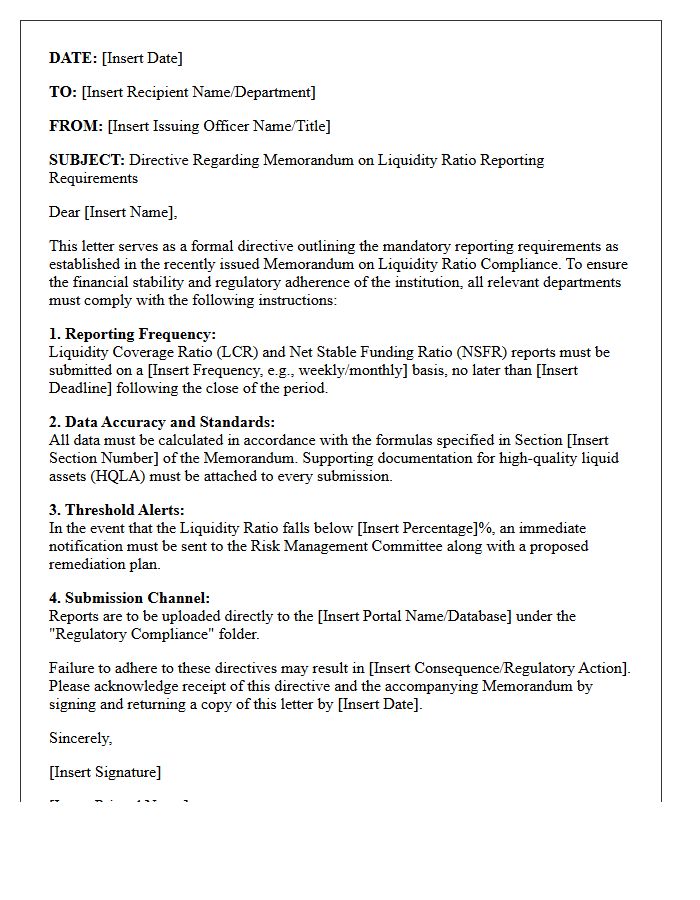
The Directive Letter outlines essential regulatory expectations for financial institutions regarding the Memorandum on Liquidity Ratio Reporting Requirements. It mandates standardized data submission to ensure accurate monitoring of short-term liquidity risk and institutional stability. Key compliance focus includes precise reporting of liquid assets and net cash outflows. Adhering to these reporting standards is vital for maintaining transparency and fulfilling statutory obligations. Failure to align with these guidelines can result in regulatory scrutiny, making timely and accurate data disclosure a priority for risk management and legal conformity.
Executive Letter Detailing the Memorandum on Liquidity Ratio Reporting Requirements
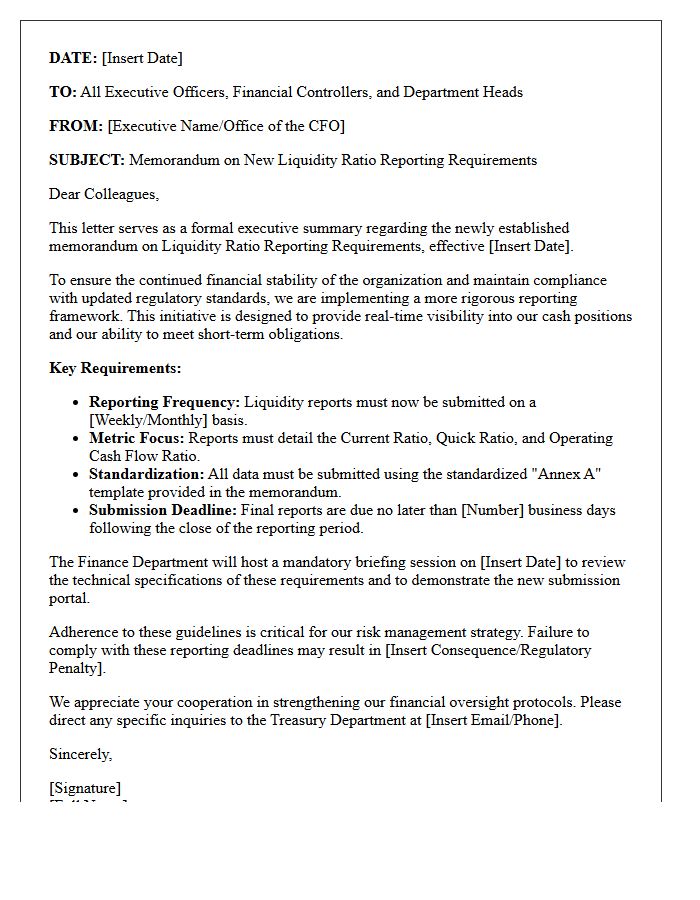
The executive letter clarifies the Liquidity Ratio Reporting standards, ensuring financial institutions maintain sufficient liquid assets to meet short-term obligations. This memorandum mandates precise compliance with regulatory timelines and data accuracy to mitigate systemic risk. Key requirements include granular asset classification and frequent reporting cycles. Understanding these guidelines is essential for treasury management to ensure financial stability and avoid regulatory penalties during liquidity stress testing audits.
Notification Letter Concerning the Memorandum on Liquidity Ratio Reporting Requirements
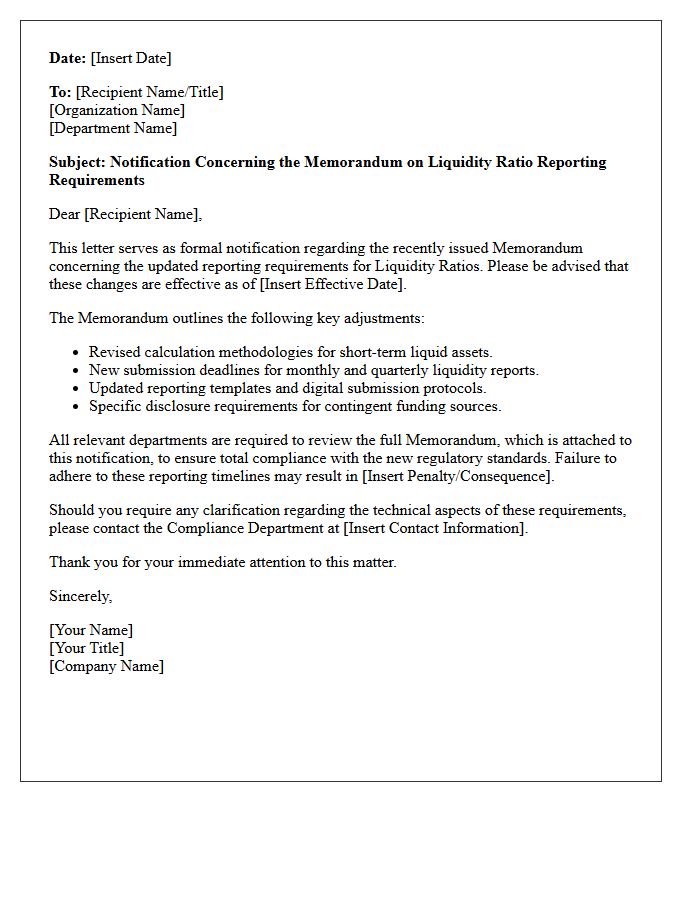
The Notification Letter regarding liquidity ratio reporting outlines critical updates to financial oversight standards. It clarifies the Memorandum mandate, ensuring that institutions maintain adequate liquid assets to meet short-term obligations. This regulatory document specifies precise reporting requirements, including standardized formats and strict submission deadlines. Adherence is essential for transparent risk management and maintaining market stability. Financial entities must review these guidelines to ensure full compliance with the updated liquidity ratio protocols and avoid potential regulatory penalties or oversight discrepancies.
Advisory Letter Accompanying the Memorandum on Liquidity Ratio Reporting Requirements
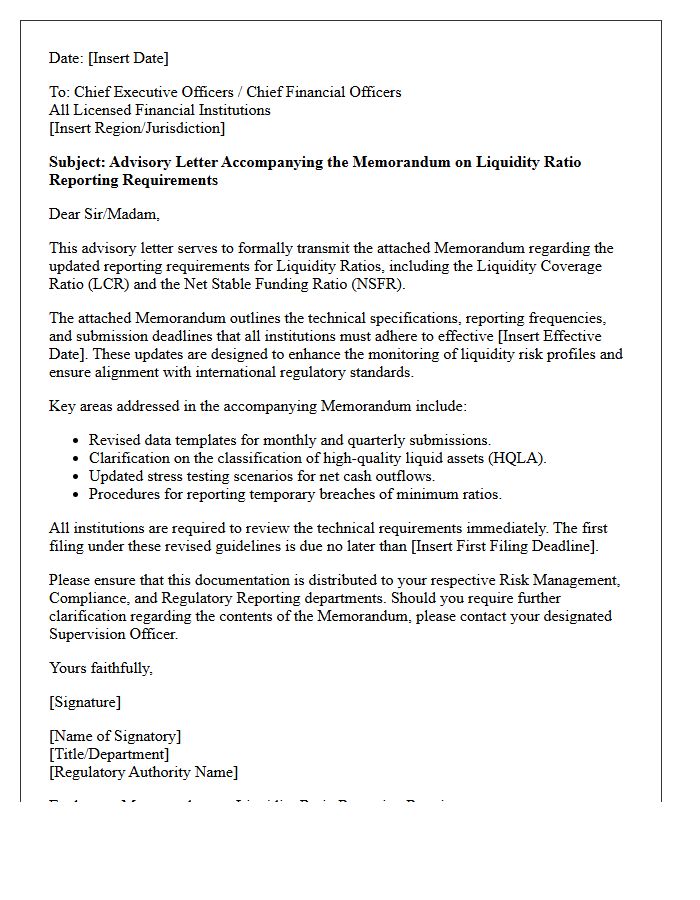
The Advisory Letter Accompanying the Memorandum on Liquidity Ratio Reporting Requirements provides essential guidance for financial institutions to ensure regulatory compliance. It clarifies technical standards for calculating and submitting liquidity coverage ratios to oversight bodies. This document ensures standardized reporting across the banking sector, helping regulators monitor market stability. Financial firms must align their internal risk management systems with these specific mandates to avoid penalties. Accurate reporting is critical for maintaining financial transparency and ensuring that institutions hold sufficient liquid assets to meet short-term obligations during economic stress.
Regulatory Letter Appending the Memorandum on Liquidity Ratio Reporting Requirements
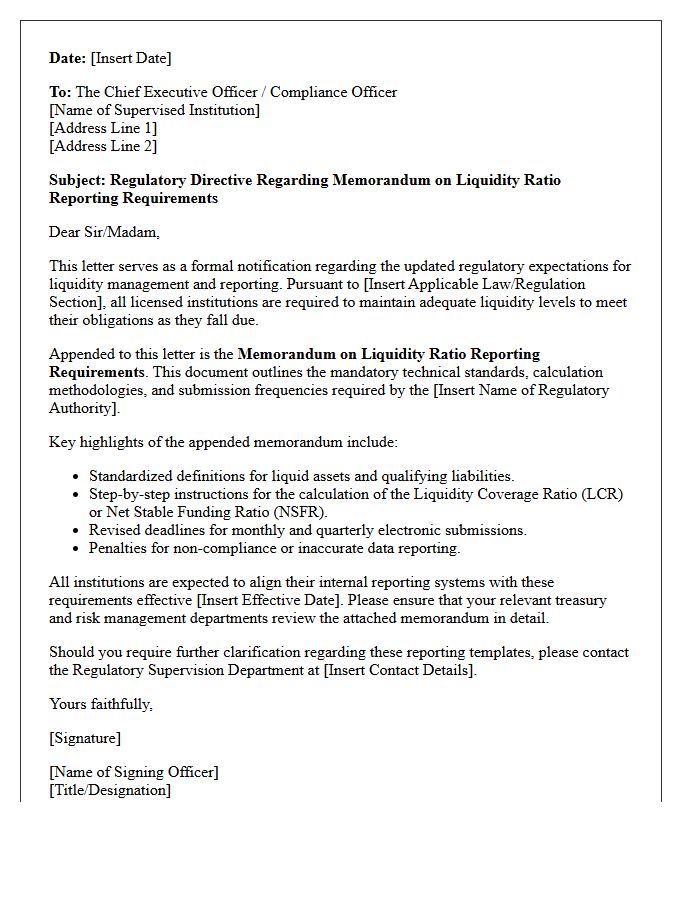
The Regulatory Letter serves as a critical supplement to the existing framework for Liquidity Ratio Reporting. It provides updated instructions and clarifications for financial institutions to ensure standardized data submission. This document outlines specific compliance deadlines and technical specifications necessary for monitoring short-term solvency. Adhering to these refined reporting requirements is essential for regulatory transparency and helps authorities assess the overall stability of the banking sector. Institutions must integrate these amendments into their internal auditing processes to mitigate operational risks and ensure accurate financial disclosure.
Internal Bank Letter Addressing the Memorandum on Liquidity Ratio Reporting Requirements
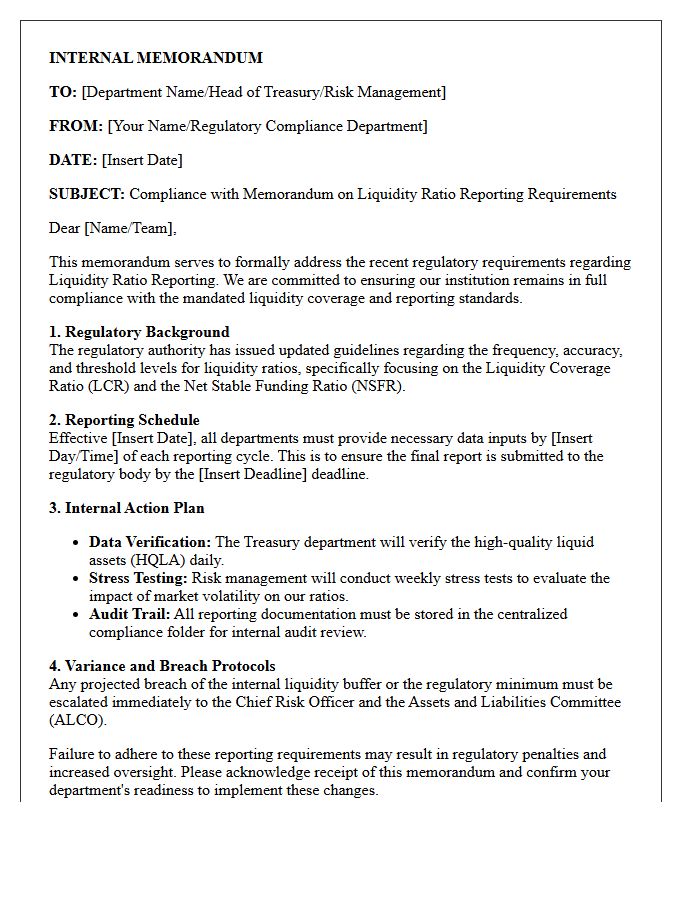
The Internal Bank Letter serves as a critical directive regarding the Memorandum on Liquidity Ratio Reporting Requirements. It outlines mandatory compliance frameworks for monitoring short-term liquidity stability. Financial institutions must adhere to these standardized reporting protocols to ensure transparency and regulatory alignment with central bank mandates. Key focus areas include the precise calculation of Liquid Assets against net cash outflows. Failure to implement these guidelines can result in oversight penalties, making it essential for risk management teams to integrate these reporting standards into their core operational workflows immediately.
Supervisory Letter Introducing the Memorandum on Liquidity Ratio Reporting Requirements
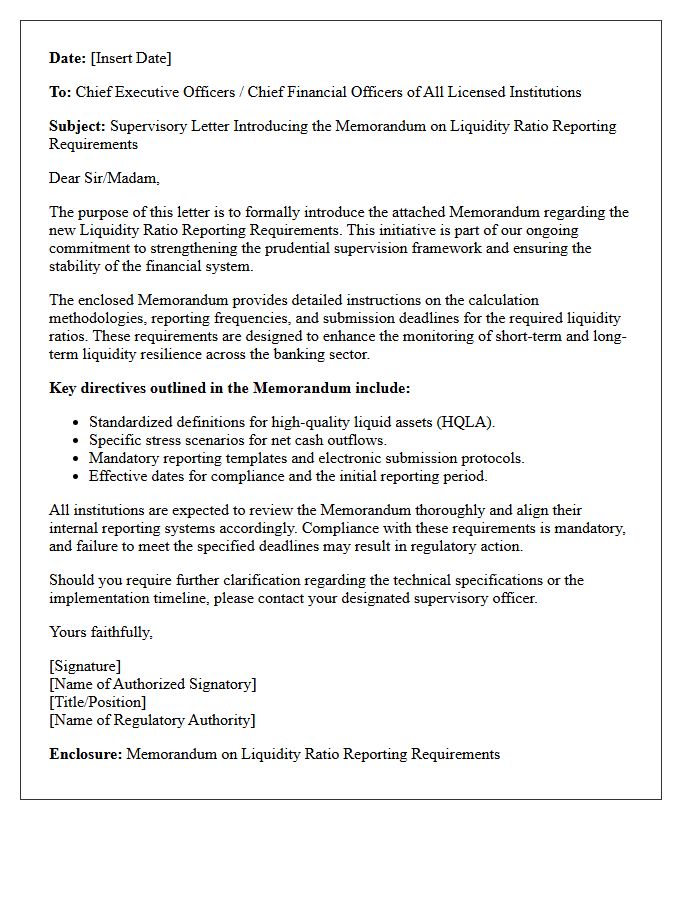
The Supervisory Letter introduces a critical Memorandum establishing standardized liquidity ratio reporting requirements for financial institutions. It mandates systematic data collection to enhance regulatory oversight and ensure banks maintain sufficient liquid assets against potential stress. This directive ensures financial stability by aligning reporting frequencies and calculation methodologies across the banking sector. Compliance is essential for accurate risk assessment, allowing supervisors to monitor institutional resilience and prevent systemic liquidity shortages through transparent, high-quality data disclosures.
Statutory Letter Enforcing the Memorandum on Liquidity Ratio Reporting Requirements
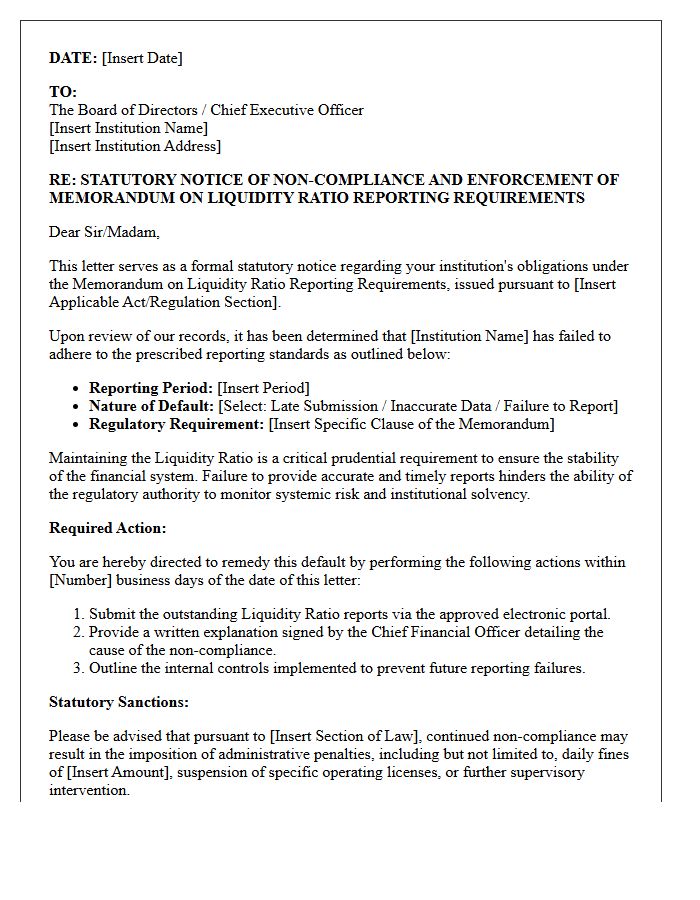
Financial institutions must strictly adhere to the Statutory Letter governing liquidity reporting. This regulatory mandate enforces the Memorandum on Liquidity Ratio Reporting Requirements, ensuring standardized data submission to oversight authorities. The primary objective is to maintain financial stability by monitoring liquidity coverage and funding risks. Compliance is mandatory, as these guidelines dictate the frequency, format, and accuracy of quantitative disclosures. Failure to meet these reporting standards can result in supervisory intervention or penalties, making it essential for firms to align their internal monitoring systems with the specified regulatory framework.
Management Letter Forwarding the Memorandum on Liquidity Ratio Reporting Requirements
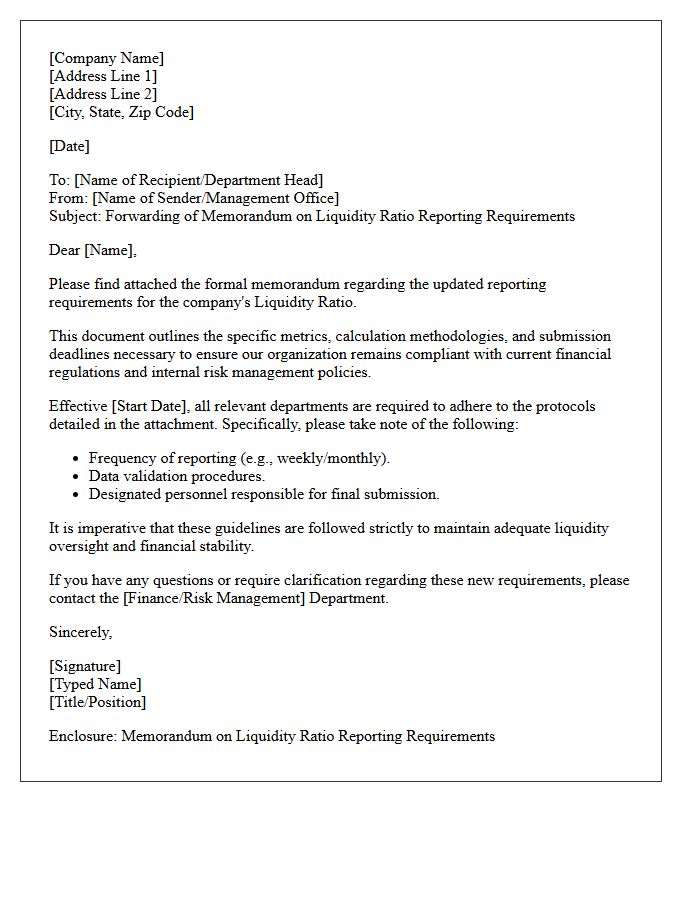
The Management Letter serves as the official instrument for forwarding the Memorandum on Liquidity Ratio Reporting Requirements to financial institutions. This document outlines mandatory compliance standards, ensuring banks maintain adequate liquid assets to meet short-term obligations. It specifies precise calculation methodologies, reporting frequencies, and data accuracy expectations required by regulatory bodies. Adhering to these liquidity guidelines is essential for institutional stability and effective risk management within the financial sector.
Policy Letter Enclosing the Memorandum on Liquidity Ratio Reporting Requirements
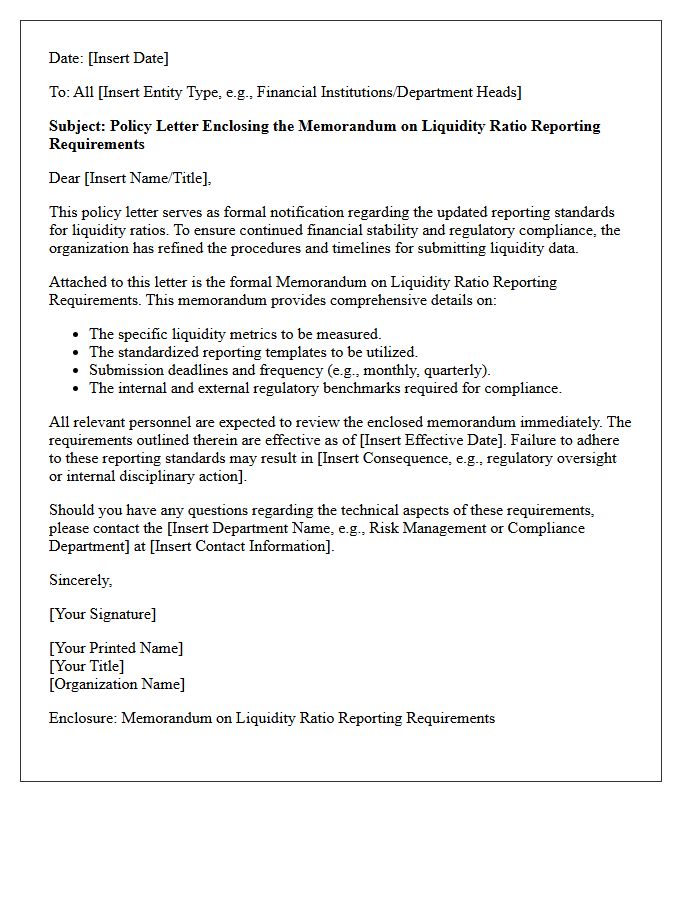
The policy letter serves as a formal notification regarding the updated Liquidity Ratio Reporting Requirements for financial institutions. It establishes standardized protocols for monitoring short-term resilience and ensures banks maintain sufficient high-quality liquid assets. This directive outlines the specific reporting templates, deadlines, and calculation methodologies mandated by regulatory bodies. Adherence is critical for prudential supervision, as it allows authorities to assess institutional stability during market stress. Organizations must align their internal auditing processes with this memorandum to guarantee transparent and accurate data submission.
What is the purpose of the Memorandum on Liquidity Ratio Reporting Requirements?
The memorandum establishes standardized guidelines and mandatory reporting schedules for financial institutions to disclose their Liquidity Coverage Ratio (LCR) and Net Stable Funding Ratio (NSFR) to regulatory authorities.
Who is required to comply with these liquidity reporting standards?
Compliance is mandatory for all licensed banking institutions, including commercial banks, investment banks, and designated financial holding companies, as specified under the prevailing prudential framework.
What are the primary data points required in the liquidity ratio report?
Institutions must provide detailed data on High-Quality Liquid Assets (HQLA), total net cash outflows over a 30-day stress period, and available stable funding (ASF) versus required stable funding (RSF).
How frequently must institutions submit their liquidity ratio disclosures?
According to the memorandum, liquidity ratio reports must be submitted on a monthly basis, no later than the 15th day of the following calendar month, unless otherwise directed by the central authority.
What are the penalties for non-compliance with the liquidity reporting requirements?
Failure to submit accurate or timely reports may result in administrative sanctions, increased capital surcharges, or restricted operational activities as determined by the regulatory oversight committee.


Comments