
This memorandum outlines essential guidelines for meeting regulatory compliance training mandates across your organization. It ensures all employees remain updated on legal requirements and industry standards to mitigate corporate risk. Understanding these protocols is vital for maintaining operational integrity and avoiding legal penalties. To simplify your documentation process, below are some ready to use templates.
Image cover: Official Memorandum Templates for Mandatory Regulatory Compliance Training
Letter Samples List
- Letter of Mandated Anti-Money Laundering Training for Retail Banking Staff
- Executive Letter Regarding Annual Bank Secrecy Act Compliance Training
- Official Letter Announcing Mandatory Consumer Financial Protection Bureau Training
- Notification Letter on Required Know Your Customer Regulatory Modules
- Compliance Department Letter Dictating Fair Lending Act Education Mandates
- Management Letter Outlining Regulatory Training Schedules for Branch Managers
- Internal Letter on Mandatory Financial Information Security and Privacy Training
- Leadership Letter Enforcing Global Sanctions Compliance Training Deadlines
- Board of Directors Letter Mandating Fraud Prevention Regulatory Courses
- Human Resources Letter Regarding Compliance Training Certification Requirements
- Departmental Letter Detailing Dodd-Frank Act Compliance Training Expectations
- Supervisory Letter on Required Risk Management and Regulatory Compliance Sessions
Letter of Mandated Anti-Money Laundering Training for Retail Banking Staff
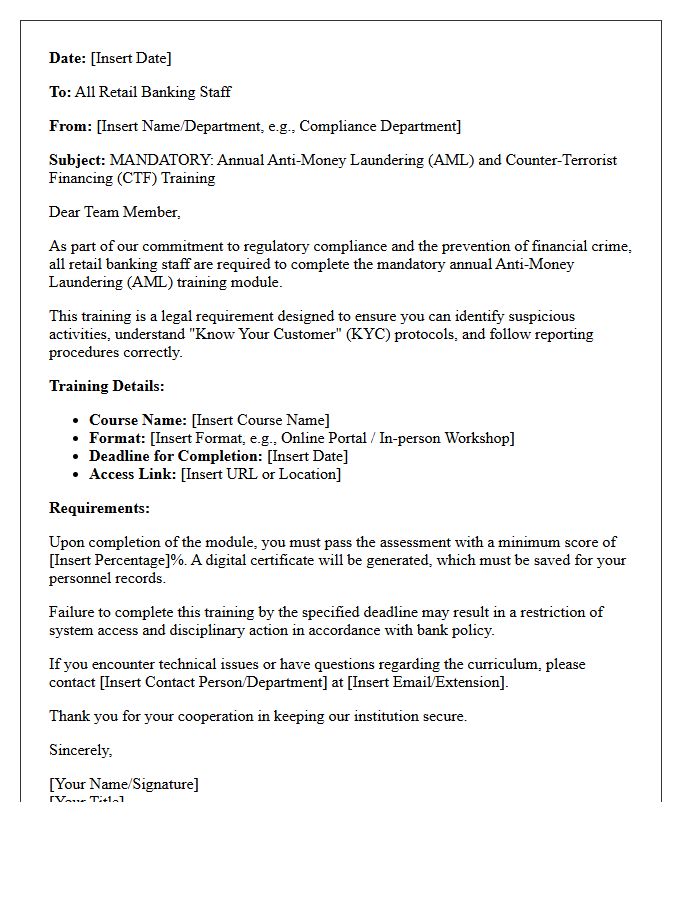
Retail banking institutions must issue a Letter of Mandated Anti-Money Laundering Training to ensure all staff members complete essential regulatory education. This formal document outlines required modules covering suspicious activity reporting and KYC compliance protocols. Failure to participate in this mandatory AML training can result in severe legal penalties for the bank and disciplinary action for the employee. Regular updates to this training are vital for identifying evolving financial crimes, protecting the integrity of the global financial system, and maintaining strict adherence to current banking regulations.
Executive Letter Regarding Annual Bank Secrecy Act Compliance Training
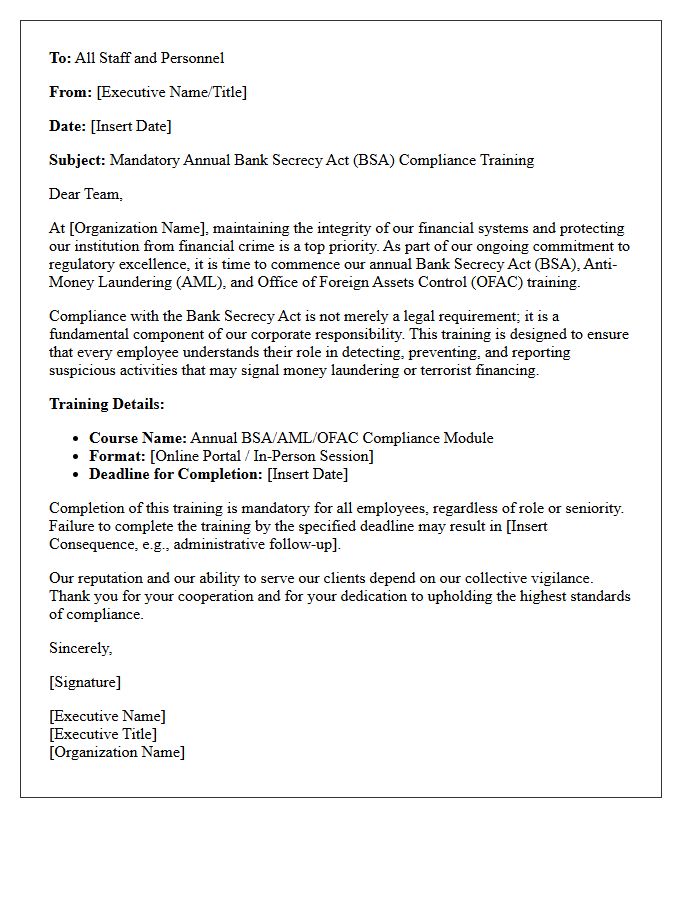
The Executive Letter serves as a formal mandate requiring all employees to complete Annual Bank Secrecy Act Compliance Training. This document emphasizes the organization's commitment to preventing financial crimes like money laundering and terrorist financing. It outlines specific deadlines, legal obligations, and the consequences of non-compliance. By reinforcing regulatory adherence, the letter ensures the institution maintains its operational license and protects its reputation. Staff must acknowledge their understanding of AML protocols to ensure the bank remains aligned with federal oversight standards and internal risk management policies.
Official Letter Announcing Mandatory Consumer Financial Protection Bureau Training
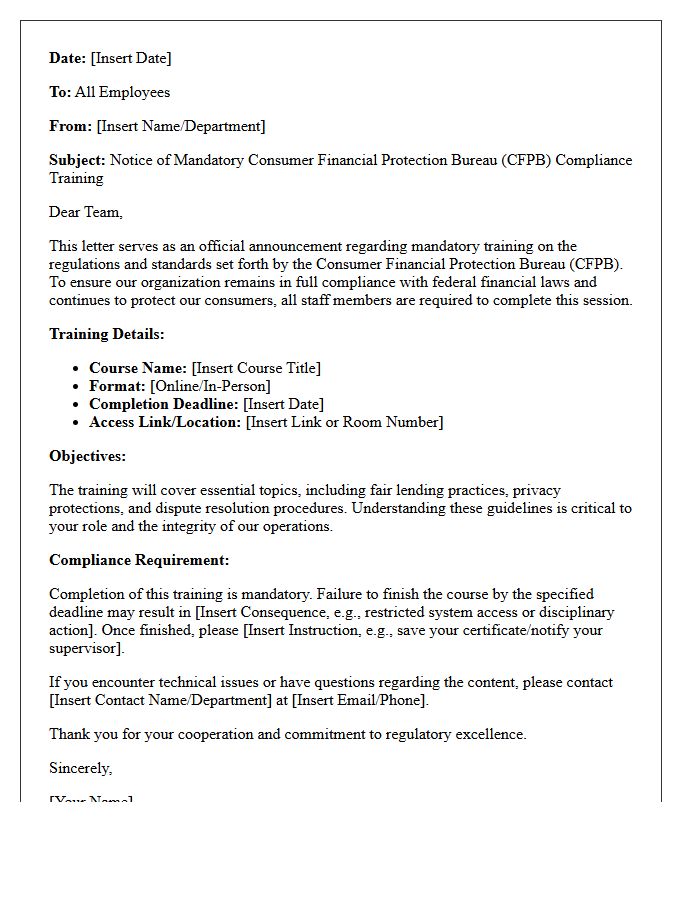
The Consumer Financial Protection Bureau (CFPB) mandates specific compliance training to ensure fair lending practices and consumer privacy. This official letter outlines compulsory educational requirements for staff to mitigate regulatory risks and prevent deceptive acts. Completing this mandatory training is essential for maintaining institutional legal standing and protecting consumer rights. Employees must adhere to the deadlines specified in the notice to avoid administrative penalties. Understanding these federal guidelines ensures that financial services remain transparent, secure, and fully compliant with current regulatory standards and consumer protection laws.
Notification Letter on Required Know Your Customer Regulatory Modules
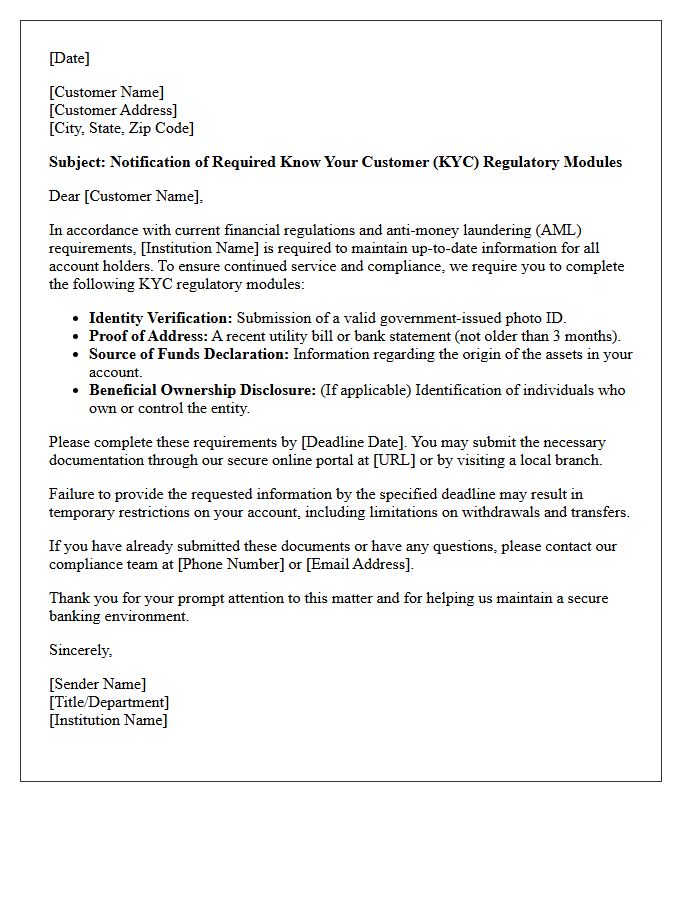
The Notification Letter on Required KYC Regulatory Modules is a formal request from financial institutions to verify your identity. It outlines specific compliance modules mandated by international anti-money laundering regulations. To prevent account restrictions, you must submit updated documentation, such as proof of address or corporate structures, within the specified deadline. This process ensures regulatory transparency and helps mitigate financial crimes like fraud or terrorist financing. Always respond promptly to these notices to maintain uninterrupted access to your banking services and ensure full legal adherence to current banking standards.
Compliance Department Letter Dictating Fair Lending Act Education Mandates
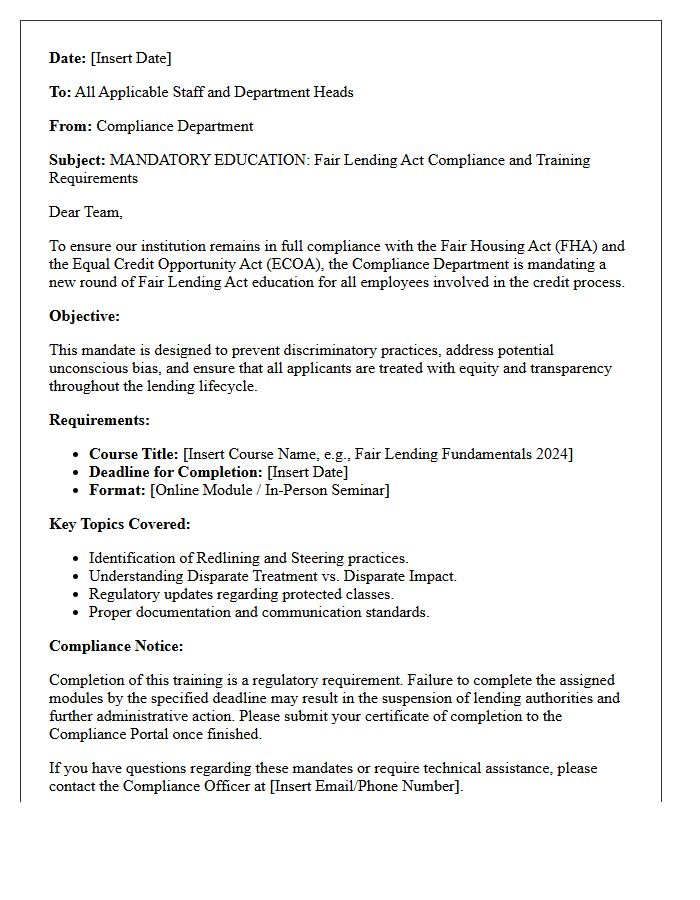
Receiving a Compliance Department Letter regarding Fair Lending Act education mandates is a critical regulatory requirement for financial institutions. This document outlines mandatory training protocols designed to prevent discriminatory practices in credit transactions based on race, religion, or gender. Staff must complete these modules to ensure adherence to federal regulations and mitigate legal risks. Timely completion is essential to maintain organizational integrity and prove compliance oversight during official audits, ensuring all lending activities remain equitable, transparent, and fully aligned with statutory standards and consumer protection laws.
Management Letter Outlining Regulatory Training Schedules for Branch Managers
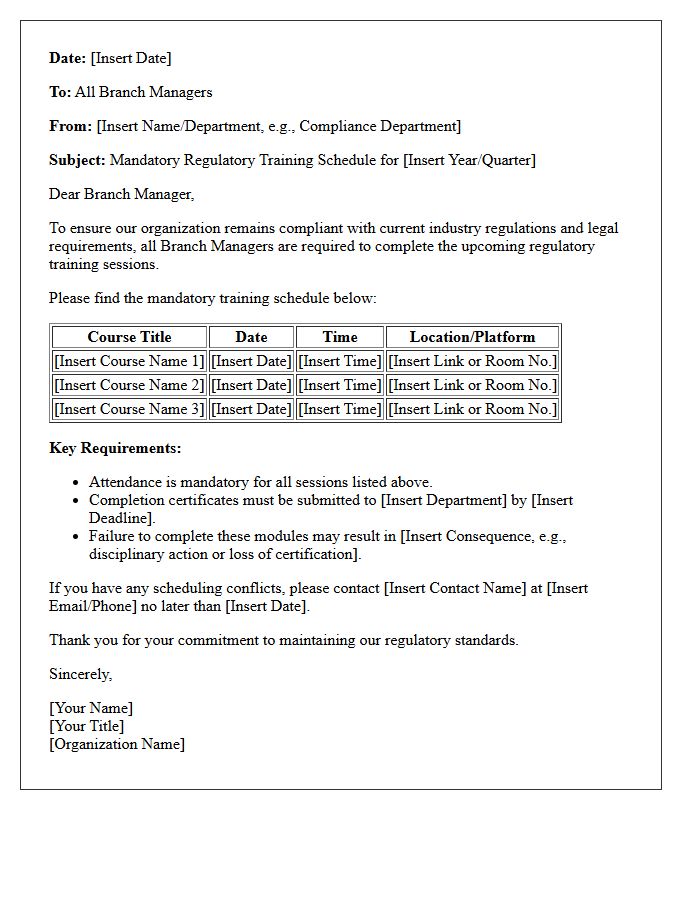
A management letter detailing regulatory training schedules serves as a critical compliance roadmap for branch managers. This document outlines mandatory legal updates, completion deadlines, and specific protocols required to maintain industry standards. By formalizing these timelines, the organization ensures operational accountability and risk mitigation across all locations. Managers must prioritize these sessions to align team activities with current governance frameworks and avoid potential penalties. Clear communication of these schedules fosters a culture of professional excellence and ensures every branch remains fully compliant with statutory requirements.
Internal Letter on Mandatory Financial Information Security and Privacy Training
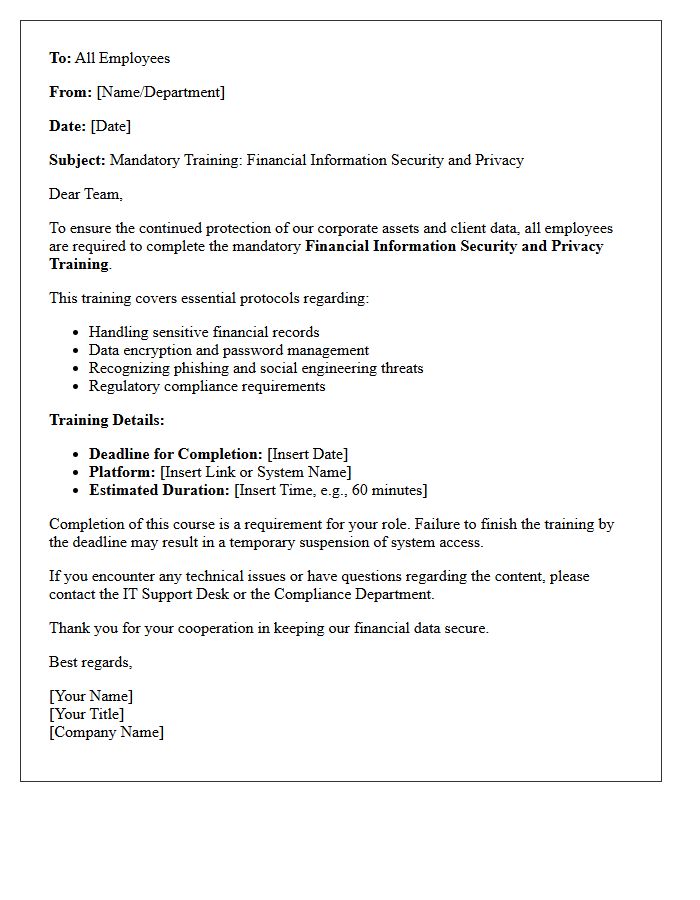
All employees must complete the Mandatory Financial Information Security and Privacy Training to ensure regulatory compliance. This session focuses on safeguarding sensitive data and preventing unauthorized access to corporate financial records. Participation is compulsory to mitigate cybersecurity risks and uphold strict privacy standards. Failure to finish the module by the specified deadline may result in restricted system access. Understanding these protocols is vital for maintaining financial integrity and protecting the organization from potential data breaches and legal liabilities.
Leadership Letter Enforcing Global Sanctions Compliance Training Deadlines
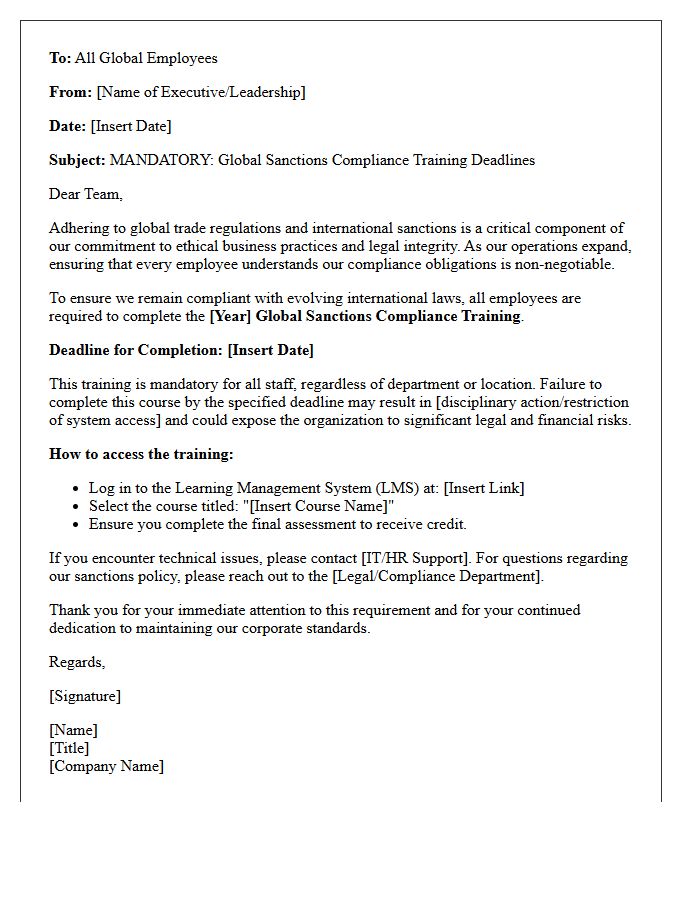
All employees must complete the mandatory Global Sanctions Compliance Training by the specified deadline to ensure organizational integrity. This directive, issued by senior leadership, underscores our commitment to regulatory adherence and risk mitigation. Failure to finish the modules on time may result in restricted system access or disciplinary action. Understanding international trade restrictions and prohibited party screenings is essential to protecting our reputation. Please prioritize this compliance requirement immediately to uphold our legal obligations and maintain operational security across all global jurisdictions.
Board of Directors Letter Mandating Fraud Prevention Regulatory Courses
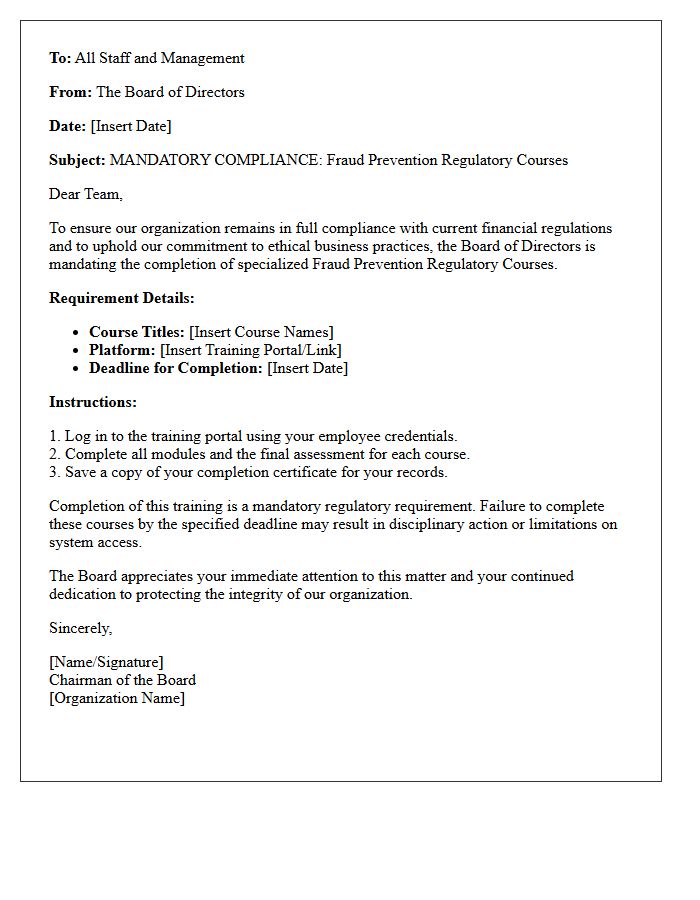
The Board of Directors has issued a formal letter mandating that all employees complete Fraud Prevention Regulatory Courses to ensure organizational compliance. This directive aims to strengthen internal controls and mitigate financial risks associated with deceptive practices. By prioritizing regulatory education, the board reinforces a culture of integrity and transparency. Participation is compulsory to meet legal requirements and protect the company's reputation. Understanding these protocols is essential for identifying vulnerabilities and upholding fiduciary responsibilities across all departments effectively.
Human Resources Letter Regarding Compliance Training Certification Requirements
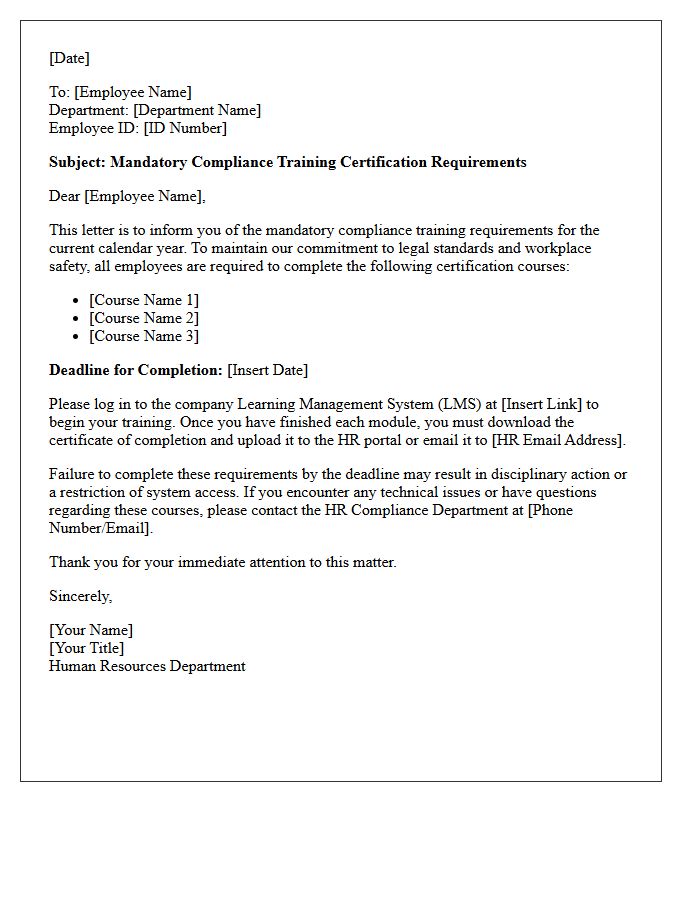
Employees must complete mandatory Compliance Training to meet legal and organizational standards. This HR letter outlines essential certification requirements, including firm completion deadlines and consequences for non-compliance. These programs cover critical topics like workplace safety, data privacy, and ethical conduct to mitigate risk. Staff are required to submit their certificates via the portal to ensure accurate regulatory tracking. Timely participation is vital to maintain operational integrity and ensure the company remains in full alignment with industry laws and internal governance policies.
Departmental Letter Detailing Dodd-Frank Act Compliance Training Expectations
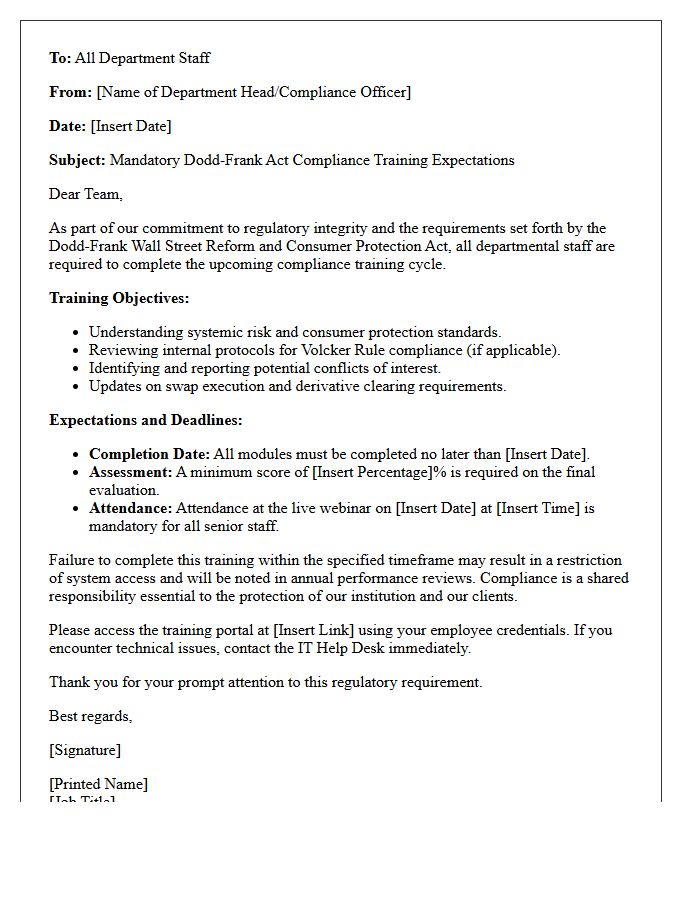
The departmental letter outlines critical regulatory expectations for financial institutions regarding Dodd-Frank Act compliance training. It mandates comprehensive programs tailored to specific roles to mitigate systemic risk and ensure consumer protection. Key requirements include documented board oversight, regular audit cycles, and updated curricula reflecting current legislative shifts. Organizations must demonstrate that employees understand complex derivatives, Volcker Rule restrictions, and transparency standards. Failure to maintain rigorous training protocols can lead to significant compliance failures and legal penalties, making adherence to these internal guidelines essential for operational integrity.
Supervisory Letter on Required Risk Management and Regulatory Compliance Sessions
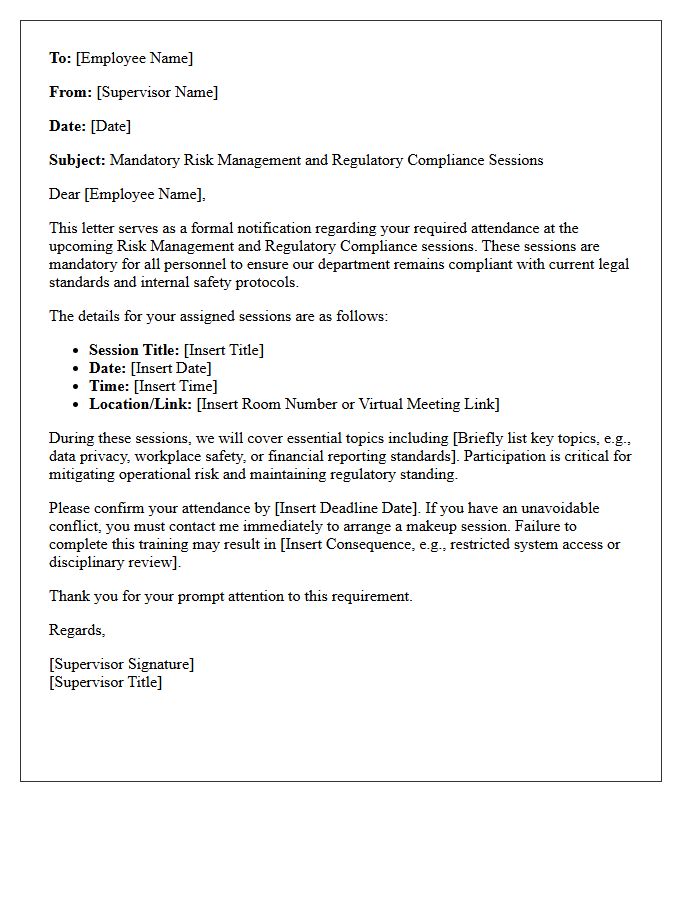
Financial institutions must prioritize the Supervisory Letter on Required Risk Management and Regulatory Compliance Sessions to ensure operational stability. This directive mandates that senior management and boards attend structured meetings focused on internal controls, risk mitigation strategies, and legal adherence. These sessions aim to bridge gaps between organizational practices and regulatory expectations, fostering a proactive safety culture. Failure to document and implement insights from these sessions can lead to enforcement actions, making active participation essential for maintaining a compliant and resilient corporate governance framework.
What is the primary purpose of the Memorandum on Regulatory Compliance Training Mandates?
The memorandum outlines mandatory training requirements designed to ensure all personnel understand and adhere to federal, state, and industry-specific legal standards, thereby mitigating institutional risk and ensuring operational integrity.
Who is required to complete the compliance training modules specified in the memo?
All full-time, part-time, and contract employees are required to complete the training, though specific modules may be assigned based on an individual's department, job function, or level of access to sensitive data.
What are the deadlines for completing the newly mandated compliance training?
Current employees must complete all assigned modules within 30 days of the memorandum's issuance, while new hires are required to finalize their compliance certification within their first 10 days of employment.
How often must employees undergo refresher training for regulatory compliance?
Compliance training is an annual requirement; however, supplemental training may be mandated mid-cycle if there are significant changes to regulatory laws or internal corporate policies.
What are the consequences of non-compliance with the training mandates?
Failure to complete the mandated training within the specified timeframe may result in the suspension of system access, disciplinary action, and potential impact on performance evaluations and professional standing within the organization.

Comments