
Receiving an Anti-Money Laundering Account Freeze Notice can be a stressful experience, often resulting from flagged suspicious activity or compliance audits. It is crucial to understand your legal rights and the required documentation to restore access to your funds promptly. This guide explains why these restrictions occur and how to respond effectively. Below are some ready to use template options to assist you.
Image cover: Formal AML Account Freeze Notification Templates and Compliance Guidelines
Letter Samples List
- Bank Institution Official Letterhead
- Date of Notice Issuance
- Customer Name and Registered Address
- Formal Letter Salutation
- Anti-Money Laundering Account Freeze Notice Letter Subject
- Customer Account Details and Reference Number
- Declaration of Immediate Account Freeze Action
- Reference to Anti-Money Laundering Regulations
- Suspension of All Account Transactions
- Request for Source of Funds Documentation
- Deadline for Required Information Submission
- Notice of Potential Account Closure
- Dedicated Compliance Department Contact Information
- Formal Letter Closing Statement
- Authorized Bank Representative Signature
Bank Institution Official Letterhead
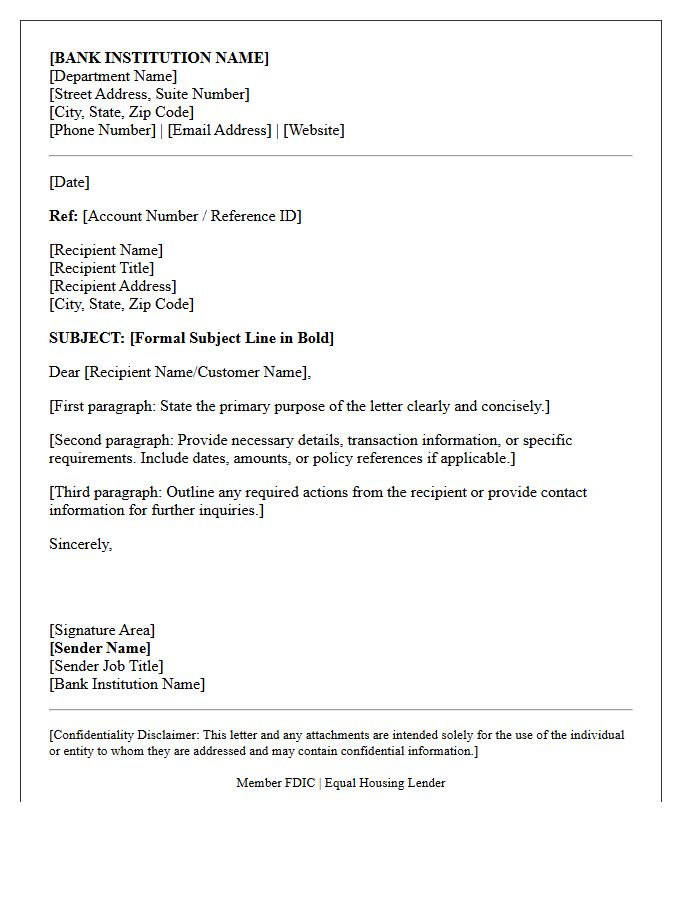
A Bank Institution Official Letterhead serves as a critical verification tool for financial authenticity. It must feature the bank's legal name, corporate logo, and registered contact information to ensure document legitimacy. These standardized headers are essential for proof of funds, loan approvals, and official correspondence, preventing fraudulent activity. When receiving such documents, always cross-reference the license details and address with official regulatory databases. This formal formatting guarantees that the communication is an authorized representation of the financial entity, providing legal accountability for all stated transactional data and account certifications.
Date of Notice Issuance
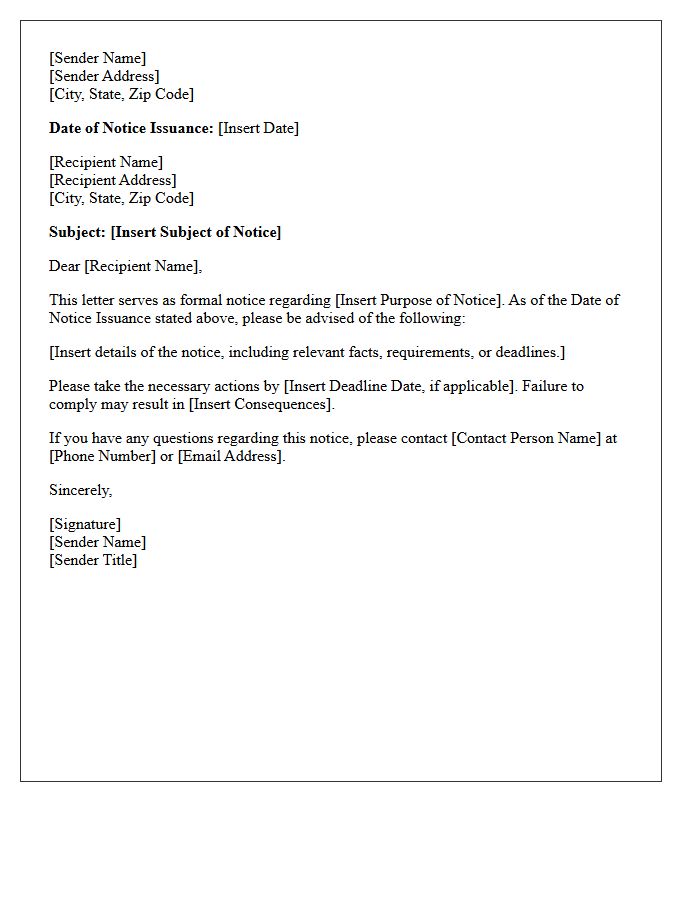
The Date of Notice Issuance marks the formal start of a legal or administrative timeline. It is the specific day a document is officially released and recorded by an authority. Knowing this date is critical for calculating strict deadlines, such as response windows, payment due dates, or appeal periods. To ensure compliance and protect your rights, always verify this date immediately upon receipt, as missing a deadline triggered by this issuance can lead to penalties or the loss of legal remedies.
Customer Name and Registered Address
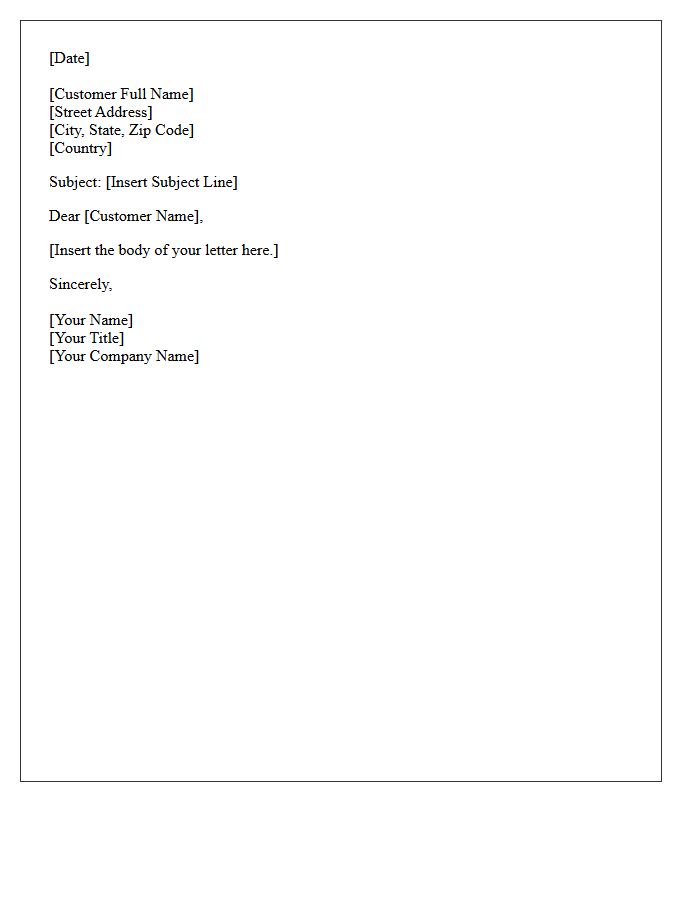
Accurate Customer Name and Registered Address details are essential for legal compliance and effective communication. The official name must match government-issued identification or corporate filings to ensure contract validity. Similarly, the registered address serves as the formal location for legal notices and tax residency verification. Keeping this information current prevents delivery failures and maintains the integrity of your business relationship. Always verify these credentials against official documentation to mitigate risks related to fraud or administrative errors in billing and service provisioning.
Formal Letter Salutation
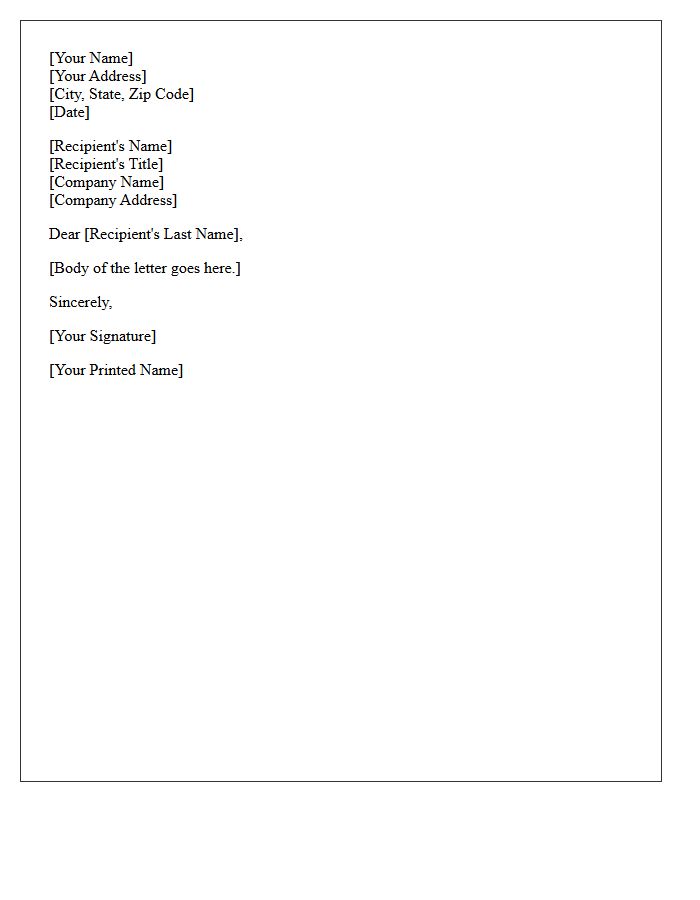
The most critical aspect of a formal letter salutation is matching the greeting to your recipient's identity. If the contact name is unknown, use "Dear Hiring Manager" or "To Whom It May Concern." When the name is known, use "Dear" followed by their honorific and surname. Avoid overly casual language to maintain professional etiquette. Correct punctuation, typically a colon in American English or a comma in British English, ensures your correspondence begins with the appropriate level of respect and professionalism for business standards.
Anti-Money Laundering Account Freeze Notice Letter Subject
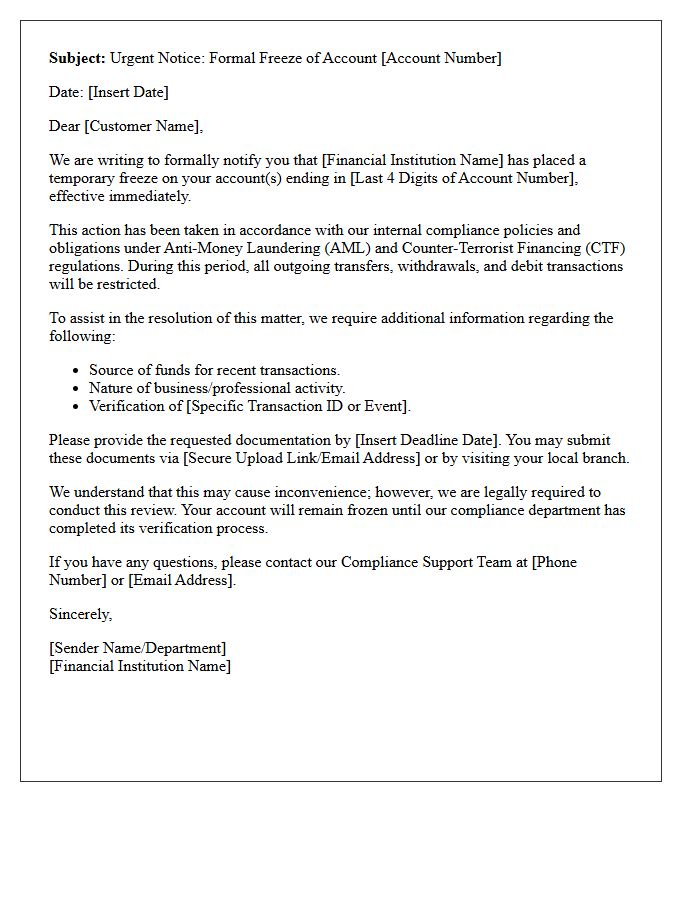
An Anti-Money Laundering (AML) account freeze notice letter is a formal communication from a financial institution stating that your access has been restricted due to suspicious activity. The most critical thing to know is that your funds are temporarily inaccessible while the bank conducts a mandatory regulatory review. To resolve this, you must promptly provide the requested Source of Wealth documentation. Avoid ignore these notices, as failure to comply can lead to permanent account closure or legal escalation under global financial compliance frameworks.
Customer Account Details and Reference Number
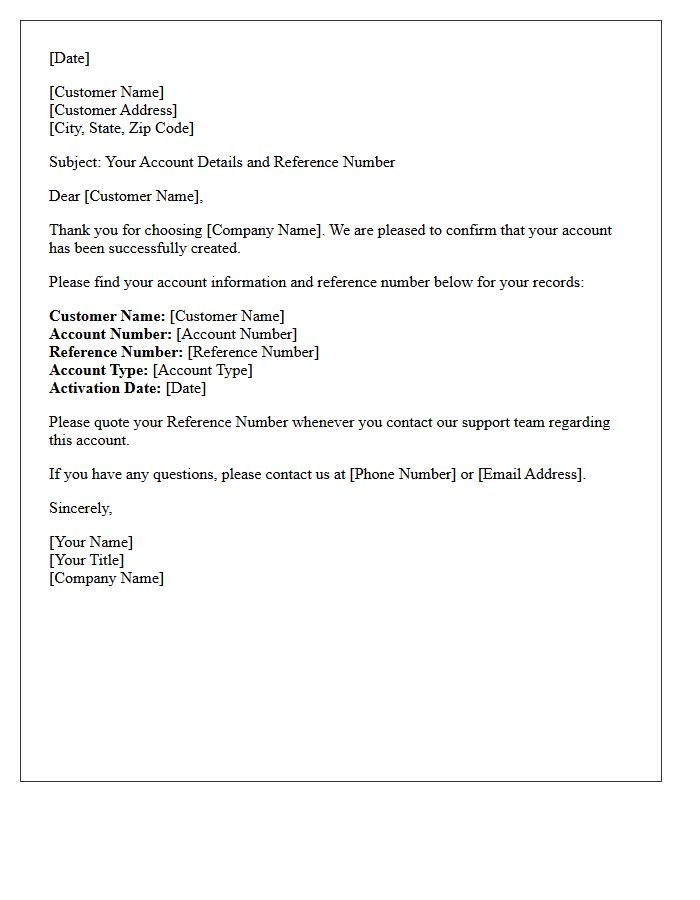
Your Customer Account Details are essential for managing your service profile and verifying your identity during support interactions. The Reference Number serves as a unique transaction identifier, ensuring that payments and inquiries are accurately linked to your billing history. Always keep these records secure to prevent unauthorized access. Providing these specific details when contacting support accelerates resolution times and minimizes errors. Understanding your unique account data is the primary step in maintaining seamless communication and ensuring precise financial tracking for all your professional or personal service requirements.
Declaration of Immediate Account Freeze Action
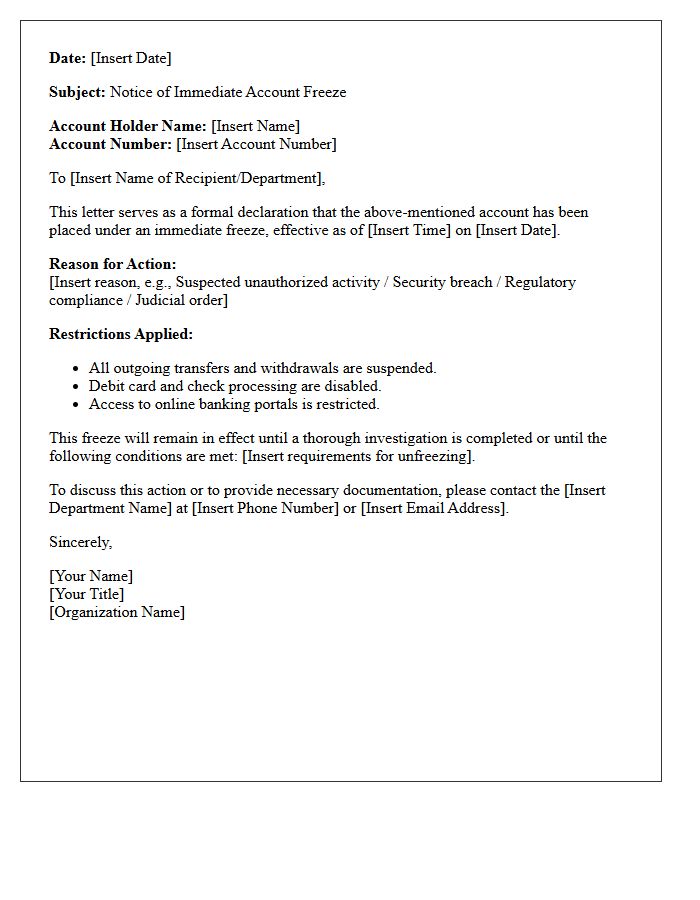
A Declaration of Immediate Account Freeze Action is a formal legal notification indicating that access to your funds has been restricted. This preventative measure is typically triggered by suspected fraudulent activity, court orders, or regulatory non-compliance. Upon issuance, all outgoing transactions are halted to protect assets or satisfy legal obligations. It is critical to contact your financial institution immediately to understand the specific compliance requirements or legal grounds for the restriction. Resolving this action often requires providing verified documentation or legal clearance to restore full account functionality and ensure financial security.
Reference to Anti-Money Laundering Regulations
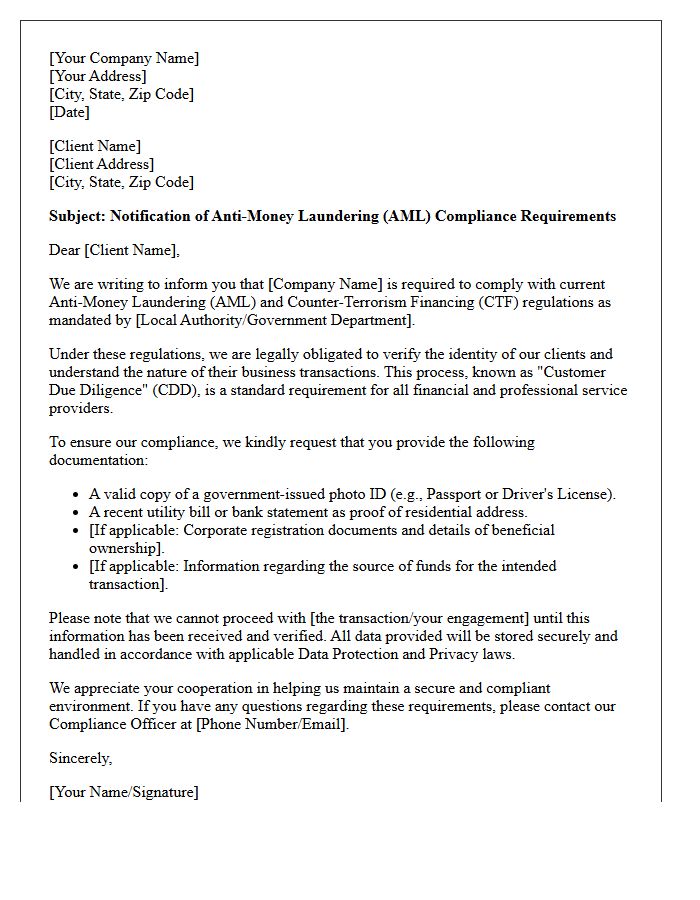
Compliance with Anti-Money Laundering (AML) regulations is essential for financial integrity. These legal frameworks require institutions to implement Customer Due Diligence (CDD) to verify identities and monitor transactions. By identifying suspicious activities, businesses prevent the layering of illicit funds into the economy. Failure to adhere to these standards results in severe legal penalties, heavy fines, and reputational damage. Maintaining robust Know Your Customer (KYC) protocols ensures transparency and helps combat global financial crimes, including terrorist financing and systemic fraud.
Suspension of All Account Transactions
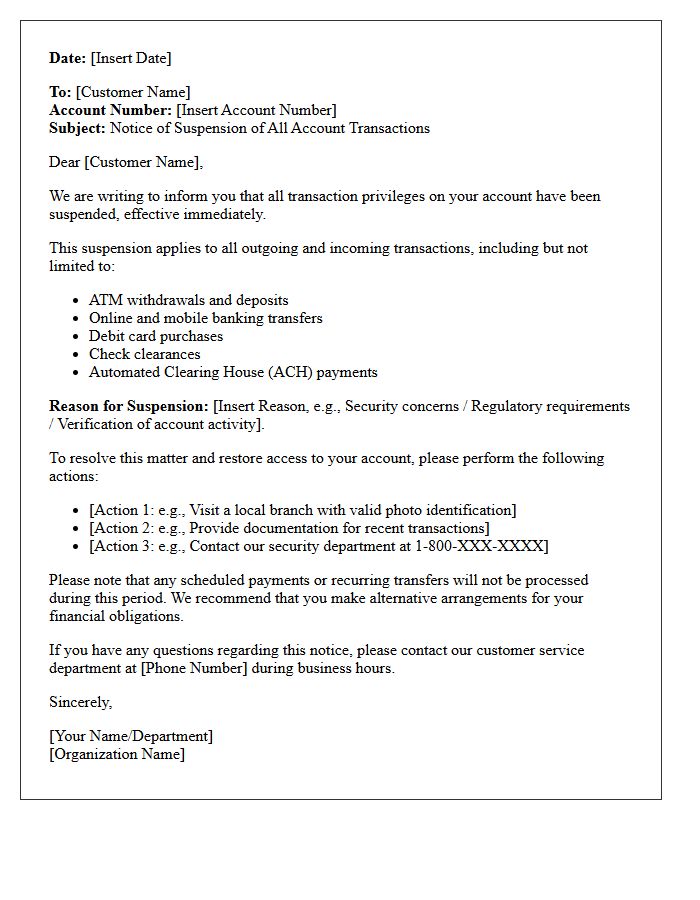
A Suspension of All Account Transactions is a restrictive measure where a financial institution freezes all debits and credits. This action typically occurs due to suspected fraud, security breaches, or regulatory non-compliance. During this period, you cannot withdraw funds, make transfers, or process payments. To resolve this, users must immediately contact their bank's compliance department to verify identity or provide necessary documentation. Understanding the specific reason for the freeze is essential to restoring full access and ensuring the security of your financial assets.
Request for Source of Funds Documentation
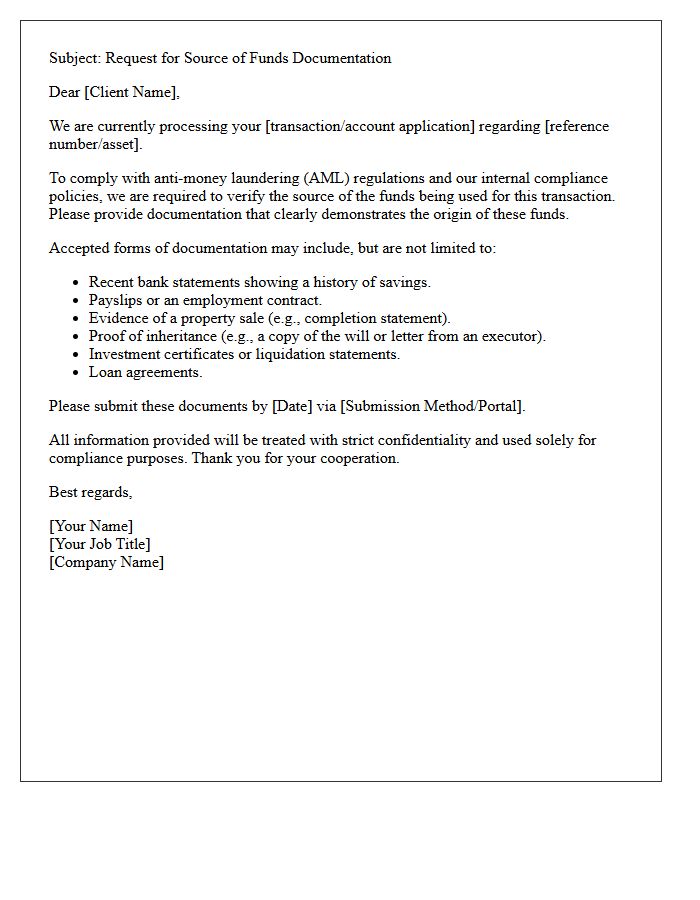
A Request for Source of Funds is a mandatory regulatory procedure used by financial institutions to prevent money laundering. When triggered, you must provide verifiable documentation, such as bank statements, payslips, or inheritance records, to prove the legal origin of your capital. Failure to comply can lead to transaction delays or account restrictions. Ensure your evidence is clear and consistent with your financial profile to satisfy compliance requirements and ensure smooth processing of high-value transfers or investments.
Deadline for Required Information Submission
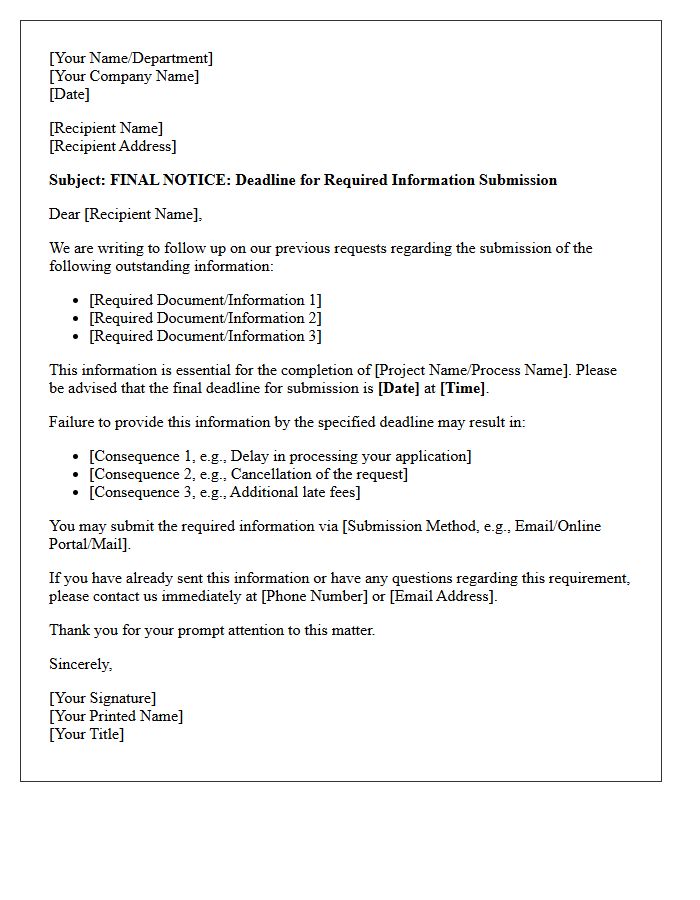
The Deadline for Required Information Submission is a critical cutoff date that ensures compliance and operational efficiency. Missing this timeframe often results in penalties, delayed processing, or total disqualification from a program. It is essential to verify the specific time zone and submission method well in advance to avoid technical glitches. Always aim to submit early to account for unexpected errors, as late entries are rarely accepted. Prioritizing this date protects your eligibility and maintains professional accountability throughout the application or reporting process.
Notice of Potential Account Closure
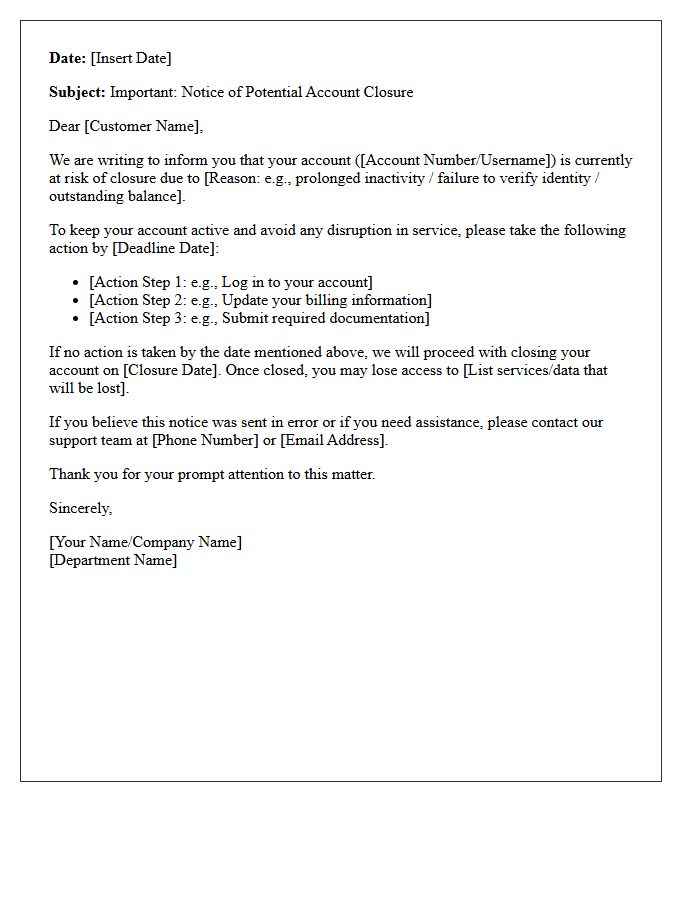
A Notice of Potential Account Closure is a formal warning that your service provider may terminate your access due to inactivity, policy violations, or outstanding balances. To prevent permanent data loss or service interruption, you must take immediate action as specified in the alert. This usually involves logging into your account, updating payment details, or verifying your identity within a strict timeframe. Always verify the sender's authenticity to avoid phishing scams before clicking links or providing sensitive information to resolve the status.
Dedicated Compliance Department Contact Information
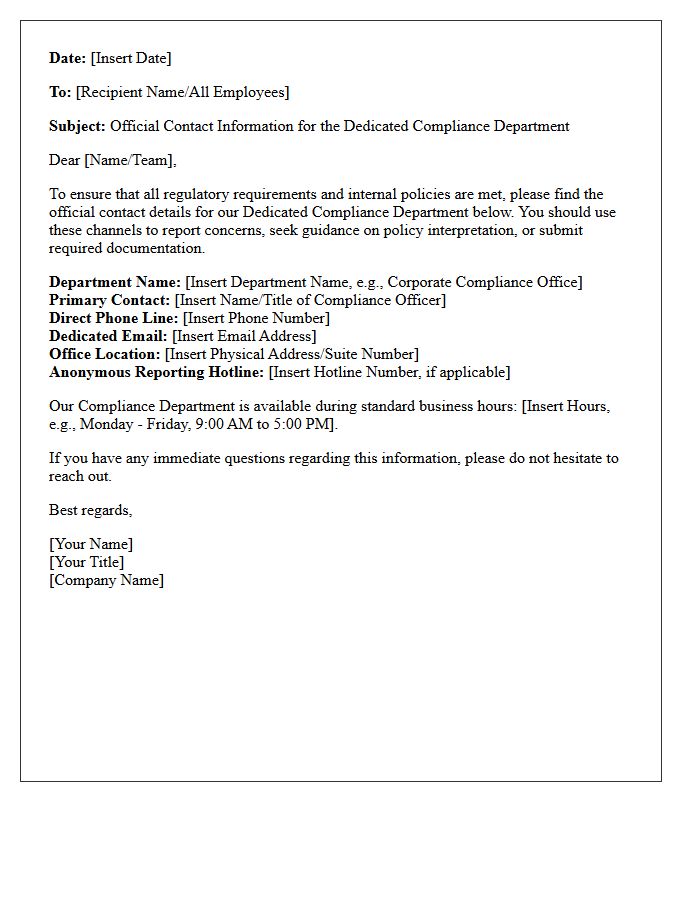
Establishing direct access to a Dedicated Compliance Department is essential for reporting regulatory concerns or seeking policy guidance. Organizations must provide transparent contact information, such as a secure email address, a verified phone line, or an anonymous whistleblower portal. Having these details readily available ensures that employees and stakeholders can uphold ethical standards and maintain legal integrity. Always verify the authenticity of the communication channels to protect sensitive data and ensure your reports reach the internal oversight team directly for swift resolution and risk mitigation.
Formal Letter Closing Statement
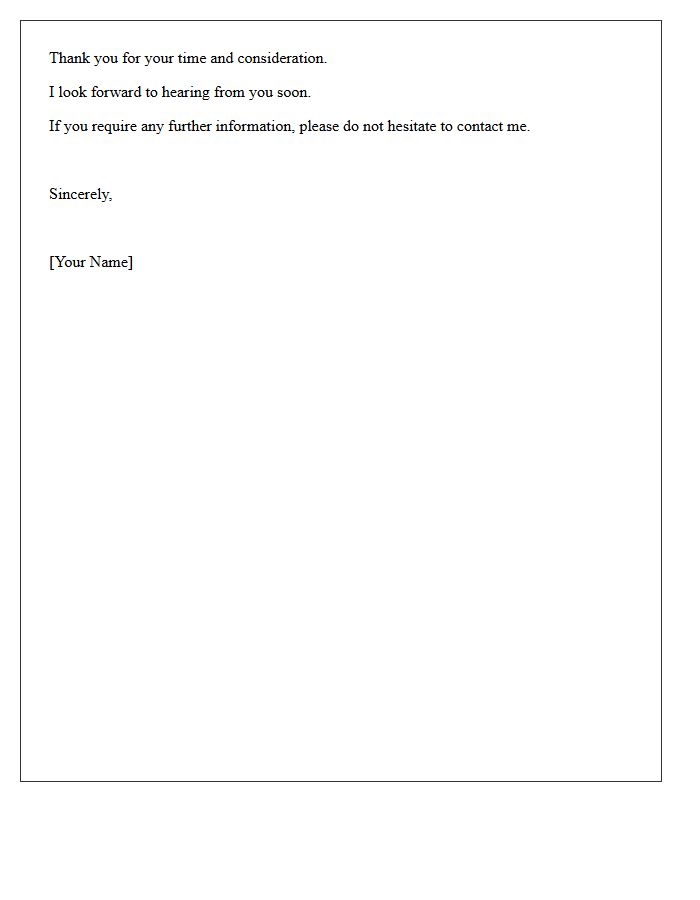
A professional formal letter closing statement ensures a polished conclusion that maintains professionalism and respect. The most common choice is Sincerely, which is appropriate for almost all business correspondence. If the recipient's name is unknown, Yours faithfully is the traditional alternative. Ensure your closing is followed by a comma, a signature space, and your printed name. Selecting the correct terminology reinforces your credibility and leaves a lasting positive impression on the reader, effectively bridging the transition from your message to your contact details.
Authorized Bank Representative Signature
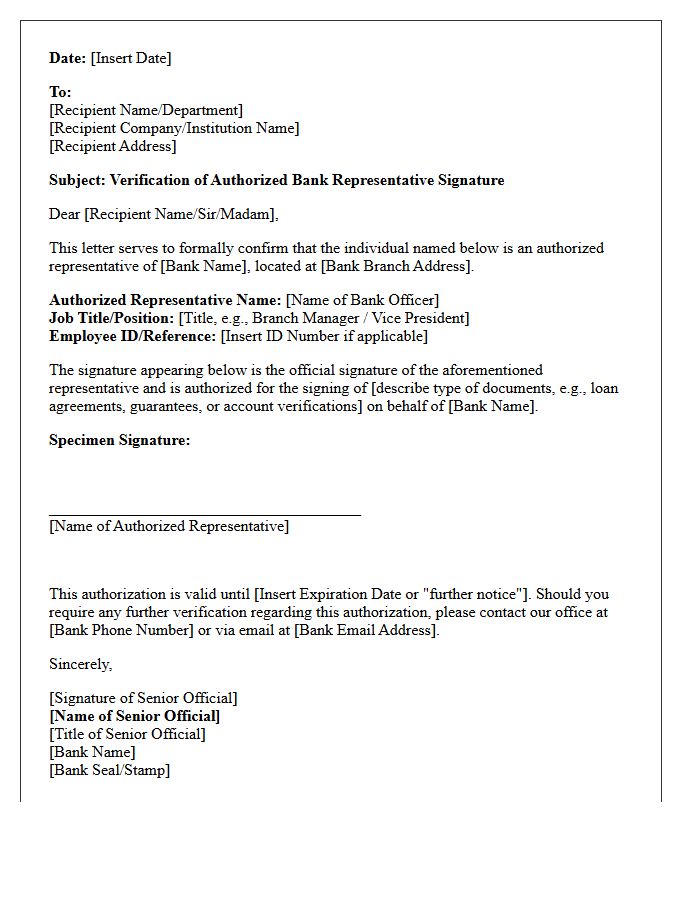
An Authorized Bank Representative Signature is a formal endorsement by a certified bank officer confirming that a document or transaction is valid and approved. This signature is critical for legal authentication, as it ensures the bank accepts responsibility for the specific financial action. It is often required for wire transfers, account changes, or Medallion Signature Guarantees. To obtain this, you typically must provide valid identification in person, ensuring the representative can verify your authority before applying their binding signature to official paperwork.
What is an Anti-Money Laundering (AML) account freeze notice?
An AML account freeze notice is a formal notification from a financial institution stating that access to your funds has been restricted. This action is typically taken to comply with legal regulations when suspicious activity is detected or when a manual compliance review is required to prevent potential money laundering or terrorist financing.
Why has my bank account been frozen for AML compliance?
Accounts are usually frozen due to irregular transaction patterns, large unexplained cash deposits, international transfers to high-risk jurisdictions, or inconsistencies in Know Your Customer (KYC) documentation. These triggers prompt the bank to temporarily halt activity while they verify the source of funds and the legitimacy of the transactions.
How long does an AML account freeze typically last?
The duration of an AML freeze varies depending on the complexity of the investigation and local jurisdiction laws. While some reviews are resolved within a few business days after providing requested documentation, complex investigations involving law enforcement or regulatory bodies can last several weeks or months.
What documents do I need to provide to unfreeze my account?
To resolve an AML freeze, you generally need to provide proof of the source of funds (such as pay stubs, tax returns, or sales contracts), updated government-issued identification, and detailed explanations for the specific transactions flagged by the bank's compliance department.
Can I withdraw money while my account is under AML investigation?
Generally, no. Once an AML freeze notice is issued, all outgoing transactions, including ATM withdrawals, wire transfers, and scheduled bill payments, are suspended. You must cooperate with the bank's compliance team and satisfy their information requests before full access to the account can be restored.

Comments