
A Notice of Revocation of Power of Attorney is a formal legal document used to officially terminate the authority previously granted to an agent. It ensures that third parties and institutions are legally notified that the representative can no longer act on your behalf. Protecting your legal interests requires timely communication of this cancellation. Below are some ready to use templates.
Image cover: Official Guide to Revoking Power of Attorney: Templates and Forms
Letter Samples List
- Letter of Revocation of Banking Power of Attorney
- Notice of Revocation of Power of Attorney Letter for Bank Accounts
- Bank Account Power of Attorney Revocation Letter
- Letter Notice of Revocation of Financial Power of Attorney
- Corporate Bank Account Power of Attorney Revocation Letter
- Letter of Revocation for Commercial Banking Power of Attorney
- Revocation Letter of Power of Attorney for Loan Management
- Banking Authorization and Power of Attorney Revocation Letter
- Letter of Revocation of Limited Banking Power of Attorney
- General Banking Power of Attorney Notice of Revocation Letter
- Wealth Management Power of Attorney Revocation Letter
- Letter of Notice to Revoke Financial Institution Power of Attorney
Letter of Revocation of Banking Power of Attorney
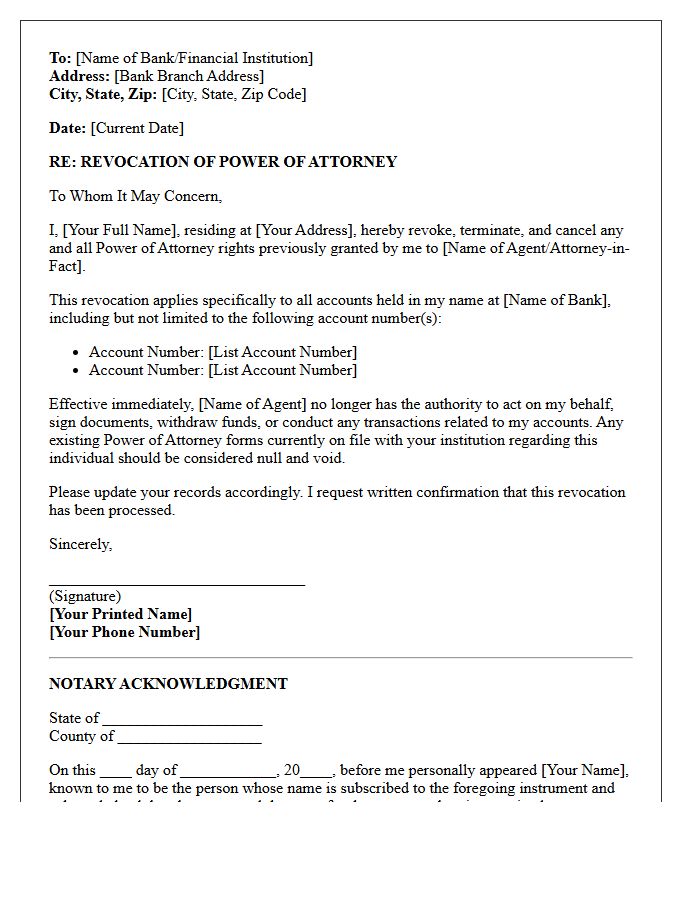
A Letter of Revocation of Banking Power of Attorney is a legal document used to formally cancel a previously granted authorization. By submitting this written notice to your financial institution, you immediately terminate an agent's right to access your accounts or conduct transactions. To ensure legal validity, the document must clearly identify the principal, the agent, and the specific power of attorney being voided. It is crucial to provide a notarized copy to your bank to prevent unauthorized activity and protect your assets from further third-party control.
Notice of Revocation of Power of Attorney Letter for Bank Accounts
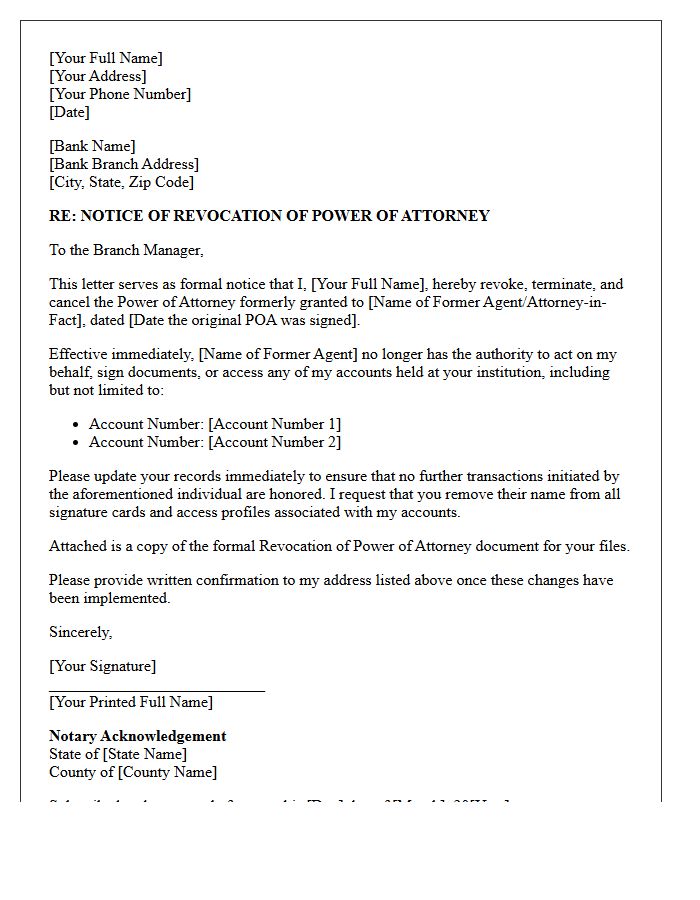
A Notice of Revocation is a formal legal document used to cancel a previously granted Power of Attorney. To protect bank accounts, you must provide a written copy to your financial institution immediately. This ensures the agent's authority is legally terminated, preventing further transactions or access to your funds. Without notifying the bank in writing, they may continue to honor the agent's requests, leaving your assets vulnerable. Always include the specific account numbers and the effective date of the cancellation to ensure complete financial security.
Bank Account Power of Attorney Revocation Letter
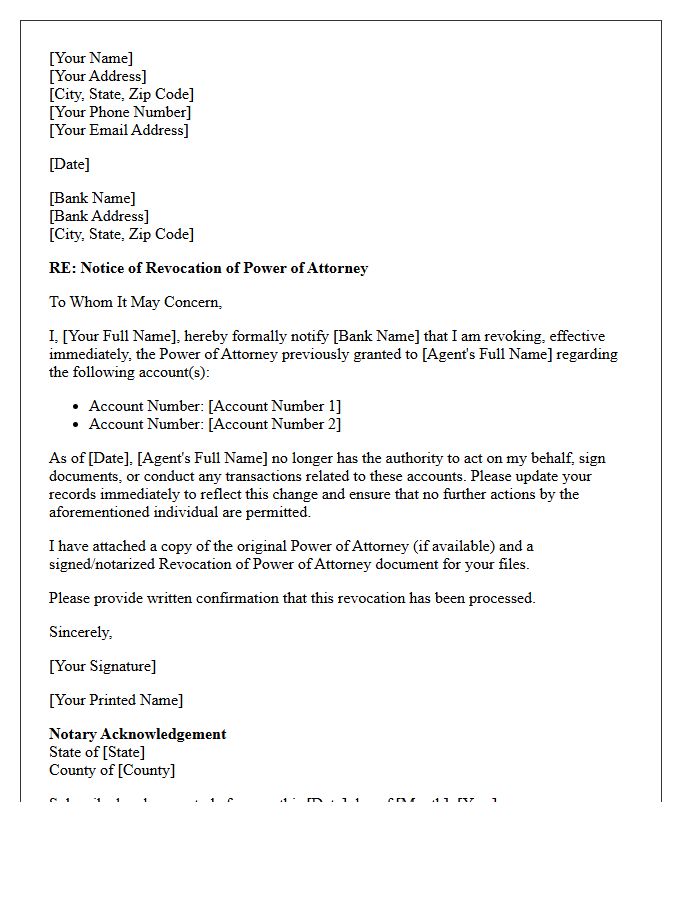
A Bank Account Power of Attorney Revocation Letter is a formal legal document used to cancel a previously granted authority. It officially notifies financial institutions that an agent no longer has the right to access funds or manage transactions. To be effective, the written notice must be delivered to the bank immediately. This process ensures the account holder regains exclusive control over their assets. It is essential to include the specific account numbers and the effective date of termination to prevent unauthorized access and protect your personal financial security.
Letter Notice of Revocation of Financial Power of Attorney
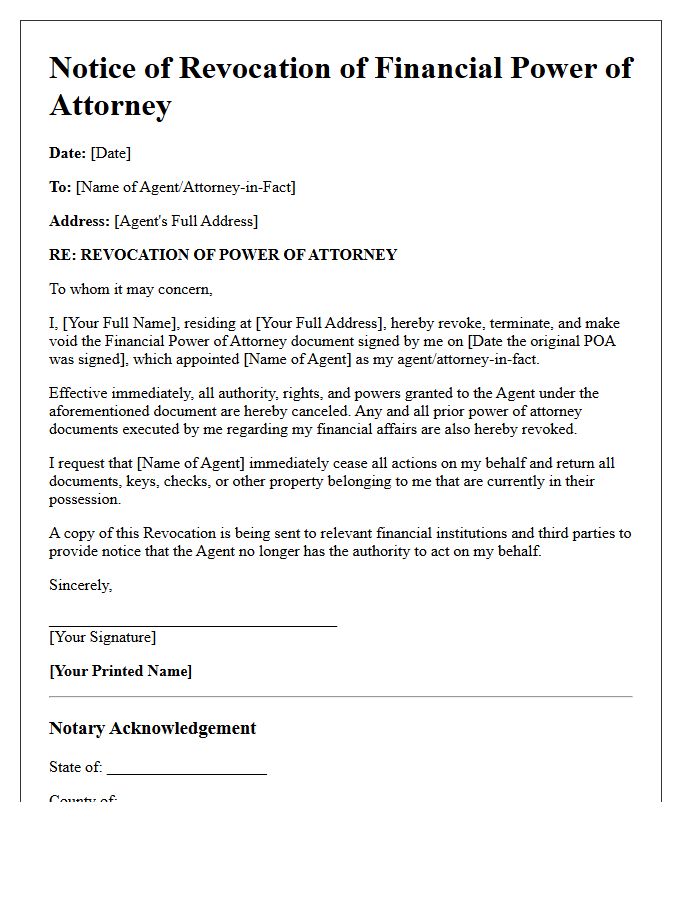
A Letter Notice of Revocation is a formal legal document used to terminate an existing Financial Power of Attorney. To be legally effective, you must provide written notice to the agent and all financial institutions where the power was used. This ensures the designated representative no longer has the authority to manage your assets, bank accounts, or property. To prevent unauthorized transactions, it is vital to record the revocation if the original document was filed with a local government office or land registry.
Corporate Bank Account Power of Attorney Revocation Letter
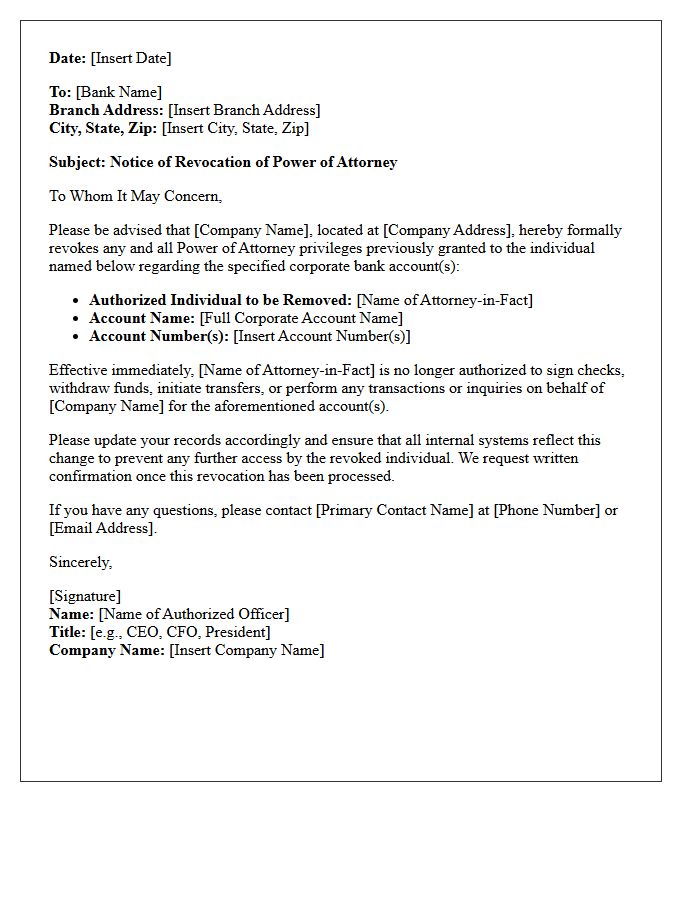
A Corporate Bank Account Power of Attorney Revocation Letter is a formal legal document used to terminate an agent's authority to manage company finances. It is crucial to send this notice immediately to the financial institution to prevent unauthorized transactions. The letter should clearly state the effective date, the account details, and the identity of the removed individual. Once received, the bank updates its records to ensure corporate security and fiscal compliance, protecting the business from potential misuse of funds by former employees or representatives.
Letter of Revocation for Commercial Banking Power of Attorney
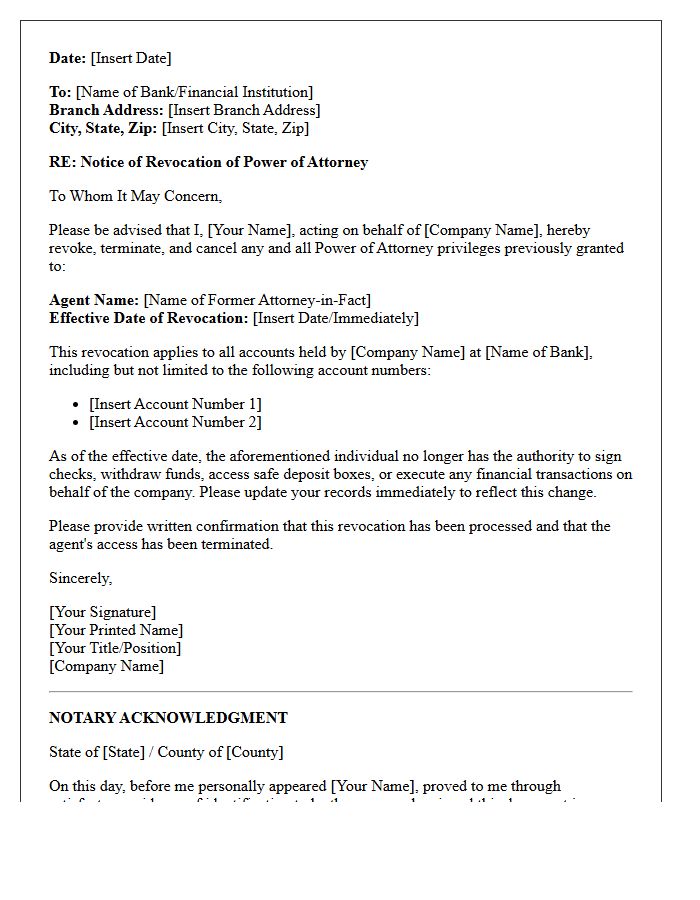
A Letter of Revocation is a formal legal document used to cancel a previously granted commercial banking power of attorney. This notice informs the financial institution that the designated agent no longer holds the authority to manage business accounts, execute transactions, or access credit lines. To ensure legal protection and prevent unauthorized fund transfers, the document must be notarized and delivered directly to the bank. Promptly revoking access is essential for maintaining corporate security and terminating fiduciary responsibilities when a business relationship or employment ends.
Revocation Letter of Power of Attorney for Loan Management
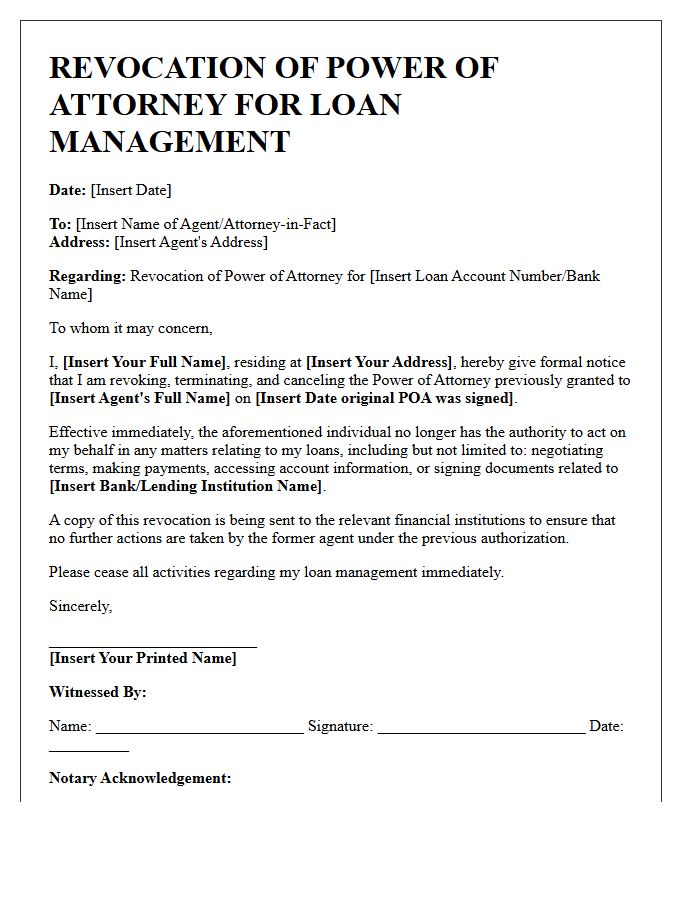
A Revocation Letter for a Power of Attorney (POA) is a formal legal document used to terminate an agent's authority over your loan management. To be legally effective, you must provide written notice to the designated representative and all relevant financial institutions. This ensures that the agent can no longer sign documents, negotiate terms, or access sensitive account information on your behalf. Promptly notifying lenders is essential to prevent unauthorized actions and protect your financial standing after the original agency relationship ends.
Banking Authorization and Power of Attorney Revocation Letter
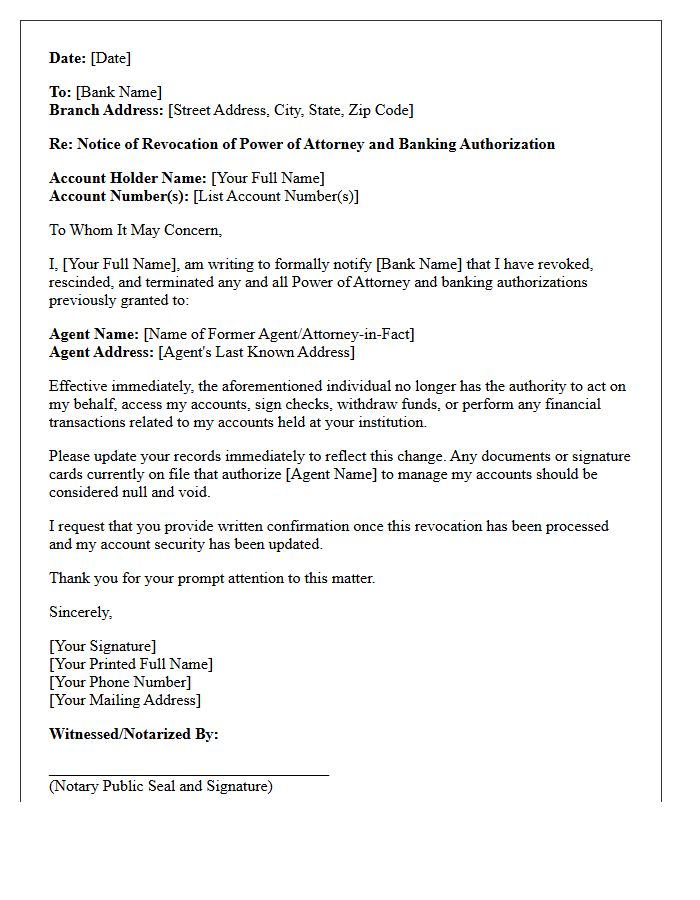
A Banking Authorization and Power of Attorney Revocation Letter is a formal legal document used to terminate an agent's legal right to manage your financial accounts. To be effective, you must provide a signed, written notice to your financial institution clearly stating the immediate cancellation of prior legal authority. Ensuring the bank updates its records prevents unauthorized access and protects your assets. It is essential to deliver this notice via certified mail to create a verifiable paper trail, ensuring your financial autonomy and security are fully restored.
Letter of Revocation of Limited Banking Power of Attorney
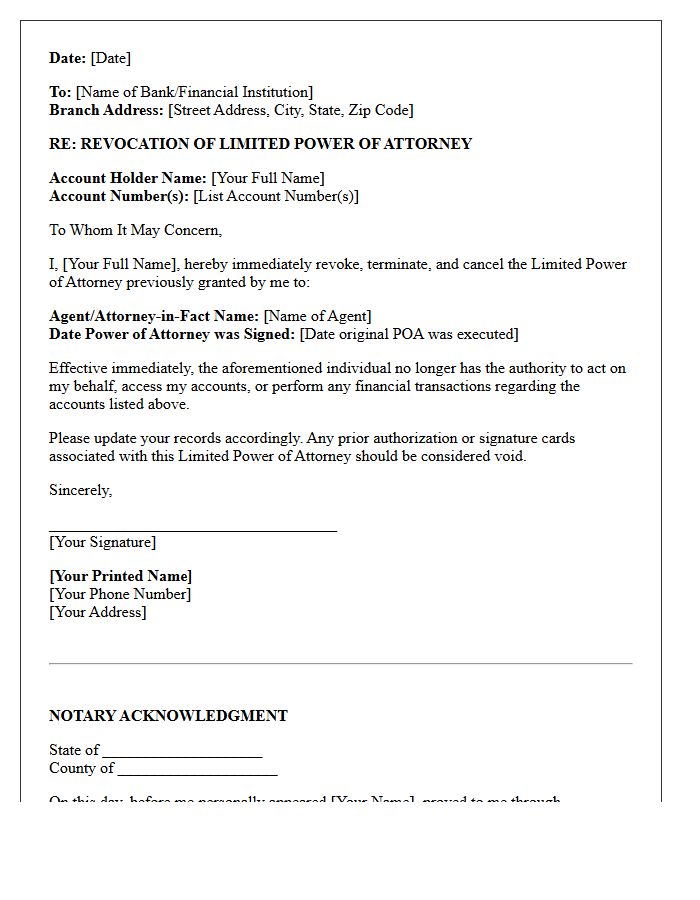
A Letter of Revocation of Limited Banking Power of Attorney is a formal legal document used to cancel a specific agent's authority over your financial accounts. It is crucial to notify your financial institution immediately to prevent unauthorized transactions. This revocation ensures that the limited powers previously granted-such as signing checks or managing specific deposits-are legally terminated. To be effective, the notice should be notarized and delivered directly to the bank, ensuring your assets remain protected and your personal financial autonomy is fully restored.
General Banking Power of Attorney Notice of Revocation Letter
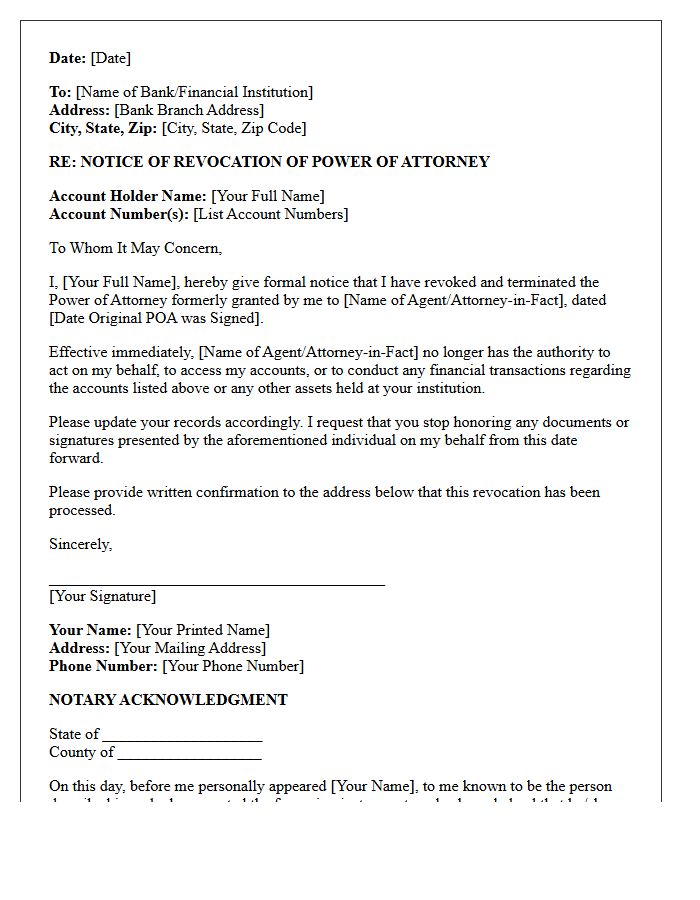
A General Banking Power of Attorney Notice of Revocation Letter is a critical legal document used to formally terminate an agent's authority over your financial accounts. To ensure the revocation is legally binding, you must deliver a signed, written copy to your financial institution immediately. This process protects your assets by preventing further transactions by the former attorney-in-fact. It is essential to include your full account details and have the document notarized to verify its authenticity, ensuring the bank updates its records and restores your exclusive control over all banking activities.
Wealth Management Power of Attorney Revocation Letter
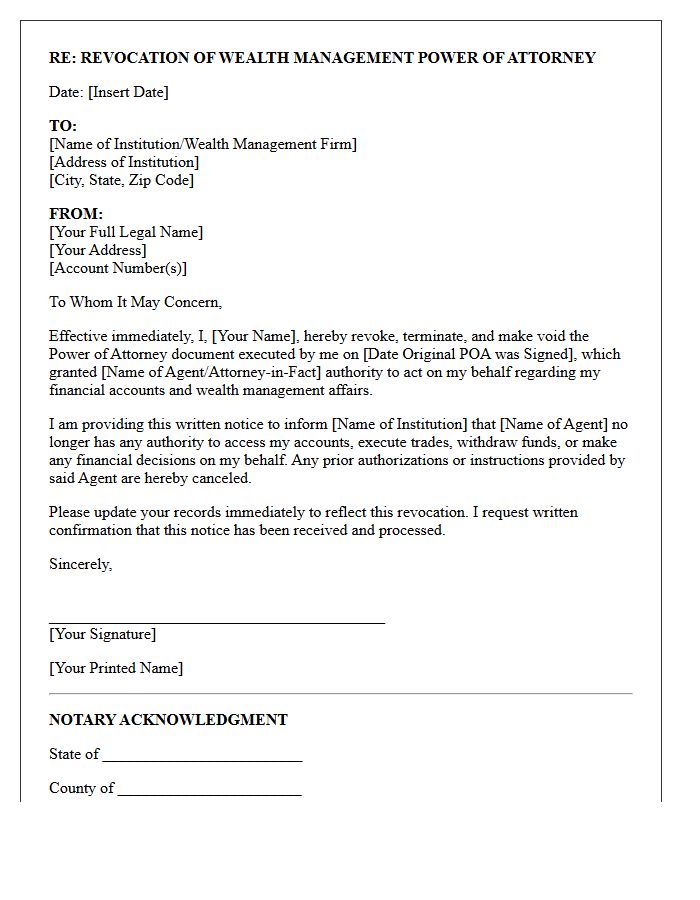
A Wealth Management Power of Attorney Revocation Letter is a formal legal document used to terminate an existing agent's authority over your financial assets. To ensure validity, you must provide written notice to your wealth manager, bank, or financial institution. This document clearly states your intent to cancel prior authorizations, protecting your estate from unauthorized transactions. For full legal effect, it is often required to be notarized and delivered via certified mail, ensuring all parties are officially informed that the designated representative no longer holds power over your wealth.
Letter of Notice to Revoke Financial Institution Power of Attorney
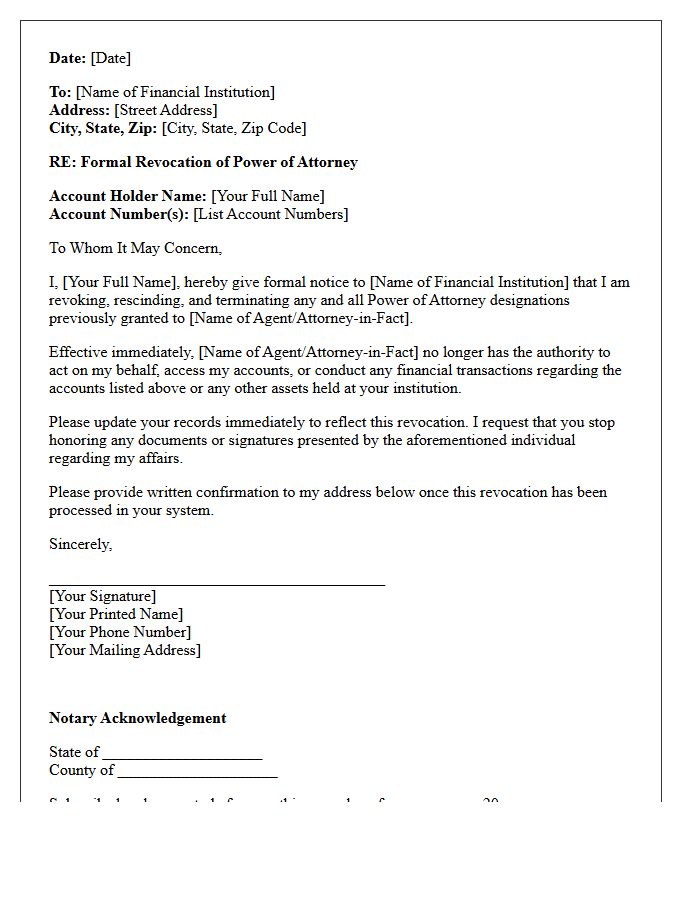
A Letter of Notice to Revoke Financial Institution Power of Attorney is a formal legal document used to terminate an agent's authority over your bank accounts and assets. It is crucial to notify your financial institution immediately in writing to prevent unauthorized transactions. Once submitted, the bank must acknowledge the revocation to ensure the previous Power of Attorney is no longer legally binding. Always include your account details, the effective date, and provide a notarized copy to the former agent to maintain clear legal protection.
What is a Notice of Revocation of Power of Attorney?
A Notice of Revocation of Power of Attorney is a formal legal document used by a principal to officially cancel or terminate the authority previously granted to an agent or attorney-in-fact.
When does a revocation of Power of Attorney become effective?
A revocation typically becomes effective the moment the principal signs the document, provided it is executed according to state laws. However, it is only legally binding on the agent and third parties (like banks) once they have received formal notice of the revocation.
Do I need to notarize a Notice of Revocation of Power of Attorney?
Yes, it is highly recommended and often legally required to have the document signed in the presence of a notary public. Notarization verifies the principal's identity and helps ensure the document is accepted by financial and legal institutions.
Who should be notified after a Power of Attorney is revoked?
You must provide a copy of the Notice of Revocation to the former agent and any third parties where the Power of Attorney may have been used, such as banks, hospitals, government agencies, and insurance companies.
Can a Power of Attorney be revoked if the principal is mentally incapacitated?
No, a principal must be of sound mind and possess the legal mental capacity to revoke a Power of Attorney. If the principal is deemed incapacitated, a court order or a guardianship proceeding may be required to terminate the agent's authority.


Comments