
An Application for Issuance of Letter of Credit is a formal request sent by a buyer to their bank to guarantee payment to a seller. This essential trade finance document outlines specific shipping terms and documentation requirements to ensure secure international transactions. It mitigates risks for both parties involved in global commerce. To help you get started, below are some ready to use templates.

Image cover: Professional Templates and Samples for Your Letter of Credit Application
Letter Samples List
- Standard Application Letter for Issuance of Letter of Credit
- Cover Letter for Letter of Credit Application Submission
- Request Letter for Commercial Letter of Credit Issuance
- Application Letter for Standby Letter of Credit Issuance
- Letter of Request for Irrevocable Letter of Credit
- Corporate Request Letter for Import Letter of Credit
- Application Letter for Revolving Letter of Credit Facility
- Letter of Application for Back-to-Back Letter of Credit
- Application Letter for Transferable Letter of Credit
- Letter of Undertaking for Letter of Credit Issuance
- Board Resolution Letter for Letter of Credit Application
- Letter of Authorization for Letter of Credit Margin Deduction
Standard Application Letter for Issuance of Letter of Credit
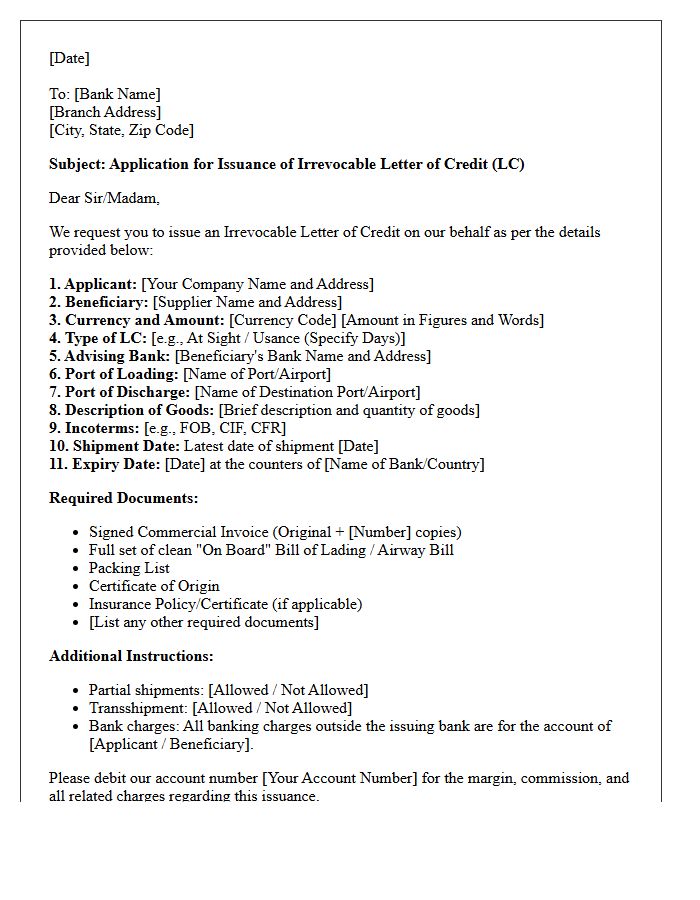
A standard application letter for the issuance of a Letter of Credit (LC) serves as a formal request from a buyer to their bank to guarantee payment to a seller. It must clearly outline the financial terms, shipment deadlines, and specific documentation required for compliance. This legal instrument mitigates risk in international trade by ensuring the issuing bank pays the beneficiary only after all contractual conditions are met. Accuracy in detail is vital to prevent discrepancies that could delay the transaction or result in costly payment rejection.
Cover Letter for Letter of Credit Application Submission
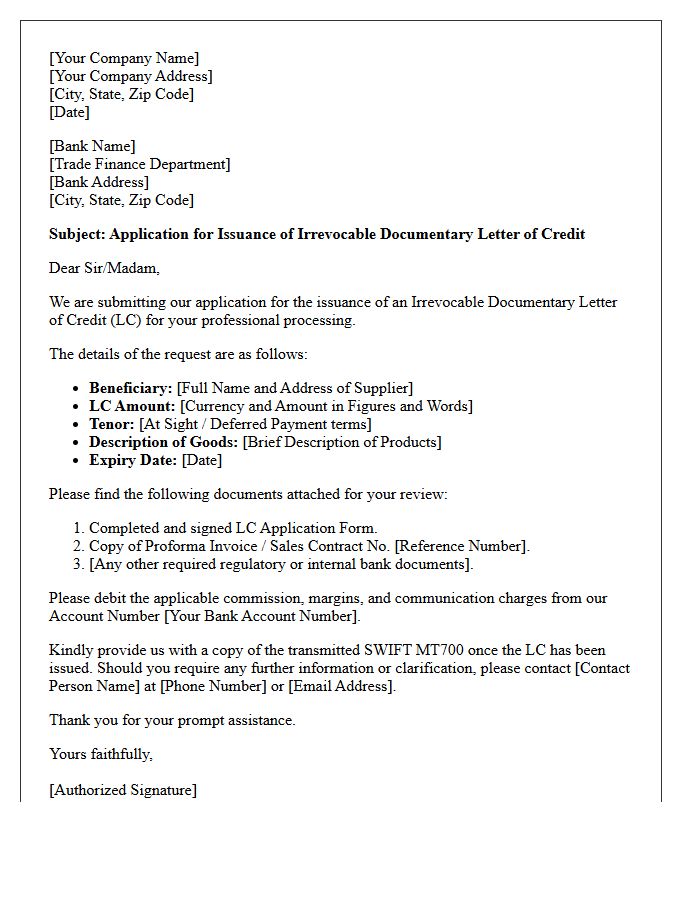
A cover letter for a Letter of Credit (LC) application serves as a formal instruction to your issuing bank. It must clearly outline the beneficiary details, precise payment terms, and required documentation to avoid discrepancies. Ensuring the letter matches the Sales Contract prevents costly delays in international trade. You should explicitly state whether the LC is irrevocable and specify the expiry date and shipment deadlines. This document acts as a roadmap, streamlining the bank's review process and protecting your financial interests during global transactions.
Request Letter for Commercial Letter of Credit Issuance
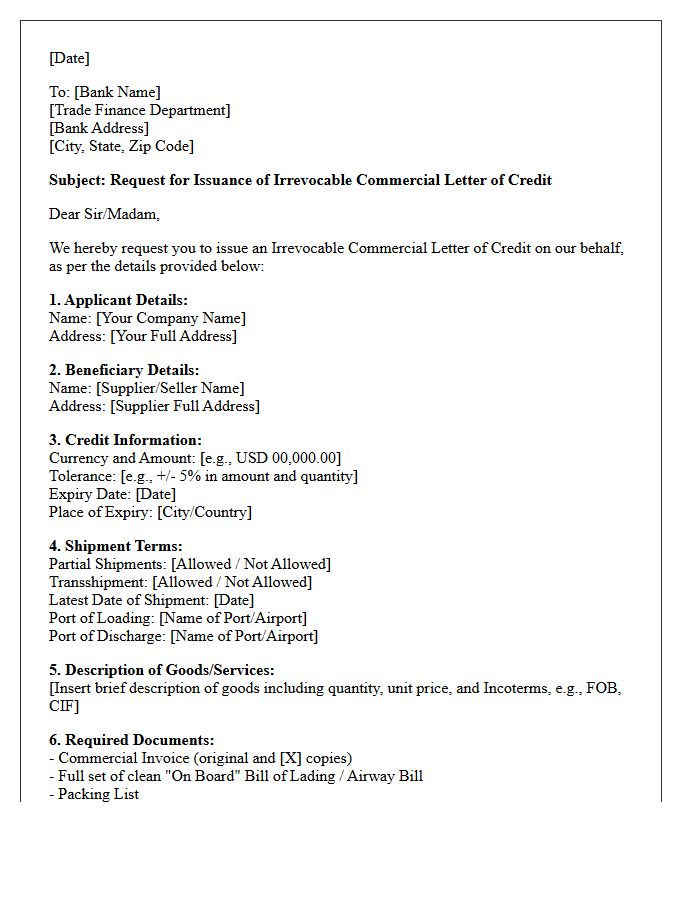
A Request Letter for Commercial Letter of Credit Issuance is a formal instruction from a buyer to their bank to guarantee payment to a seller. This document acts as the primary financial instrument for international trade, ensuring the exporter receives funds upon presenting specific shipping documents. It must clearly outline the beneficiary details, precise payment terms, and required documentation to avoid discrepancies. By establishing creditworthiness, this letter mitigates risks for both parties, facilitating a secure and standardized transaction process within global commerce.
Application Letter for Standby Letter of Credit Issuance
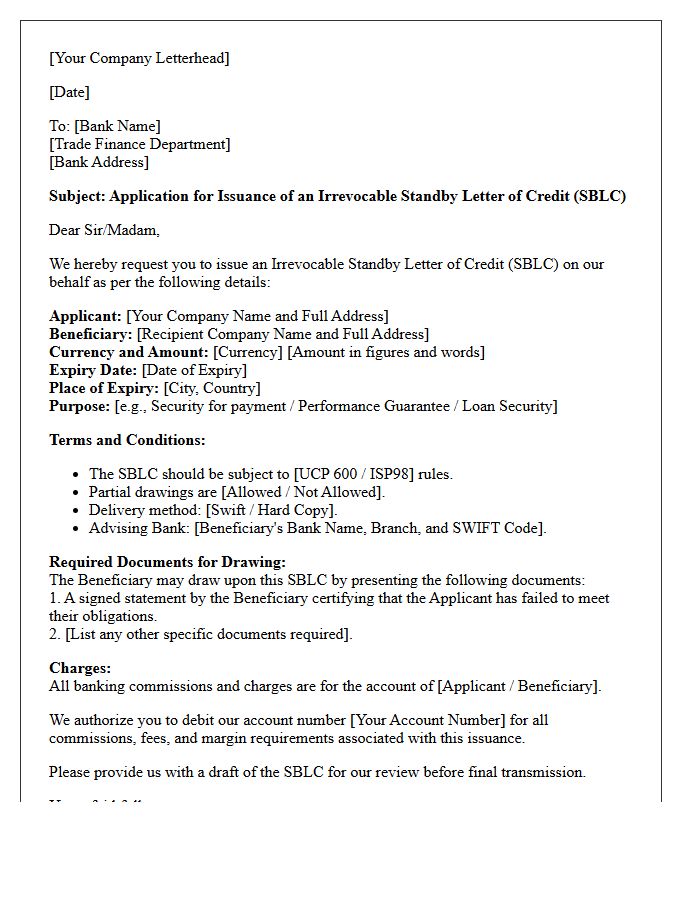
An application letter for Standby Letter of Credit (SBLC) issuance is a formal request to a bank to provide a financial guarantee. This document is essential for securing international trade contracts by ensuring payment security if the applicant defaults. It must clearly specify the beneficiary details, expiration date, and exact monetary amount. Because the bank assumes credit risk, they will evaluate your collateral or credit line before approval. Accuracy in drafting this letter prevents legal delays and ensures your business meets its contractual obligations with confidence.
Letter of Request for Irrevocable Letter of Credit
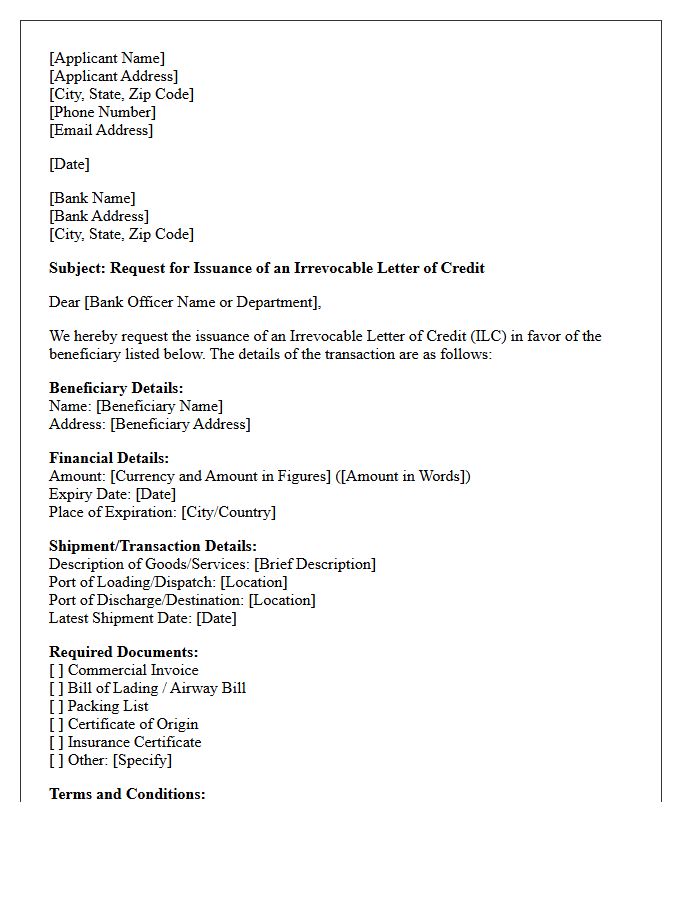
A Letter of Request for Irrevocable Letter of Credit is a formal application submitted by a buyer to their bank to facilitate secure international trade. It instructs the issuing bank to guarantee payment to a seller, provided all contractual shipping documents are presented correctly. Because the credit is irrevocable, its terms cannot be modified or cancelled without the explicit consent of all involved parties. This document minimizes financial risk for exporters while ensuring importers only pay once specific trade obligations and quality standards are verified through strictly compliant documentation.
Corporate Request Letter for Import Letter of Credit
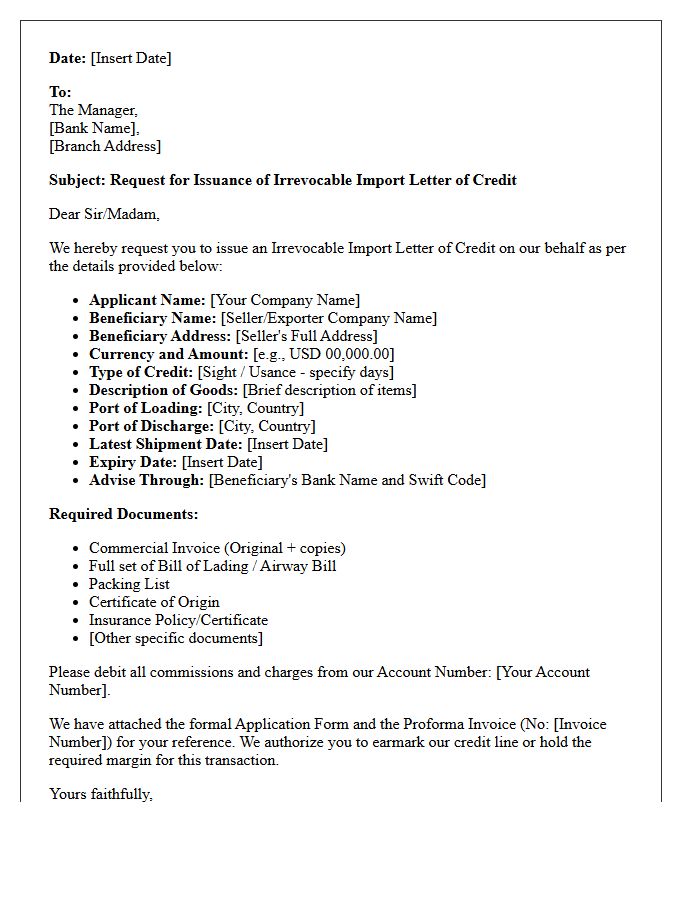
A corporate request letter for an import letter of credit is a formal application submitted to a bank to facilitate international trade. It acts as a financial guarantee, ensuring the seller receives payment once specific shipping documents are presented. To ensure smooth processing, the letter must clearly outline the beneficiary details, credit amount, and expiry date. Accuracy is vital to avoid discrepancies that could delay cargo clearance. By issuing this document, the importer leverages the bank's creditworthiness to mitigate risks and build trust with overseas suppliers.
Application Letter for Revolving Letter of Credit Facility
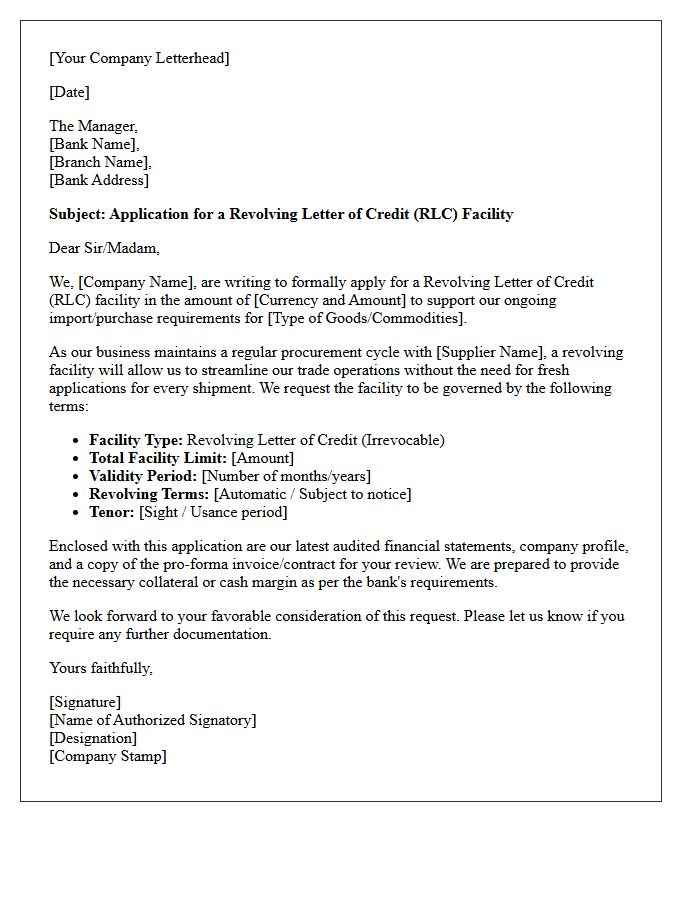
An application letter for a Revolving Letter of Credit Facility is a formal request to a bank for a renewable credit limit. This financial instrument is essential for businesses engaged in regular trade, as it automatically restores the credit amount after each transaction or payment. Applicants must clearly state the facility's purpose, required limit, and repayment terms. Demonstrating a strong credit history and providing collateral are crucial for approval, ensuring seamless, continuous international or domestic procurement without the need for repetitive individual credit applications.
Letter of Application for Back-to-Back Letter of Credit
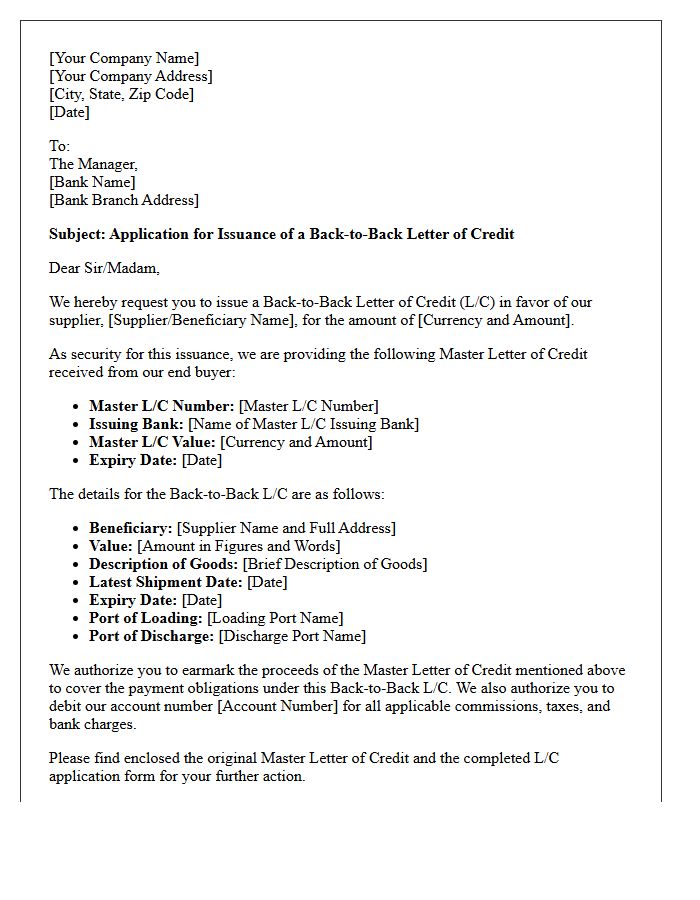
A letter of application for a back-to-back letter of credit is a formal request by an intermediary to their bank to issue a secondary credit based on an existing export LC. This mechanism allows a middleman to facilitate trade without using their own capital. The application must ensure that terms, such as shipment deadlines and documentation, align perfectly between both credits to minimize risk. Precise synchronization is essential to ensure that documents presented under the new credit also satisfy the requirements of the original master letter of credit for successful payment.
Application Letter for Transferable Letter of Credit
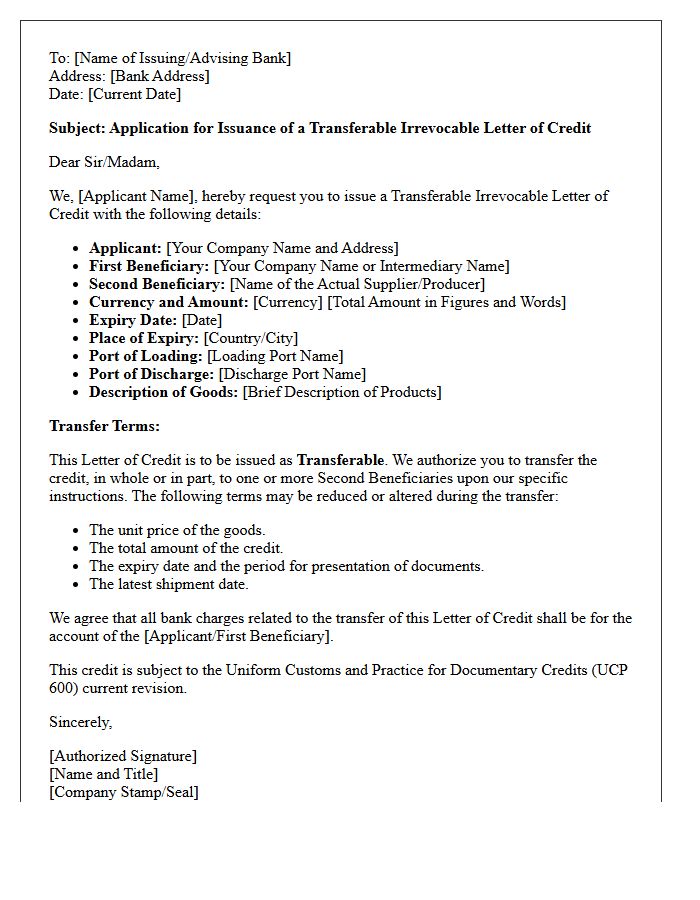
An application letter for a transferable letter of credit is a formal request from the first beneficiary to the issuing bank to shift credit rights to a second beneficiary. This document must clearly state transferable terms, ensuring the original conditions remain intact while allowing flexibility for middlemen. It is essential to specify the exact amount, shipment dates, and document requirements to maintain security. Precise wording prevents payment delays, making it a critical tool for international trade intermediaries seeking to bridge transactions between suppliers and end buyers without using their own capital.
Letter of Undertaking for Letter of Credit Issuance
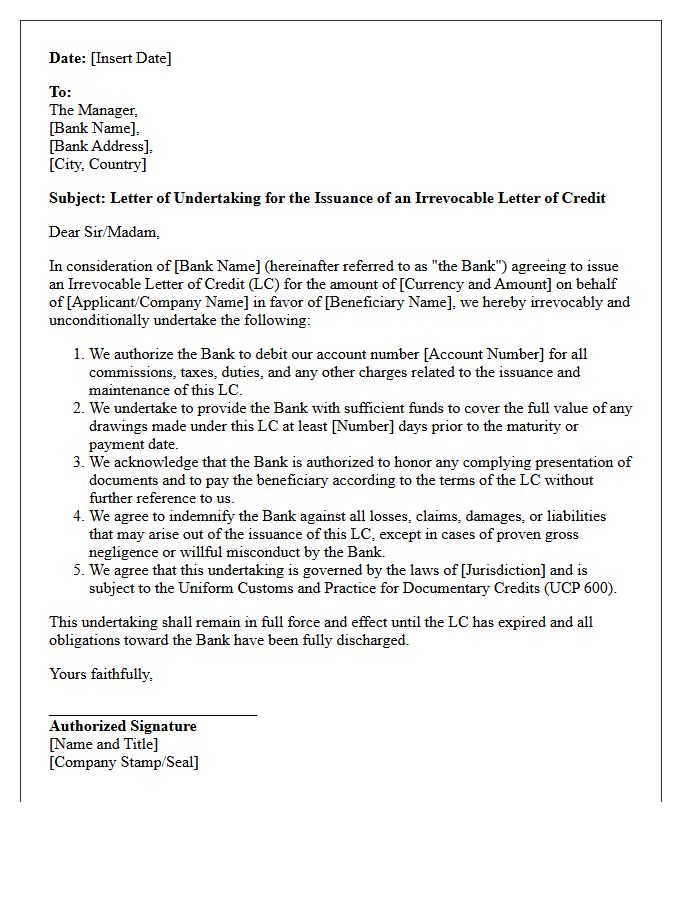
A Letter of Undertaking (LOU) is a critical legal document where a party guarantees to fulfill specific obligations to facilitate Letter of Credit issuance. It serves as a binding commitment to provide collateral or satisfy financial terms required by the bank. By signing an LOU, the applicant ensures the issuing bank that all repayment conditions and underlying contractual duties will be met. This document mitigates credit risk, bridging the trust gap between financial institutions and importers to ensure the smooth execution of international trade transactions.
Board Resolution Letter for Letter of Credit Application
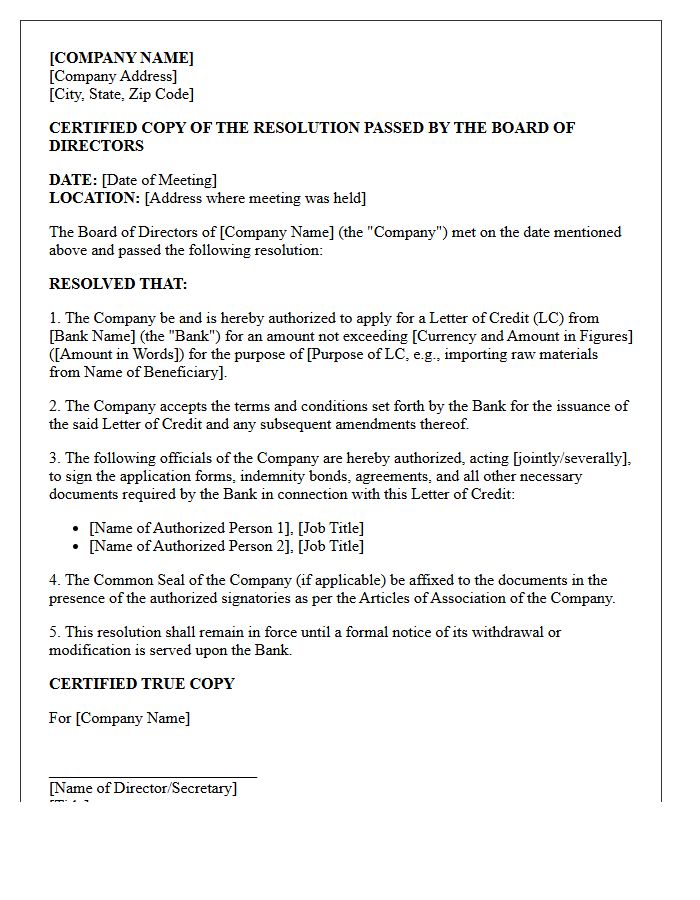
A board resolution letter for a Letter of Credit application is a formal document proving that a company's directors have authorized the business to seek trade financing. This resolution serves as legal evidence that specific individuals are empowered to sign bank documents and pledge assets as collateral. Banks require this to ensure the credit facility is approved by governing authorities, minimizing legal risks. To be valid, it must include the meeting date, the names of authorized signatories, and the corporate seal to confirm official corporate authorization.
Letter of Authorization for Letter of Credit Margin Deduction
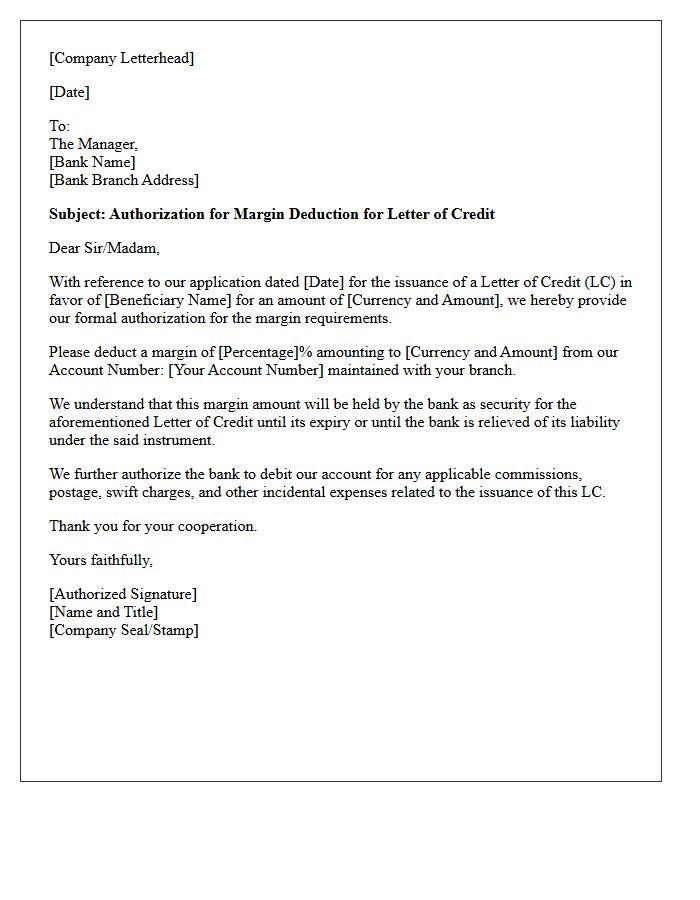
A Letter of Authorization for Letter of Credit margin deduction is a critical financial document used to pledge cash collateral. It grants a bank explicit permission to deduct specific funds from a client's account to secure the issuance of a credit facility. This process ensures the bank maintains a security margin against potential default risks. By signing this authorization, the applicant facilitates the immediate allocation of liquidity required to finalize trade finance transactions, ensuring the bank remains indemnified while streamlining the documentary credit workflow for international trade operations.
What is an Application for Issuance of Letter of Credit?
An Application for Issuance of Letter of Credit is a formal request submitted by a buyer (applicant) to their bank (issuing bank) to open a financial guarantee that ensures payment to a seller (beneficiary) upon the fulfillment of specific documentary conditions.
What documents are required to apply for a Letter of Credit?
Commonly required documents include a completed bank application form, a proforma invoice or sales contract, a valid import license (if applicable), and insurance certificates covering the transit of goods.
How do banks evaluate a Letter of Credit application?
Banks evaluate applications based on the applicant's creditworthiness, the availability of collateral or credit lines, the legitimacy of the transaction, and the compliance of the terms with international standards like UCP 600.
What are the key details needed in the LC application form?
The application must specify the beneficiary details, the total credit amount, the description of goods, the expiry date, shipping deadlines, and the specific documents required for the seller to claim payment.
Can an application for a Letter of Credit be amended after submission?
Yes, once the Letter of Credit is issued, any changes require an official amendment. Both the buyer and the seller must agree to the revised terms, and the issuing bank may charge additional fees for processing the amendment.

Comments