
Receiving a Notice of Discrepant Documents occurs when inconsistencies are found between shipping paperwork and Letter of Credit requirements. These errors can delay payments and complicate international trade settlements. Understanding how to address these discrepancies quickly is essential for exporters to ensure smooth financial transactions and avoid penalties. Below are some ready to use template.
Image cover: Mastering Discrepant Document Notices: Essential Templates and Professional Samples
Letter Samples List
- Letter of Notice of Discrepant Documents Under Letter of Credit
- First Notice Letter of Discrepant Presentation
- Letter of Refusal Due to Discrepant Documents
- Importer Waiver Request Letter for Discrepant Documents
- Bank Advice Letter of Discrepant Export Documents
- Final Rejection Letter for Unresolved Discrepant Documents
- Exporter Letter of Indemnity for Discrepant Documents
- Letter of Notification Regarding Discrepant Shipping Documents
- Discrepant Documents Payment Refusal Letter
- Bank Notice Letter of Discrepant Trade Documents
- Letter of Discrepancy Advice Under Documentary Credit
- Importer Acceptance Letter for Discrepant Documents
- Applicant Waiver Approval Letter for Discrepant Documents
Letter of Notice of Discrepant Documents Under Letter of Credit
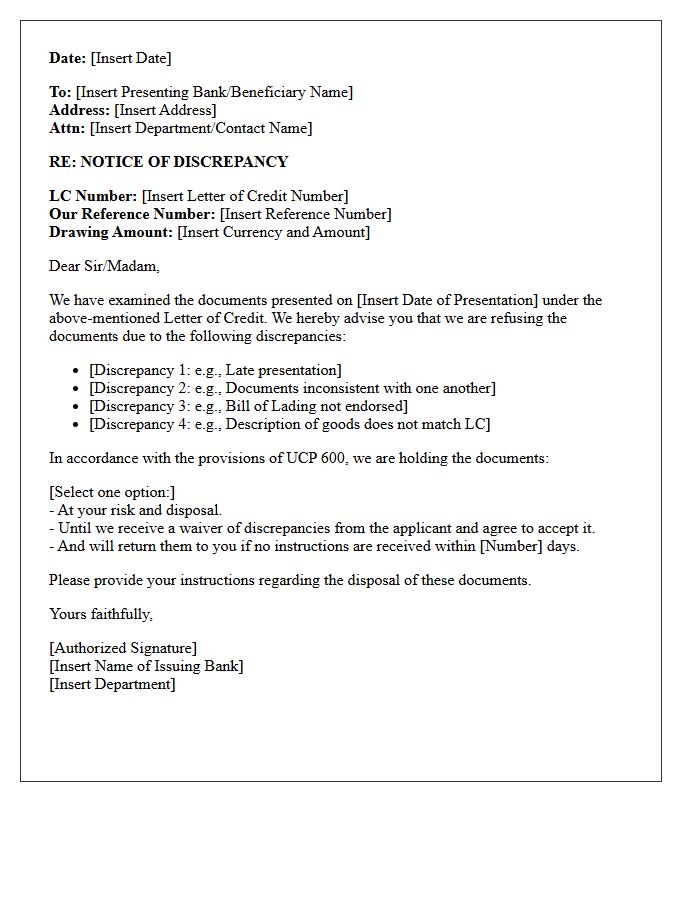
A Letter of Notice of Discrepant Documents is a formal notification sent by an issuing bank when documents presented under a Letter of Credit fail to comply with its specific terms. This notice must clearly list each discrepancy found, as per UCP 600 standards. The beneficiary must be informed promptly whether the bank is refusing the documents or seeking a waiver from the applicant. Timely communication is vital to resolve conflicts, avoid payment delays, and ensure the financial security of the international trade transaction remains intact for all parties involved.
First Notice Letter of Discrepant Presentation
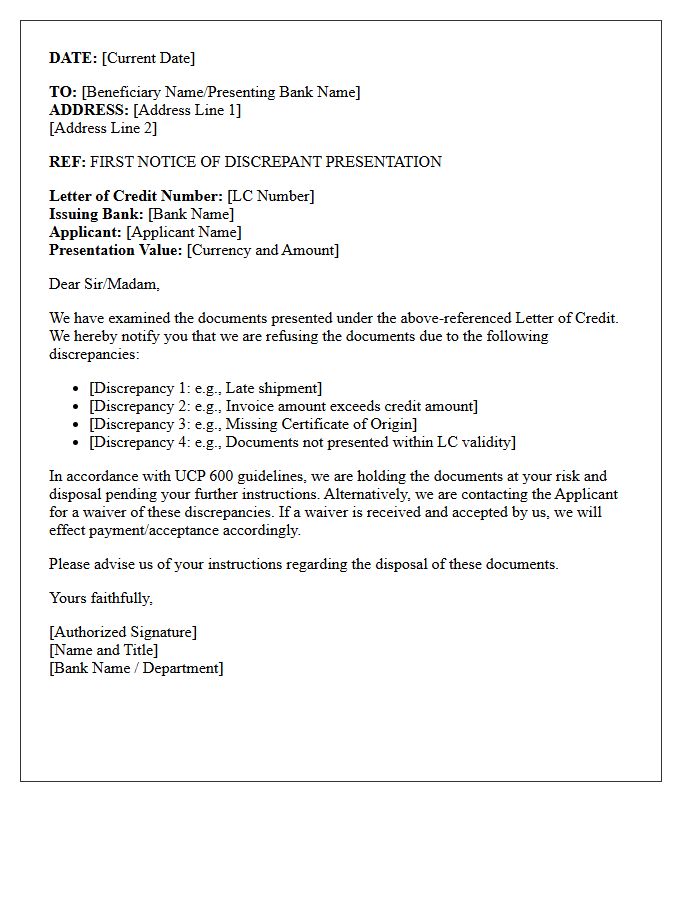
A First Notice Letter of Discrepant Presentation is a formal notification issued by a nominated or issuing bank when documents submitted under a Letter of Credit contain errors or inconsistencies. It details specific discrepancies that prevent immediate payment. Upon receipt, the beneficiary must quickly decide whether to correct the documents, request a waiver from the applicant, or accept the rejection. Timely response is critical, as any delay in addressing these non-conformities can lead to payment refusal, increased bank fees, and potential financial loss in international trade transactions.
Letter of Refusal Due to Discrepant Documents
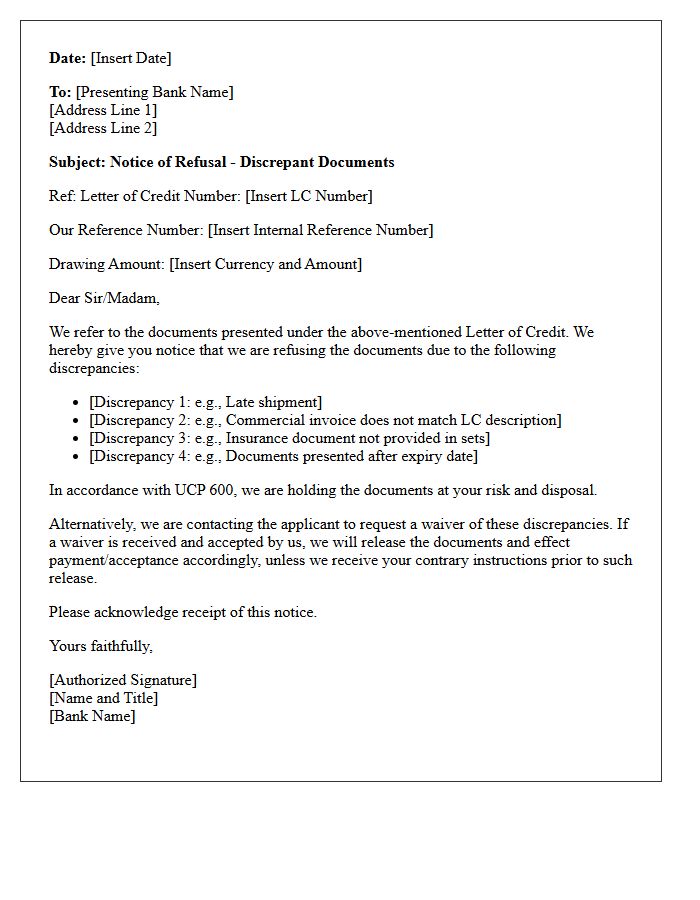
A letter of refusal due to discrepant documents is a formal notification issued by a bank when presented paperwork fails to comply with Letter of Credit terms. This occurs because banks operate under the principle of strict compliance, meaning even minor typographical errors or missing data can lead to a rejection. To resolve this, exporters must either correct the discrepancies within the credit's validity period or request the buyer to issue a waiver. Ensuring document accuracy is essential to guarantee payment and avoid costly delays in international trade transactions.
Importer Waiver Request Letter for Discrepant Documents
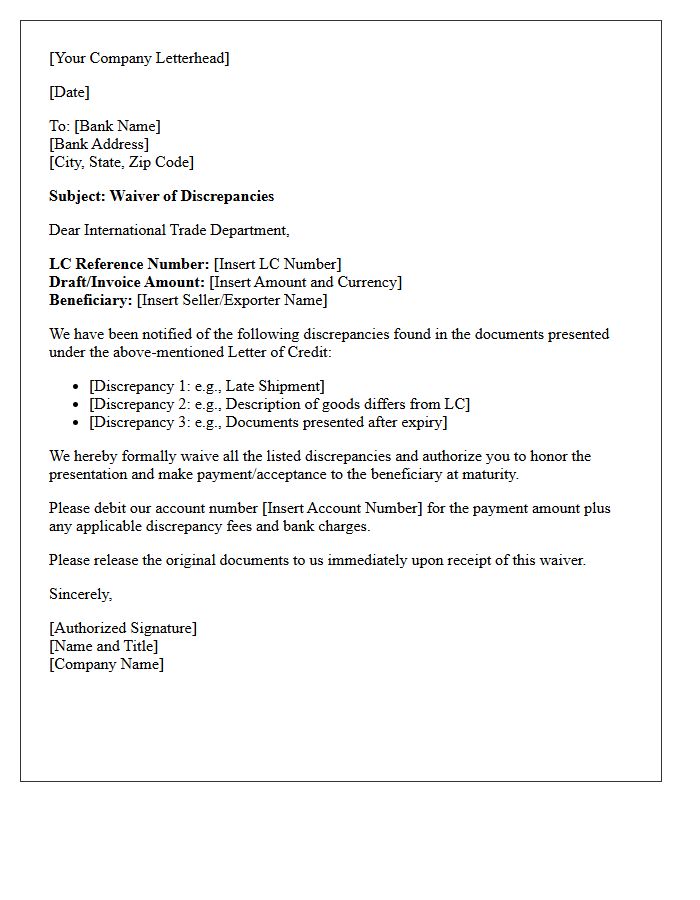
An Importer Waiver Request Letter is a formal authorization sent to a bank to accept discrepant documents under a Letter of Credit. When shipping paperwork contains errors or inconsistencies, the bank typically refuses payment. By issuing this waiver, the importer voluntarily overlooks these specific non-conformities, instructing the bank to release payment to the exporter despite the risks. It is a critical legal instrument to prevent shipment delays and storage costs, but it must clearly identify each discrepancy to ensure cargo release and proper financial settlement between all parties involved.
Bank Advice Letter of Discrepant Export Documents
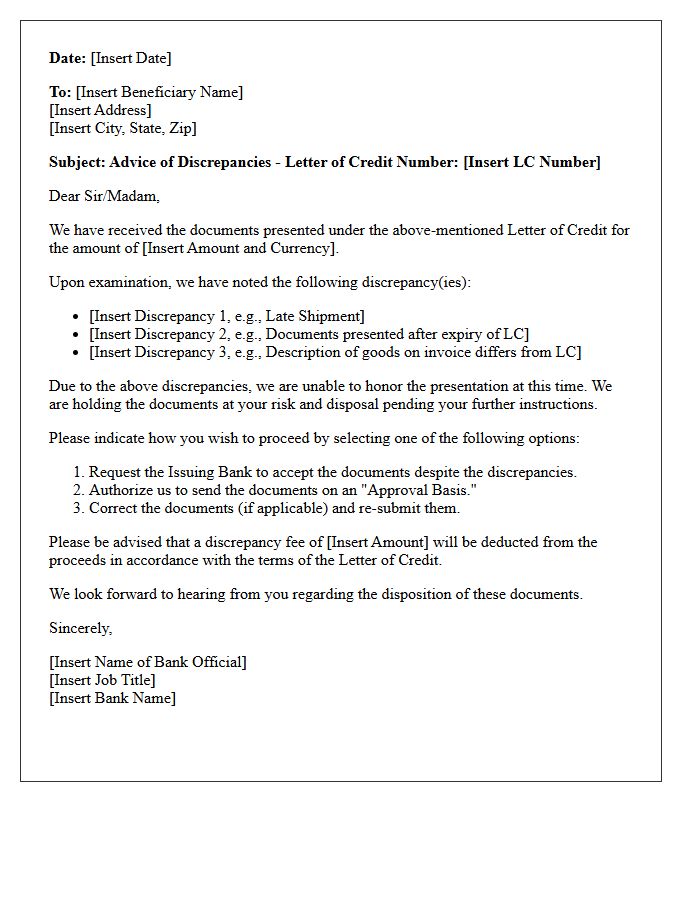
A bank advice of discrepancy notifies exporters that submitted trade documents do not strictly comply with Letter of Credit terms. This official notice lists specific errors, such as late shipments or mismatched data, which can delay payment or lead to document rejection. Upon receipt, the beneficiary must quickly decide whether to correct the errors, request a waiver from the buyer, or send documents on an approval basis. Prompt action is essential to maintain financial security and ensure the issuing bank honors the payment obligation despite the initial inconsistencies.
Final Rejection Letter for Unresolved Discrepant Documents
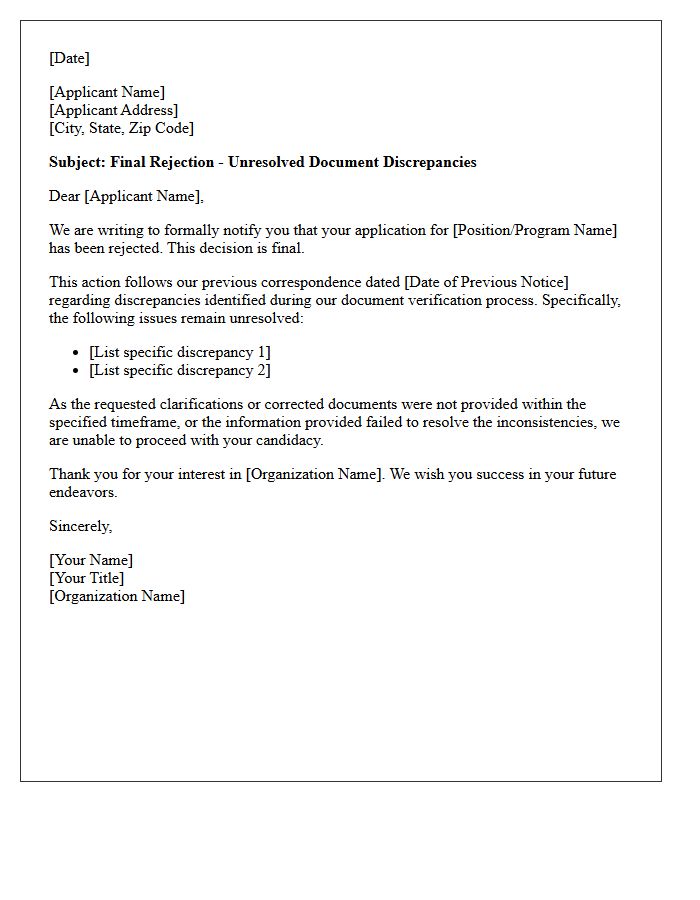
A final rejection letter confirms the bank's refusal to honor a letter of credit due to unresolved discrepancies. It serves as formal notice that presented documents remain non-compliant with international standards despite previous notification. Once issued, the bank ceases its payment obligation and holds documents at the presenter's risk. To avoid financial loss, exporters must immediately seek a waiver from the applicant or provide corrected paperwork before the credit's expiry. This document is critical for legal protection and clarifying the status of the underlying trade finance transaction.
Exporter Letter of Indemnity for Discrepant Documents
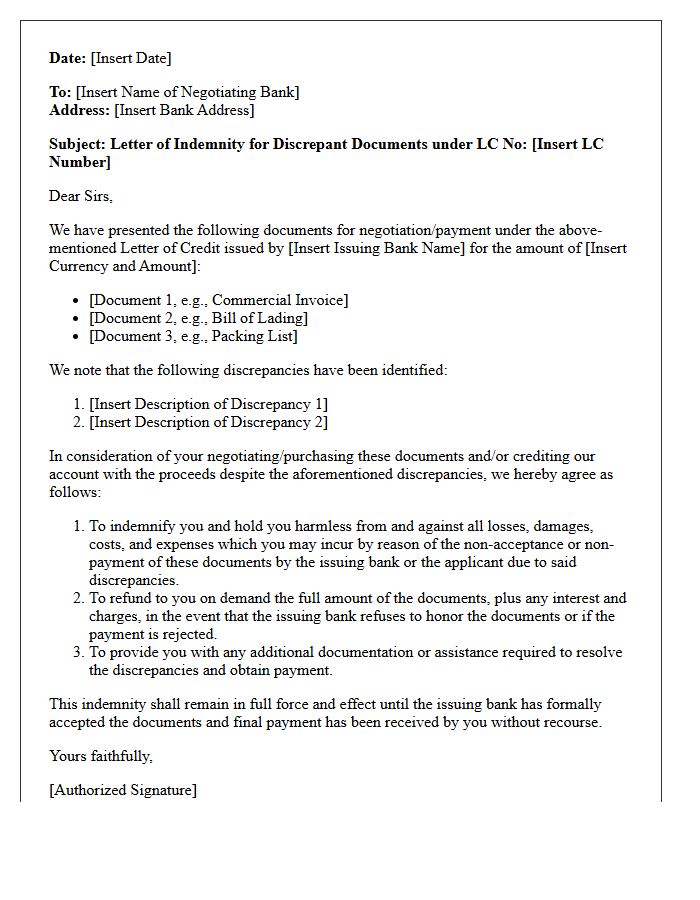
An Exporter Letter of Indemnity (LOI) is a legal undertaking used when shipping documents contain discrepancies that violate Letter of Credit terms. By issuing this document, the exporter requests the bank to negotiate payment despite errors, guaranteeing to indemnify the bank against any financial losses or legal claims if the buyer refuses to honor the transaction. This mechanism facilitates faster payment processing but shifts full financial liability and risk back to the exporter, making it a critical instrument for managing international trade documentation inconsistencies while ensuring liquidity.
Letter of Notification Regarding Discrepant Shipping Documents
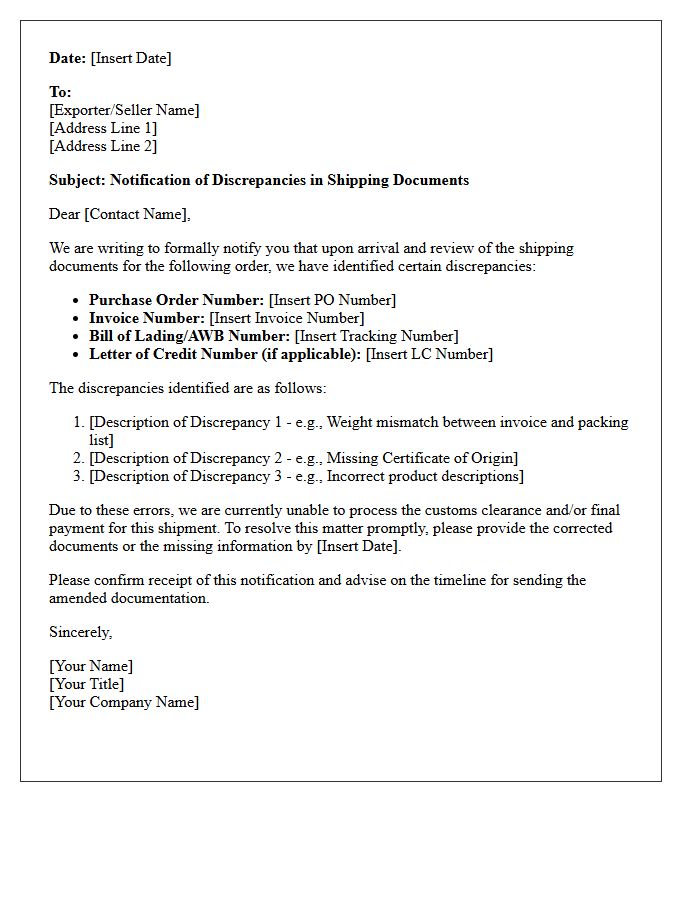
A Letter of Notification Regarding Discrepant Shipping Documents is a formal communication issued by a bank or buyer when presented trade documentation fails to match the terms of a Letter of Credit. This notification lists specific inconsistencies, such as typos, incorrect quantities, or expired dates, which can delay payment or lead to financial penalties. To ensure a smooth transaction, exporters must provide a timely response to either correct the errors or request a waiver of discrepancies to proceed with the fund transfer and cargo release.
Discrepant Documents Payment Refusal Letter
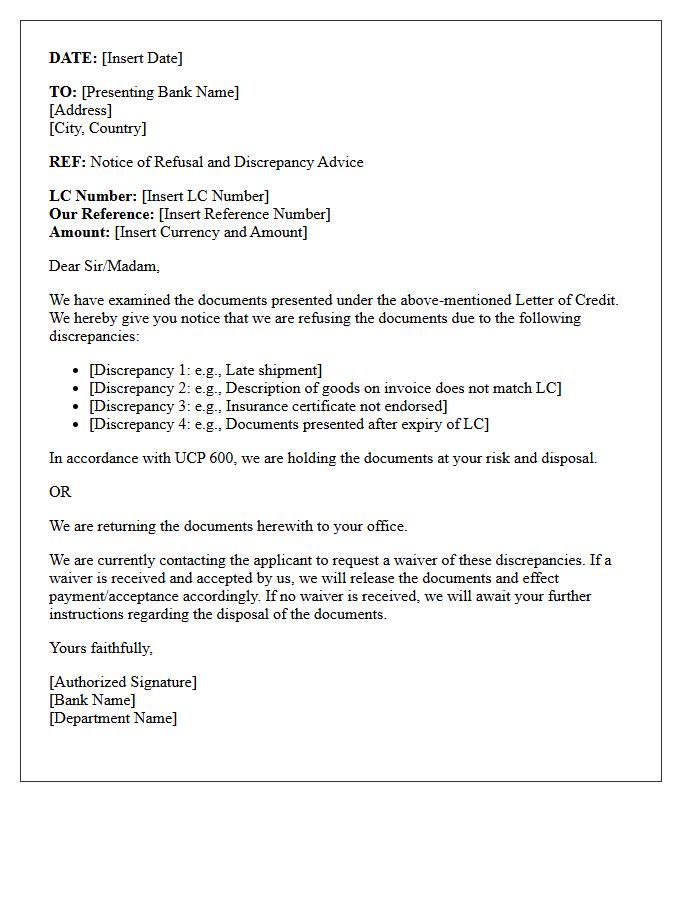
A Discrepant Documents Payment Refusal Letter is a formal notification issued by an issuing bank when documents presented under a Letter of Credit fail to comply with specific terms. This notice must clearly state each discrepancy found and specify whether the bank is holding the documents or returning them to the presenter. Under UCP 600 rules, the bank has a maximum of five banking days to examine documents and issue this refusal. Timely notification is critical, as failure to provide prompt notice may preclude the bank from claiming that documents are non-compliant.
Bank Notice Letter of Discrepant Trade Documents
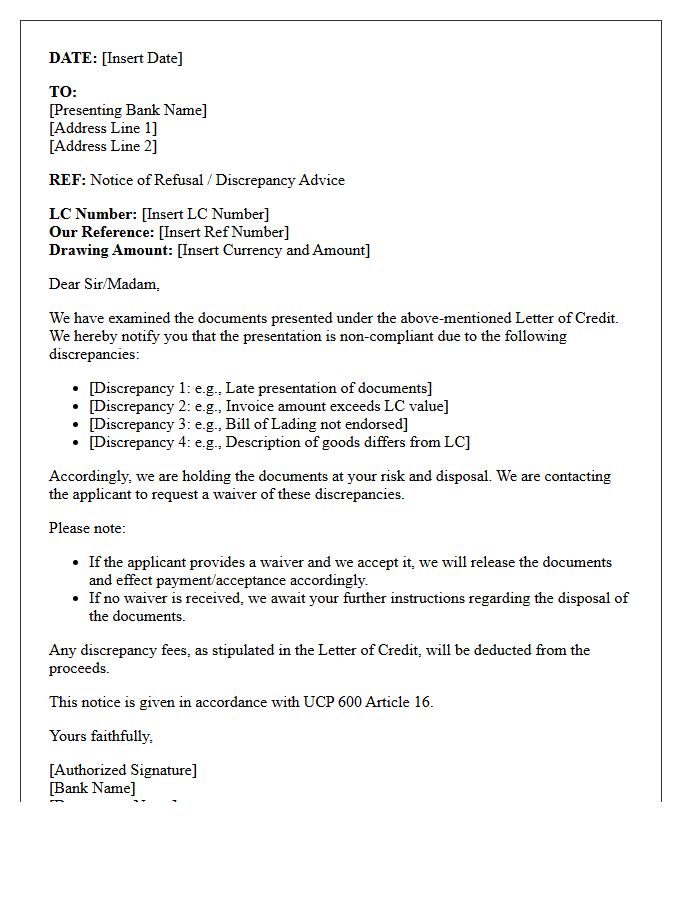
A bank notice regarding discrepant trade documents occurs when paperwork submitted under a Letter of Credit fails to match the required terms. This formal notification, often called a refusal advice, lists specific inconsistencies that prevent immediate payment. Upon receipt, the beneficiary must quickly correct errors or seek a waiver from the applicant to avoid costly delays or non-payment. Understanding these discrepancies is vital for maintaining international trade liquidity and ensuring the compliance of financial transactions between exporters and importers.
Letter of Discrepancy Advice Under Documentary Credit
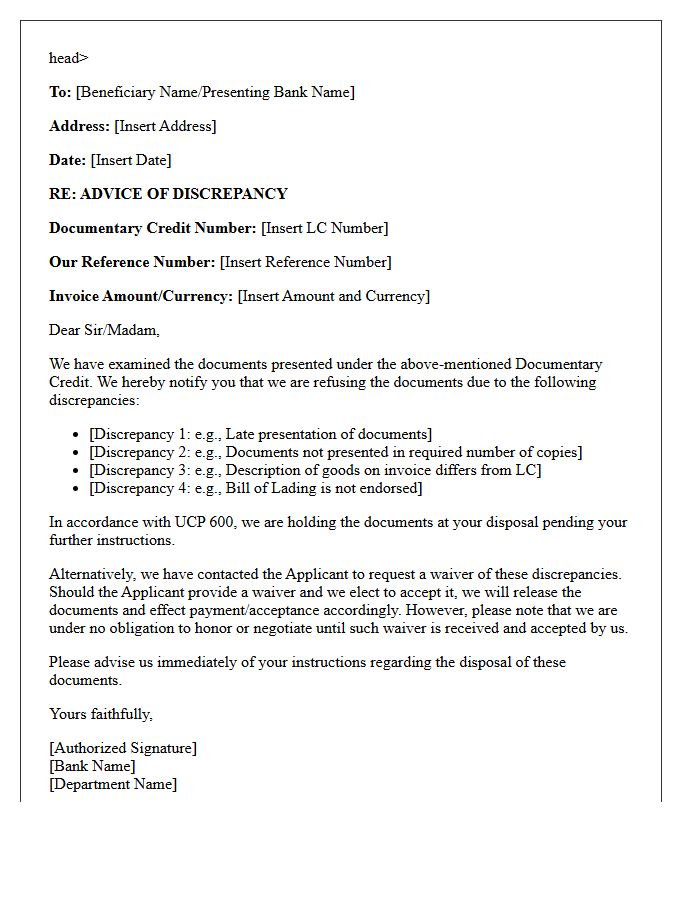
A Letter of Discrepancy Advice is a critical formal notice issued by a nominated or issuing bank when documents presented under a documentary credit fail to strictly comply with terms. This refusal notice lists specific errors, such as data inconsistencies or late shipment, preventing immediate payment. To resolve this, the beneficiary must either correct the documents, request a waiver from the applicant, or accept the risk of payment on an approval basis. Timely communication is essential to maintain trade flow and ensure eventual settlement under UCP 600 guidelines.
Importer Acceptance Letter for Discrepant Documents
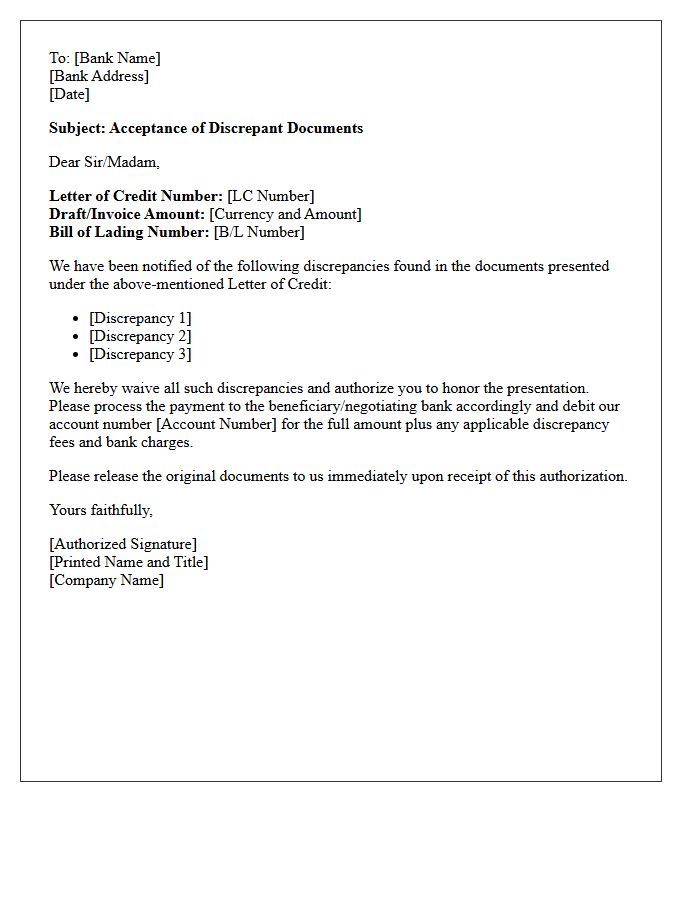
An Importer Acceptance Letter is a formal waiver issued when shipping documents contain discrepancies under a Letter of Credit. By signing this document, the buyer instructs their bank to honor the payment despite specific errors or inconsistencies. This action releases the bank from liability regarding the non-compliance. It is a critical step to ensure the timely release of goods and avoid costly port storage fees. However, importers must verify the cargo's condition before acceptance, as this legal authorization typically renders the discrepancies irrelevant for payment obligations.
Applicant Waiver Approval Letter for Discrepant Documents
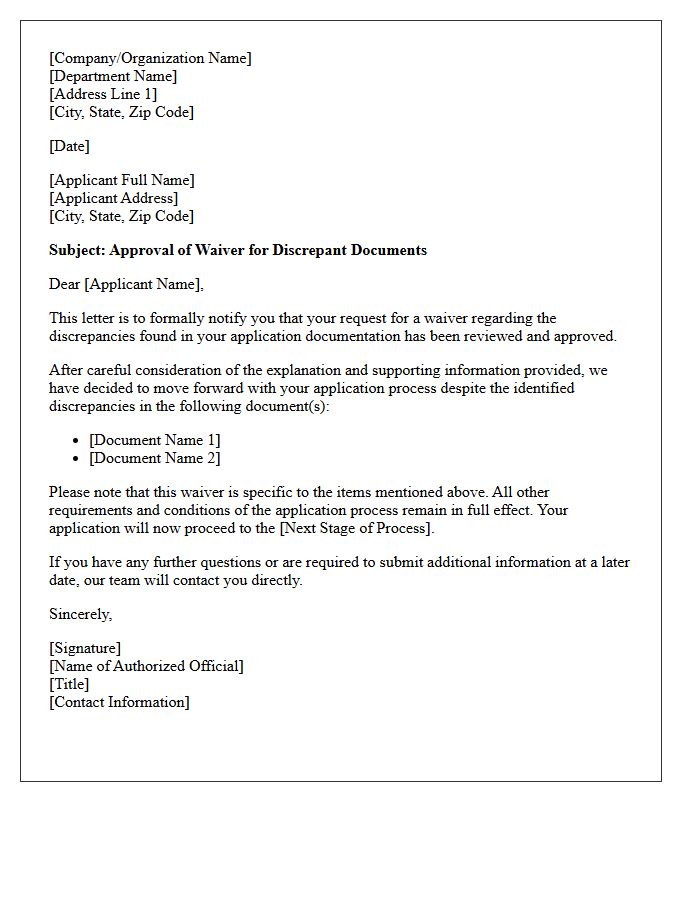
An Applicant Waiver Approval Letter is a formal document issued by an issuing bank when a buyer agrees to accept discrepant documents under a Letter of Credit. This waiver authorizes the bank to release payment despite inconsistencies found during the document examination process. It effectively overrides original discrepancies, ensuring the seller receives funds while allowing the importer to take possession of the goods. Timely issuance is critical to avoid costly storage fees or shipment delays, as it confirms the applicant's consent to proceed with the transaction regardless of any technical errors in the presentation.
What is a Notice of Discrepant Documents?
A Notice of Discrepant Documents is a formal notification issued by a nominated bank or issuing bank to a beneficiary (exporter) stating that the documents presented under a Letter of Credit do not strictly comply with the terms and conditions or UCP 600 rules.
What are the most common reasons for receiving a discrepancy notice?
Common reasons include late presentation of documents, expired Letter of Credit, missing signatures, inconsistent descriptions of goods across documents, and data conflicts between the commercial invoice and the transport document.
How long does a bank have to issue a notice of discrepancy?
Under UCP 600 Article 16, the bank has a maximum of five banking days following the day of presentation to examine the documents and provide a single notice of refusal if discrepancies are found.
What should an exporter do after receiving a discrepancy notice?
An exporter can choose to correct the documents if time permits, request the bank to contact the applicant for a waiver of discrepancies, or instruct the bank to send the documents on an "approval" basis to the issuing bank.
Does a notice of discrepancy mean the bank will not pay?
Not necessarily. While the bank is not legally obligated to honor the presentation due to the discrepancy, payment is typically made once the applicant (importer) provides a formal waiver and accepts the documents as presented.


Comments