
Managing finances requires timely alerts to avoid costly fees. A Notification of Overdraft Trigger informs customers immediately when their account balance falls below zero or a specific threshold. This proactive communication helps users manage liquidity and prevents unauthorized transaction declines. To help you automate your banking alerts effectively, below are some ready to use template.
Image cover: Mastering Overdraft Alerts: Professional Templates and Best Practices
Letter Samples List
- Initial Overdraft Trigger Notification Letter
- Overdraft Protection Activation Letter
- Insufficient Funds Fee Assessment Letter
- Linked Account Transfer Confirmation Letter
- Overdraft Grace Period Expiration Letter
- Continuous Overdraft Warning Letter
- Overdraft Line of Credit Draw Notification Letter
- Negative Balance Repayment Demand Letter
- Overdraft Privilege Suspension Letter
- Account Closure Due to Unresolved Overdraft Letter
- Overdraft Protection Opt-In Confirmation Letter
- Unpaid Overdraft Collection Transfer Letter
Initial Overdraft Trigger Notification Letter
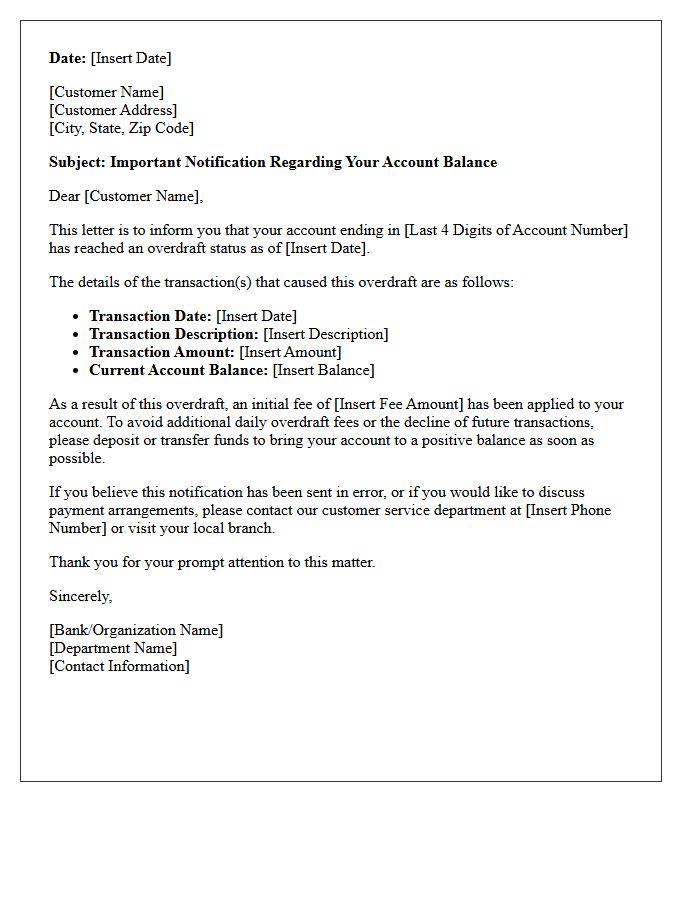
An Initial Overdraft Trigger Notification Letter is a mandatory alert sent by banks when your account balance falls below zero. This document is a regulatory requirement designed to inform you of pending charges and provide an opportunity to rectify the balance. It outlines specific overdraft fees, interest rates, and the timeframe available to deposit funds to avoid further penalties. Understanding this notice is essential for financial transparency and helps consumers manage their liquidity effectively while avoiding escalating debt or negative impacts on their credit standing.
Overdraft Protection Activation Letter
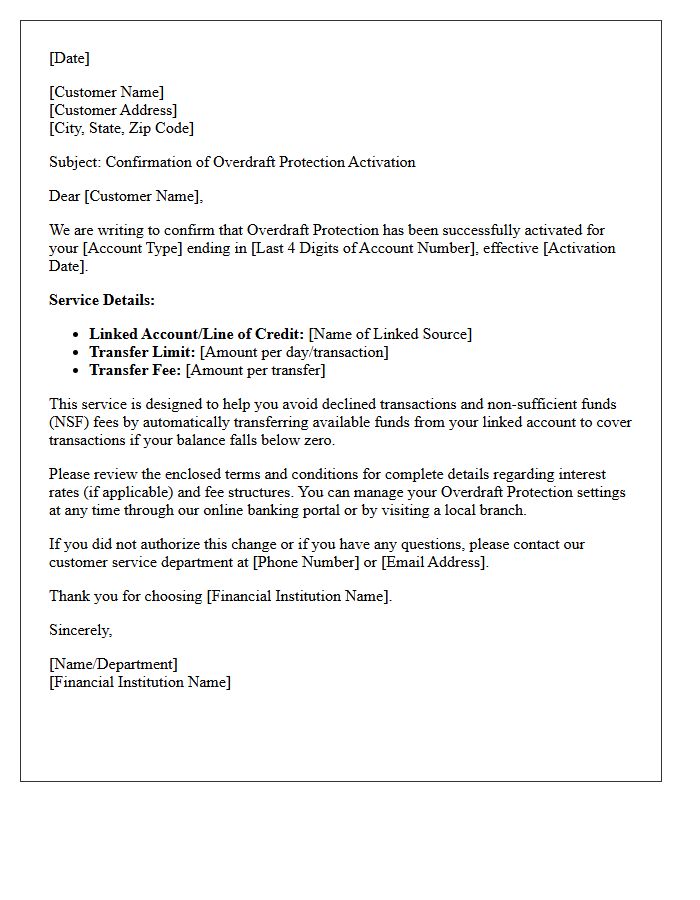
An Overdraft Protection Activation Letter confirms that your bank has enabled a safety net for your checking account. This document outlines the terms and conditions of the service, which links your account to a secondary source like savings or a credit line. It specifies the transfer fees and interest rates applied when you overdraw funds. Reviewing this notice is crucial to understanding how it prevents declined transactions and returned item fees while managing your overall financial costs and account liquidity effectively.
Insufficient Funds Fee Assessment Letter
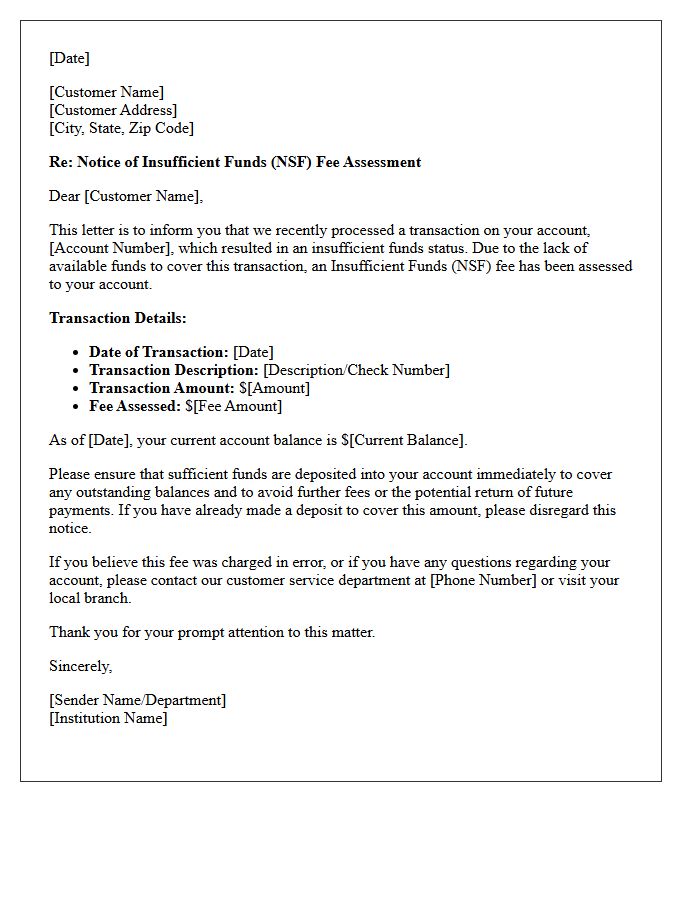
An Insufficient Funds Fee Assessment Letter is a formal notification from a financial institution stating that an account lacked the balance to cover a transaction. This document details the overdraft charges applied to your account and specifies the transaction that triggered the penalty. It is crucial to review these notices immediately to rectify negative balances, avoid compounding interest, and prevent potential account closure. Monitoring these letters helps in maintaining a healthy credit standing and managing personal cash flow effectively while ensuring all banking obligations are met promptly.
Linked Account Transfer Confirmation Letter
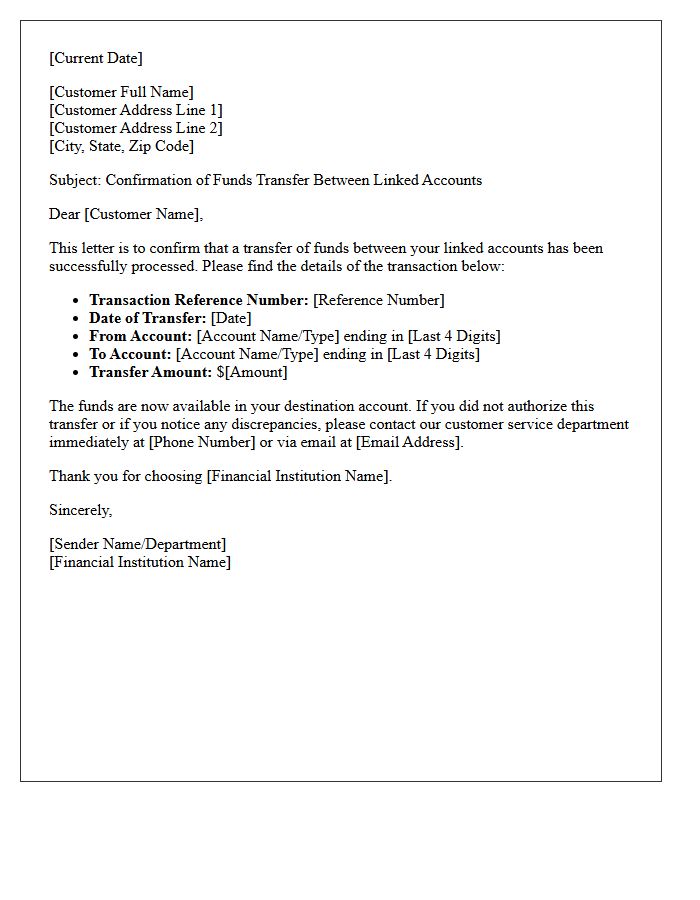
A Linked Account Transfer Confirmation Letter is a formal document issued by financial institutions to verify the successful connection or movement of funds between two accounts. It serves as official proof of the transaction, ensuring security and transparency for the account holder. This letter typically includes the transfer date, settlement amount, and partial account details. It is essential for legal protection and record-keeping, helping to prevent unauthorized access while confirming that the financial link has been established correctly for future automated or manual transfers.
Overdraft Grace Period Expiration Letter
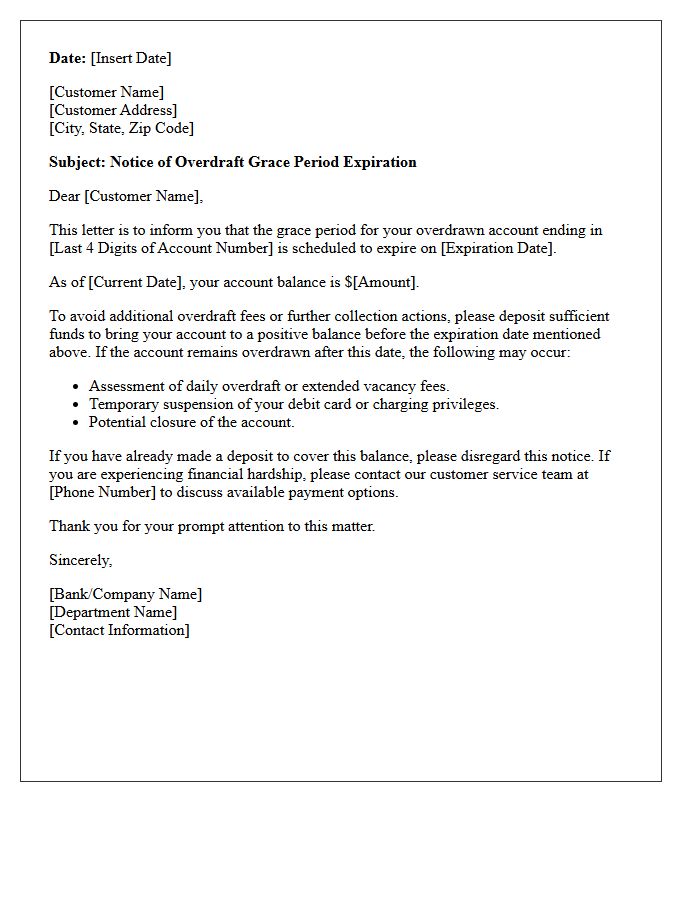
An Overdraft Grace Period Expiration Letter notifies account holders that their temporary window to rectify a negative balance is ending. To avoid overdraft fees, you must deposit sufficient funds before the specified deadline. This document serves as a final warning, detailing the exact amount owed and the date by which your account must return to a positive standing. Failing to act can result in financial penalties, account restrictions, or reported credit damage. Always review the letter immediately to ensure your banking status remains secure and to prevent unnecessary service charges.
Continuous Overdraft Warning Letter
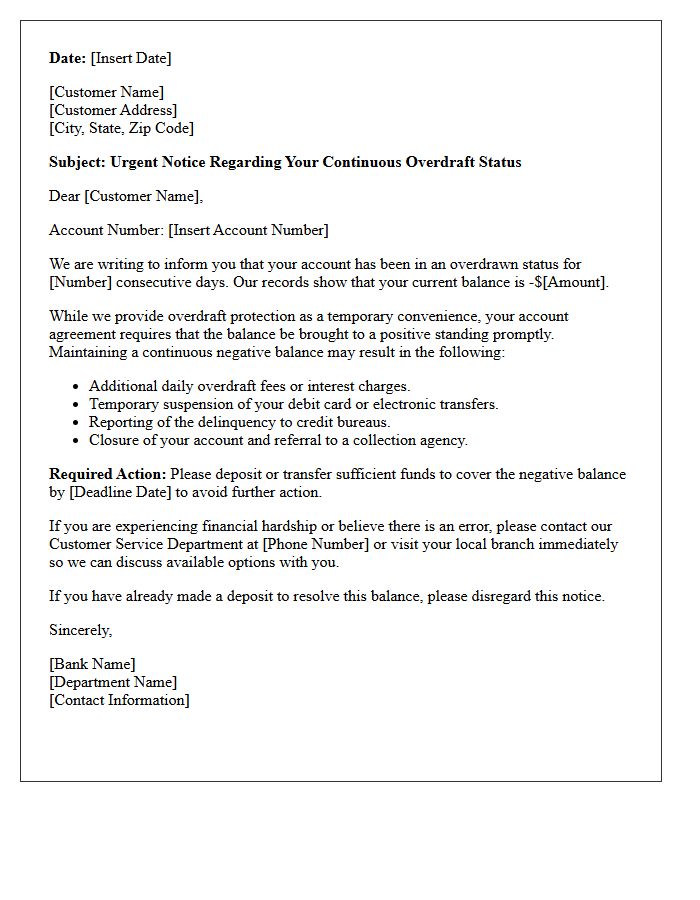
A Continuous Overdraft Warning Letter is a formal notification from a bank regarding a prolonged negative balance. It serves as a regulatory requirement to alert customers that their account has remained overdrawn for an extended period, typically 30 days. This document outlines potential consequences, such as increased interest charges, impact on credit scores, or account closure. It is crucial to address this notice immediately by depositing funds or contacting the bank to arrange a repayment plan and avoid further financial penalties or loss of banking facilities.
Overdraft Line of Credit Draw Notification Letter
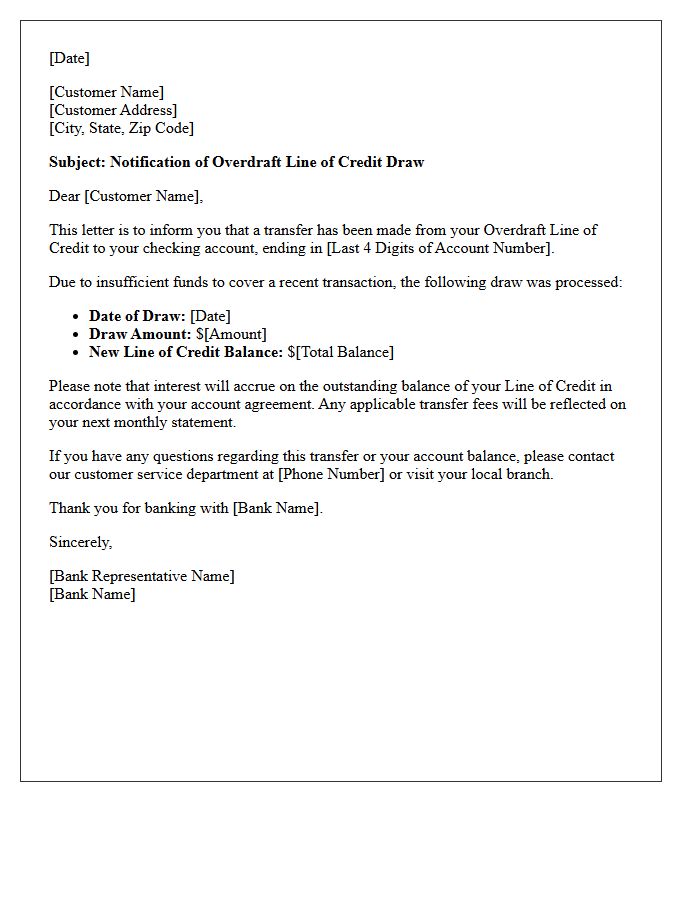
An Overdraft Line of Credit Draw Notification Letter is a formal alert sent by a financial institution when funds are transferred to cover a shortfall. The most critical element is the automatic transfer of credit to your checking account to prevent declined transactions. This document details the specific amount borrowed, applicable interest rates, and any associated fees. Reviewing these notices promptly is essential for effective debt management, ensuring you understand your repayment obligations and maintaining a healthy credit profile while avoiding costly non-sufficient funds penalties.
Negative Balance Repayment Demand Letter
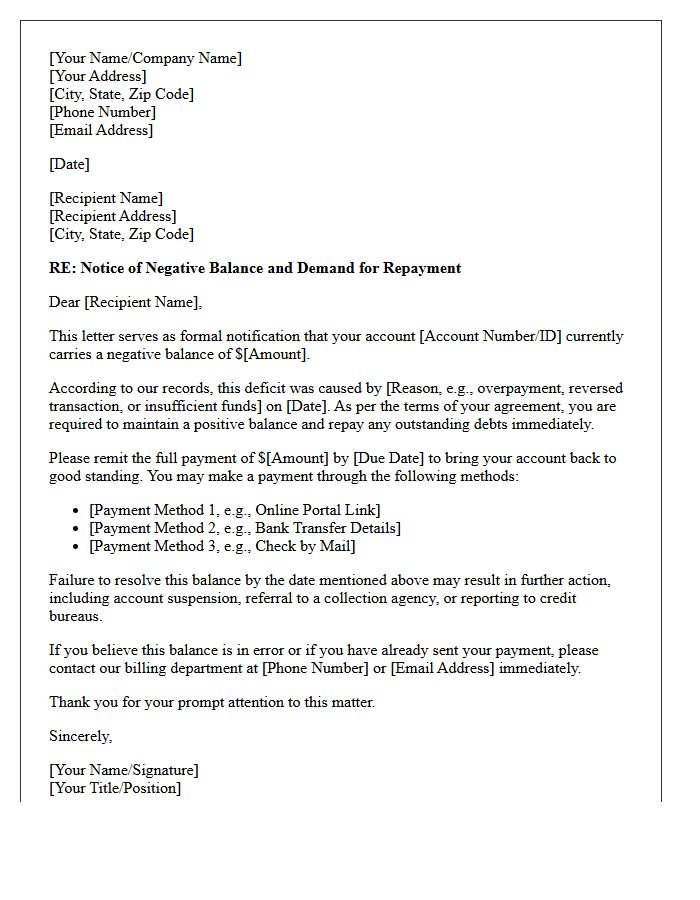
A Negative Balance Repayment Demand Letter is a formal legal notification sent by an employer to a former employee. It officially requests the return of unearned wages, commission overpayments, or vacation time used before it was accrued. This document outlines the specific amount owed, the reason for the debt, and a deadline for restitution. Receiving this letter indicates that the company may pursue legal action or credit reporting if the balance remains unpaid. It is crucial to review your final pay stubs to verify the repayment accuracy before responding.
Overdraft Privilege Suspension Letter
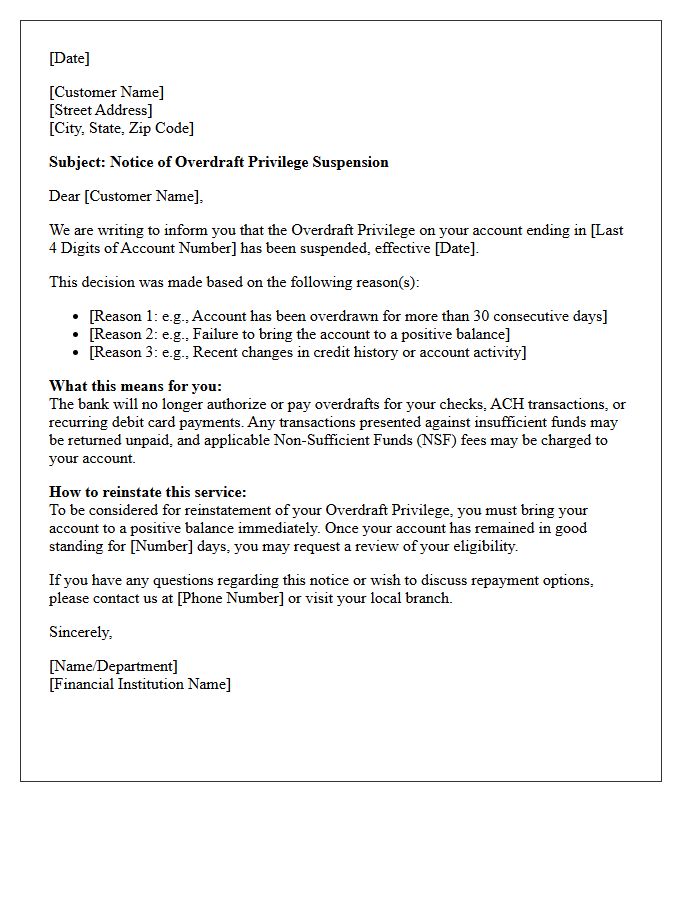
An Overdraft Privilege Suspension Letter is a formal notification from a financial institution stating that your ability to overdraw your account has been revoked. This typically occurs due to excessive negative balances, failure to repay debts promptly, or changes in creditworthiness. Receiving this notice means the bank will no longer cover transactions exceeding your available funds, leading to potential returned items and additional fees. To restore this service, you must usually bring your account to a positive balance and maintain financial stability as required by the bank's specific policies.
Account Closure Due to Unresolved Overdraft Letter
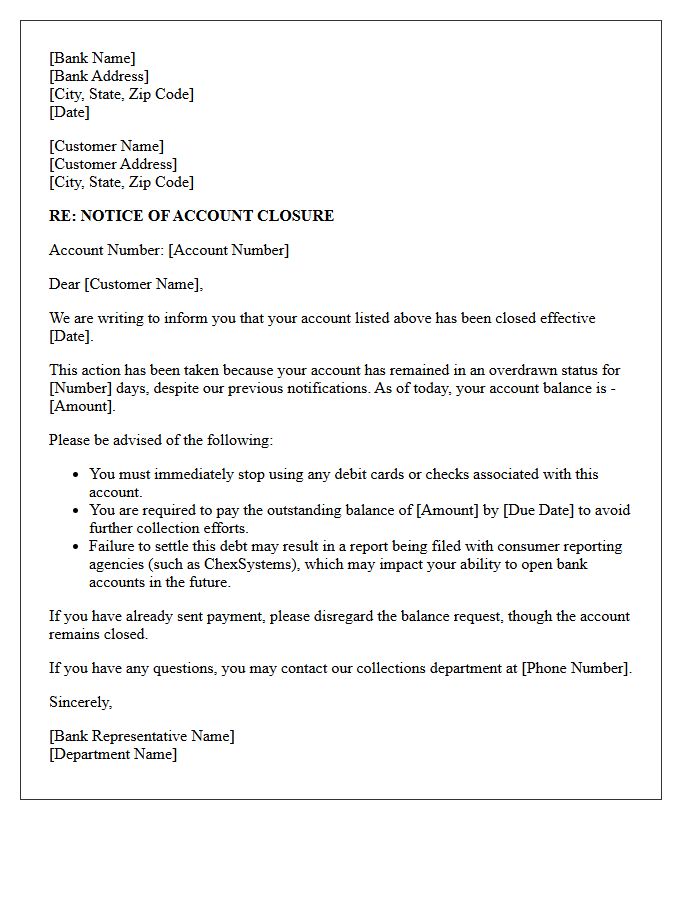
An account closure letter serves as a formal notification that your bank is terminating your relationship due to a persistent negative balance. Receiving this means previous attempts to recover funds failed, potentially leading to ChexSystems reporting. This negative mark can prevent you from opening new bank accounts for several years. To mitigate damage, you must immediately repay the unresolved overdraft and request a satisfaction letter. Acting quickly helps protect your financial reputation and prevents the debt from being sold to a third-party collection agency.
Overdraft Protection Opt-In Confirmation Letter
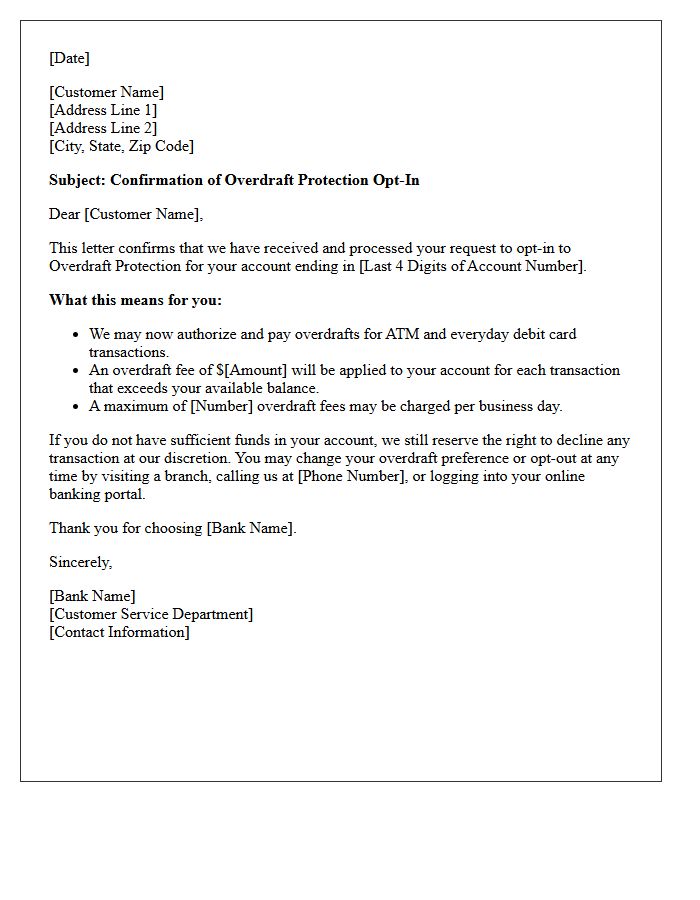
An Overdraft Protection Opt-In Confirmation Letter is a formal document verifying your decision to allow bank coverage for ATM and one-time debit card transactions when funds are insufficient. This regulatory requirement ensures you understand potential overdraft fees associated with the service. Without this active consent, your card transactions will simply be declined at the point of sale. Review this letter carefully to confirm your enrollment status, fee structures, and your right to revoke this authorization at any time to avoid unexpected banking costs.
Unpaid Overdraft Collection Transfer Letter
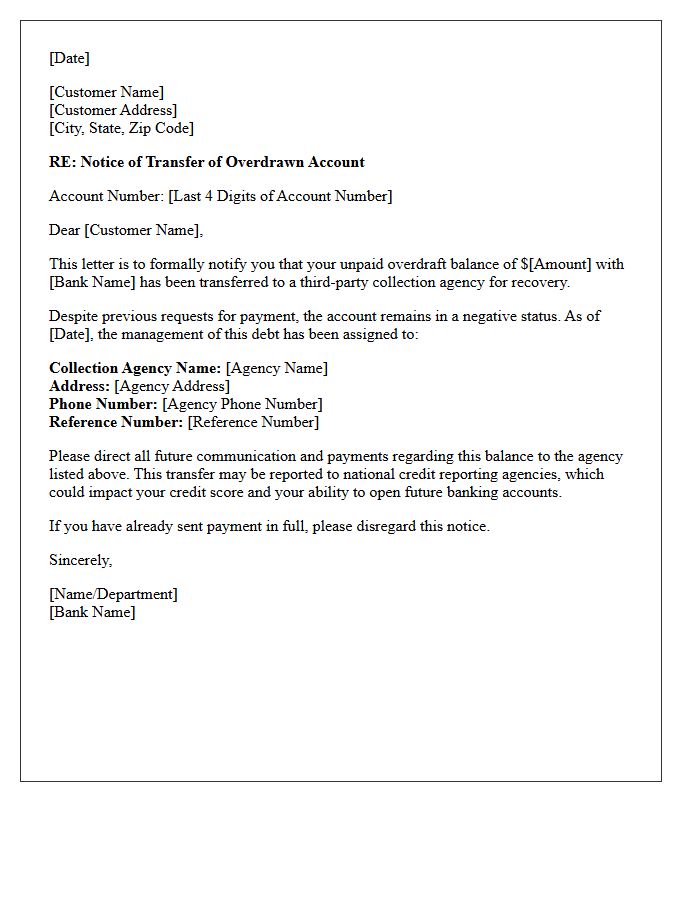
An Unpaid Overdraft Collection Transfer Letter serves as formal notice that a bank has moved your negative balance to a third-party agency. This document signifies that the original creditor is no longer managing the debt, which often leads to credit score damage. Receiving this letter is a final warning to settle the account before aggressive recovery tactics begin. It is crucial to validate the debt amount immediately to ensure accuracy and prevent legal action or long-term financial penalties associated with unaddressed banking deficits.
What is an overdraft trigger notification?
An overdraft trigger notification is an automated alert sent via SMS, email, or mobile app push notification to inform you when your account balance falls below zero or a pre-set threshold, indicating that an overdraft has occurred or is imminent.
How do I set up alerts for an overdraft trigger?
You can set up alerts by logging into your online banking portal or mobile app, navigating to the 'Alerts' or 'Notifications' settings, and selecting the option for low balance or overdraft triggers to receive real-time updates.
Will I be charged a fee when I receive an overdraft notification?
While the notification itself is typically free, it serves as a warning that your account is overdrawn. If you do not deposit funds to cover the negative balance by the bank's specified cutoff time, you may incur an overdraft protection fee or a non-sufficient funds (NSF) charge.
Can I customize the balance amount that triggers a notification?
Yes, most financial institutions allow you to customize your "Low Balance Alert" threshold. You can set a specific dollar amount, such as $50 or $100, to trigger a notification before your account actually reaches zero or enters an overdraft state.
What should I do immediately after receiving an overdraft trigger alert?
Upon receiving an alert, you should immediately transfer funds from another account or make a deposit to bring your balance above zero. Taking action before the end of the business day can often help you avoid daily overdraft penalties and returned check fees.

Comments