
The Opt-Out Overdraft Service Acknowledgment Notice is a vital document confirming a consumer's decision to decline overdraft coverage for ATM and one-time debit transactions. This formal notification ensures financial institutions respect your choice to avoid associated fees by declining transactions when funds are insufficient. Understanding this process helps maintain control over your banking preferences. To assist you, below are some ready to use template.

Image cover: Streamlined Opt-Out Overdraft Service Acknowledgment Templates and Best Practices
Letter Samples List
- Overdraft Service Opt-Out Acknowledgment Letter
- Regulation E Overdraft Decline Confirmation Letter
- Customer Overdraft Protection Opt-Out Letter
- Debit Card Overdraft Opt-Out Acknowledgment Letter
- Account Overdraft Coverage Decline Letter
- Standard Overdraft Privilege Cancellation Letter
- Overdraft Opt-Out Processing Confirmation Letter
- Consumer Overdraft Service Decline Letter
- Banking Overdraft Opt-Out Acknowledgment Letter
- Checking Account Overdraft Cancellation Letter
- Overdraft Fee Opt-Out Confirmation Letter
- Everyday Debit Overdraft Decline Letter
Overdraft Service Opt-Out Acknowledgment Letter
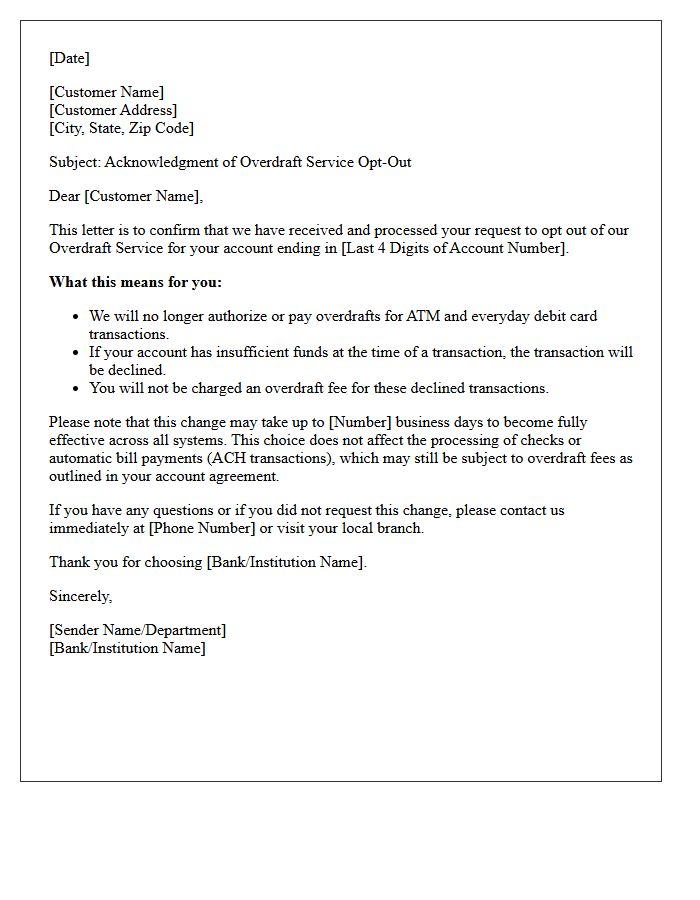
The Overdraft Service Opt-Out Acknowledgment Letter serves as formal confirmation that a financial institution has processed your request to decline overdraft coverage for ATM and everyday debit card transactions. This document verifies that the bank will no longer charge fees for these specific point-of-sale occurrences; instead, transactions exceeding your available balance will typically be denied. It is a critical record for ensuring your consumer rights under Regulation E are upheld, providing clear evidence of your choice to avoid unexpected overdraft penalties while managing your account balance strictly.
Regulation E Overdraft Decline Confirmation Letter
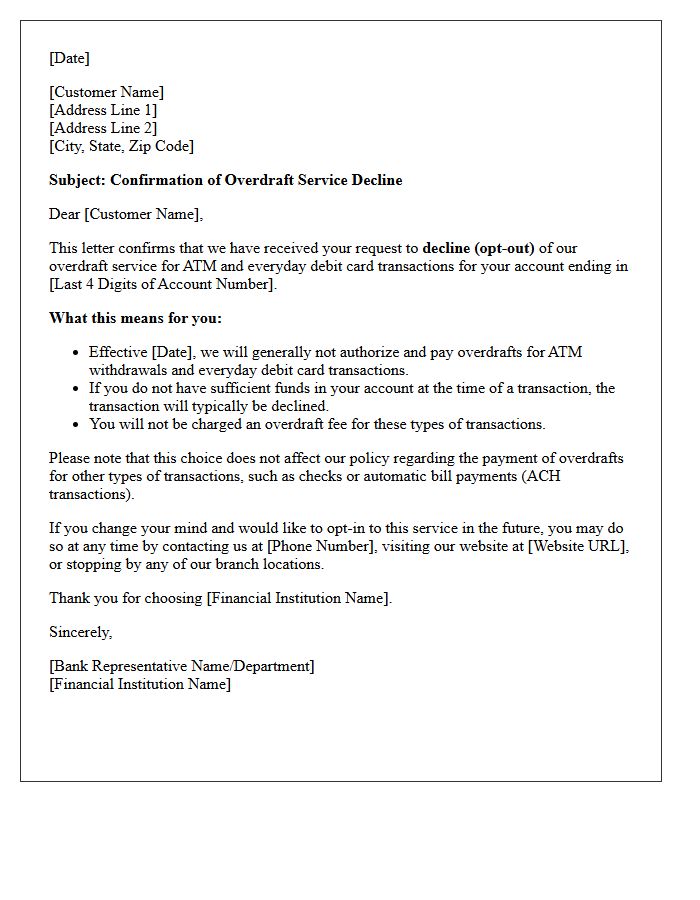
A Regulation E Overdraft Decline Confirmation Letter is a formal notification sent to consumers when their request to opt-out of overdraft services for ATM and one-time debit transactions is processed. This document confirms that the bank will decline transactions if account funds are insufficient, preventing associated service fees. Under federal law, financial institutions must provide this written confirmation to verify the consumer's choice. It serves as essential proof that the account holder has revoked consent for overdraft coverage, ensuring transparency and protecting consumers from unexpected charges during electronic transactions.
Customer Overdraft Protection Opt-Out Letter
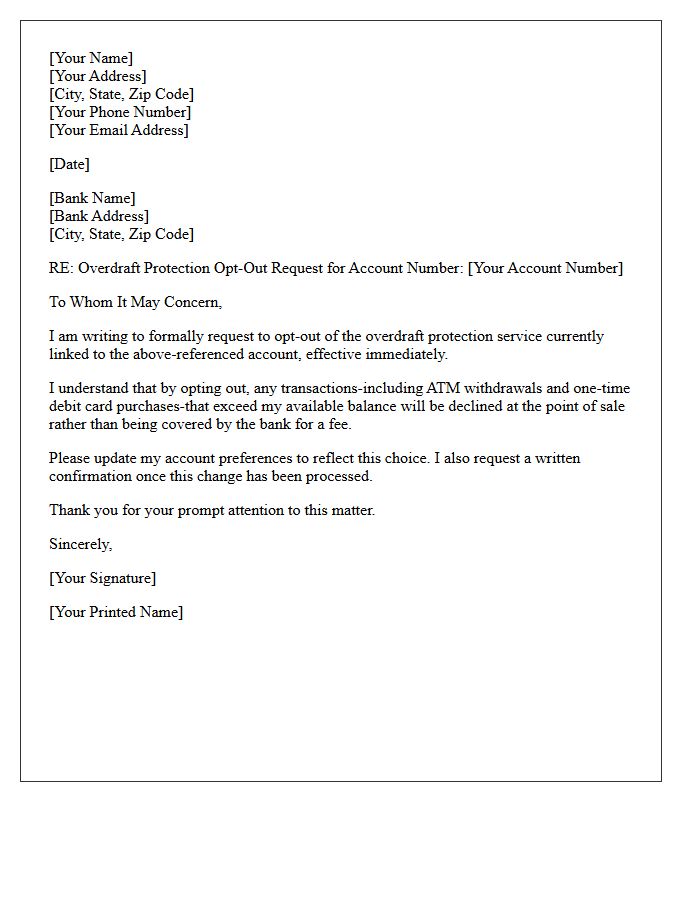
A customer overdraft protection opt-out letter is a formal notice to your bank declining overdraft services for ATM and everyday debit transactions. By choosing to opt-out, you prevent the bank from charging high fees for insufficient funds; instead, the transaction is simply declined at the point of sale. This document ensures you maintain control over your financial account and avoid recurring penalties. Providing a written request creates a clear record of your preference to prioritize budget management over expensive short-term credit coverage provided by the financial institution.
Debit Card Overdraft Opt-Out Acknowledgment Letter
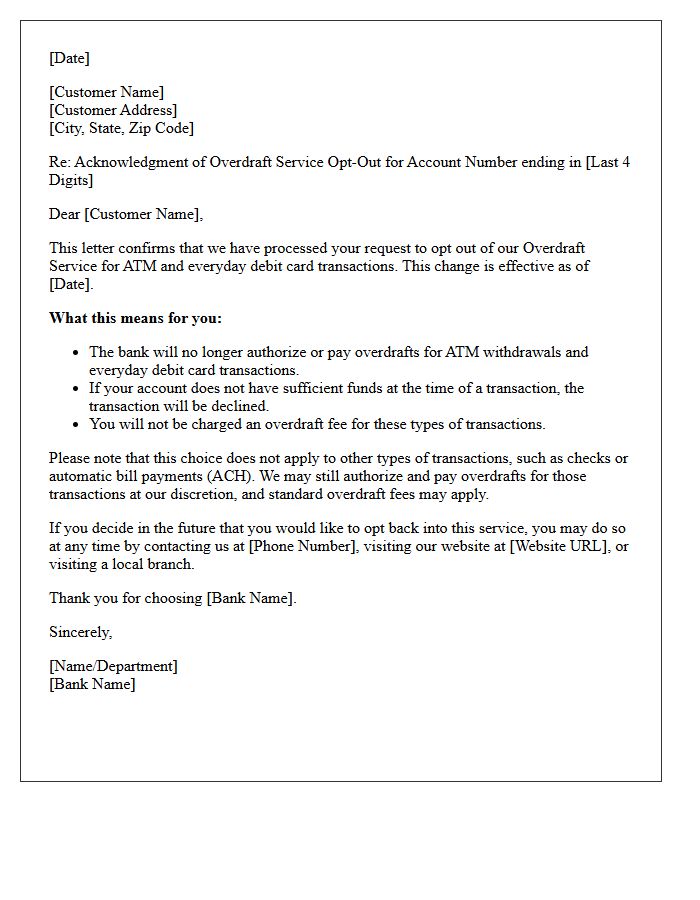
A Debit Card Overdraft Opt-Out Acknowledgment Letter is a formal document confirming your decision to decline overdraft coverage for one-time debit and ATM transactions. By opting out, your bank will decline transactions if your account lacks sufficient funds, helping you avoid expensive overdraft fees. This letter serves as legal proof of your preference under Regulation E. It ensures you maintain control over your spending without the risk of unintended bank charges, though it may result in payment refusals at the point of sale during a balance deficiency.
Account Overdraft Coverage Decline Letter
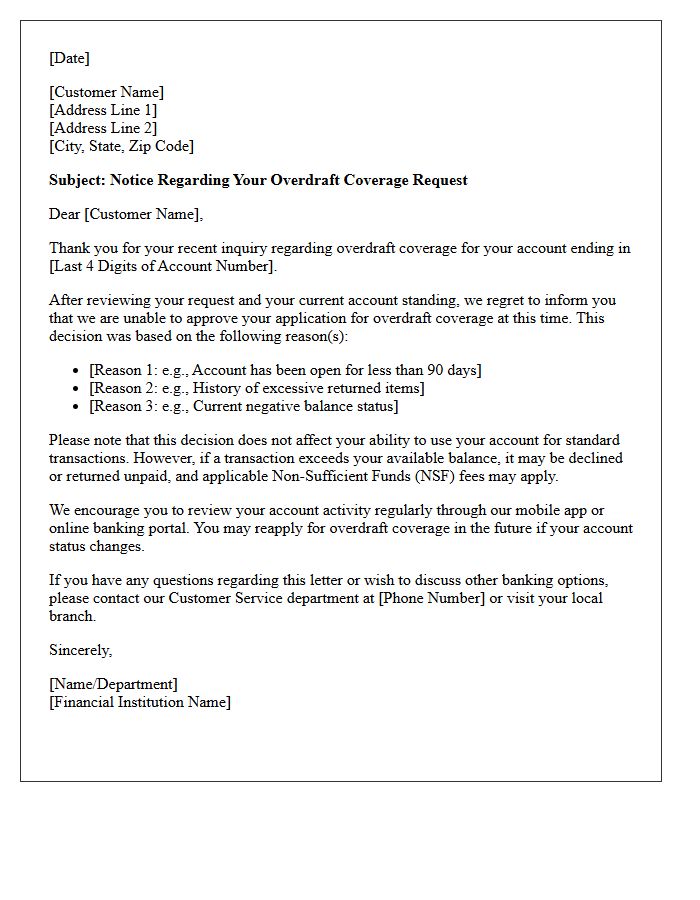
An Account Overdraft Coverage Decline Letter is a formal notice sent by a bank informing a customer that their request for overdraft protection has been denied. This decision is typically based on a poor credit history or a pattern of past account mismanagement. Receiving this letter means the bank will not cover transactions that exceed your available balance, resulting in declined payments and potential NSF fees. Reviewing the specific reasons cited in the letter is essential for improving your financial standing and re-applying for coverage in the future.
Standard Overdraft Privilege Cancellation Letter
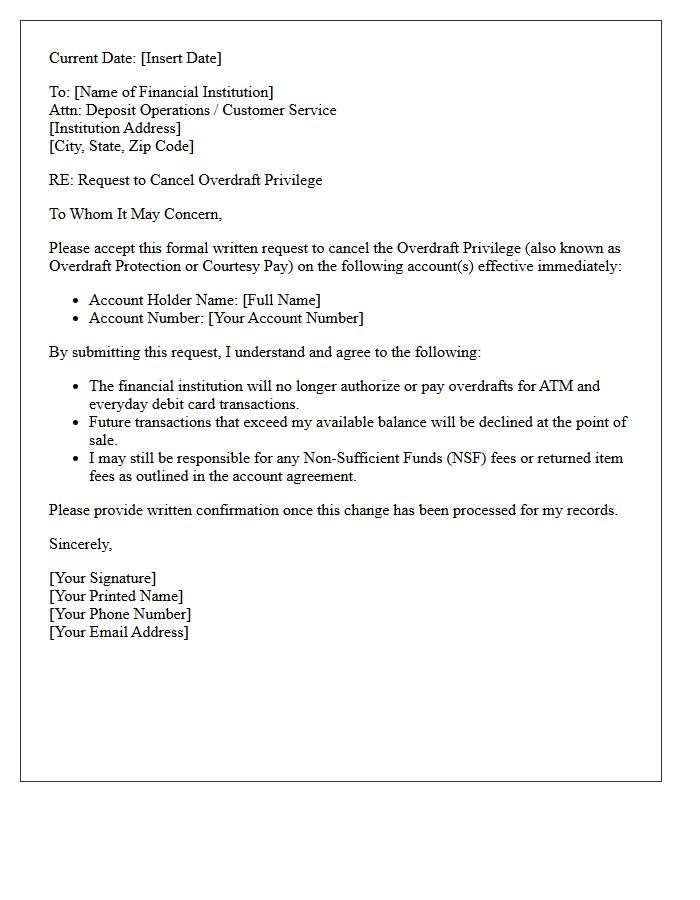
A Standard Overdraft Privilege Cancellation Letter is a formal document used to revoke your consent for bank overdraft services. By submitting this written notice, you instruct your financial institution to decline transactions, such as ATM withdrawals or debit card purchases, if your account has insufficient funds. This action helps you avoid expensive overdraft fees associated with automated coverage. Once processed, the bank must stop charging fees for one-time transactions, though you remain responsible for any outstanding balances or returned item charges. Keeping a copy ensures a record of your opt-out request.
Overdraft Opt-Out Processing Confirmation Letter
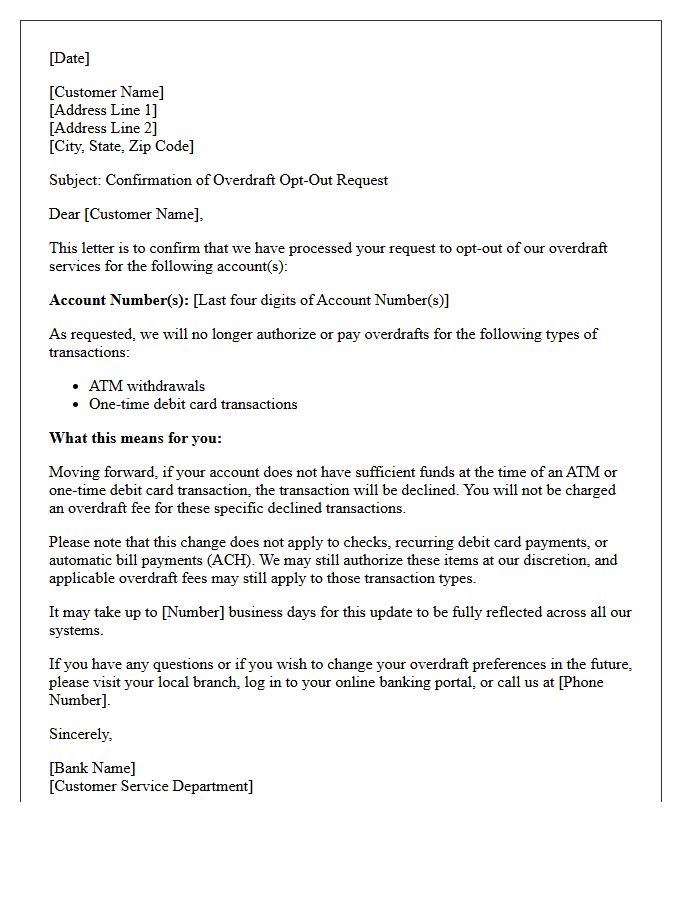
An Overdraft Opt-Out Processing Confirmation Letter serves as formal verification that your financial institution has processed your request to decline overdraft protection services. This document confirms that the bank will no longer authorize one-time debit card or ATM transactions if your account has insufficient funds. Receiving this notice ensures your account settings are updated to avoid unexpected overdraft fees, though it means transactions exceeding your balance will be declined at the point of sale. Keep this written confirmation for your records to ensure compliance with federal banking regulations.
Consumer Overdraft Service Decline Letter
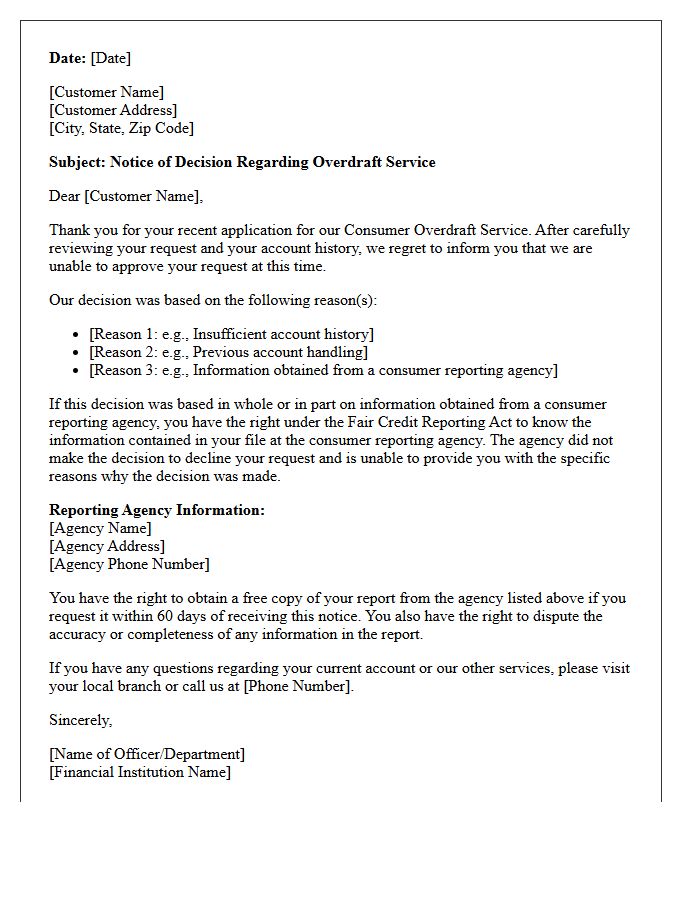
A Consumer Overdraft Service Decline Letter is a formal notification sent by a financial institution when a request for overdraft protection is rejected. This document typically outlines specific reasons for the denial, often citing credit history or insufficient account activity. Under federal regulations, banks must provide this adverse action notice to ensure transparency. Reviewing this letter is essential for consumers to understand their eligibility status and to identify potential errors in their credit reports that may have influenced the bank's final decision.
Banking Overdraft Opt-Out Acknowledgment Letter
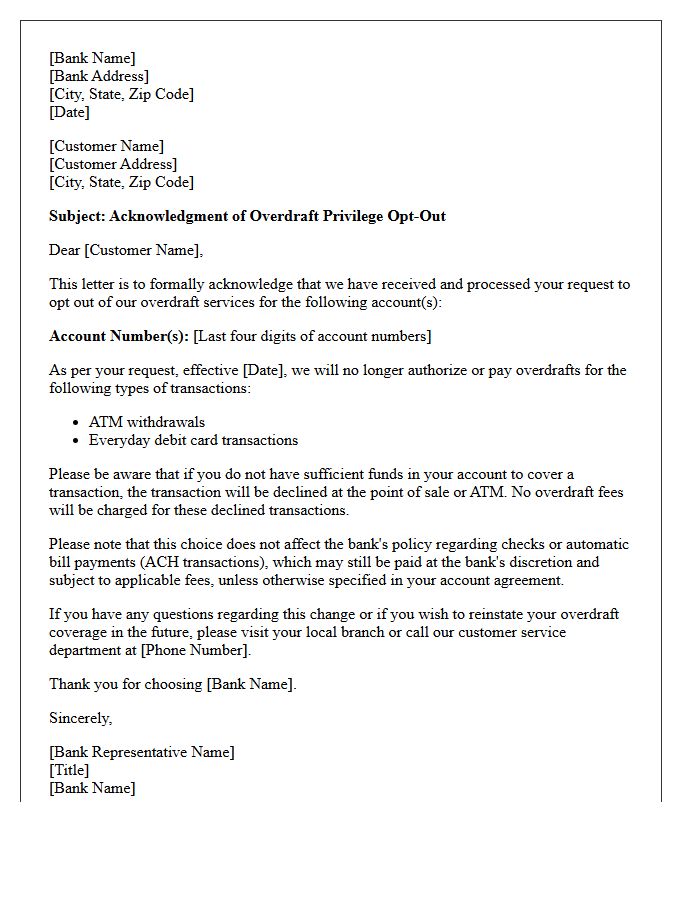
A Banking Overdraft Opt-Out Acknowledgment Letter is a formal document confirming your decision to decline overdraft protection services. By opting out, the bank will typically decline ATM withdrawals or point-of-sale transactions if your account lacks sufficient funds, rather than covering the balance for a fee. This letter serves as essential written proof of your choice, helping you avoid unexpected overdraft fees and maintain better control over your personal finances. Ensure you retain this acknowledgment to dispute any future unauthorized charges or service changes effectively.
Checking Account Overdraft Cancellation Letter
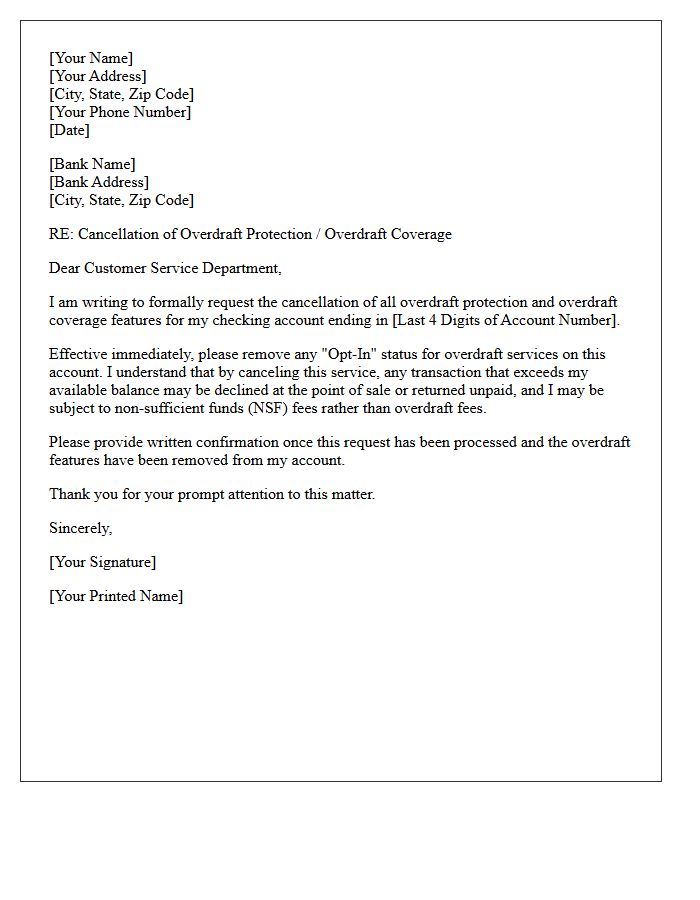
A checking account overdraft cancellation letter is a formal request to opt-out of overdraft protection services. This document ensures the bank will decline transactions when funds are insufficient rather than charging expensive overdraft fees. It serves as a legal record to revoke prior consent under federal regulations. Providing your account number and a clear statement of intent protects your finances from recurring automated penalties. Once processed, it prevents your balance from falling into the negative, helping you maintain better financial control over your personal banking expenses.
Overdraft Fee Opt-Out Confirmation Letter
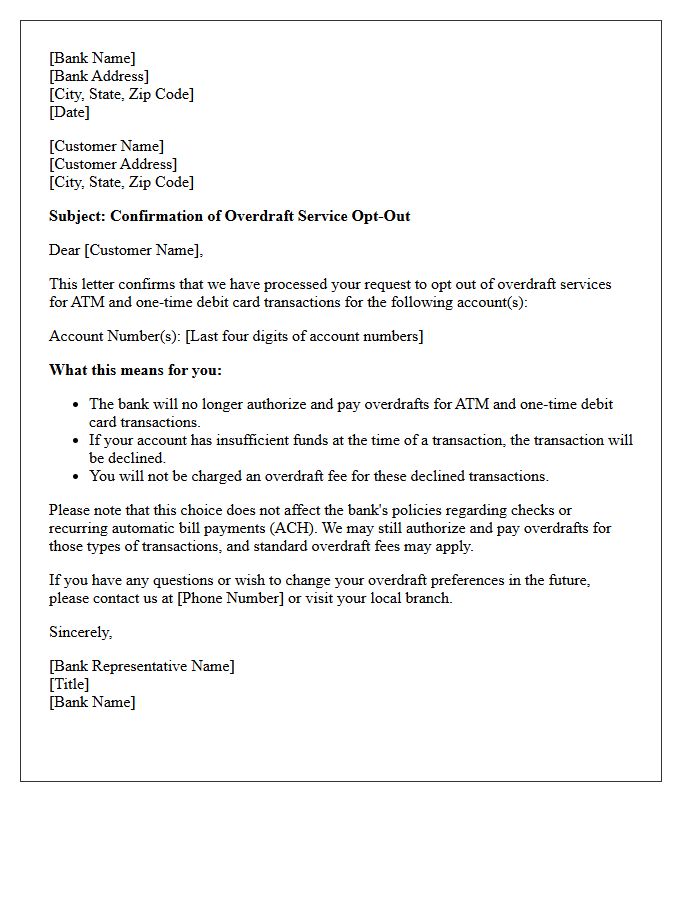
An Overdraft Fee Opt-Out Confirmation Letter serves as formal proof that you have declined Standard Overdraft Coverage for ATM and everyday debit card transactions. This document confirms that your financial institution cannot charge you overdraft fees for these specific types of point-of-sale activities. Instead, if your account lacks sufficient funds, the transaction will simply be declined at no cost. It is essential to retain this letter to ensure your consumer rights under Regulation E are protected and to verify your account's billing preferences are correctly updated.
Everyday Debit Overdraft Decline Letter
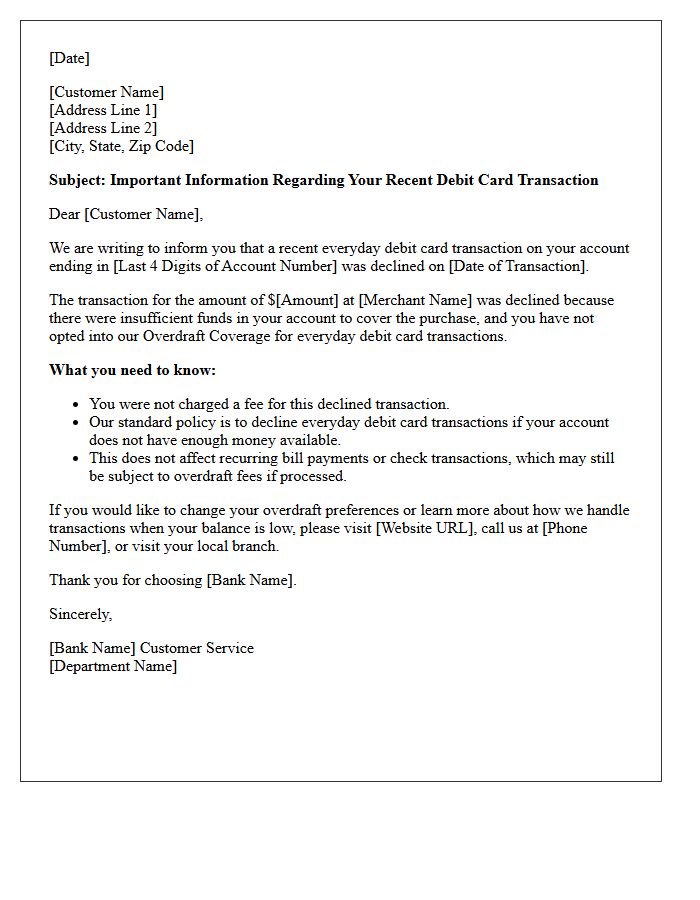
An Everyday Debit Overdraft Decline Letter notifies you that a one-time debit card or ATM transaction was rejected due to insufficient funds. This occurs because you did not opt into an overdraft protection program, or your bank chose not to authorize the specific charge. Receiving this notice is important for financial monitoring, as it helps you track failed payments without incurring expensive overdraft fees. Use this letter to reconcile your account balance and avoid future transaction denials by ensuring adequate coverage for your daily spending needs.
What is an Opt-Out Overdraft Service Acknowledgment Notice?
An Opt-Out Overdraft Service Acknowledgment Notice is a formal confirmation sent by a financial institution to a customer acknowledging their request to decline overdraft coverage for ATM and everyday debit card transactions. This document confirms that the bank will no longer authorize these specific transaction types if there are insufficient funds in the account.
What happens to my debit card transactions after opting out of overdraft services?
Once your opt-out request is processed and acknowledged, any everyday debit card purchase or ATM withdrawal that exceeds your available balance will typically be declined at the point of sale. You will not incur an overdraft fee for these declined transactions, but you are responsible for ensuring sufficient funds are available before making a purchase.
Are checks and recurring bill payments affected by the overdraft opt-out notice?
No, the standard opt-out acknowledgment specifically applies to "non-recurring" transactions like ATM withdrawals and one-time debit purchases. Under federal regulations (Regulation E), checks, ACH transfers, and recurring bill payments may still be covered by the bank's standard overdraft practices, which may involve a fee per item paid.
Can I change my overdraft preference after receiving an acknowledgment notice?
Yes, you have the right to change your overdraft preference at any time. If you initially opted out but later decide you want coverage for emergencies, you can "opt-in" by contacting your bank. Conversely, if you are currently opted-in, you can request to opt-out at any time to avoid future overdraft fees on debit transactions.
Does opting out of overdraft services impact my credit score?
Opting out of overdraft services does not directly impact your credit score, as overdraft coverage is not a form of consumer credit. However, preventing your account from falling into a negative balance helps you avoid potential collection actions or the involuntary closing of your account, which could affect your banking history record (such as ChexSystems).

Comments