
A Notice of Regulatory Examination Readiness Letter is a formal document sent by financial institutions to regulators confirming they are prepared for an upcoming audit. It verifies that all requested documentation, internal controls, and compliance data are organized and accessible for review. Ensuring accuracy in this notification demonstrates transparency and operational integrity. Below are some ready to use template options to assist you.
Image cover: Proactive Compliance: Regulatory Examination Readiness Notification Templates
Letter Samples List
- Notice of Regulatory Examination Readiness Letter
- Pre-Examination Compliance Readiness Declaration Letter
- Internal Audit Regulatory Readiness Certification Letter
- Executive Management Examination Readiness Confirmation Letter
- Anti-Money Laundering Examination Readiness Acknowledgment Letter
- Information Technology Security Examination Readiness Letter
- Consumer Financial Protection Readiness Attestation Letter
- Board of Directors Examination Readiness Notification Letter
- Third-Party Vendor Management Examination Readiness Letter
- Capital Adequacy Assessment Examination Readiness Letter
- Fair Lending Practices Examination Readiness Submission Letter
- Operational Risk Management Examination Readiness Letter
Notice of Regulatory Examination Readiness Letter
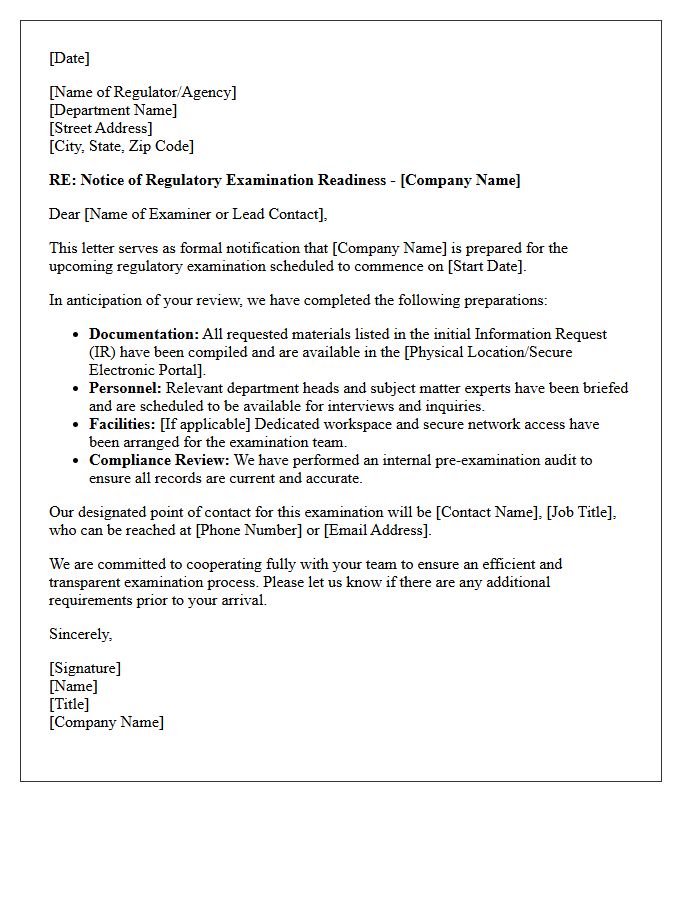
A Notice of Regulatory Examination Readiness Letter is a formal notification from a financial regulator, such as FINRA or the SEC, informing a firm of an upcoming audit. This document typically includes a Request List specifying required documents, data, and internal policies. It marks the beginning of the examination's off-site phase, requiring immediate attention to compliance records. Providing accurate and timely responses is critical to demonstrating operational integrity and avoiding potential deficiency letters or enforcement actions. Firms must treat this notice as a high-priority compliance milestone.
Pre-Examination Compliance Readiness Declaration Letter
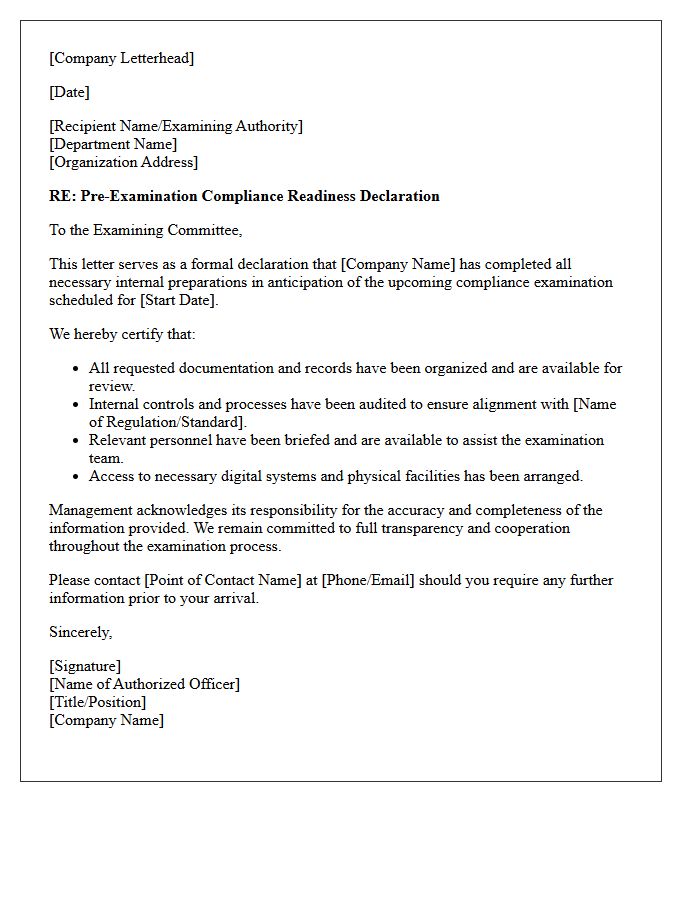
The Pre-Examination Compliance Readiness Declaration Letter is a critical regulatory document used by financial institutions to confirm they have met all preparatory requirements before an official audit. It serves as a formal attestation that internal controls, documentation, and data systems are fully updated and ready for inspection. By signing this letter, management acknowledges their operational readiness, which helps streamline the supervisory process and minimizes the risk of findings related to regulatory non-compliance or incomplete information during the examination phase.
Internal Audit Regulatory Readiness Certification Letter
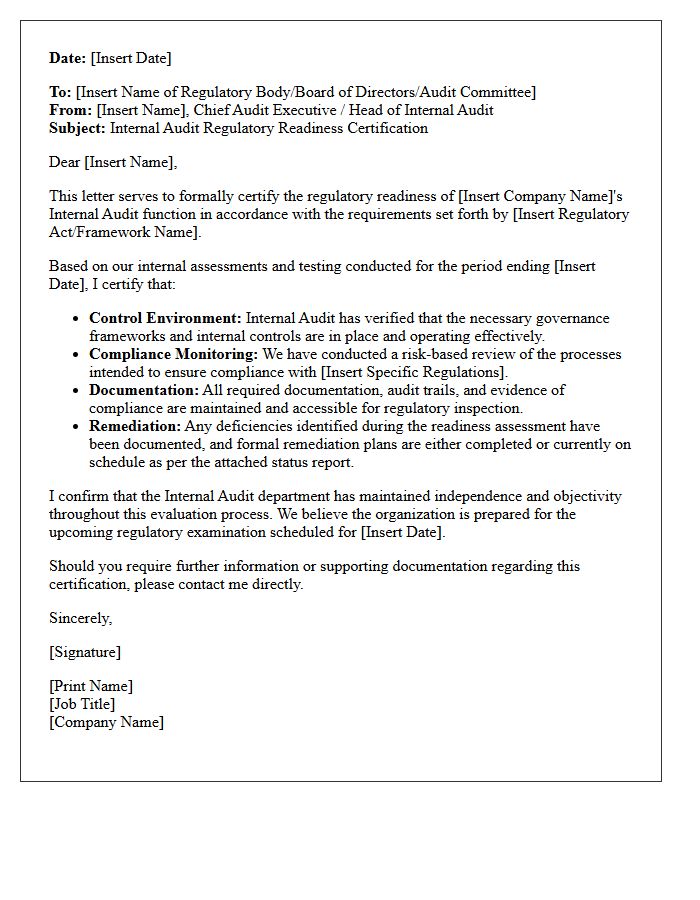
An Internal Audit Regulatory Readiness Certification Letter serves as a formal verification that an organization's controls meet specific compliance standards before an official examination. This document confirms that internal systems are audit-ready, reducing the risk of regulatory penalties or operational failures. It provides senior management and stakeholders with assurance regarding the effectiveness of risk management frameworks. By documenting remediation efforts and control testing, the letter demonstrates a proactive commitment to governance, ensuring the entity is prepared for rigorous scrutiny by external oversight bodies.
Executive Management Examination Readiness Confirmation Letter
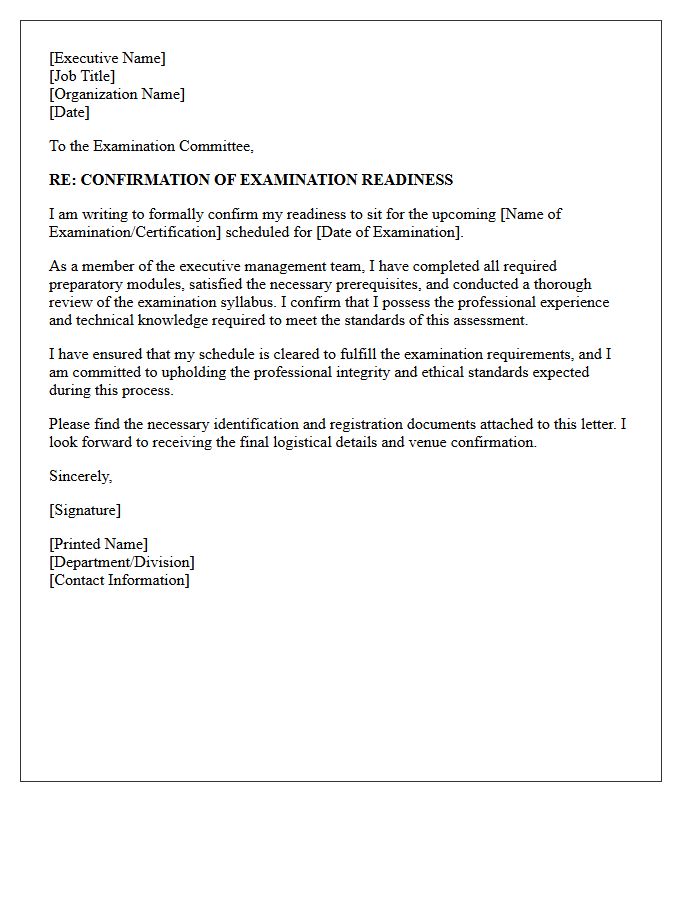
An Executive Management Examination Readiness Confirmation Letter is a critical regulatory document used in banking to verify that a financial institution is prepared for an official audit. It serves as a formal attestation from senior leadership that all necessary data, internal controls, and compliance records are accessible and accurate. This letter ensures accountability, streamlines the oversight process, and confirms that the board is proactive in its risk management duties. Providing this confirmation helps minimize delays and demonstrates regulatory compliance maturity to examiners during high-level financial reviews.
Anti-Money Laundering Examination Readiness Acknowledgment Letter
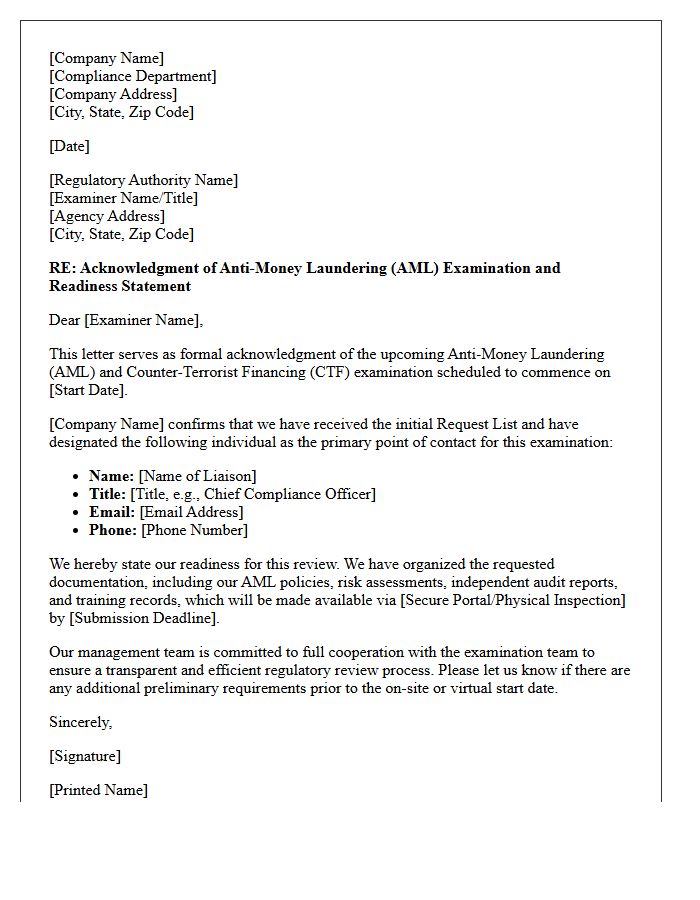
The Anti-Money Laundering Examination Readiness Acknowledgment Letter is a formal document issued by regulatory bodies to confirm a financial institution's preparedness for an upcoming audit. It requires senior management to certify that all compliance programs, internal controls, and transaction monitoring systems are fully operational. Signing this letter signifies that the firm has gathered necessary documentation and is ready for rigorous testing. Failure to provide accurate information can lead to regulatory penalties, making it a critical step in demonstrating proactive AML governance and legal adherence.
Information Technology Security Examination Readiness Letter
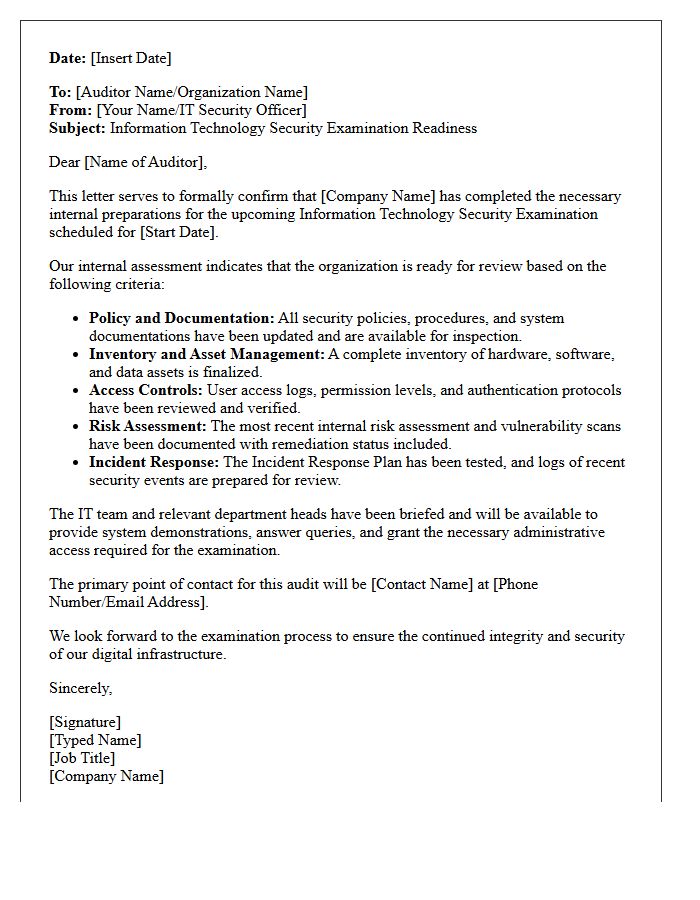
An Information Technology Security Examination Readiness Letter is a formal document verifying that an organization has implemented necessary cybersecurity controls and met compliance standards. It serves as an attestation of preparedness before a formal regulatory audit occurs. This letter evaluates risk management, data protection policies, and technical safeguards to identify potential gaps. By securing this readiness assessment, businesses demonstrate proactive due diligence, reducing the likelihood of critical findings and ensuring a smoother evaluation process by governing bodies or third-party examiners.
Consumer Financial Protection Readiness Attestation Letter
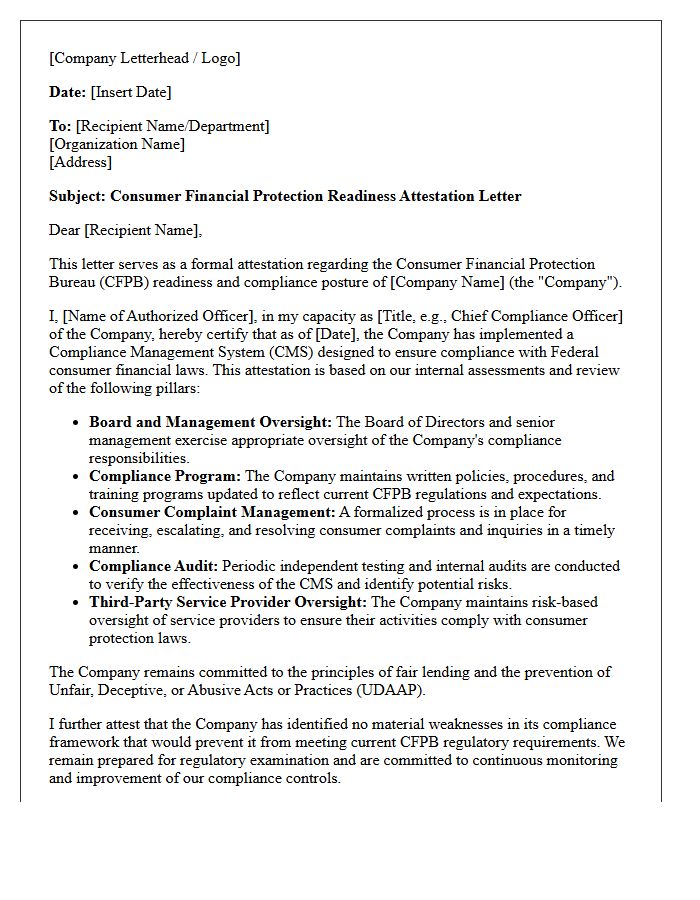
A Consumer Financial Protection Readiness Attestation Letter is a formal document verifying that a fintech company or service provider complies with federal consumer protection laws. Banks often require this letter from partners to ensure regulatory alignment with CFPB standards. It demonstrates that the entity has robust systems for managing consumer complaints, fair lending, and data privacy. Providing this attestation mitigates risk for financial institutions, facilitating secure partnerships while proving a commitment to maintaining a transparent and compliant consumer financial environment.
Board of Directors Examination Readiness Notification Letter
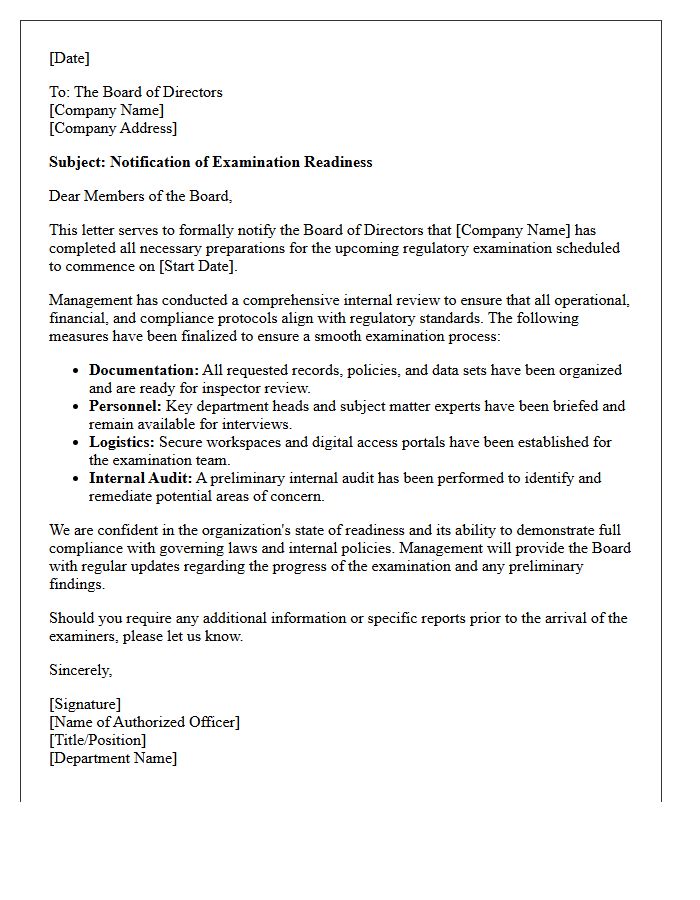
The Board of Directors Examination Readiness Notification Letter is a critical formal document issued by regulatory agencies, such as the NCUA or FDIC. It serves as an official advance notice informing the credit union or bank leadership about an upcoming safety and soundness audit. This letter outlines the specific scope of the review, required documentation, and key deadlines. Receipt of this notification signals that directors must ensure all financial records, compliance protocols, and governance policies are fully updated to demonstrate operational transparency and regulatory adherence during the evaluation process.
Third-Party Vendor Management Examination Readiness Letter
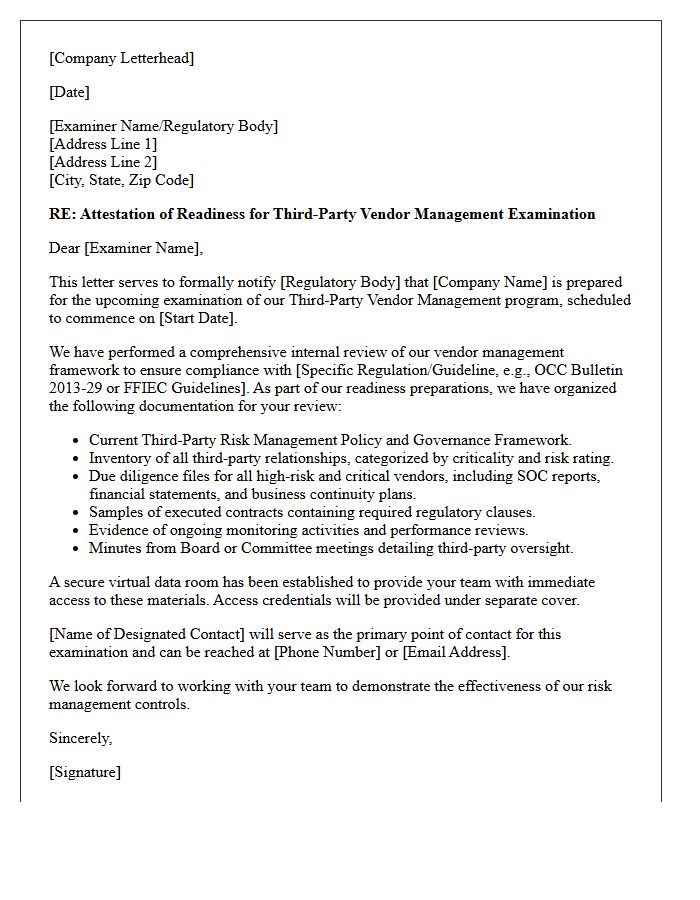
A Third-Party Vendor Management Examination Readiness Letter serves as a formal attestation of an organization's preparedness for regulatory scrutiny. It confirms that internal controls, risk assessments, and monitoring protocols for external partners align with compliance standards. The most critical component is documenting a robust due diligence framework to mitigate operational and security risks. This letter assures stakeholders and examiners that the company effectively manages its supply chain vulnerabilities. Having this documentation ready demonstrates proactive governance and reduces the likelihood of audit findings during financial or cybersecurity inspections.
Capital Adequacy Assessment Examination Readiness Letter
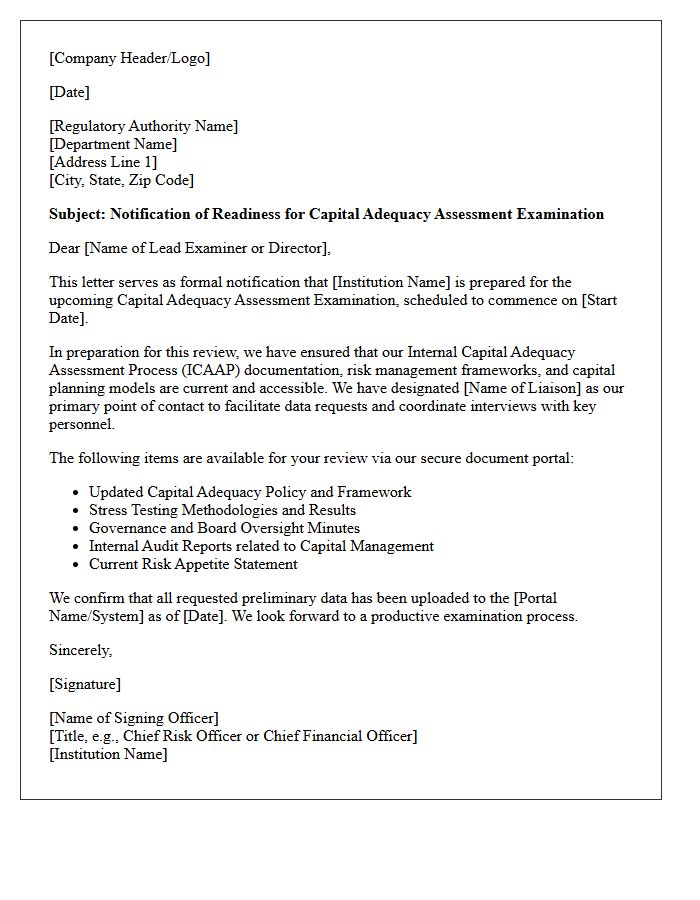
A Capital Adequacy Assessment Examination Readiness Letter is a formal document issued by financial institutions to confirm they have met the regulatory standards for internal risk management. This letter signifies that the bank's internal capital adequacy processes are fully prepared for official supervisory review. It ensures that the organization maintains sufficient reserves to cover potential losses while supporting ongoing operations. Being "exam-ready" demonstrates compliance with regulatory frameworks like Basel III, proving that the institution has rigorous governance, stress testing protocols, and accurate data reporting systems in place before an audit begins.
Fair Lending Practices Examination Readiness Submission Letter
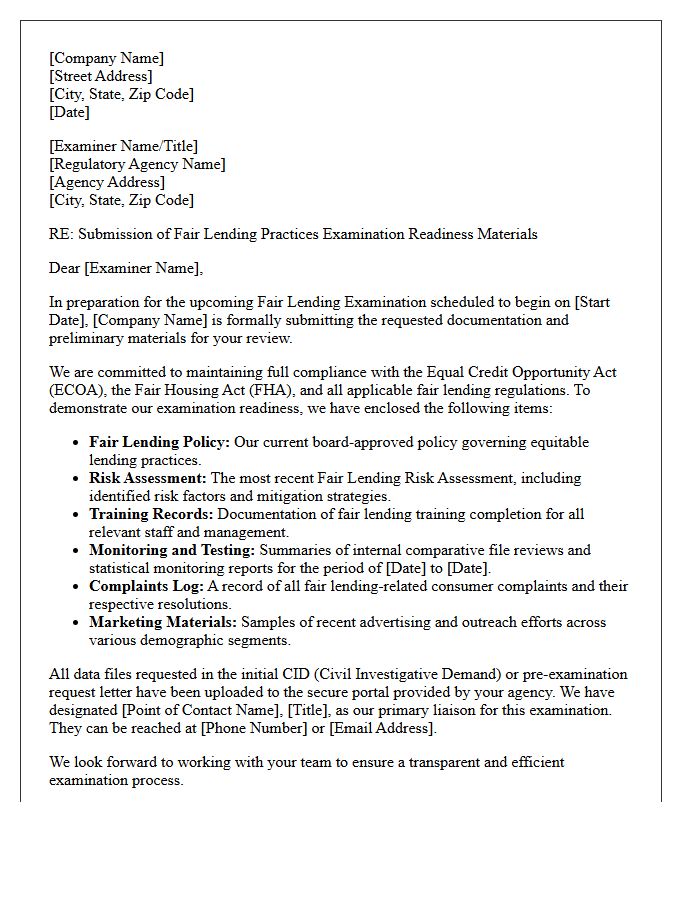
The Fair Lending Practices Examination Readiness Submission Letter is a formal document certifying that a financial institution has implemented necessary controls to prevent discriminatory practices. It signals to regulators that your Compliance Management System is prepared for audit by addressing underwriting equity and pricing consistency. Providing this letter demonstrates proactive governance, helps mitigate regulatory risk, and confirms that internal data monitoring aligns with Equal Credit Opportunity Act standards. Timely submission ensures a streamlined examination process while showcasing a commitment to fair lending transparency and institutional accountability.
Operational Risk Management Examination Readiness Letter
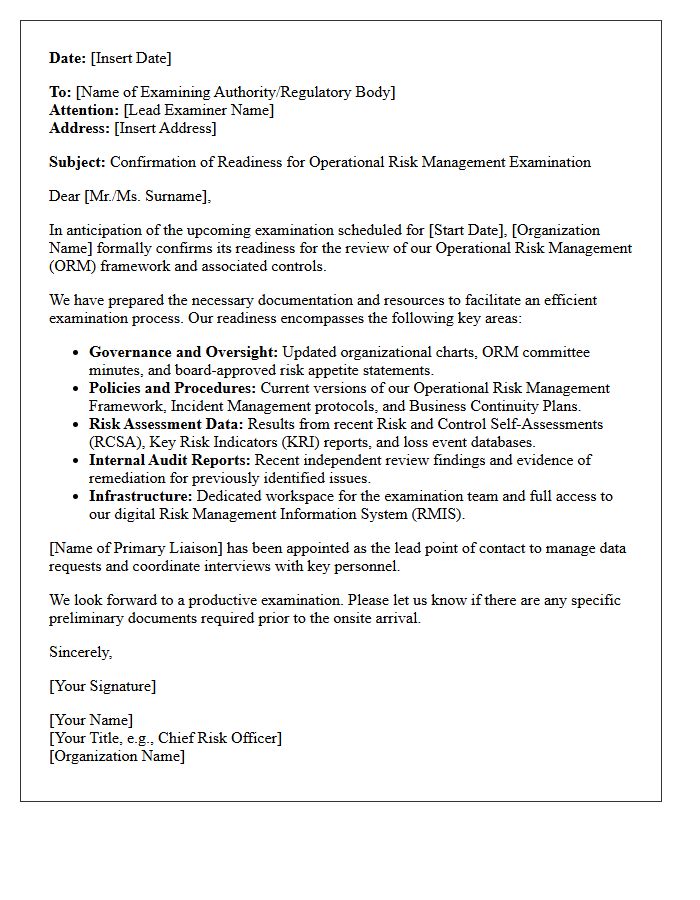
An Operational Risk Management Examination Readiness Letter is a formal document confirming that a financial institution has implemented robust internal controls and frameworks. It signals to regulators that the organization is prepared for an audit by detailing governance structures, risk assessment methodologies, and mitigation strategies. This letter ensures transparency, demonstrating that the entity can identify, monitor, and manage potential systemic failures or human errors effectively. Being examination-ready reduces regulatory friction and confirms compliance with safety and soundness standards, protecting the institution from unexpected operational disruptions and legal penalties.
What is a Notice of Regulatory Examination Readiness Letter?
A Notice of Regulatory Examination Readiness Letter is a formal document issued by a regulatory body to notify a financial institution or entity that an upcoming examination has been scheduled and to request specific documentation for preliminary review.
What should be included in a response to a Readiness Letter?
A response should include all requested data sets, internal policy documents, organizational charts, and evidence of compliance controls, typically organized in a secure digital exam folder as specified by the regulator.
How much time does a firm have to respond to a Readiness Letter?
The timeline varies by regulator, but firms generally have between 14 to 30 days to provide the initial document request list (DRL) and confirm their readiness for the on-site or remote examination phase.
Why is the Regulatory Readiness Letter critical for compliance?
The letter serves as the official start of the supervisory cycle; timely and accurate submission of the requested materials sets the tone for the exam and demonstrates the firm's operational transparency and governance maturity.
Can a firm request an extension for a Regulatory Examination Readiness Letter?
Extensions are rarely granted and usually require a demonstration of extraordinary circumstances; however, firms can communicate with their assigned Examiner-in-Charge (EIC) if specific data points require additional time to extract.

Comments