
A Dividend Payment Restriction Letter is a formal notice used to limit or prohibit the distribution of company profits to shareholders. These restrictions often arise from loan covenants, legal requirements, or financial restructuring to preserve capital. Understanding these constraints is essential for corporate compliance and debt management. Below are some ready to use templates.
Image cover: Formal Notice of Dividend Payment Restrictions: Templates and Best Practices
Letter Samples List
- Regulatory Dividend Payment Restriction Letter
- Capital Adequacy Dividend Payment Restriction Letter
- Covenant Breach Dividend Payment Restriction Letter
- Board Resolution Dividend Payment Restriction Letter
- Stress Test Failure Dividend Payment Restriction Letter
- Shareholder Notice Dividend Payment Restriction Letter
- Prompt Corrective Action Dividend Payment Restriction Letter
- Asset Quality Dividend Payment Restriction Letter
- Consent Order Dividend Payment Restriction Letter
- Liquidity Shortfall Dividend Payment Restriction Letter
- Retained Earnings Deficit Dividend Payment Restriction Letter
- Basel Compliance Dividend Payment Restriction Letter
Regulatory Dividend Payment Restriction Letter
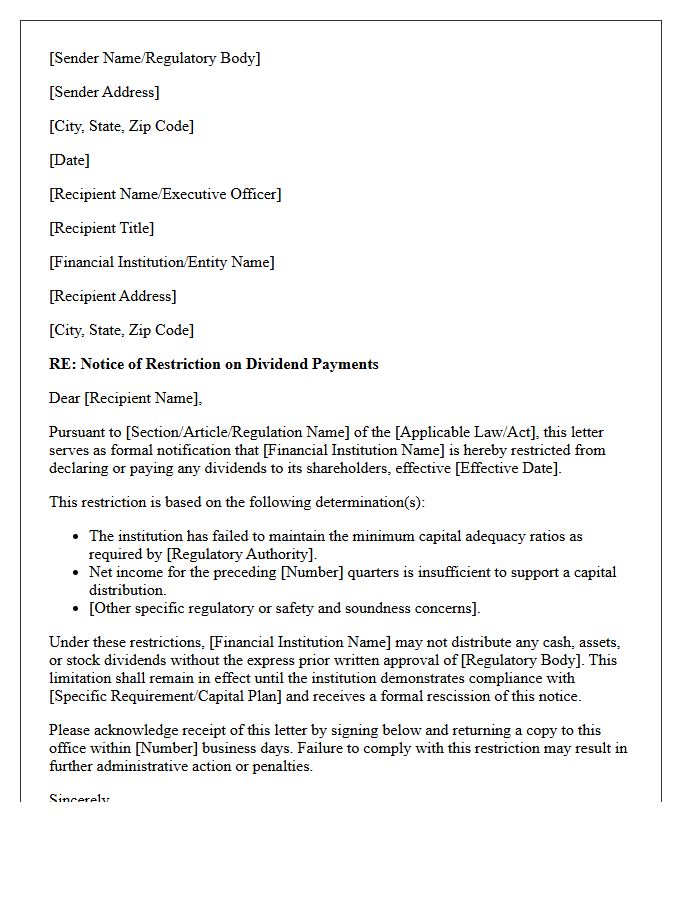
A Regulatory Dividend Payment Restriction Letter is a formal notification issued by financial regulators to a bank or institution. This document explicitly prohibits or limits the distribution of capital to shareholders. Such measures are typically enforced when a firm fails to meet specific capital adequacy ratios or faces liquidity stress. These restrictions ensure the entity retains sufficient funds to absorb potential losses and maintain operational stability. Understanding these letters is crucial for investors, as they signal heightened regulatory oversight and a temporary suspension of expected dividend income to protect the broader financial system.
Capital Adequacy Dividend Payment Restriction Letter
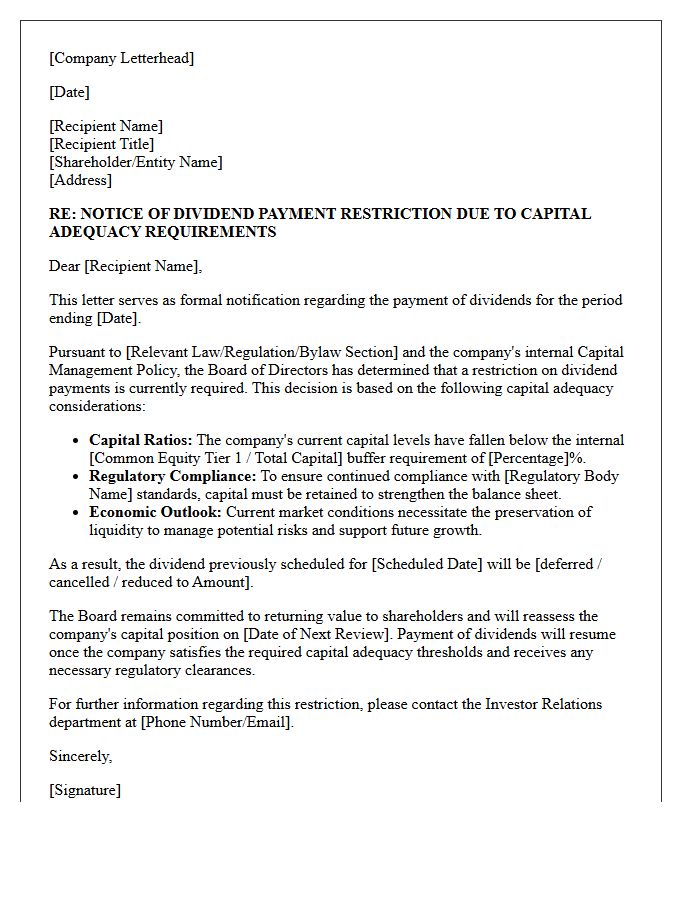
A Capital Adequacy Dividend Payment Restriction Letter is a formal regulatory notice issued by financial authorities to a bank or institution. It mandates that the firm must halt or limit shareholder distributions to preserve its capital buffer. This occurs when a bank's capital ratios fall below the minimum requirements set by regulators like the Federal Reserve. The primary objective is to maintain financial stability and ensure the institution has sufficient liquidity to absorb potential losses during periods of economic stress or systemic instability.
Covenant Breach Dividend Payment Restriction Letter
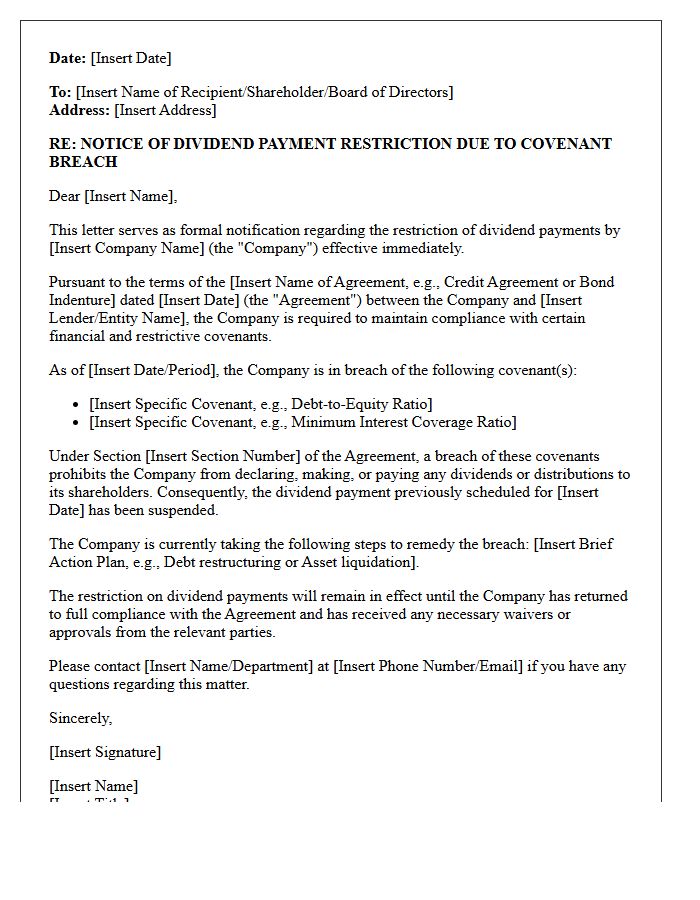
A Covenant Breach Dividend Payment Restriction Letter is a formal notice issued by lenders when a borrower violates specific financial or negative covenants. This document serves as a default notice, legally preventing the company from distributing dividends to shareholders until the breach is cured. Its primary purpose is to preserve cash flow and protect the lender's security interest by ensuring capital remains within the business. Understanding these restrictions is critical for maintaining corporate liquidity and ensuring compliance with debt financing agreements to avoid further legal acceleration of loans.
Board Resolution Dividend Payment Restriction Letter
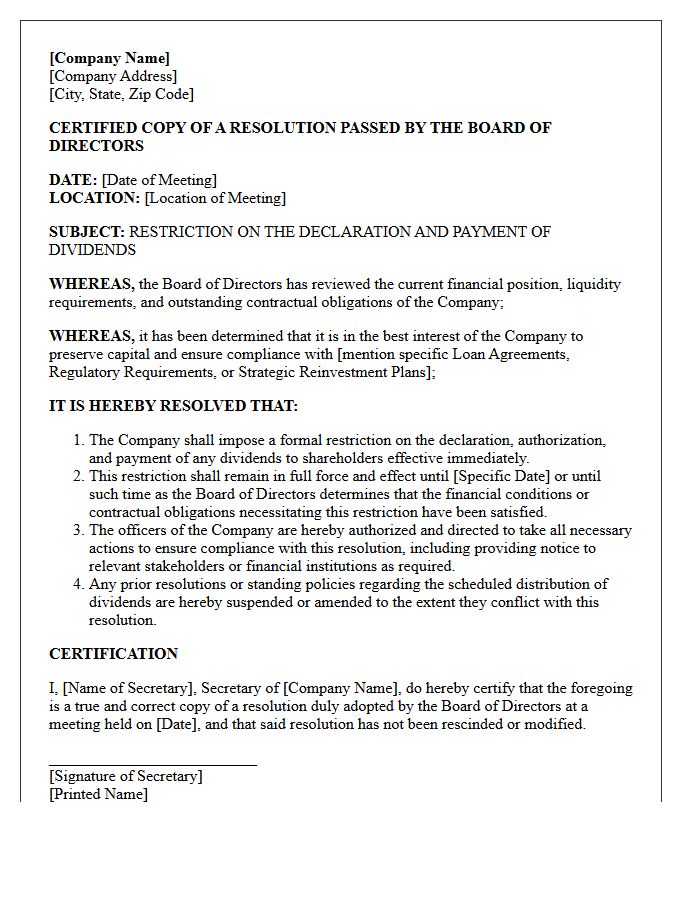
A Board Resolution Dividend Payment Restriction Letter is a formal document notifying shareholders that the board of directors has decided to suspend or limit dividend distributions. This action often occurs to preserve capital during financial instability or to comply with legal covenants in loan agreements. It ensures the company maintains adequate liquidity for operational needs or future growth. Understanding these restrictions is vital for investors, as it directly impacts cash flow expectations and reflects the firm's current fiscal health and strategic priorities under prevailing market conditions.
Stress Test Failure Dividend Payment Restriction Letter
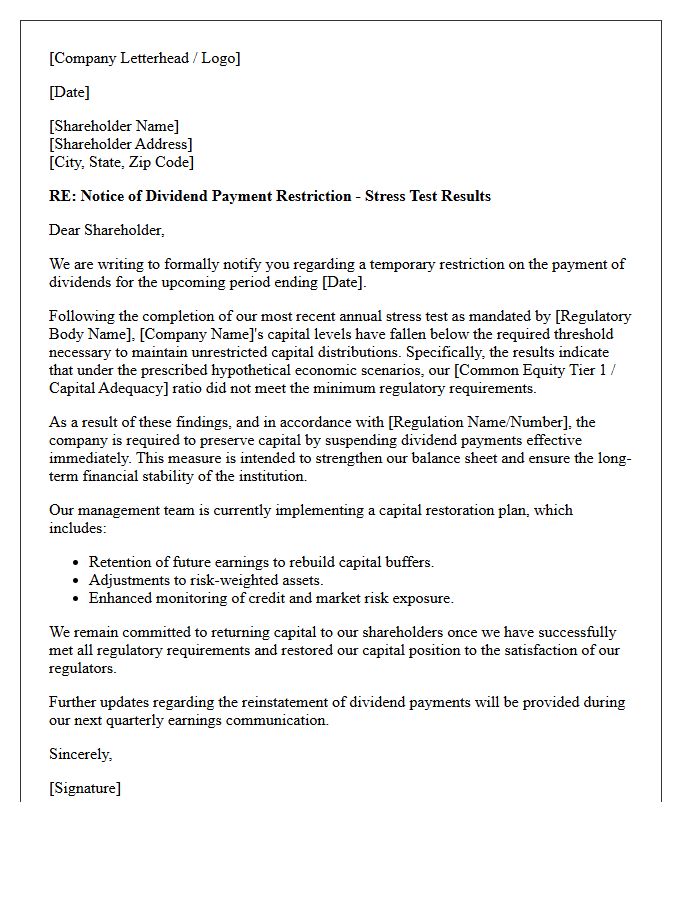
A Stress Test Failure Dividend Payment Restriction Letter is a formal notification issued by financial regulators when a bank's capital levels fall below required thresholds during simulated economic downturns. This document mandates mandatory distribution limitations, preventing the institution from paying dividends or repurchasing shares to preserve liquidity. It serves as a critical regulatory intervention to ensure financial stability and solvency. Understanding this letter is vital for investors, as it signals increased risk and a temporary halt on shareholder payouts until capital adequacy improves.
Shareholder Notice Dividend Payment Restriction Letter
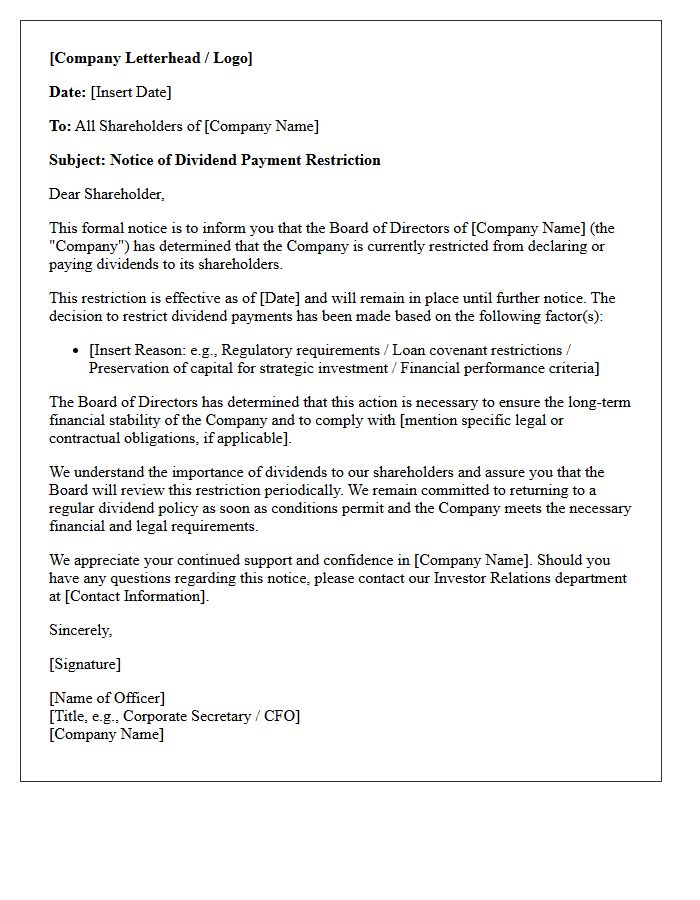
A Shareholder Notice Dividend Payment Restriction Letter is a formal communication informing investors that a company is legally or contractually prohibited from distributing profits. This often occurs due to loan covenants, financial instability, or regulatory requirements. It is a critical risk indicator for stakeholders, as it signals that the board must prioritize debt obligations or capital preservation over shareholder returns. Understanding these restrictions is essential for evaluating a company's liquidity and long-term financial health during periods of economic constraint or structural restructuring.
Prompt Corrective Action Dividend Payment Restriction Letter
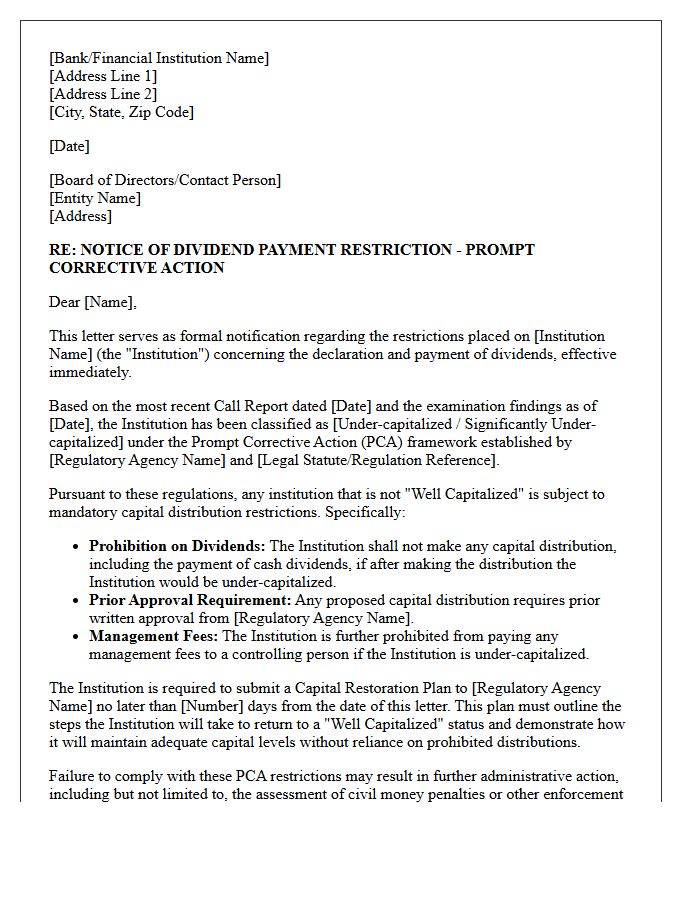
A Prompt Corrective Action Dividend Payment Restriction Letter is a formal enforcement notice issued by banking regulators like the FDIC. It mandates immediate capital preservation by prohibiting a financial institution from distributing dividends to shareholders. This action occurs when a bank's capital levels fall below specific regulatory thresholds, signaling a high risk of insolvency. The primary objective is to stop the outflow of cash, ensuring the bank retains sufficient liquidity to stabilize its balance sheet and protect depositors during periods of financial distress or undercapitalization.
Asset Quality Dividend Payment Restriction Letter
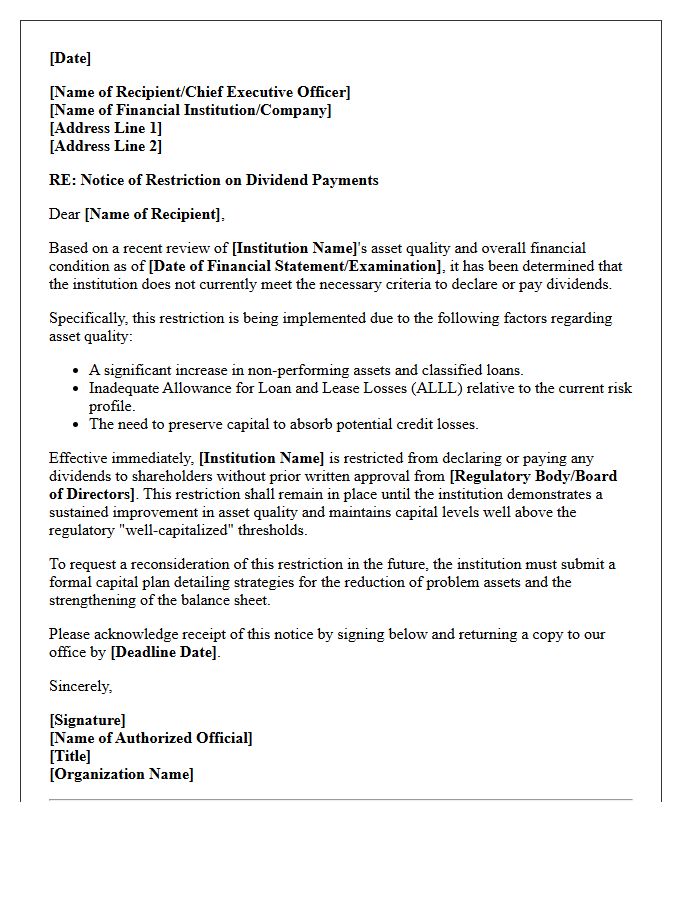
The Asset Quality Dividend Payment Restriction Letter is a regulatory directive issued by financial authorities to banks with deteriorating credit profiles. It formally prohibits or limits capital distributions to shareholders when non-performing loans exceed safe thresholds. This enforcement action ensures that earnings are retained to bolster capital adequacy and absorb potential losses rather than being paid out as dividends. Investors must recognize this letter as a critical signal of heightened financial risk and increased supervisory oversight regarding the institution's long-term solvency and internal risk management controls.
Consent Order Dividend Payment Restriction Letter
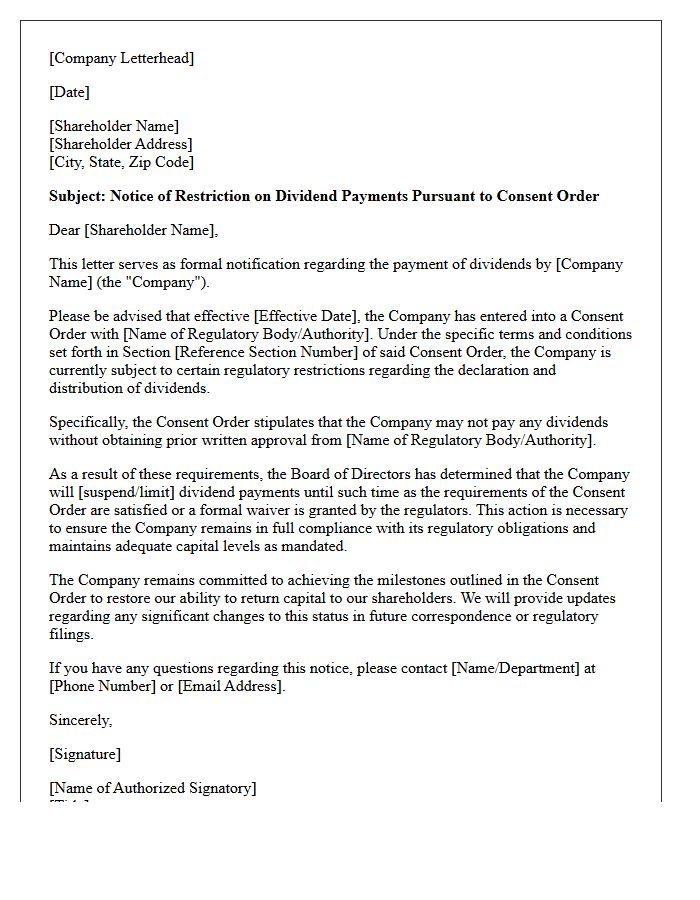
A Consent Order Dividend Payment Restriction Letter is a formal notification issued by regulators to banks or financial institutions. It prohibits the distribution of dividends to shareholders without prior written approval. This measure is typically enforced when a firm fails to meet capital adequacy requirements or regulatory standards. The primary goal is to preserve internal liquidity and ensure the institution maintains a sufficient financial cushion during periods of instability or remediation. Compliance is mandatory to protect the overall stability of the financial system and the interests of depositors.
Liquidity Shortfall Dividend Payment Restriction Letter
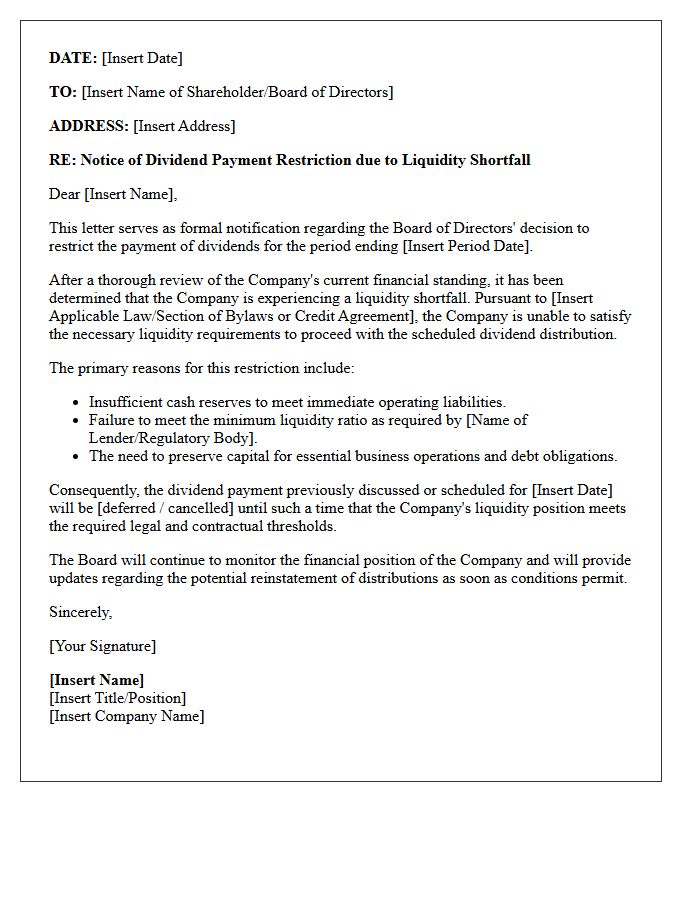
A Liquidity Shortfall Dividend Payment Restriction Letter is a formal notice issued when a company lacks sufficient liquid assets to fulfill its financial obligations while seeking to distribute profits. This document serves as a legal safeguard to prevent insolvency by prohibiting dividend payments until specific liquidity ratios are restored. It ensures that creditors are prioritized over shareholders during periods of financial stress. Understanding these restrictions is vital for investors, as they signal potential cash flow constraints and impact the timing of expected investment returns.
Retained Earnings Deficit Dividend Payment Restriction Letter
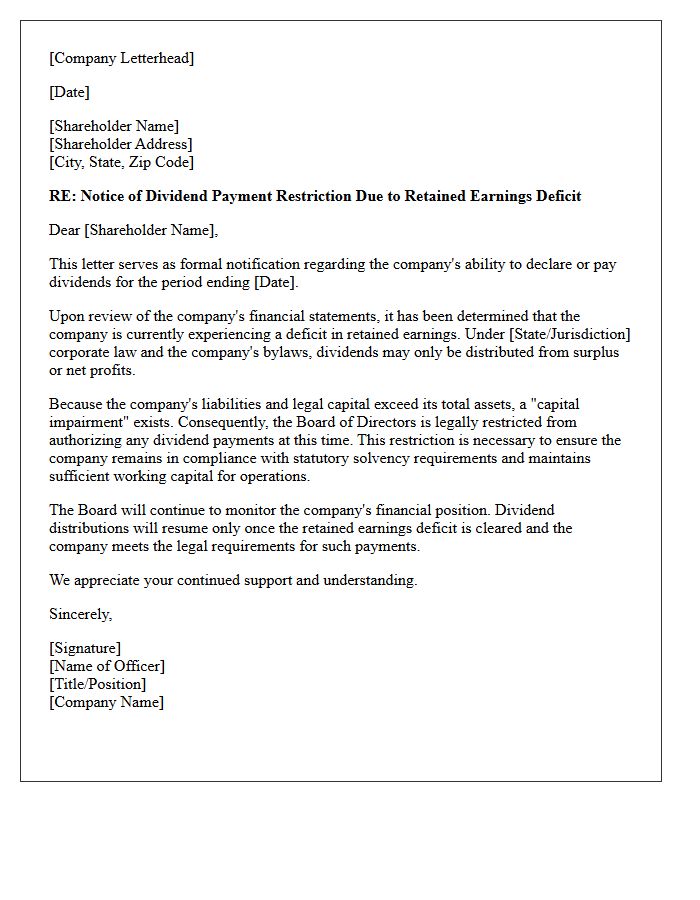
A Retained Earnings Deficit Dividend Payment Restriction Letter is a formal notification issued when a company's accumulated losses prevent it from legally distributing profits. Under many jurisdictions, statutory capital requirements prohibit dividends if retained earnings are negative. This document serves as legal compliance, informing shareholders or lenders that capital must be preserved to restore solvency. It ensures the firm adheres to fiduciary duties and protects creditors by preventing the unlawful depletion of corporate assets during periods of financial instability or recovery.
Basel Compliance Dividend Payment Restriction Letter
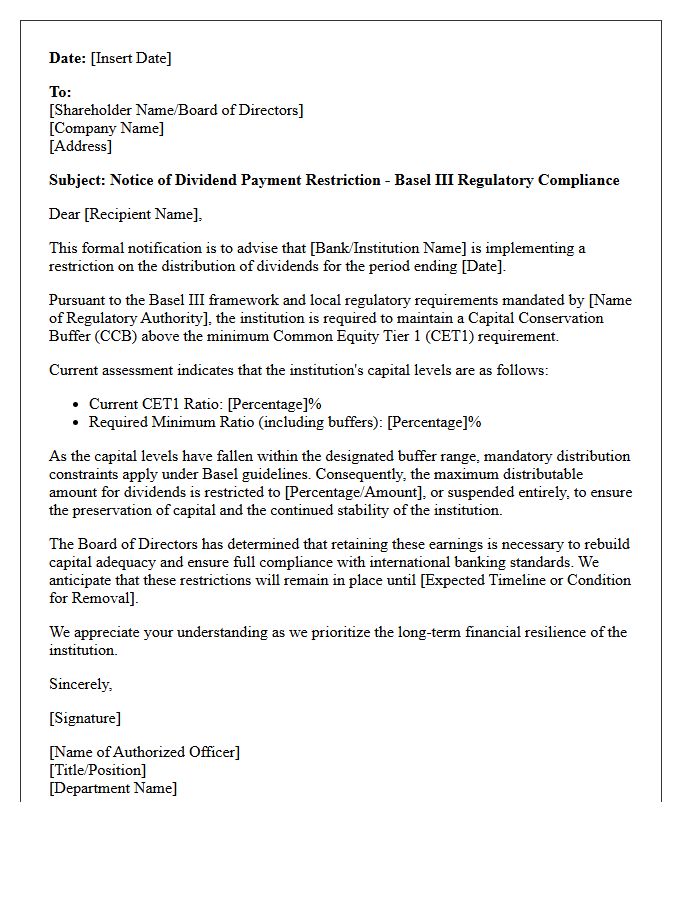
A Basel Compliance Dividend Payment Restriction Letter is a formal notification issued by a regulator to a bank. It enforces capital conservation buffers under the Basel III framework. If a financial institution's capital levels fall below specific thresholds, this letter mandates a dividend restriction to preserve liquidity. Its primary purpose is to ensure the bank retains enough earnings to absorb potential losses during economic stress. Understanding these restrictions is vital for investors, as they directly impact shareholder payouts and signal the bank's underlying financial stability and regulatory compliance status.
What is a Dividend Payment Restriction Letter?
A Dividend Payment Restriction Letter is a formal notification or agreement, typically issued by lenders or regulatory bodies, that limits or prohibits a company from distributing dividends to its shareholders to preserve liquidity and ensure debt obligations are met.
When is a Dividend Payment Restriction Letter issued?
These letters are commonly issued during debt restructuring, when a company is in technical default of loan covenants, or as a precautionary measure by financial regulators to ensure banks maintain adequate capital buffers during economic instability.
What are the legal implications of violating a dividend restriction?
Violating the terms of a Dividend Payment Restriction Letter can result in a declaration of default on credit facilities, the acceleration of debt repayment demands, legal action by creditors, and potential personal liability for directors who authorized the payment.
Can a Dividend Payment Restriction Letter be waived or amended?
Yes, a company can negotiate a waiver or amendment with the issuing party-usually a lender-by demonstrating improved financial health, providing additional collateral, or agreeing to higher interest rates in exchange for the right to distribute dividends.
How does a Dividend Payment Restriction Letter affect shareholders?
For shareholders, such a letter results in the suspension of expected income distributions. While this may cause a temporary drop in stock price, the restriction is often intended to protect the long-term solvency and operational viability of the company.

Comments