
The Executive Compensation Supervisory Letter outlines regulatory expectations for aligning senior leadership pay with long-term institutional stability and risk management. This guidance ensures that incentive structures do not encourage excessive risk-taking, maintaining compliance with safety and soundness standards. Understanding these requirements is essential for governance and effective board oversight. To assist your documentation, below are some ready to use template.

Image cover: Effective Executive Compensation Supervisory Letter Templates and Best Practices
Letter Samples List
- Executive Compensation Risk Alignment Supervisory Letter
- Incentive Compensation Clawback Enforcement Letter
- Regulatory Compliance Executive Compensation Letter
- Compensation Practices Examination Deficiency Letter
- Deferred Compensation Scheme Supervisory Letter
- Golden Parachute Restriction Supervisory Letter
- Executive Remuneration Structure Approval Letter
- Board Compensation Committee Response Letter
- Peer Benchmarking And Pay Parity Supervisory Letter
- Sales Incentive Practices Remediation Letter
- Equity Award Vesting Supervisory Letter
- Chief Risk Officer Compensation Review Letter
- Capital Stress Testing Compensation Adjustment Letter
Executive Compensation Risk Alignment Supervisory Letter
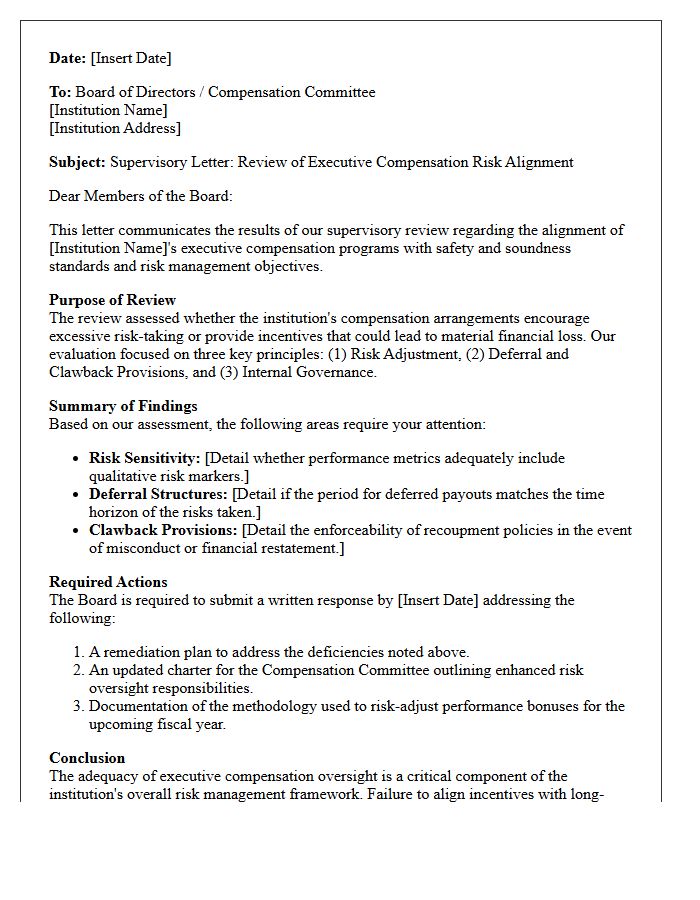
The Executive Compensation Risk Alignment Supervisory Letter outlines critical expectations for banking organizations to align incentive programs with prudent risk-taking. It emphasizes that compensation structures must not encourage excessive risk that could threaten an institution's safety and soundness. Regulators require balanced incentives, robust internal controls, and active board oversight to ensure payouts reflect long-term performance. By integrating risk-adjustment financial metrics and clawback provisions, firms can mitigate potential conflicts between short-term executive gains and the organization's overall financial stability and regulatory compliance.
Incentive Compensation Clawback Enforcement Letter
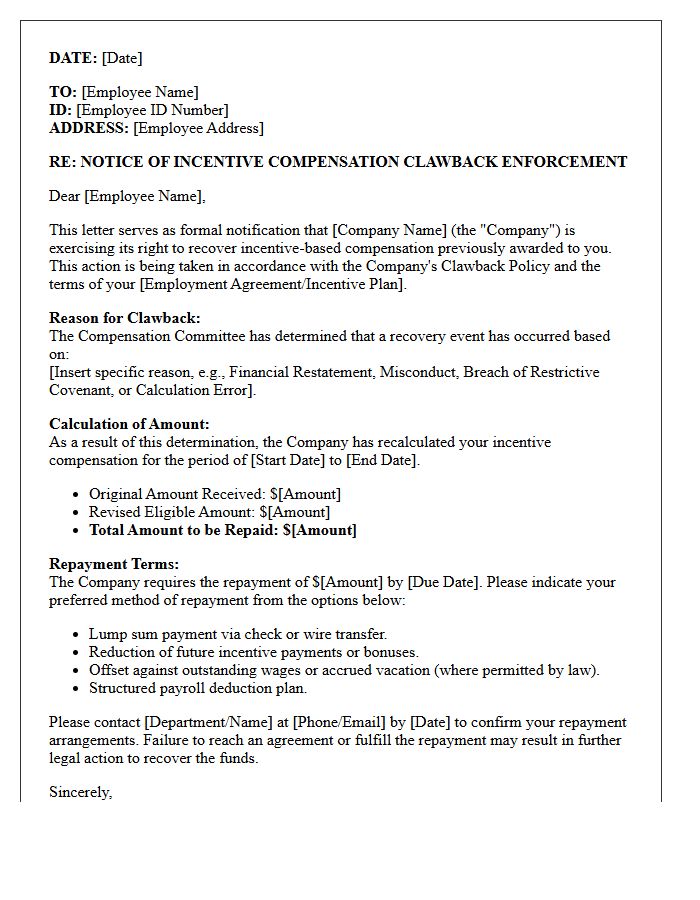
An Incentive Compensation Clawback Enforcement Letter is a formal legal notice used by corporations to recover previously paid bonuses or equity from executives. Following SEC and exchange listing standards, these letters are mandatory when financial restatements occur due to material non-compliance. The document specifies the repayment amount, the justification for the recovery, and the deadline for compliance. Understanding these enforcement actions is critical for ensuring regulatory compliance and maintaining corporate accountability, as failure to pursue recovery can lead to severe legal penalties for the organization and its board members.
Regulatory Compliance Executive Compensation Letter
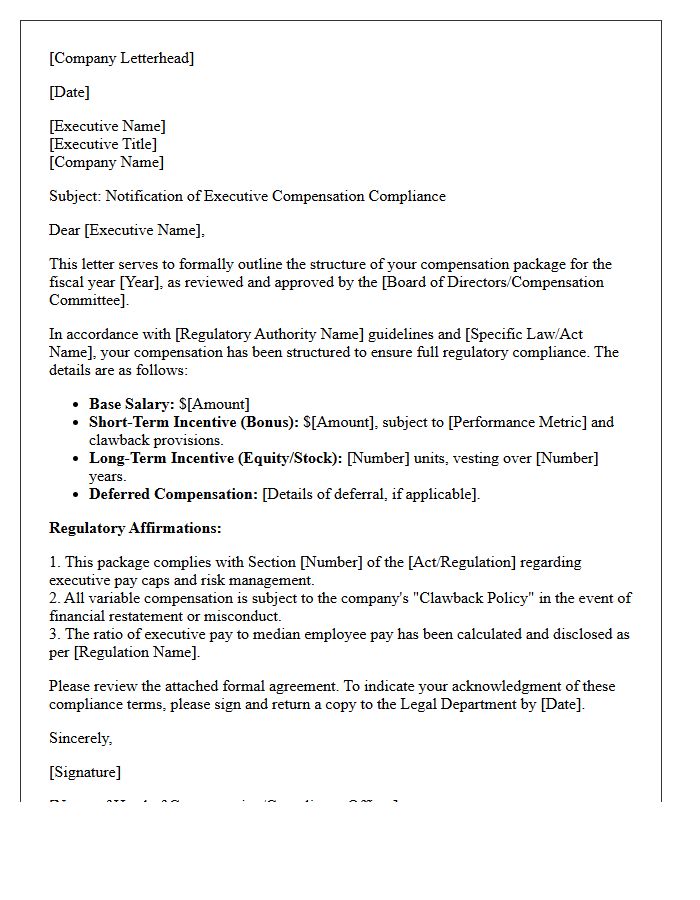
A Regulatory Compliance Executive Compensation Letter is a formal document ensuring that executive pay structures adhere to strict financial laws and governance standards. It verifies that bonuses and incentives are aligned with risk management protocols and shareholder interests. This letter confirms that compensation packages do not encourage excessive risk-taking, maintaining transparency with regulatory bodies like the SEC. It is essential for protecting the organization from legal penalties and reputational damage by documenting statutory compliance within senior leadership contracts. This process safeguards institutional integrity while justifying high-level remuneration frameworks through rigorous legal oversight.
Compensation Practices Examination Deficiency Letter
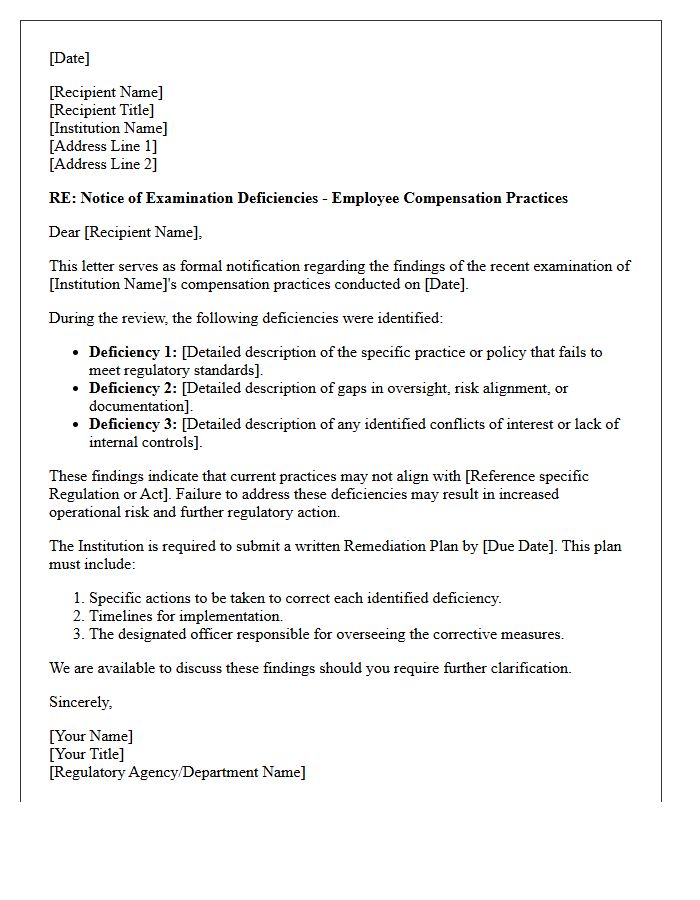
A Compensation Practices Examination Deficiency Letter is a formal notification from regulators identifying non-compliance with established financial governance standards. It highlights failures in aligning incentive structures with risk management protocols to prevent excessive risk-taking. Recipients must provide a remediation plan addressing specific gaps in oversight, documentation, or calculation methodologies. Failure to resolve these findings can lead to enforcement actions or mandatory adjustments to corporate pay policies. This document serves as a critical warning to strengthen internal controls and ensure executive rewards remain consistent with the organization's long-term safety and soundness.
Deferred Compensation Scheme Supervisory Letter
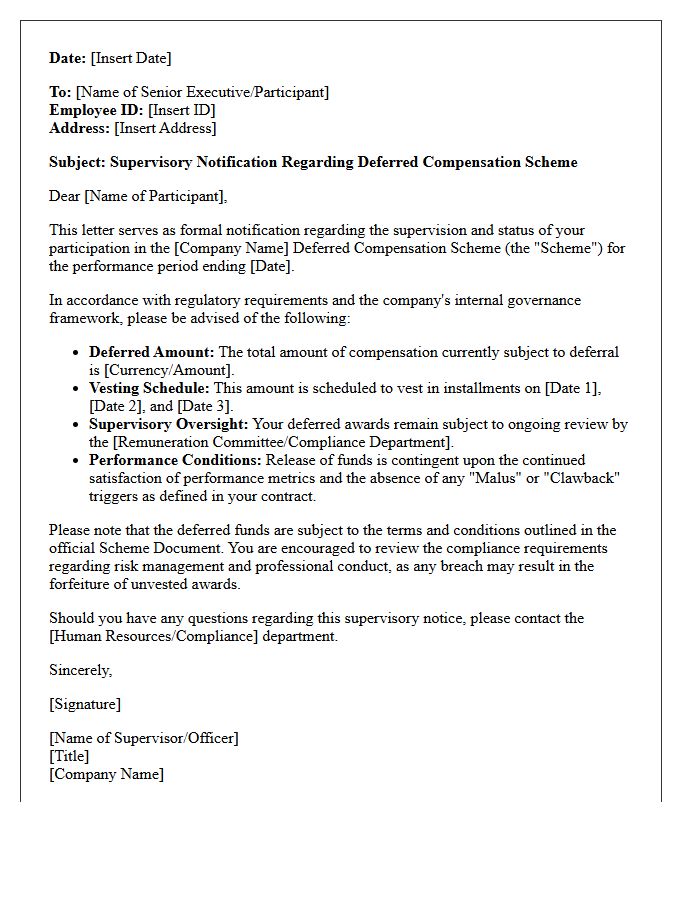
The Deferred Compensation Scheme Supervisory Letter is a critical regulatory document issued by authorities like the HKMA to ensure robust governance of financial incentives. It mandates that remuneration policies align with long-term risk management rather than short-term gains. Key requirements include deferral periods, clawback provisions, and performance adjustments to discourage excessive risk-taking. Compliance is essential for authorized institutions to maintain financial stability and meet regulatory standards regarding staff payouts and risk accountability.
Golden Parachute Restriction Supervisory Letter
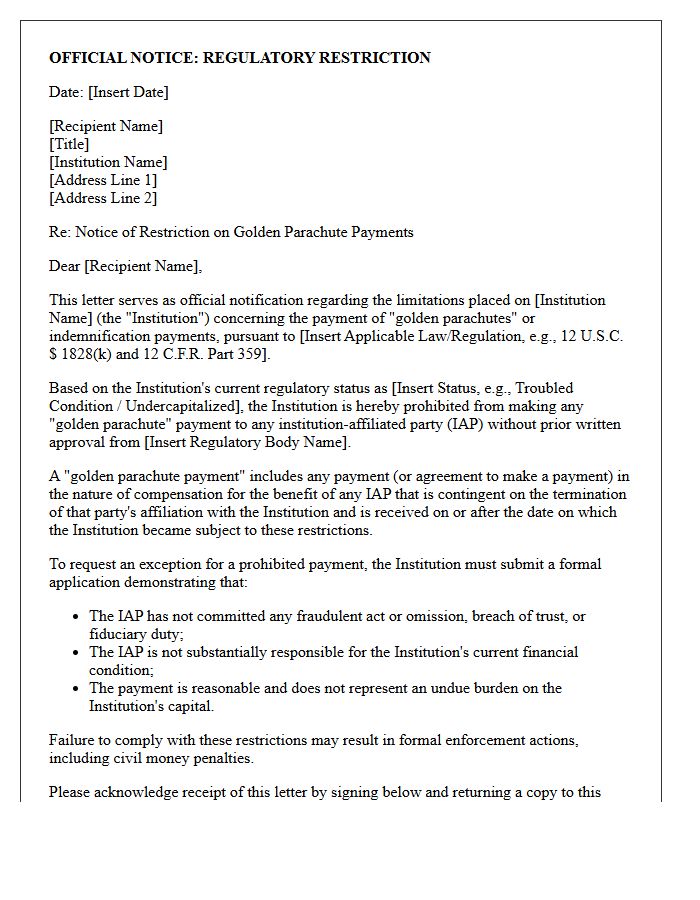
The Golden Parachute Restriction Supervisory Letter is a formal regulatory notice issued to troubled financial institutions. It prohibits excessive severance payments to departing executives, known as golden parachutes, unless specific prior approval is granted by regulators like the FDIC or Federal Reserve. These restrictions, outlined under Section 18(k) of the FDI Act, aim to prevent the depletion of capital and protect the institution's solvency during periods of financial distress. Understanding these limitations is critical for regulatory compliance and corporate governance in high-risk banking environments.
Executive Remuneration Structure Approval Letter
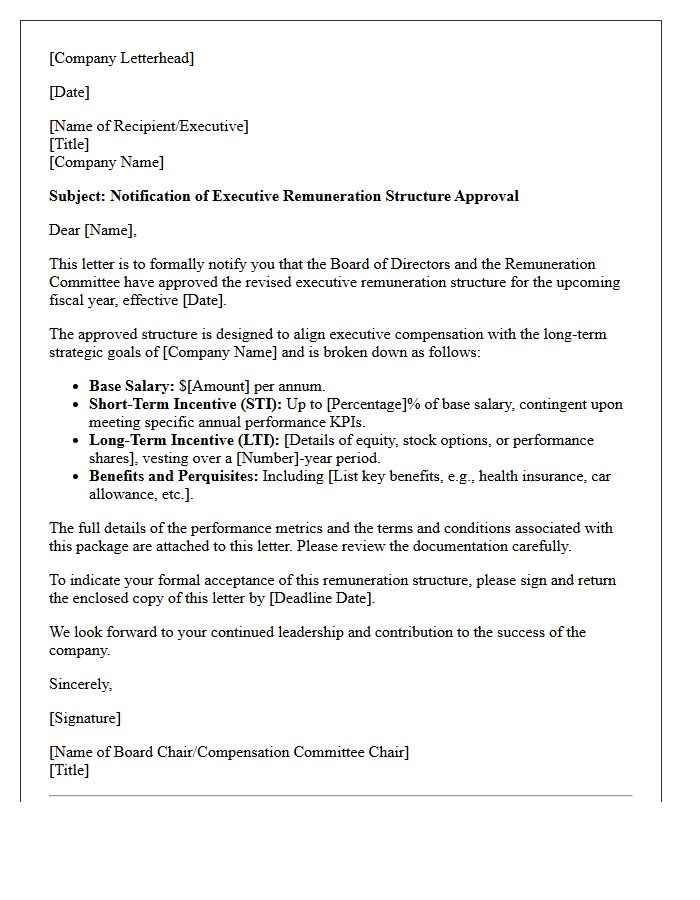
An Executive Remuneration Structure Approval Letter is a formal document confirming the board's authorization of a senior leader's compensation package. It outlines critical components such as base salary, performance-based bonuses, and long-term equity incentives. This letter ensures that the agreed-upon pay framework aligns with corporate governance standards and shareholder interests. By clearly defining performance metrics and vesting schedules, it provides a transparent legal record of the remuneration strategy, helping to mitigate financial risk and ensuring compliance with regulatory requirements during executive recruitment or annual reviews.
Board Compensation Committee Response Letter
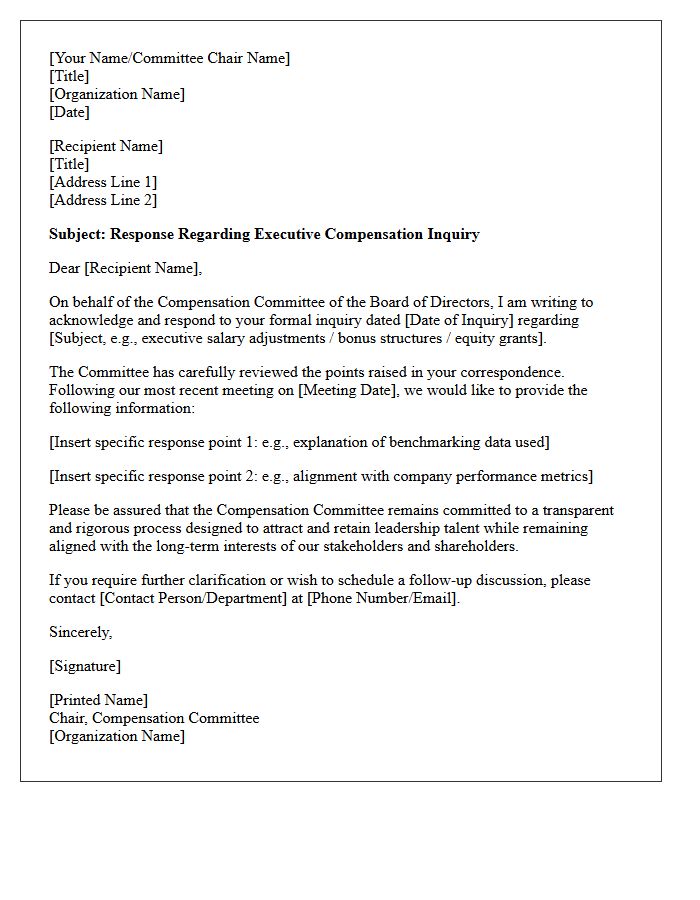
A Board Compensation Committee Response Letter is a formal document addressing shareholder concerns regarding executive pay. It serves to justify remuneration strategies by aligning incentives with long-term company performance and regulatory compliance. The letter outlines the rationale behind specific bonuses, stock options, and base salaries while demonstrating responsiveness to institutional investor feedback. Effective communication in this document is crucial for securing support during Say-on-Pay votes, ensuring transparency in corporate governance, and maintaining investor trust by proving that executive compensation is both competitive and merit-based.
Peer Benchmarking And Pay Parity Supervisory Letter
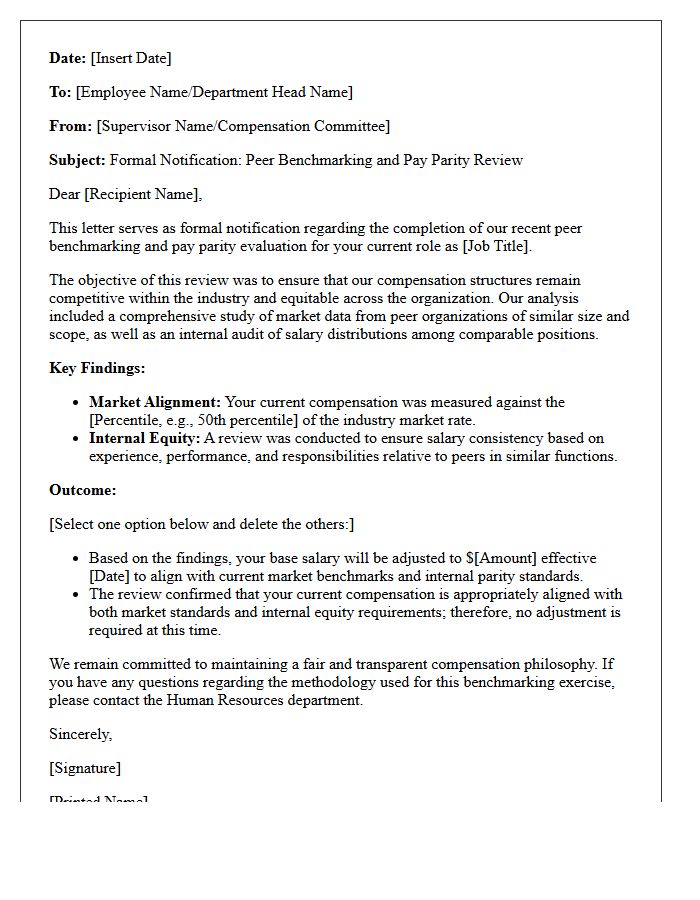
The Peer Benchmarking and Pay Parity Supervisory Letter highlights regulatory expectations for financial institutions to ensure equitable compensation practices. It emphasizes using relevant peer groups to conduct rigorous internal audits, identifying and correcting unexplained wage gaps. Organizations must maintain transparent data methodologies to mitigate compliance risks and legal liabilities. By aligning pay structures with market standards and ensuring fairness across demographic groups, firms demonstrate commitment to operational integrity and regulatory alignment. Adhering to these guidelines is essential for fostering a competitive, inclusive workplace while satisfying strict supervisory oversight requirements.
Sales Incentive Practices Remediation Letter
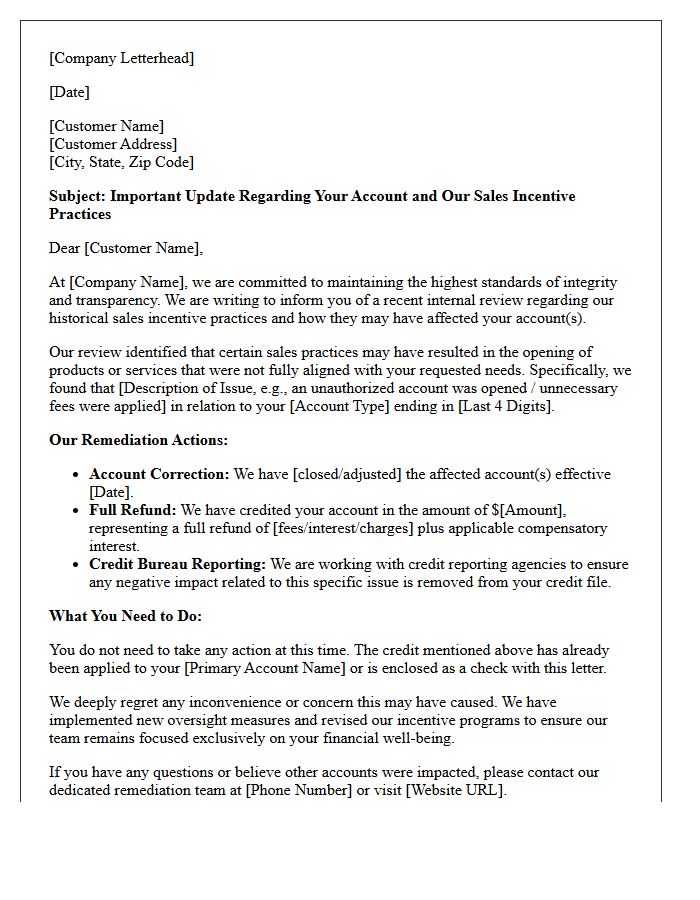
A Sales Incentive Practices Remediation Letter is a formal notification issued by financial institutions to customers affected by improper sales tactics. This document typically explains how unauthorized accounts or products were opened in the consumer's name due to aggressive internal quotas. It outlines the specific restitution steps, such as fee refunds or credit score corrections, being taken to resolve the issue. Receiving this letter indicates you are eligible for compensation or corrective actions resulting from regulatory enforcement and internal audits aimed at addressing systemic consumer protection failures.
Equity Award Vesting Supervisory Letter
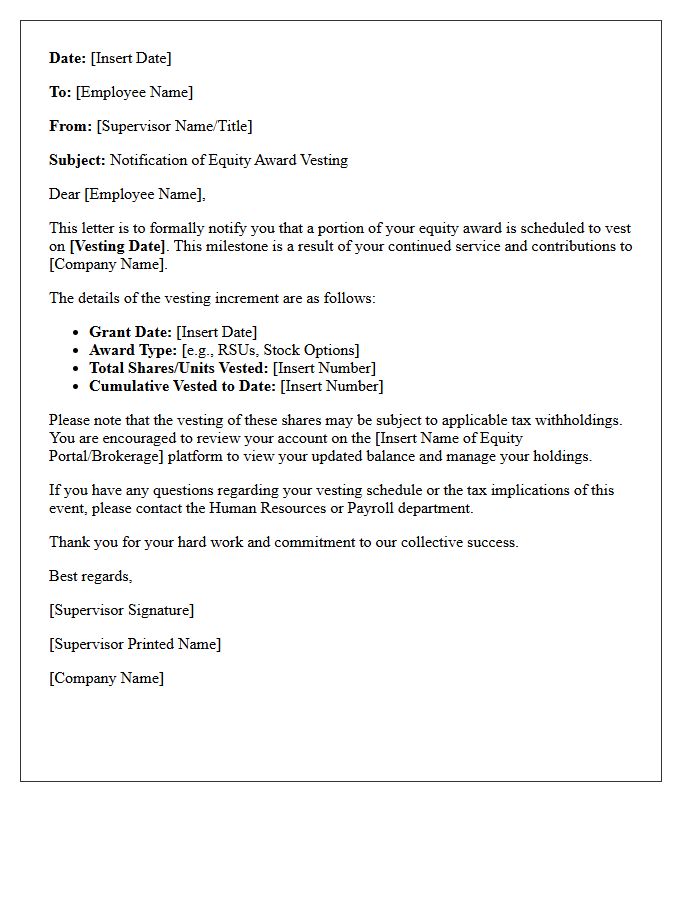
The Equity Award Vesting Supervisory Letter is a critical regulatory notification used by financial institutions to manage deferred compensation. It outlines specific conditions under which an employee's vested stock or options may be forfeited or withheld. This letter typically addresses compliance with prudential standards, ensuring that payouts align with long-term risk management and institutional stability. Understanding these provisions is essential for executives, as it defines the legal framework for asset transfer and potential clawback triggers mandated by supervisory authorities to prevent excessive risk-taking.
Chief Risk Officer Compensation Review Letter
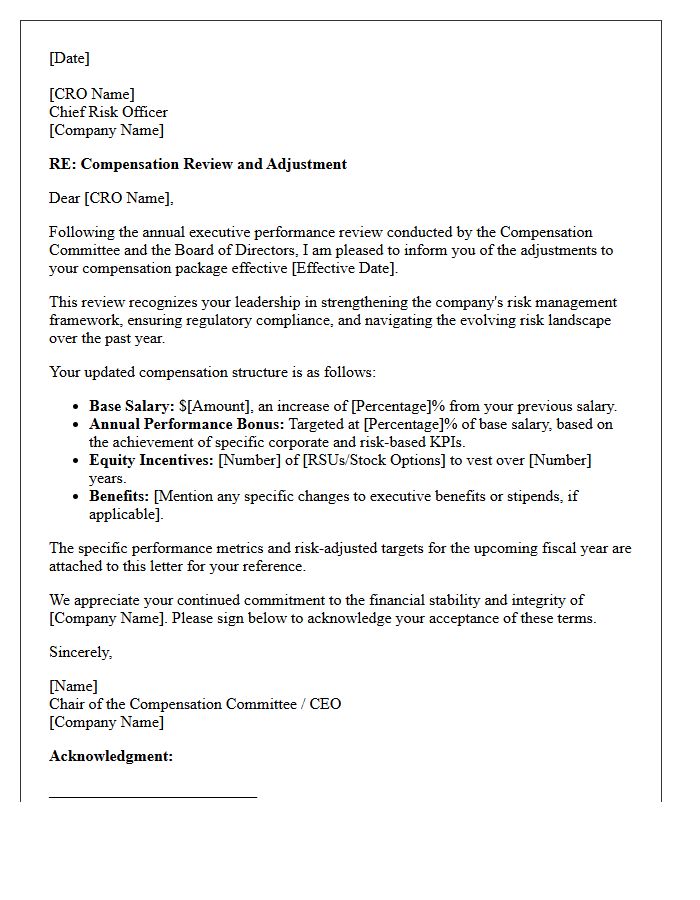
A Chief Risk Officer Compensation Review Letter is a formal document used to evaluate and justify the remuneration package of a top executive. It ensures that financial incentives align with the organization's long-term risk appetite and regulatory compliance standards. This review helps mitigate moral hazard by decoupling bonuses from excessive short-term risk-taking. Boards use these letters to document independent oversight and demonstrate that pay structures support sustainable stability, rather than volatile gains, maintaining transparency with shareholders and financial authorities during audit processes.
Capital Stress Testing Compensation Adjustment Letter
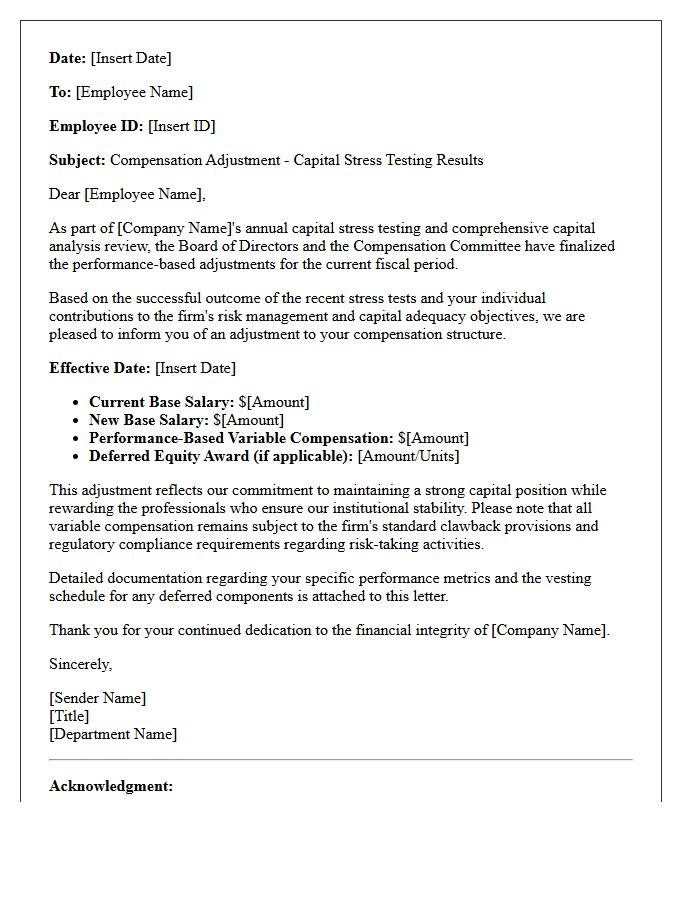
A Capital Stress Testing Compensation Adjustment Letter notifies executives of variable pay modifications based on a bank's financial resilience. This formal document links incentive compensation directly to risk management performance and regulatory capital requirements. It ensures that bonus payouts align with the firm's ability to withstand economic shocks. Understanding this letter is crucial because it outlines how stress test results may trigger malus or clawback provisions, potentially reducing total remuneration to maintain institutional stability during periods of financial volatility or capital inadequacy.
What is an Executive Compensation Supervisory Letter?
An Executive Compensation Supervisory Letter is a formal communication issued by financial regulatory authorities, such as the Federal Reserve, outlining expectations, findings, or guidance regarding how a financial institution structures and manages its executive pay programs in alignment with safety and soundness standards.
What are the primary objectives of a Supervisory Letter on executive compensation?
The primary objectives are to ensure that compensation arrangements do not encourage imprudent risk-taking, to promote effective corporate governance, and to verify that pay structures are balanced by internal controls and active oversight by the board of directors.
How do regulators assess incentive compensation arrangements under these guidelines?
Regulators assess arrangements based on three key principles: providing incentives that appropriately balance risk and reward, ensuring compatibility with effective controls and risk management, and supporting strong corporate governance through active board involvement.
What are the consequences of non-compliance with an Executive Compensation Supervisory Letter?
Non-compliance can lead to formal enforcement actions, a lower supervisory rating (such as a CAMELS rating downgrade), increased capital requirements, or the mandated restructuring of compensation plans to mitigate identified risks to the institution.
How should a Board of Directors respond to a Supervisory Letter regarding pay practices?
The Board should conduct a formal review of existing compensation policies, document how pay aligns with long-term risk management, and provide a written response to the regulator detailing specific corrective actions or enhancements made to the institution's incentive oversight framework.

Comments