
Receiving a Notice of Proposed Assessment from the IRS means the tax agency identified potential discrepancies in your tax return. This letter outlines proposed adjustments to your tax liability based on reported information. It is crucial to review the changes and respond promptly to avoid further penalties. To help you draft a professional reply, below are some ready to use template.
Image cover: Understanding Your Notice of Proposed Assessment: Templates and Response Guide
Letter Samples List
- Bank Secrecy Act Violation Proposed Assessment Letter
- Anti-Money Laundering Civil Money Penalty Proposed Assessment Letter
- Federal Deposit Insurance Corporation Premium Shortfall Proposed Assessment Letter
- Consumer Financial Protection Bureau Restitution Proposed Assessment Letter
- Corporate Income Tax Deficiency Proposed Assessment Letter
- Fair Lending Noncompliance Fine Proposed Assessment Letter
- Capital Adequacy Requirement Violation Proposed Assessment Letter
- State Banking Department Regulatory Fee Proposed Assessment Letter
- Truth in Lending Act Infraction Proposed Assessment Letter
- Office of Foreign Assets Control Penalty Proposed Assessment Letter
- Unfair or Deceptive Acts Practices Proposed Assessment Letter
- Information Security Breach Regulatory Fine Proposed Assessment Letter
Bank Secrecy Act Violation Proposed Assessment Letter
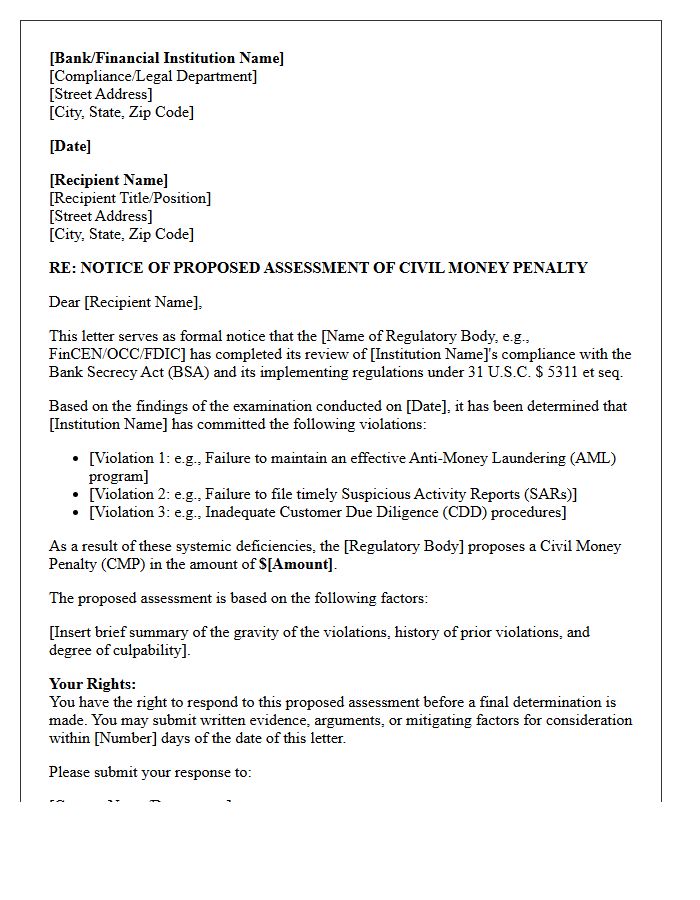
A Bank Secrecy Act Violation Proposed Assessment Letter is a formal notification from FinCEN or regulatory agencies indicating intent to impose civil money penalties. This document outlines specific anti-money laundering (AML) failures, such as inadequate internal controls or suspicious activity reporting. Receiving this letter is a critical enforcement stage, allowing the financial institution or individual a final opportunity to respond or provide mitigating evidence before the fine is finalized. Immediate legal counsel is essential to address these allegations and potentially reduce the assessed penalties.
Anti-Money Laundering Civil Money Penalty Proposed Assessment Letter
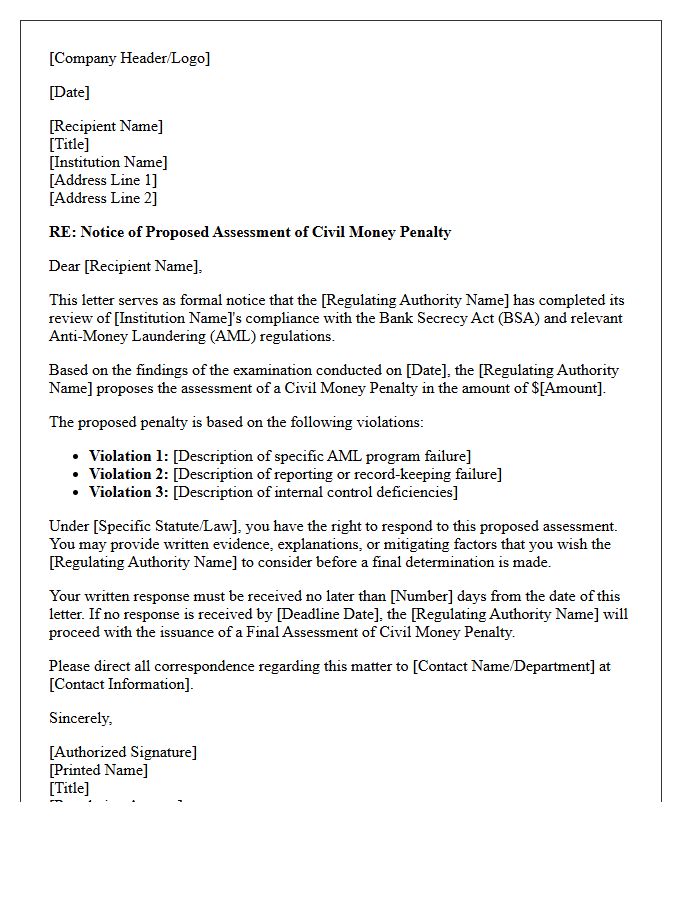
An Anti-Money Laundering Civil Money Penalty Proposed Assessment Letter is a formal notice from regulators like FinCEN or the OCC indicating an intent to levy fines for compliance failures. This critical document outlines specific violations of the Bank Secrecy Act and details the calculated penalty amount. Recipients must respond within a strict timeframe to contest findings or negotiate a settlement. Ignoring this letter can lead to final enforcement actions, severe reputational damage, and mandatory remedial measures to correct systemic internal control weaknesses within the financial institution.
Federal Deposit Insurance Corporation Premium Shortfall Proposed Assessment Letter
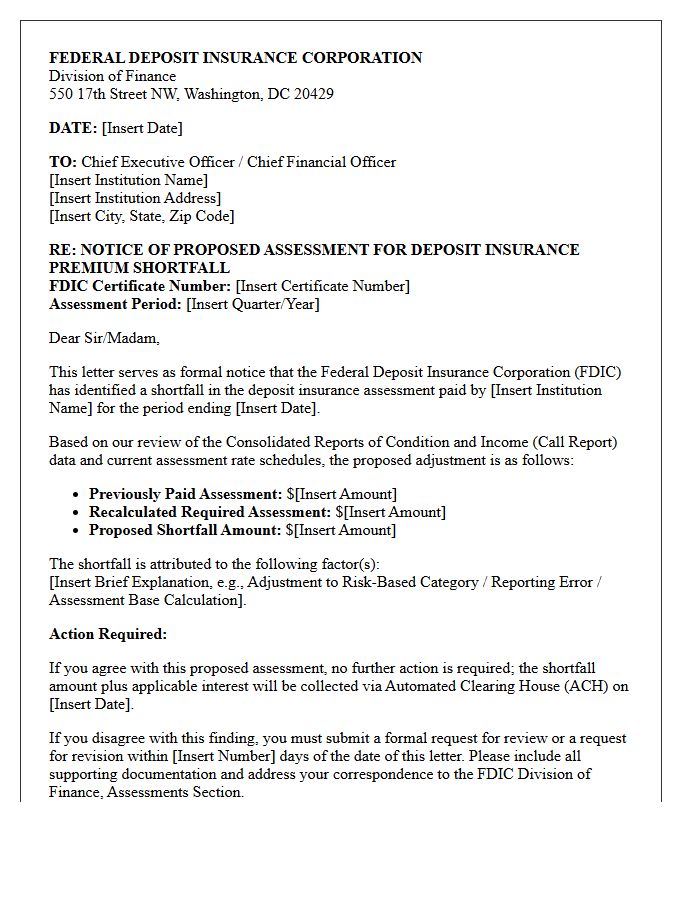
The Federal Deposit Insurance Corporation (FDIC) Special Assessment aims to recover extraordinary losses to the Deposit Insurance Fund following recent bank failures. Insured institutions receive a Proposed Assessment Letter outlining their specific financial obligation based on uninsured deposits. This Premium Shortfall charge ensures the banking system maintains long-term stability and liquidity. Banks must carefully review these letters to verify calculation accuracy, as these assessments directly impact quarterly earnings and operational capital reserves. Timely reporting and compliance are essential to meet federal regulatory standards and maintain public trust.
Consumer Financial Protection Bureau Restitution Proposed Assessment Letter
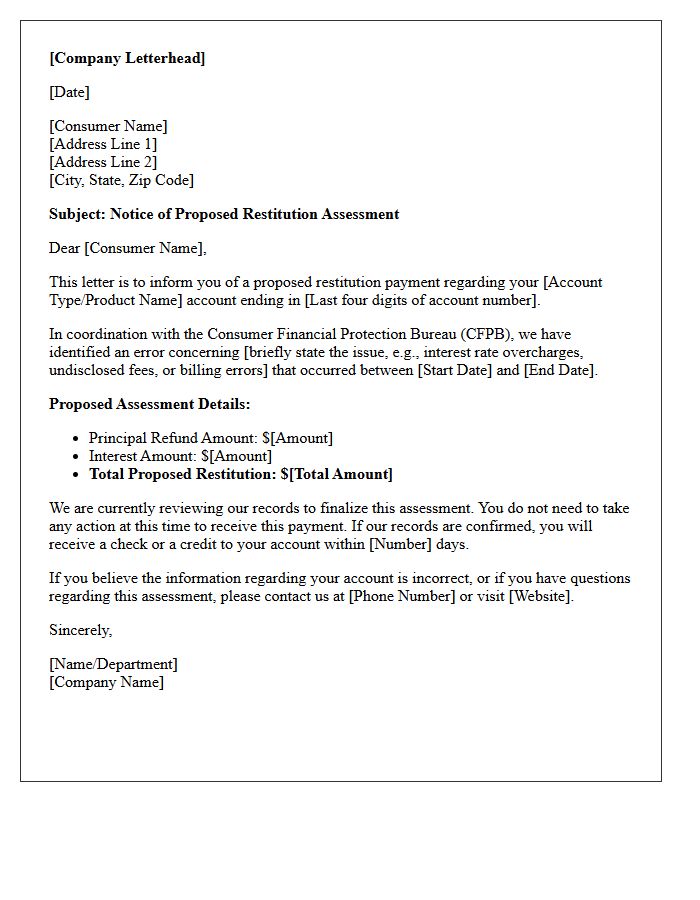
A CFPB Restitution Proposed Assessment Letter notifies individuals that they may be eligible for financial compensation due to deceptive or illegal practices by a financial institution. This formal document outlines the restitution amount calculated by the bureau following an enforcement action. Recipients should verify the legitimacy of the sender to avoid scams. It is essential to follow the instructions carefully to claim your refund, as there are often strict deadlines for submission. This letter represents a critical step in consumer redress for financial harm suffered.
Corporate Income Tax Deficiency Proposed Assessment Letter
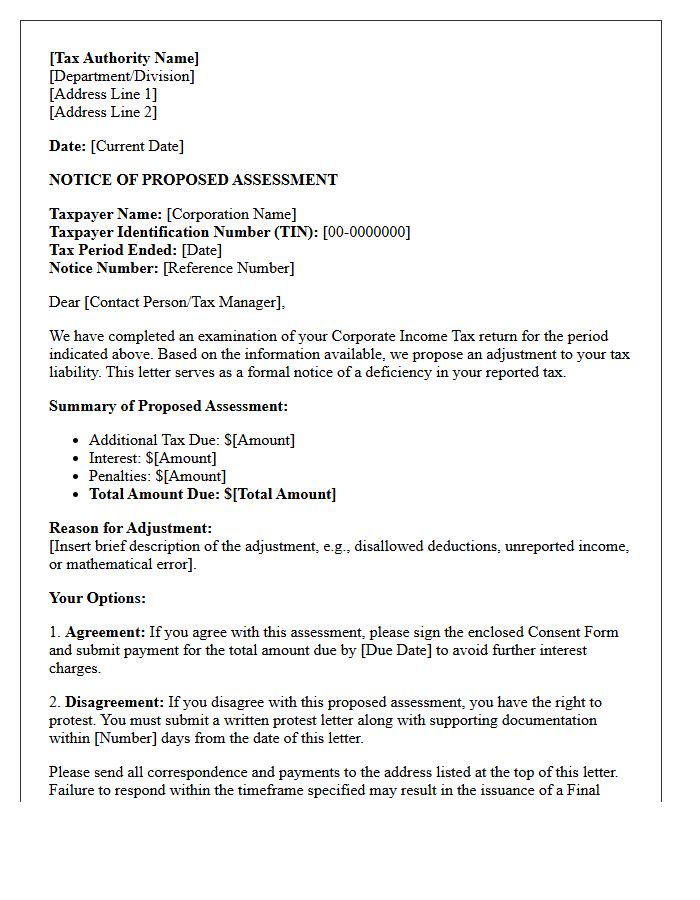
A Corporate Income Tax Deficiency Proposed Assessment is a formal notice from tax authorities indicating that your tax liability has been recalculated, resulting in additional taxes owed. This preliminary finding usually stems from an audit or reporting discrepancies. It is crucial to review the specific adjustments immediately, as you have a limited timeframe to formalize a protest or provide supporting documentation. Ignoring this letter can lead to final assessments, penalties, and interest. If you disagree with the findings, you must submit a written rebuttal to prevent the assessment from becoming legally binding.
Fair Lending Noncompliance Fine Proposed Assessment Letter
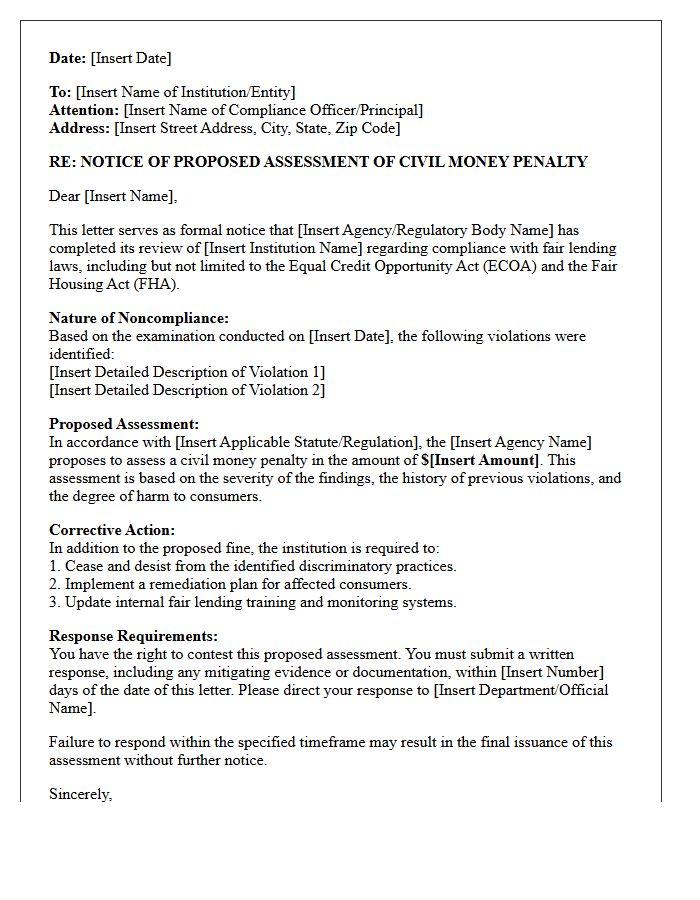
A Fair Lending Noncompliance Fine Proposed Assessment Letter is a formal notice from regulators, such as the CFPB or DOJ, indicating potential violations of the Equal Credit Opportunity Act. This document outlines specific discriminatory practices identified during an examination and proposes monetary penalties. Receiving this letter is critical because it represents the final stage before official enforcement action. Financial institutions must respond urgently with rebuttal evidence or corrective action plans to mitigate legal risks, protect their public reputation, and potentially reduce the assessed civil money penalties through proactive compliance remediation.
Capital Adequacy Requirement Violation Proposed Assessment Letter
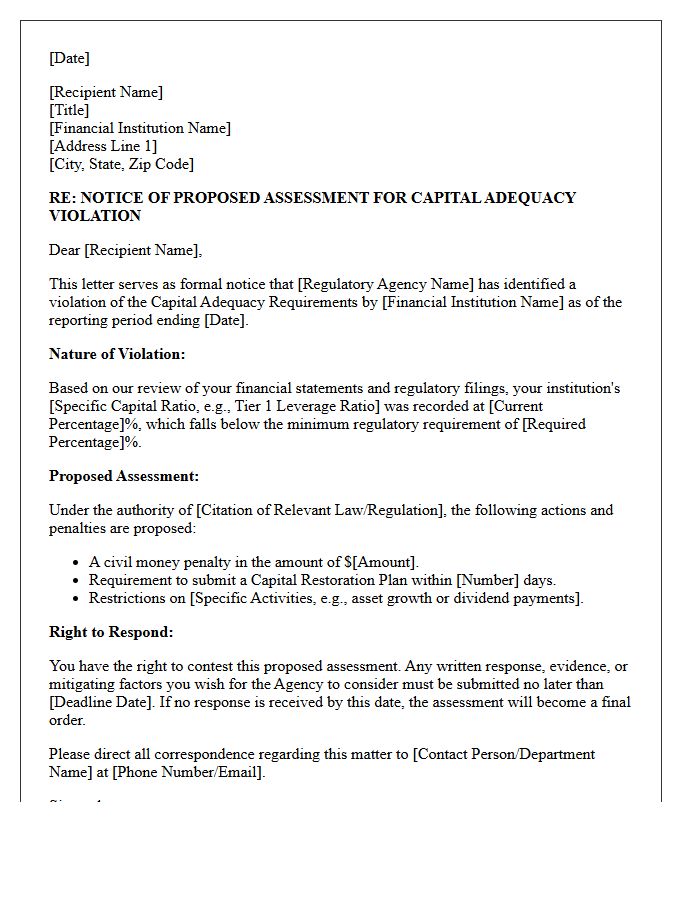
A Capital Adequacy Requirement Violation Proposed Assessment Letter is a formal notice from regulators indicating a bank has fallen below minimum capital thresholds. This document outlines the specific regulatory breach, proposed financial penalties, and required corrective actions to restore solvency. Receiving this letter signifies a serious threat to institutional stability, often leading to restricted dividends or mandatory restructuring. Banks must respond promptly with a comprehensive recapitalization plan to mitigate enforcement actions and ensure long-term compliance with global banking standards like Basel III.
State Banking Department Regulatory Fee Proposed Assessment Letter
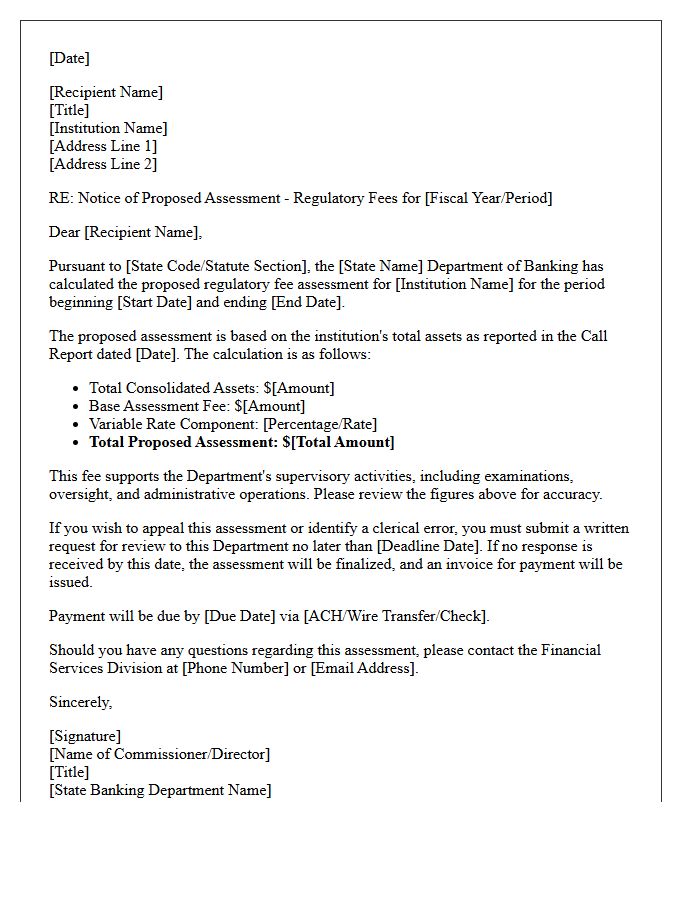
The State Banking Department Regulatory Fee Proposed Assessment Letter is a formal notification detailing the annual costs institutions must pay for supervision and examination. This assessment is calculated based on the entity's total assets and ensures the department has necessary funding for financial oversight. Regulated entities must review the proposed amount, verify asset calculations, and adhere to payment deadlines to remain in good standing. Understanding this letter is crucial for budgetary compliance and maintaining your operational license within the state's regulatory framework.
Truth in Lending Act Infraction Proposed Assessment Letter
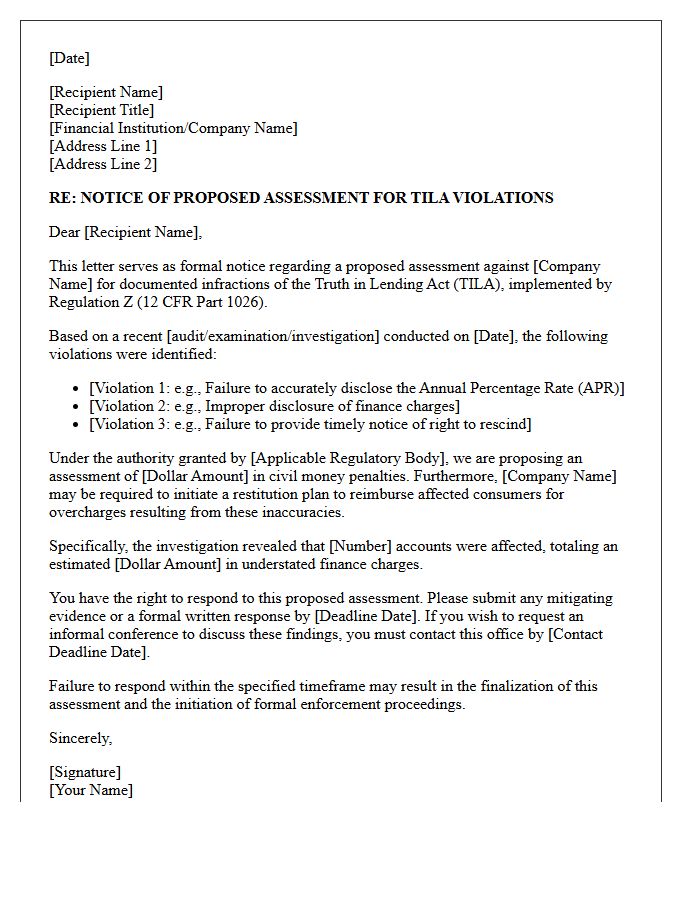
A Truth in Lending Act Infraction Proposed Assessment Letter is a formal notification from regulators, such as the Consumer Financial Protection Bureau, alleging specific violations of federal disclosure requirements. This document outlines calculated civil money penalties resulting from errors in reporting annual percentage rates or finance charges. Financial institutions must review these allegations immediately, as they typically have a limited timeframe to provide evidence or contest the findings. Failure to respond effectively can lead to mandatory restitution to consumers and significant public enforcement actions against the lender.
Office of Foreign Assets Control Penalty Proposed Assessment Letter
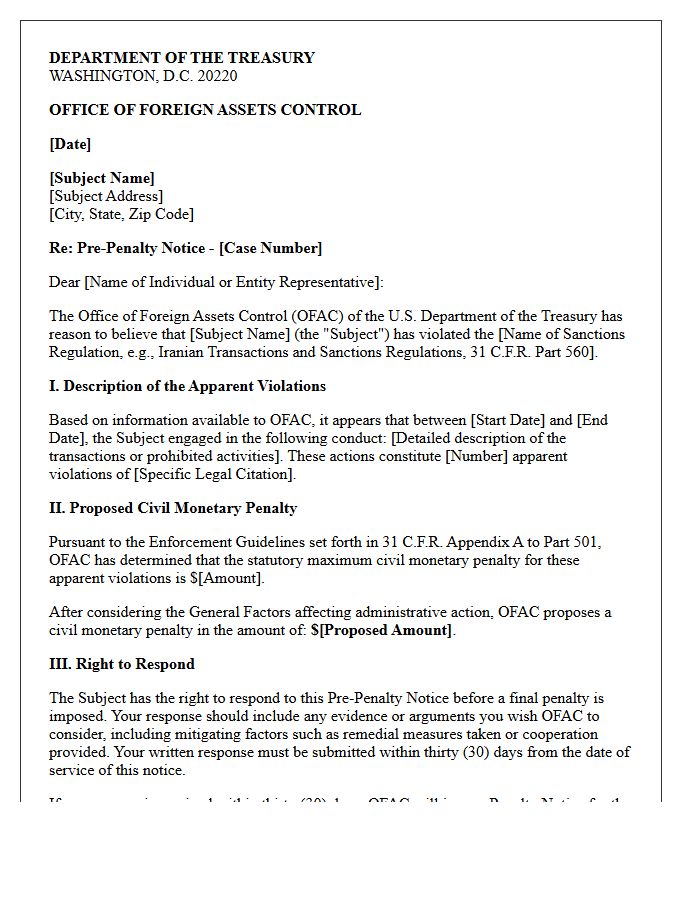
An OFAC Penalty Proposed Assessment Letter is a formal notification issued by the U.S. Treasury indicating an intent to impose financial sanctions for sanctions violations. This document outlines the specific transactions or behaviors that violated federal law and calculates a preliminary civil money penalty. Recipients must respond promptly with a written defense or mitigating evidence to challenge the findings or request a lower fine. Ignoring this letter can lead to a Final Penalty Notice, making legal counsel and proactive compliance review essential for organizational protection.
Unfair or Deceptive Acts Practices Proposed Assessment Letter
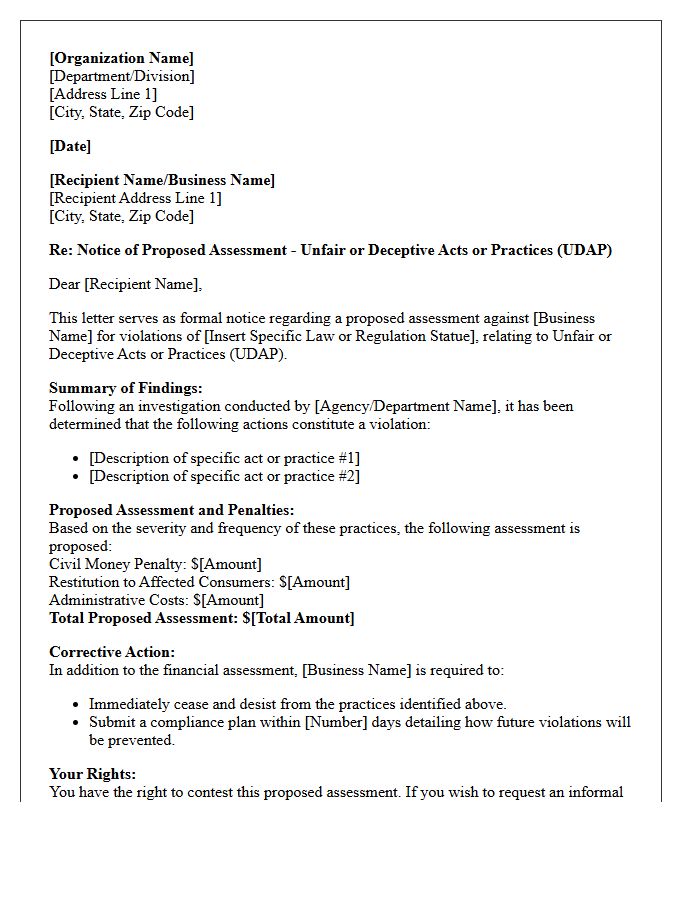
An Unfair or Deceptive Acts or Practices (UDAP) Proposed Assessment Letter is a formal regulatory notice indicating that a financial institution may have violated consumer protection laws. This document outlines specific findings where business activities were deemed misleading or harmful to consumers. It is critical to respond within the designated timeframe to contest findings or propose corrective actions. Receiving this letter often precedes formal enforcement actions or significant monetary penalties, making legal counsel and immediate compliance reviews essential for mitigating long-term regulatory risk and protecting the institution's reputation.
Information Security Breach Regulatory Fine Proposed Assessment Letter
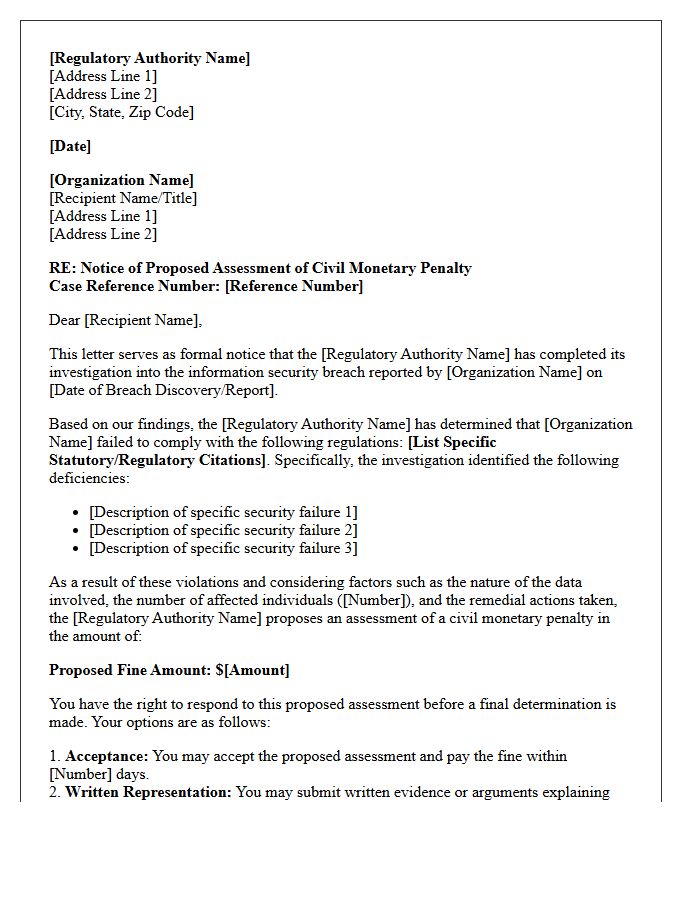
An Information Security Breach Regulatory Fine Proposed Assessment Letter is a formal notification from a governing body, such as the ICO or a state attorney general, regarding potential penalties for data violations. This document outlines the alleged statutory infringements, proposed monetary sanctions, and required remediation steps. It is critical to review the specific legal citations and response deadlines provided. Recipients should immediately consult legal counsel to prepare a formal defense or mitigation strategy, as these assessments often represent the final stage before a binding enforcement action is officially issued.
What is a Notice of Proposed Assessment (NPA) letter?
A Notice of Proposed Assessment is a formal notification from a tax authority indicating that they intend to change your tax liability based on an audit or information mismatch. It outlines the additional tax, penalties, and interest the agency believes you owe before the debt becomes final.
How long do I have to respond to a Notice of Proposed Assessment?
Typically, taxpayers have 60 days from the date printed on the Notice of Proposed Assessment to file a formal protest or pay the balance. Failure to respond within this timeframe usually results in the proposed amount becoming a final tax assessment subject to collection actions.
Do I have to pay the amount shown on a Notice of Proposed Assessment immediately?
No, you do not have to pay immediately if you disagree with the findings. The NPA is a "proposed" change, allowing you the opportunity to provide documentation to dispute the adjustments; however, interest will continue to accrue on any unpaid balance that is eventually determined to be correct.
What should I do if I disagree with a Notice of Proposed Assessment?
If you disagree with the assessment, you must file a written protest by the deadline stated in the letter. You should include a detailed explanation of why you disagree, along with supporting documents like receipts, bank statements, or tax records to prove your original filing was accurate.
What happens if I ignore a Notice of Proposed Assessment letter?
If you ignore the letter, the proposed tax, penalties, and interest will automatically become a final assessment after the protest period expires. Once finalized, the tax agency can initiate collection activities, including wage garnishments, bank levies, or filing a tax lien against your property.

Comments