
The Federal Reserve's new guidance emphasizes the critical need for robust Third-Party Risk Management across all banking operations. This supervisory letter outlines heightened expectations for identifying, monitoring, and mitigating risks associated with external vendors and fintech partnerships to ensure operational resilience. Understanding these regulatory standards is essential for maintaining compliance. To assist your implementation, below are some ready to use template.
Image cover: Modernizing Vendor Oversight: Third-Party Risk Management Templates and Supervisory Letter Samples
Letter Samples List
- Third-Party Risk Management Compliance Letter
- Initial Vendor Risk Assessment Request Letter
- Critical Outsourcing Arrangement Notification Letter
- Third-Party Remediation Plan Supervisory Letter
- Vendor Data Breach Incident Response Letter
- Concentration Risk Supervisory Warning Letter
- Third-Party Termination and Transition Letter
- Due Diligence Examination Findings Letter
- Cross-Border Outsourcing Compliance Letter
- Cloud Service Provider Risk Audit Letter
- Unapproved Third-Party Relationship Cease Letter
- Fourth-Party Risk Oversight Demand Letter
- Annual Third-Party Risk Management Review Letter
Third-Party Risk Management Compliance Letter
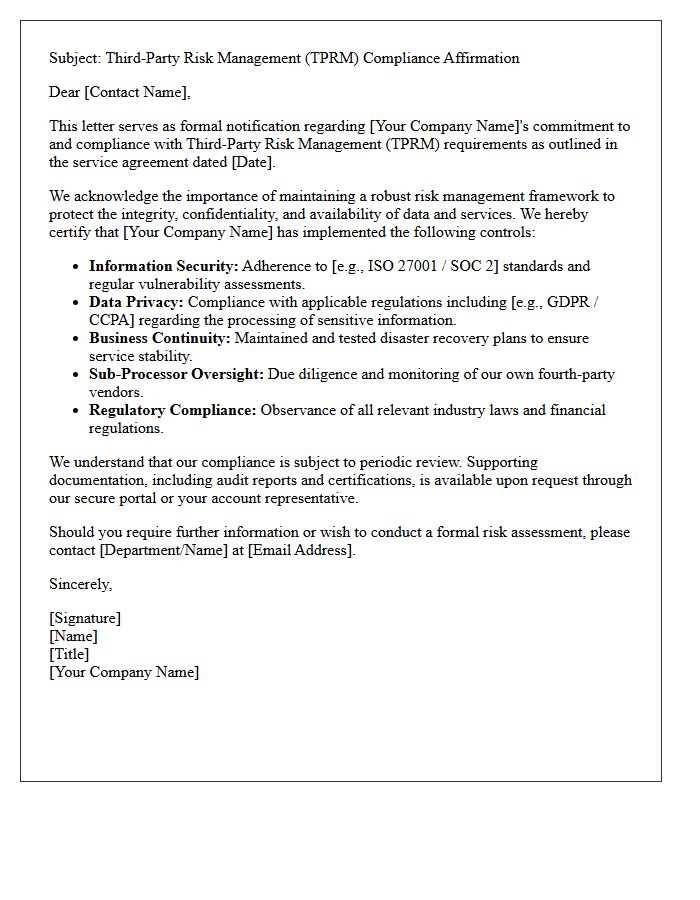
A Third-Party Risk Management (TPRM) compliance letter serves as formal attestation that a service provider meets specific security and regulatory standards. It is a critical tool for due diligence, ensuring that external vendors do not compromise a company's data integrity or legal standing. These letters typically summarize audit findings, such as SOC 2 reports or ISO certifications, to verify operational security. Providing this document builds trust, streamlines the procurement process, and ensures that all parties adhere to strict compliance frameworks to mitigate potential supply chain vulnerabilities.
Initial Vendor Risk Assessment Request Letter
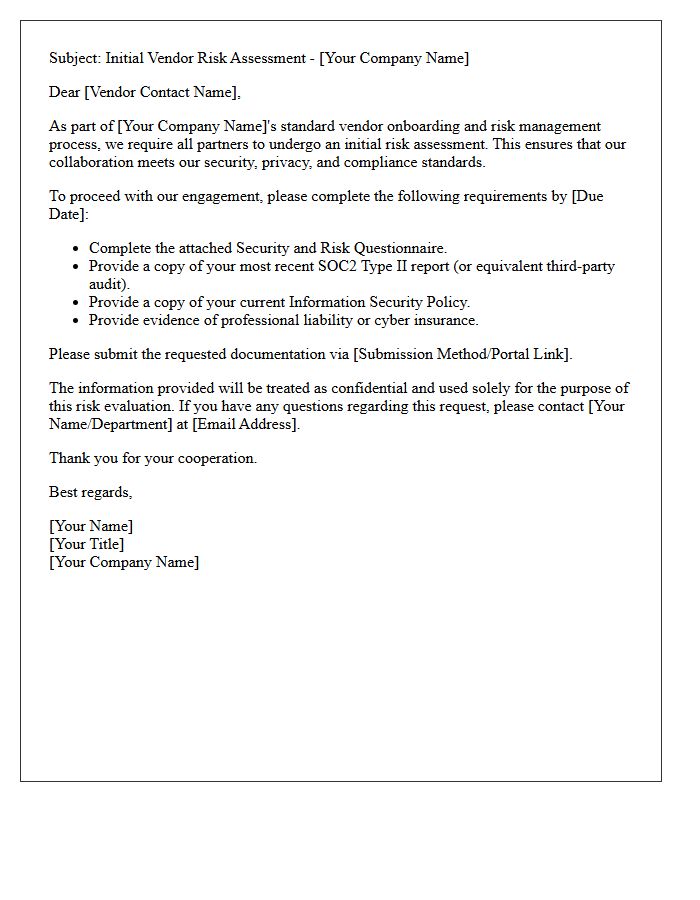
An Initial Vendor Risk Assessment Request Letter is a formal notification sent to prospective third parties to evaluate their security posture. It initiates the due diligence process by requesting sensitive documentation, such as SOC 2 reports or security certifications. This document is crucial for identifying potential vulnerabilities before a partnership begins. Clear communication ensures vendors provide accurate data, allowing your organization to mitigate cybersecurity risks and maintain regulatory compliance. Establishing this baseline protects your internal infrastructure and ensures all external partners adhere to your company's specific safety standards.
Critical Outsourcing Arrangement Notification Letter
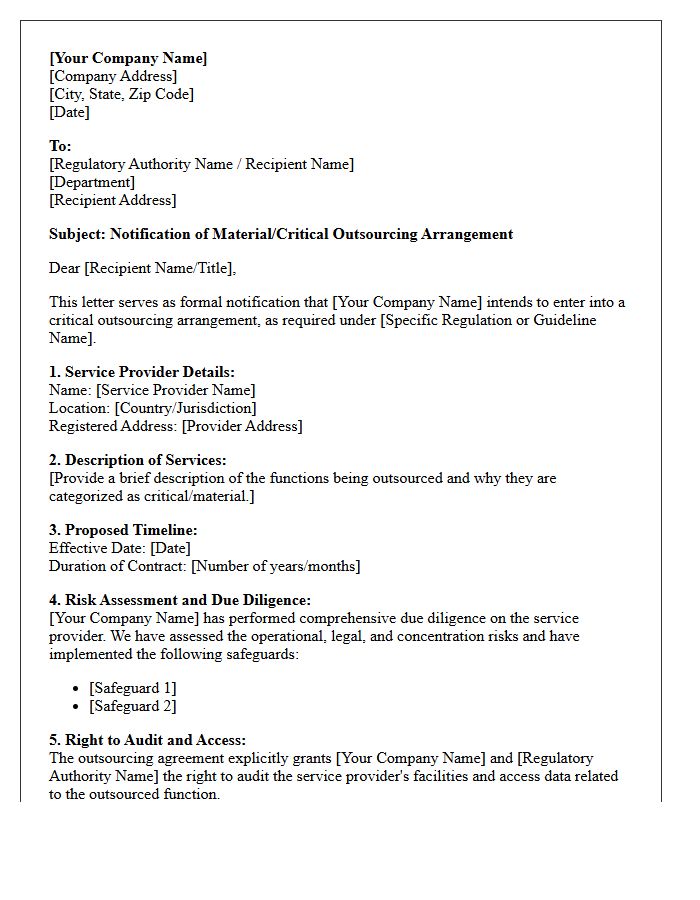
A Critical Outsourcing Arrangement Notification Letter is a formal regulatory requirement for financial institutions. Organizations must notify supervisory authorities before entering into material service agreements that impact operational continuity. This document details the service provider, the nature of the outsourced functions, and the associated risk management strategies. Timely submission ensures compliance with governance standards, allowing regulators to assess potential systemic risks. Failing to submit this notification can lead to significant legal penalties and operational disruptions, making it a vital component of a firm's third-party risk framework.
Third-Party Remediation Plan Supervisory Letter
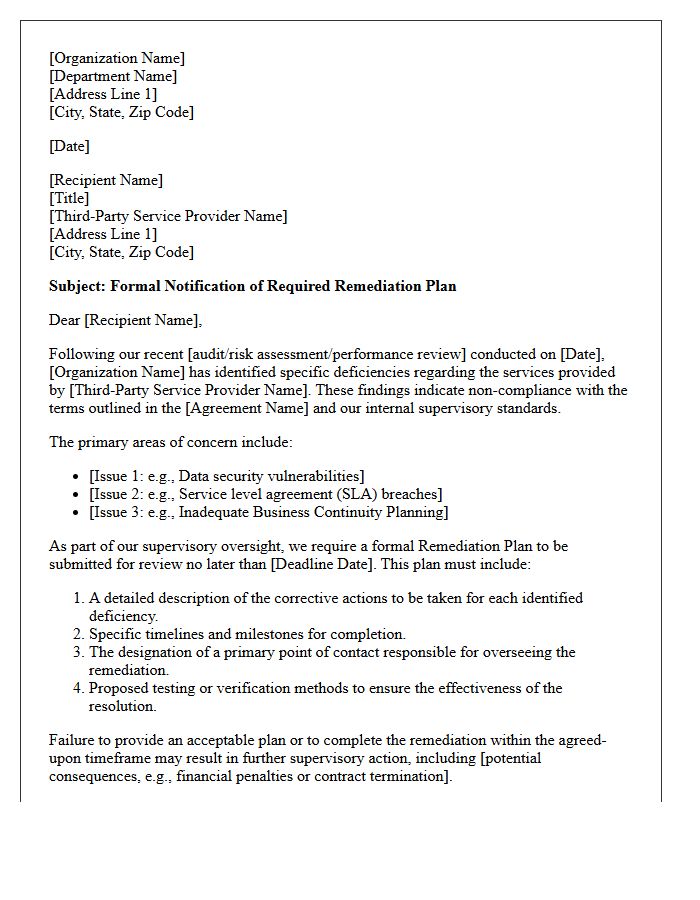
A Third-Party Remediation Plan Supervisory Letter is a formal document issued by regulators directing financial institutions to resolve specific compliance failures or operational risks within their vendor partnerships. It mandates a structured corrective action plan to address vulnerabilities in oversight and risk management. This directive ensures that third-party relationships adhere to legal standards, protecting the institution from systemic threats. Boards must prioritize these letters, as failure to implement the required remediation steps can lead to severe enforcement actions, fines, or increased regulatory scrutiny regarding the organization's overall safety and soundness.
Vendor Data Breach Incident Response Letter
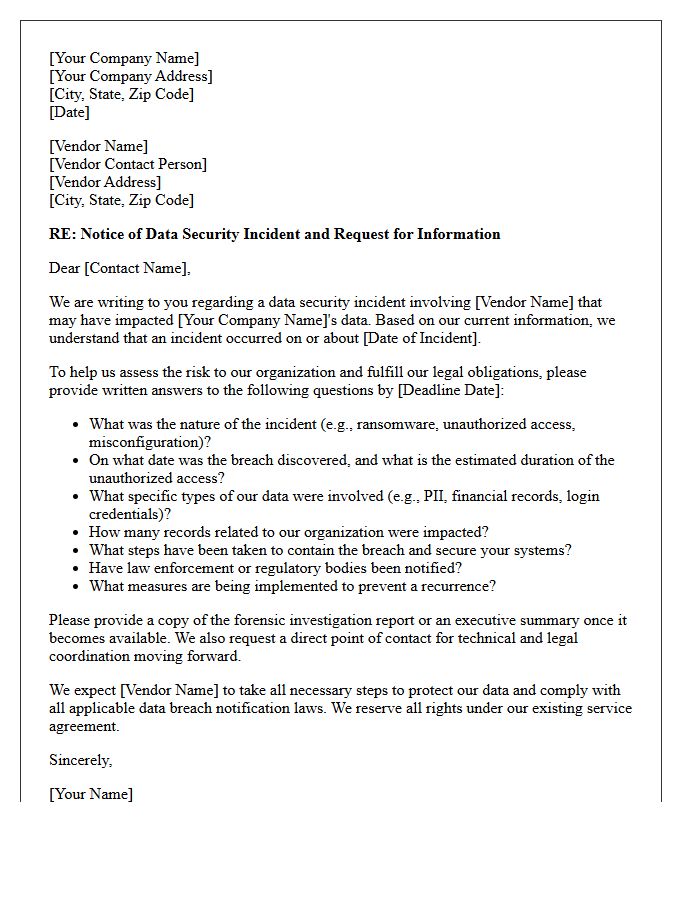
A Vendor Data Breach Incident Response Letter is a formal notification sent to stakeholders after a third-party service provider suffers a security failure. The primary goal is to maintain transparency and comply with data privacy regulations like GDPR or CCPA. This document must clearly outline what information was compromised, the steps taken to mitigate risks, and specific remediation actions for affected parties. Timely communication is essential to preserve organizational trust and minimize potential legal liabilities or reputational damage resulting from the external security incident.
Concentration Risk Supervisory Warning Letter
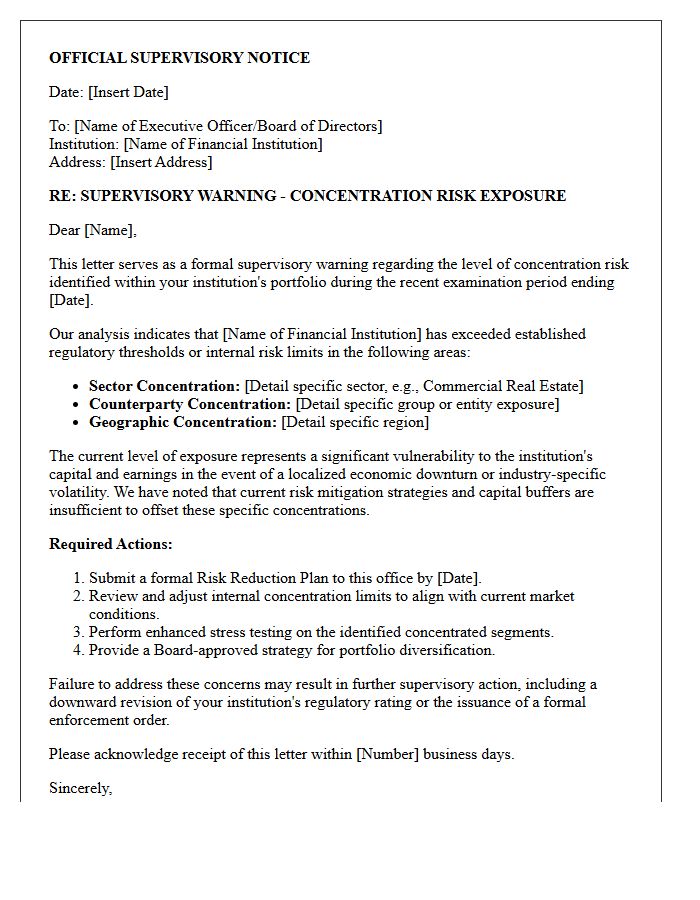
The Concentration Risk Supervisory Warning Letter is a formal regulatory notification issued to financial institutions. It identifies excessive exposure to specific sectors, counterparties, or asset classes that could jeopardize stability. Banks must prioritize diversification strategies and enhance stress testing to mitigate potential losses. Failure to address these warnings may lead to heightened capital requirements or enforcement actions. Effective governance and proactive monitoring of risk limits are essential to ensure long-term resilience against market volatility and systemic shocks.
Third-Party Termination and Transition Letter
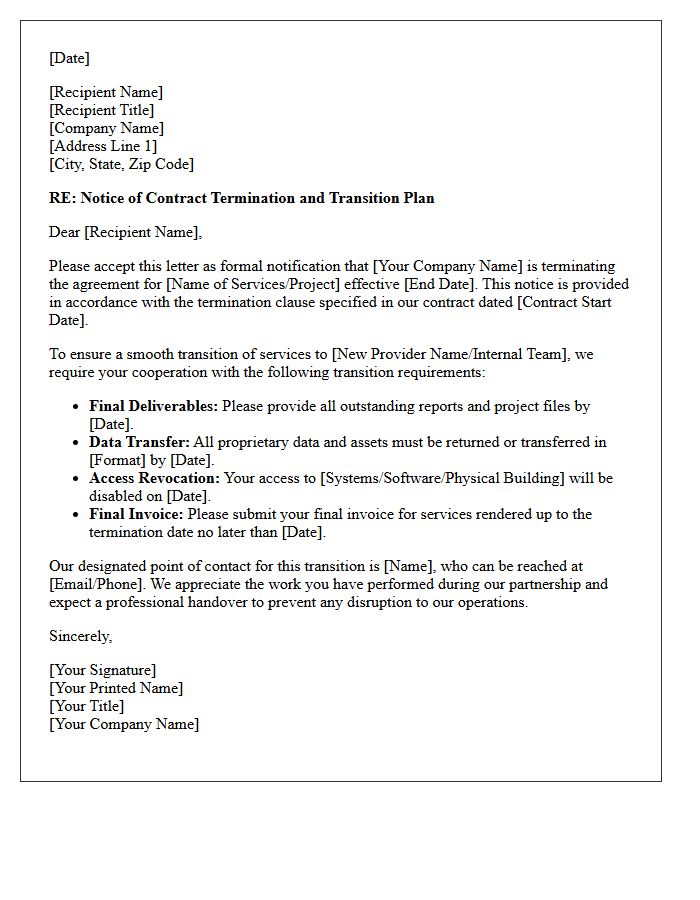
A Third-Party Termination and Transition Letter is a formal notification used to end a business relationship while ensuring continuity of service. This document clearly defines the termination date and outlines specific transition responsibilities required from the outgoing vendor. It serves as a legal safeguard to protect intellectual property and sensitive data during the handoff process. To mitigate operational risks, the letter must detail the return of assets, final payment terms, and the knowledge transfer process necessary for a seamless migration to a new provider or internal team.
Due Diligence Examination Findings Letter
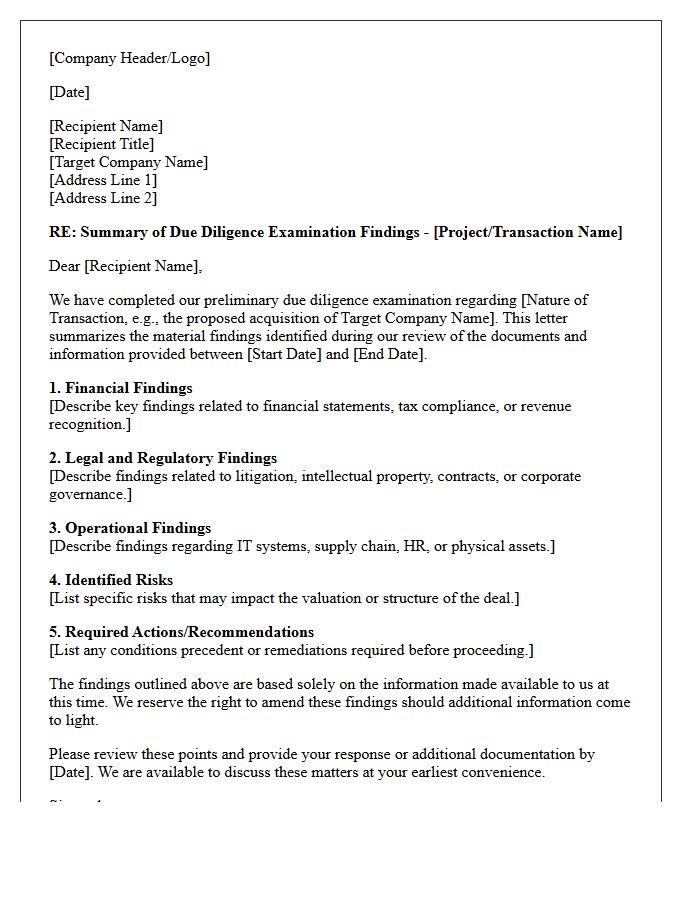
A Due Diligence Examination Findings Letter is a formal document issued by regulators or investors summarizing critical compliance gaps and operational risks identified during a review. It highlights material weaknesses, regulatory breaches, or financial discrepancies that require immediate remediation. Understanding these findings is essential for risk mitigation and ensuring transparency before finalizing transactions or maintaining licensing. Recipients must provide a detailed management response to address each deficiency, as these letters serve as a legal record of an entity's oversight and internal control effectiveness during the assessment period.
Cross-Border Outsourcing Compliance Letter
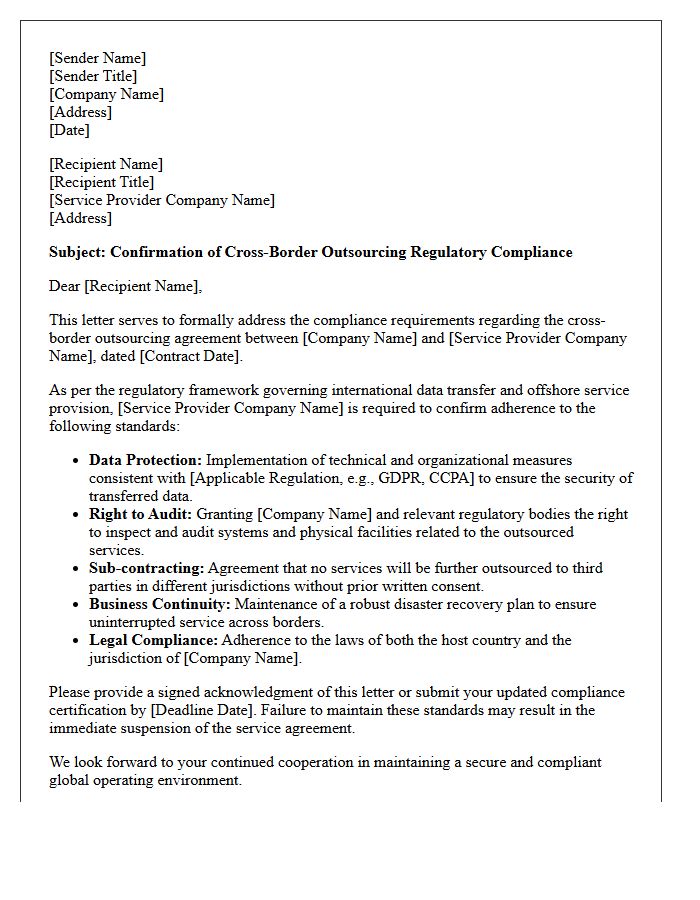
A Cross-Border Outsourcing Compliance Letter is a vital legal document confirming that international service providers adhere to specific regulatory standards and data protection laws. It ensures that global operations remain transparent and legally sound across different jurisdictions. This letter typically addresses critical areas like risk management, confidentiality, and security protocols required by governing bodies. Obtaining this certification mitigates legal exposure and strengthens business integrity when delegating essential functions to overseas partners, ensuring that all third-party activities align with mandatory compliance frameworks.
Cloud Service Provider Risk Audit Letter
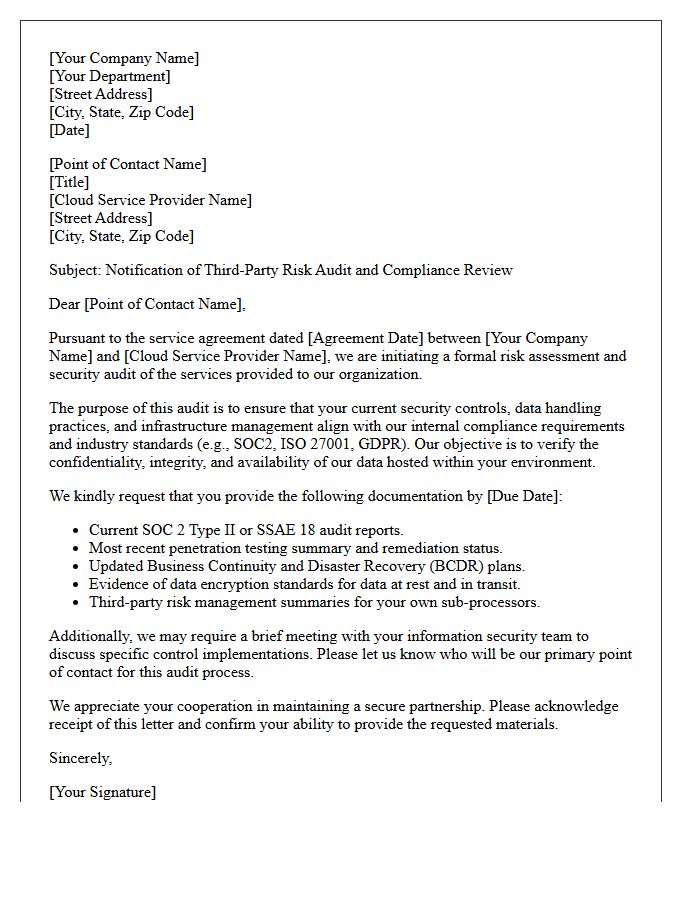
A Cloud Service Provider Risk Audit Letter is a critical document used to assess the security posture of external vendors. It highlights potential vulnerabilities within infrastructure, data handling, and compliance frameworks. Organizations utilize these letters to verify that providers adhere to industry standards like SOC 2 or ISO 27001. Understanding this letter is essential for effective third-party risk management, ensuring that sensitive information remains protected against breaches. It serves as formal evidence of due diligence, helping stakeholders evaluate the operational integrity and reliability of cloud-based solutions before integration.
Unapproved Third-Party Relationship Cease Letter
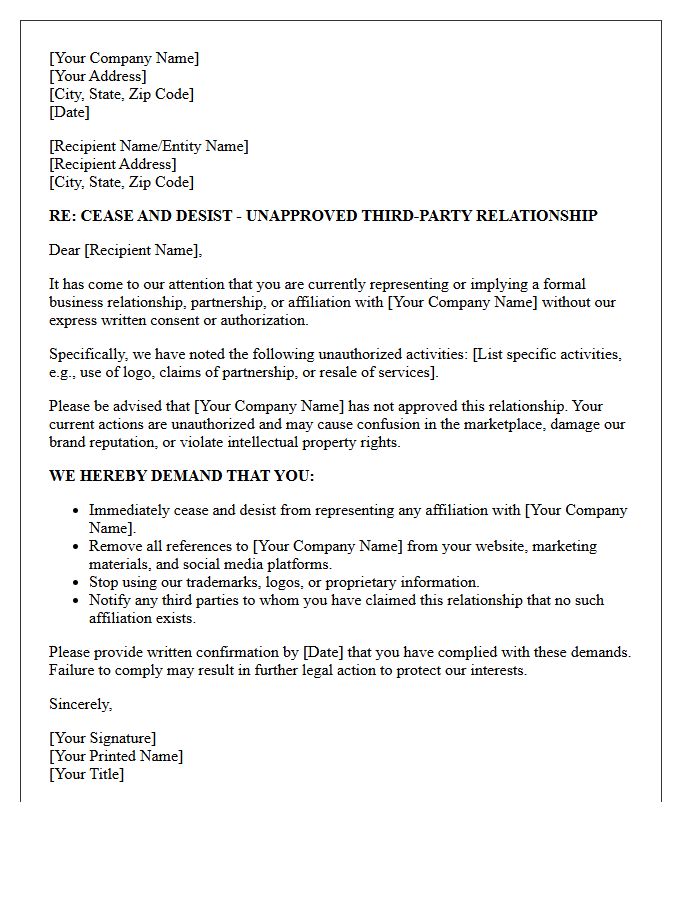
An Unapproved Third-Party Relationship Cease Letter is a formal legal notice demanding an immediate end to unauthorized business affiliations. It serves as a critical compliance tool to protect intellectual property, brand reputation, and contractual integrity. By issuing this document, organizations mitigate risks associated with unauthorized representation or data sharing. It establishes a clear paper trail for potential litigation if the recipient continues the prohibited behavior. Use this letter to enforce exclusivity and ensure all professional partnerships remain within established regulatory and legal frameworks to prevent financial or operational liability.
Fourth-Party Risk Oversight Demand Letter
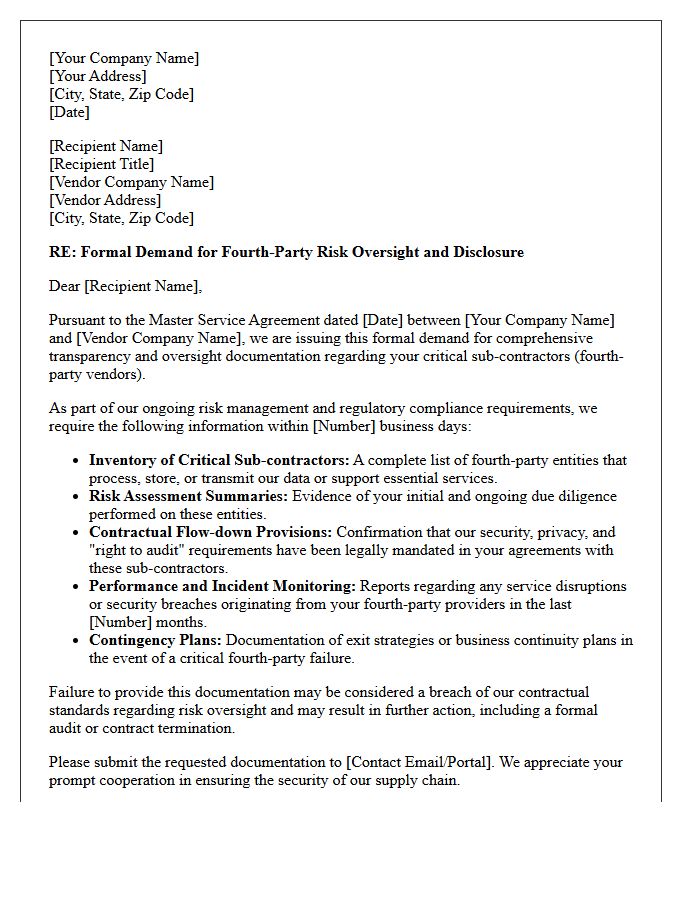
A Fourth-Party Risk Oversight Demand Letter is a formal legal document sent to vendors requiring transparency regarding their own subcontractors. In modern supply chains, sub-service providers often handle sensitive data, creating hidden vulnerabilities. This letter demands proof of due diligence, security certifications, and continuous monitoring practices. Establishing clear accountability beyond direct partnerships is essential for regulatory compliance and operational resilience. Failure to address these "Nth-party" risks can lead to catastrophic data breaches and systemic failures, making proactive legal oversight a critical component of third-party risk management strategies.
Annual Third-Party Risk Management Review Letter
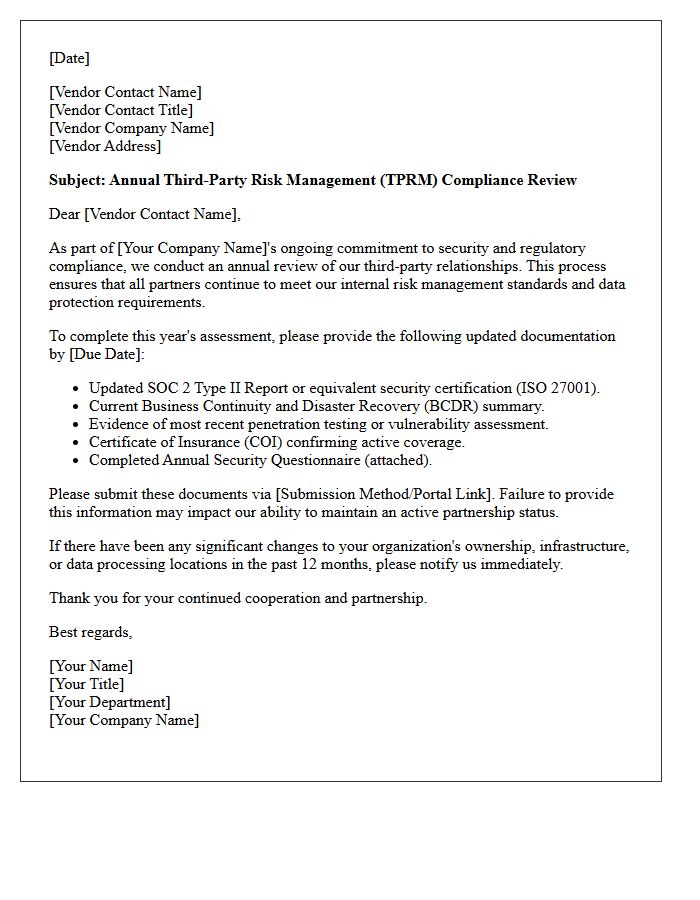
An Annual Third-Party Risk Management Review Letter is a formal document validating that an organization has evaluated its vendors' security controls and operational stability. It confirms due diligence was performed throughout the year to mitigate external threats. This letter serves as critical evidence for auditors and regulators, demonstrating compliance with data protection standards. It summarizes risk assessments, performance metrics, and any identified vulnerabilities, ensuring that third-party relationships align with the company's internal security posture and risk appetite to prevent supply chain disruptions.
What is the purpose of the Third-Party Risk Management Supervisory Letter?
The supervisory letter provides official guidance to financial institutions on identifying, monitoring, and mitigating risks associated with third-party relationships, ensuring compliance with safety and soundness standards.
Which entities are required to comply with these third-party risk guidelines?
All banking organizations supervised by the regulatory agencies, including national banks, state member banks, and federal savings associations, must adhere to the requirements outlined in the supervisory letter.
How does the supervisory letter define a "critical" third-party relationship?
A relationship is considered critical if the third party provides services that support high-value transactions, handle sensitive data, or perform functions that would significantly impact operations or customers if disrupted.
What are the key stages of the third-party risk management life cycle?
The life cycle consists of five primary stages: planning, due diligence and third-party selection, contract negotiation, ongoing monitoring, and termination of the relationship.
What documentation is required for a third-party risk management audit?
Institutions must maintain detailed records of due diligence reports, signed contracts, performance monitoring metrics, risk assessments, and evidence of board oversight to demonstrate compliance during examinations.

Comments