
A Warning Letter for Dormant Account Status is a formal notice sent to customers when their financial accounts show no activity for an extended period. This communication outlines the risks of account deactivation and provides steps to keep the account active to avoid escheatment. Ensure compliance and clear communication using our guide; below are some ready to use template.
Image cover: Reactivating Your Dormant Account: Notice and Recovery Templates
Letter Samples List
- Warning Letter for Dormant Account Status
- Notice Letter Regarding Extended Account Inactivity
- Dormant Account Reactivation Request Letter
- Final Warning Letter Before Dormant Account Closure
- Banking Account Dormancy Notification Letter
- Action Required Letter for Inactive Bank Account
- Impending Escheatment Warning Letter for Dormant Funds
- Customer Alert Letter for Prolonged Account Inactivity
- Official Warning Letter for Unclaimed Bank Deposits
- Status Update Letter for Dormant Checking Account
- Pre-Dormancy Warning Letter for Savings Account
- Final Notice Letter Before Account Freeze
Warning Letter for Dormant Account Status
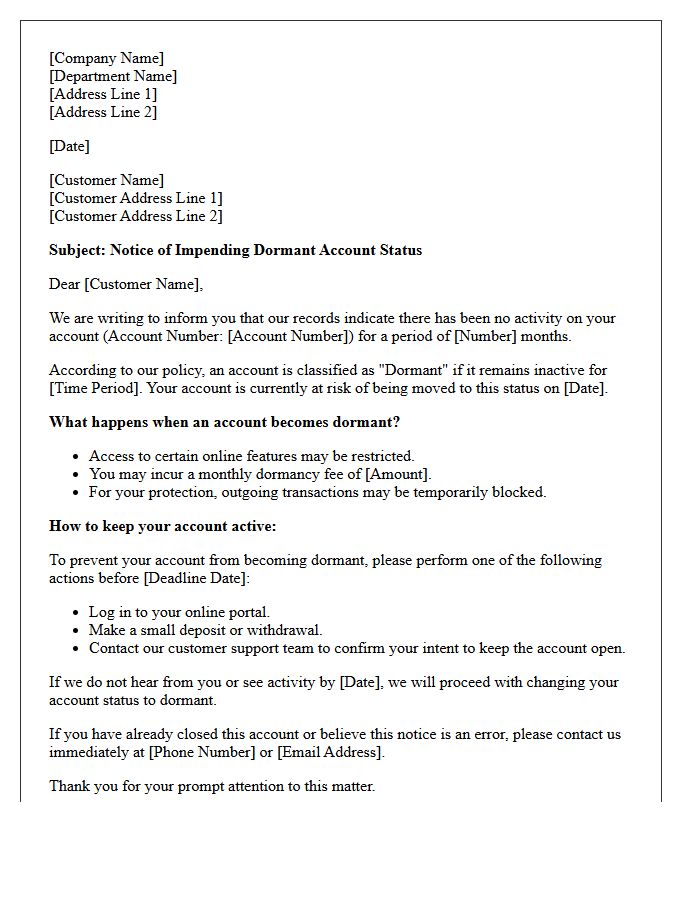
A Warning Letter for Dormant Account Status is a formal notice sent by financial institutions when an account remains inactive for a specific period. It serves as a final opportunity to reactivate the account before it is classified as unclaimed property. To prevent the escheatment process, where funds are transferred to the state treasury, users must perform a transaction or contact the bank immediately. Keeping your account active ensures continuous access to your balance and avoids the administrative burden of reclaiming assets from government authorities.
Notice Letter Regarding Extended Account Inactivity
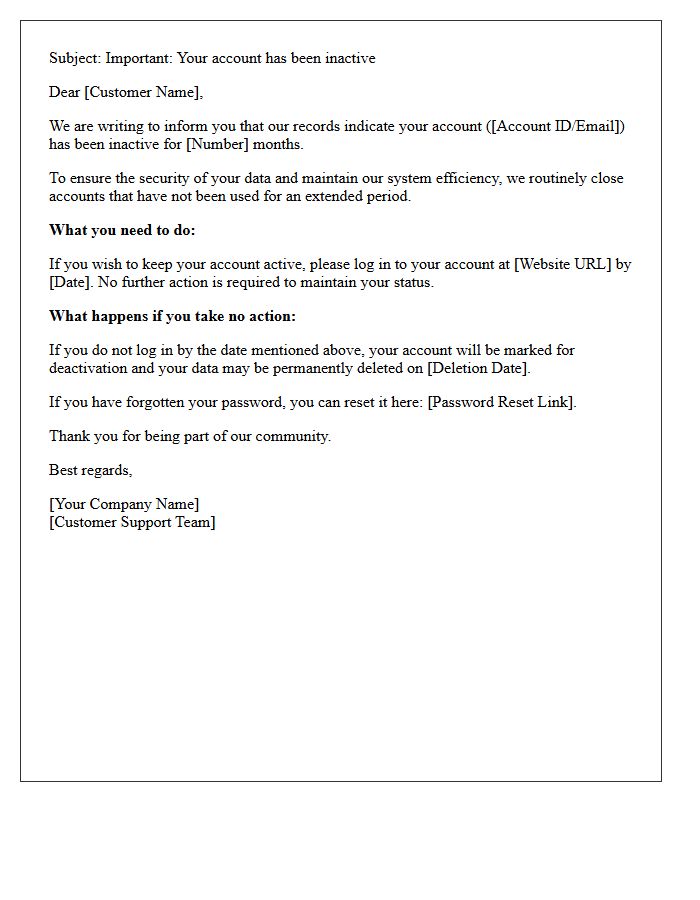
A Notice Letter Regarding Extended Account Inactivity is a formal warning that your account may be deactivated or deleted due to prolonged non-use. To prevent the loss of data or access, you must log in immediately or perform a specific action as outlined in the message. These notices often precede escheatment, where unclaimed financial assets are transferred to the state. Always verify the sender's identity to avoid phishing, and ensure you update your security credentials to keep the account active and protected from permanent closure.
Dormant Account Reactivation Request Letter
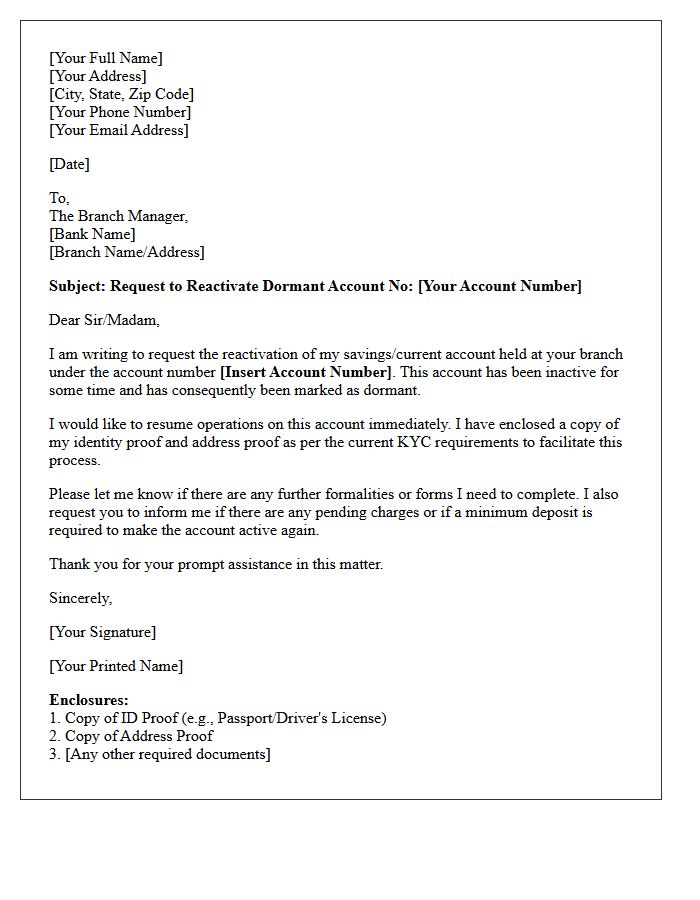
A Dormant Account Reactivation Request Letter is a formal document submitted to a financial institution to restore access to an inactive account. To ensure a smooth process, you must include your full name, account number, and valid identification documents. Clearly state your intent to resume transactions and address any outstanding compliance requirements like updated KYC details. Submitting this request promptly helps prevent the permanent escheatment of funds to the state. Always verify with your bank if a specific official form or an in-person visit is required alongside your written correspondence.
Final Warning Letter Before Dormant Account Closure
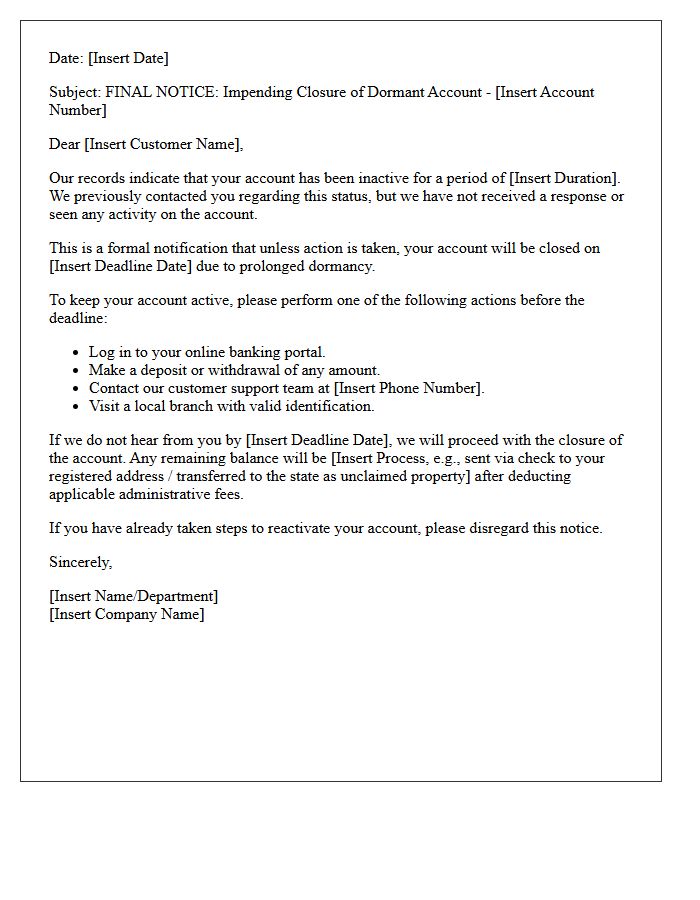
A final warning letter serves as a critical notice regarding your inactive account. It informs users that their profile will be permanently deleted due to prolonged inactivity. To prevent permanent data loss, you must log in before the specified deadline. This action ensures your information remains secure and accessible. Failure to respond will result in the closure of your account and the removal of all associated files. Always verify the sender's authenticity to avoid phishing attempts while securing your digital assets promptly.
Banking Account Dormancy Notification Letter
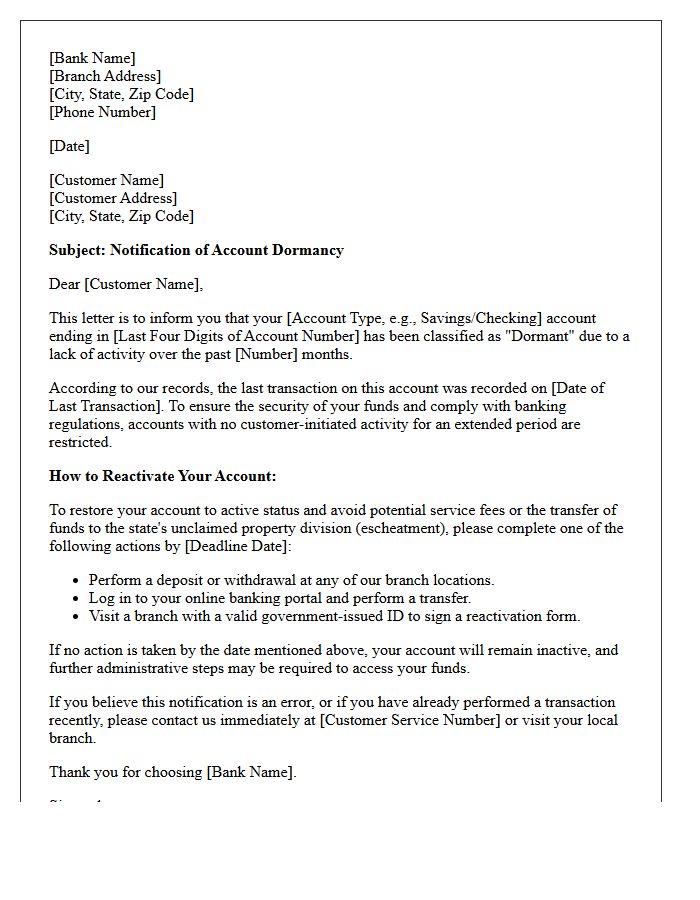
A Banking Account Dormancy Notification Letter is a formal notice sent to customers when their account shows no activity for an extended period. The most critical aspect is the escheatment process, where unclaimed funds are legally transferred to the state. To prevent this, you must perform a qualifying transaction or contact the bank immediately to reactivate the status. Ignoring this letter risks the closure of your account and the loss of direct access to your balance. Always verify the letter's authenticity to protect against potential phishing attempts.
Action Required Letter for Inactive Bank Account
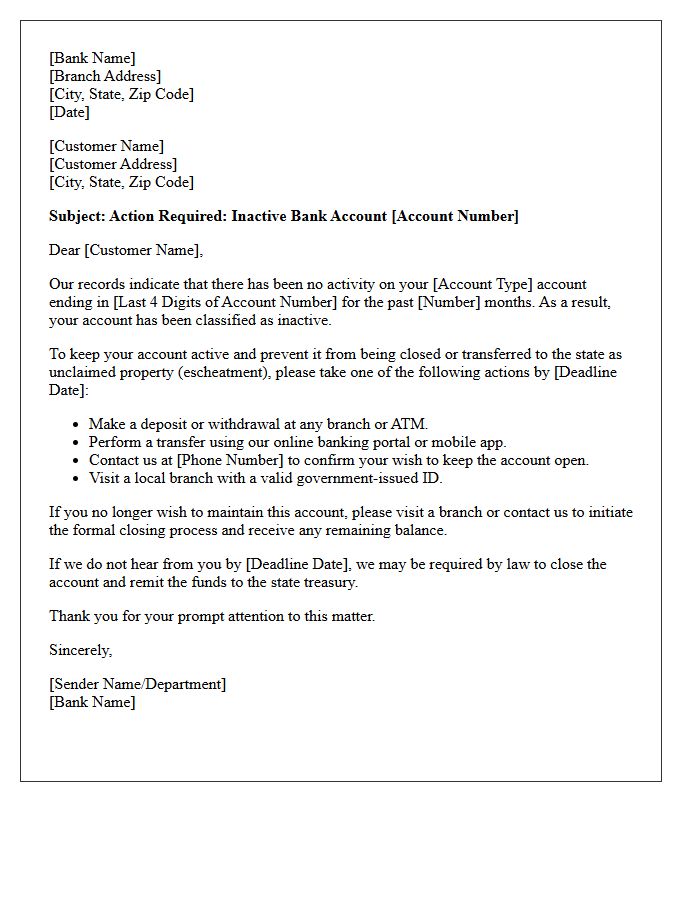
An Action Required Letter is a formal notice sent when a bank account becomes dormant due to prolonged inactivity. To prevent funds from being transferred to the state as unclaimed property through escheatment, you must respond immediately. Usually, performing a small transaction, signing the included form, or contacting your branch will reactive the account. Ignoring this letter may result in the bank closing your account and sending the balance to the government, making recovery much more difficult. Ensure your contact information is always current to receive these vital alerts.
Impending Escheatment Warning Letter for Dormant Funds
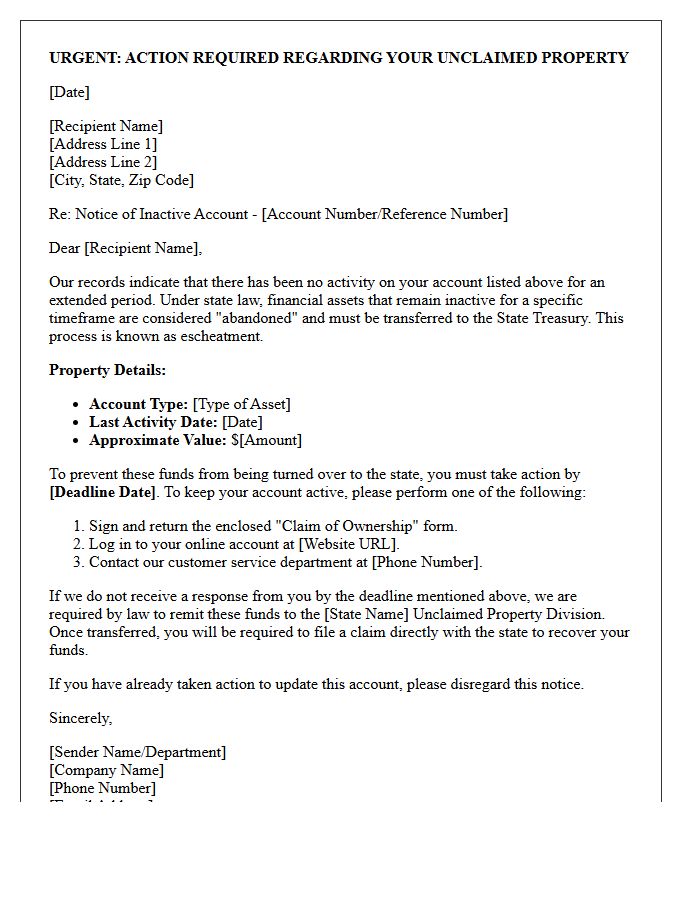
An impending escheatment warning letter is a critical notice from a financial institution regarding unclaimed property. It informs you that your account has been flagged as dormant due to prolonged inactivity. To prevent the legal transfer of your assets to the state government-a process known as escheatment-you must take immediate action. Typically, you can stop this by signing the included form, making a small transaction, or contacting the holder. Responding before the specified deadline is essential to maintain control over your private funds and avoid complex state recovery processes.
Customer Alert Letter for Prolonged Account Inactivity
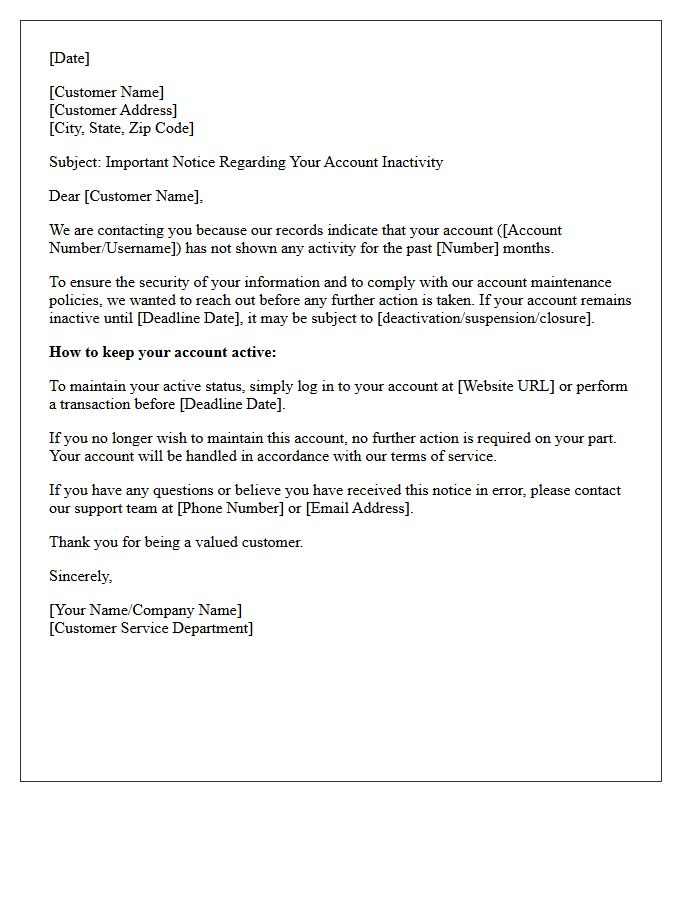
A customer alert letter for prolonged account inactivity serves as a formal notification before an account is classified as dormant. It is essential to inform users that escheatment may occur, leading to the transfer of unclaimed funds to the state. To prevent asset forfeiture, customers must perform a qualifying transaction or contact the institution immediately. Clear communication helps maintain account security and ensures regulatory compliance. Always verify the deadline provided in the notice to reactivate your status and protect your financial holdings from being permanently turned over to government authorities.
Official Warning Letter for Unclaimed Bank Deposits
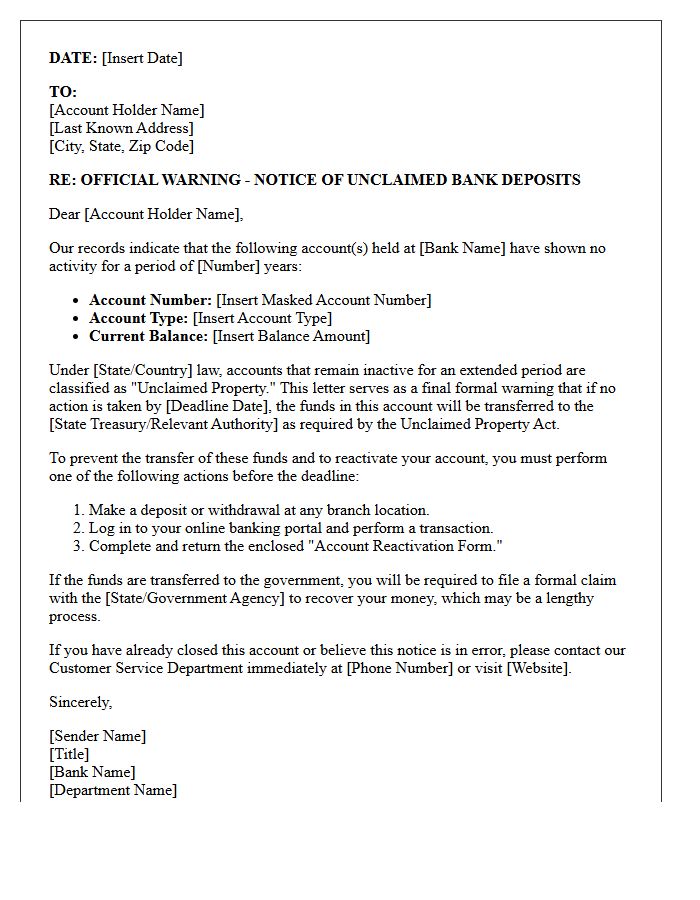
An official warning letter for unclaimed bank deposits serves as a formal dormancy notification. Financial institutions issue these notices when an account remains inactive for a specific period, typically three to five years. It is crucial to respond immediately to prevent your funds from being transferred to the state government via escheatment. To reactivate the account, you must contact your bank, verify your identity, or perform a transaction. Ignoring this letter may result in losing direct access to your private assets, requiring a complex legal claim process to recover them.
Status Update Letter for Dormant Checking Account
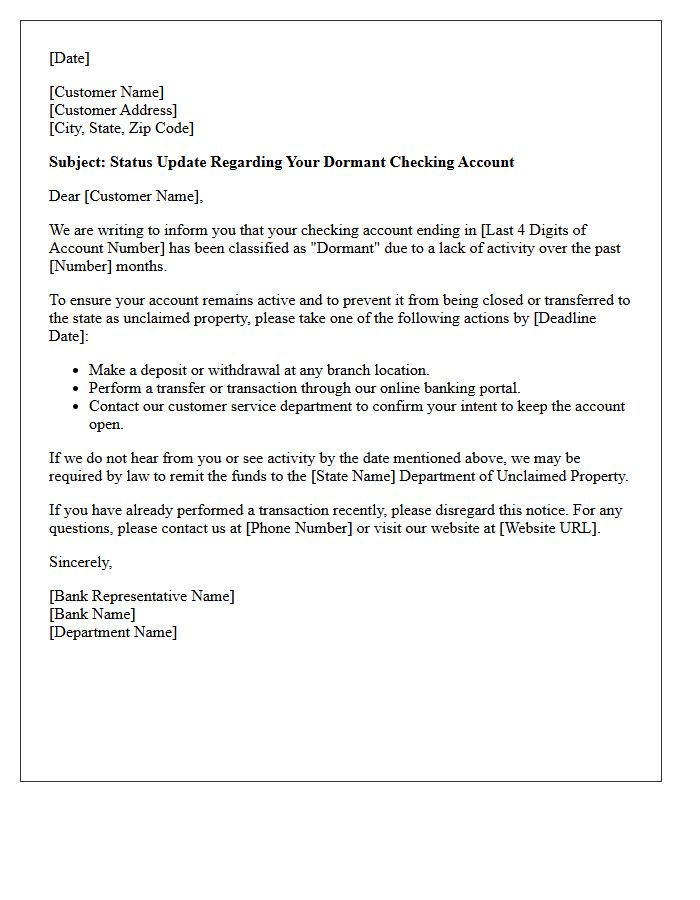
A status update letter is a formal notice sent by banks to inform customers that a checking account has become inactive. This communication warns that without immediate activity, the funds may be classified as unclaimed property and transferred to the state through escheatment. To prevent account closure, you must perform a transaction or contact the institution to verify your account ownership. Responding promptly ensures your balance remains secure and avoids the lengthy process of reclaiming assets from government agencies.
Pre-Dormancy Warning Letter for Savings Account
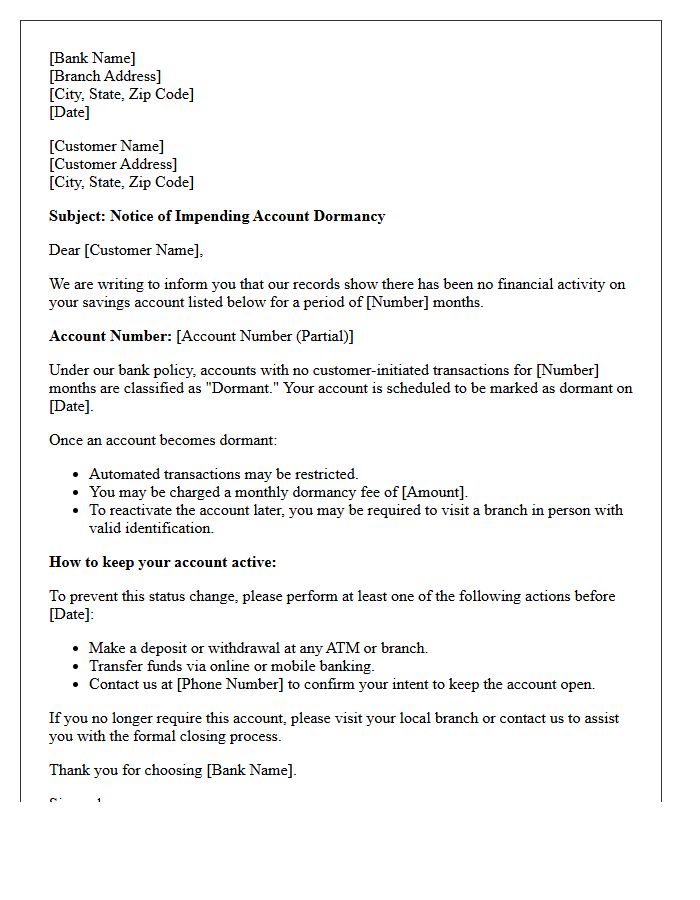
A pre-dormancy warning letter is a critical notification sent by banks when a savings account shows no customer-initiated activity for an extended period. This notice serves as a final alert to prevent your funds from being classified as unclaimed property. To maintain an active status, you must perform a transaction, such as a small deposit or withdrawal, before the specified deadline. Ignoring this letter may lead to account closure and the legal transfer of your balance to state custody through a process known as escheatment.
Final Notice Letter Before Account Freeze
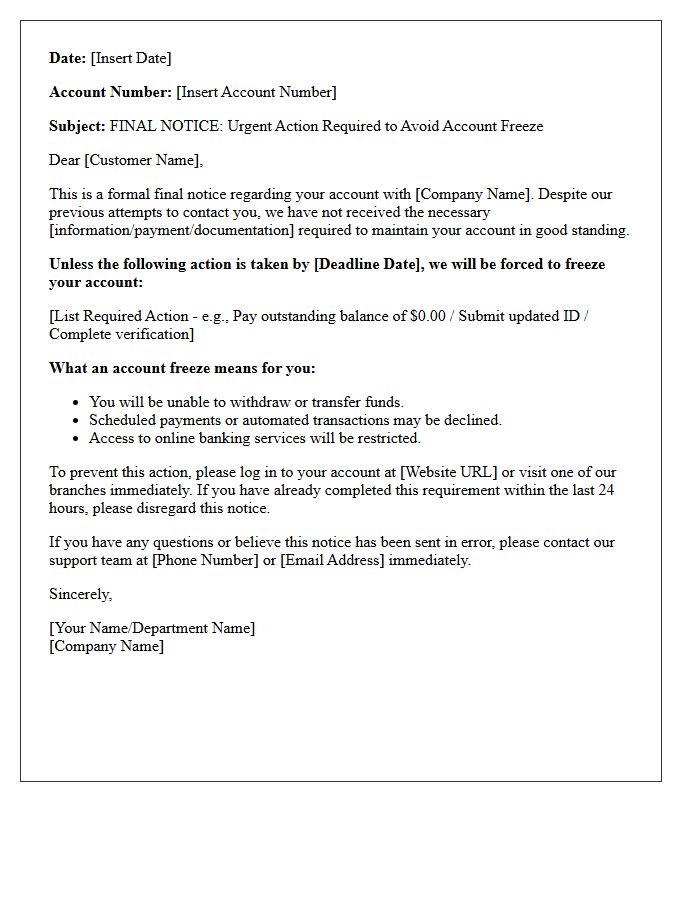
A final notice letter is a critical warning indicating that your bank account will be restricted within a specific timeframe. To avoid an account freeze, you must take immediate action, such as updating personal documentation or resolving outstanding debts. Failure to respond may result in restricted access to funds, declined transactions, and canceled direct debits. Always verify the sender's identity to prevent fraud, then contact your financial institution directly using official channels to rectify the underlying issue and maintain your financial stability.
What is a warning letter for a dormant account status?
A warning letter for a dormant account is a formal notification sent by a financial institution to inform a customer that their account has shown no activity for a specific period, typically 12 to 24 months, and is at risk of being classified as inactive or closed.
Why did I receive a notice about my account being dormant?
You received this notice because there have been no customer-initiated transactions, such as deposits, withdrawals, or transfers, on your account for an extended timeframe. Banks are required by regulation to notify customers before changing an account status to dormant.
How can I reactivate my account after receiving a dormancy warning?
To reactivate your account, you usually need to perform a transaction, such as a small deposit or withdrawal, via an ATM, mobile app, or branch. In some cases, you may be required to submit a formal reactivation request along with updated KYC (Know Your Customer) documentation.
Are there fees associated with a dormant account status?
Many banks charge a monthly dormancy fee or an inactivity fee once an account moves past the warning stage. Reactivating your account promptly after receiving a warning letter helps you avoid these additional service charges and potential escheatment.
What happens if I ignore the dormant account warning letter?
If you ignore the warning, the bank will restrict access to the account, disabling ATM cards and online transfers. If the account remains dormant for several years, the funds may be legally transferred to the state government as unclaimed property through a process called escheatment.

Comments