
A Bankruptcy Discharge Account Closure Letter is a formal notification sent to creditors to ensure your accounts are accurately updated following legal debt relief. Sending this letter helps protect your credit report from lingering inaccuracies and prevents further collection attempts on discharged debts. Ensure your fresh financial start by using the correct documentation; below are some ready to use templates.
Image cover: Formal Debt Discharge Account Closure Letters: Templates and Examples
Letter Samples List
- Bankruptcy Discharge Account Closure Letter
- Notice of Account Closure Following Bankruptcy Discharge Letter
- Collection Agency Bankruptcy Discharge Acknowledgment Letter
- Chapter Seven Bankruptcy Discharge Account Termination Letter
- Chapter Thirteen Discharge Collection Cease and Closure Letter
- Post-Bankruptcy Discharge Account Resolution Letter
- Discharged Debt Final Account Closure Letter
- Consumer Notice of Bankruptcy Discharge Account Closure Letter
- Zero Balance Bankruptcy Discharge Confirmation Letter
- Debt Collection Cease Activity and Discharge Letter
- Court Ordered Bankruptcy Discharge Account Update Letter
- Final Resolution and Bankruptcy Discharge Closure Letter
Bankruptcy Discharge Account Closure Letter
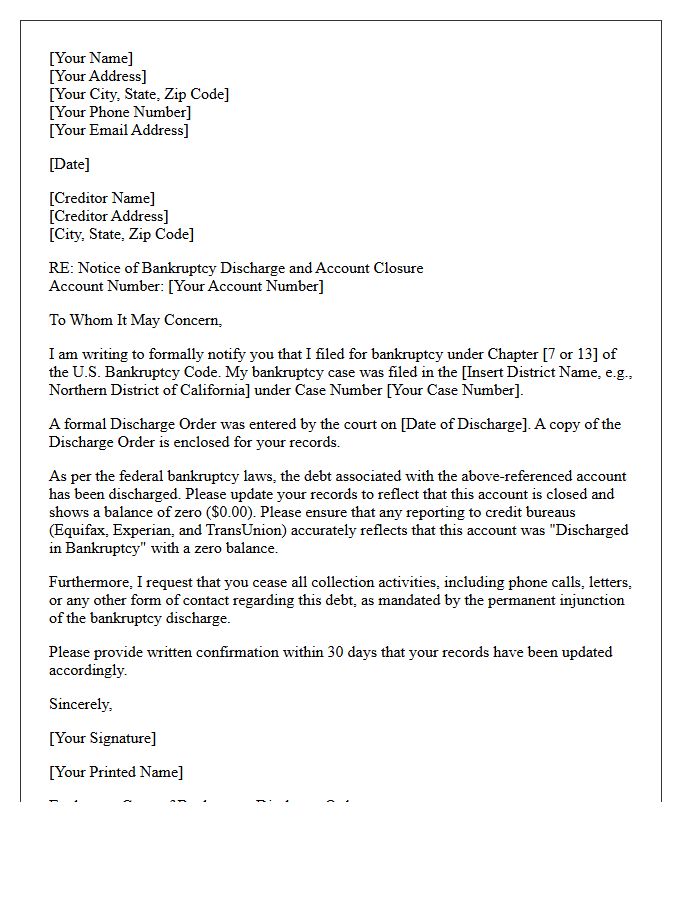
A Bankruptcy Discharge Account Closure Letter serves as formal notification to creditors that a debt has been legally eliminated. This document is essential for restoring credit accuracy by ensuring reporting agencies update balances to zero. It should include your case number, discharge date, and a copy of the court order to prevent illegal collection attempts. Sending this via certified mail creates a legal paper trail, protecting your rights under federal law and confirming that the permanent injunction against debt collection is strictly enforced for a clean financial fresh start.
Notice of Account Closure Following Bankruptcy Discharge Letter
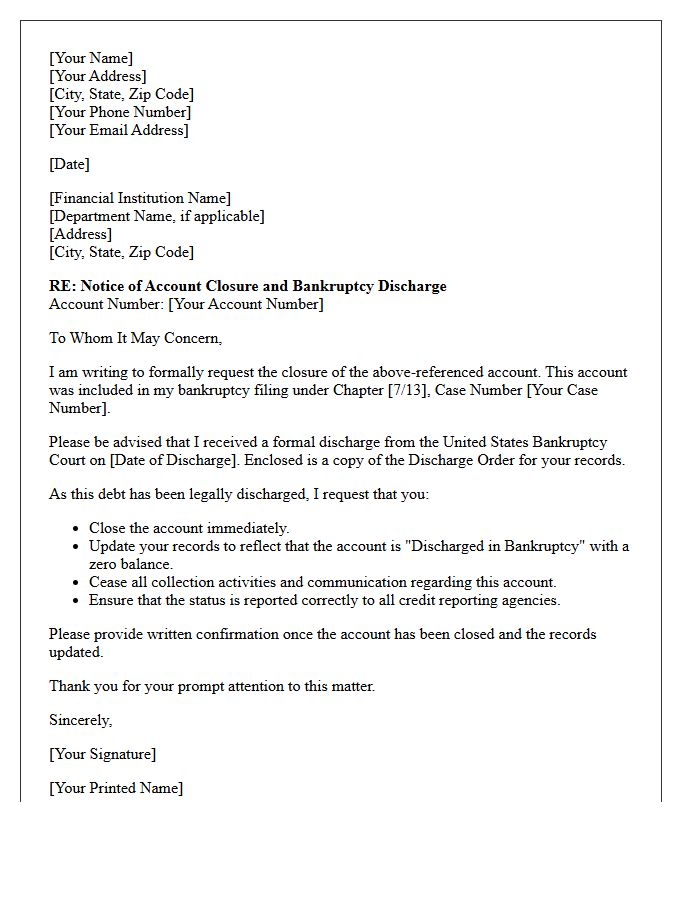
A Notice of Account Closure Following Bankruptcy Discharge Letter informs creditors that a debt has been legally released. Its primary goal is to ensure the discharge injunction is honored, preventing further collection attempts. Highlighting the case number and discharge date is essential for accuracy. Once received, creditors must update your credit report to show a zero balance. Sending this via certified mail provides a legal record, protecting your financial recovery and ensuring your credit history accurately reflects your post-bankruptcy status.
Collection Agency Bankruptcy Discharge Acknowledgment Letter
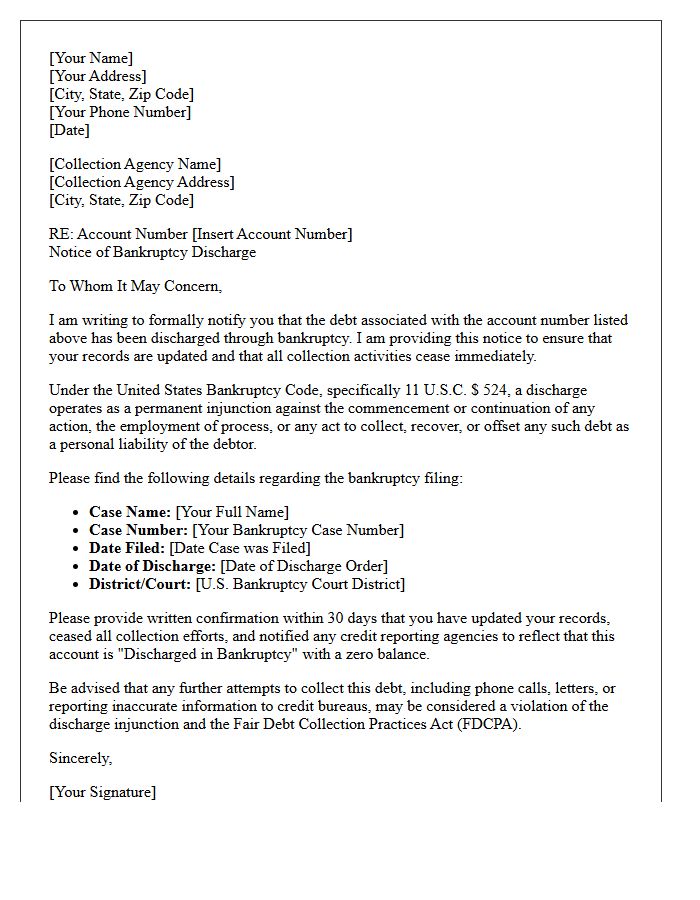
A Collection Agency Bankruptcy Discharge Acknowledgment Letter is a formal document confirming that a creditor has recognized a legal discharge of debts. It serves as essential proof that you are no longer personally liable for specific obligations following a court order. Receiving this acknowledgment ensures the agency stops all collection activities and updates your credit report to reflect a zero balance. Keeping this record is vital for consumer protection, as it prevents future harassment and helps rectify potential reporting errors regarding your financial standing after bankruptcy proceedings conclude.
Chapter Seven Bankruptcy Discharge Account Termination Letter
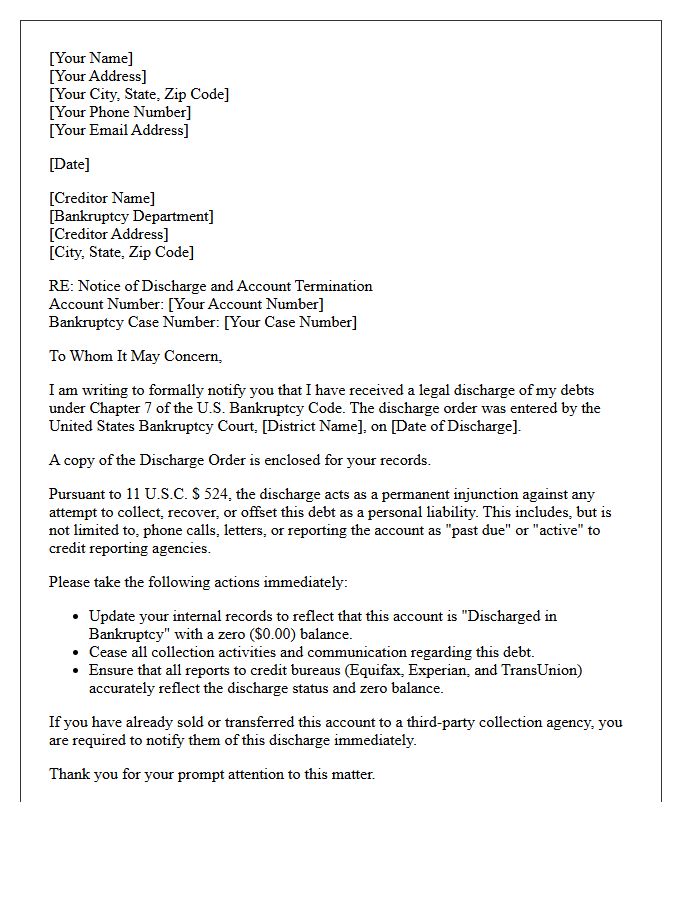
A Chapter Seven Bankruptcy Discharge Account Termination Letter is a formal notification sent to creditors to halt collection efforts on discharged debts. It serves as legal proof that the automatic stay or final discharge injunction has permanently eliminated your personal liability. Providing this document ensures your credit report reflects a zero balance and prevents illegal post-bankruptcy solicitation. It is essential to include your case number and the specific court order to guarantee that the lender updates their records and formally closes the account according to federal bankruptcy laws.
Chapter Thirteen Discharge Collection Cease and Closure Letter
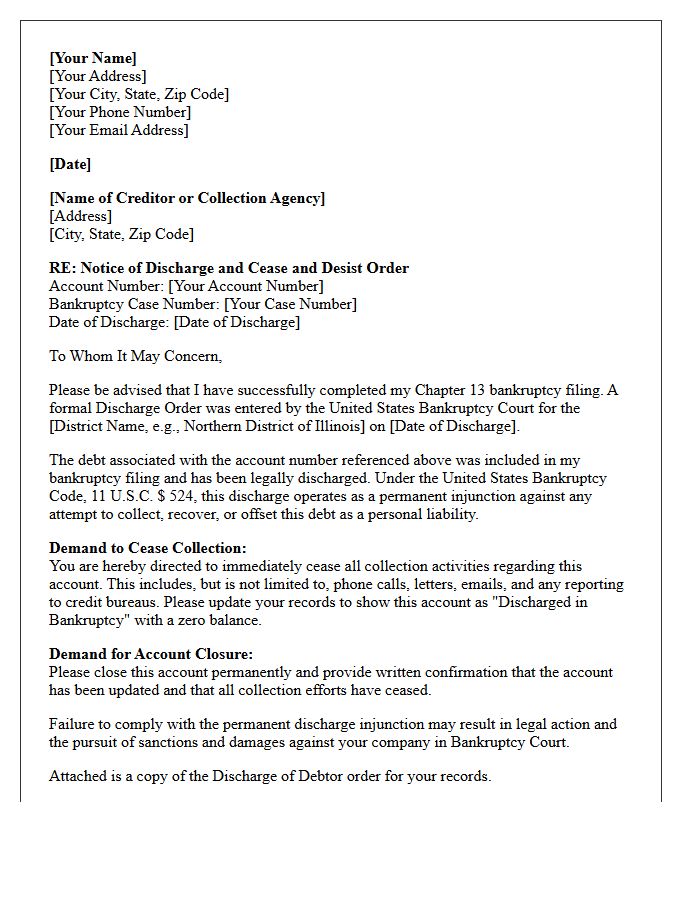
A Chapter 13 Discharge marks the successful completion of your court-approved payment plan. Upon receiving the Closure Letter, all creditors subject to the bankruptcy must legally cease collection efforts indefinitely. This document serves as official proof that your qualifying unsecured debts are eliminated and the case is finalized. It is critical to retain this letter to dispute any future credit reporting errors or illegal attempts to collect discharged balances. Ensure your attorney confirms that all administrative requirements are met to prevent any delays in formal case closure.
Post-Bankruptcy Discharge Account Resolution Letter
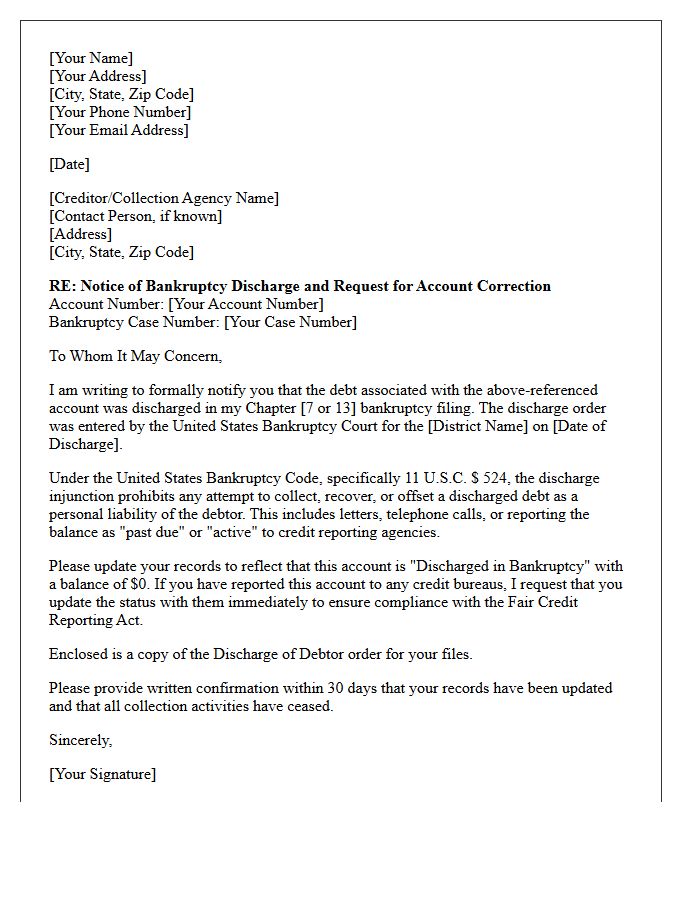
A Post-Bankruptcy Discharge Account Resolution Letter is a vital legal tool used to inform creditors that a debt has been legally eliminated. Once you receive your discharge order, you must send this formal notice to any lender reporting incorrect balances. It serves to enforce the discharge injunction, preventing further collection attempts or credit reporting errors. Including a copy of the court decree ensures that your credit report is updated to reflect a zero balance, which is essential for successfully rebuilding your financial future after filing for bankruptcy.
Discharged Debt Final Account Closure Letter
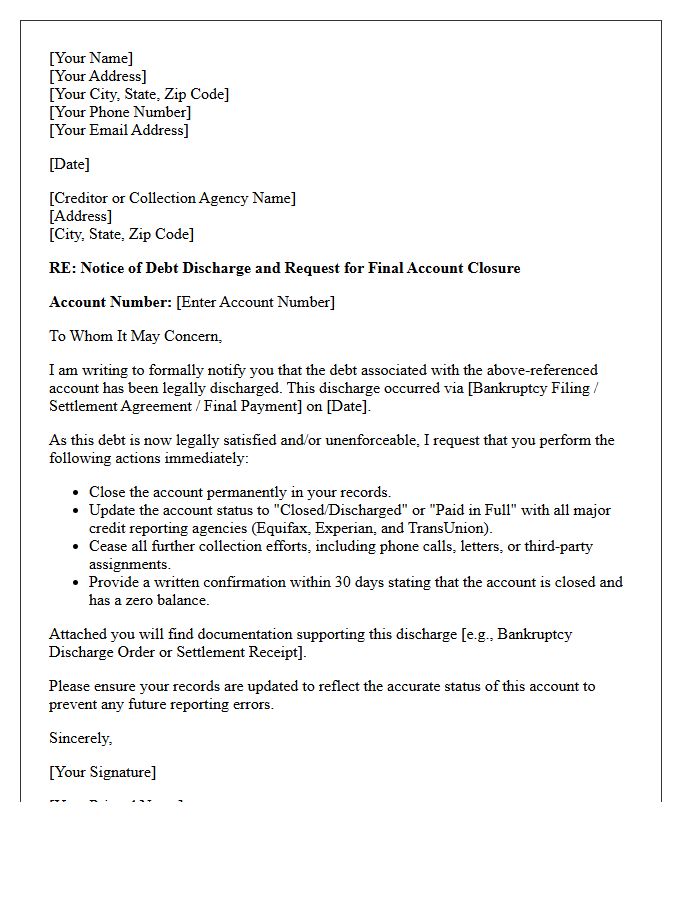
A Discharged Debt Final Account Closure Letter is a critical document confirming that your legal obligation to pay a specific debt has ended. This letter serves as formal proof that the account is permanently closed with a zero balance following bankruptcy or a settlement. It protects you against future collection attempts and serves as vital evidence for credit report corrections. Always retain the original copy to ensure your financial records accurately reflect that the debt is legally satisfied and no longer outstanding.
Consumer Notice of Bankruptcy Discharge Account Closure Letter
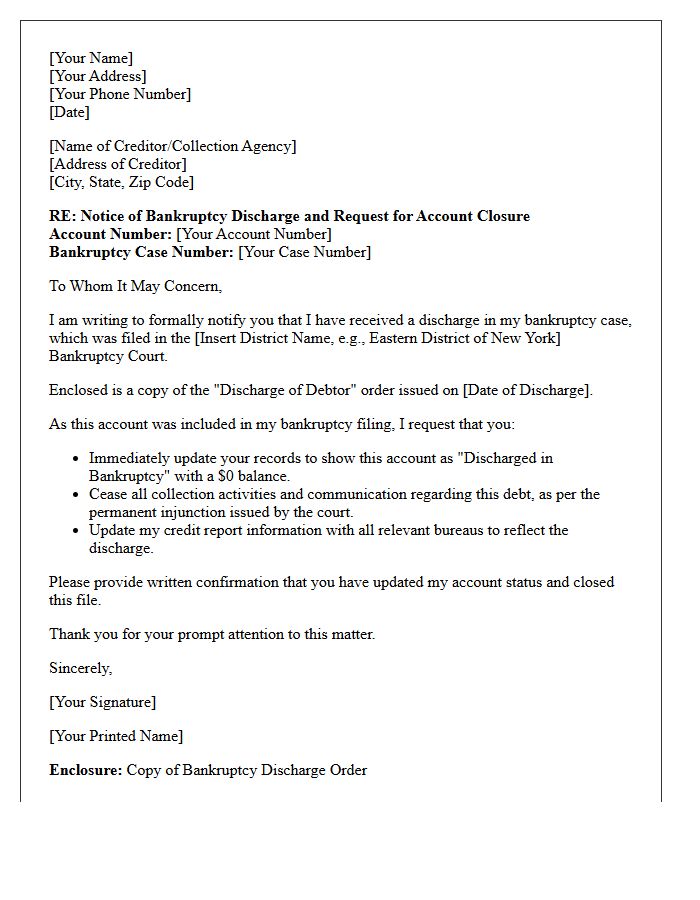
A Bankruptcy Discharge Account Closure Letter serves as formal legal notification to creditors that a debt has been officially canceled by the court. Sending this document ensures lenders update their records to reflect a zero balance and cease all collection activities. It is essential for protecting your consumer rights under federal law, preventing unlawful post-discharge communication, and ensuring accurate credit reporting. Retaining proof of delivery helps resolve future disputes regarding discharged debts and facilitates the process of rebuilding your financial standing after the bankruptcy case is finalized.
Zero Balance Bankruptcy Discharge Confirmation Letter
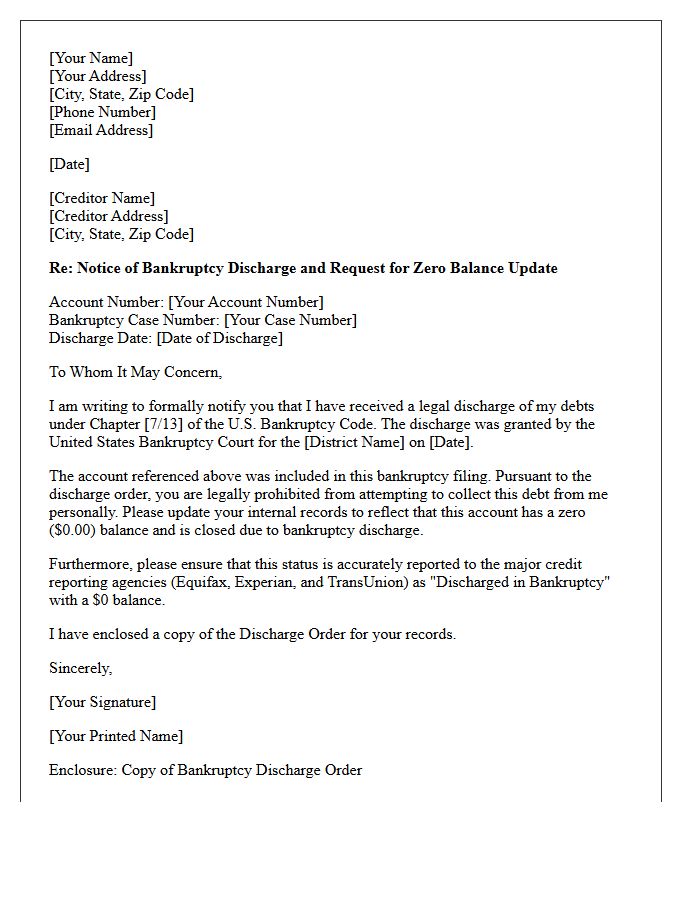
A Zero Balance Bankruptcy Discharge Confirmation Letter is a critical legal document confirming that a bankruptcy discharge has been successfully finalized. It serves as official proof that your liability for qualified debts has been permanently eliminated. You must provide this discharge notice to credit bureaus and lenders to ensure your credit report accurately reflects a zero balance. Retaining this letter is vital for your financial recovery, as it protects you against future collection attempts on discharged accounts and facilitates the process of rebuilding your financial standing after legal proceedings conclude.
Debt Collection Cease Activity and Discharge Letter
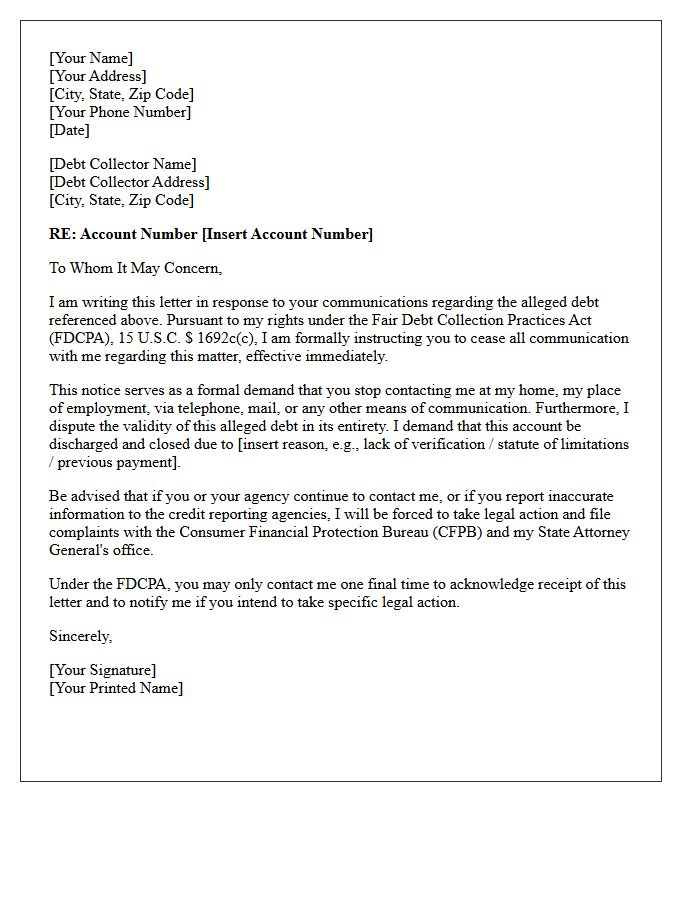
A Cease Activity and Discharge Letter is a formal legal notification sent to creditors or collection agencies. This document demands an immediate stop to all communication regarding a debt that has been legally discharged through bankruptcy or resolved via settlement. It serves as critical evidence that the consumer has exercised their rights under fair debt collection laws. Providing proof of discharge ensures the collector can no longer legally pursue payment, protecting the individual from harassment and potential legal action while preserving their financial peace of mind and credit standing.
Court Ordered Bankruptcy Discharge Account Update Letter
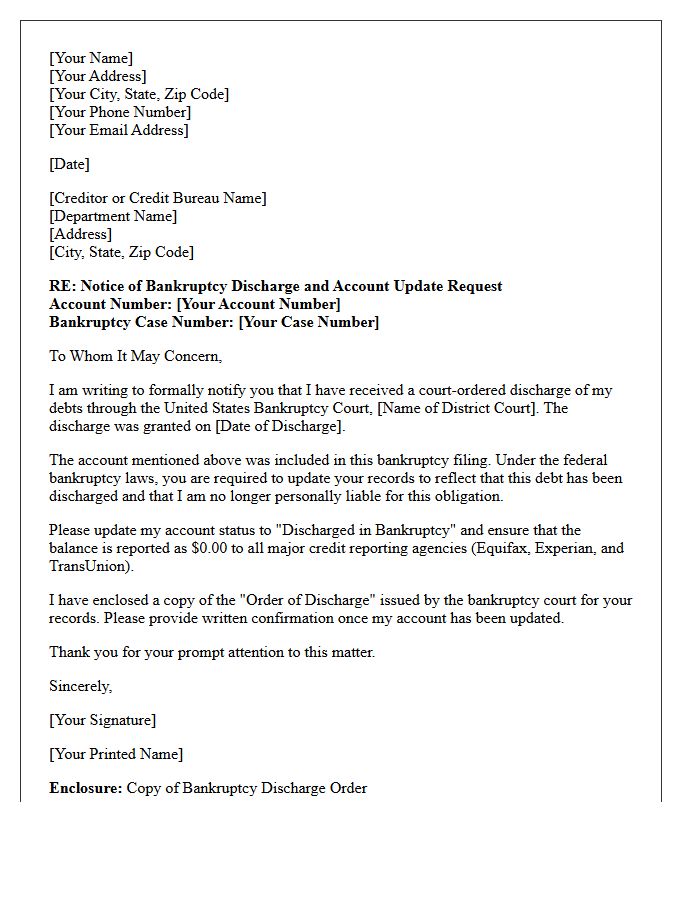
A Court Ordered Bankruptcy Discharge Account Update Letter is a critical document used to notify creditors that a bankruptcy discharge has been legally granted. Sending this formal notice ensures that credit bureaus and financial institutions update your credit report to reflect a zero balance. This prevents illegal collection attempts and helps in restoring your credit score by confirming the legal injunction against debt recovery. Accurate reporting is essential for your long-term financial recovery and protects your rights under federal bankruptcy laws.
Final Resolution and Bankruptcy Discharge Closure Letter
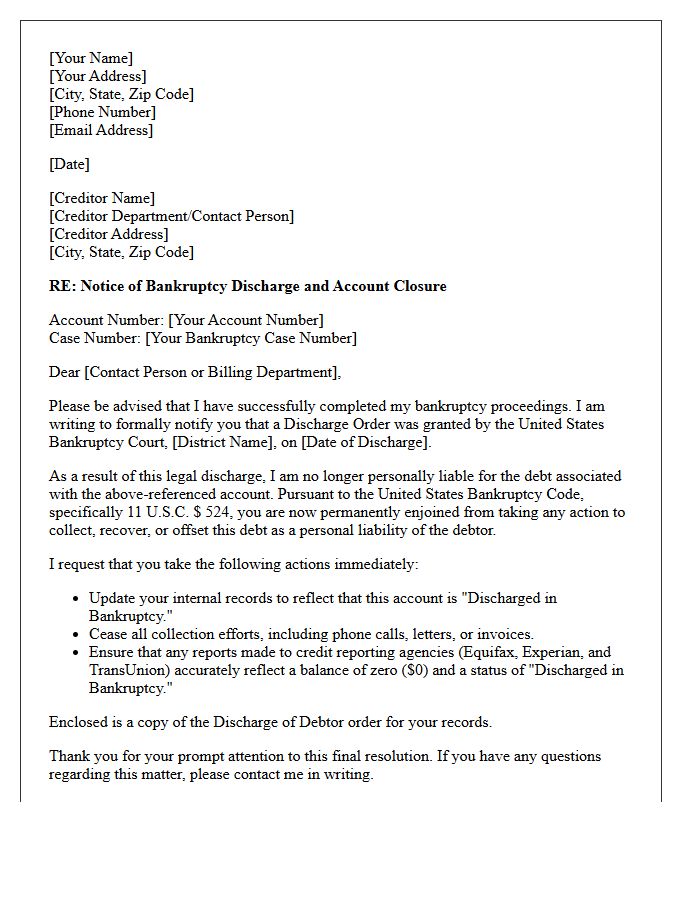
A Final Resolution and Bankruptcy Discharge Closure Letter is the essential legal document confirming your debt relief process is complete. It signifies that the court has released you from personal liability for dischargeable debts, providing a fresh financial start. Retain this letter to verify your status to creditors, correct credit reports, and prevent illegal collection attempts. This document serves as permanent proof that your case is formally closed, ensuring your financial protection and legal rights are fully restored under federal bankruptcy laws.
What is a Bankruptcy Discharge Account Closure Letter?
A Bankruptcy Discharge Account Closure Letter is a formal written notification sent to creditors or financial institutions informing them that a specific debt has been legally discharged by a bankruptcy court and requesting the official closure of the account on their records.
When should I send a discharge notification letter to my creditors?
You should send this letter immediately after receiving your formal Discharge Order from the bankruptcy court, especially if a creditor continues to report a balance, attempts to collect on the debt, or fails to update your account status to "Discharged in Bankruptcy."
What information must be included in an account closure letter after bankruptcy?
The letter should include your full name, your bankruptcy case number, the date of the discharge, the specific account number, and a copy of the court-issued Discharge Order to serve as legal proof that the debt is no longer collectible.
Can a creditor keep an account open after it has been discharged?
No. Once a debt is discharged, the creditor must stop all collection efforts and report the balance as zero. Sending a formal closure letter ensures the creditor updates their internal database and reports the correct "discharged" status to the major credit bureaus.
Does sending a bankruptcy discharge letter help repair my credit score?
Yes. By providing proof of discharge to creditors and credit bureaus, you ensure that accounts are accurately reported with a zero balance. Correcting these records prevents ongoing negative reporting of "past due" amounts, which is a critical step in rebuilding your credit post-bankruptcy.

Comments