
When a formal agreement is ignored, sending a formal demand for immediate payment is a critical legal step to recover owed funds. This process asserts your rights and establishes a clear deadline for settlement after a broken promise. To help you draft a professional notice quickly, below are some ready to use template.
Image cover: Final Notice: Demand for Immediate Payment After Failed Payment Agreement
Letter Samples List
- Demand Letter for Immediate Payment Following Broken Promise
- Broken Payment Arrangement Immediate Demand Letter
- Default on Promised Payment Final Demand Letter
- Immediate Payment Demand Letter for Broken Agreement
- Debt Collection Letter for Breached Payment Promise
- Final Notice Letter for Broken Payment Plan
- Urgent Demand Letter Following Defaulted Payment Promise
- Broken Promise to Pay Immediate Collection Letter
- Notice of Default and Immediate Demand Letter
- Breach of Settlement Agreement Demand Letter
- Failed Promise to Pay Immediate Action Letter
- Final Warning Letter for Broken Payment Commitment
- Accelerated Balance Demand Letter for Broken Promise
Demand Letter for Immediate Payment Following Broken Promise
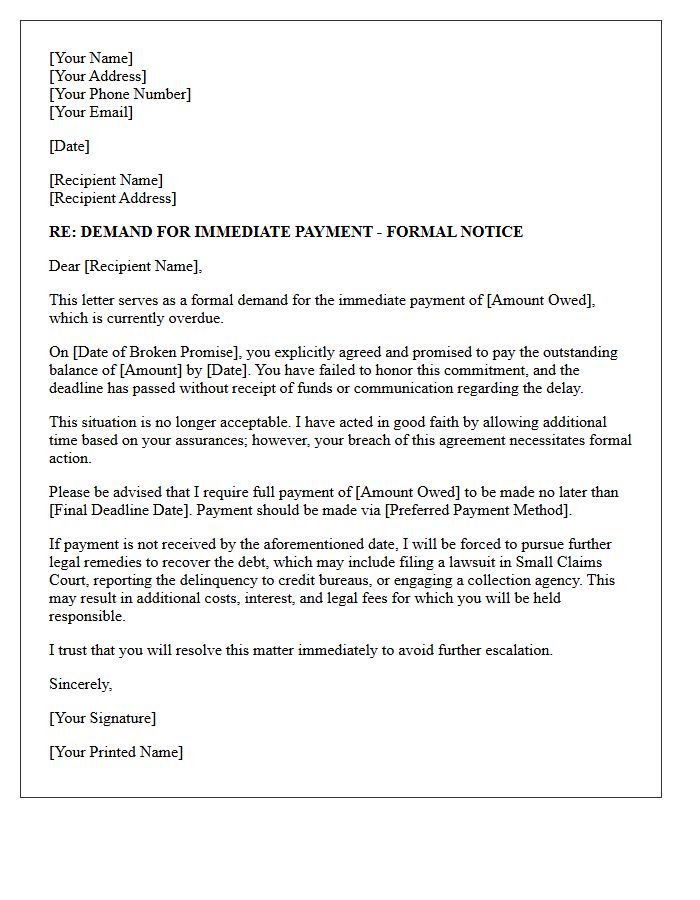
A demand letter serves as a formal legal notice asserting your right to immediate payment after a debtor violates a settlement or repayment agreement. This document highlights the broken promise, providing a clear timeline of the default and specifying the total amount due, including potential interest. It acts as a critical precursor to litigation, demonstrating your good faith effort to resolve the dispute out of court. Clearly stating that further legal action will follow ensures the recipient understands the severity of non-compliance regarding their financial obligations.
Broken Payment Arrangement Immediate Demand Letter
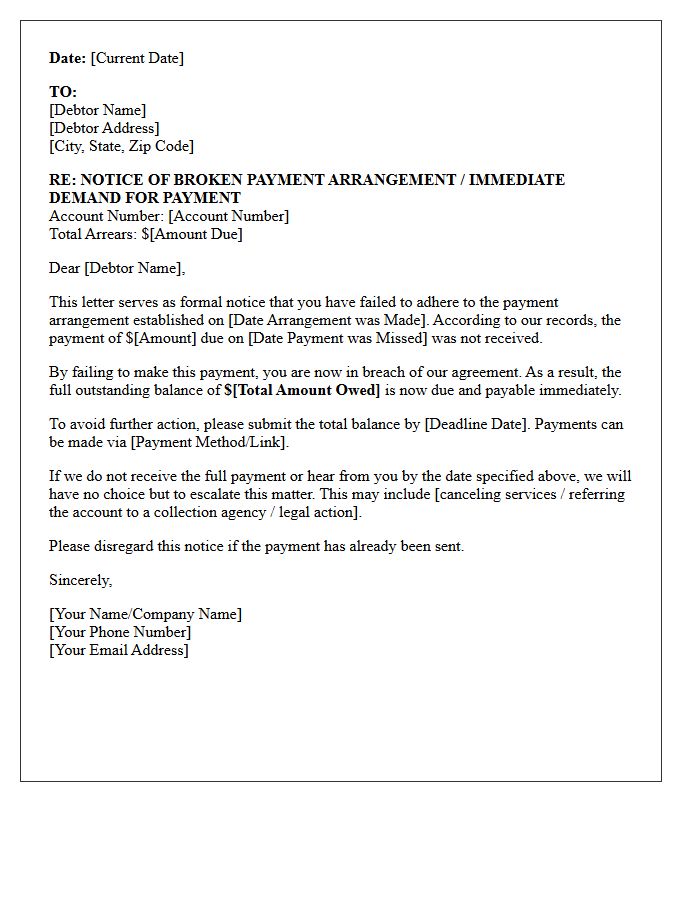
A Broken Payment Arrangement Immediate Demand Letter is a formal legal notice issued when a debtor fails to honor an agreed repayment schedule. Receiving this document signifies that the prior installment plan is void, and the entire outstanding balance is now due immediately. This letter serves as a final warning before the creditor initiates aggressive debt collection actions or legal proceedings. To prevent further escalation, such as credit score damage or lawsuits, the recipient must prioritize immediate communication or full settlement of the debt within the specified timeframe.
Default on Promised Payment Final Demand Letter
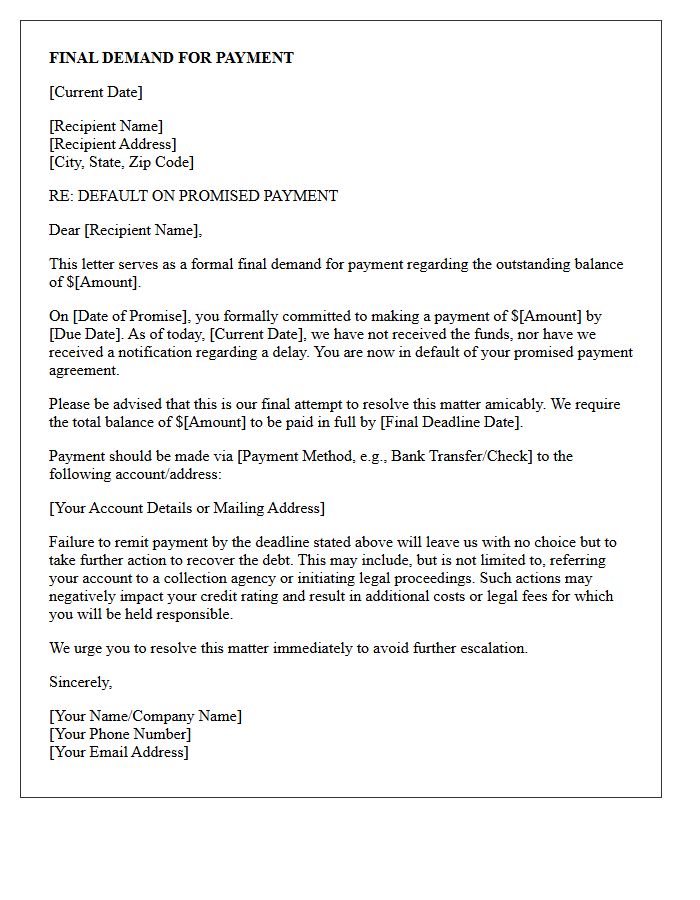
A Final Demand Letter for a defaulted payment is a critical formal notice issued before initiating legal action. It serves as a last opportunity for a debtor to settle outstanding debts and avoid litigation. This document must clearly state the original agreement terms, the specific amount overdue, and a firm deadline for restitution. Sending this letter demonstrates a good-faith attempt to resolve the dispute, which is often a mandatory procedural step required by courts. Failing to respond to this ultimatum typically results in credit damage or formal debt recovery proceedings.
Immediate Payment Demand Letter for Broken Agreement
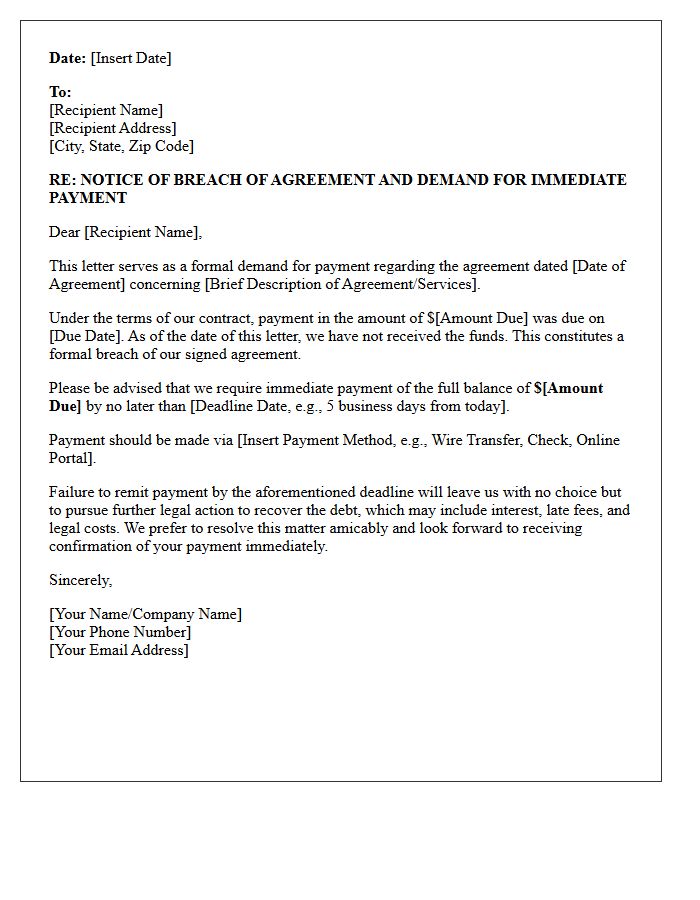
An Immediate Payment Demand Letter serves as a formal notice to resolve a breach of contract. It clearly outlines the violated terms, the outstanding balance, and a specific deadline for restitution. This document acts as crucial evidence should legal action become necessary, demonstrating a good-faith effort to collect debts. By explicitly stating potential consequences, such as litigation or credit reporting, it incentivizes the recipient to fulfill their financial obligations promptly to avoid further legal escalation and additional costs associated with a broken agreement.
Debt Collection Letter for Breached Payment Promise
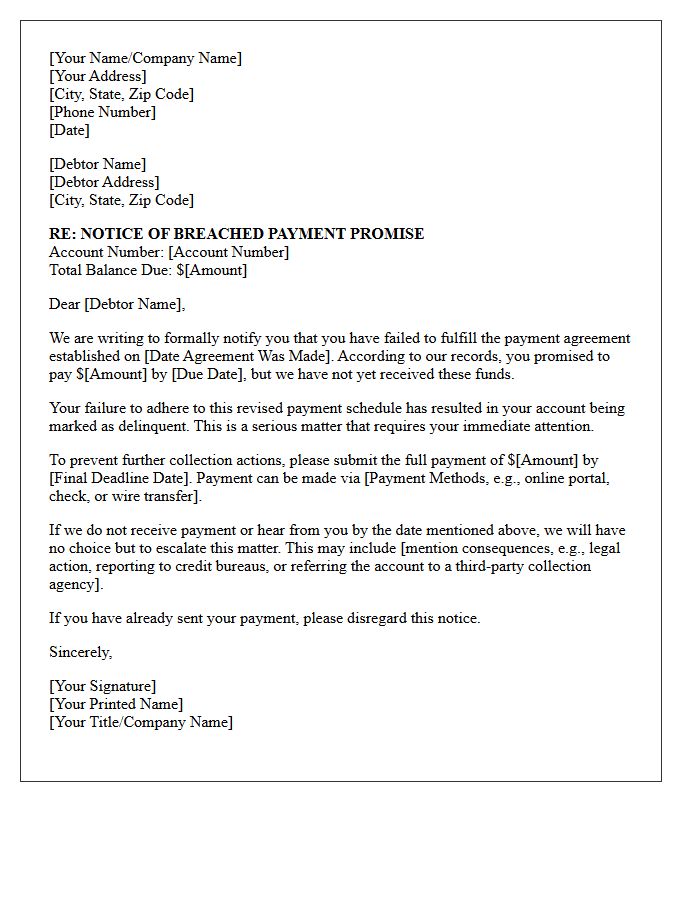
A debt collection letter for a breached payment promise serves as a formal notice that a legally binding agreement has been violated. When a debtor fails to uphold a repayment schedule, the creditor must document the default to protect their rights. This letter outlines the original terms, the specific missed installment, and the outstanding balance. It is a critical step in debt recovery, providing a final opportunity for the debtor to settle the arrears before the account is escalated to a collection agency or results in formal legal action.
Final Notice Letter for Broken Payment Plan
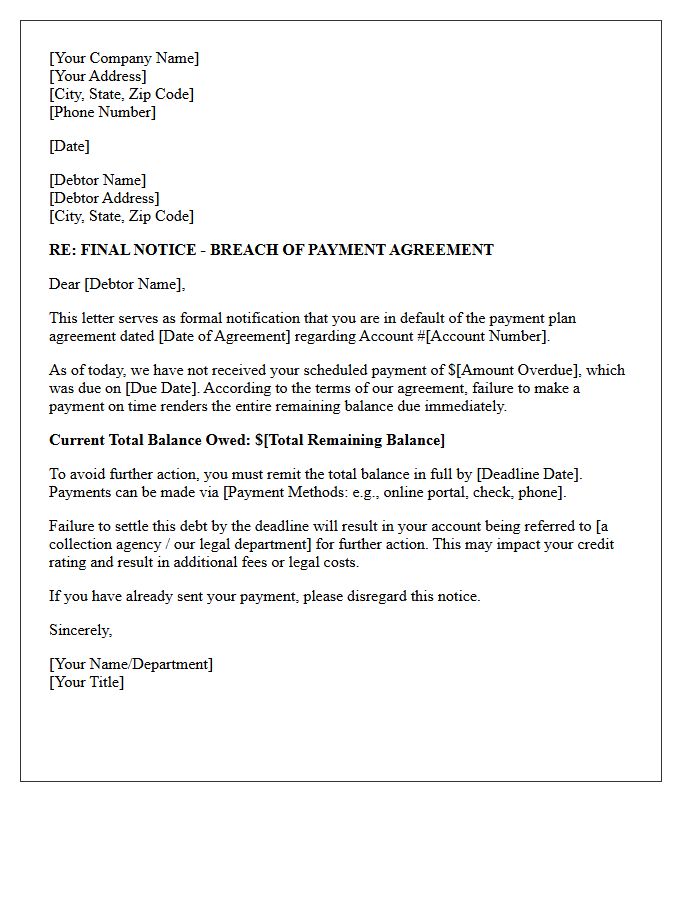
A Final Notice Letter serves as a critical warning that a payment plan has officially defaulted. This formal document notifies the debtor that previous agreements are void due to missed installments. It provides a final opportunity to settle the outstanding balance before the account moves to legal action or a third-party collection agency. To avoid severe credit score damage and additional litigation fees, the recipient must respond immediately or pay the full amount. Ignoring this notice typically results in the termination of all amicable negotiation efforts.
Urgent Demand Letter Following Defaulted Payment Promise
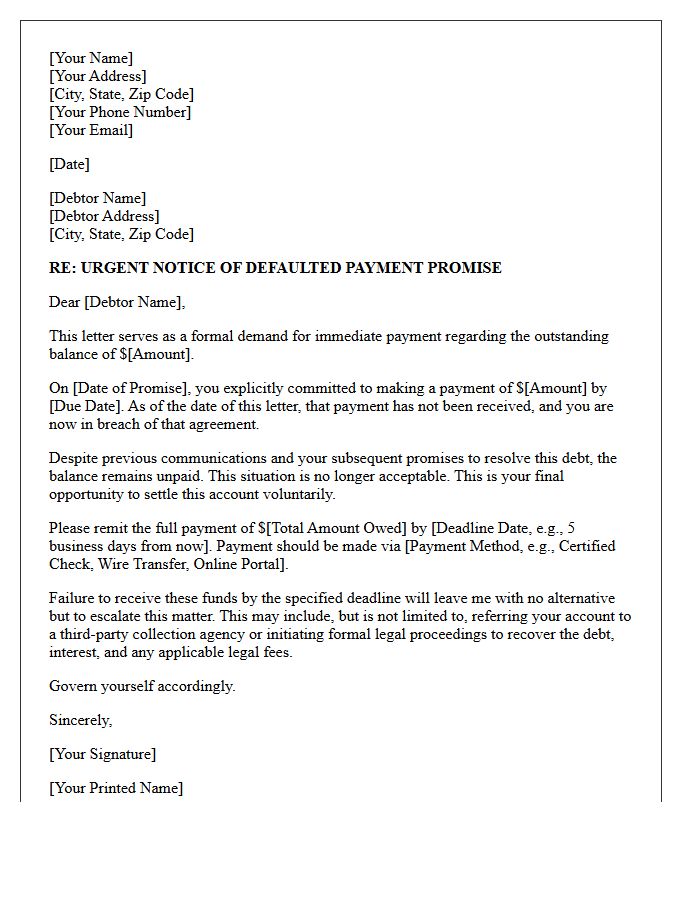
An Urgent Demand Letter serves as a formal final notice after a broken payment promise. It transitions the dispute from informal communication to a legal record, establishing a clear deadline for settlement. To be effective, the document must detail the specific amount owed, the original due date, and the failed commitment. This letter is a critical step in debt collection, signaling your intent to escalate the matter to litigation or a collections agency if immediate payment is not received. It provides essential evidence of your legal compliance and attempts to resolve the debt amicably.
Broken Promise to Pay Immediate Collection Letter
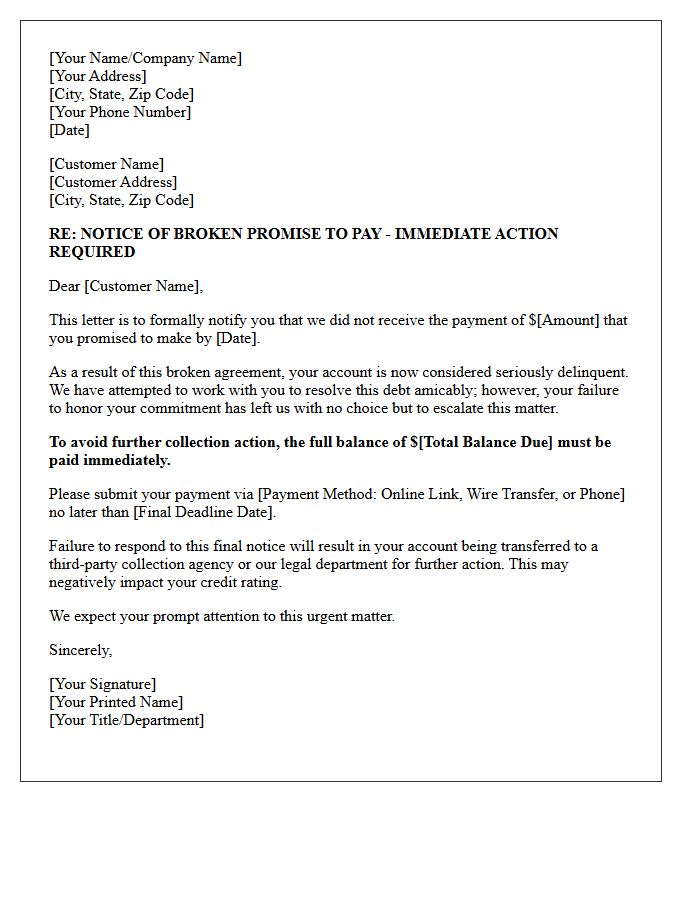
Receiving a Broken Promise to Pay Immediate Collection Letter signifies that a debtor failed to fulfill a prior installment agreement. This notice acts as a final demand, typically voiding previous payment plans and triggering aggressive recovery actions. To avoid legal escalation or credit damage, you must contact the agency immediately to settle the balance or provide proof of payment. Ignoring this formal warning often leads to wage garnishment or asset seizure, as the creditor now views the account as a high-risk priority for debt recovery.
Notice of Default and Immediate Demand Letter
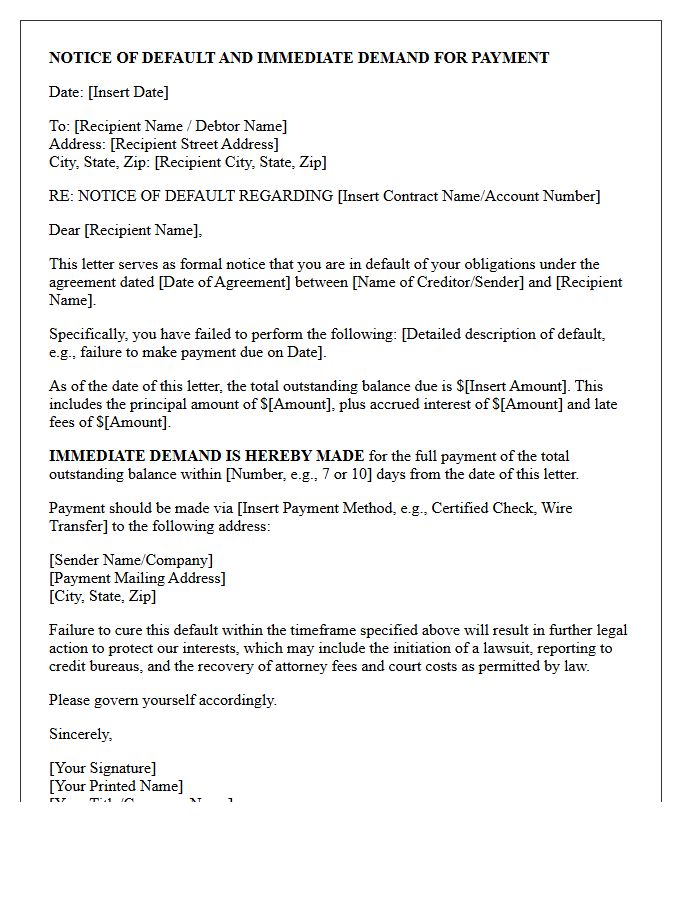
A Notice of Default and Immediate Demand Letter is a critical legal notification sent when a borrower fails to meet contractual obligations. This formal document serves as an official warning that the loan is in arrears, demanding the full repayment of the debt within a specific timeframe. Receiving this notice is the final step before a creditor initiates foreclosure or legal action. It is essential to respond promptly or seek legal counsel to explore loss mitigation options and avoid the permanent loss of property or assets.
Breach of Settlement Agreement Demand Letter
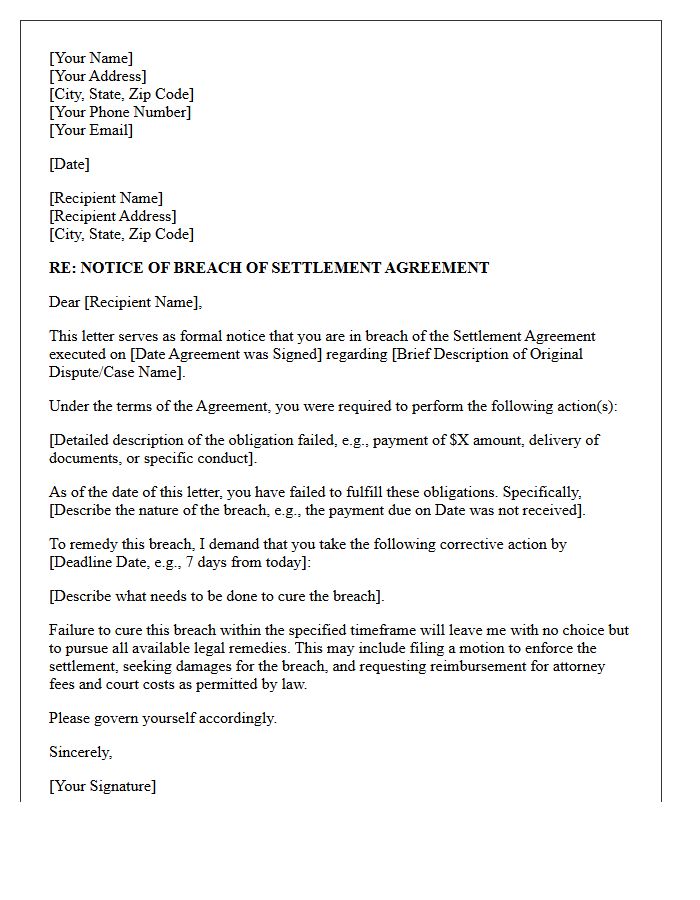
A Breach of Settlement Agreement Demand Letter is a formal legal notice issued when a party fails to fulfill their obligations under a signed contract. This document serves as a final warning to enforce compliance and resolve the dispute before initiating litigation. It must clearly identify the specific breached terms, provide a strict deadline for remedy, and outline potential legal consequences. Sending this letter is a critical step to demonstrate good faith efforts in court while protecting your contractual rights and securing the performance or payment originally promised.
Failed Promise to Pay Immediate Action Letter
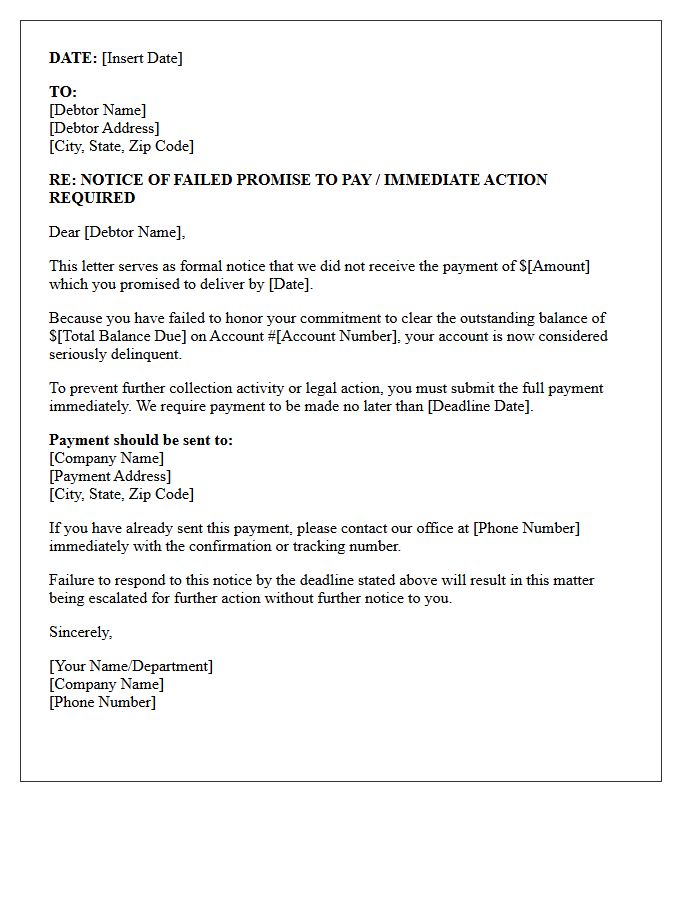
A Failed Promise to Pay Immediate Action Letter is a formal notification sent when a debtor breaches a prior repayment agreement. This urgent document serves as a final warning, demanding immediate settlement to avoid escalating the collection process. It signals that initial leniency has ended and that the creditor is prepared to pursue legal action or credit reporting consequences. Recipients must respond quickly to prevent further financial penalties or litigation. Clear documentation of the broken promise strengthens the creditor's position if the dispute moves to a formal court hearing.
Final Warning Letter for Broken Payment Commitment
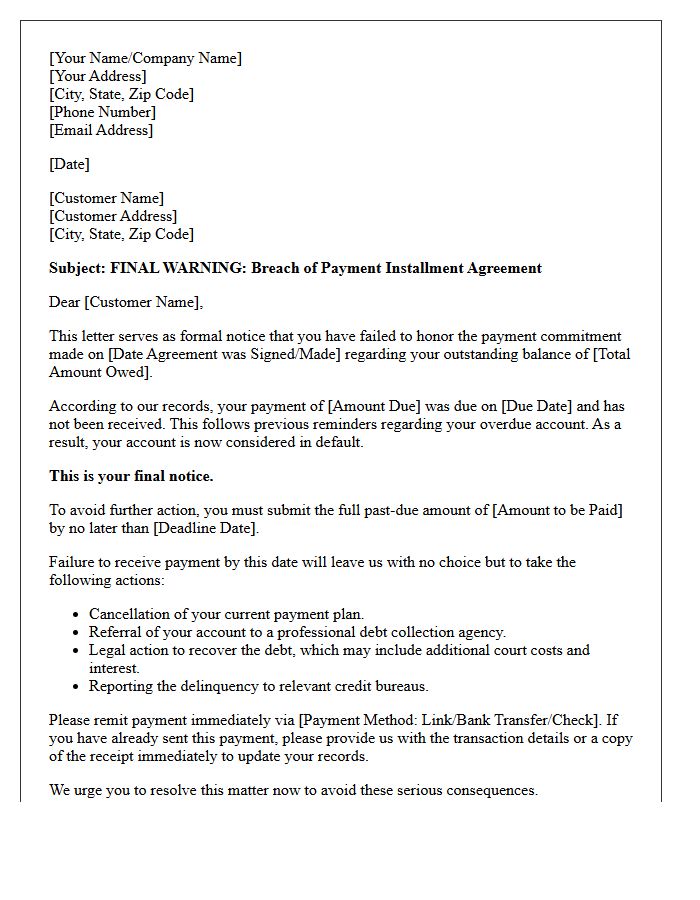
A final warning letter for a broken payment commitment is a formal notice issued when a debtor fails to honor an agreed-upon repayment schedule. This document serves as the last attempt to settle outstanding arrears before the creditor initiates legal action or debt recovery procedures. It outlines the total amount due, specifies a strict deadline for payment, and details the consequences of further non-compliance. Receiving this letter indicates that the amicable negotiation phase has ended, making immediate communication or full settlement essential to avoid litigation and negative impacts on credit ratings.
Accelerated Balance Demand Letter for Broken Promise
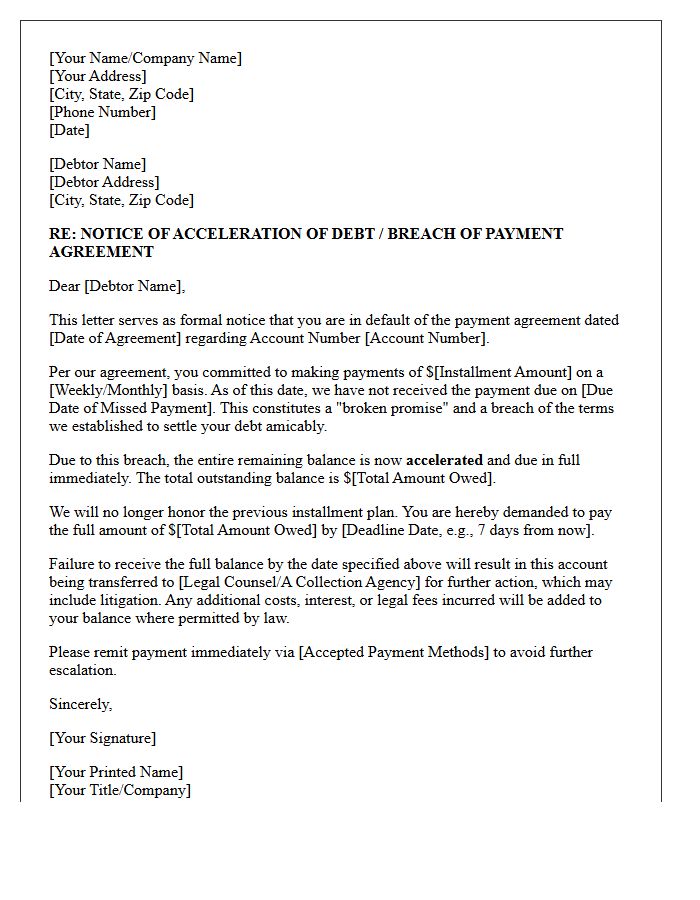
An Accelerated Balance Demand Letter is a formal legal notice issued when a borrower fails to fulfill a repayment agreement. This "broken promise" triggers an acceleration clause, making the entire remaining balance due immediately rather than in installments. It serves as a final warning before the creditor pursues aggressive litigation or debt collection actions. Receiving this letter indicates that the grace period has ended, and the creditor is no longer accepting partial payments, requiring immediate settlement of the total debt to avoid further legal consequences.
What happens if a debtor breaks a promise to pay?
When a debtor fails to uphold a payment agreement, the creditor can issue a demand for immediate payment. This typically revokes any previous installment arrangements and requires the full outstanding balance to be settled instantly to avoid further legal action.
Is a demand for immediate payment legally enforceable after a broken promise?
Yes, if a formal payment plan was breached, the creditor generally has the right to demand the full amount. Documentation of the original debt, the broken promise, and the subsequent demand notice serve as critical evidence for legal recovery or debt collection proceedings.
Can interest be added to a demand for immediate payment?
Interest can often be added to the total demand if the original contract or local laws allow for late fees and accruals. Following a broken promise, many creditors include these costs as part of the final demand for immediate payment to cover the loss of time and resources.
What is the notice period for a demand for immediate payment?
While the demand is for "immediate" payment, most formal notices provide a specific deadline-often 3 to 7 days-before the account is referred to a collection agency or a lawsuit is filed. This acts as a final opportunity for the debtor to rectify the broken promise.
What are the consequences of ignoring a demand for immediate payment?
Ignoring a demand following a broken promise usually leads to escalated collection efforts, such as credit score damage, the filing of a civil summons, or wage garnishment. Resolving the demand immediately is the best way to prevent additional legal expenses and long-term financial penalties.

Comments