
A Notification of Delinquency on Renegotiated Terms is a formal notice sent when a debtor fails to meet payment obligations previously adjusted through a workout agreement. This document serves as a critical legal record to protect creditor rights while demanding immediate compliance with the modified schedule. Effectively managing these defaults ensures financial transparency and debt recovery. Below are some ready to use templates.
Image cover: Notice of Delinquency for Revised Payment Agreements: Templates and Samples
Letter Samples List
- First Notice of Delinquency on Renegotiated Terms Letter
- Default on Modified Payment Plan Notification Letter
- Breach of Renegotiated Settlement Agreement Letter
- Immediate Action Required for Renegotiated Account Delinquency Letter
- Warning Letter Regarding Missed Payment on Modified Terms
- Revocation of Renegotiated Terms Due to Delinquency Letter
- Final Demand Letter for Defaulted Restructured Debt
- Reinstatement Offer Letter for Delinquent Renegotiated Account
- Notice of Escalation Letter for Broken Payment Arrangement
- Cancellation of Forbearance Agreement Notification Letter
- Overdue Balance Letter on Restructured Collection Account
- Legal Action Warning Letter for Renegotiated Terms Default
First Notice of Delinquency on Renegotiated Terms Letter
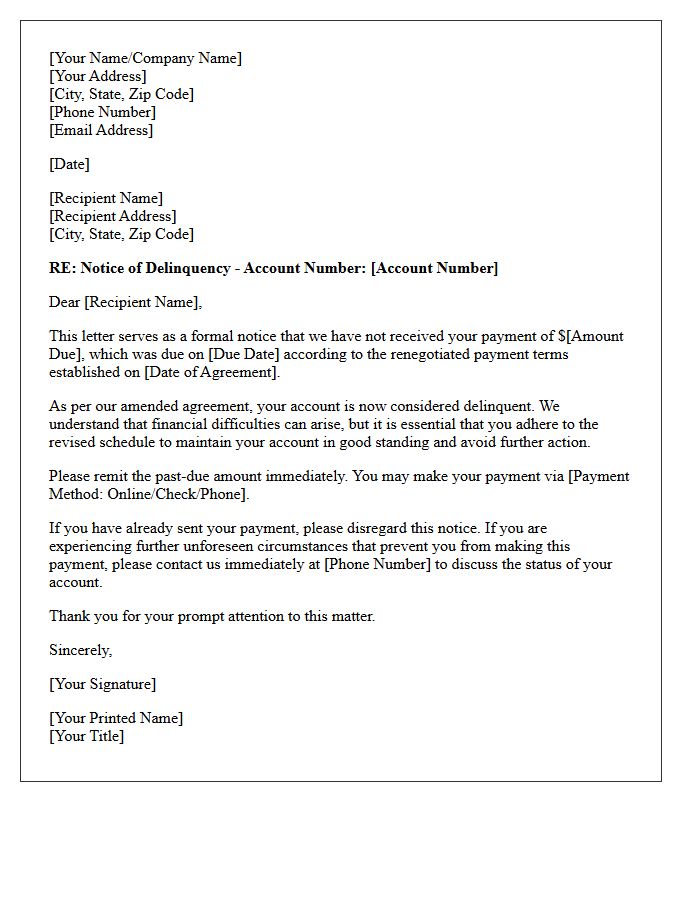
A First Notice of Delinquency on Renegotiated Terms Letter is a formal notification sent when a borrower fails to meet the specific payment conditions established in a loan modification agreement. This document serves as a legal warning that the previous concession is at risk of cancellation. It highlights the exact amount overdue and provides a deadline to rectify the breach. Failing to address this notice promptly can lead to acceleration of the debt or immediate foreclosure actions, as the lender has already granted prior leniency through the renegotiated terms.
Default on Modified Payment Plan Notification Letter
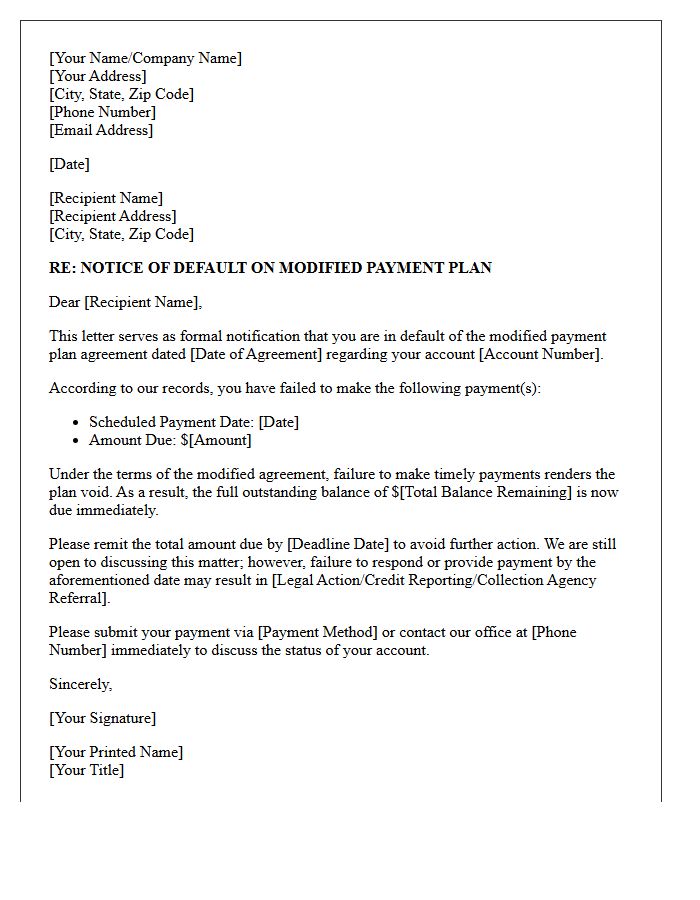
A Default on Modified Payment Plan Notification Letter is a formal notice sent when a borrower fails to meet the revised terms of a repayment agreement. This document warns that the temporary relief period has ended due to missed installments. Consequently, the lender may revoke lowered interest rates or extended terms, reverting the account to its original, more demanding obligations. It is critical to contact the creditor immediately upon receipt to discuss reinstatement options and avoid aggressive collection actions or permanent damage to your credit score.
Breach of Renegotiated Settlement Agreement Letter
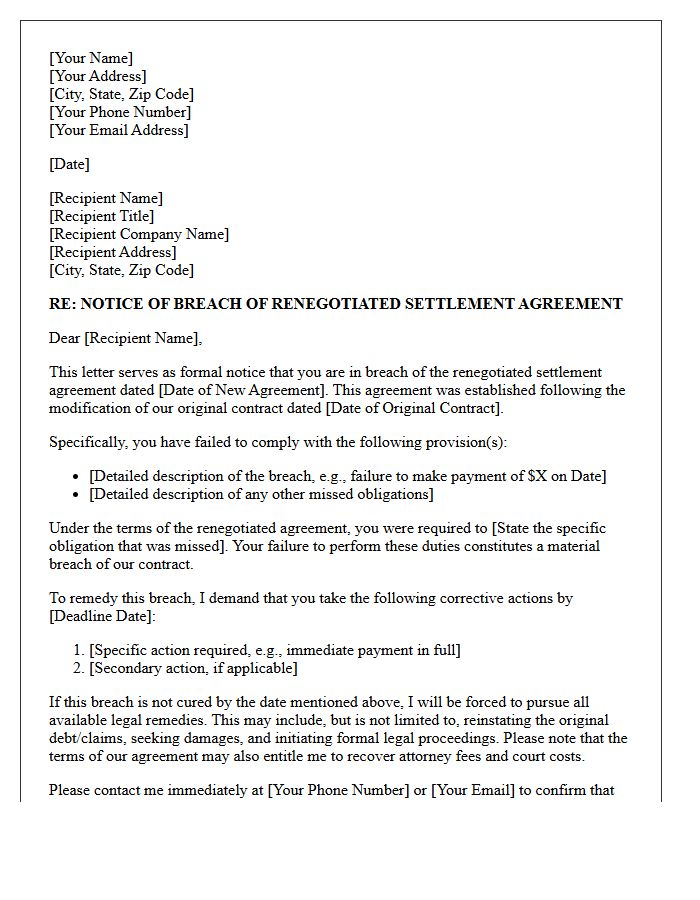
A breach of renegotiated settlement agreement letter is a formal notice issued when a party fails to uphold newly modified terms previously agreed upon to resolve a dispute. This document serves as legal evidence of non-compliance, clearly outlining the specific violations and demanding immediate rectification. It is essential for protecting your rights, as it often acts as a mandatory precondition for litigation or enforcing original penalties. Sending this letter establishes a clear timeline of the breach, helping to secure a remedy through further negotiation or court intervention.
Immediate Action Required for Renegotiated Account Delinquency Letter
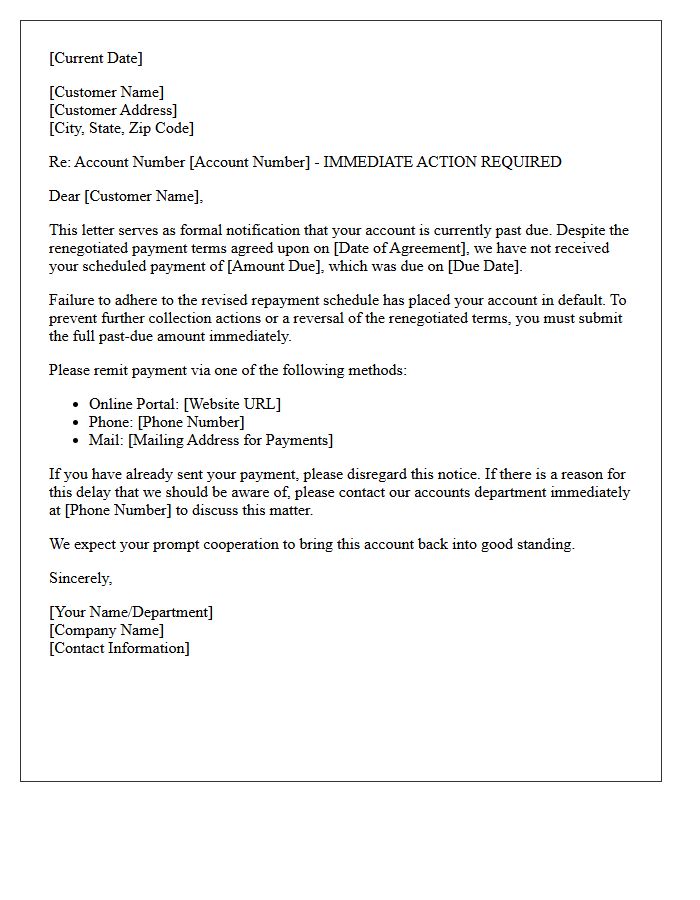
If you receive an Immediate Action Required notice for a renegotiated account delinquency, you must act instantly to prevent legal escalation or credit damage. This letter indicates that a previous settlement or payment plan has defaulted. To protect your financial standing, contact the creditor immediately to verify the balance and discuss reinstatement options. Ignoring this formal demand can lead to debt acceleration, resulting in the full amount becoming due immediately. Prompt communication is the most effective way to resolve the breach and secure a new repayment agreement.
Warning Letter Regarding Missed Payment on Modified Terms
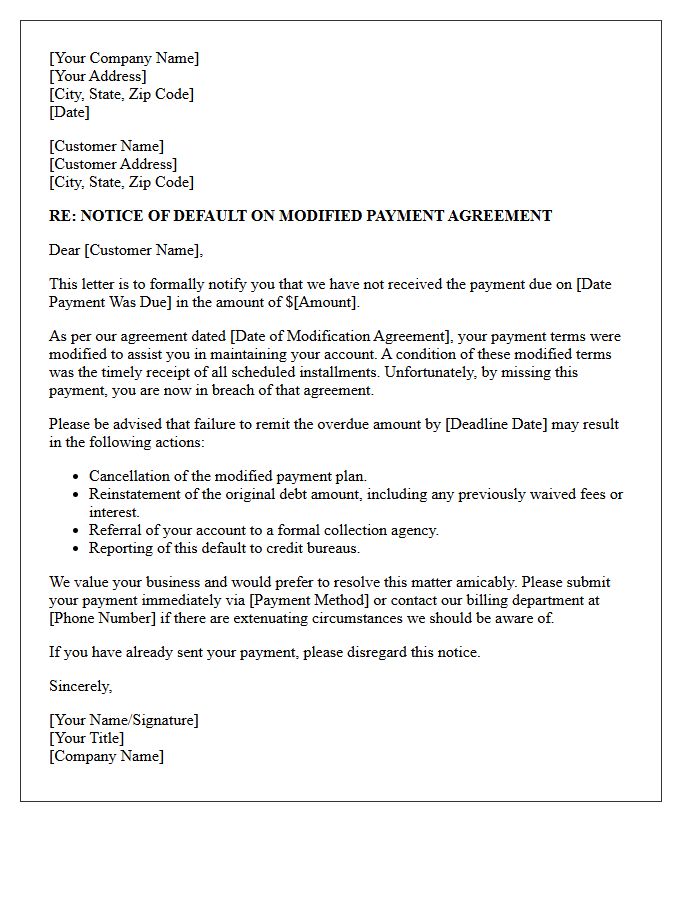
A Warning Letter serves as a formal notice that you have breached your modified payment agreement. It is critical to act immediately because missing payments on restructured terms often voids the concession, potentially triggering debt acceleration or legal action. To protect your credit score and avoid foreclosure or repossession, contact your creditor instantly to explain the hardship. Prompt communication may allow for a one-time waiver or a further renegotiation before the account is officially marked as defaulted and sent to collections.
Revocation of Renegotiated Terms Due to Delinquency Letter
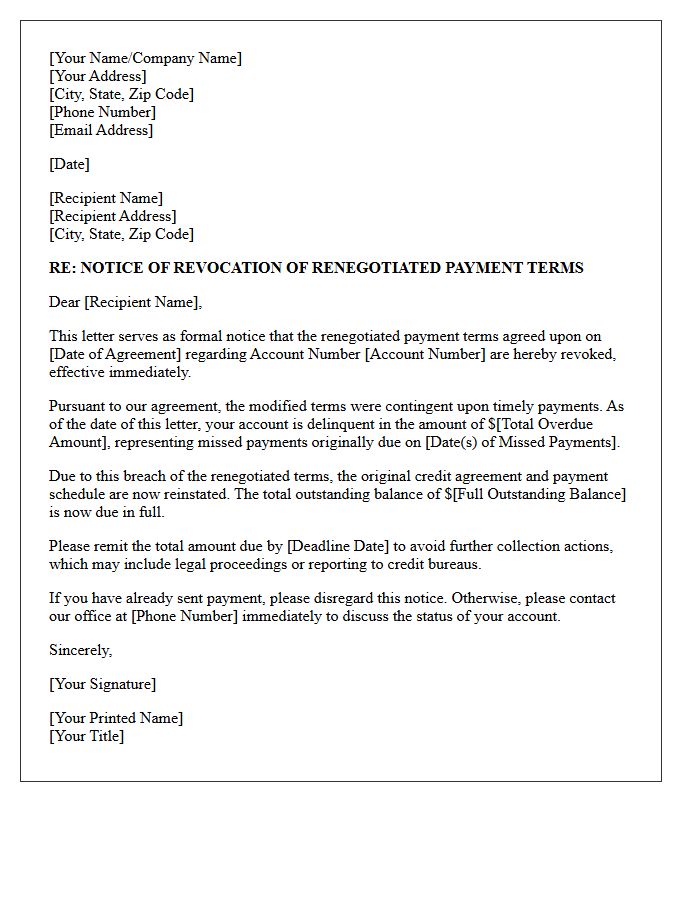
A Revocation of Renegotiated Terms Due to Delinquency Letter serves as a formal notice that a previously agreed-upon payment plan or loan modification is being canceled. This occurs when a debtor fails to meet the new repayment obligations stipulated in the renegotiation agreement. Once revoked, the original, often more demanding, debt terms are typically reinstated immediately. It is a critical legal warning that the creditor may now pursue aggressive collection actions, such as foreclosure, repossession, or legal proceedings, because the borrower breached the secondary good-faith arrangement.
Final Demand Letter for Defaulted Restructured Debt
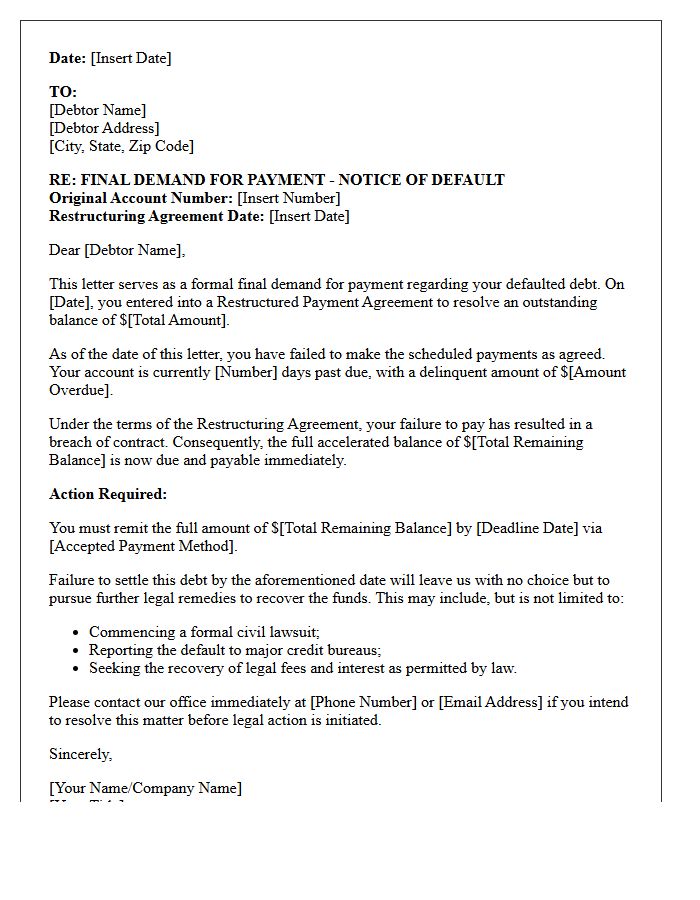
A final demand letter for defaulted restructured debt serves as a formal legal notice issued after a borrower fails to adhere to revised payment terms. This critical document warns that the creditor will initiate litigation or debt recovery actions if the outstanding balance is not settled within a specified timeframe. It outlines the breach of the modified agreement, the total amount due including interest, and potential consequences such as asset seizure. Receiving this letter indicates that legal acceleration is imminent, making immediate communication or payment essential to avoid further judicial proceedings.
Reinstatement Offer Letter for Delinquent Renegotiated Account
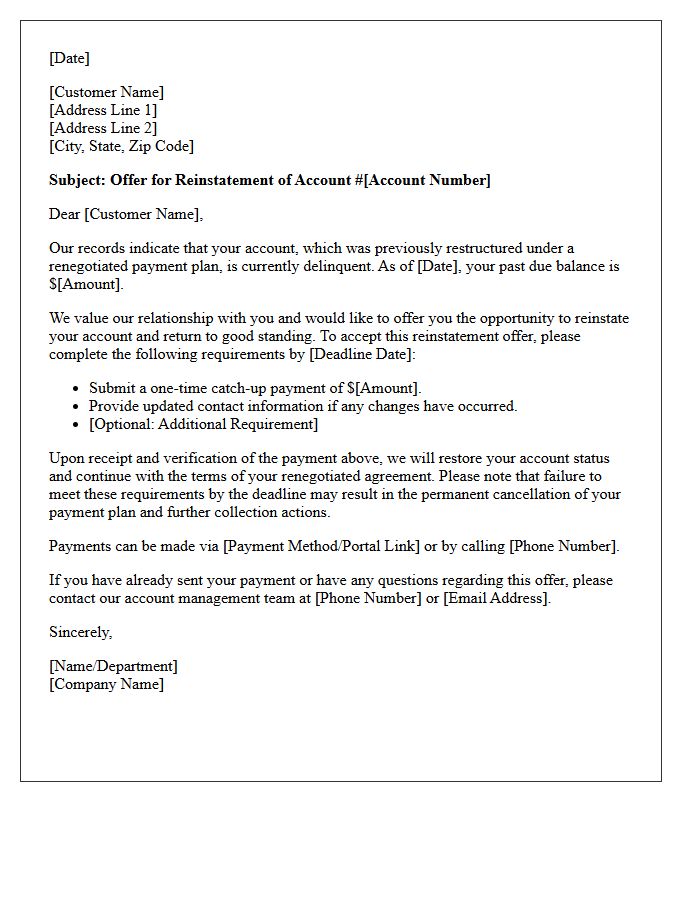
A Reinstatement Offer Letter is a formal document allowing borrowers to restore a delinquent renegotiated account to current status. It outlines the specific past-due balance, late fees, and the deadline required to stop legal action or foreclosure. By fulfilling these terms, you reinstate the original modified agreement. It is crucial to verify that all payment terms align with your financial capacity, as failure to comply usually results in immediate default and loss of the account's restructured benefits.
Notice of Escalation Letter for Broken Payment Arrangement
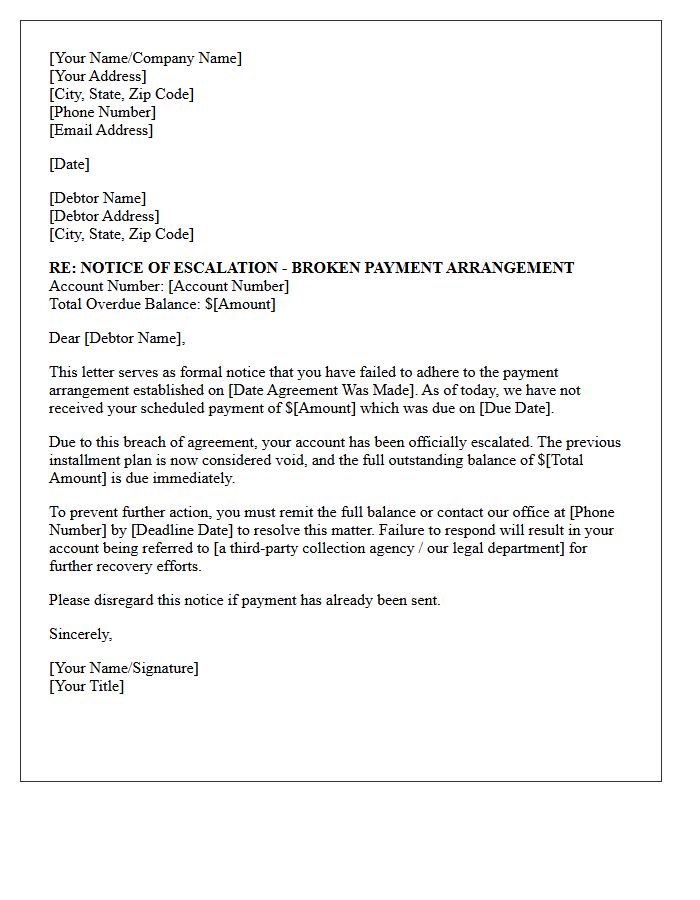
A Notice of Escalation is a formal legal warning issued when a debtor fails to honor a previously agreed-upon payment plan. This document signifies that the account is moving toward more aggressive recovery actions, such as litigation, credit bureau reporting, or third-party collection agencies. To prevent further financial penalties or legal proceedings, it is critical to contact the creditor immediately to renegotiate terms or settle the outstanding balance before the specified deadline expires.
Cancellation of Forbearance Agreement Notification Letter
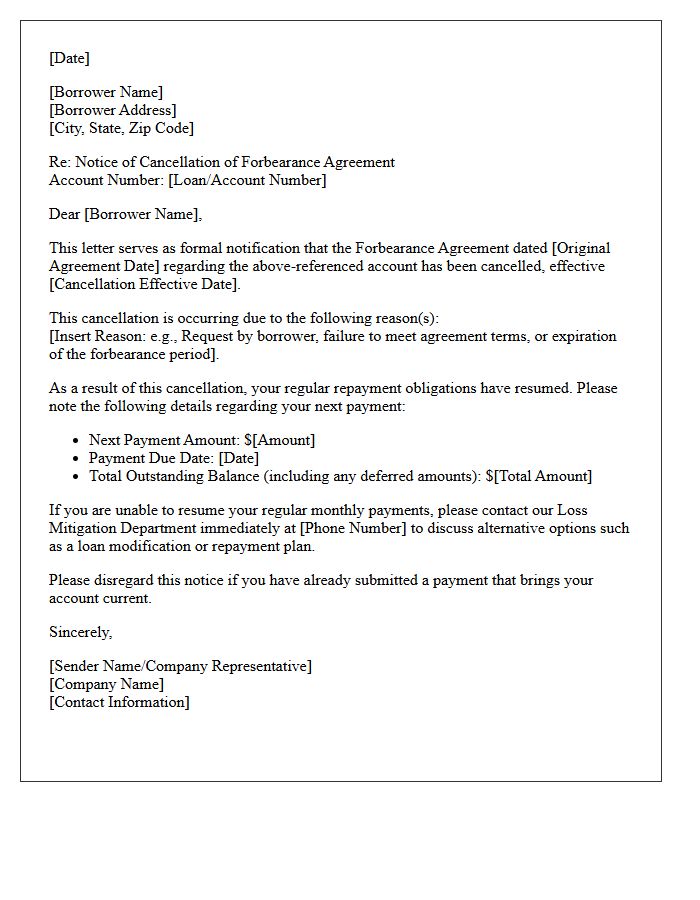
A Cancellation of Forbearance Agreement Notification Letter is a formal document issued by a lender to inform a borrower that their temporary payment relief period has ended. It is crucial to understand that once this agreement is revoked, the original mortgage terms resume immediately. Borrowers must prepare for repayment options, such as a deferral, loan modification, or repayment plan, to avoid potential foreclosure. Reviewing the effective date and any outstanding balance requirements is essential for maintaining financial stability and protecting your credit standing after the forbearance period expires.
Overdue Balance Letter on Restructured Collection Account
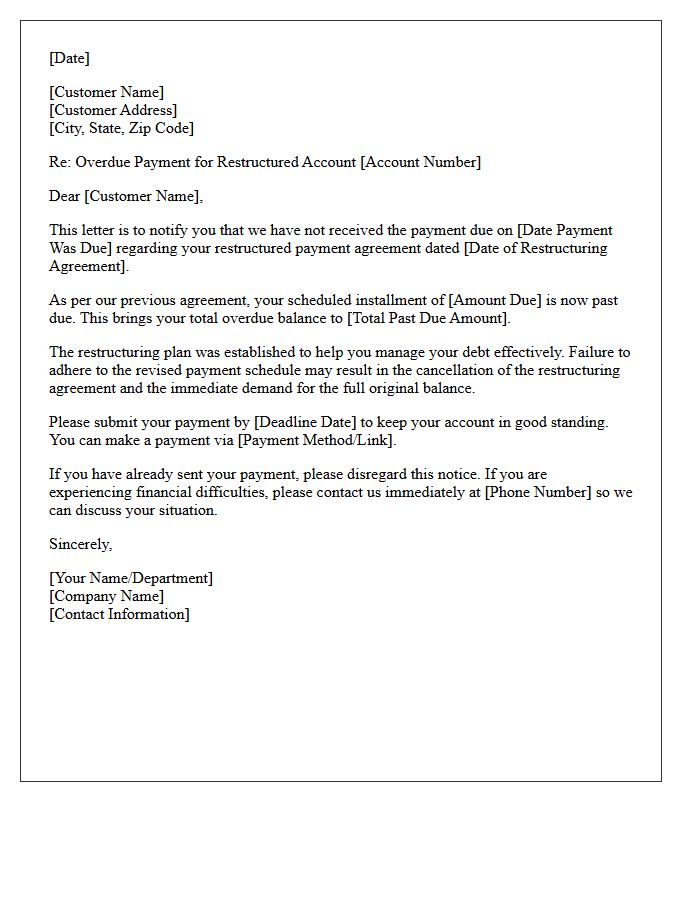
An overdue balance letter for a restructured collection account signifies a breach of newly negotiated payment terms. It is critical to address this notice immediately to prevent the reinstatement of the original debt amount and the loss of settlement benefits. Ignoring this communication may lead to aggressive legal action or further damage to your credit score. To protect your financial standing, contact the creditor to discuss a hardship extension or to resume the agreed repayment schedule before the account is flagged as a permanent default.
Legal Action Warning Letter for Renegotiated Terms Default
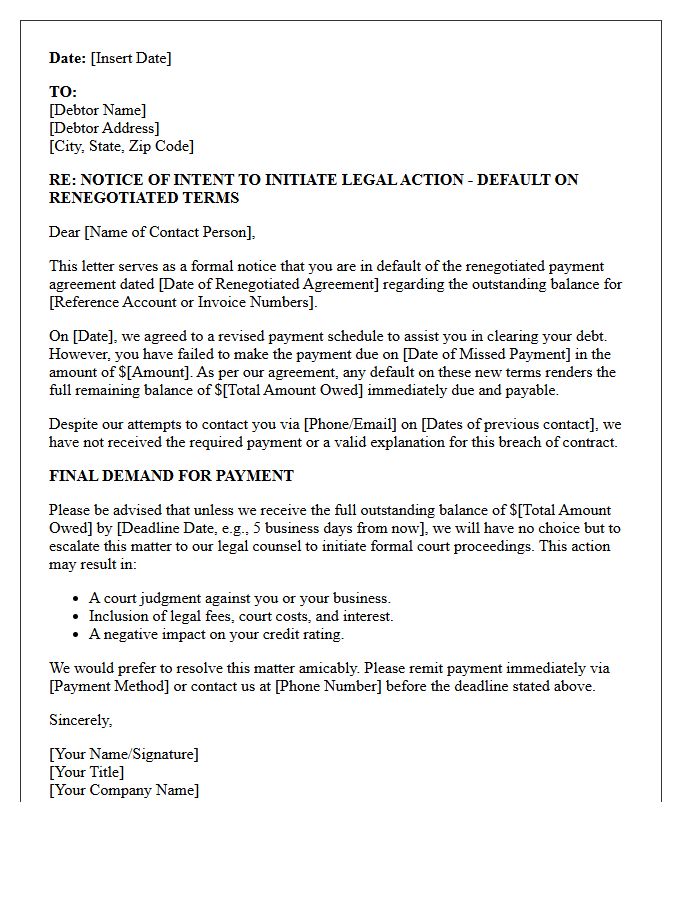
A Legal Action Warning Letter serves as a formal notice when a debtor fails to uphold renegotiated payment terms. This document acts as a final opportunity to rectify the default before initiating litigation. It must clearly outline the original settlement agreement, identify the specific breach, and state a firm deadline for compliance. Receiving this notice signifies that the creditor is prepared to pursue court proceedings or debt recovery actions. Promptly addressing this warning is essential to avoid additional legal fees, interest penalties, and negative impacts on your credit standing.
What is a Notification of Delinquency on Renegotiated Terms?
This is a formal legal notice sent to a borrower when they fail to meet the specific repayment obligations established under a previously modified or restructured loan agreement.
Does a delinquency notice mean my renegotiated contract is void?
Typically, yes; most restructured agreements include a "default clause" stating that if a payment is missed, the original loan terms and total balance may be reinstated, and the settlement offer may be revoked.
How long do I have to respond to a delinquency notice on a modified loan?
Response times vary by contract, but usually, borrowers have a 10 to 30-day "cure period" to pay the overdue amount before the lender initiates foreclosure or legal recovery actions.
Can I renegotiate my terms again after receiving a delinquency notice?
While difficult, it is possible through a secondary loan modification or a forbearance agreement; however, lenders are less likely to grant a second restructuring after a breach of the first renegotiated plan.
What are the consequences of ignoring a Notification of Delinquency?
Ignoring the notice can lead to the immediate acceleration of the full debt, a significant negative impact on your credit score, and the commencement of collateral repossession or wage garnishment proceedings.

Comments