
Protecting your credit profile requires swift action when fraudulent activity occurs. A Cease and Desist Acknowledgment formally notifies creditors that specific accounts result from identity theft, legally demanding they halt collection efforts and reporting. This document is essential for disputing unauthorized debts and restoring your financial reputation effectively. To simplify your legal correspondence, below are some ready to use template.
Image cover: Formal Response Templates for Identity Theft Cease and Desist Acknowledgments
Letter Samples List
- Identity Theft Claim and Cease and Desist Acknowledgment Letter
- Cease and Desist Acknowledgment and Identity Theft Documentation Request Letter
- Account Closure and Cease and Desist Acknowledgment Letter for Identity Theft
- Collection Suspension and Cease and Desist Acknowledgment Letter Pending Identity Theft Investigation
- Original Creditor Referral and Cease and Desist Acknowledgment Letter for Identity Theft Claim
- Credit Bureau Deletion and Cease and Desist Acknowledgment Letter for Identity Theft
- FTC Affidavit Receipt and Cease and Desist Acknowledgment Letter
- Fraud Department Transfer and Cease and Desist Acknowledgment Letter
- Final Communication and Cease and Desist Acknowledgment Letter for Identity Theft Account
- Release of Liability and Cease and Desist Acknowledgment Letter for Identity Theft
- Account Return to Seller and Cease and Desist Acknowledgment Letter for Identity Theft Claim
- Identity Theft Claim Resolution and Cease and Desist Acknowledgment Letter
Identity Theft Claim and Cease and Desist Acknowledgment Letter
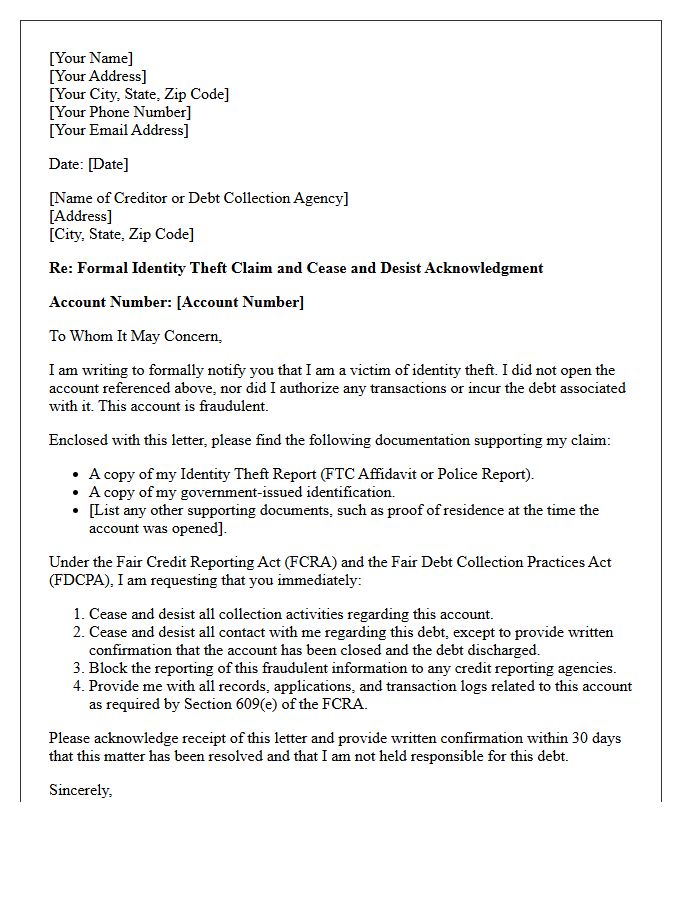
An Identity Theft Claim serves as formal notice to creditors that an account was opened fraudulently. When paired with a Cease and Desist Acknowledgment Letter, it legally compels debt collectors to halt all communication while investigating the dispute. Under the Fair Credit Reporting Act, once you provide a sworn affidavit and police report, the collector must stop reporting the debt to bureaus. This combined documentation protects your legal rights, prevents further harassment, and is the essential first step in restoring your financial reputation and clearing unauthorized liabilities from your credit profile.
Cease and Desist Acknowledgment and Identity Theft Documentation Request Letter
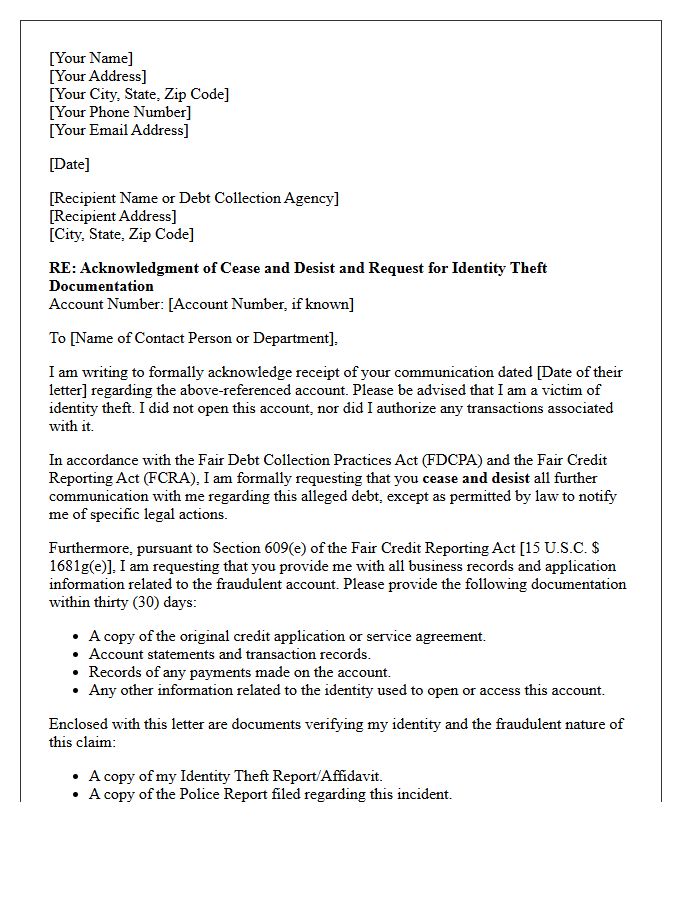
A Cease and Desist Acknowledgment combined with an Identity Theft Documentation Request Letter is a vital legal tool for victims. It formally notifies creditors or debt collectors that a specific account was opened fraudulently. By sending this, you demand they stop collection activities and provide transaction records or application details necessary to clear your name. Under federal law, companies must provide these documents to help you prove identity theft. Always include a copy of your Identity Theft Report to ensure your rights are protected and the recovery process begins.
Account Closure and Cease and Desist Acknowledgment Letter for Identity Theft
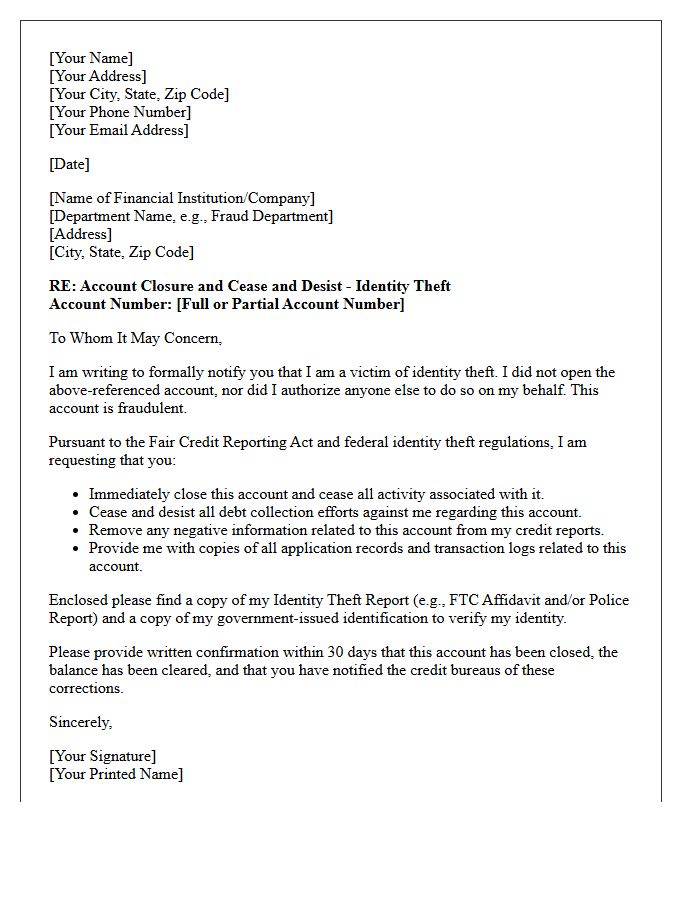
An Account Closure and Cease and Desist Acknowledgment Letter is a vital legal tool for victims of identity theft. This document formally notifies creditors that a specific account was opened fraudulently and must be permanently closed. It includes a formal cease and desist demand, legally prohibiting debt collectors from contacting you regarding the unauthorized debt. Providing a copy of your identity theft report alongside this letter strengthens your claim. Retaining a signed acknowledgment ensures you have verifiable proof that the institution has recognized the fraud and cleared your liability.
Collection Suspension and Cease and Desist Acknowledgment Letter Pending Identity Theft Investigation
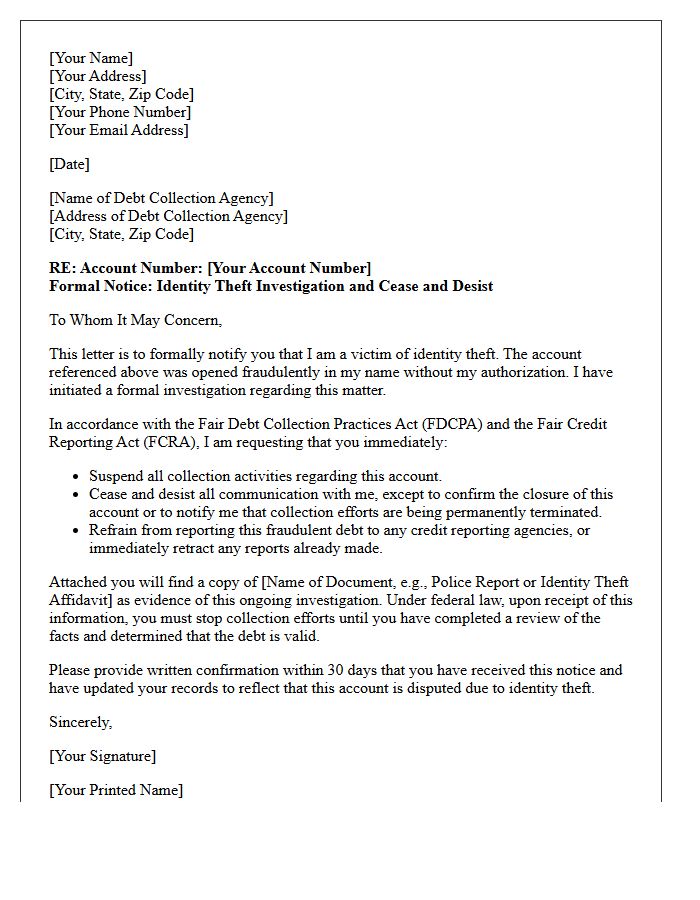
A Collection Suspension and Cease and Desist Acknowledgment Letter serves as formal proof that a creditor has paused recovery efforts. This document confirms they have received your Identity Theft Report and are legally required to stop contacting you during the investigation. It acts as a critical safeguard for your consumer rights, ensuring that disputed fraudulent debts do not impact your credit score while the Identity Theft Investigation is pending. Always retain this acknowledgment to prevent unlawful harassment and maintain clear documentation for credit bureau disputes.
Original Creditor Referral and Cease and Desist Acknowledgment Letter for Identity Theft Claim
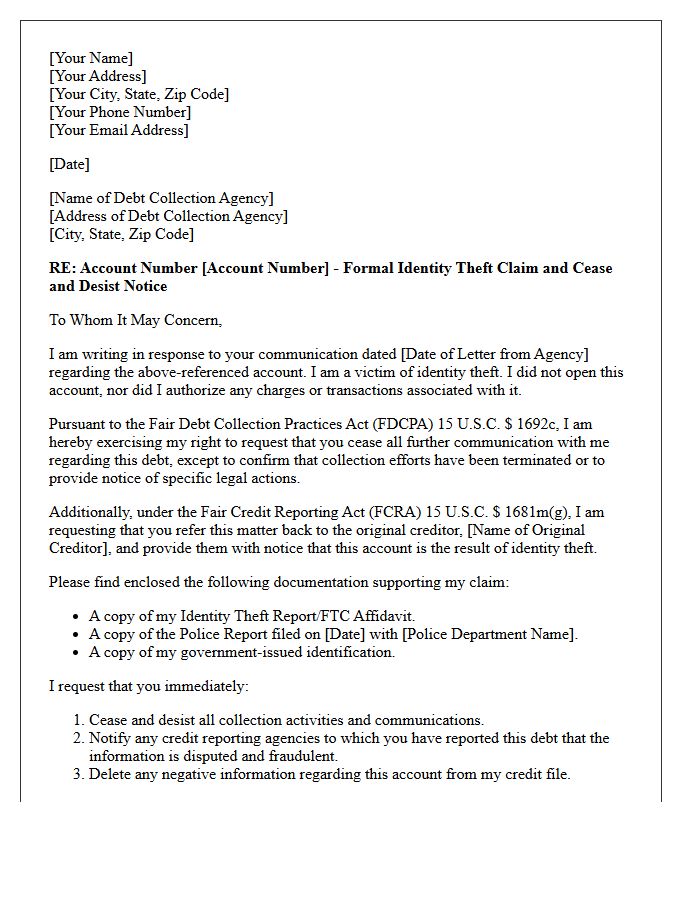
An Original Creditor Referral and Cease and Desist Acknowledgment Letter is a vital document used when a debt collector is notified of an identity theft claim. This letter confirms that the collection agency has ceased recovery efforts and referred the account back to the original creditor for investigation. It serves as legal proof of your identity theft notification, ensuring the collector stops all communication. Keeping this acknowledgment is essential for disputing fraudulent records and protecting your credit score while the theft is officially resolved under federal consumer protection laws.
Credit Bureau Deletion and Cease and Desist Acknowledgment Letter for Identity Theft
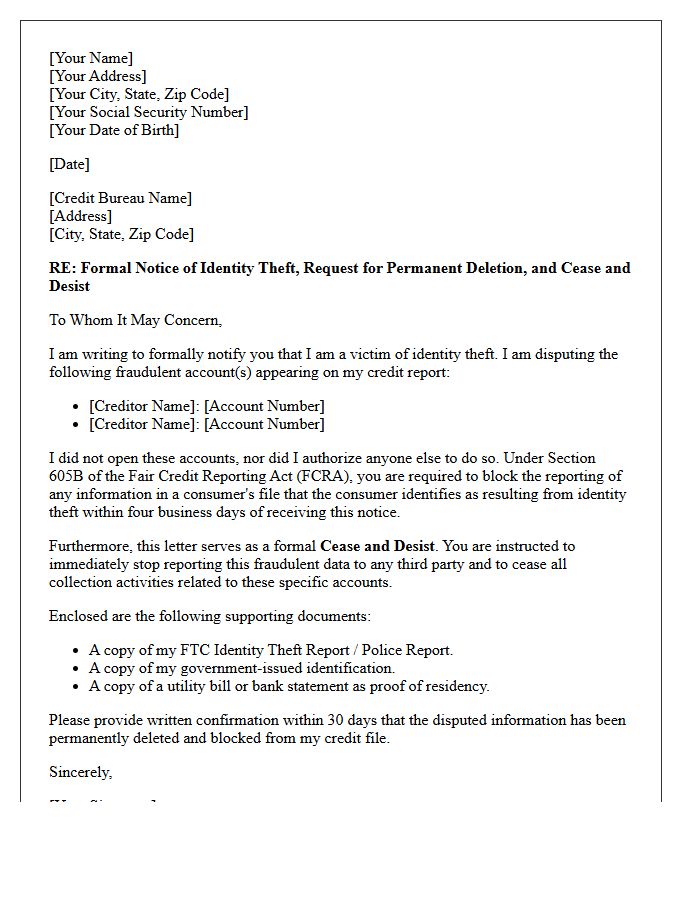
Sending a Credit Bureau Deletion and Cease and Desist Acknowledgment Letter is a vital step for identity theft victims. This formal document demands that reporting agencies permanently remove fraudulent accounts from your credit report. By incorporating a cease and desist notice, you legally instruct creditors to stop all collection activities and communication regarding the unauthorized debt. Providing a police report or an FTC identity theft affidavit strengthens your claim, ensuring your financial reputation is restored while preventing further harassment from debt collectors during the recovery process.
FTC Affidavit Receipt and Cease and Desist Acknowledgment Letter
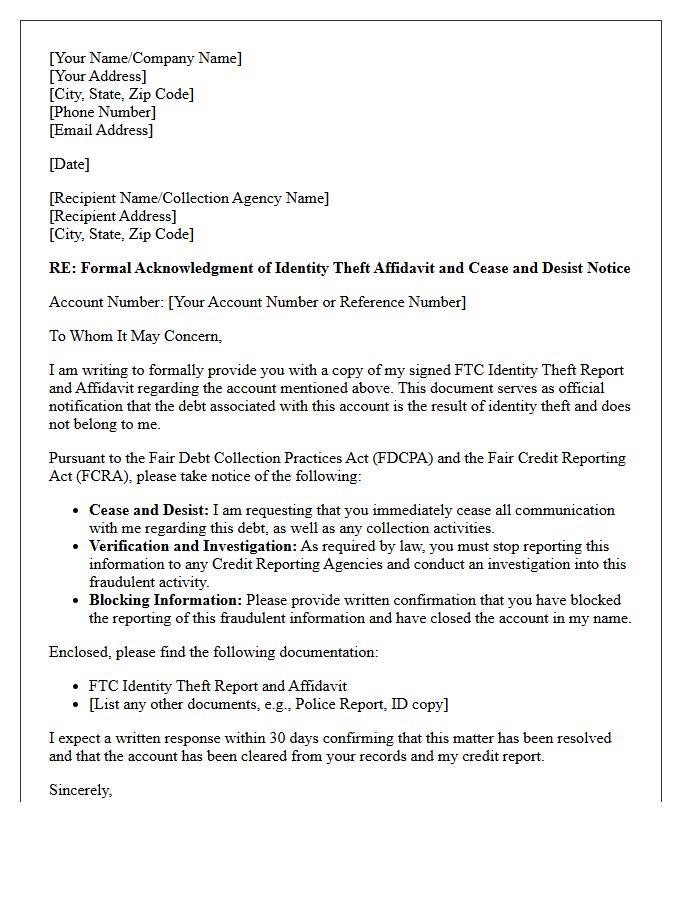
An FTC Affidavit Receipt confirms that a consumer has formally reported identity theft to the Federal Trade Commission. This document serves as official evidence to help victims dispute fraudulent accounts. When paired with a Cease and Desist Acknowledgment Letter, it legally compels creditors and debt collectors to stop contacting the individual regarding the specified fraudulent debts. These tools are essential for protecting your credit reputation and ensuring that financial institutions verify the legitimacy of claims before pursuing further collection actions under federal law.
Fraud Department Transfer and Cease and Desist Acknowledgment Letter
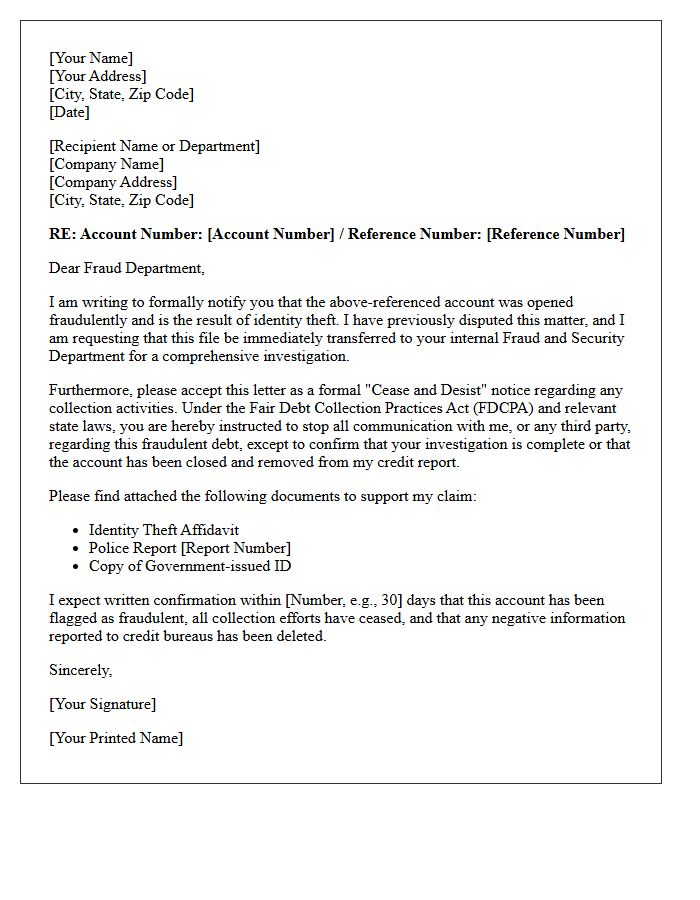
A Fraud Department Transfer formally moves a disputed account to specialized investigators to resolve identity theft or unauthorized activity. Once submitted, providing a Cease and Desist Acknowledgment Letter ensures the creditor or agency recognizes your legal demand to stop collection contact. This document serves as critical evidence that the entity has received your notice and must comply with the Fair Debt Collection Practices Act. Maintaining these records is essential for protecting your consumer rights, correcting your credit report, and ensuring all harassing communications permanently stop during the investigation process.
Final Communication and Cease and Desist Acknowledgment Letter for Identity Theft Account
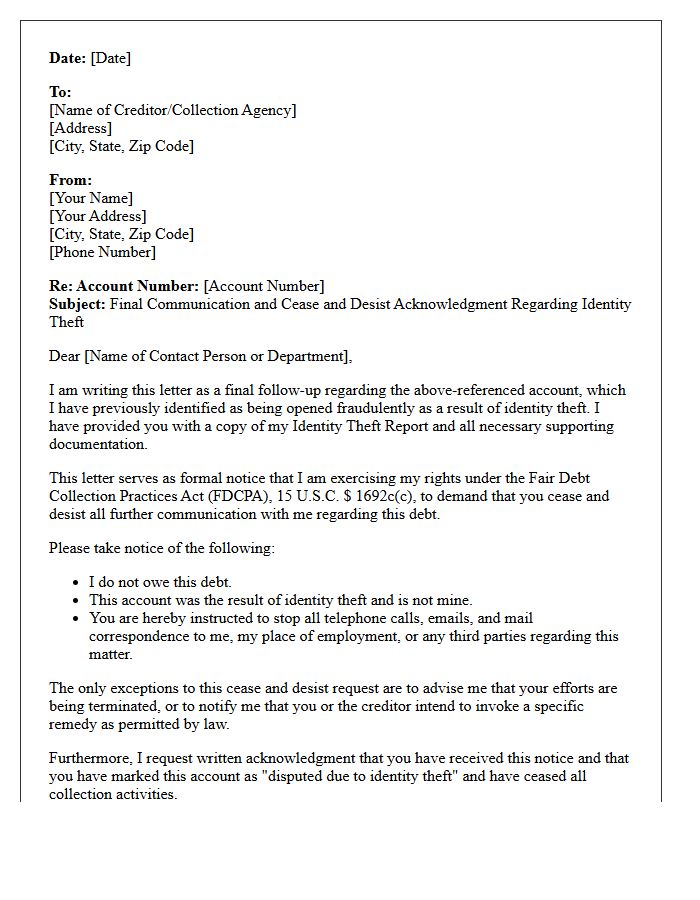
A final communication letter serves as formal notice to a creditor that a specific account resulted from identity theft. By including a Cease and Desist acknowledgment, you legally mandate that the debt collector stop all contact regarding the fraudulent balance. This document should reference your official police report and identity theft affidavit to provide proof of the crime. Once received, the collector must investigate and cease collection activities, effectively protecting your credit score and legal rights while ensuring the fraudulent record is permanently removed from your financial history.
Release of Liability and Cease and Desist Acknowledgment Letter for Identity Theft
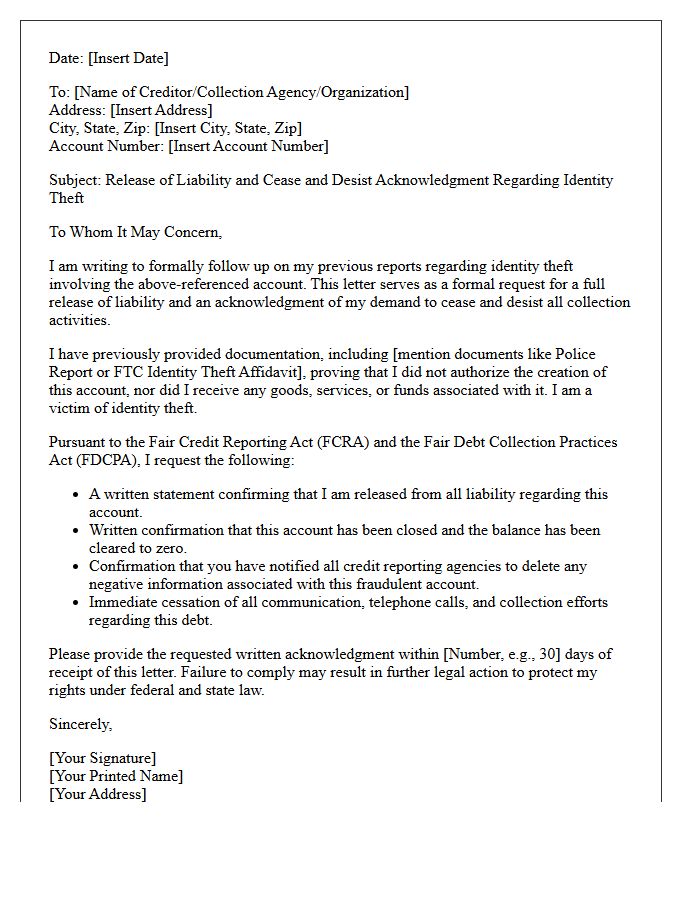
A Release of Liability and Cease and Desist Acknowledgment Letter is a critical legal tool for identity theft victims. It formally notifies creditors that a specific account was opened fraudulently, demanding they stop collection efforts immediately. By signing this, the creditor acknowledges your non-responsibility for the debt while preventing further credit damage. Providing an official Identity Theft Report alongside this letter strengthens your case, ensuring legal protection under consumer rights laws and effectively clearing your financial record from unauthorized liabilities caused by impersonation.
Account Return to Seller and Cease and Desist Acknowledgment Letter for Identity Theft Claim
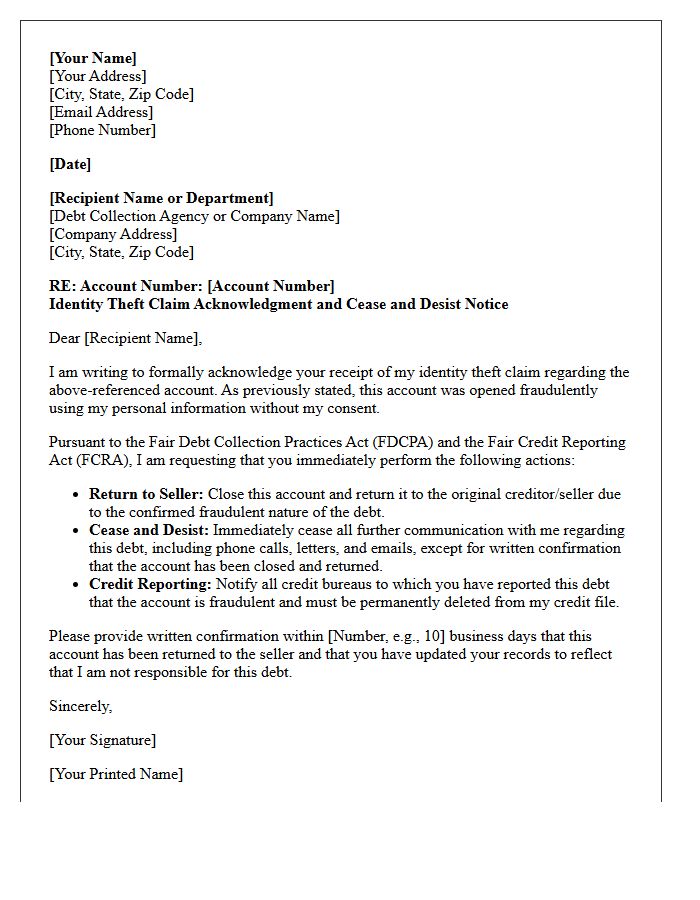
An Account Return to Seller and Cease and Desist Acknowledgment Letter is a critical legal document used to resolve identity theft claims. It confirms that a fraudulent account has been closed and returned to the original creditor, effectively stopping all collection activities. This letter serves as formal recognition that the victim is not responsible for the debt. Retaining this acknowledgment is essential for credit report restoration, providing necessary proof to bureaus that the disputed tradeline must be permanently removed to protect your financial standing.
Identity Theft Claim Resolution and Cease and Desist Acknowledgment Letter
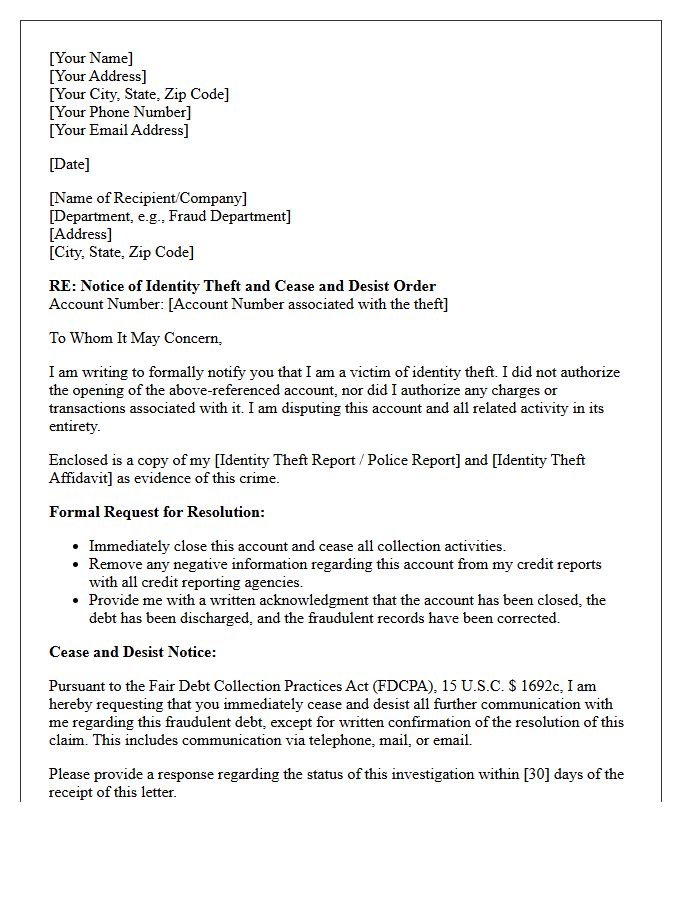
An Identity Theft Claim Resolution letter serves as formal notification that a fraudulent account investigation is complete. Once your identity is verified, creditors must provide a Cease and Desist Acknowledgment, confirming they will stop all collection efforts and legal actions against you. This documentation is critical for credit repair, as it mandates the removal of fraudulent entries from your reports. Retaining these letters ensures permanent protection against future attempts to collect on the same unauthorized debt, effectively restoring your financial standing and legal rights after a security breach.
What is a Cease and Desist Acknowledgment for identity theft claims?
A Cease and Desist Acknowledgment is a formal notification sent to a creditor or debt collector confirming that you have disputed an account due to identity theft and legally demanding they stop all collection activities while the claim is under investigation.
How do I stop debt collectors from contacting me about identity theft accounts?
To stop further contact, you must provide the collector with a written Cease and Desist Acknowledgment accompanied by a copy of your FTC Identity Theft Report or a police report, which legally obligates them to halt collection efforts under the Fair Debt Collection Practices Act (FDCPA).
What should be included in a Cease and Desist letter for fraudulent accounts?
The letter should include your full legal name, the fraudulent account number, a clear statement that the account was opened via identity theft, a copy of your official identity theft report, and an explicit demand that all phone calls and written correspondence regarding the debt cease immediately.
Can a creditor continue to report a fraudulent account to credit bureaus after receiving a Cease and Desist?
Once a creditor receives notice of identity theft and a Cease and Desist Acknowledgment, they are generally prohibited from reporting the disputed information to credit bureaus or selling the debt until they have completed a thorough investigation and verified the debt's validity.
What are my rights if a collector ignores my Cease and Desist Acknowledgment for identity theft?
If a collector continues to contact you or report a fraudulent debt after receiving your notice, they may be in violation of the FDCPA and the Fair Credit Reporting Act (FCRA), giving you the right to file a complaint with the Consumer Financial Protection Bureau (CFPB) or pursue legal action for damages.

Comments