
Receiving a bounced check disrupts business operations and financial stability. If informal requests fail, issuing a formal intent to pursue legal action is a critical step to recover your funds and assert your rights under commercial law. This notice serves as a final warning before initiating litigation or criminal charges. To help you proceed professionally, below are some ready to use template.

Image cover: Notice of Intent to Pursue Legal Action for Dishonored Checks: Professional Templates and Best Practices
Letter Samples List
- Notice of Intent to Pursue Legal Action for Dishonored Check Letter
- Final Demand and Intent to Sue for Bounced Check Letter
- Pre-Litigation Warning for Non-Sufficient Funds Check Letter
- Formal Debt Collection Intent to Litigate Dishonored Check Letter
- Statutory Notice of Dishonored Check Legal Action Letter
- Final Notice of Pending Lawsuit for Returned Check Letter
- Attorney Demand and Intent to Sue for Dishonored Check Letter
- Notice of Intent to File Civil Action for Dishonored Check Letter
- Debt Collection Final Demand and Legal Action Intent Letter
- Dishonored Check Legal Proceeding Notification Letter
- Warning of Legal Action for Unpaid Bad Check Letter
- Commercial Debt Collection Intent to Sue for Dishonored Check Letter
- Notice of Pending Civil Litigation for Returned Check Letter
Notice of Intent to Pursue Legal Action for Dishonored Check Letter
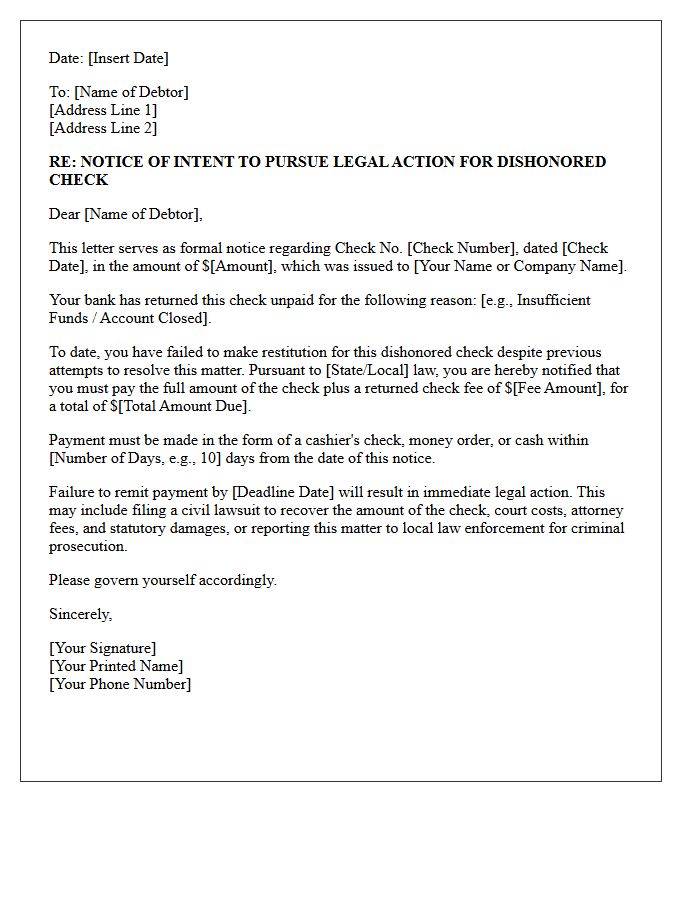
A Notice of Intent to Pursue Legal Action for Dishonored Check is a formal demand for payment following a bounced check. This legal document notifies the issuer of their financial liability and provides a specific deadline to rectify the debt. It serves as an essential pre-litigation step required by many jurisdictions before filing a lawsuit or pursuing criminal charges. Sending this notice via certified mail establishes a paper trail, proving the recipient was informed of the dishonored payment and the potential for legal consequences, including additional statutory damages and court costs.
Final Demand and Intent to Sue for Bounced Check Letter
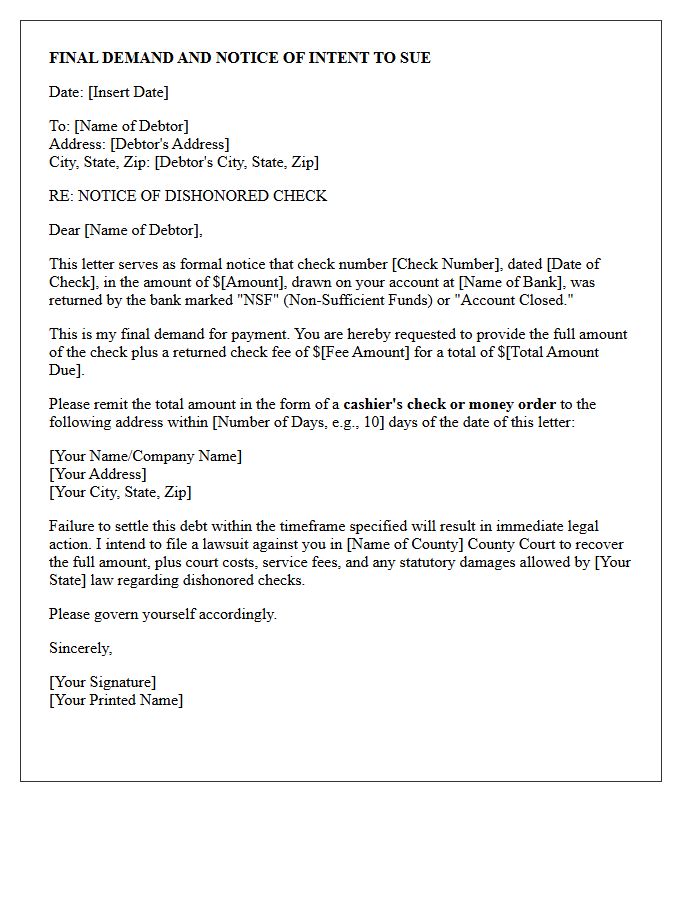
A Final Demand and Intent to Sue letter is a formal legal notice issued to a debtor after a check is returned for insufficient funds. This document serves as a final opportunity for the issuer to settle the debt before formal litigation begins. It must clearly state the check amount, any applicable bank fees, and a specific deadline for payment. Providing this written warning is often a mandatory legal requirement in many jurisdictions to qualify for treble damages or criminal prosecution related to bad check recovery under state statutes.
Pre-Litigation Warning for Non-Sufficient Funds Check Letter
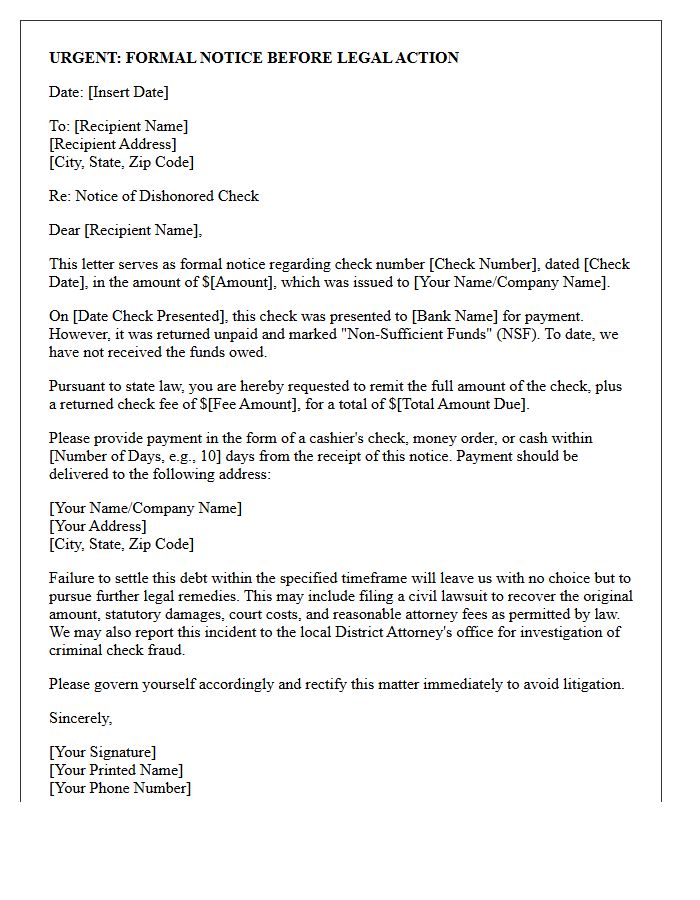
A pre-litigation warning for a Non-Sufficient Funds (NSF) check serves as a formal demand for payment before initiating legal action. It notifies the issuer that their payment failed due to inadequate account balance. This letter typically provides a specific deadline for settlement and outlines potential legal consequences, such as civil lawsuits or statutory penalties. Sending this notice is often a mandatory legal step to establish intent to collect and can significantly increase the chances of recovering the full amount plus administrative fees without entering a courtroom.
Formal Debt Collection Intent to Litigate Dishonored Check Letter
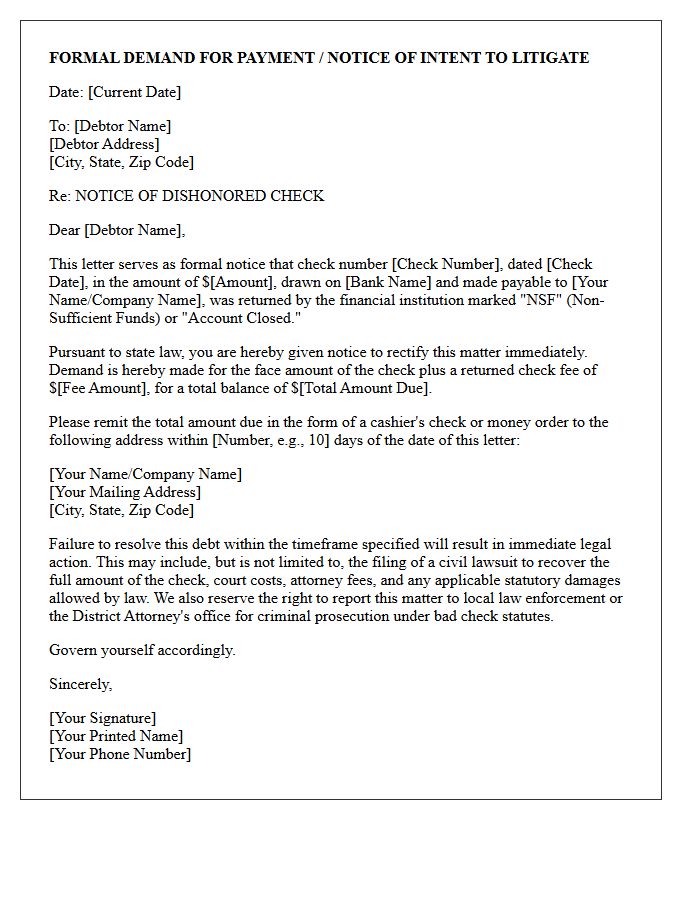
A formal intent to litigate for a dishonored check serves as a final legal warning before court action. This demand letter notifies the issuer that their payment failed due to non-sufficient funds or a closed account. Under many state laws, providing this notice is a mandatory step to recover the original amount plus statutory damages and legal fees. To avoid litigation, the recipient must provide restitution within a specified timeframe. Documenting this process is essential for establishing evidence of bad faith or financial liability during future legal proceedings.
Statutory Notice of Dishonored Check Legal Action Letter
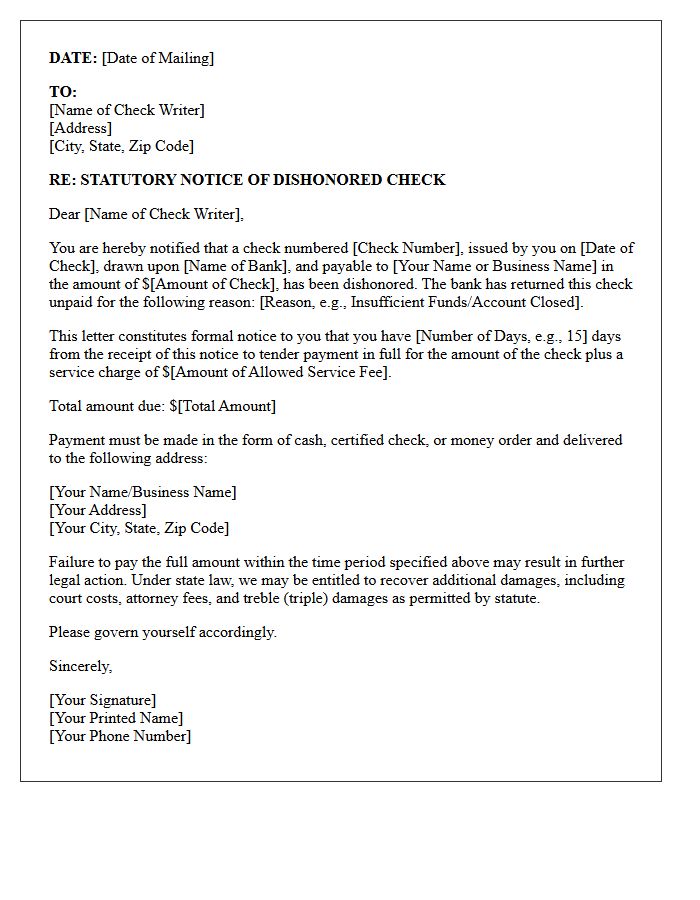
A Statutory Notice of Dishonored Check is a formal legal demand sent to a drawer after a check bounces due to insufficient funds or a closed account. Sending this notice is a mandatory prerequisite before pursuing civil legal action or criminal charges. It provides the recipient a specific grace period, typically 15 to 30 days, to pay the full amount plus fees. Failure to comply allows the payee to sue for triple damages, court costs, and attorney fees under state statutes, making it a critical tool for debt recovery.
Final Notice of Pending Lawsuit for Returned Check Letter
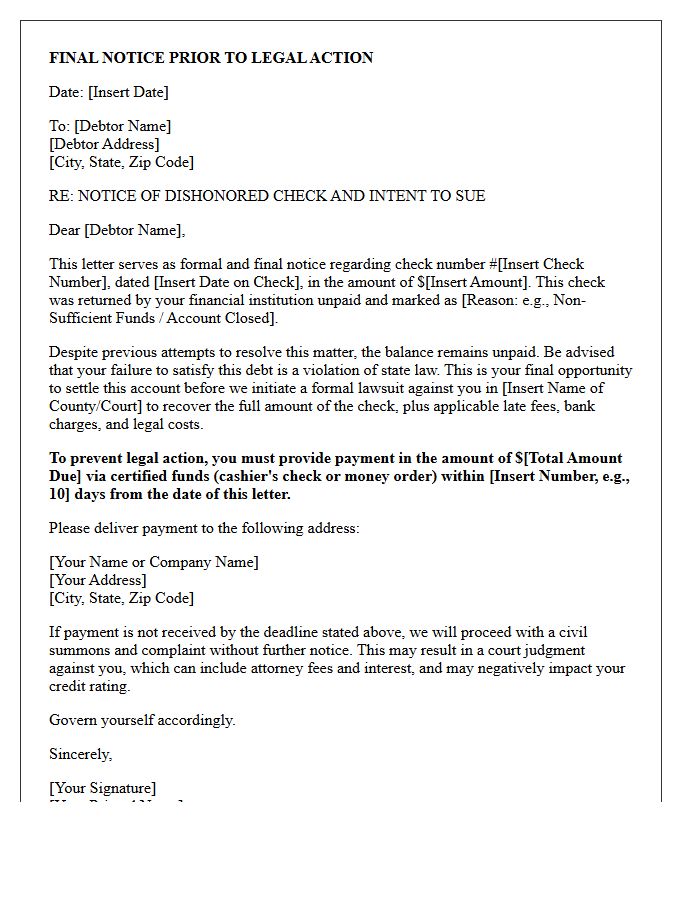
A Final Notice of Pending Lawsuit is a formal legal warning sent to a debtor before initiating court action for a returned check. This letter serves as a critical final opportunity to settle the outstanding debt, including potential NSF fees and statutory damages, to avoid litigation. It must clearly state the amount owed, a strict deadline for payment, and the intent to file a summons. Receiving this notice signifies that the creditor has exhausted informal collection efforts and is prepared to seek a judgment through the judicial system.
Attorney Demand and Intent to Sue for Dishonored Check Letter
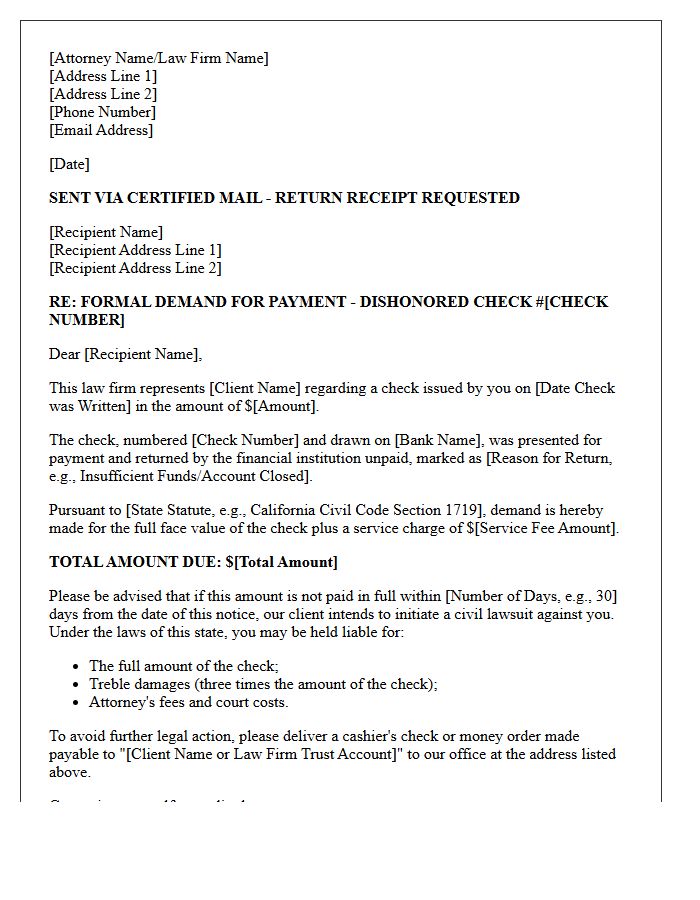
An Attorney Demand Letter for a dishonored check serves as a formal legal notice to a drawer regarding an unpaid instrument. This document establishes clear intent to sue if the debt, including statutory penalties and bank fees, remains unresolved within a specific timeframe. Sending this letter is often a mandatory procedural step required by state law before initiating litigation. It provides a final opportunity for the debtor to settle the balance voluntarily, potentially avoiding treble damages and the significant legal consequences associated with passing bad checks in civil or criminal court.
Notice of Intent to File Civil Action for Dishonored Check Letter
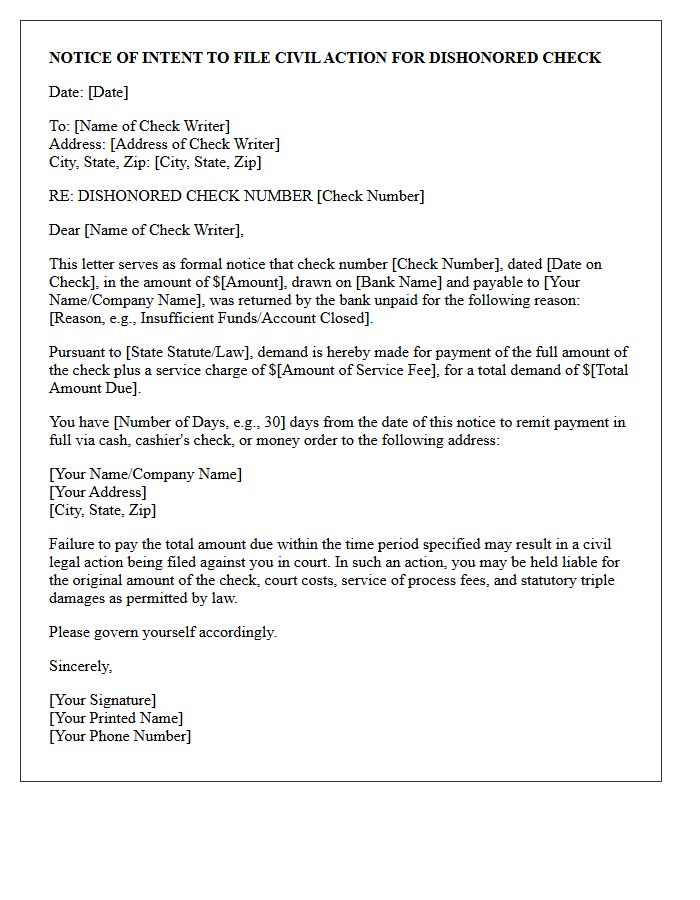
A Notice of Intent to File Civil Action is a formal legal demand sent to a drawer after a check is returned for insufficient funds. This statutory notice serves as a final warning, providing the debtor a specific window-typically 30 days-to pay the full amount plus service fees. Sending this letter is a mandatory prerequisite in many jurisdictions before seeking treble damages or legal fees in court. It creates a legal presumption of intent to defraud, significantly strengthening the creditor's position during litigation for dishonored checks.
Debt Collection Final Demand and Legal Action Intent Letter
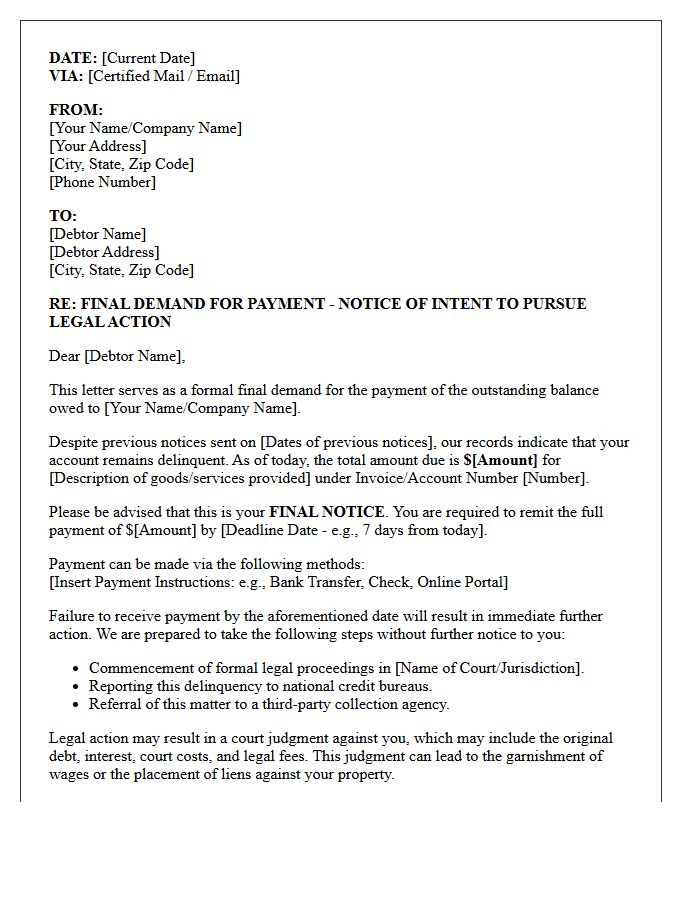
A debt collection final demand and legal action intent letter is a formal notice issued before a lawsuit. It serves as a final warning to the debtor, providing a specific deadline to settle the outstanding balance. This document is critical because it fulfills the legal requirement of fair notice, demonstrating that the creditor attempted to resolve the matter out of court. Ignoring this letter often results in litigation, leading to potential wage garnishments or asset seizures. Always verify the debt's accuracy and respond promptly to avoid further legal consequences and additional court costs.
Dishonored Check Legal Proceeding Notification Letter
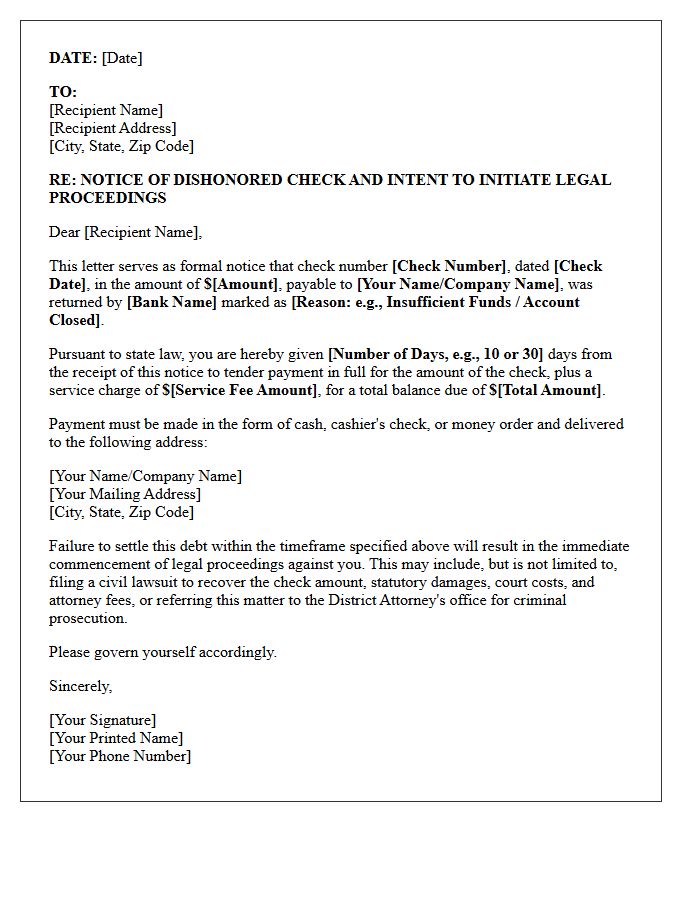
A Dishonored Check Legal Proceeding Notification Letter is a formal demand sent to a drawer whose payment was returned for insufficient funds or closed accounts. It serves as a final opportunity for the debtor to settle the balance plus applicable fees before litigation begins. Under many jurisdictions, providing this written notice is a mandatory legal prerequisite to recovering treble damages or pursuing criminal charges. Recipients should respond within the specified timeframe, typically ten to thirty days, to avoid civil lawsuits, collection costs, and potential prosecution for issuing bad checks.
Warning of Legal Action for Unpaid Bad Check Letter
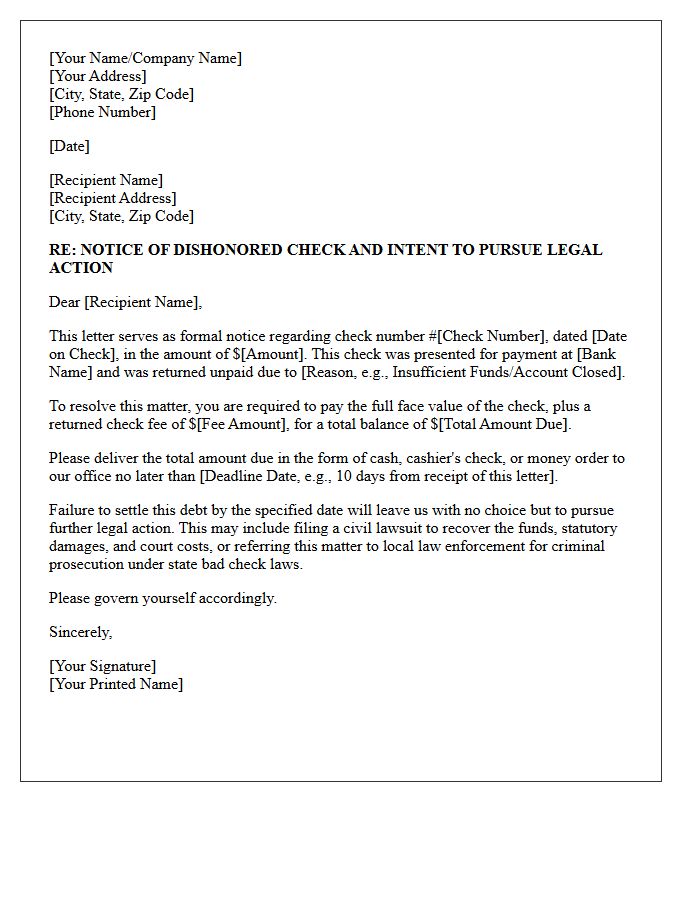
Receiving a legal notice for an unpaid bad check is a serious matter that requires immediate attention. This letter serves as a formal demand for payment, often including the original check amount plus administrative fees. Most jurisdictions provide a statutory grace period (typically 10 to 30 days) to resolve the debt. Failure to settle the balance within this timeframe may result in civil litigation or criminal charges for fraud. Always verify the debt's validity and retain proof of payment to avoid potential court costs and damage to your credit standing.
Commercial Debt Collection Intent to Sue for Dishonored Check Letter
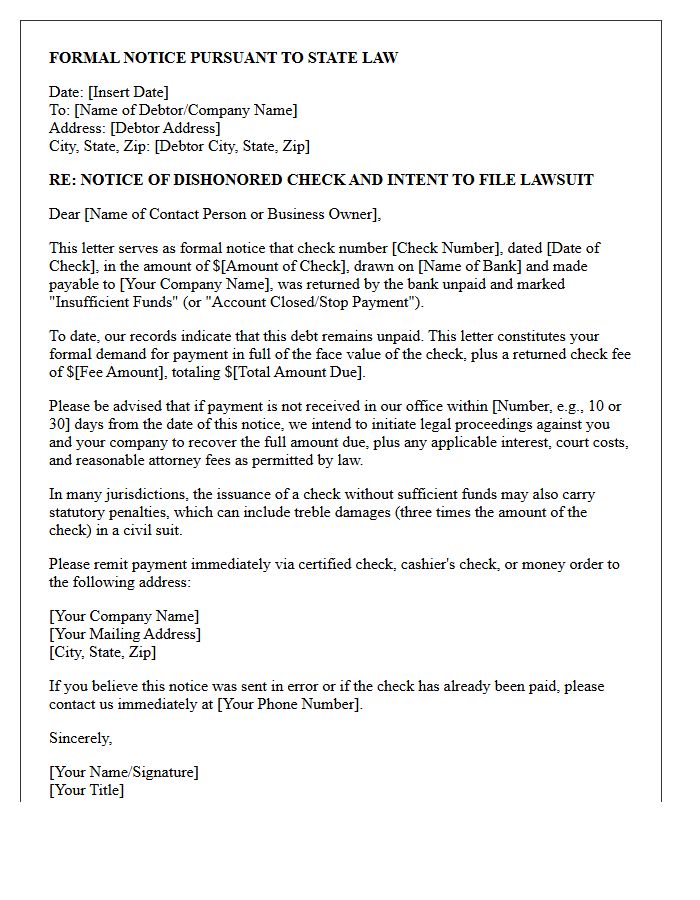
A commercial debt collection intent to sue for a dishonored check is a formal legal notification sent when a business payment fails. This document serves as a final warning before litigation, demanding immediate restitution for the unpaid balance plus statutory fees. In many jurisdictions, this letter is a mandatory prerequisite to pursuing treble damages or criminal penalties. Creditors must ensure the notice complies with state laws regarding grace periods and specific disclosure language to maintain legal standing during formal court proceedings.
Notice of Pending Civil Litigation for Returned Check Letter
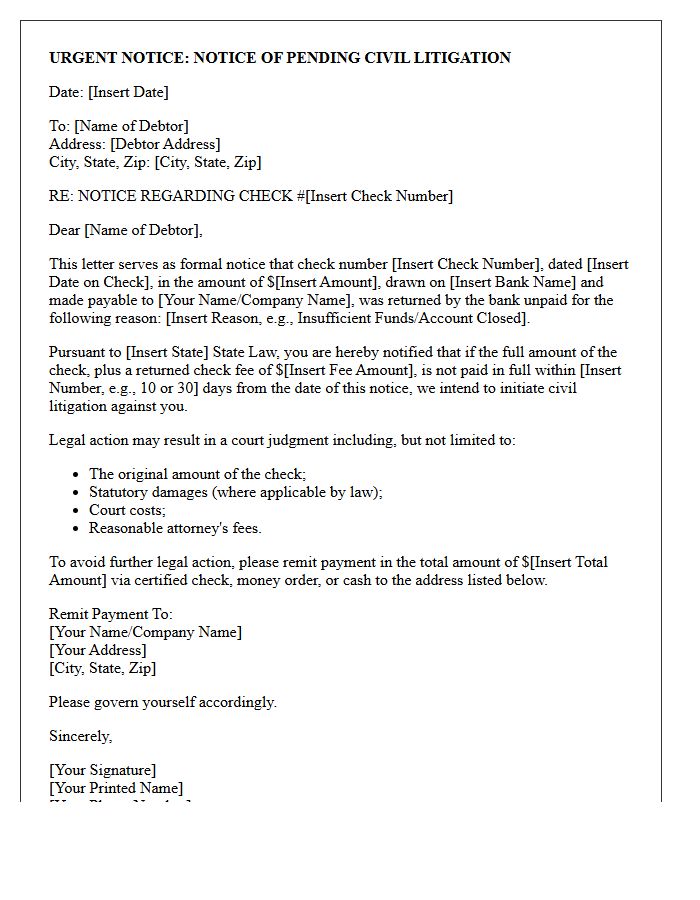
A Notice of Pending Civil Litigation for Returned Check is a formal legal demand sent to a payer after a check is dishonored by a bank. This document serves as a final warning, providing a specific grace period-often 30 days-to settle the debt plus mandatory service fees. It is the crucial precursor to a civil lawsuit, which can result in penalties triple the check's value. Receiving this notice requires immediate action to resolve the balance and prevent formal court filings, potential criminal charges for fraud, and long-term damage to your credit history.
What are the legal consequences of issuing a dishonored check?
Issuing a check without sufficient funds can lead to both civil litigation and criminal prosecution. Legal consequences typically include the obligation to pay the full check amount, statutory penalties, court costs, and potential criminal charges for fraud or theft by deception, depending on your local jurisdiction.
How do I send a formal legal notice for a bounced check?
A formal legal notice should be sent via certified mail with a return receipt requested. The letter must clearly state the check number, the amount, the date it was returned, and a specific deadline (usually 15 to 30 days) for the recipient to make full payment before further legal action is initiated.
Can I sue someone for a dishonored check in small claims court?
Yes, if the amount of the dishonored check falls within your state's small claims limit, you can file a lawsuit to recover the funds. In many jurisdictions, you may also be entitled to "treble damages," which allows you to claim up to three times the original check amount plus administrative fees.
What evidence is required to prove a case for a dishonored check?
To successfully pursue legal action, you must provide the original dishonored check (or a certified digital copy), the "Return to Sender" or "NSF" notice from the bank, a copy of the formal demand letter sent to the issuer, and proof of delivery for that demand letter.
What is the statute of limitations for filing a lawsuit over a bounced check?
The statute of limitations varies by state and whether the action is classified as a civil debt collection or a criminal offense. Generally, the timeframe to initiate legal action ranges from two to six years from the date the check was dishonored.

Comments