
If a creditor or credit bureau fails to resolve your inaccuracies after a first attempt, you must file a Notice of Continued Dispute. This formal notification asserts your rights under consumer protection laws to demand a secondary investigation and corrected records. Formally challenging unsatisfactory results is essential for credit repair. Below are some ready to use templates.
Image cover: Follow-Up Notice: Templates for Maintaining a Formal Credit Dispute after the Initial Response
Letter Samples List
- Notice of Continued Dispute After Initial Response Letter
- To Whom It May Concern at the Debt Collection Agency
- I Am Writing This Letter to Continue My Dispute of the Account
- Your Initial Response Did Not Provide Sufficient Legal Verification
- I Require Full Proof of the Original Creditor and Current Balance
- Please Provide the Original Signed Agreement for This Alleged Debt
- Until Proper Verification Is Received This Debt Remains Disputed
- I Request That All Unlawful Collection Activities Cease Immediately
- Failure to Comply May Result in Legal Action under the FDCPA
- Please Update All Major Credit Bureaus Regarding This Disputed Status
- I Expect a Prompt Written Reply to This Continued Dispute Letter
- Sincerely Yours in Awaiting Proper Debt Verification Documentation
- Sender Name and Signature for This Official Communication Letter
Notice of Continued Dispute After Initial Response Letter
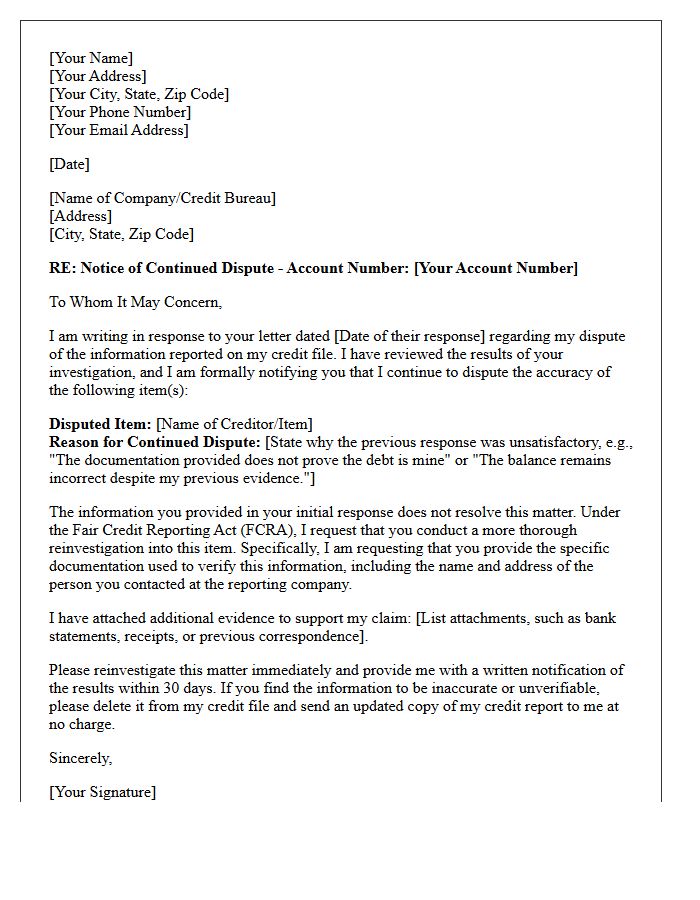
A Notice of Continued Dispute is a vital follow-up letter sent when a credit bureau's initial investigation fails to correct inaccuracies. Under the Fair Credit Reporting Act (FCRA), you must formally reject their findings if the data remains incorrect. This document should provide additional evidence or specific reasons why the previous response was insufficient. Persisting with this notice preserves your legal rights and compels the bureau to re-investigate the disputed item, ensuring your credit report reflects accurate and verified information for future lenders.
To Whom It May Concern at the Debt Collection Agency
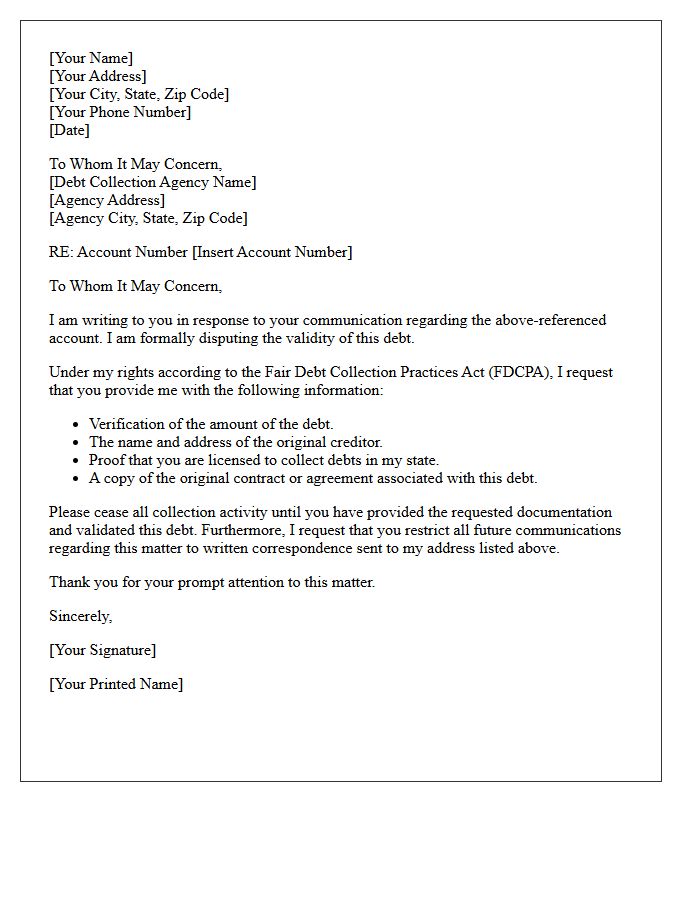
When addressing a letter To Whom It May Concern at a debt collection agency, you are likely initiating a formal debt validation request. Under the Fair Debt Collection Practices Act, this communication forces the agency to provide legal proof of the debt. It is crucial to send this via certified mail to maintain a paper trail. Using this formal salutation is appropriate when a specific agent's name is unavailable, ensuring your legal rights are protected during the mandatory thirty-day dispute period to prevent unauthorized credit reporting or harassment.
I Am Writing This Letter to Continue My Dispute of the Account
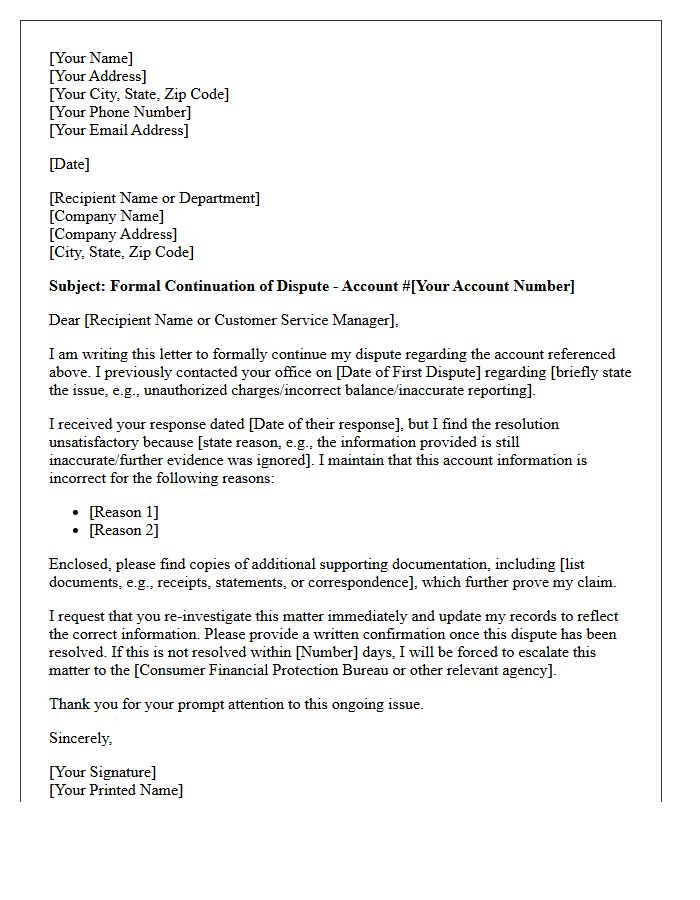
When you send a formal notice stating "I am writing this letter to continue my dispute," you are exercising your legal rights under the Fair Credit Reporting Act. This persistent communication informs credit bureaus that prior investigations failed to resolve inaccuracies. It is essential to provide new evidence or highlight specific unverified information to force a reinvestigation. Consistent follow-ups prevent lenders from ignoring your claims, ensuring your credit report reflects truthful data and protecting your overall financial reputation from damaging, erroneous entries.
Your Initial Response Did Not Provide Sufficient Legal Verification
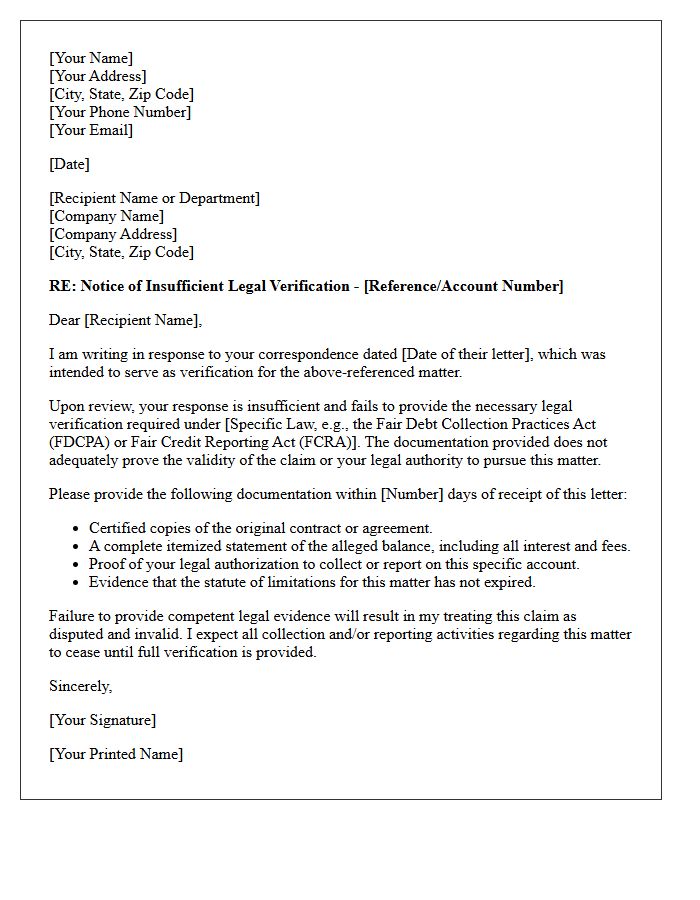
When you receive a notification stating your initial response did not provide sufficient legal verification, it means the documentation submitted failed to meet compliance standards. This often occurs due to expired identification, incomplete forms, or a lack of certified witness signatures. To resolve this, you must provide authenticated evidence that satisfies specific statutory requirements. Ensuring all legal disclosures are fully transparent and verified by authorized entities is essential to prevent further delays in your official processing or application approval.
I Require Full Proof of the Original Creditor and Current Balance
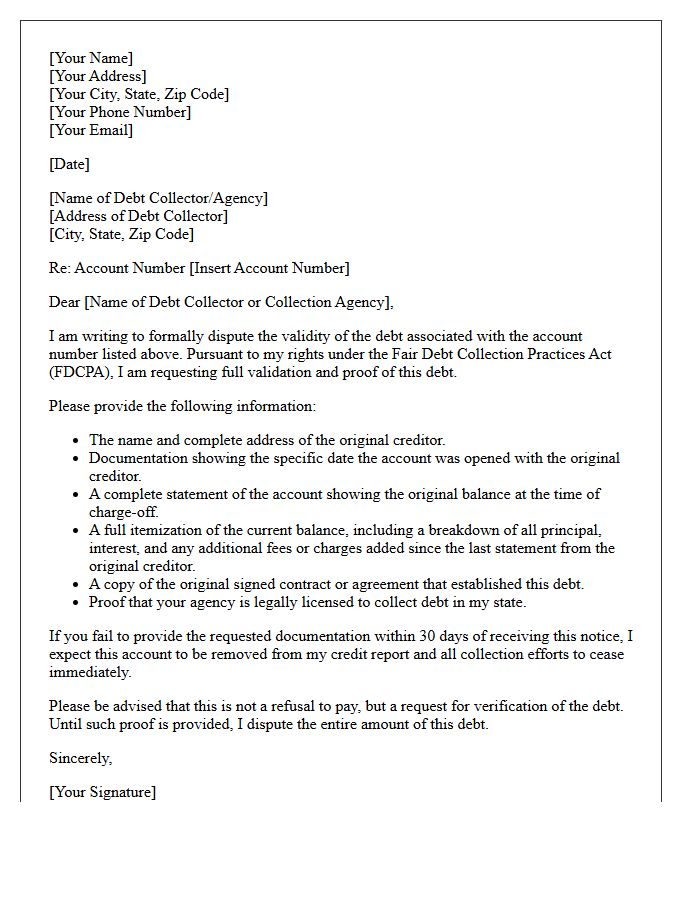
When disputing a debt, you must request validation to ensure the claim is legitimate. This process requires the collector to provide Full Proof of the Original Creditor, linking the debt back to the initial contract. Additionally, they must verify the Current Balance by providing a detailed breakdown of principal, interest, and fees. Obtaining this documentation is your legal right under the FDCPA, protecting you from unauthorized collection attempts on expired, inaccurate, or already paid accounts before you make any payments.
Please Provide the Original Signed Agreement for This Alleged Debt
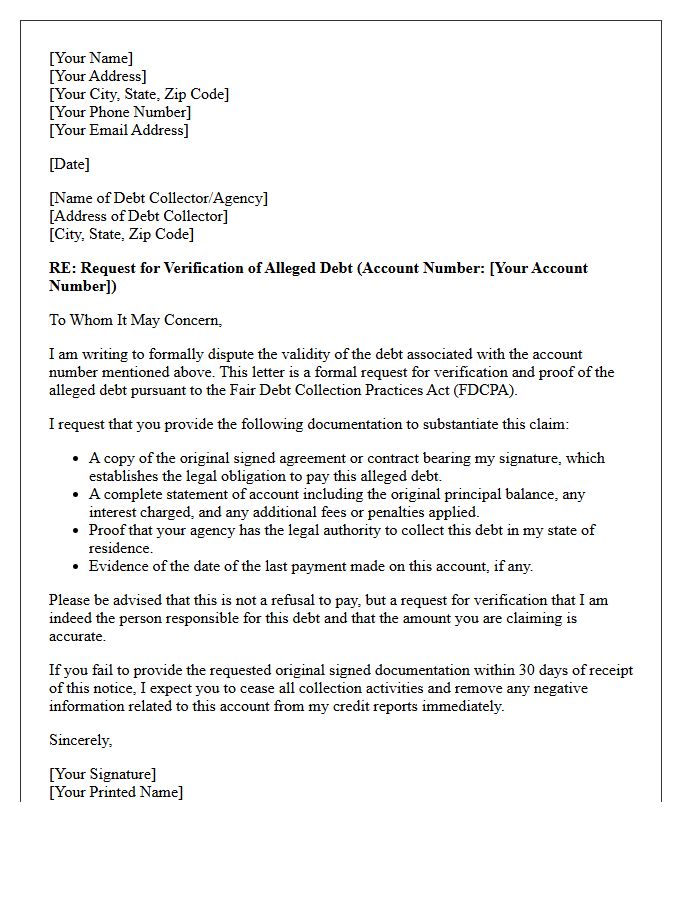
When disputing a collection, demanding to validate the obligation is your legal right. You must request that the collector provide the original signed agreement to prove the debt's legitimacy and their authority to collect. Under the Fair Debt Collection Practices Act, agencies must pause activities until they present documented evidence of a contract. Without a signature or chain of custody, the claim may be legally unenforceable. Always send this request via certified mail to maintain a paper trail and protect your financial rights against unsubstantiated claims.
Until Proper Verification Is Received This Debt Remains Disputed
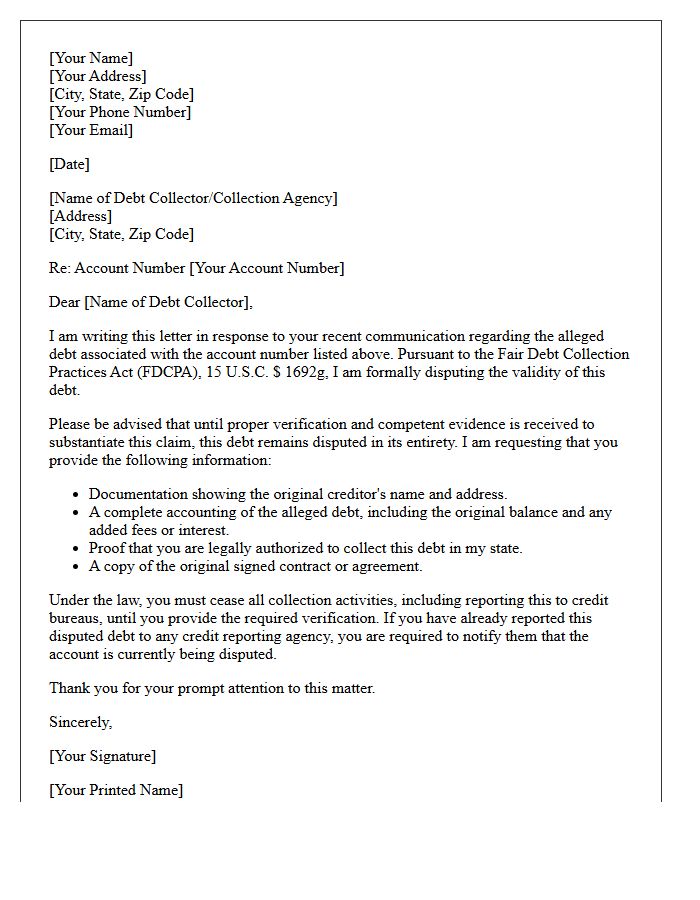
When a consumer invokes their rights under the FDCPA, stating "until proper verification is received this debt remains disputed" legally halts collection efforts. This phrase creates a Debt Validation requirement, forcing the agency to provide documented proof of the obligation. Once a formal dispute is initiated, the collector must cease all communication and reporting activities until they furnish official verification. Understanding this protection ensures that individuals are not harassed for inaccurate, expired, or fraudulent claims while maintaining their financial rights against unauthorized collection attempts.
I Request That All Unlawful Collection Activities Cease Immediately
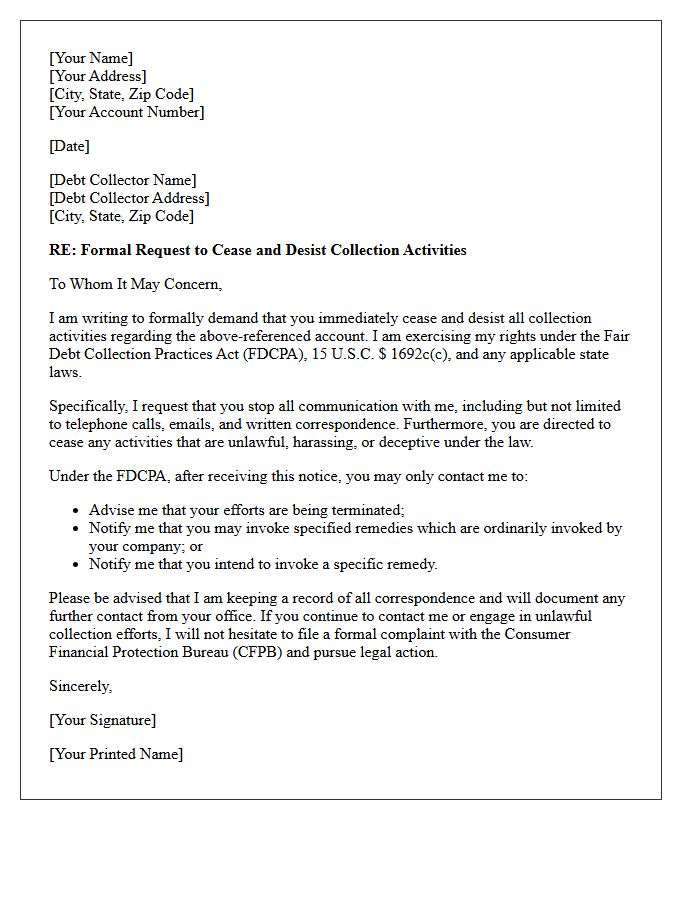
Sending a formal notice to request that all unlawful collection activities cease immediately is a critical step in protecting your consumer rights. Under the Fair Debt Collection Practices Act, collectors must stop contacting you once they receive a written cease and desist letter. This legal demand prevents further harassment, deceptive tactics, or unauthorized communication regarding a debt. Documenting this request provides essential evidence if you need to pursue legal action for non-compliance. Always use certified mail to ensure you have proof that the agency received your directive to end all illegal collection efforts.
Failure to Comply May Result in Legal Action under the FDCPA
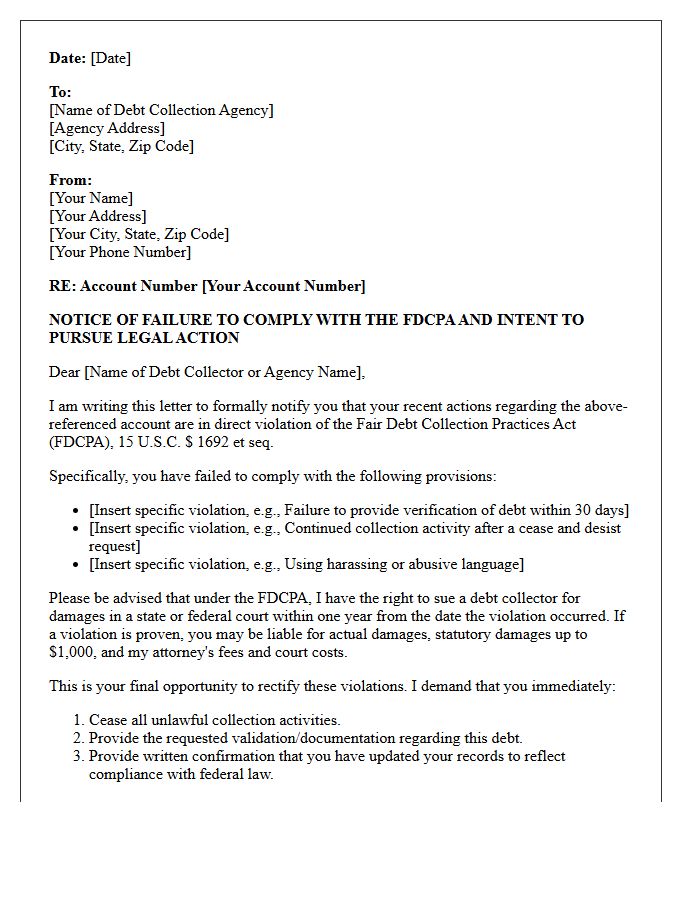
When dealing with debt collection, the Fair Debt Collection Practices Act (FDCPA) provides essential consumer protections. If a collector violates these federal guidelines-such as using harassment, misrepresenting debt amounts, or contacting you at prohibited times-Failure to Comply May Result in Legal Action. Consumers have the right to sue for statutory damages, attorney fees, and actual losses. Understanding your rights ensures that agencies follow ethical procedures, as non-compliance triggers significant legal liabilities and penalties under federal law to prevent abusive collection tactics.
Please Update All Major Credit Bureaus Regarding This Disputed Status
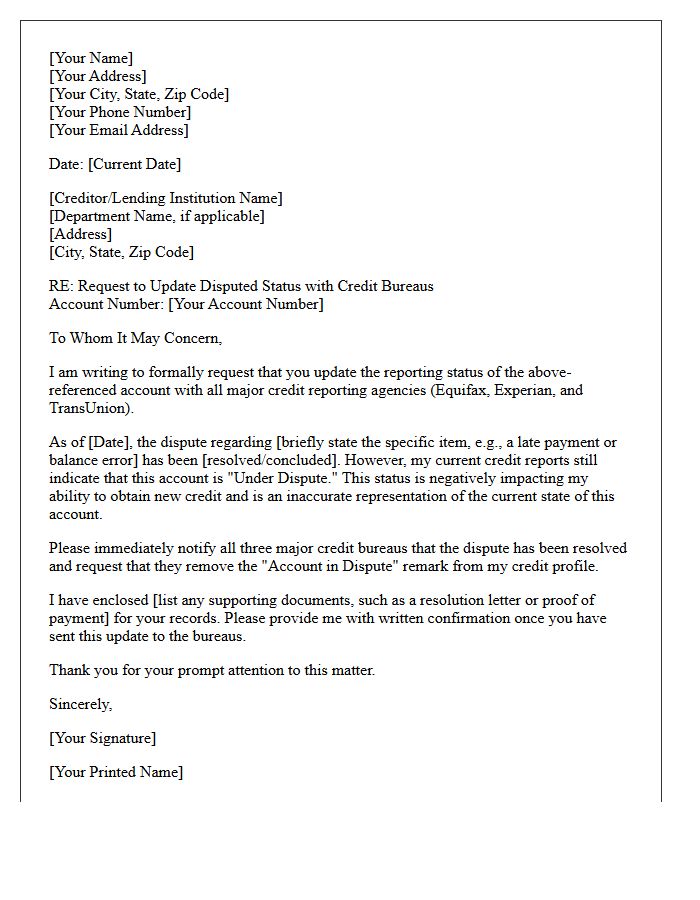
To resolve inaccuracies effectively, you must notify all three major credit bureaus-Equifax, Experian, and TransUnion-simultaneously. Updating a disputed status with only one agency does not guarantee corrections across the others. Providing consistent documentation to each bureau ensures your credit report reflects the most accurate information. This comprehensive approach is essential for protecting your financial reputation and improving your overall credit score. Always maintain copies of your correspondence and track all official disputes to confirm that every agency has updated your records correctly.
I Expect a Prompt Written Reply to This Continued Dispute Letter
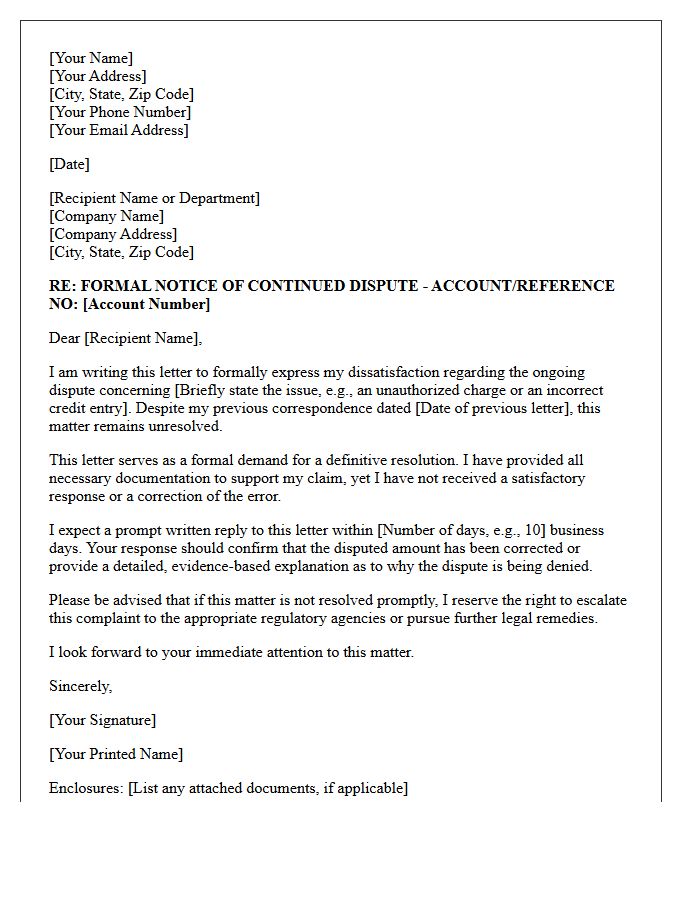
When sending a formal demand for a prompt written reply regarding a continued dispute, clearly cite your previous correspondence. Explicitly state your expectation for a resolution within a specific timeframe, typically 15 days. Emphasize that a timely response is necessary to maintain an accurate credit profile and prevent further escalations. Requesting verification of all disputed items ensures compliance with consumer protection laws. Conclude by confirming your intent to pursue legal remedies or regulatory complaints if the matter remains unaddressed. Professionalism and persistence are key to securing a definitive answer.
Sincerely Yours in Awaiting Proper Debt Verification Documentation
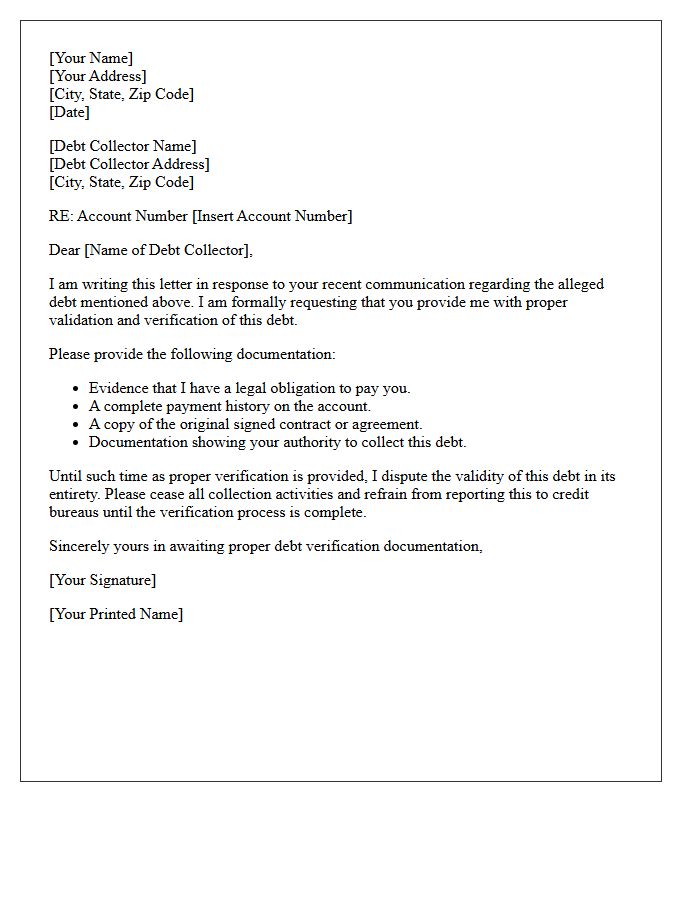
Using the phrase "Sincerely Yours in Awaiting Proper Debt Verification Documentation" in a formal letter asserts your legal rights under the Fair Debt Collection Practices Act. This statement notifies collectors that you are exercising your right to dispute an alleged debt. Until the agency provides certified proof of the debt's validity and their authority to collect it, they must cease most communication. Employing this specific language helps create a legal paper trail, protecting consumers from aggressive tactics while demanding transparency and factual evidence before any payment is issued.
Sender Name and Signature for This Official Communication Letter
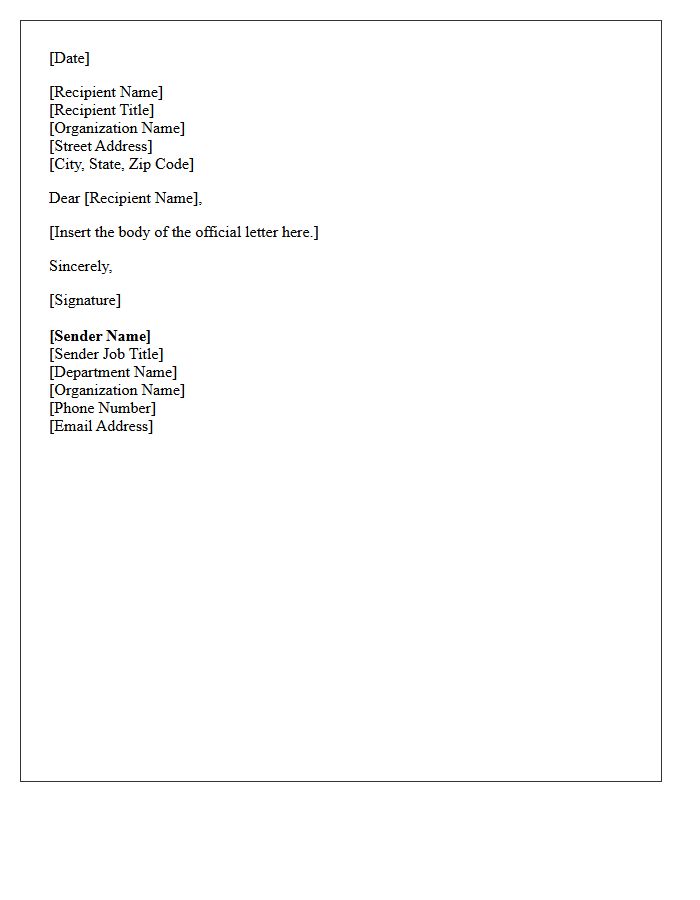
When drafting an official letter, ensure the Sender Name matches the legal identity of the individual or organization to establish immediate credibility. Use a professional signature to authenticate the document and signify formal approval. The signature should be placed directly above the typed name and include your official job title and department. Consistency in these details prevents identity confusion and ensures the communication is legally recognized. Always verify that contact information is current to facilitate seamless follow-up responses from the recipient.
What is a Notice of Continued Dispute After Initial Response?
A Notice of Continued Dispute is a formal written statement submitted by a consumer or entity expressing disagreement with the outcome of an initial dispute investigation. It indicates that the previous resolution provided by the creditor or credit bureau was unsatisfactory and that the dispute remains unresolved.
When should I file a Notice of Continued Dispute?
You should file this notice immediately after receiving a dispute response that fails to correct inaccurate information or fails to provide sufficient evidence validating a debt. It is typically sent when the initial investigation results in a "verified" status that you still believe to be incorrect.
What information must be included in a continued dispute notice?
The notice should include your full legal identity, the specific reference number from the initial dispute, a clear identification of the disputed items, and new supporting documentation or detailed arguments explaining why the initial response was insufficient or legally non-compliant.
Does a continued dispute trigger a new investigation period?
Yes, under the Fair Credit Reporting Act (FCRA), providing "relevant new information" with a continued dispute generally requires the investigating agency to conduct a reinvestigation within 30 to 45 days. However, if no new information is provided, the agency may deem the dispute "frivolous."
What are the next steps if a Notice of Continued Dispute is rejected?
If the agency maintains its position after a continued dispute, your options include adding a 100-word consumer statement to your credit file, filing a complaint with the Consumer Financial Protection Bureau (CFPB), or seeking legal counsel to pursue an action for FCRA violations.

Comments