
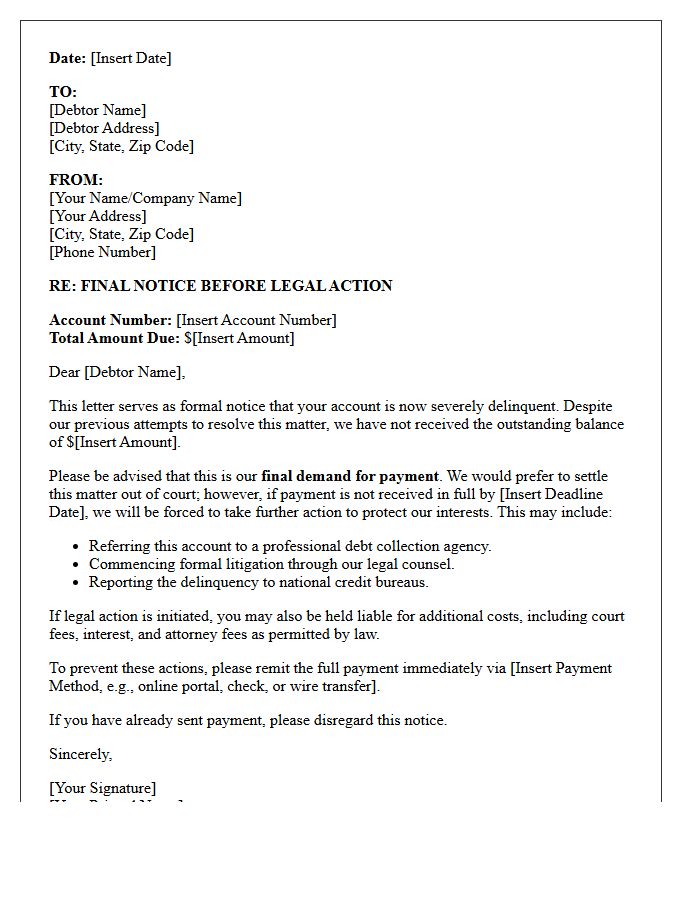
A Final Notice of Intent to Sue is the last formal warning sent to a debtor before initiating legal action. This critical document demands immediate payment of an outstanding balance to avoid courtroom litigation and additional legal fees. It serves as final proof of your attempt to resolve the debt amicably. Below are some ready to use templates.
Image cover: Final Notice of Intent to Sue: Formal Templates and Legal Demand Letters for Unpaid Debt
Letter Samples List
- Final Notice of Intent to Sue for Unpaid Debt Letter
- Pre-Litigation Debt Collection Warning Letter
- Final Demand for Payment and Legal Action Letter
- Outstanding Balance Final Notice Legal Letter
- Intent to Initiate Lawsuit for Debt Recovery Letter
- Final Debt Collection Agency Demand Letter
- Notice of Pending Legal Action for Unpaid Account Letter
- Debt Resolution or Imminent Litigation Letter
- Final Opportunity to Settle Delinquent Debt Letter
- Legal Prosecution Warning for Past Due Balance Letter
- Notice of Lawsuit Intent for Unresolved Debt Letter
- Final Collection Attempt and Litigation Notice Letter
Final Notice of Intent to Sue for Unpaid Debt Letter
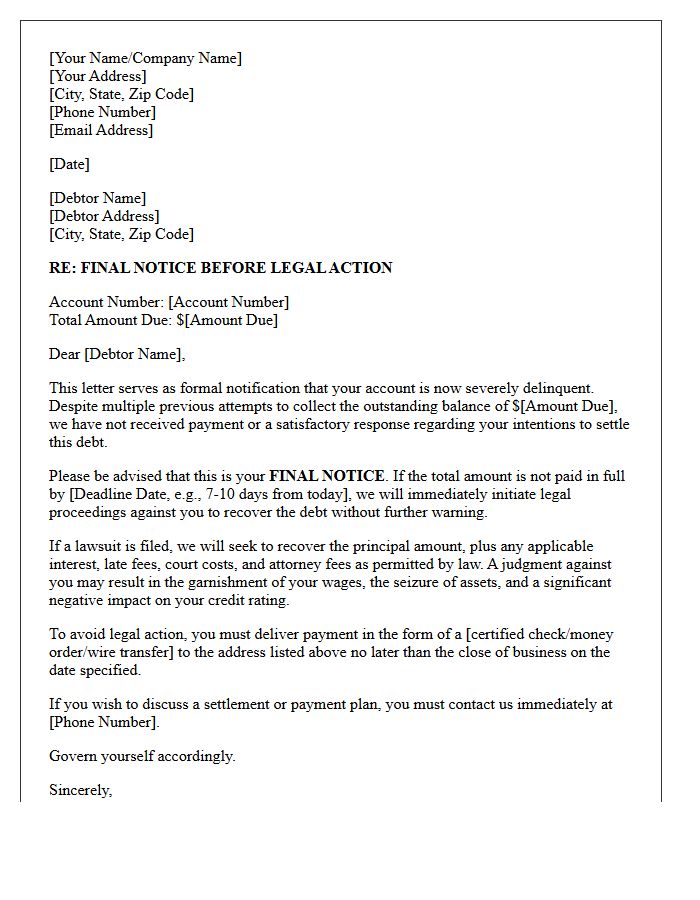
A Final Notice of Intent to Sue is a formal legal warning sent by creditors before initiating a lawsuit for unpaid debt. This document serves as a final opportunity to resolve the balance through payment or settlement to avoid litigation. It typically outlines the total amount owed, a strict deadline for response, and the impending legal action. Receiving this notice is critical because failing to act may lead to a court judgment, wage garnishment, or asset seizure. Promptly verifying the debt or negotiating terms is essential to protect your financial standing.
Pre-Litigation Debt Collection Warning Letter
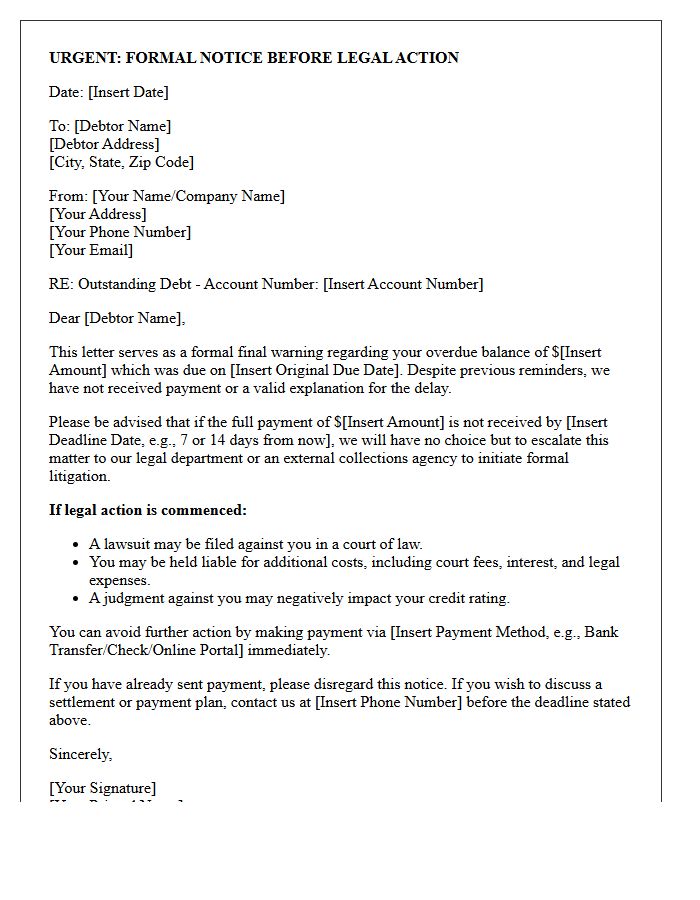
A Pre-Litigation Debt Collection Warning Letter is a formal notice sent to a debtor before legal proceedings begin. It serves as a final demand for payment, outlining the outstanding balance and providing a specific deadline to settle the debt. Receiving this document is a critical stage in the recovery process, as it signals that the creditor is prepared to file a lawsuit. To avoid costly court fees and potential judgments, recipients should prioritize legal compliance by responding promptly or arranging a settlement to prevent further escalation into formal litigation.
Final Demand for Payment and Legal Action Letter
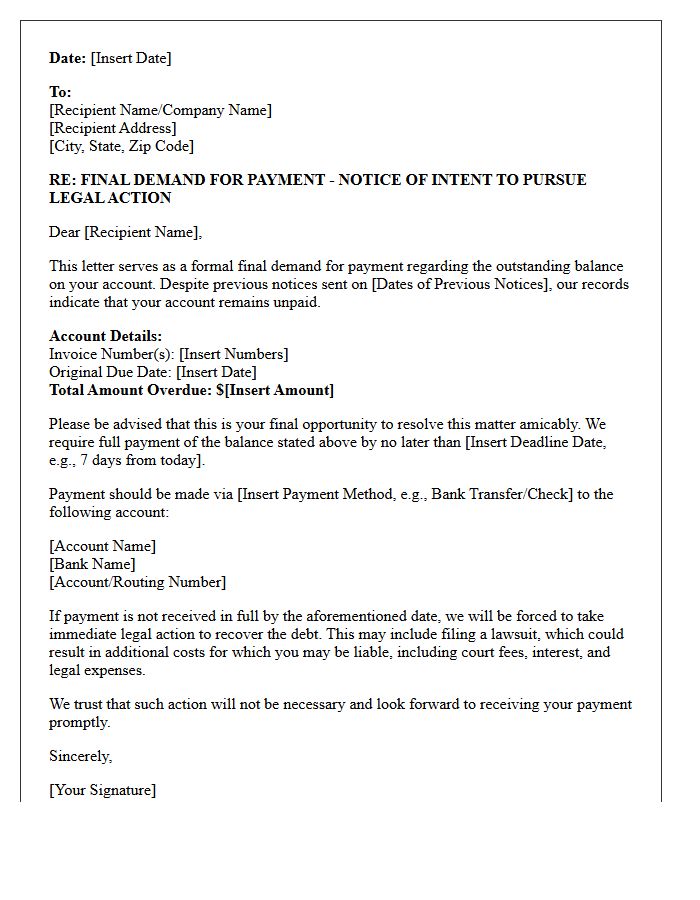
A Final Demand for Payment is a formal notice sent to a debtor before initiating legal action. This critical document serves as a final opportunity to resolve an outstanding debt voluntarily, clearly stating the amount owed and a strict deadline. It acts as essential evidence in court, demonstrating that the creditor attempted to settle the dispute prior to litigation. Receiving this letter indicates that failure to pay will result in a lawsuit, potential judgment, and additional costs like attorney fees or interest charges against the debtor.
Outstanding Balance Final Notice Legal Letter
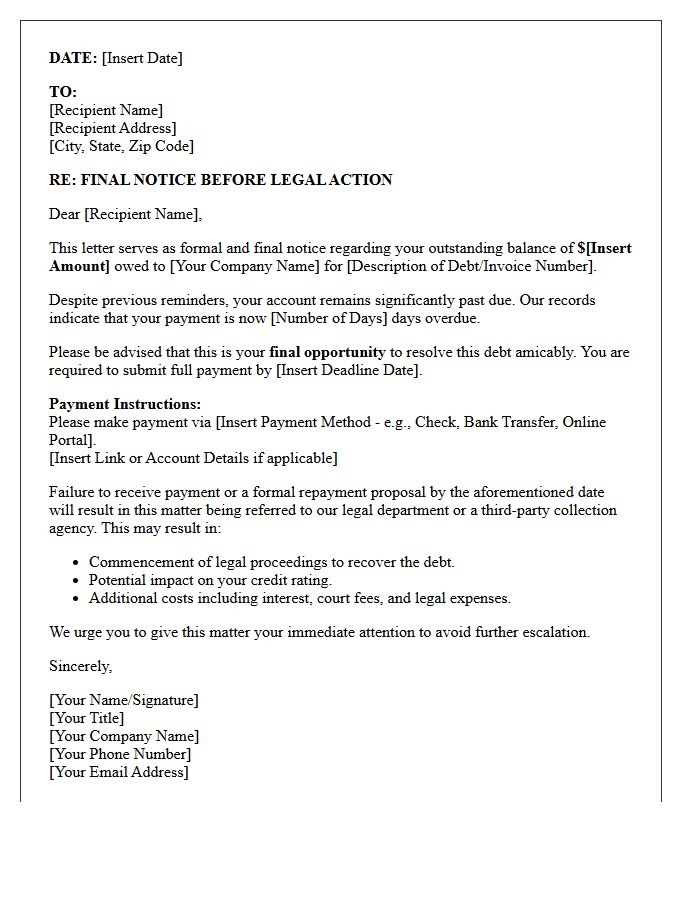
An Outstanding Balance Final Notice is a formal legal demand for immediate payment. This letter of demand serves as the final warning before a creditor initiates litigation or refers the debt to a collection agency. It outlines the total amount owed, payment deadlines, and potential legal consequences, such as credit score damage or court summons. Receiving this document signifies that previous attempts to settle the debt have failed. To avoid legal action and additional interest fees, it is critical to respond promptly or negotiate a settlement plan immediately.
Intent to Initiate Lawsuit for Debt Recovery Letter
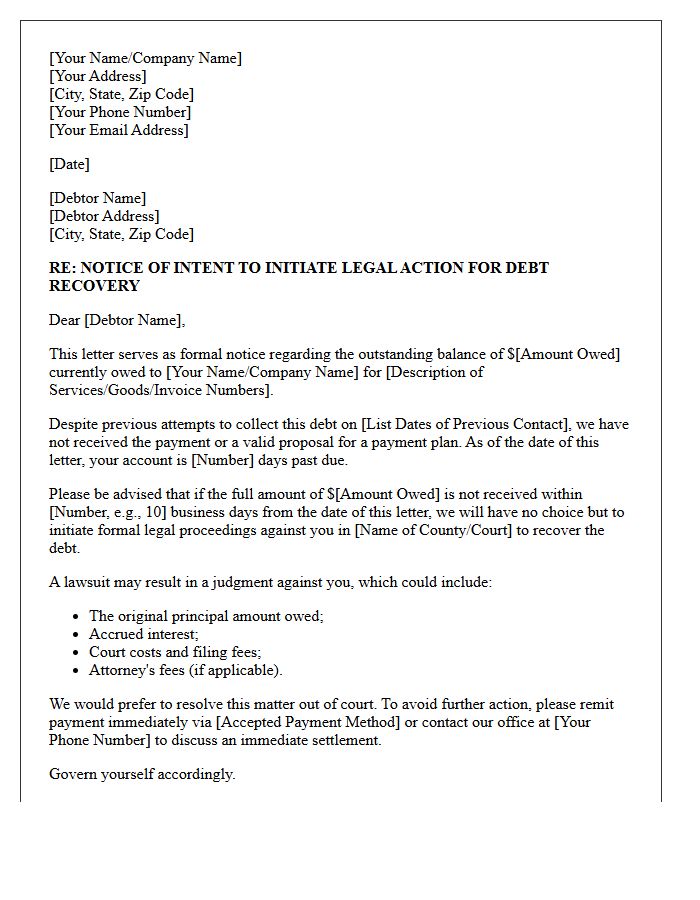
An Intent to Initiate Lawsuit for Debt Recovery Letter serves as a formal final notice before legal action. It notifies a debtor that failing to settle an outstanding balance will result in a summons and court proceedings. This document is a critical step in the pre-litigation process, often required to prove a good-faith attempt to resolve the matter. It must clearly state the debt amount, a specific deadline for payment, and the consequences of non-compliance, including potential wage garnishment, asset seizure, and additional legal fees or interest charges.
Final Debt Collection Agency Demand Letter
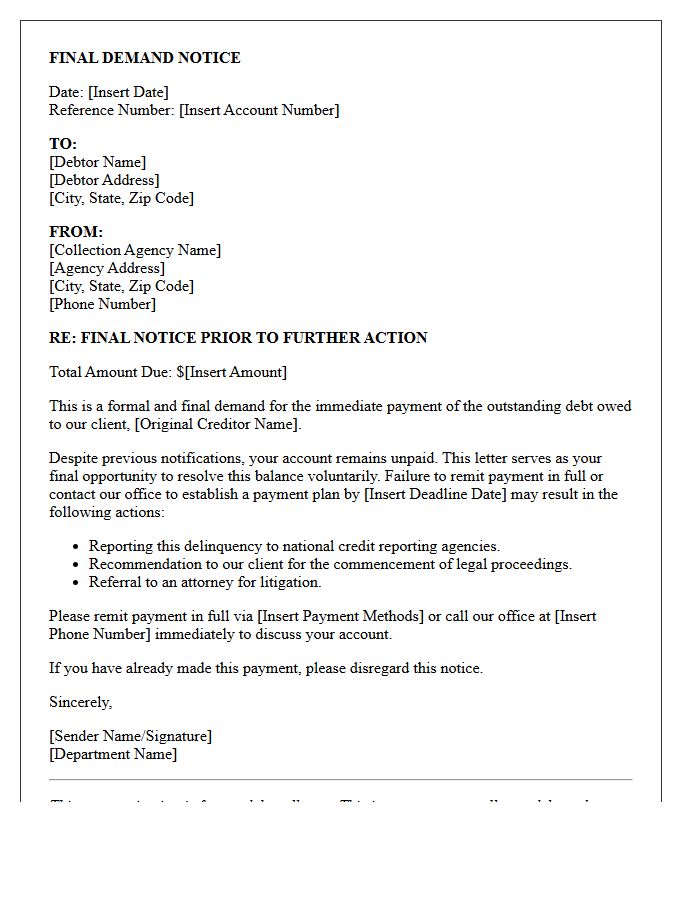
A final debt collection agency demand letter is a formal notice signaling the last opportunity to settle an outstanding balance before legal action or credit reporting occurs. It serves as a legal warning that outlines the total amount owed, the original creditor, and a strict deadline for payment. Receiving this document means the agency may soon initiate a lawsuit or refer the account to attorneys. It is critical to verify the debt immediately in writing to ensure accuracy and protect your consumer rights under the Fair Debt Collection Practices Act.
Notice of Pending Legal Action for Unpaid Account Letter
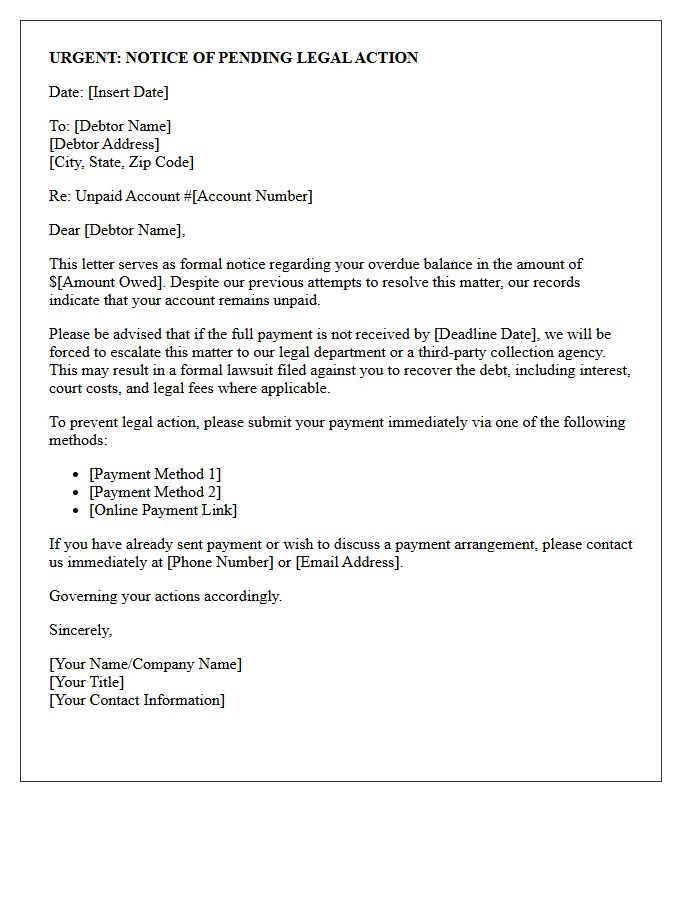
A Notice of Pending Legal Action for Unpaid Account is a formal warning that a creditor intends to file a lawsuit to recover outstanding debt. This letter serves as a final opportunity to resolve the balance through payment or a settlement agreement before litigation begins. Receiving this document means you may face additional costs, such as attorney fees and court interest. It is crucial to verify the debt validity immediately and respond in writing to avoid a default judgment, which could lead to wage garnishment or property liens.
Debt Resolution or Imminent Litigation Letter
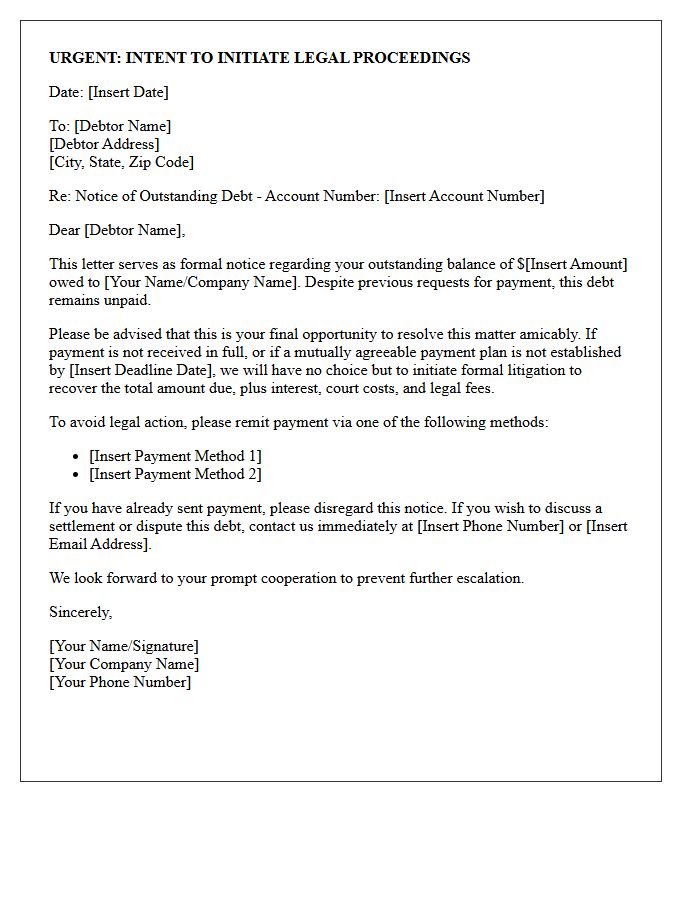
Receiving a debt resolution notice or imminent litigation letter requires immediate action. These legal documents signify that a creditor intends to file a lawsuit to recover unpaid balances. To avoid a court judgment, wage garnishment, or bank levies, you must respond within the specified timeframe. Engaging in settlement negotiations or seeking legal counsel can help restructure your obligations and stop formal proceedings. Ignoring these warnings often leads to a default judgment, making it crucial to verify the debt's validity and explore repayment options before the deadline expires.
Final Opportunity to Settle Delinquent Debt Letter
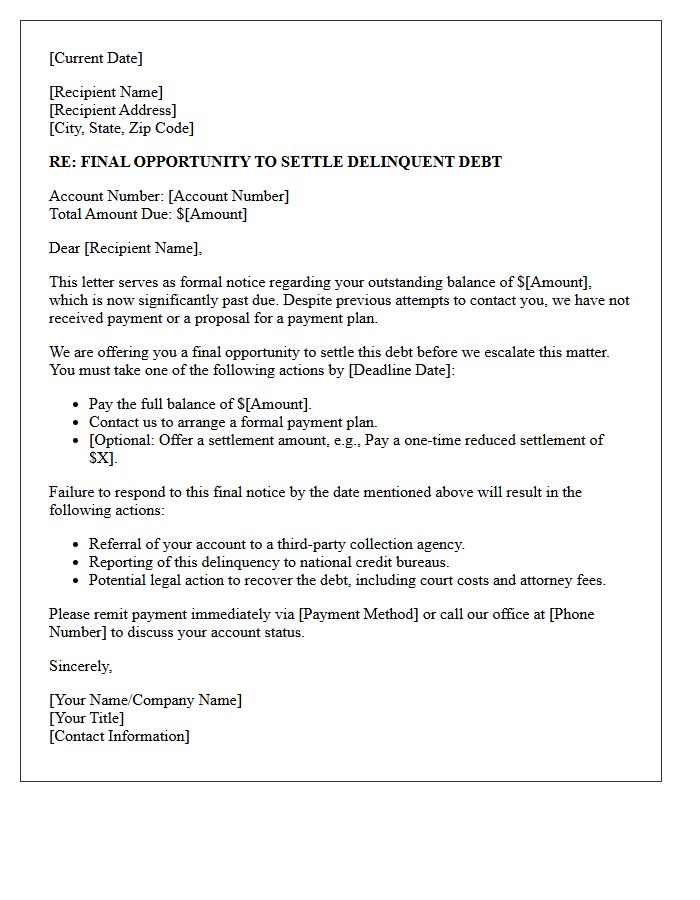
Receiving a Final Opportunity to Settle Delinquent Debt Letter is a critical warning that your account is approaching legal action or a permanent charge-off. This document serves as a last chance to negotiate a reduced payment or structured settlement before the creditor transfers the file to a collection agency or initiates a lawsuit. You must act immediately to protect your credit score and avoid potential wage garnishments. Review the balance for accuracy and respond within the specified deadline to secure a formal debt settlement agreement in writing.
Legal Prosecution Warning for Past Due Balance Letter
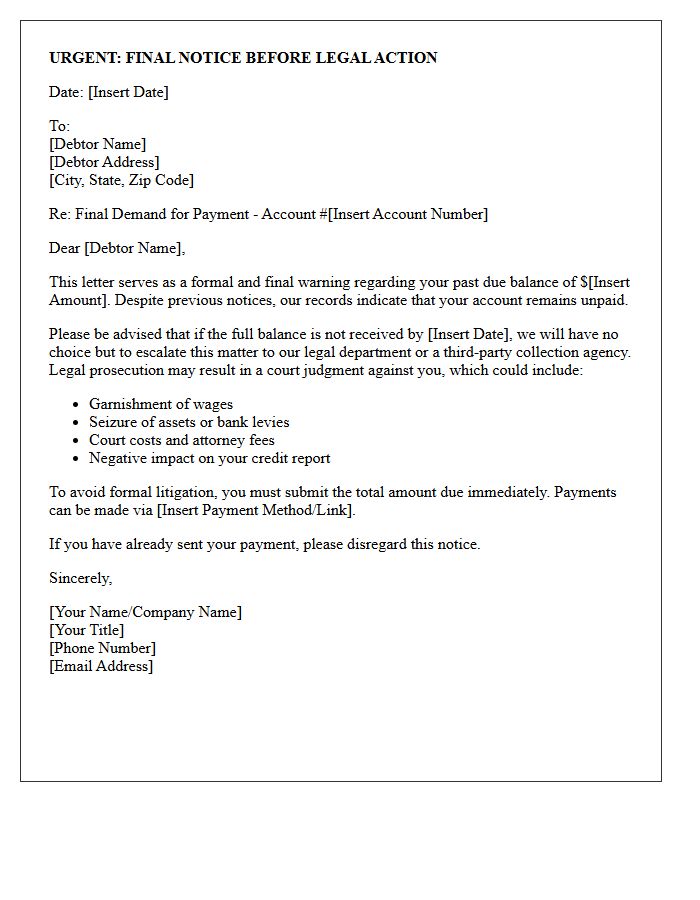
Receiving a legal prosecution warning for a past due balance indicates that a creditor may initiate litigation to recover unpaid debt. This formal notice serves as a final opportunity to resolve the delinquency before a lawsuit is filed in court. Ignoring this warning can lead to severe consequences, including wage garnishment, bank levies, or judgment liens against your property. It is crucial to verify the debt's accuracy, communicate with the collector to negotiate a settlement, and understand your rights under the Fair Debt Collection Practices Act to avoid further legal action.
Notice of Lawsuit Intent for Unresolved Debt Letter
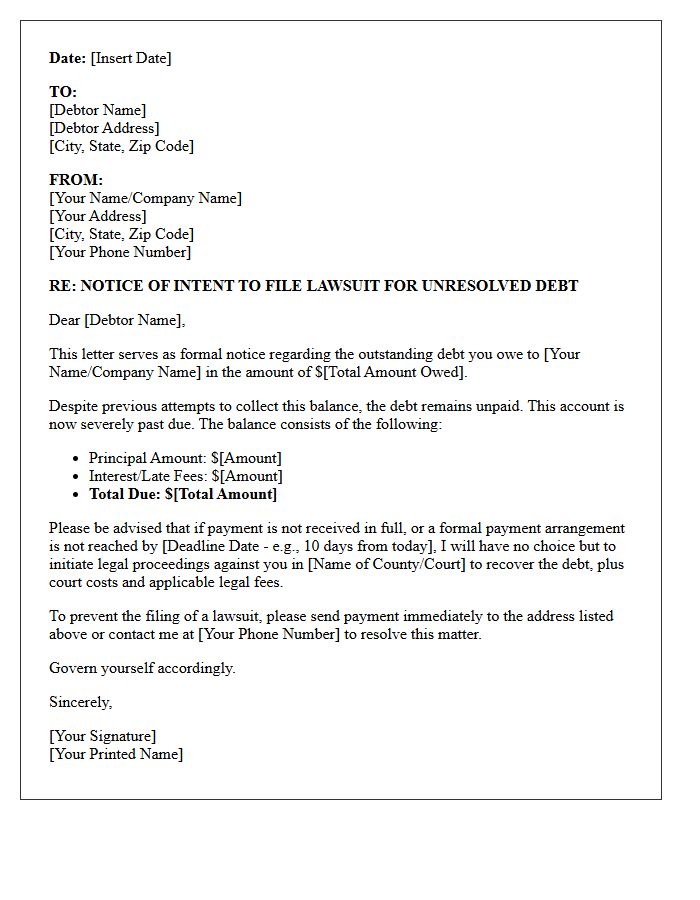
A Notice of Lawsuit Intent for Unresolved Debt is a final demand sent by a creditor or collection agency before initiating formal legal action. Receiving this document indicates that previous attempts to collect have failed, and the creditor intends to file a summons and complaint to obtain a court judgment. It is crucial to verify the debt's accuracy and respond promptly to avoid wage garnishment or bank levies. Addressing this notice immediately through payment, settlement, or legal counsel can prevent a costly and damaging lawsuit against your credit profile.
Final Collection Attempt and Litigation Notice Letter
A Final Collection Attempt and Litigation Notice Letter is a formal warning that your account is reaching the legal escalation phase. This document serves as the last opportunity to resolve a debt before a lawsuit is filed in court. Receiving this notice indicates that the creditor or agency may pursue litigation to secure a judgment, potentially leading to wage garnishment or asset liens. It is critical to respond immediately or negotiate a settlement to avoid costly legal proceedings and further damage to your credit profile.
What is a Final Notice of Intent to Sue for unpaid debt?
A Final Notice of Intent to Sue is a formal letter sent by a creditor or debt collector notifying a debtor that legal action will be initiated in court if the outstanding balance is not paid within a specific timeframe. This serves as the final warning before a civil lawsuit is filed to recover the debt.
What should I do after receiving a Final Notice of Intent to Sue?
Upon receiving this notice, you should immediately verify the debt's validity, review your financial records, and consider contacting the creditor to negotiate a settlement or payment plan. Ignoring this notice typically results in the creditor filing a summons and complaint against you in court.
Can a debt collector sue me after sending a final notice?
Yes, if the debt is within the statute of limitations and the notice period has expired without payment or resolution, a debt collector has the legal right to file a lawsuit to obtain a judgment for the unpaid amount, which may lead to wage garnishment or bank levies.
How long do I have to respond to a Final Notice of Intent to Sue?
The timeframe varies by jurisdiction and the specific terms stated in the letter, but most final notices provide a window of 10 to 30 days to resolve the debt before legal proceedings officially commence.
Does receiving a notice of intent to sue mean I have been sued?
No, the notice itself is a pre-litigation demand letter and not a court filing. You are not officially sued until a process server delivers a formal Summons and Complaint that has been filed with a local or state court.

Comments