
Protect your business interests when a lessee fails to make payments. Sending a formal Intent to Sue for Defaulted Equipment Lease Agreement is a critical legal step to demand outstanding balances and the return of machinery before initiating litigation. This notice serves as a final warning to resolve the breach of contract. Below are some ready to use templates.
Image cover: Demand for Payment and Notice of Intent to Sue: Equipment Lease Default Templates
Letter Samples List
- Final Demand and Intent to Sue Letter for Defaulted Equipment Lease
- Debt Collection Intent to Sue Letter for Equipment Lease Agreement Default
- Pre-Litigation Intent to Sue Letter for Delinquent Equipment Lease
- Notice of Intent to Sue Letter for Breach of Equipment Lease Agreement
- Commercial Debt Collection Intent to Sue Letter for Defaulted Machinery Lease
- Final Warning and Intent to Sue Letter for Unpaid Equipment Lease
- Legal Action Intent to Sue Letter for Defaulted Equipment Lease Contract
- Collection Agency Intent to Sue Letter for Heavy Equipment Lease Default
- Notice of Pending Lawsuit Letter for Defaulted Equipment Lease Agreement
- Litigation Warning Intent to Sue Letter for Defaulted Medical Equipment Lease
- Statutory Intent to Sue Letter for Outstanding Equipment Lease Debt
- Creditor Notice of Intent to Sue Letter for Equipment Lease Arrears
Final Demand and Intent to Sue Letter for Defaulted Equipment Lease
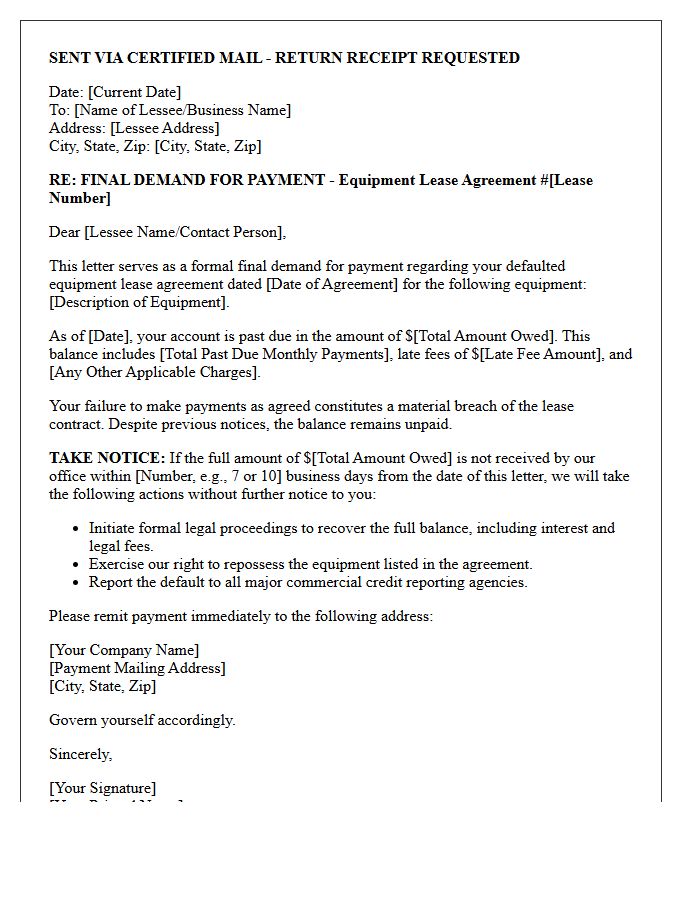
A Final Demand and Intent to Sue Letter serves as the ultimate formal notice before initiating litigation for a defaulted equipment lease. It outlines the specific lease violations, total outstanding balance, and a strict deadline for payment. Sending this document is a critical legal step to demonstrate good faith efforts to resolve the debt out of court. If the lessee fails to comply, the letter establishes the foundation for a breach of contract lawsuit, seeking equipment recovery, liquidated damages, and reimbursement for legal fees incurred during the collection process.
Debt Collection Intent to Sue Letter for Equipment Lease Agreement Default
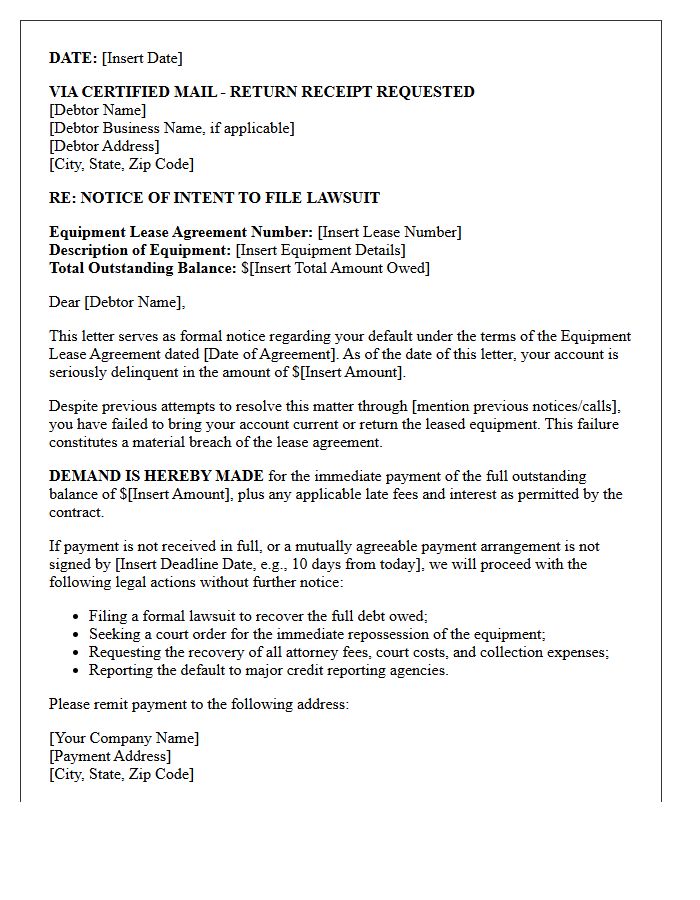
Receiving a Debt Collection Intent to Sue Letter signals that an equipment lease agreement is in serious default. This formal notice serves as a final warning before legal action commences to recover outstanding balances and repossess leased assets. It is critical to verify the debt's accuracy and review the original contract terms immediately. Failing to respond or negotiate a settlement may result in a lawsuit, leading to potential wage garnishment, bank levies, and severe credit damage. Prioritizing legal counsel or direct communication with the lessor can prevent costly courtroom litigation.
Pre-Litigation Intent to Sue Letter for Delinquent Equipment Lease
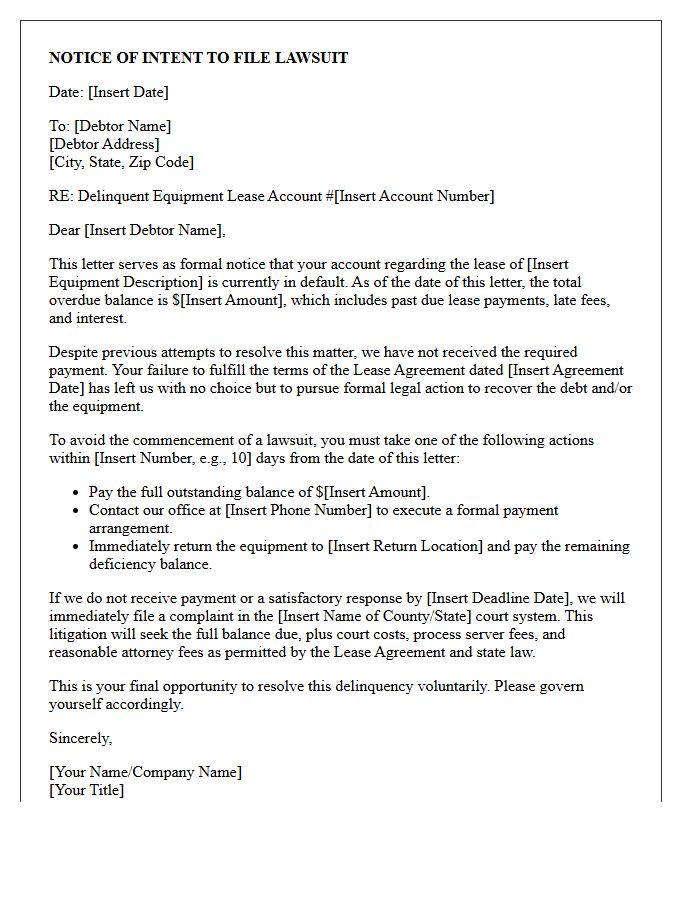
A Pre-Litigation Intent to Sue Letter serves as a final formal notice to a lessee regarding a delinquent equipment lease. This critical document demands immediate payment or equipment return, outlining specific legal actions if the default remains unresolved. It establishes a clear paper trail for the court, proving the lessor's attempt to settle the debt amicably. Sending this notice is a vital procedural step to accelerate debt recovery, trigger lease acceleration clauses, and demonstrate legal compliance before initiating a formal lawsuit for breach of contract.
Notice of Intent to Sue Letter for Breach of Equipment Lease Agreement
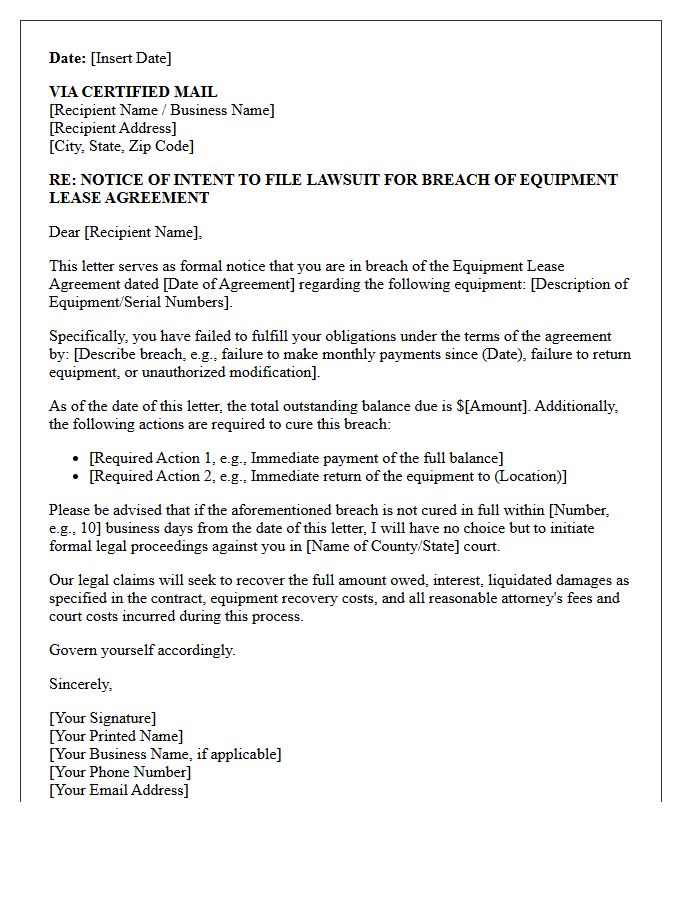
A Notice of Intent to Sue for a breach of equipment lease agreement serves as a formal final warning before litigation. This legal demand letter outlines specific contractual violations, such as non-payment or unauthorized equipment use. It provides the defaulting party a final opportunity to "cure" the breach by paying outstanding balances or returning assets within a set timeframe. Sending this notice is a critical step to demonstrate a good faith effort to resolve the dispute out of court, often satisfying procedural requirements necessary for filing a formal lawsuit.
Commercial Debt Collection Intent to Sue Letter for Defaulted Machinery Lease
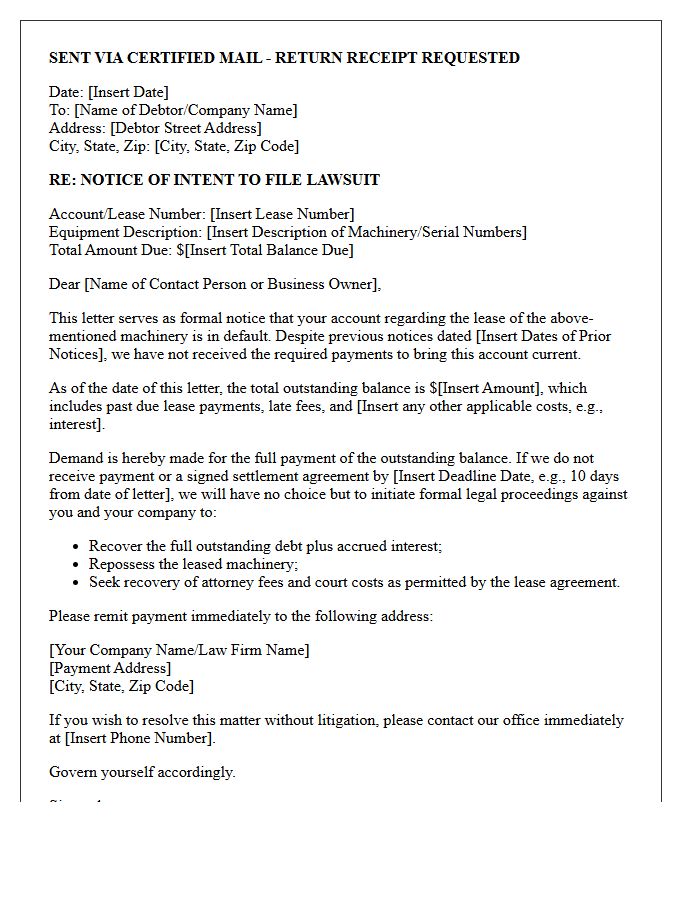
A Commercial Debt Collection Intent to Sue Letter serves as a final formal warning before initiating legal action for a defaulted machinery lease. It establishes a clear deadline for payment, satisfying the legal prerequisite for demonstrating a good-faith effort to resolve the debt. This document typically outlines the outstanding balance, specifies the breached contract terms, and demands the immediate return of equipment or full restitution. Sending this notice is crucial for accelerating recovery and protecting the lessor's rights in court if the lessee fails to settle the delinquency promptly.
Final Warning and Intent to Sue Letter for Unpaid Equipment Lease
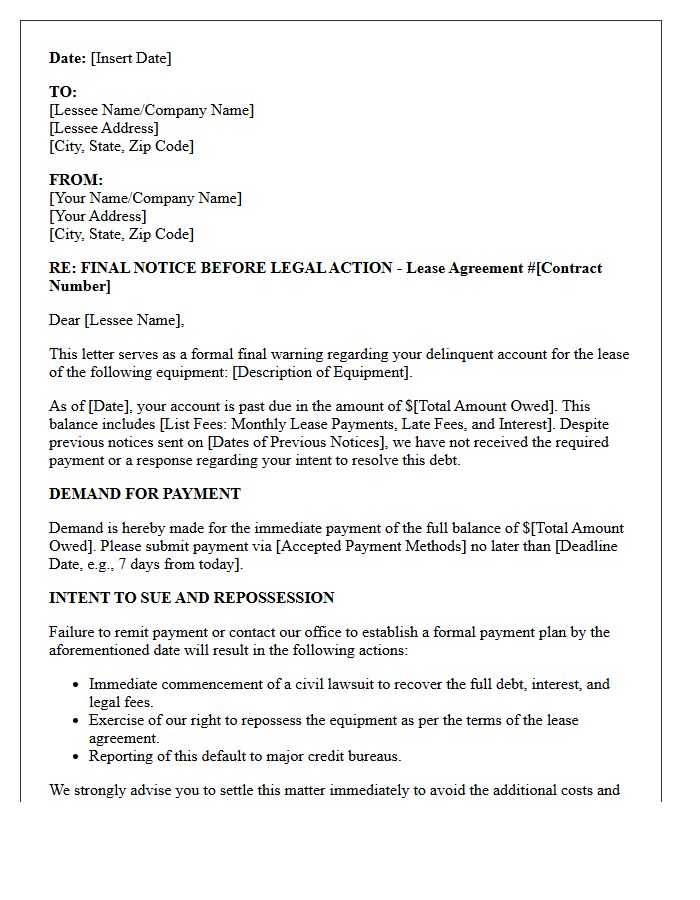
A final warning and intent to sue letter is a formal notice demanding immediate payment for an unpaid equipment lease before legal action commences. This document serves as a critical pre-litigation step, providing the lessee one last opportunity to settle the debt or return the assets. It outlines the total balance due, breach of contract details, and a specific deadline for compliance. Sending this letter is essential for establishing a paper trail, demonstrating a good-faith effort to resolve the dispute, and strengthening your position if a lawsuit becomes necessary to recover losses.
Legal Action Intent to Sue Letter for Defaulted Equipment Lease Contract
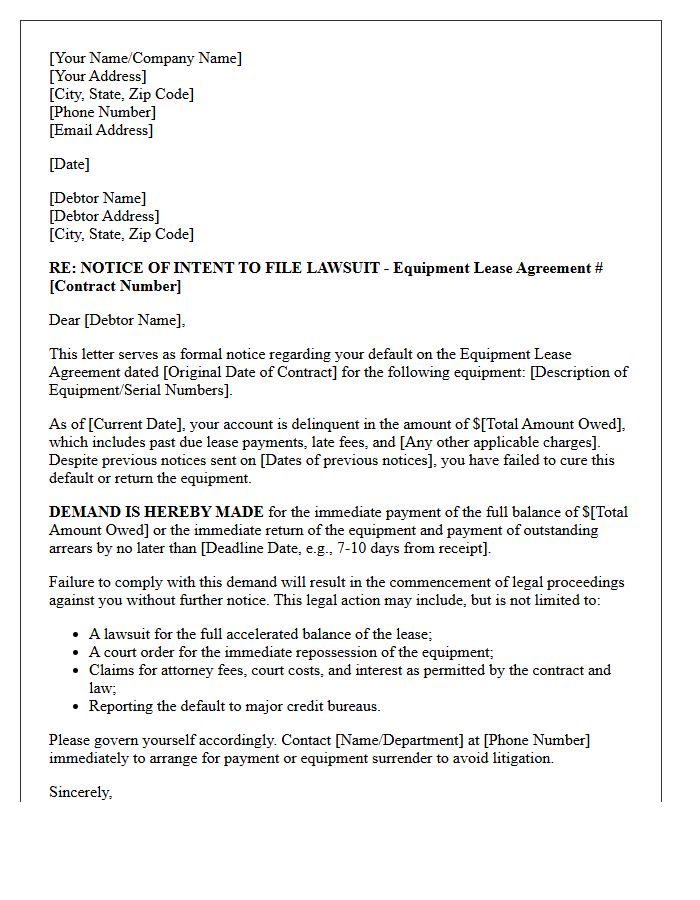
A Legal Action Intent to Sue Letter serves as a formal notice demanding immediate payment for a defaulted equipment lease contract. It warns the lessee that failure to cure the delinquency will result in litigation to recover the outstanding balance, late fees, and the equipment itself. This document is a critical pre-trial requirement that establishes a clear paper trail of your attempts to resolve the debt. Issuing this demand letter is the final step before filing a lawsuit to enforce contractual obligations and protect your business assets from financial loss.
Collection Agency Intent to Sue Letter for Heavy Equipment Lease Default
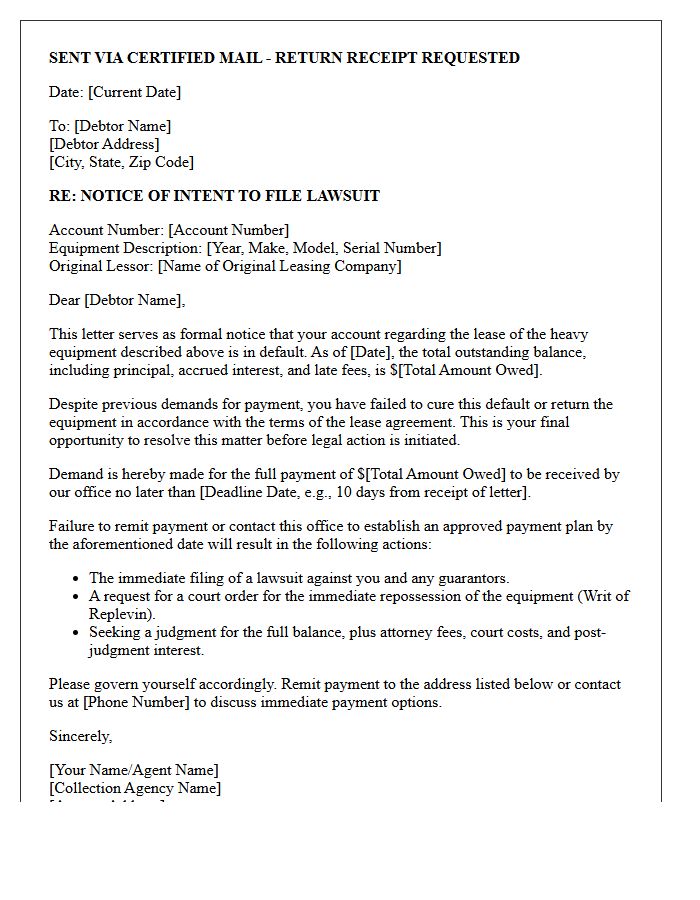
Receiving a Notice of Intent to Sue for a heavy equipment lease default is a critical legal warning. This formal letter signifies that a collection agency or lessor is prepared to initiate a lawsuit to recover the outstanding balance and potentially repossess machinery. It often precedes a court summons and may include claims for liquidated damages and legal fees. To mitigate risks like bank levies or asset seizures, you must respond promptly, verify the debt's accuracy, and consider negotiating a settlement or structured payment plan before the filing deadline expires.
Notice of Pending Lawsuit Letter for Defaulted Equipment Lease Agreement
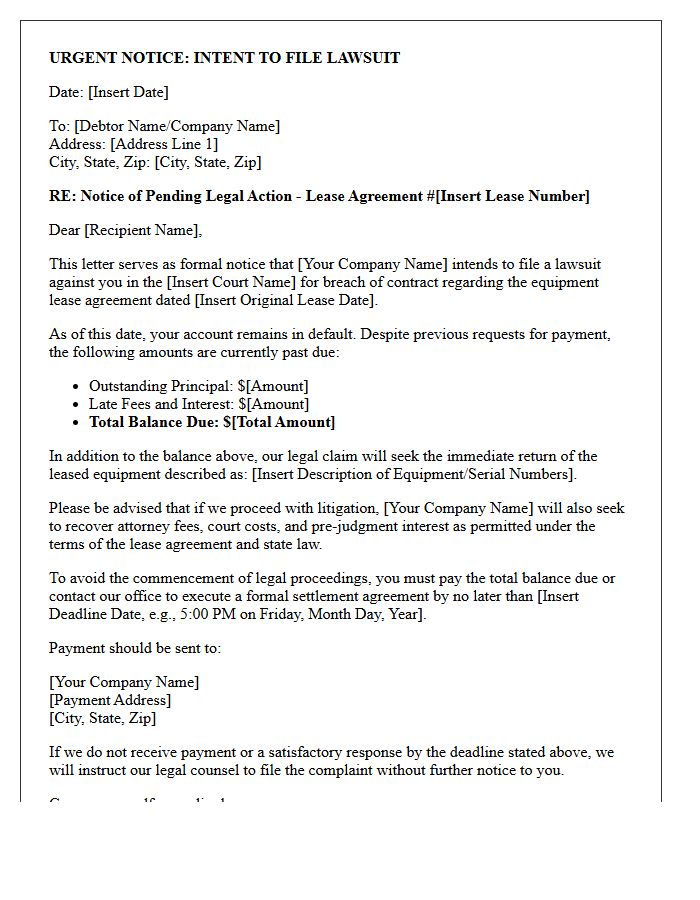
A Notice of Pending Lawsuit is a formal legal warning issued when an equipment lease agreement is in default. This document signifies that the lessor intends to initiate litigation to recover outstanding payments or repossess the leased machinery. It serves as a final opportunity for the lessee to cure the breach through repayment or negotiation before court proceedings begin. Ignoring this notice can lead to legal judgments, significant financial penalties, and damage to business credit. Immediate legal counsel is recommended to explore settlement options and avoid formal summons and complaint filings.
Litigation Warning Intent to Sue Letter for Defaulted Medical Equipment Lease
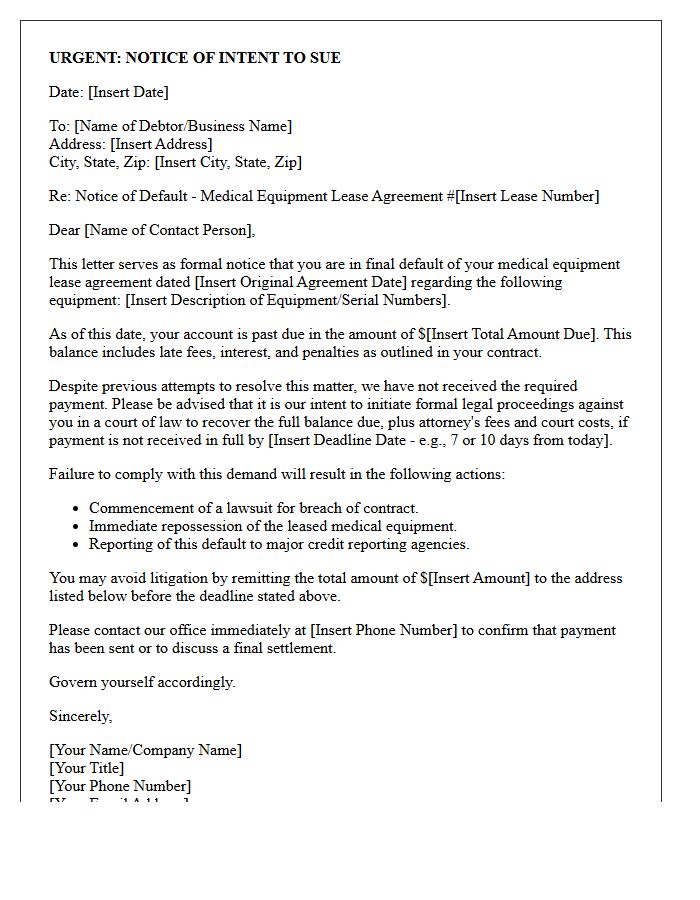
A Litigation Warning Intent to Sue Letter serves as a final formal notice before legal action begins. When a medical equipment lease enters default, the lessor issues this document to demand immediate payment or equipment return. It outlines the specific breach of contract, outstanding balances, and a strict deadline for compliance. Receiving this letter indicates that the creditor is prepared to file a lawsuit to recover losses. To avoid costly litigation and potential damage to professional reputation, recipients should immediately review the lease terms or seek a settlement agreement.
Statutory Intent to Sue Letter for Outstanding Equipment Lease Debt
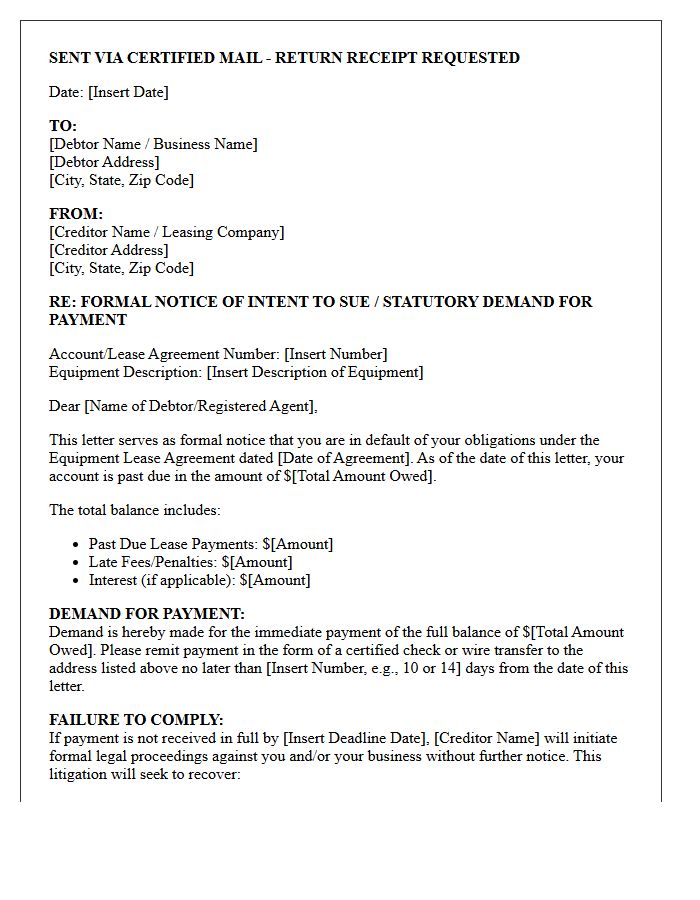
A statutory intent to sue letter serves as a formal notice demanding payment for outstanding equipment lease debt before legal action commences. This document outlines the specific breach of contract, the total balance due, and a final deadline for resolution. Sending this notice is often a legal prerequisite to demonstrate a good-faith effort to collect. For lessees, receiving this letter indicates that the lessor is prepared to initiate a lawsuit, potentially leading to asset repossession, credit damage, and additional legal fees if the delinquency is not settled immediately.
Creditor Notice of Intent to Sue Letter for Equipment Lease Arrears
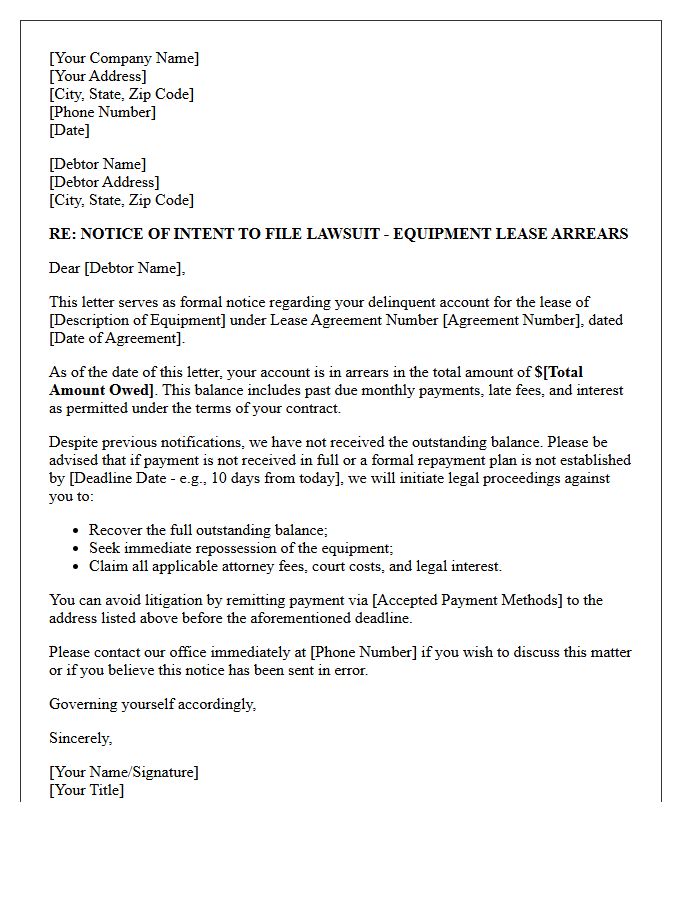
A Creditor Notice of Intent to Sue is a formal legal demand issued when equipment lease arrears remain unpaid. This document serves as a final warning that the lessor plans to initiate litigation to recover outstanding debts and potentially repossess the assets. It typically outlines the total balance due, including late fees and interest, while providing a strict deadline for payment to avoid court action. Receiving this notice is a critical trigger event; failing to respond or negotiate a settlement may result in a judgment, wage garnishment, or seizure of business property.
What constitutes a default on an equipment lease agreement?
A default typically occurs when a lessee fails to make scheduled payments, fails to maintain required insurance coverage, or violates specific terms outlined in the lease contract. Once the cure period specified in the agreement expires, the lessor has the legal right to initiate a lawsuit for breach of contract.
What legal remedies are available to a lessor when a lessee defaults?
When a lessee defaults, a lessor may sue to recover the full accelerated balance of the lease, repossess the equipment through a writ of possession, and claim damages for attorney fees and collection costs. Legal action aims to restore the lessor to the financial position they would have held had the contract been fulfilled.
Can I sue for the remaining balance if I repossess the equipment?
Yes, most equipment lease agreements include a "deficiency balance" clause. This allows the lessor to repossess and sell the equipment and subsequently sue the lessee for the difference between the sale proceeds and the total remaining amount owed under the lease terms.
Is a formal demand letter required before filing a lawsuit for an equipment lease default?
While requirements vary by jurisdiction and specific contract language, sending a formal "Notice of Default and Demand for Payment" is a critical first step. This document provides evidence to the court that the lessee was given an opportunity to remedy the breach before litigation was initiated.
How does a personal guaranty affect an intent to sue for a defaulted lease?
If the equipment lease is backed by a personal guaranty, the lessor can name both the business entity and the individual guarantor as defendants in the lawsuit. This allows the lessor to pursue the personal assets of the guarantor if the business lacks sufficient funds to satisfy a judgment.


Comments